A prospective randomized controlled study of VAX-D and TENS for the treatment of chronic low back pain The single randomized controlled trial of spinal decompression therapy compared the VAX-D® unit, which places the patient a prone rather than supine position, to transcutaneous electrical nerve stimulation (TENS) for the treatment of chronic low back pain. Subjects [...]
A prospective randomized controlled study of VAX-D and TENS for the treatment of chronic low back pain
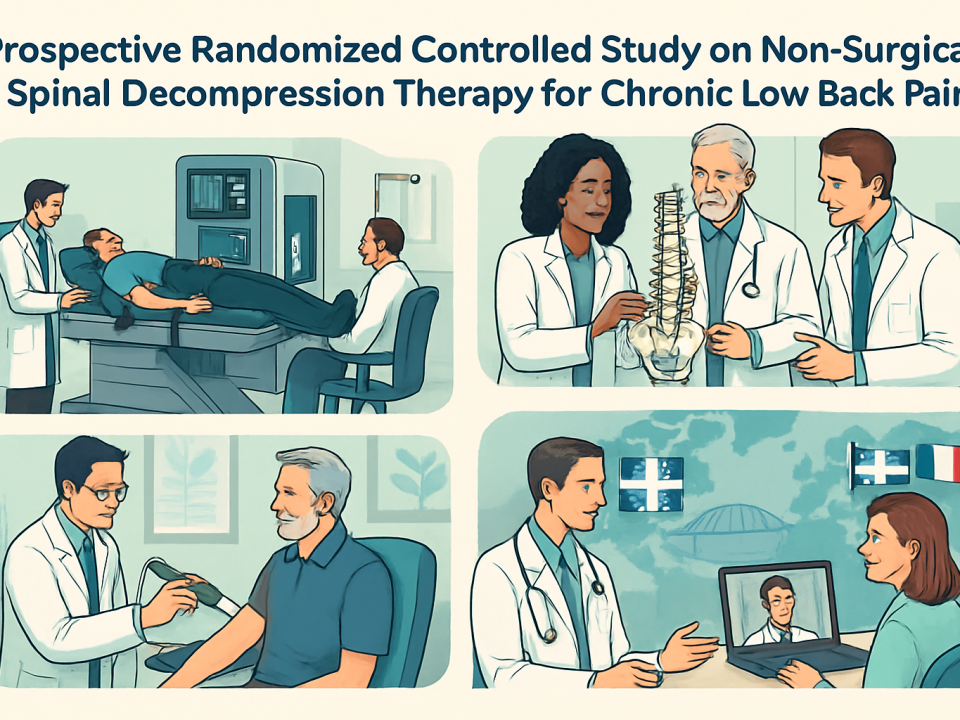
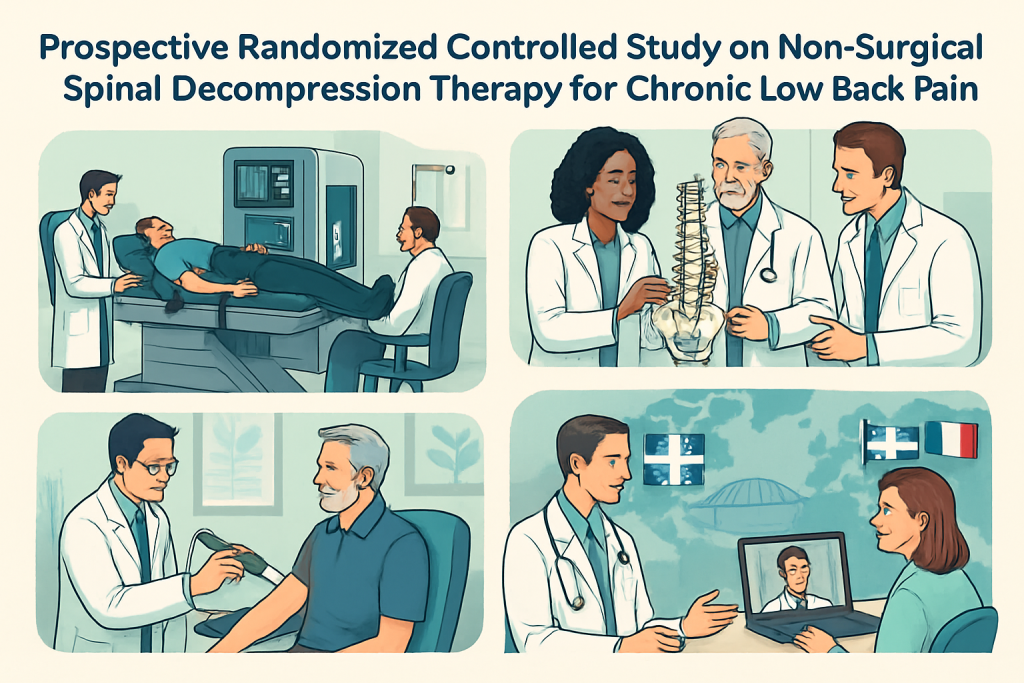
The single randomized controlled trial of spinal decompression therapy compared the VAX-D® unit, which places the patient a prone rather than supine position, to transcutaneous electrical nerve stimulation (TENS) for the treatment of chronic low back pain. Subjects were recruited through advertisement and had chronic low back pain of greater than 3 months duration with associated leg pain. Disc protrusion or herniation confirmed by CT or MRI was also required. Average duration of pain in the study population was 7.3 years and average age was 42 years old. This study enrolled 44 patients and 40 completed the study. Patients were randomized in sequential order to their appropriate group. Outcome measures were the 10 centimeter visual analog pain scale (VAS) and a disability scale. The disability scale rated the subject’s ability to perform their most affected activity on a 0 to 4 scale, with 4 being “can do without limitation”. Treatments consisted of 30 minute sessions, five times per week for four weeks followed by weekly sessions for 4 weeks. The control group received TENS for 30 minutes daily for 20 days followed by weekly treatment for 4 weeks. Both groups were able to take anti-inflammatory and non-narcotic pain relievers as needed. Success of treatment was defined by 50% improvement in VAS and any improvement in disability. At the conclusion of the study 13 out of 19 (68.4%) of the treatment group showed improvement while 0 of 21 for the TENS group. At follow-up 7 of the original 19 subjects (36.8%) in the treatment group showed sustained improvement.
Sherry E, Kitchener P, Smart R. A prospective randomized controlled study of VAX-D and TENS for the treatment of chronic low back pain. Neurol Res 2001; 23(7):780-784.
Special Report on Nonsurgical Spinal Decompression to treat low back pain in the January 2008 issue of the journal “Pain Medicine News”. In most industrialized countries, chronic low back pain is recognized as a widespreadcondition. However, a Special Report is now featured in the January issue of Pain Medicine News. The Special Report was first [...]
Special Report on Nonsurgical Spinal Decompression to treat low back pain in the January 2008 issue of the journal “Pain Medicine News”.
In most industrialized countries, chronic low back pain is recognized as a widespreadcondition. However, a Special Report is now featured in the January issue of Pain Medicine News. The Special Report was first featured in the December 2007 issue of Anesthesiology News and was then presented on-line at: www.painmedicinenews.com in early January.
The article has since become the most read article on this website. The Special Report highlights exciting research on a medical device that offers patients a non-surgical treatment option in treating chronic low back pain. The authors of this Special Report are from the prestigious institutions of Duke University School of Medicine, Mayo Clinic, and Johns Hopkins University School of Medicine. They conclude their Special Report by stating, “computerized nonsurgical spinal decompression systems were designed to provide maximum patient benefits with the use of a noninvasive approach that may help minimize health care resources and offer a potentially optimal therapeutic approach to the treatment of LBP (low back pain).”
Decompression table, spinal decompression table or non surgical decompression tables are all terms used for computerized traction tables that do spinal decompression. Decompression Tables are used for patients that are suffering from back and neck pain. Spinal decompression tables are high-tech form of mechanical traction devices, controlled by a computer, which can provide relief in [...]
Decompression table, spinal decompression table or non surgical decompression tables are all terms used for computerized traction tables that do spinal decompression. Decompression Tables are used for patients that are suffering from back and neck pain.
Spinal decompression tables are high-tech form of mechanical traction devices, controlled by a computer, which can provide relief in many cases of back pain. Unfortunately, it is widely promoted with unsubstantiated claims that it can correct all cases of degenerated and herniated discs without surgery.
When the FDA cleared spinal decompression tables as traction devices, it set limits on what the manufacturer can claim. However, unscrupulous providers and one manufacturer in particular, Axiom International, the manufacturer of the DRX-9000 table, have exceeded these limits and consequently lost their homologation from Health Canada. You have to understand that non-surgical spinal decompression therapy may provide relief for properly selected patients, but it is not a cure all magic bullet.
Some believe that manual treatment can usually accomplish the same thing more quickly, safely, and less expensively. This couldn’t be further from the truth: the same people also say that over 80% of back pain will go away on its own after 30 days, so you should not spend your money on spinal decompression. You have to understand that spinal decompression is for those patients who have much worse back conditions and have had them for months: herniated discs and chronic back pain. Such conditions do not go away on its own and, in most cases, won’t respond well to more traditional methods such as physical therapy, acupuncture, medication, massage therapy, osteopathy or chiropractic.
Others will market a particular decompression table brand as being the only device capable of curing your back or neck pain. This is a deceiving way of saying “come to our clinic and our magical table will take away your suffering”. The truth is, spinal decompression therapy is a chiropractic technique which is administered by a competent certified chiropractic, medical or osteopathic doctor. You should ask for a certified decompression therapy practitioner (CDTP), one that will do an exam, read your MRI, do a differential diagnosis and set up a treatment plan adapted to your diagnosis. Remember, most spinal decompression table will do the job if the practitioner knows what he is doing. The doctor treats you, not the table.
There are many decompression table manufacturers out there: Vax-D, Accu-Spina, DRX-3000, DRX9000, SpineMED, and Lordex Traction Unit, Triton DTS 600, Z-Grav, Chattanooga ADP-400, ATX, Eurotech DOC, Saunders, Spina IDD , Da Vinci X10, Alpha Spina, Extentrac, Kennedy, Antalgic Trak, etc . All have been FDA approved as decompression devices.
Spinal decompression: an effective treatment for herniated disc and chronic back pain. Non-surgical spinal decompression therapy is: Noninvasive Conservative Painless Safe Supervised by a health professional who holds a doctorate degree Effective for a variety of back conditions (herniated disc, chronic pain, arthrosis, facet syndrome, etc.) If you are visiting our website …It [...]
Spinal decompression: an effective treatment for herniated disc and chronic back pain.
Non-surgical spinal decompression therapy is:
- Noninvasive
- Conservative
- Painless
- Safe
- Supervised by a health professional who holds a doctorate degree
- Effective for a variety of back conditions (herniated disc, chronic pain, arthrosis, facet syndrome, etc.)
If you are visiting our website …It is because you suffer from a condition described below!
This site was designed for those who suffer from chronic back pain, herniated disc or disc herniation, bulging of a disc, sciatica, leg pain, degenerative disc disease, tingling, numbness, pain in arms, neck pain, and for some patients with spinal stenosis and finally for those who underwent back surgery but still suffering from pain.
What are your treatment options?
Types of Care |
Efficiency |
| Acupuncture | Unlikely |
| Heat & cryotherapy (cold) | Unlikely |
| Electrotherapy (ultrasond, tens, etc.) | Unlikely |
| Exercices | Unlikely |
| Osteopathy | Unlikely |
| Massage Therapy | Unlikely |
| Surgery | likely |
| Spinal decompression | likely |
Spinal decompression demystified
Spinal decompression reduces the pressure that builds up inside the discs. This technique consists of a mechanical disc decompression by suction causing decompression of the disc. The pain decreases because of resorption of the herniated disc, bulging disc or because of the reduced pressure on the nerves or spinal cord: that is to say that the disc returns to its original shape when the bulge or bulging disc disappears and the pressure on the spinal nerves is therefore eliminated.
Spinal decompression achieves this by creating a negative pressure inside the disc, known as negative intra-discal pressure. This essentially creates a vacuum to suck the bulging and herniated material inside the disc space by reducing the pressure.
The same phenomenon happens when you break the window of a pressurized airplane flying at high altitude: everything that is inside the airplane (positive pressure) is violently expelled to the outside (negative pressure).
When there is a bulging of the intervertebral disc and / or herniated disc, the ligaments that hold up the disk material has become stretched or torn. Spinal Decompression strengthens the ligament bands that hold the disc material in place, allowing healing and preventing a recurrence.
In most cases, the healing process requires only a few weeks of outpatient treatment.
A gentle conservative treatment for herniated disc: non-surgical spinal decompression therapy Once diagnosed by a competent health professional, the treatment of herniated disc can be done, in some cases, with conservative treatment, without resorting to surgery. Our method is scientifically recognized: it is a distraction with a high-tech device that enables safe treatment. Non-surgical spinal [...]
A gentle conservative treatment for herniated disc: non-surgical spinal decompression therapy
Once diagnosed by a competent health professional, the treatment of herniated disc can be done, in some cases, with conservative treatment, without resorting to surgery. Our method is scientifically recognized: it is a distraction with a high-tech device that enables safe treatment.
Non-surgical spinal decompression and its specialized equipment is used in all our clinics.
What will happen during the treatment?
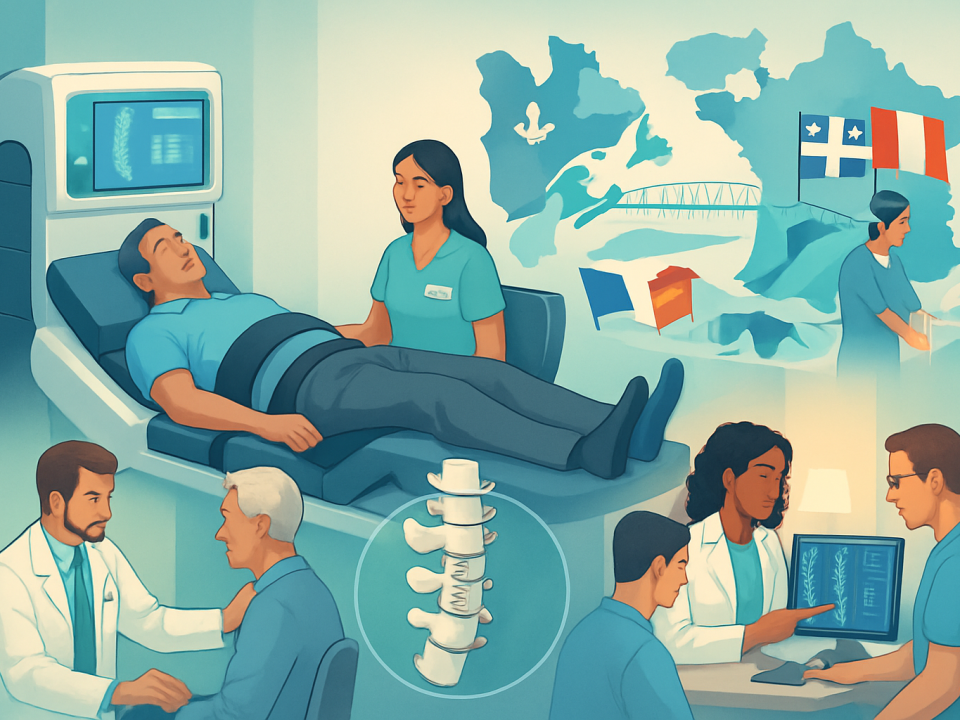
Lumbar treatment : after a comprehensive exam, allowing the clinician to determine the nature of the vertebral infringement, the patient is laid down on the table and a traction force on the lumbar spine is applied, mobilizing the segment of the spine causing the problem. Thus, movements of deep traction or distraction are induced by the practitioner with precision and gentleness: all these movements are done without feeling any pain.
Cervical Treatment : The patient is lying flat on his back on the treatment table, allowing a segmental traction and mobilization of the cervical spine.
Other types of treatment may be required in some cases.
Every patient is unique, no two patients have with exactly the same condition, the same threshold of tolerance to pain and the same resilience.In this regard, we customize our treatment to respond to the unique needs of each of our patients, while maintaining a treatment protocol which has been proven.
Current therapies for disc pathology
- medication and limited activity
- spinal rehabilitation
- interventional pain management
- spinal manipulation
- spinal surgery
- non-surgical spinal decompression
Non-surgical spinal decompression
- Spinal decompression is a term that describes the relief of pressure on one or many pinched nerves (neural impingement) of the spinal column
- Spinal decompression can be achieved both surgically and non-surgically and is used to treat conditions that result in chronic back pain such as disc bulge, disc herniation, sciatica, spinal stenosis, and isthmic and degenerative spondylolisthesis.
- Non-surgical spinal decompression was originally developed and pioneered in 1985, by Dr. Allan Dyer, PhD, MD, a canadian doctor who had served as Deputy Minister of Health in Ontario, Canada.
- Non-invasive procedure designed to target underlying disc pathology
Goals of treatment
- actively distract and passively retract the spine in order to affect intervertebral disc space
- reduce intradiscal pressures
- increase fluid and nutrient exchange
- promote disc regeneration
- retract nucleic material of bulging or herniated disc
Guarding reflex
- Traditional spinal traction causes natural guarding reflex
- Muscles contract or spasm to prevent distraction (deep traction or decompression) in order to protect the spine
- Old style traction devices are not able to bypass or overpower reflex contractions and achieve distraction of the disc space – (aka spinal decompression)