

Low back pain is a prevalent and often debilitating condition affecting millions worldwide, with complex causes that challenge both patients and clinicians. Among the many contributing factors, Modic changes have emerged as a significant, though often underrecognized, element linked to degenerative spine disease and chronic discomfort. These specific changes in the vertebral endplates and adjacent bone marrow, identified through MRI imaging, hold clues to the persistent pain many patients experience. Understanding the nature, diagnosis, and treatment possibilities surrounding Modic changes empowers patients to engage meaningfully with their healthcare providers and advocates for personalized care strategies. In this detailed exploration, we shed light on the biological mechanisms behind these changes, clinical implications, and innovative interventions aiming to alleviate suffering and improve spinal wellness.
Understanding Modic Changes: Definition and Spinal Anatomy Context
Modic changes refer to distinct alterations in the vertebral endplates and the adjacent bone marrow visible through magnetic resonance imaging (MRI). Rooted in the work of Dr. Michael Modic in 1988, these alterations visually reflect underlying biological processes tied to degenerative spine diseases, particularly degenerative disc disease.
To grasp the significance of Modic changes, it helps to revisit basic spine anatomy. The spine is composed of 33 vertebrae stacked vertically, connected by intervertebral discs, ligaments, and supported by an intricate array of muscles. Each vertebra ends with a vertebral endplate that interfaces with the intervertebral disc, acting as a critical structure in spinal stability and nutrient exchange.
Discs provide cushioning and allow flexibility in the spine. However, over time, discs undergo wear and tear, referred to as degenerative disc disease (DDD). This degeneration differs vastly between individuals, influenced by genetics, lifestyle, and injury history, among other factors. Importantly, disc degeneration alone doesn’t guarantee the presence of pain; rather, associated conditions such as Modic changes are crucial in understanding pain generation.
- Vertebrae: Rigid bones forming the spinal column.
- Intervertebral discs: Cartilaginous cushions that absorb shocks.
- Vertebral endplates: Junctions between vertebrae and discs, critical to spinal health.
- Surrounding tissues: Ligaments and muscles stabilizing and mobilizing the spine.
Modic changes themselves are categorized into three types based on MRI and histological features:
| Type | Characteristics | Associated Tissue Changes |
|---|---|---|
| Type 1 | Inflammation and edema (fluid accumulation) | Active inflammatory process within bone marrow. |
| Type 2 | Fatty infiltration or steatosis | Fat replacement of hematopoietic bone marrow. |
| Type 3 | Sclerotic changes and endplate thickening | Bone hardening and fibrosis. |
Each type suggests different pathological states and may correlate with varying pain levels and responses to treatment. Type 1 is often linked with more acute inflammation and pain, whereas Type 2 and Type 3 reflect more chronic, end-stage changes in the vertebrae.
Patients encountering persistent low back pain are encouraged to discuss Modic changes with their spine care expert to evaluate if these alterations play a role in their symptoms and explore appropriate evaluations such as MRI scans for precise diagnosis.

Pathophysiology of Modic Changes: Inflammatory and Degenerative Processes
At the core of Modic changes lies a complex interplay of biological and mechanical events tied to degenerative disc disease. When the intervertebral disc deteriorates, it jeopardizes the adjacent vertebral endplates, sparking inflammatory cascades and tissue remodeling.
Type 1 Modic changes are marked by inflammatory edema within the vertebral marrow. This is characterized by increased fluid accumulation triggered by immune cells responding to microdamage in the endplate and surrounding bone. Researchers have identified key inflammatory enzymes like matrix metalloproteinase-1 (MMP-1) and ADAMTS-5, which contribute to cartilage breakdown and strain the spinal structures further.
The transition from Type 1 to Type 2 reflects a shift from active inflammation to fatty tissue replacement, indicating a move towards chronicity. Lipid metabolism alterations are pivotal here, as fatty infiltration may worsen mechanical instability and alter nutrient flow in the spine.
Type 3 changes are less common but involve sclerosis or hardening of the vertebral bone, often representing advanced degeneration and reduced vascularity.
- Inflammatory mediators: Cytokines and enzymes that promote tissue degradation and pain.
- Mast cell pathways: Recent studies reveal mast cells’ involvement via Mrgprb2 receptor pathways, exacerbating local inflammation.
- Lipid metabolism: Fatty accumulation disrupts normal marrow function.
- Complement system: Plays a role in immune-regulated changes in the vertebral marrow environment.
These molecular insights pave the way for targeted treatments that not only alleviate symptoms but also alter disease progression. Understanding the unique pathophysiological mechanisms behind an individual’s Modic changes can guide spine care experts like Dr. Sylvain Desforges in personalizing non-surgical treatment strategies.
| Pathological Process | Associated Modic Type | Clinical Relevance |
|---|---|---|
| Edema and inflammation | Type 1 | Often linked to acute pain, treatment responsive. |
| Fat accumulation in bone marrow | Type 2 | Chronic phase, may indicate degenerative progression. |
| Bone sclerosis and thickening | Type 3 | Advanced degeneration, often less painful but with structural compromise. |
Emerging Research and Clinical Applications
Studies in 2024 and 2025 have increasingly focused on the biochemical markers and immune pathways involved in Modic changes, fostering advances in both diagnostics and therapy. Such research underscores the importance of scientific rigor and ethical application, hallmarks of clinical practice at institutions like Cliniques TAGMED, founded by experts including Dr. Sylvain Desforges. Innovations such as dynamic spinal implants and neurovertebral decompression complement these biological understandings by offering tangible improvements in patient quality of life.
Modic Changes and Vertebrogenic Low Back Pain: Clinical Correlations
Vertebrogenic low back pain arises from damaged vertebral endplates with Modic changes acting as primary pain generators. Unlike generalized low back pain, vertebrogenic pain is often persistent, localized, and linked with specific MRI findings.
The relationship between certain Modic types and clinical symptoms is critical in guiding treatment decisions. Particularly, patients with Type 1 and Type 2 changes often experience chronic pain consistent with vertebrogenic origins.
- Type 1 Modic changes: Correlated with active inflammation and often present with sharp, localized pain intensified by spinal loading.
- Type 2 Modic changes: Associated with longer-term degenerative changes, tend to create duller but persistent discomfort.
- Type 3 changes: Generally less symptomatic but may reflect advanced biomechanical deterioration.
Effective identification of vertebrogenic pain through MRI and clinical examination allows personalized treatment pathways, reducing unnecessary surgeries and focusing on targeted nonsurgical therapies. This approach echoes Dr. Desforges’ philosophy of in-depth evaluation and patient-centered care, emphasizing contemporary standards and regulations applied in Québec and Canada.
| Modic Type | Pain Characteristics | Treatment Considerations |
|---|---|---|
| Type 1 | Sharp, inflammatory pain | Anti-inflammatory meds, physical therapy, radiofrequency ablation |
| Type 2 | Dull, chronic discomfort | Supportive care, lifestyle adjustments, possible advanced therapies |
| Type 3 | Reduced pain but structural issues | Monitoring, biomechanical support |
Patients suffering from persistent symptoms should seek evaluation with experts trained in spinal assessment to ensure accurate diagnosis and access to treatments aligned with the latest research.
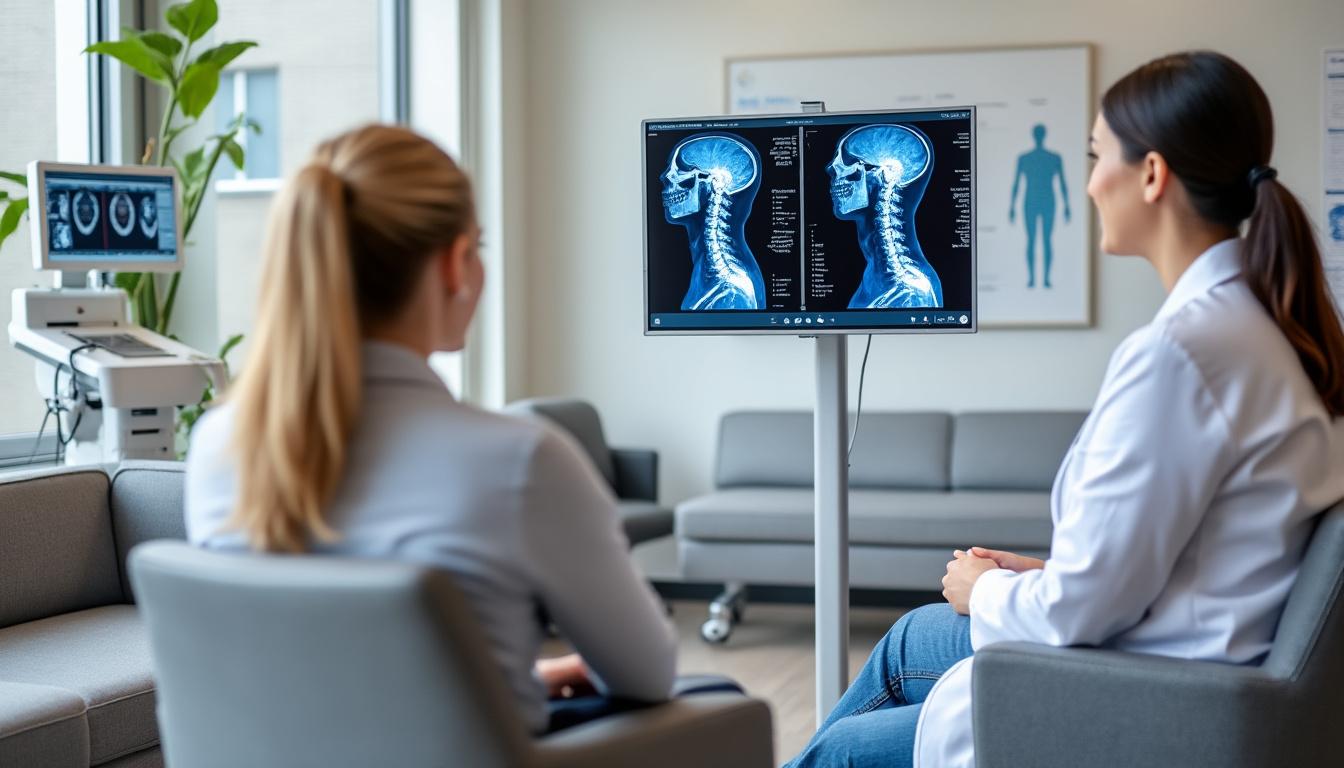
Diagnostic Techniques for Identifying Modic Changes and Assessing Back Pain
An accurate and early diagnosis of Modic changes is pivotal for optimal management of low back pain. MRI remains the gold standard imaging technique, enabling clear visualization of endplate and bone marrow alterations that signify Modic changes.
Key diagnostic features on MRI include:
- T1- and T2-weighted imaging: Differentiates between types of Modic changes by signal variations (e.g., hypointensity or hyperintensity).
- Advanced imaging protocols: Newer sequences like STIR (Short Ti Inversion Recovery) enhance visualization of edema and inflammation.
- Comprehensive evaluation: Includes disc health, endplate integrity, and bone marrow status to form a complete clinical picture.
In clinical practice, it is critical to combine imaging findings with detailed patient history, physical examination, and symptomatology to distinguish vertebrogenic pain from other causes of low back pain.
| Imaging Technique | Role in Diagnosing Modic Changes | Benefits and Limitations |
|---|---|---|
| MRI T1-weighted | Identifies fatty infiltration (Type 2) and sclerosis (Type 3) | High soft tissue contrast, large availability |
| MRI T2-weighted | Detects edema and inflammation (Type 1) | Effective in acute/moderate inflammation detection |
| STIR MRI sequences | Highlights edema more sensitively | Improves detection of active Modic changes |
Given the specialized nature of these diagnostics, consultation with spinal experts such as Dr. Sylvain Desforges, who integrates multidisciplinary assessment techniques and state-of-the-art technology, helps ensure patients receive precise diagnoses grounded in scientific evidence and clinical experience.
Conservative Management of Modic-Associated Low Back Pain
Initial treatment of Modic-related low back pain prioritizes conservative, non-invasive approaches tailored to individual patient needs and symptoms. Given the multifaceted nature of Modic changes, effective management combines symptom relief and halting disease progression.
The cornerstone of conservative treatment includes:
- Pharmacologic interventions: Non-steroidal anti-inflammatory drugs (NSAIDs) targeting inflammation, pain relievers, and muscle relaxants.
- Physical therapy: Strength exercises, spinal mobilization, and flexibility training to support spinal mechanics.
- Lifestyle modifications: Weight management, smoking cessation, ergonomics and activity alteration.
- Advanced therapies: Techniques like neurovertebral decompression (BioModic, SpineAware), laser therapy, and other emerging modalities to support tissue healing.
Each treatment plan is customized after a thorough assessment, aiming to alleviate pain while restoring spinal wellness and functionality. Throughout, an empathetic communication style reassures patients about their prognosis and potential paths.
| Treatment | Purpose | Typical Outcomes |
|---|---|---|
| NSAIDs and analgesics | Reduce pain and inflammation | Improved comfort, variable duration of relief |
| Physical therapy | Enhance spine stability and function | Increase mobility, decrease pain frequency |
| Lifestyle changes | Support long-term spine health | Reduced risk of degeneration progression |
| Neurovertebral decompression | Alleviate disc-related nerve pressure | Improved pain control, enhanced disc health |
Promising techniques such as spinal decompression (ModiFlex, BackSense devices) provide non-surgical options preferred by many patients, consistent with guidelines emphasizing conservative management prior to invasive procedures.

Interventional and Minimally Invasive Procedures for Modic-Driven Pain
When conservative measures fail to sufficiently relieve pain or improve function, targeted interventional options may be considered. Among these, radiofrequency ablation (RFA), particularly focused on the basivertebral nerve, has gained prominence as an effective method to manage vertebrogenic pain.
The basivertebral nerve transmits pain signals from damaged vertebral endplates. The Intracept procedure, a minimally invasive radiofrequency ablation technique, selectively targets this nerve, disrupting pain transmission without extensive tissue damage.
- Procedure features: Outpatient setting, under anesthesia, lasting around one hour.
- Clinical benefits: Long-lasting pain relief, reduced opioid reliance, improved quality of life.
- Safety profile: High success rates with minimal complications reported.
Other interventional approaches explored include intradiscal steroid injections, which have demonstrated efficacy in alleviating inflammation and pain associated with Modic changes, particularly Type 1. These injections help reduce local inflammation, offering relief to patients not responding to conservative therapies.
| Intervention | Indications | Outcomes |
|---|---|---|
| Basivertebral nerve radiofrequency ablation (Intracept) | Chronic vertebrogenic low back pain with Modic 1/2 changes | Long-term pain relief, functional improvement |
| Intradiscal steroid injections | Symptomatic inflammation in Modic Type 1 | Short to medium-term pain reduction |
These sophisticated approaches reflect the commitment to scientific rigor and innovation exemplified by clinics like TAGMED, where patient safety and regulatory compliance align with a personalized treatment philosophy.
Implications for Patients: Navigating Modic Changes and Low Back Pain
For patients confronted with chronic low back pain, understanding Modic changes offers clarity in a landscape often clouded by uncertainty. Awareness of how these spinal alterations contribute to pain and disability encourages proactive engagement in diagnosis and therapy.
The journey often begins with consultation at specialized clinics equipped with cutting-edge imaging and led by experts such as Dr. Sylvain Desforges. His extensive clinical experience, combined with leadership roles in Canadian osteopathic medicine and alternative medicine associations, ensures a holistic and evidence-based care paradigm.
- Inform yourself: Understanding the three types of Modic changes and their symptoms.
- Advocate for comprehensive evaluation: Requesting MRI scans focusing on endplate and bone marrow evaluation.
- Explore treatment options: Ranging from conservative therapies (BackSense, BioModic techniques) to advanced interventions.
- Maintain open communication: Work alongside your healthcare provider to tailor care plans suited to your unique condition.
Patient-centered education is vital in breaking down complex medical jargon into accessible knowledge, fostering reassurance and motivation. This empowerment helps patients weigh benefits and limitations of potential treatments confidently.
| Patient Action | Purpose | Expected Benefit |
|---|---|---|
| Seek specialized expert evaluation | Identify presence and type of Modic changes accurately | Custom-tailored and effective care plan |
| Engage in recommended conservative care | Manage symptoms and slow progression | Improved function and quality of life |
| Consider advanced therapies if needed | Address persistent pain effectively | Long-term relief with minimal invasiveness |
Future Directions in Research and Clinical Practice
As research accelerates in 2025, the landscape of degenerative spine disease management continues to evolve. The integration of artificial intelligence and machine learning algorithms into MRI interpretation promises to refine Modic change classification and predict patient outcomes more accurately. Emerging classification systems like DEBC (Disc-Endplate-Bone-Marow Complex) improve understanding of the interconnected alterations in spinal tissues, guiding surgical and non-surgical decision-making with unprecedented precision.
On the therapeutic frontier, molecular studies targeting immune pathways and lipid metabolism may yield novel pharmaceutical agents capable of modifying the disease process at its root, reducing inflammation, and promoting spinal tissue regeneration.
- AI-enhanced diagnostics: Improving accuracy and predicting symptom trajectories.
- Classification innovations: DEBC system aiding personalized treatment.
- Therapeutic breakthroughs: Targeting mast cell pathways and complement system.
- Patient-centered technology integration: Tools like ModiFlex dynamic implants enhancing function.
Clinics embracing these innovations, under the guidance of seasoned experts such as Dr. Sylvain Desforges, will continue to set standards for scientifically rigorous, ethical, and patient-focused spinal care.
What are Modic changes and why do they matter in low back pain?
Modic changes are alterations in the vertebral endplates and adjacent bone marrow visible via MRI, indicating inflammatory or degenerative processes linked with chronic low back pain. Their identification helps guide personalized treatment strategies.
How are Modic changes diagnosed?
A detailed MRI scan with specific sequences detects Modic changes. Diagnosis is best made by a spinal care expert who integrates imaging with clinical assessment.
Can Modic changes be treated without surgery?
Yes, many treatment approaches exist from conservative methods like physical therapy and neurovertebral decompression to advanced procedures such as radiofrequency ablation targeting pain pathways.
What is the role of the basivertebral nerve in Modic-related pain?
The basivertebral nerve transmits pain signals from damaged vertebral endplates. Procedures such as Intracept utilize radiofrequency ablation to interrupt this pathway and reduce pain.
How can patients best approach managing their Modic changes?
Patients should seek expert evaluation, understand their specific Modic change type, pursue tailored conservative care initially, and discuss advanced options if symptoms persist, ensuring communication and education throughout their care journey.