

Back pain and nerve discomfort can disrupt daily life significantly, especially when caused by spinal conditions such as foraminal stenosis and central canal stenosis. Although both involve the narrowing of spaces within the spine, understanding their unique characteristics is essential for effective management and treatment. Patients frequently face uncertainty due to overlapping symptoms and complex terminology surrounding these conditions. This article clarifies the differences between foraminal stenosis and central canal stenosis, illustrating how precise evaluation and advanced therapies are pivotal in restoring spinal health and quality of life.
The human spine is a remarkable structure, designed to balance protection of vital nerve pathways with flexibility for movement. However, aging, injury, or degeneration often compromise these features, leading to various forms of spinal narrowing or stenosis. Through decades of clinical experience, experts like Dr. Sylvain Desforges emphasize the importance of tailored approaches, integrating cutting-edge technology with compassionate care.
Detailed Anatomy of the Spine: Foundations for Understanding Foraminal and Central Canal Stenosis
Grasping the difference between foraminal stenosis and central canal stenosis begins with a clear understanding of the spine’s intricate anatomy. The spine consists of 33 vertebrae, categorized into cervical, thoracic, lumbar, sacral, and coccygeal regions. These vertebrae provide structural support while encasing the spinal cord, which transmits nervous signals between the brain and the body.
Between vertebrae lie intervertebral discs—gel-like cushions that absorb shocks and facilitate movement. Each spinal segment contains openings called foramina through which nerve roots exit, branching off from the spinal cord to innervate various body regions. The space within the vertebrae housing the spinal cord is known as the spinal canal. Its integrity is crucial to maintain unimpeded neural communication.
Key elements to consider include:
- Vertebrae: The bony building blocks offering spine support and protection.
- Intervertebral Discs: Act as shock absorbers, preventing vertebral friction.
- Spinal Canal: Houses and safeguards the spinal cord.
- Foramina: Narrow bony passages that allow nerve roots to exit the vertebral column.
- Nerve Roots: Carry motor and sensory signals between the spinal cord and limbs.
Understanding these features helps locate where spinal narrowing occurs—a fundamental distinction between central canal stenosis (spinal canal narrowing) and foraminal stenosis (narrowing of the nerve root exit passages).
| Anatomical Feature | Function | Relevance to Stenosis |
|---|---|---|
| Vertebrae | Provides structural framework and protection | Bone spurs from vertebrae can cause stenosis |
| Intervertebral Discs | Cushion between vertebrae allowing flexible movement | Herniation can compress nerves or spinal cord |
| Spinal Canal | Passage for spinal cord | Narrowing leads to central canal stenosis |
| Foramina | Openings allowing nerve roots to exit | Narrowing leads to foraminal stenosis |
| Nerve Roots | Transmit signals to limbs and organs | Compression causes radicular pain and dysfunction |
Central Canal Stenosis: The Impact of Spinal Canal Narrowing on Neural Structures
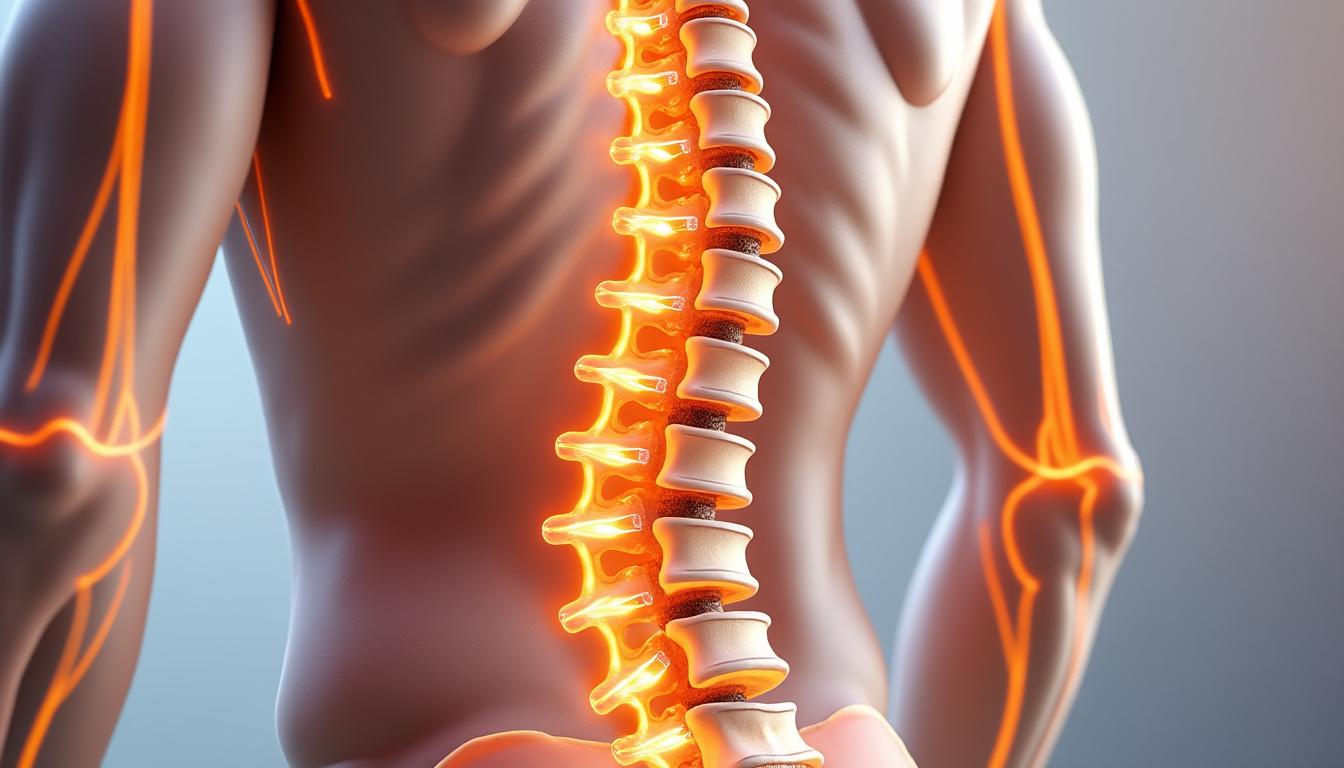
Central canal stenosis is defined by narrowing of the spinal canal itself, the protective tunnel encasing the spinal cord. Such narrowing can compress the spinal cord or cauda equina nerves, potentially compromising neural signals essential for movement and sensation.
Common causes include:
- Degenerative Changes: Osteoarthritis leads to bone spur formation and ligament thickening.
- Disc Degeneration: Herniated or bulging discs can intrude into the spinal canal.
- Ligamentum Flavum Hypertrophy: Thickening of this ligament reduces canal space.
- Trauma or Injury: Fractures or dislocations can alter spinal canal dimensions.
- Tumors: Rare, but significant when present within the canal.
Central canal stenosis predominantly affects these spinal levels:
- Cervical Spine: Might cause neck pain, bilateral limb weakness, or balance issues.
- Lumbar Spine: Most frequent location; leads to lower back pain, leg numbness, and neurogenic claudication.
- Thoracic Spine: Less common but can severely impair trunk and leg functions.
Patients with central stenosis often report diffuse pain, weakness, and sensory changes affecting both sides of the body. For instance, lumbar central stenosis may cause difficulty standing or walking beyond short distances, while cervical involvement can result in hand numbness and gait disturbances.
| Feature | Cervical Stenosis | Lumbar Stenosis | Thoracic Stenosis |
|---|---|---|---|
| Common Symptoms | Neck pain, arm weakness, gait instability | Lower back pain, leg numbness, claudication | Mid-back pain, sensory loss below lesion |
| Neurological Impact | Spinal cord compression | Cauda equina compression | Spinal cord compression |
| Treatment Considerations | Physical therapy, decompression surgery | Conservative care first, surgery if needed | Rare; individualized management |
Advanced imaging such as MRI remains the gold standard for confirming diagnosis, identifying the extent of spinal cord compression and guiding treatment approaches. The role of comprehensive evaluation—like those conducted by Dr. Sylvain Desforges—cannot be overstated in developing personalized treatment plans that prioritize patient safety and functional recovery.
Technological Innovations in Managing Central Canal Stenosis
Recent years have brought forward specialized technologies enhancing outcomes for central canal stenosis patients. Neurovertebral decompression systems, for instance, offer non-invasive options to mechanically relieve pressure on the canal. Companies such as Medtronic, Stryker, and NuVasive have developed precision surgical tools facilitating minimally invasive decompressions and fusions, reducing postoperative risks and recovery times.
- Laser Therapy: Some protocols employ laser to reduce inflammation and promote tissue healing after decompression.
- Dynamic Spinal Implants: These help maintain motion in the spinal segment post-decompression, an alternative to rigid fusion.
- Image-Guided Navigation: Enhances precision during both non-surgical and surgical interventions.
These advances align with Dr. Desforges’ philosophy of combining scientific rigor, ethical practice, and state-of-the-art technology to maximize patient outcomes.
Foraminal Stenosis: Nerve Root Compression and Its Specific Symptomatology
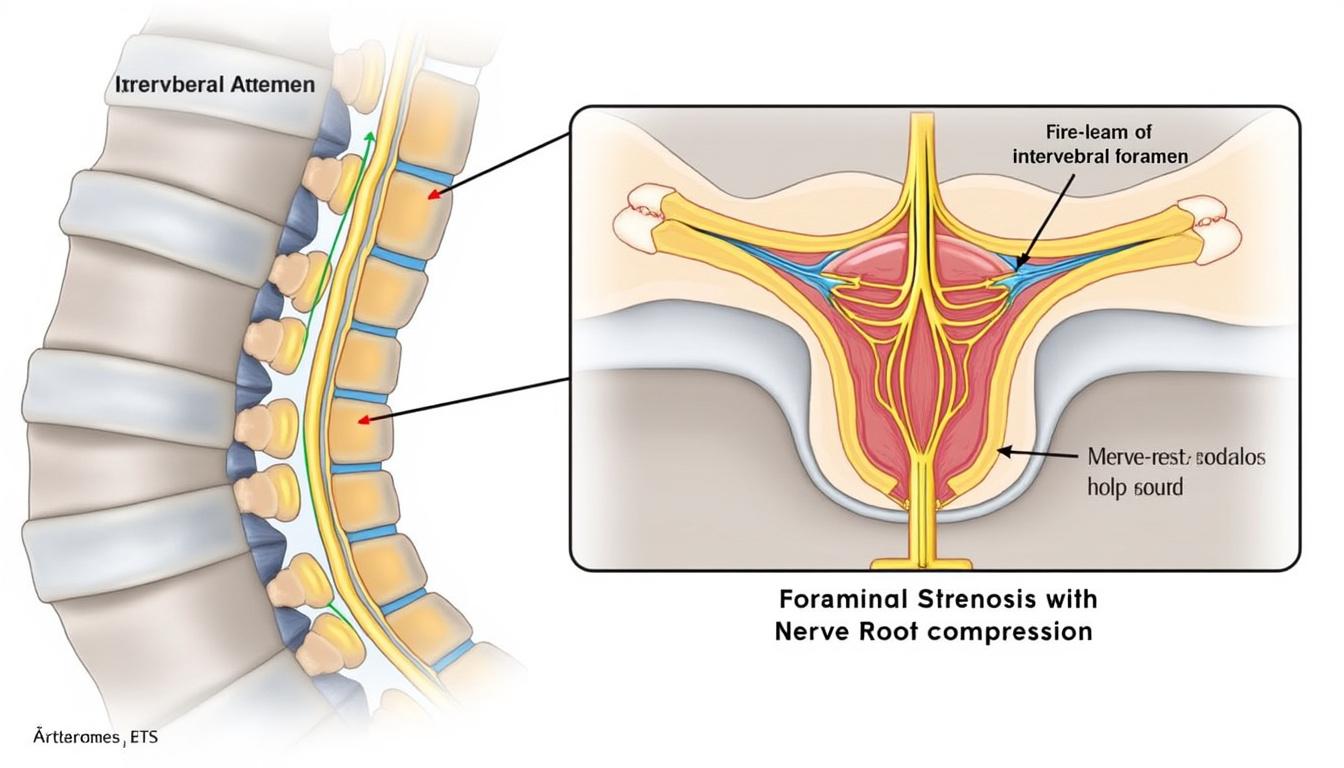
In contrast to central canal stenosis, foraminal stenosis involves narrowing specifically at the foramina, the bony tunnels through which nerve roots exit the spinal canal. Compression here directly affects a single nerve root rather than the spinal cord itself, often resulting in more localized symptoms.
The main causes mirror those of central stenosis but manifest distinctively at the nerve root level:
- Osteophytes Formation: Bone spurs around the foramina limit space.
- Herniated Disc Impingement: The disc can bulge into the foramen.
- Ligamentous Thickening: Excess ligament tissue reduces opening size.
- Facet Joint Degeneration: Enlargement can encroach upon foramen space.
Foraminal stenosis frequently affects cervical and lumbar regions, causing symptoms that follow the specific nerve root’s distribution:
- Cervical Foraminal Stenosis: Radiating pain, numbness, or weakness along the arm and hand.
- Lumbar Foraminal Stenosis: Sciatic-type pain, localized numbness, or weakness in the leg or foot.
Unlike central canal stenosis, the pain experienced in foraminal stenosis is often sharp and shooting, aligned with the irritated nerve root. Patients might notice unilateral symptoms rather than the bilateral or diffuse presentation seen in central canal stenosis.
| Feature | Cervical Foraminal Stenosis | Lumbar Foraminal Stenosis |
|---|---|---|
| Typical Symptoms | Radicular arm pain, numbness, biceps weakness | Leg pain (sciatica), foot numbness, weakness in ankle dorsiflexion |
| Common Causes | Disc herniation, bone spurs, ligament thickening | Facet hypertrophy, osteophytes, disc protrusion |
| Distinct Characteristics | Localized nerve root irritation | Follows L4, L5, or S1 nerve root distribution |
| Treatment Approach | Physical therapy, epidural injections, possible foraminotomy | Conservative care, targeted injections, surgical decompression |
Proper diagnosis is imperative since targeted therapies such as neural decompression at the foramen (foraminotomy) may effectively relieve symptoms while preserving spinal stability. Dr. Sylvain Desforges’ expertise in comprehensive evaluations is crucial in determining whether foraminal stenosis is present and defining suitable interventions.
Contrasting Foraminal and Central Canal Stenosis: A Comparative Overview for Patients
To assist patients and healthcare providers alike in distinguishing between both conditions, a detailed comparison is paramount. Here is a summary table capturing critical differences:
| Aspect | Central Canal Stenosis | Foraminal Stenosis |
|---|---|---|
| Definition | Narrowing of the central spinal canal affecting the spinal cord or cauda equina | Narrowing of the bony foramina affecting specific nerve roots |
| Location of Narrowing | Central canal (midline of spine) | Foramina on sides of vertebrae |
| Affected Structures | Spinal cord or cauda equina nerves | Single nerve roots |
| Symptoms Pattern | Diffuse pain and weakness, often bilateral | Radicular pain following a distinct nerve root path |
| Common Symptoms | Back/neck pain, numbness, claudication | Shooting limb pain, localized numbness and weakness |
| Treatment Focus | Can include decompression, physical therapy, steroid injections, or surgery | Targeted decompression, physical therapy, injections, sometimes surgery |
Discerning these differences informs treatment decisions. For example, central canal stenosis might warrant treatments aimed at central decompression, while foraminal stenosis might focus on nerve root-specific interventions including minimally invasive foraminotomy.
Diagnostic Pathway: Comprehensive Evaluation Before Treatment Decisions
Accurate diagnosis requires an integrative approach combining patient history, physical examination, and imaging studies. Specialists with deep expertise, such as Dr. Sylvain Desforges, conduct thorough evaluations to distinguish between central canal and foraminal stenosis, considering the following elements:
- Detailed History: Identifying pain distribution, aggravating and alleviating factors, and functional impairment.
- Physical Examination: Assessing motor strength, reflexes, sensory deficits, and gait stability.
- Imaging Studies: MRI provides detailed visualization of soft tissues, neural structures, and canal dimensions.
- CT Scans: Complement MRI by delineating bony architecture, particularly osteophytes and foraminal narrowing.
- Electrodiagnostic Tests: EMG and nerve conduction studies ascertain nerve root function and severity of compression.
Combining these modalities reduces diagnostic ambiguity and ensures treatment plans are tailored to the individual’s precise pathology.
| Diagnostic Tool | Purpose | Relevance to Stenosis Type |
|---|---|---|
| Physical Exam | Assess neurological function and pain localization | Guides differentiation between central vs foraminal involvement |
| MRI | Detailed soft tissue and neural imaging | Identifies spinal cord and nerve root compression |
| CT Scan | Bone structure assessment | Highlights osteophytes and bony foraminal narrowing |
| EMG/Nerve Conduction | Evaluate nerve conduction velocity and damage | Confirms nerve root involvement in foraminal stenosis |
Modern Treatment Modalities: From Conservative Care to Advanced Surgical Options
Treatment for spinal stenosis—central or foraminal—begins conservatively, progressing to advanced interventions if necessary. Dr. Sylvain Desforges prioritizes evidence-based approaches emphasizing patient education, safety, and innovation.
Conservative treatments include:
- Physical Therapy: Programs designed to strengthen core muscles, improve flexibility, and teach ergonomic practices.
- Pharmacologic Intervention: Use of NSAIDs, neuropathic pain agents, and muscle relaxants.
- Epidural Steroid Injections: Decreasing inflammation around affected nerves.
- Non-Surgical Spinal Decompression: Utilizes traction-based technology to relieve pressure; available at clinics like TAGMED endorsed by Dr. Desforges.
- Lifestyle Modifications: Weight management and activity adjustments to reduce mechanical stress.
If symptoms persist or worsen, surgical options become relevant:
- Laminectomy: Removal of vertebral lamina to widen spinal canal.
- Foraminotomy: Enlarging the foramina to decompress nerve roots.
- Minimally Invasive Decompression: Technologies from Zimmer Biomet, DePuy Synthes, and Globus Medical facilitate procedures with reduced trauma.
- Spinal Fusion: Combines disrupted vertebrae for stability, often expanding from central stenosis cases.
Choosing the appropriate treatment demands a nuanced understanding of stenosis type, symptomatology, and patient-specific factors. The integration of dynamic implants and laser therapies reflects the ongoing innovation championed by clinics led by experts such as Dr. Desforges.
Strategies for Living Well with Spinal Stenosis: Patient-Centered Recommendations
Managing spinal stenosis involves more than treatments; lifestyle and self-care profoundly influence long-term outcomes. Patients benefit from a multidisciplinary approach focused on physical, emotional, and ergonomic factors.
- Maintain Healthy Weight: Decreases spinal load reducing progression risk.
- Regular Safe Exercise: Core strengthening, low-impact aerobics, and flexibility promote fluid spinal function.
- Ergonomic Adjustments: Proper seating, workstation setup, and sleep postures limit daily spine stress.
- Pain Management Techniques: Use of heat, cold therapies, and relaxation methods ease discomfort.
- Patient Education: Understanding condition complexities supports informed decisions and adherence to therapies.
- Emotional Support and Counseling: Coping strategies lessen psychological burdens from chronic pain.
Dr. Desforges advocates personalized guidance, guaranteeing that each patient’s unique story shapes their care trajectory, inviting reassessment as needed for optimal functioning and confidence.
Recognizing Warning Signs: When to Seek Professional Spine Care
Timeliness in addressing symptoms can prevent irreversible damage. Patients should seek urgent evaluation if experiencing:
- Severe or Progressive Weakness: Especially in limbs or gait instability.
- Sudden Loss of Bladder or Bowel Control: Indicates possible cauda equina syndrome requiring emergency care.
- Unremitting Pain: Not alleviated by conservative treatment.
- Balance or Coordination Difficulties: Increasing risk of falls or injuries.
- New Neurological Symptoms: Such as numbness or shooting pains spreading rapidly.
Initiating evaluation with a trusted clinic such as TAGMED ensures that comprehensive assessment defines the best treatment and care pathways.
What differentiates foraminal stenosis from central canal stenosis?
Foraminal stenosis narrows the openings through which nerve roots exit the spine, affecting specific nerves leading to localized pain, whereas central canal stenosis narrows the main spinal canal, compressing the spinal cord or cauda equina with more diffuse symptoms.
Can non-surgical treatments effectively manage these stenosis types?
Many patients benefit from conservative care including physical therapy, medications, and spinal decompression, although severe cases may require surgical intervention.
How important is advanced imaging in diagnosing spinal stenosis?
MRI and CT scans provide critical insights into the exact location and severity of narrowing, guiding personalized treatment strategies.
What are the latest technological advancements in treating stenosis?
Minimally invasive surgery, dynamic spinal implants, laser therapy, and non-surgical decompression technology represent leading innovations improving patient outcomes.
When should I contact a spine care expert for evaluation?
If experiencing worsening pain, neurological deficits, or bladder/bowel dysfunction, prompt evaluation by a spine expert is essential to prevent serious complications.