Motion Surgery in Terrebonne: Improve Posture and Reduce Pain
November 8, 2025Who Can Benefit from Neurovertebral Decompression? Understanding Lumbar Disc Herniation Treatment Options in Mirabel
November 8, 2025In Laval, a city known for its vibrant health community and progressive medical approaches, patients suffering from disc herniations now have access to advanced, surgery-free care options that prioritize safety, functionality, and long-term wellness. The emergence of sophisticated non-surgical therapies challenges the historic reliance on invasive procedures and lengthy recovery times traditionally associated with spinal surgery. This evolution marks a pivotal shift towards patient-centered, evidence-based interventions that effectively restore spinal health while minimizing risks.
Disc herniations can cause debilitating pain, mobility issues, and lower quality of life when nerve roots become compressed or inflamed. Yet many individuals mistakenly believe surgery is the only path to relief. The reality is that most cases respond well to conservative care involving physical therapy, targeted rehabilitation, and innovative technologies designed to decompress and heal spinal tissue naturally. The expertise of practitioners like Dr. Sylvain Desforges—an osteopathic pioneer with over three decades of clinical experience and leadership in Canadian integrative spine care—ensures that patients in Laval receive personalized and comprehensive evaluations and treatment plans.
Through a combination of manual therapies, therapeutic exercises, postural training, and advanced modalities including neurovertebral decompression and laser therapy, patients benefit from interventions that alleviate symptoms, restore function, and greatly reduce the need for surgical intervention. These approaches reflect a proud commitment within Laval Spine Wellness to combine scientific rigor, compassionate care, and international collaboration, enabling tailored treatments that meet each patient’s unique needs.
Understanding the Pathophysiology of Disc Herniation and Non-Surgical Healing Processes
A herniated disc occurs when the soft, gel-like nucleus pulposus inside the spinal disc ruptures through the tougher annulus fibrosus, often pressing on adjacent nerve roots and causing pain, numbness, or weakness. Knowledge of the underlying biological and mechanical processes is fundamental to devising effective non-surgical interventions customized to Laval patients’ needs.
The intervertebral disc undergoes a range of age- and stress-related changes: decreased water content in the nucleus pulposus, biochemical degradation via enzymes like matrix metalloproteinases, weakening of the annulus fibrosus fibers, and heightened local inflammation. These factors collectively contribute to disc degeneration and eventual herniation, especially in the lumbar segments L4-L5 and L5-S1, which carry the bulk of spinal loading.
Non-surgical regimens seek to mitigate inflammation, promote disc hydration and healing, and relieve nerve impingement without tissue disruption. Exercises that strengthen core musculature improve spinal stability, while traction-based therapies, such as non-surgical spinal decompression (NSD), employ gentle mechanical forces to increase intervertebral spaces and reduce pressure on nerve roots.
Advanced modalities like neurovertebral decompression systems utilized at specialized clinics in Laval provide focused, motorized spinal distraction, encouraging retraction of herniated disc material and enhancement of spinal biomechanical function. These nonsurgical methods facilitate natural healing, reduce symptoms, and prevent surgical risks such as infection or failed back surgery syndrome.
Understanding these pathophysiological mechanisms allows experts including Dr. Sylvain Desforges to design patient-specific plans grounded in the latest evidence, avoiding unnecessary surgical interventions while optimizing disc health and overall spinal integrity.
| Key Pathophysiological Factors of Disc Herniation | Impact on Healing |
|---|---|
| Dehydration of nucleus pulposus | Reduced disc cushioning; requires hydration-supporting therapies |
| Breakdown of collagen and extracellular matrix | Weakened annulus fibrosus; needs tissue repair stimulation |
| Matrix metalloproteinase upregulation | Accelerated tissue degradation; requires inflammation control |
| Local inflammation and nerve compression | Peripheral pain and neurological deficits; addressed by decompression and anti-inflammatory treatments |
| Lumbar segment loading (L4-L5, L5-S1) | High mechanical stress areas; focused stabilization and rehabilitation recommended |
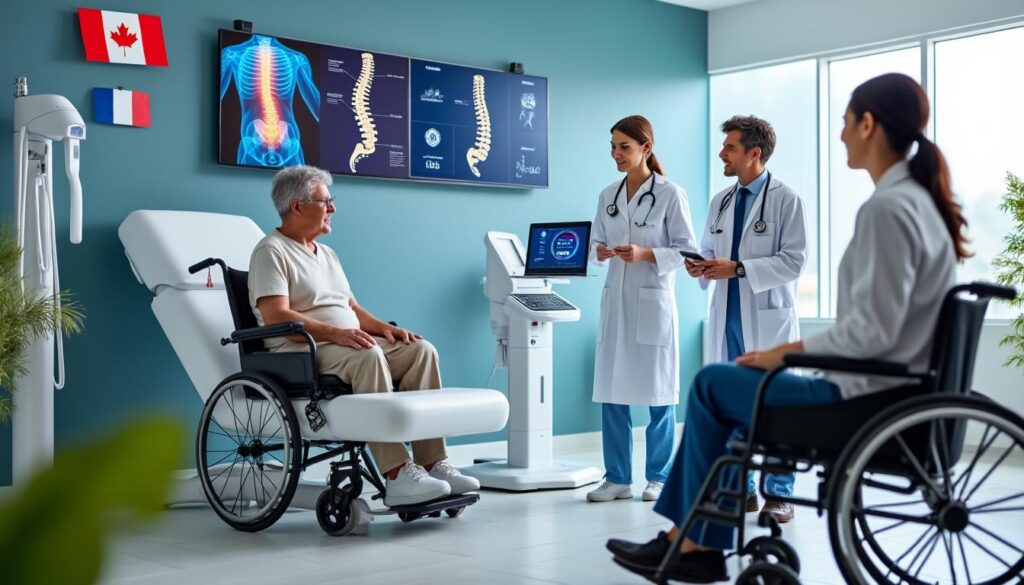
Laval Lumbar Herniated Disc Solutions for Seniors
The prevalence of lumbar herniated discs among seniors in Laval has led to a growing demand for advanced, non-invasive, and effective solutions that offer relief without the risks associated with surgery. This shift towards conservative care is particularly pertinent as…
Non-Surgical Treatment Modalities: How Laval Patients Can Benefit from Conservative Care
Many residents in Laval suffering from herniated discs have found relief through several non-invasive treatments that emphasize the body’s inherent capacity to heal. Dr. Sylvain Desforges has championed a multifaceted approach integrating evidence-based modalities that reduce pain, improve mobility, and restore quality of life safely, avoiding the complications of surgery.
This conservative framework involves:
- Physical therapy and exercise therapy: Supervised exercises boost core muscle strength, improve spinal stability and flexibility, and promote disc recovery. Specific programs like the McKenzie method employ repetitive lumbar movements to centralize and alleviate radicular pain.
- Manual therapy: Techniques such as spinal mobilization and manipulation alleviate stiffness, restore joint mobility, and enhance neuromuscular coordination.
- Traction therapies: Both mechanical traction and lumbar extension traction increase intervertebral spacing, reducing nerve root compression and inflammation. Notably, lumbar extension traction can restore lumbar lordosis, vital for patients with hypo-lordosis and chronic symptoms.
- Neural mobilization: Targeted neural gliding methods relieve nerve tension and reduce neuropathic pain in the affected regions.
- Adjunct modalities: Low-level laser therapy for anti-inflammatory benefits, dry needling for trigger point release, and epidural steroid injections for short-term pain control form part of an integrative toolkit.
Emphasizing clear communication and comprehensive evaluation, Dr. Desforges ensures every patient understands their condition and the rationale behind each chosen therapy, empowering them to actively participate in their recovery. This approach reflects the care offered at the Sciatica Ease Clinic, where individualized programs minimize pain and facilitate healing without surgery.
| Non-Surgical Treatment | Primary Benefit | Evidence Level |
|---|---|---|
| Patient education & self-management | Empowerment & prevention | Moderate (Level B) |
| Exercise therapy (McKenzie, core strengthening) | Spinal stability & symptom relief | Moderate (Level B) |
| Manual mobilization & manipulation | Improved mobility & pain reduction | Moderate (Level B) |
| Traction (short-term) | Reduce nerve compression | Moderate (Level B) |
| Neural mobilization | Relieve nerve tension | Moderate (Level B) |
| Dry needling | Muscle relaxation | Weak (Level C) |
| Laser and ultrasound therapy | Symptomatic relief | Conflicting (Level D) |
| Epidural steroid injections | Short-term pain control | Moderate (Level B) |
These modalities provide DiscCare Alternatives that efficiently address the symptoms and pathology of herniated discs, allowing patients to avoid the risks of surgery and lengthy recovery times.

Candiac Back Pain Relief for Herniated Disc Sufferers
Back pain stemming from herniated discs remains a challenging and widespread issue impacting many individuals in Candiac and the surrounding Quebec regions. This condition often leads to persistent discomfort, restricted mobility, and diminished quality of life for sufferers. In the…
Patient-Centered Evaluation and Tailored Therapies at Laval’s Spine Restore Center
Dr. Sylvain Desforges fosters a practice philosophy centered on treating each individual as unique, understanding the multifactorial causes of spinal pain and disability. As founder and president of the Canadian College of Osteopaths and ACMA, his expertise lies in detailed spinal evaluations that inform personalized, non-surgical treatment pathways designed to promote optimum outcomes.
At facilities like TAGMED Clinics, patients undergo thorough assessments encompassing medical history, physical examination, and where appropriate, advanced imaging review. The goal is not diagnosis alone but holistic interpretation—to map out pathways that address mechanical, inflammatory, and neurological components of the herniation.
By embracing patient education, clarifying the benefits and limitations of each treatment, and coordinating care with international partners in France and beyond, Dr. Desforges ensures seamless collaboration to optimize timelines and responsiveness. For Laval residents, this translates into access to cutting-edge techniques and ongoing support through stages of care—from initial conservative treatment to potential advanced interventions, should they become necessary.
- Comprehensive evaluation encompassing neuro-musculoskeletal status and patient-reported outcomes
- Personalized, multidisciplinary care plans integrating physical therapy, osteopathic treatment, and advanced decompression technology
- Emphasis on evidence-based non-surgical management per Quebec medical regulations and ethical guidelines
- Coordination with transatlantic specialists to augment surgical expertise only when warranted
- Continuous patient support and education to facilitate adherence and self-management
| Steps in Patient-Centered Conservative Management | Key Features |
|---|---|
| Initial evaluation and imaging review | Identify herniation type and severity; rule out red flags |
| Patient education | Build understanding and self-management skills |
| Therapeutic intervention plan | Customize modalities and exercises to patient profile |
| Ongoing monitoring and adjustments | Ensure progress and patient feedback incorporation |
| International collaboration | Engage specialist input when complex cases arise |
This meticulous approach contrasts with generic care, reinforcing the philosophy that no two patients with herniated discs are alike, with the aim of delivering NonSurgical Spine Relief pathways that respect each individual’s circumstances and goals.
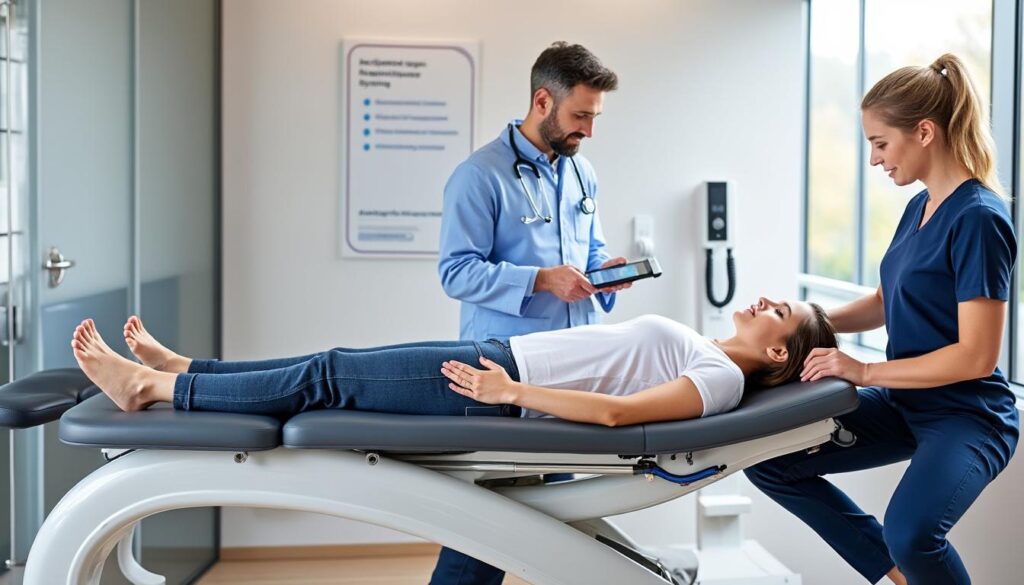
La Prairie Chronic Neck Pain Recovery Without Medication
Chronic neck pain continues to be a widespread and challenging condition that impacts millions globally, with significant effects on daily functioning and quality of life. Not confined to any particular age or occupation, it manifests from diverse causes such as…
Advanced Technologies Enhancing SafeDisc Treatment and Minimizing Surgery Risks
Technological innovation plays a vital role in modern management of herniated discs within Laval’s medical landscape. Under Dr. Desforges’ guidance, TAGMED and affiliated centers consistently integrate state-of-the-art equipment that complements conservative care.
Among the most impactful technologies are:
- Neurovertebral decompression therapy: A non-invasive, computer-assisted spinal decompression system that promotes targeted vertebral distraction, easing pressure on nerve roots and disc structures.
- Laser therapy: Low-level laser treatments stimulate local tissue repair and reduce inflammatory cytokines, improving patient comfort and accelerating healing.
- Dynamic spinal implants: In select cases where implants are indicated, advanced designs provide stability without compromising motion, albeit as a last-resort intervention after conservative care.
- Virtual consultations and telehealth services: Facilitating ongoing patient monitoring and education remotely, enhancing adherence and personalized adjustments.
These innovations embody the Risk-Free Back Care philosophy—offering safe, effective treatment options that diminish complication risks and provide patients with sustainable, meaningful relief.
| Advanced Technology | Purpose | Clinical Benefits |
|---|---|---|
| Neurovertebral decompression | Targeted spinal distraction | Decreases nerve compression; improves disc retraction |
| Laser therapy | Anti-inflammatory & tissue repair | Reduces pain and accelerates healing |
| Dynamic spinal implants | Joint stabilization without fusion | Maintains mobility; last resort when needed |
| Telehealth and virtual care | Remote monitoring and education | Improves compliance and patient support |
Mirabel Lumbar Disc Protrusion Treatment Success Rates
The management of lumbar disc protrusion remains a critical focus in spinal health research and clinical care, especially within the dynamic context of Mirabel and surrounding regions. As low back pain continues to affect a significant portion of the adult…
International Collaboration in Spine Care: Enhancing Patient Experience and Outcomes
Integral to the expertise brought forth by Dr. Sylvain Desforges is a unique system of cross-border collaboration between Canadian spine care centers and French surgical specialists. This partnership enhances diagnostic precision, treatment selection, and continuity of care for patients with complex disc herniations.
Through coordinated teleconsultations, shared imaging reviews, and synchronized treatment plans, patients benefit from access to a wider spectrum of techniques and timely specialist interventions only when required. This collaboration is facilitated with the help of leading platforms like SOS Tourisme Médical, which streamline the patient journey between Canada and France.
For patients in Laval, this means expert care that integrates global medical advances without compromising local support or personalized attention. It also shortens treatment timelines and avoids unnecessary surgical procedures by applying the most appropriate conservative measures first.
Patients are reassured knowing their case is managed collaboratively by multidisciplinary teams spread across continents while maintaining full respect for Quebec’s healthcare regulations and patient safety standards.
- Joint evaluation sessions combining osteopathic expertise and surgical perspectives
- Access to surgical technologies and implants not widely available in Canada
- Streamlined medical travel arrangements through specialized coordinators
- Post-treatment rehabilitation and follow-up services coordinated locally
- Shared research and clinical data to advance spine care practices continuously
| International Coordination Element | Patient Benefit |
|---|---|
| Teleconsultations | Rapid, expert opinion and plan modifications |
| Access to specialized surgical techniques | Option for advanced care when conservative treatment fails |
| Medical tourism platforms | Streamlined logistics, reduced wait times |
| Coordinated local post-op care | Improved recovery and continuity |
| Collaborative clinical research | Better evidence-based interventions |
As a result, patients receive a harmonious care pathway that uniquely blends the best international and local expertise, exemplifying the hallmark of Laval Spine Wellness programs.
Vaudreuil-Dorion Sciatica Recovery Through Non-Invasive Care
In the vibrant community of Vaudreuil-Dorion, many individuals grapple with debilitating sciatica, a condition characterized by sharp, radiating pain originating in the lower back and traveling down the legs. This ailment significantly disrupts daily life, impeding mobility and diminishing overall…
Overcoming Common Misconceptions about Herniated Disc Treatment and Surgery Avoidance
A vast number of patients in Laval initially harbor misconceptions that surgery is inevitable once a herniated disc is diagnosed. However, leading experts like Dr. Sylvain Desforges dispel these myths by emphasizing conservative care’s capacity and success in most cases.
Persistent fears surrounding surgery risks, prolonged hospital stays, and unpredictable outcomes highlight the critical need for patient education. Such education elucidates:
- The natural healing timeline of herniated discs, often improving significantly within 4-6 weeks of conservative therapy
- Potential complications linked to surgery, including infections, nerve damage, and the possibility of recurrent herniations
- How advances in non-surgical spinal decompression (SafeDisc Treatment) effectively address nerve root compression and pain
- The individuality of symptoms and overall health status, highlighting how personalized care improves results and reduces surgery necessity
- The importance of active patient participation and lifestyle modifications in long-term spine health
This empowering knowledge encourages patients to pursue evidence-based conservative treatments as first-line interventions, promoting Herniation Healing Hub approaches that prioritize functionality and well-being over invasive surgery.
Sharing stories from local residents who recovered without surgery also motivates new patients in Laval to explore these innovative options, building trust in the expertise and advancements fostering their spine care journey.
| Common Misconceptions | Clarifying Facts |
|---|---|
| Surgery is the only definitive solution | Most herniations heal with conservative care; surgery is a last resort |
| Surgical risks are minimal and rare | Complications such as infections or failed back surgery syndrome are real and notable |
| Symptoms always warrant surgery | Many cases resolve spontaneously or with physical therapy |
| Non-surgical treatments lack scientific basis | Evidence supports multiple conservative modalities as effective |
| All patients benefit from the same treatment | Individualized care plans optimize outcomes |

Saint-Eustache Neck Herniation Solutions Using Decompression
Neck pain, often stemming from conditions like herniated disc and cervical spine disorders, is a widespread affliction impacting millions globally. Residents of Saint-Eustache facing such challenges now have access to innovative, non-surgical treatment options that tackle the root causes of…
Empowering Patients through Education and Supportive Care Pathways in Laval
At the heart of effective herniated disc management is empowering patients with information and continuous support. Dr. Sylvain Desforges and his team prioritize transparent, empathetic communication to demystify the complexities of spinal care and bolster patient confidence.
Educational efforts cover:
- Clear explanation of spinal anatomy, herniation causes, and symptoms to foster understanding
- Tailored lifestyle advice including ergonomics, weight management, and safe movement habits
- Guidance on symptom monitoring helping patients recognize warning signs requiring urgent assessment
- Access to resources for ongoing motivation such as virtual consultations and community support groups
- Encouraged self-management by empowering patients to engage actively in home exercises and preventative measures
This education-centric approach ensures patients not only receive NoSurgery Spine Solutions for their condition but also build resilience and autonomy in their health journey.
| Patient Education Components | Benefits |
|---|---|
| Understanding condition and care options | Improves adherence to treatment |
| Lifestyle and ergonomic guidance | Minimizes strain and prevents recurrence |
| Regular symptom tracking | Timely intervention for complications |
| Supportive resources | Boosts motivation and reduces anxiety |
| Self-care empowerment | Encourages proactive health management |
Mascouche Lower Back Injury Rehabilitation Without Surgery
Lower back injuries are a prevalent challenge that impacts countless individuals in Mascouche and beyond, often resulting in debilitating pain and disrupted daily life. Despite the common perception that surgery is the inevitable recourse for such spinal issues, many patients…
Holistic Rehabilitation: Combining Multidisciplinary Approaches for Optimal Recovery
The heart of effective herniated disc treatment lies in combining diverse expertise to address physical, neurological, and psychosocial dimensions of recovery. In Laval, this multidisciplinary approach is embraced to maximize functional restoration and enhance quality of life without surgical risks.
Collaboration occurs across osteopathy, physiotherapy, pain management, and patient education specialists. This integrated model ensures that both the symptoms and underlying causes of spinal dysfunction are targeted. Strategies include:
- Coordinated physical therapy programs that incorporate both manual therapy and active exercise regimes, promoting core stability and functional movement
- Pain management protocols employing modalities like dry needling and epidural injections where needed to break pain cycles and support engagement in rehabilitation
- Psychosocial support including counseling and motivational coaching, recognizing the impact of chronic pain on mental well-being
- Follow-up and adjustment to ensure continuous improvement and adaptation to patient progress
This holistic framework reflects global trends promoting conservative spinal care and is firmly supported by scientific evidence, positioning Laval’s services as a beacon of NoSurgery Spine Solutions with compassionate, comprehensive support.
| Multidisciplinary Rehabilitation Components | Role in Recovery |
|---|---|
| Osteopathic manipulation | Restores joint function and alignment |
| Physical therapy exercises | Enhances strength and mobility |
| Pain relief techniques | Break pain cycles to enable rehab |
| Psychosocial intervention | Supports mental health and motivation |
| Regular progress reviews | Ensure treatment optimization |
Can herniated discs heal without surgery?
Yes, the majority of herniated discs improve significantly with conservative treatments such as physical therapy, spinal decompression, and lifestyle modifications, often within a few weeks.
What are the risks associated with spinal surgery?
Surgical risks include infections, nerve damage, blood clots, and the possibility of persistent or recurrent pain. Conservative treatments minimize these risks by avoiding invasive procedures.
How does non-surgical spinal decompression work?
This therapy uses motorized traction to gently stretch the spine, creating negative pressure that helps retract herniated disc material and relieve nerve compression.
When should surgery be considered for a herniated disc?
Surgery is usually reserved for patients with severe neurological deficits, worsening symptoms despite conservative care, or specific red-flag conditions such as cauda equina syndrome.
How important is patient education in disc herniation treatment?
Patient education is key to empowering individuals to engage actively in their recovery, adhere to treatment protocols, and make lifestyle changes that prevent recurrence.

Saint-Jérôme Cervical Disc Herniation Recovery in Weeks
Cervical disc herniation poses a significant challenge for many residents in Saint-Jérôme seeking fast and effective relief from neck pain and restricted movement. This condition, involving the displacement or rupture of the cushioning discs located between the cervical vertebrae, can…