

Serving Repentigny patients at Clinique TAGMED Terrebonne
Spinal Decompression Near Repentigny
Disc-focused, non-surgical care for selected Repentigny patients with herniated disc, sciatica, leg pain, numbness, or tingling.
If you live in Repentigny and are looking for spinal decompression therapy within realistic driving distance, Clinique TAGMED Terrebonne offers disc-focused evaluations for selected patients with herniated disc, sciatica, radiating leg pain, and pressure-sensitive spinal symptoms.
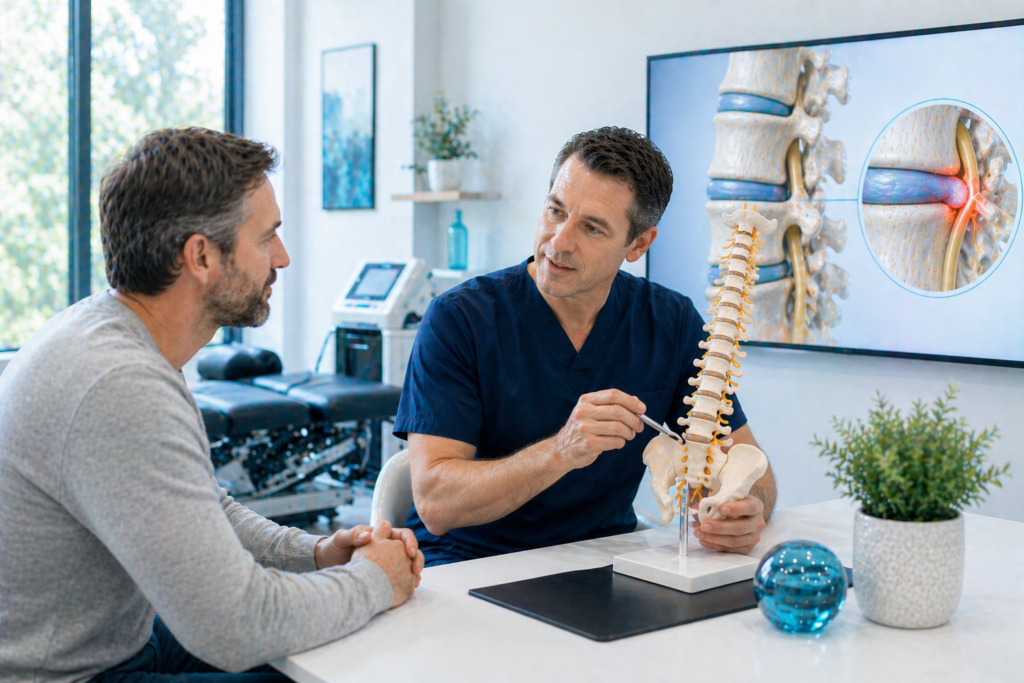
A practical option for Repentigny patients
When spinal decompression requires repeated visits, choosing a realistic clinic location matters.
Spinal decompression care often requires repeated in-person visits over several weeks. For patients living in Repentigny, the Terrebonne clinic may be a practical TAGMED location because it is within a realistic driving distance for a structured care plan.
Patients with herniated disc or sciatica symptoms often need more than general back-pain advice. When pain keeps returning after stretching, strengthening, sitting, driving, bending, or previous care, the disc and nerve may still be mechanically reactive.
At Clinique TAGMED Terrebonne, Dr. Sylvain Desforges evaluates selected patients to determine whether their symptoms suggest a pressure-sensitive disc pattern and whether spinal decompression may be appropriate as part of a personalized, non-surgical plan.
Local access from Repentigny
Why Proximity Matters for Spinal Decompression
Decompression care is usually not a one-visit approach. If a patient needs repeated visits, the treatment location must be realistic enough to attend consistently.
Accessible from Repentigny
The Terrebonne clinic may be a practical option for Repentigny patients who need repeated in-person care.
Consistency matters
A realistic driving distance helps patients complete a structured plan when decompression care is recommended.
Disc-focused evaluation
The first step is to determine whether your symptoms fit a pressure-sensitive disc or nerve irritation pattern.
Understanding the treatment
What Is Spinal Decompression Therapy?
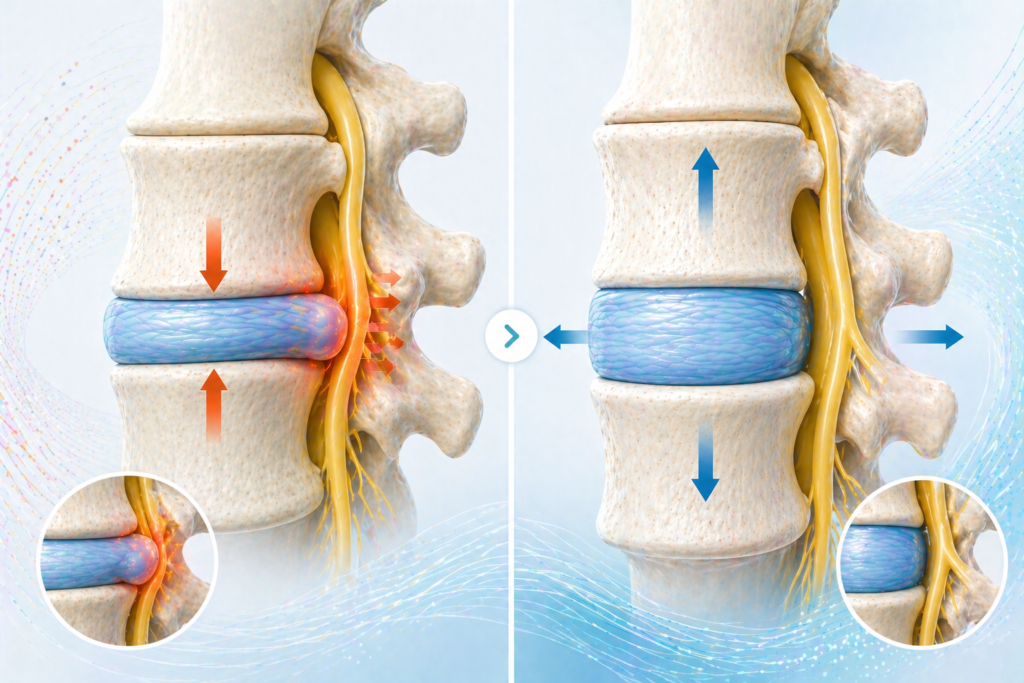
Spinal decompression therapy is a non-surgical, non-invasive approach designed to reduce mechanical pressure on selected spinal segments.
Controlled traction
Decompression uses controlled traction to gently unload the spine rather than forcing movement or aggressive loading.
Disc-pressure strategy
If a disc is pressure-sensitive, reducing mechanical stress may be more appropriate than adding compression immediately.
Nerve irritation focus
In selected patients, decompression may help create a less provocative mechanical environment around an irritated nerve root.
Who may need an evaluation
When Repentigny Patients Should Consider a Disc-Focused Evaluation
A disc-focused evaluation may be appropriate if your symptoms suggest that your disc or nerve root is still mechanically reactive.
- Persistent lower back pain with buttock or leg pain
- Sciatica traveling into the thigh, calf, ankle, or foot
- Numbness, tingling, burning, or electric-like sensations
- Pain that worsens with sitting, driving, bending, or lifting
- Pain that flares after stretching or core exercises
- MRI-confirmed herniated disc, protrusion, or bulging disc
- Persistent symptoms after previous conservative care
- Difficulty working, walking, sitting, or sleeping comfortably
Spinal decompression is not appropriate for every patient. A clinical evaluation is required to determine whether your condition fits this type of mechanical approach.
TAGMED clinical approach
Our Strategy: Space First, Movement Later
Many patients with disc-related pain have already tried exercise-based advice. If symptoms keep flaring, the disc may need a pressure-reduction strategy before more loading is introduced.
“Before a pressure-sensitive disc is progressively loaded, it may first need to be calmed, unloaded, and evaluated.”
1
Evaluate the pattern
We assess whether symptoms behave like a disc-pressure pattern, nerve irritation pattern, or another spinal presentation.
2
Reduce stress
When appropriate, care may focus on reducing compression, flexion stress, prolonged sitting stress, or nerve irritation.
3
Progress later
Movement and strengthening may be reintroduced later based on symptom behavior and clinical progression.
When symptoms keep returning
Why Some Herniated Disc and Sciatica Patients Keep Flaring
If symptoms keep returning after stretching, strengthening, sitting, driving, or general advice, the disc may still be too irritated for loading.
Stretching may irritate the nerve
Hamstring or low back stretching can feel temporarily relieving but may increase neural tension in some sciatica patterns.
Core exercises may compress too early
Bracing, planks, crunches, and stability exercises may increase pressure before the disc is ready.
Sitting may maintain pressure
Prolonged sitting and driving can maintain lumbar disc stress, especially in pressure-sensitive disc cases.
Delayed flare-ups matter
If symptoms worsen later in the day or the next morning, the activity may have exceeded tissue tolerance.
Conditions commonly evaluated
Disc-Related Conditions We Commonly Evaluate Near Repentigny
Patients from Repentigny commonly seek care for symptoms that interfere with sitting, driving, walking, sleep, work, and daily function.
- Lumbar herniated disc
- L4-L5 herniated disc
- L5-S1 herniated disc
- Disc protrusion
- Bulging disc
- Sciatica
- Radiating leg pain
- Numbness and tingling
- Disc-related low back pain
- Selected cervical disc symptoms
What to expect
How the Evaluation Process Works
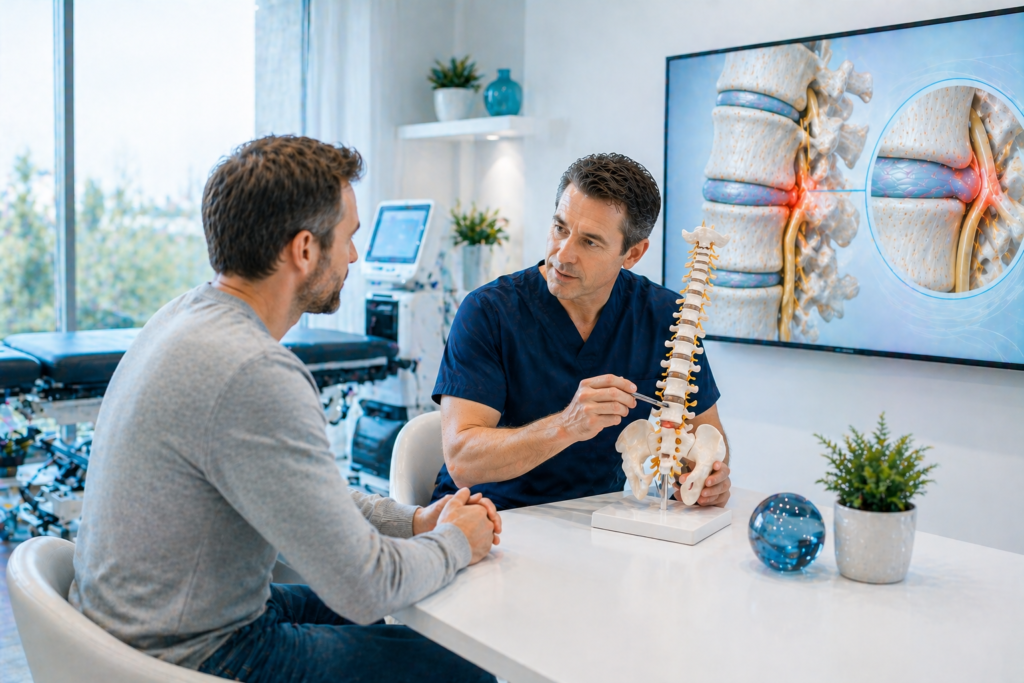
The evaluation helps determine whether your symptoms appear compatible with a decompression-based strategy and whether any safety concerns are present.
1
Symptom review
We review your pain pattern, previous care, and daily triggers such as sitting, bending, or driving.
2
Clinical assessment
We evaluate symptom behavior, nerve irritation signs, movement tolerance, and mechanical sensitivity.
3
Imaging review
If you already have MRI or other imaging reports, bring them to your appointment.
4
Care plan
If appropriate, a decompression-focused plan may be recommended based on your presentation and tolerance.
Safety first
When Spinal Symptoms Require Urgent Medical Attention
Most disc-related cases are not emergencies, but some symptoms require immediate medical evaluation.
- Loss of bladder or bowel control
- Saddle numbness in the groin or inner thighs
- Rapidly worsening leg weakness
- Progressive foot drop
- Sudden severe weakness in both legs
- Fever with severe spinal pain
- Major trauma
- History of cancer with new severe spinal pain
Urgent care warning
If you experience bladder or bowel changes, saddle numbness, rapidly worsening weakness, or severe progressive neurological symptoms, seek urgent medical evaluation immediately.
Patient questions
Frequently Asked Questions About Spinal Decompression Near Repentigny
Do you have a spinal decompression clinic in Repentigny?
Clinique TAGMED does not currently have a Repentigny clinic. Repentigny patients can access spinal decompression evaluations at the Terrebonne clinic.
Is Terrebonne a realistic option for Repentigny patients?
Yes. For many Repentigny patients, Terrebonne is a practical TAGMED location because decompression care may require repeated in-person visits over several weeks.
Can spinal decompression help a herniated disc?
Spinal decompression may be appropriate for selected patients with disc-related symptoms. A disc-focused evaluation is needed to determine whether your condition fits this type of mechanical approach.
How often would I need to come?
Spinal decompression protocols often require repeated visits over several weeks. This is why choosing a realistic driving location is important.
Do I need an MRI before booking?
An MRI can be helpful, but it is not always required before the first evaluation. If you already have imaging reports, bring them to your appointment.
Is this covered by RAMQ?
No. TAGMED services are private and are not covered by RAMQ. Receipts are issued for osteopathy and may be reimbursable by many private insurance plans, depending on your coverage.
Related resources