

Herniated disc and sitting pain
Why Herniated Disc Pain Gets Worse After Sitting
A disc-focused explanation for patients whose back pain, sciatica, leg pain, numbness, or tingling worsens after sitting or driving.
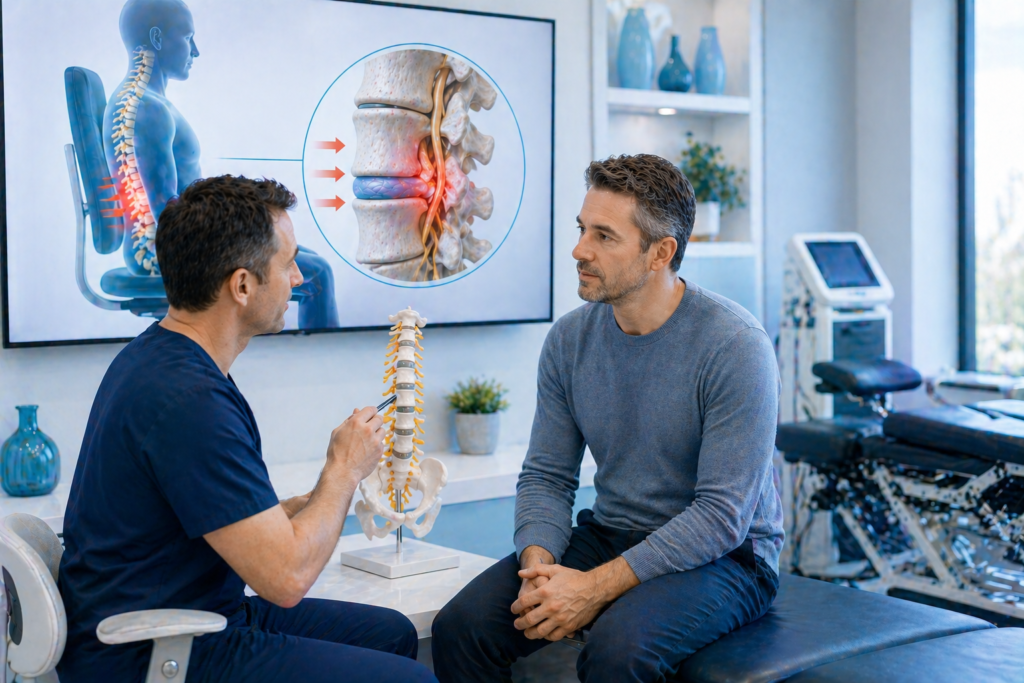
If your herniated disc pain gets worse after sitting, driving, working at a desk, or getting up from a chair, the problem may be related to sustained disc pressure and nerve irritation. Sitting is not always a resting position for a damaged disc. For many patients, it is one of the most provocative positions.
Why sitting can be provocative
Sitting may feel passive, but it can increase stress on a pressure-sensitive disc.
Many patients assume that sitting should help because they are not walking, lifting, or exercising. But for a herniated disc, sitting can sometimes create sustained pressure through the lumbar spine, especially when the pelvis rolls backward and the lower back flexes.
When a disc is already irritated, that sustained pressure may aggravate the outer disc fibers, increase symptoms around the nerve root, and contribute to sciatica that travels into the buttock, thigh, calf, or foot.
At Clinique TAGMED, Dr. Sylvain Desforges evaluates selected patients with sitting-related disc pain to determine whether symptoms suggest a pressure-sensitive disc pattern and whether spinal decompression may be appropriate as part of a personalized non-surgical plan.
The sitting mechanism
Why Sitting Can Make a Herniated Disc Worse
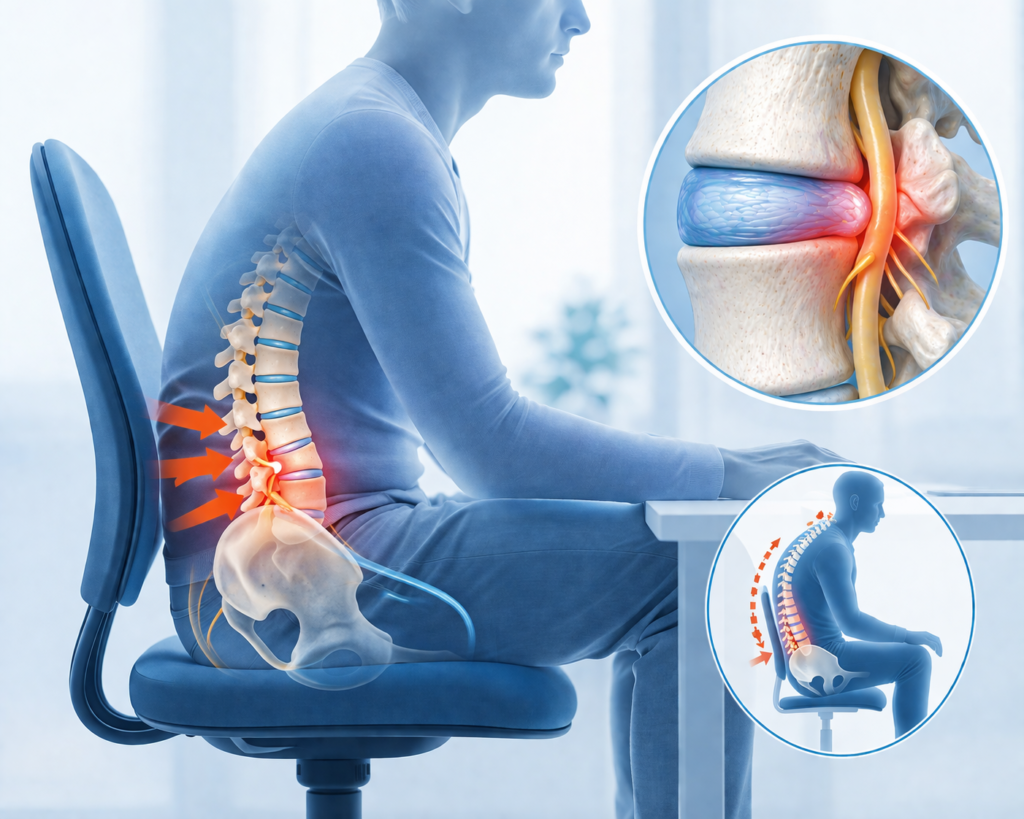
Sitting may aggravate a herniated disc because it can combine sustained flexion, compression, reduced movement, and nerve sensitivity.
Sustained disc pressure
Sitting may increase pressure through the lumbar discs, especially when the lower back rounds or the pelvis tilts backward.
Reduced spinal variation
Long periods in one position may reduce movement variability and keep the irritated segment under continuous stress.
Nerve root irritation
If a herniated disc is irritating a nerve root, sitting may increase symptoms into the buttock, thigh, calf, foot, or toes.
Common sitting-related symptoms
Symptoms Patients Often Notice After Sitting
Sitting-related disc symptoms may appear during sitting, after standing up, during driving, or several hours later.
- Lower back pain that increases after sitting
- Sciatica that worsens while driving
- Buttock pain after sitting at a desk
- Leg pain traveling into the thigh, calf, ankle, or foot
- Numbness, tingling, burning, or electric-like symptoms
- Sharp pain when rising from a chair
- Stiffness or spasms after prolonged sitting
- Pain that improves briefly with walking but returns after sitting again
- Symptoms that worsen during long car rides
- Pain that is worse later in the day after sitting at work
Sitting-related pain can be an important clue that the disc may still be pressure-sensitive. The pattern should be evaluated before adding more loading or aggressive stretching.
Posture and disc load
Why Sitting Can Be Worse Than Standing for Some Disc Patients
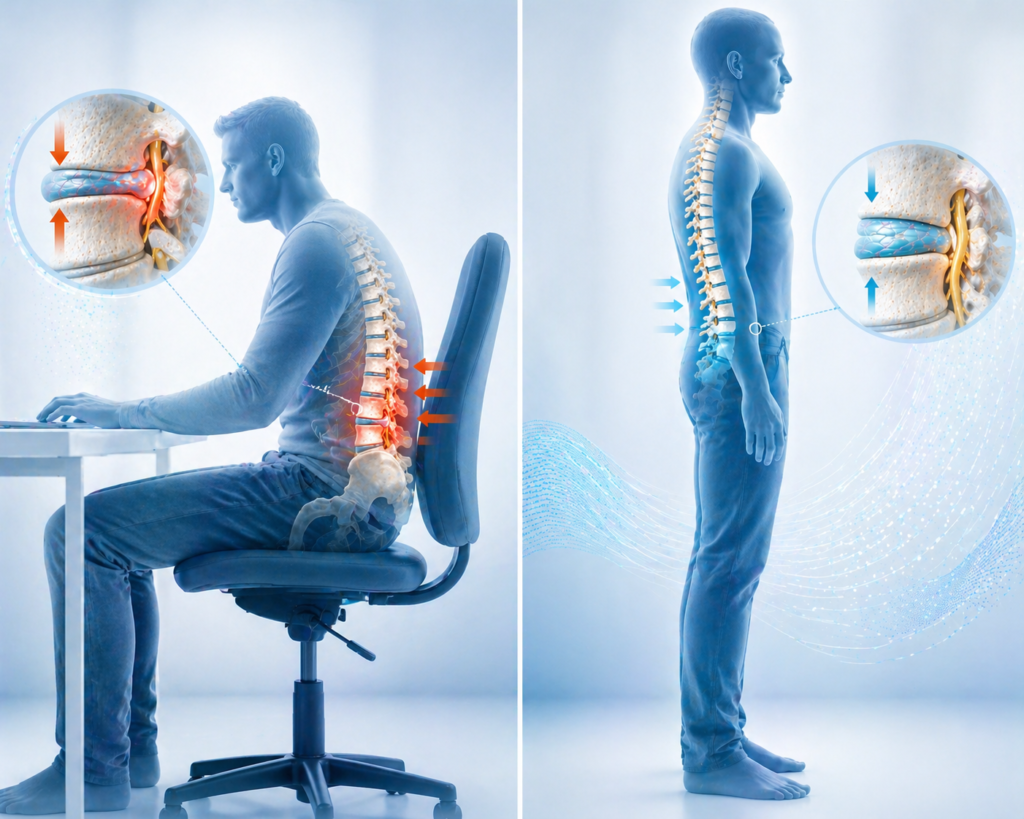
Standing allows more natural postural variation. Sitting often locks the spine into a sustained position that may increase disc stress.
Standing allows more variation
When standing, patients often shift weight, change position, and walk short distances. This may help reduce sustained loading on one spinal segment.
Sitting can hold the disc under load
Sitting at a desk, in a car, or on a couch can keep the lumbar spine flexed and loaded for longer periods.
Daily sitting triggers
Common Sitting Situations That Can Aggravate Disc Pain
Many patients do not flare during a single movement. They flare because the disc is repeatedly exposed to sitting-related stress throughout the day.
- Driving to work
- Sitting at a desk for long periods
- Working from a laptop on a couch
- Sitting after exercise
- Sitting after stretching
- Long meetings without standing breaks
- Dining chairs with poor support
- Soft couches that round the lower back
- Long car rides
- Getting up suddenly after sitting too long
TAGMED clinical approach
Our Strategy: Reduce Disc Pressure Before Rebuilding Sitting Tolerance
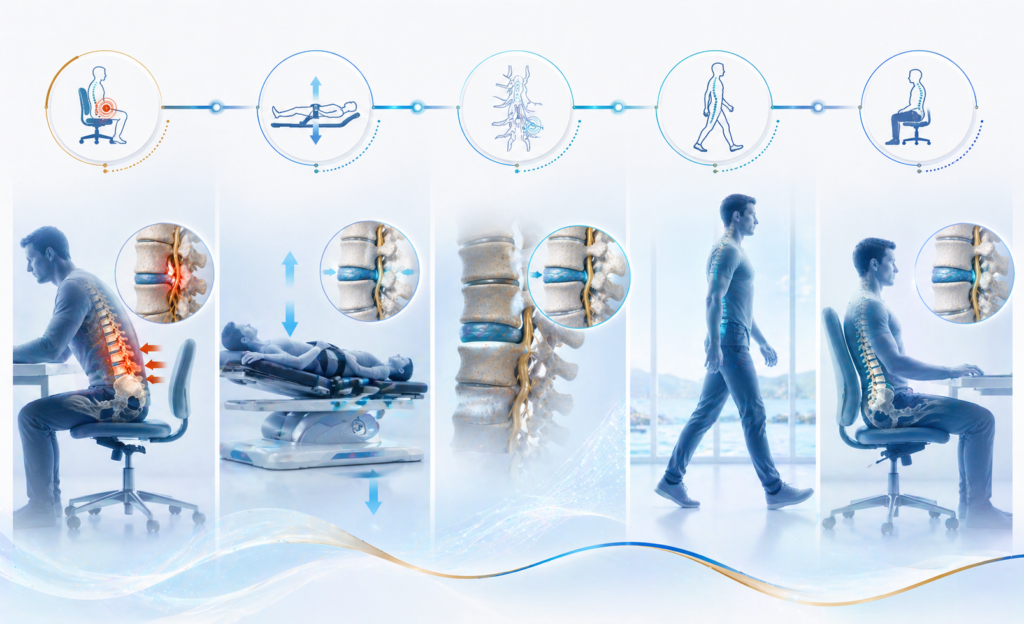
If sitting repeatedly worsens herniated disc symptoms, the first priority may not be stronger exercises. It may be reducing the mechanical pressure that keeps the disc and nerve irritated.
“Before a pressure-sensitive disc is asked to tolerate prolonged sitting, it may first need less compression, less nerve irritation, and a calmer mechanical environment.”
1
Identify sitting triggers
We evaluate whether sitting, driving, desk posture, or couch posture is reproducing symptoms.
2
Reduce pressure
When appropriate, spinal decompression may be considered to reduce mechanical stress around selected spinal segments.
3
Rebuild tolerance
Sitting tolerance may improve gradually as symptoms become less reactive and daily movement becomes less provocative.
Pressure-reduction option
How Spinal Decompression May Fit Sitting-Related Disc Pain
When sitting-related pain is associated with a herniated disc or sciatica, spinal decompression may be considered for selected patients after a disc-focused evaluation.
Reduce mechanical pressure
Decompression is designed to gently unload selected spinal segments rather than increasing pressure through exercise too early.
Calm nerve irritation
In selected cases, reducing pressure may help create a less provocative environment around an irritated nerve root.
Improve tolerance over time
As the disc and nerve become less reactive, daily activities such as sitting and driving may be reassessed.
Who should consider evaluation
When to Book a Disc-Focused Evaluation
A disc-focused evaluation may be appropriate if sitting consistently triggers or worsens a herniated disc or sciatica pattern.
- Back pain worsens after sitting
- Sciatica worsens while driving
- Leg pain increases after desk work
- Numbness or tingling appears after sitting
- Pain worsens when rising from a chair
- Sitting after exercise causes flare-ups
- You have a known or suspected herniated disc
- You cannot sit long enough for work, driving, or daily life
Safety first
When Sitting-Related Disc Pain Requires Urgent Medical Attention
Most sitting-related herniated disc pain is not an emergency, but certain symptoms require immediate medical evaluation.
- Loss of bladder or bowel control
- Saddle numbness in the groin or inner thighs
- Rapidly worsening leg weakness
- Progressive foot drop
- Sudden severe weakness in both legs
- Fever with severe spinal pain
- Major trauma
- Severe progressive neurological symptoms
Urgent care warning
If you experience bladder or bowel changes, saddle numbness, rapidly worsening weakness, or severe progressive neurological symptoms, seek urgent medical evaluation immediately.
Patient questions
Frequently Asked Questions About Herniated Disc Pain Worse After Sitting
Why does my herniated disc hurt more after sitting?
Sitting may increase sustained pressure through the lumbar discs, especially when the lower back rounds. If the disc is pressure-sensitive, symptoms may worsen.
Why does driving make my sciatica worse?
Driving combines sitting, vibration, limited movement, and sustained lumbar posture. This can aggravate a pressure-sensitive disc or irritated nerve root.
Should I avoid sitting completely?
Not necessarily. The goal is usually to reduce prolonged provocative sitting and improve tolerance gradually, based on your symptom response and evaluation.
Can spinal decompression help sitting-related disc pain?
Spinal decompression may be appropriate for selected patients when sitting-related pain appears connected to disc pressure or nerve root irritation. A disc-focused evaluation is needed first.
Why does pain get worse when I stand up after sitting?
After prolonged sitting, the disc and surrounding tissues may be irritated or stiff. Standing up may suddenly change pressure and trigger pain.
Is this covered by RAMQ?
No. TAGMED services are private and are not covered by RAMQ. Receipts are issued for osteopathy and may be reimbursable by many private insurance plans, depending on your coverage.
Related resources