Lumbar Disc Herniation in Longueuil: Estimated Relief Duration and Neurovertebral Decompression Therapy Explained
June 19, 2026
Chronic lower back pain continues to impact thousands of individuals across Québec, profoundly affecting their daily lives and mobility. Lumbar spinal disorders such as stenosis and degenerative spondylolisthesis frequently require interventions that balance pain relief with the preservation of spinal function. In this evolving landscape, the emergence of innovative treatments like the TOPS (Total Posterior Spine) System offers renewed hope. Positioned as a modern alternative to traditional lumbar fusion surgery, TOPS technology provides dynamic stabilization — maintaining spinal motion while addressing instability and pain. Importantly, this advanced surgical option is available in Gatineau, bridging Canadian expertise with cutting-edge surgical practices performed in France. This collaborative transatlantic care pathway ensures patients benefit from rigorous evaluations, personalized treatment plans, and comprehensive post-operative support from pioneers such as Dr. Sylvain Desforges, a leader in spinal health and patient-centered care in Québec.
Back pain related to degenerative spinal conditions has long challenged both patients and clinicians seeking effective solutions that do not compromise the spine’s natural biomechanics. Traditional lumbar fusion surgery, while effective in stabilizing the affected vertebrae, results in immobilization of spinal segments, often accelerating degeneration in adjacent areas and limiting patients’ mobility. The TOPS System revolutionizes treatment by stabilizing the lumbar spine dynamically without fusion, allowing preserved movement and reducing the risk of complications. For many patients in Gatineau and beyond, this represents an appealing option that aligns with modern treatment goals focused on quality of life and functional recovery.
Understanding the TOPS System as a Leading Treatment for Lumbar Spinal Conditions in Gatineau
The TOPS device is a dynamic spinal implant designed specifically to provide spinal stability after decompression surgery for lumbar spinal stenosis and degenerative spondylolisthesis typically at levels L3 to L5. Unlike lumbar fusion, which completely immobilizes the treated vertebral segment, the TOPS system maintains controlled motion, mimicking the natural mechanics of the spine. This distinction is crucial because it reduces adjacent segment disease—a common complication observed with fusion surgeries. Patients can benefit from pain relief while retaining their ability to perform daily activities without the limitations imposed by spinal fusion.
Developed by Premia Spine and approved by the FDA, the TOPS System addresses two crucial functions of the lumbar spine: maintaining stability and preserving mobility. Its mechanical implant compensates for spinal instability caused by degenerative changes while supporting natural spinal kinematics. Studies continue to affirm its efficacy, showing significant improvements in patient mobility, pain reduction, and lower reoperation rates compared to traditional fusion methods. A remarkable example is the reduced reoperation rate of 5.9% observed with TOPS, compared to 8.8% for conventional fusion, highlighting the long-term benefits of this approach.
Within Québec, experts like Dr. Sylvain Desforges bring over 30 years of clinical experience to the forefront, meticulously assessing spinal disorders and guiding patients through this innovative treatment pathway. His integrative approach—including neurovertebral decompression and laser therapy prior to considering surgical options—underscores the commitment to ensure surgery is only pursued when absolutely necessary. This clinical rigor assures patients in Gatineau of a safe, evidence-based treatment journey in keeping with Quebec’s medical regulations and international standards.
The experience of lumbar disc herniation affects thousands in the bustling city of Longueuil, a suburban hub that combines vibrant urban life with the complexities of modern work and lifestyle challenges. Individuals suffering from this condition frequently seek innovative yet…
Biomechanical Advantages of TOPS Compared to Traditional Lumbar Fusion Surgery
The biomechanics of the lumbar spine are complex and essential to everyday function. Traditional lumbar fusion surgery resolves instability by permanently immobilizing the affected vertebral segment, which unfortunately can lead to increased stress and degeneration in adjacent spinal segments. The TOPS System stands out by stabilizing while preserving a natural range of motion, thus maintaining a healthier biomechanical environment.
TOPS implants consist of a sophisticated mechanical articulating device that allows controlled flexion, extension, and rotation of the lumbar segment while preventing excessive motion that could aggravate symptoms or cause further damage. This balance of stability and mobility has several important benefits:
- Preservation of natural spinal motion – Patients retain the flexibility crucial for activities such as bending and twisting.
- Reduction in adjacent segment degeneration – By not fusing the vertebrae, stress on neighboring spinal levels decreases, potentially extending the lifespan of spinal health.
- Lower chronic pain levels – Maintaining movement reduces persistent discomfort often linked with fusion procedures.
- Accelerated recovery timelines – Patients typically begin rehabilitation almost immediately, enhancing early functional gains and reducing hospital stays.
These biomechanical advantages translate directly into improved quality of life. Patient testimonials often report feeling more agile and experiencing less stiffness after TOPS surgery compared to prior experiences with fusion or conservative therapies. For example, Jean-Marc, a 58-year-old Gatineau resident, shared how TOPS surgery allowed him to return to his gardening hobby within two months post-operation, an activity previously impossible due to pain and limited spine movement.
Further details on how this system preserves lumbar biomechanics can be found on the dedicated pages explaining the TOPS system’s mechanisms, which provides clear insights into the clinical and functional outcomes of this dynamic implant.
Mechanical Design and Functional Benefits of the TOPS Implant
The TOPS device comprises two titanium plates fixed to the vertebrae with pedicle screws, connected by a set of articulating components that permit six degrees of controlled movement. This design allows the spinal segment to move freely within safe limits, preventing torsion or lateral bending that could provoke pain.
Such technology contrasts with rigid fusion hardware, which eliminates all motion at the treated level. The preservation of movement achieved with TOPS encourages better shock absorption and reduces compensatory movements, which often cause strain on muscles and ligaments, a frequent source of post-fusion pain.
This engineered balance between mobility and stabilization reflects today’s modern treatment paradigm for spine surgery worldwide and is an option transforming outcomes for patients struggling with chronic low back pain.
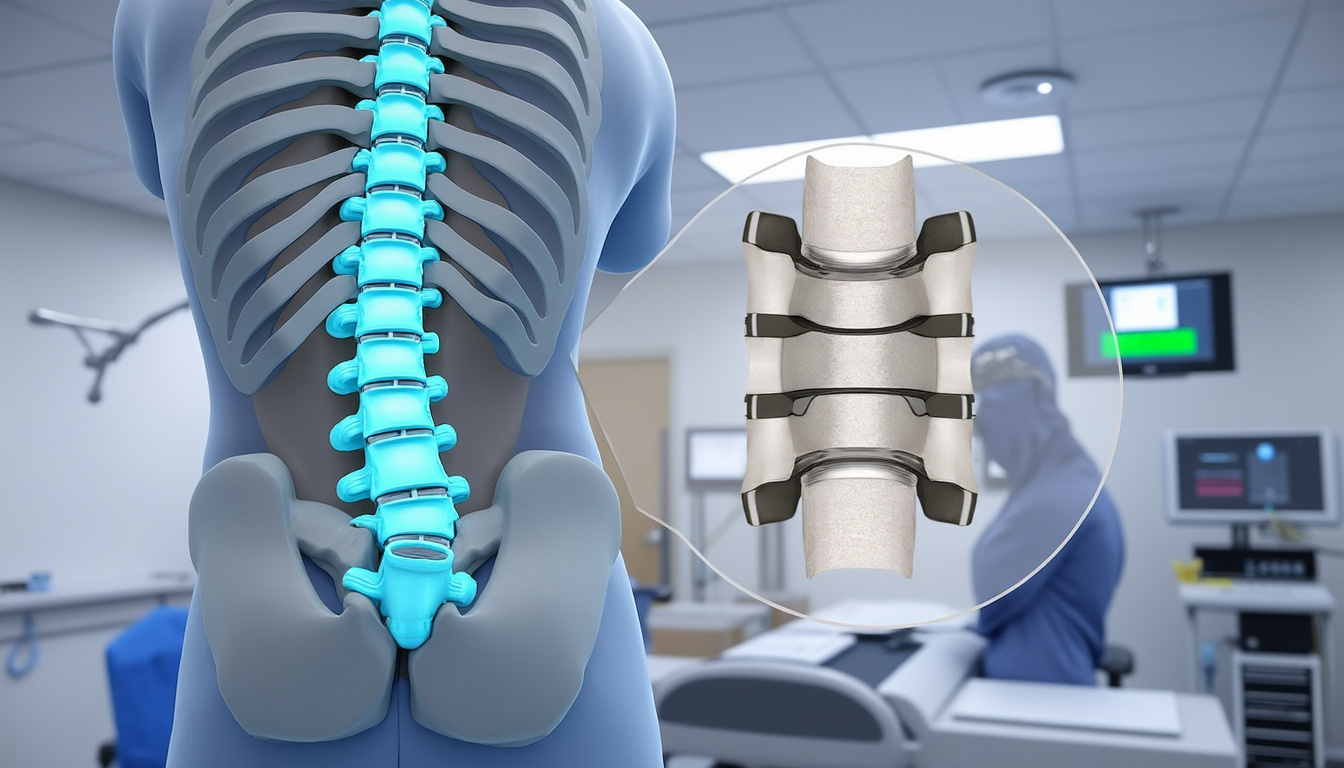
Cervical Disc Prosthesis in Quebec: Restoring Mobility with Proven Approval
The landscape of spinal care in Quebec has evolved remarkably, offering new hope to patients suffering from chronic neck pain and diminished mobility. Among the transformative innovations in this field is the use of cervical disc prostheses, a groundbreaking orthopedic…
Personalized Patient Evaluation and Care Coordination Led by Dr. Sylvain Desforges
At the core of achieving successful outcomes with the TOPS system is a comprehensive, personalized patient evaluation process. Dr. Sylvain Desforges, with over three decades of expertise and leadership in the spine care field, ensures each patient’s condition is thoroughly assessed before advancing to surgical options. His meticulous approach emphasizes scientific rigor, ethics, and patient safety, clearly aligning with Québec medical regulations and international guidelines.
The evaluation process usually involves:
- Detailed clinical assessment: Physical exam, functional evaluations, and symptom documentation.
- Imaging and diagnostic tests: MRI, CT scans, and X-rays to ascertain anatomical changes and instability.
- Trial of conservative treatments: Emphasizing non-surgical modalities such as neurovertebral decompression therapy, laser treatments, and osteopathic care at Clinique TAGMED.
- Patient education: Ensuring patients understand their condition, treatment options, including benefits and limitations, fostering informed decision-making.
- Shared decision-making: Collaborative establishment of a treatment plan aligned with the patient’s lifestyle and goals.
Only when conservative therapies fail to provide adequate relief, and imaging confirms eligibility, does the pathway proceed to the surgical introduction of the TOPS system. This approach respects patients’ individuality, reinforcing a compassionate and motivational ethos essential to spinal care.
Dr. Desforges also coordinates the transatlantic care journey between Québec and France, collaborating with specialized surgeons and expert teams to ensure timely, safe surgical interventions. Patients benefit from logistic support and continuity of care, with post-operative rehabilitation facilitated by Québec’s trusted healthcare providers to maximize long-term success.
In Montreal, herniated disc care has evolved into a multidisciplinary practice combining cutting-edge technology and personalized protocols designed to mitigate pain, restore mobility, and improve overall spine health. The bustling urban environment, combined with physically demanding lifestyles, imposes unique challenges…
Optimized Surgical Opportunities in France Complementing Québec Patient Needs
The availability of modern techniques in France plays a pivotal role in offering Québec patients access to cutting-edge interventions such as TOPS. Surgical centers in France possess specialized expertise in spine surgery and adopt minimally invasive approaches, improving patient outcomes and shortening hospital stays. This partnership highlights how international collaboration broadens treatment horizons.
Several surgical options available in France for lumbar spine conditions include:
| Technique | Indications | Advantages | Limitations |
|---|---|---|---|
| Open Surgery with Fusion | Severe stenosis, vertebral instability | Proven stability, well-established method | Loss of motion, longer recovery |
| Minimally Invasive/Endoscopic Surgery | Moderate nerve compression | Less tissue trauma, quicker recovery | Limited indications |
| Disc Prosthesis (Artificial Disc) | No major instability | Preserves segmental mobility | Not suitable for pronounced arthrosis |
| Dynamic Stabilization (TOPS) | Symptomatic lumbar stenosis with instability | Preserves mobility, low complication risk | Requires specialized expertise |
TOPS complements this spectrum by providing an innovative solution that balances motion preservation with spinal stability, avoiding the drawbacks of fusion while effectively alleviating symptoms.
Minimally Invasive Surgery in Longueuil: Maintaining Post-Operative Flexibility
Minimally invasive surgery in Longueuil is transforming the way spinal conditions are treated, offering patients a path that emphasizes reduced tissue trauma, quicker recovery times, and preservation of natural spinal mobility. For many individuals suffering from chronic back and neck…
The Crucial Role of Conservative Treatments Before Considering Surgery
In line with best practice and ethical medical standards, a conservative treatment phase of 3 to 6 months is mandatory prior to surgical consideration for lumbar spinal disorders. Conservative management includes therapies such as:
- Neurovertebral decompression therapy to gently relieve nerve pressure
- Precision osteopathic techniques tailored to spinal biomechanics
- Laser and shockwave therapy to reduce inflammation and stimulate healing
- Physical therapy and rehabilitation focusing on strengthening and flexibility
At Clinique TAGMED, under Dr. Desforges’ guidance, patients receive individualized plans combining these modalities. This period serves multiple purposes: alleviating pain, improving function, and accurately evaluating the need for surgical intervention. Many patients witness significant improvements, sometimes avoiding surgery altogether through this methodical conservative approach.
In the vibrant, active region of Laval, lumbar disc herniation (LDH) represents a significant health concern, especially among individuals facing repetitive spinal strain or leading sedentary lifestyles. This spinal condition, often manifesting as intense back pain and functional limitations, calls…
Benefits of the Transatlantic Partnership for Quebec Patients Seeking TOPS Surgery
The collaboration between Québec and specialized French spine surgery centers exemplifies a dynamic model of international healthcare partnerships. For patients in Gatineau facing prolonged wait times for lumbar fusion or standard interventions, this connection offers timely access to a modern surgical solution.
- Reduced waiting periods: Patients typically proceed to surgery within 2-4 months, significantly faster than domestic waitlists.
- Access to specialized expertise: Highly skilled French surgeons performing minimally invasive TOPS implantations.
- Comprehensive patient support: Coordinated logistics, personalized treatment plans, and post-operative rehabilitation spanning two countries.
- Enhanced treatment success: Customized interventions aligned with patients’ functional requirements and health status.
This transatlantic approach, orchestrated under the supervision of experts like Dr. Desforges, assures patients a high quality of care while embracing innovation, safety, and individualized treatment objectives.
IntraSPINE® in Laval: A Modern and Safe Solution
Back pain continues to challenge millions across Quebec, affecting everyday activities and diminishing quality of life. As the demand for modern, effective spinal treatments grows, innovations like IntraSPINE at Laval emerge as pivotal solutions. This advanced dynamic implant provides a…
Patient Experiences Highlighting the Impact of TOPS Technology
Real-world patient stories shed light on how TOPS has transformed lives. Consider Marie, a 62-year-old woman from Gatineau, who struggled with lumbar stenosis for years. Despite multiple conservative therapies, her pain worsened, impeding daily tasks and compromising sleep. Under Dr. Desforges’ careful evaluation, she was recommended the TOPS system. The surgery was performed in France, with post-operative care adapted upon return to Québec. Within weeks, Marie reported markedly reduced pain and restored mobility, enabling her to enjoy walking and light activities once again.
Jean-Pierre, a retired teacher, shared a similar journey. His persistent back pain due to degenerative spondylolisthesis hindered his ability to work in his garden and engage in recreational sports. After being evaluated by Dr. Desforges, he embarked on the TOPS treatment pathway. His experience epitomizes the benefits of maintaining spinal motion without fusion, with recovery allowing a return to cherished activities and improved quality of life.
These testimonials emphasize the importance of expert evaluation, advanced technology, and empathetic patient care in spinal health management.
Disc herniation in Sainte-Anne-de-Bellevue presents a significant challenge, impacting the daily lives of many adults in this thriving community. As bustling professional and family demands intensify, the prevalence of spinal disorders, particularly herniated discs, has amplified the need for effective,…
Educational Resources and Ongoing Research on TOPS and Lumbar Spine Health
As a medical expert and educator, Dr. Sylvain Desforges ensures patients and healthcare providers have access to clear, evidence-based information on spine conditions and treatments. Understanding the innovations behind TOPS helps patients make informed choices aligned with their health goals.
Extensive research studies, such as the recent publications on lumbar facet arthroplasty versus fusion, validate the efficacy and safety of the TOPS System, strengthening confidence in its implementation as a modern treatment. Further information and patient-focused explanations are available through trusted platforms dedicated to spinal health education.
This commitment to knowledge dissemination highlights the importance of transparency and patient empowerment in complex spinal conditions. It also reinforces the vital role of experts like Dr. Desforges, whose clinical and academic leadership ensures patient journeys are as informative and reassuring as they are technically advanced.
How does the TOPS system differ from traditional lumbar fusion?
The TOPS system provides dynamic stabilization, preserving lumbar spine mobility, while traditional fusion immobilizes the segment, potentially increasing complications.
What is the typical recovery time after TOPS surgery?
Recovery is generally faster with TOPS, with patients resuming light activities often within a month post-surgery.
Are conservative treatments required before surgery?
Yes, a period of 3 to 6 months of conservative therapies is recommended to assess their effectiveness before surgical options are considered.
Where is the TOPS surgery performed?
Surgical procedures using the TOPS system take place in specialized centers in France, known for their expertise in this innovative technique.
Is post-operative follow-up available in Québec?
Yes, specialized healthcare professionals in Québec provide thorough post-operative care and rehabilitation to ensure sustained recovery.
Neck Surgery in Montreal: Enhancing Mobility and Alleviating Pain
Chronic neck pain and cervical spine disorders remain among the leading causes of disability and reduced quality of life worldwide. In Montreal, a city known for its advanced medical facilities and cutting-edge research, the field of neck surgery has undergone…