Disc Prosthesis in Sherbrooke: Durable and Proven Results
October 26, 2025
Lumbar Disc Prosthesis in Terrebonne: Restore Mobility
October 26, 2025
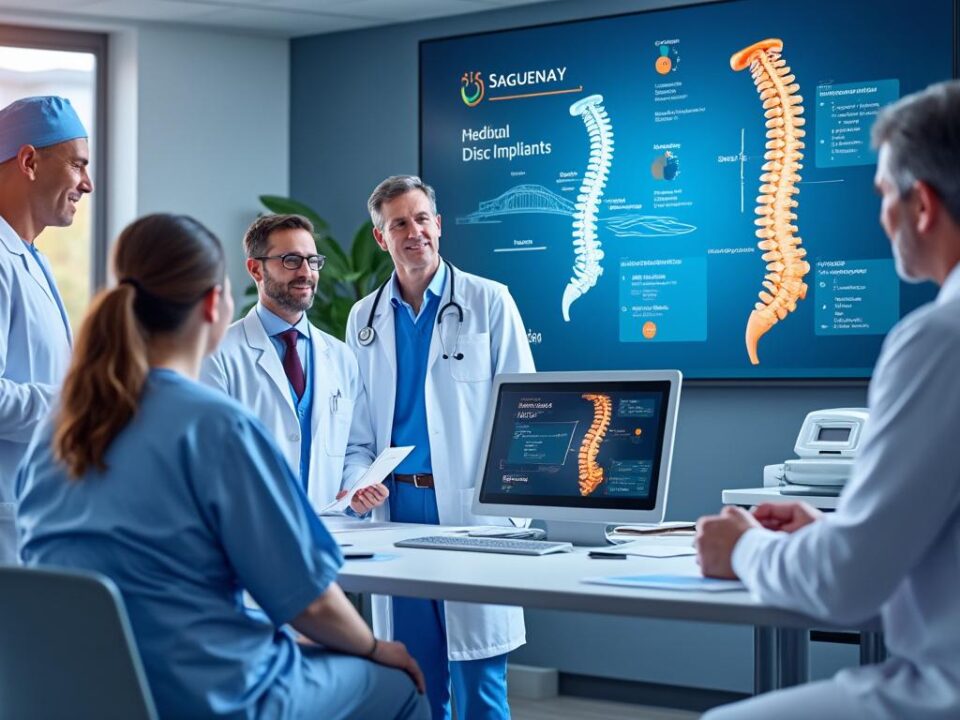
The chronic burden of lumbar disc herniation and degenerative spine conditions significantly impacts the quality of life for many patients, particularly in regions with limited rapid access to specialized care such as Quebec. Among the innovative solutions emerging in 2025, the IntraSPINE device offers a revolutionary approach to spinal stabilization, emphasizing dynamic motion preservation rather than rigid fusion. This novel implant, developed and manufactured by Cousin Surgery, has garnered attention for its capacity to maintain lumbar mobility while providing effective pain relief.
In the Saguenay region, the introduction of the IntraSPINE procedure represents a modern and scientifically validated option, meeting rigorous safety and efficacy standards. Beyond the technical features of this advanced interlaminar implant, the procedure embodies a patient-centered philosophy that aligns with evolving care paradigms emphasizing minimally invasive techniques and functional outcomes. This article explores the comprehensive aspects of the IntraSPINE procedure, from its biomechanics and indications to the patient pathway and postoperative recovery, emphasizing the expertise and innovations spearheaded by pioneers in spinal care.
Understanding the IntraSPINE Dynamic Stabilization Device for Lumbar Spine Conditions
In the landscape of spine surgery, the paradigm shift from traditional fusion towards motion-preserving techniques reflects an evolution in managing degenerative lumbar disorders. IntraSPINE is an exemplar of this innovative direction, offering dynamic stabilization to preserve the natural biomechanics of the spinal motion segment.
Key Biomechanical Principles
Unlike conventional interspinous devices that sit posteriorly and primarily restrict extension, the IntraSPINE implant is uniquely positioned in an interlaminar space, closer to the instantaneous axis of rotation of the vertebral segment. This strategic anterior placement allows for more physiological ‘rocking’ movements during flexion and extension, effectively relieving facet joint pressure without abrupt motion limitation.
This dynamic support mechanism offers dual benefits: it decompresses neural elements by restoring foraminal height and meanwhile maintains lumbar lordosis, enhancing spinal alignment and load distribution. By avoiding complete immobilization, IntraSPINE mitigates risks associated with fusion such as adjacent segment degeneration (ASD).
Innovative Design and Materials
The implant’s wedge-shaped core is made from medical-grade polydimethylsiloxane, covered by a biocompatible polyethylene terephthalate (PET) textile that promotes integration while preventing inflammatory responses. The frontal surface, adjacent to sensitive neural structures, is coated with a silicone anti-adhesion film reducing fibrous tissue formation that can complicate revisions. For enhanced stability in select cases, a polyester ligament with titanium tensioning loops supports the biomechanical optimization by reinforcing posterior tension bands.
- Interlaminar positioning near the center of rotation improves motion preservation.
- Dual-material design balances distraction and cushioning.
- Biocompatible textile envelope ensures tissue compatibility and durability.
- Anti-adhesion silicone layer minimizes postoperative scarring.
- Optional ligamentous support limits excessive flexion when indicated.
This design philosophy, rooted in advanced textile implant expertise from Cousin Surgery’s longstanding heritage, exemplifies a commitment to scientific and clinical excellence, registering as a Class IIb medical device with CE marking in Europe.
| Implant Component | Function | Material |
|---|---|---|
| Wedge Core | Distraction & cushioning | Polydimethylsiloxane (silicone) |
| Envelope Textile | Tissue integration | Polyethylene terephthalate (PET) |
| Anti-adhesion Coating | Prevent neural adhesions | Silicone film |
| Ligamentous Strap | Additional stability in flexion | Polyester with titanium loop |
Disc Prosthesis in Lévis: Maintain Natural Mobility
In the evolving landscape of spinal health, the pursuit of innovative solutions for chronic back pain and degenerative disc conditions has never been more critical. Residents of Lévis and surrounding regions seeking pathways beyond the limitations of traditional spinal fusion…
Who Can Benefit from IntraSPINE? Indications and Patient Selection Criteria
Proper patient selection is paramount in optimizing outcomes with the IntraSPINE device. Its indications target specific degenerative spine pathologies where dynamic stabilization can outperform fusion or conservative treatments, particularly in carefully evaluated adult patients.
Clinical Indications
- Lumbar Facet Joint Syndrome: Arthritic changes in facet joints causing localized back pain responsive to decompression and stabilization.
- Foraminal Stenosis: Narrowing of the nerve exit canals leading to neurogenic claudication or radiculopathy.
- Degenerative Disc Disease: Chronic disc wear often seen as the ‘black disc’ on MRI, contributing to instability and pain.
- Posterior Ligamentous Complex Insufficiency: Resulting in subtle spinal instability manageable with dynamic support.
- Large Disc Hernias Post-Discectomy: Preventing disc space collapse after removal of herniated tissue, especially in younger, active patients.
- Kissing Spine Syndrome: Interspinous impingement producing pain during extension.
Exclusion and Contraindications
- Patients with severe osteoporosis or poor bone quality.
- Active infections either systemic or localized to the spine.
- Severe deformities such as scoliosis > 25 degrees or high-grade spondylolisthesis.
- Pregnant or breastfeeding women.
- Known allergies to implant materials (silicone, PET, titanium).
- Obesity significantly increasing mechanical demands beyond device recommendations.
The precise selection process involves detailed imaging including MRI and CT scans, alongside a thorough clinical assessment, ensuring the intervention remains aligned with each patient’s unique profile.
| Inclusion Criteria | Exclusion Criteria |
|---|---|
| Age 18 and above | Bone fragility or osteoporosis |
| Single segment pathology at L4-L5 or L5-S1 | Multiple level lumbar spine involvement |
| Median or posterolateral disc herniation | Prior spinal instrumentation at target level |
| Failure of adequate conservative treatment | Chronic systemic disease impacting healing |
Clinical studies and expert consensus continue to refine these criteria, optimizing the balance between therapeutic benefit and patient safety.
Motion Surgery in Terrebonne: Advanced Techniques Available in France
With over three decades of dedicated expertise in spine care, I have witnessed firsthand the evolution of surgical options aimed at improving quality of life for those living with spinal disorders. Among these advances, Motion Surgery stands out in Terrebonne…
Comprehensive Patient Journey: Evaluation, Surgery, and Transatlantic Coordination
The treatment journey incorporating the IntraSPINE device exemplifies a multidisciplinary and transnational approach to spine care, particularly benefiting patients from Quebec seeking advanced therapies available in France.
Preoperative Evaluation and Conservative Treatment
Initial patient assessment is expertly carried out by practitioners such as Dr. Desforges, who, with over three decades of expertise in spinal evaluation, guides patients through an evidence-based clinical pathway. Fundamental before considering surgery is a minimum of 3 to 6 months of conservative interventions, including physiotherapy, medication, and notably, neurovertebral decompression therapy available at specialized centers like the Clinique TAGMED.
- Physical examination and detailed imaging studies.
- Assessment of prior treatments and response.
- Patient education and shared decision-making.
- Referral for or continuation of advanced conservative care.
International Surgical Planning and Coordination
For patients opting for surgical treatment in France, coordination between Canadian healthcare providers, surgical teams in France, and international medical tourism platforms like SOS Tourisme Médical ensures personalized, efficient planning. This includes:
- Secure transfer of medical records and imaging.
- Scheduling consultations with experienced spine surgeons trained in IntraSPINE implantation.
- Logistical support for travel and accommodation.
- Patient counseling on surgical risks, benefits, and rehabilitation.
Surgical Procedure and Hospital Stay
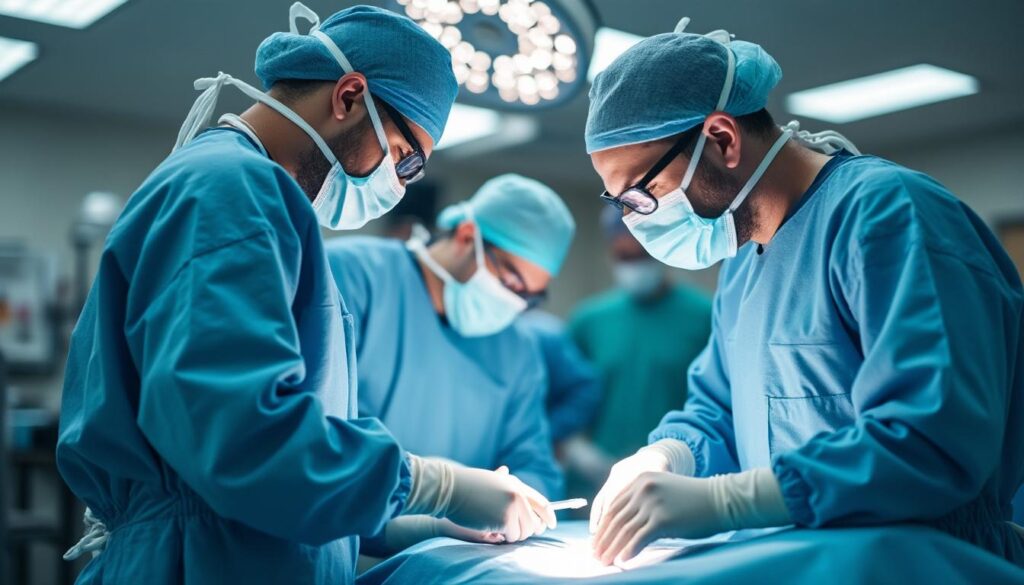
At the center of excellence in Saguenay or related French surgical centers, the minimally invasive IntraSPINE operation is performed, typically lasting 1 to 2 hours under general anesthesia. The approach emphasizes tissue preservation, small incisions, and early mobilization to facilitate rapid recovery and shorter hospital stay compared to fusion procedures.
| Stage | Details | Patient Involvement |
|---|---|---|
| Preoperative | Imaging, anesthetic clearance, informed consent | Active questions, finalizing understanding |
| Operative | Mini-invasive implantation of IntraSPINE | Procedure under anesthesia |
| Postoperative | Pain management, physiotherapy initiation | Early mobilization, adherence to rehab |
| Discharge | Return home, follow-up plan organized | Family support, lifestyle adjustments |
Postoperative Rehabilitation and Return to Quebec
Upon returning home, continued rehabilitation is coordinated with local healthcare teams familiar with dynamic spine implants, ensuring gradual restoration of function under supervised physiotherapy programs. Patients are encouraged to maintain communication with their international care providers for outcome monitoring and long-term support.
Lumbar Disc Prosthesis in Saguenay: Long-Lasting Relief After Surgery
Chronic back pain rooted in lumbar disc degeneration challenges many patients in Saguenay and beyond, urging exploration of innovative solutions to restore spine health and quality of life. Traditional spinal fusion surgeries, though effective for stabilizing painful segments, have notable…
Biomechanical and Clinical Advantages of IntraSPINE Compared to Fusion Surgery
Understanding the fundamental differences between fusion and dynamic stabilization devices like IntraSPINE is critical for patients making informed decisions regarding their spinal care.
Motion Preservation vs. Immobilization
While spinal fusion eliminates all motion at a treated segment, often causing increased mechanical burden on adjacent levels, the IntraSPINE device maintains a significant range of motion. Clinical data indicate:
- Retention of approximately 3.4 degrees of segmental motion versus near-zero in fusion (0.22 degrees).
- Stability without limiting flexion and extension in a natural, physiological manner.
Reduction in Adjacent Segment Degeneration
Preserving motion reduces hypermobility in adjacent segments, a documented contributor to accelerated degeneration and potential need for further surgeries. An observed absence of new adjacent segment pathology was recorded in IntraSPINE patients versus 8 cases in fusion group with 3 requiring reoperation within one year.
Improved Patient Outcomes and Faster Recovery
Reported improvements in pain scores favor IntraSPINE, with better leg pain relief and overall function at 12 months compared to fusion. Hospital stays average under 10 days for dynamic stabilization versus over 11 for fusion, translating to reduced costs and faster return to daily activities.
| Outcome Parameter | IntraSPINE (Dynamic) | Fusion (Arthrodesis) | Advantage |
|---|---|---|---|
| Pain Relief (VAS Score) | Lower (0.63) | 0.95 | IntraSPINE |
| Range of Motion (Segment) | Preserved (3.43°) | 0.22° | IntraSPINE |
| Range of Motion (Adjacent Segments) | Stable | Increased (hypermobility) | IntraSPINE |
| Adjacent Segment Degeneration | None reported | 8 cases; 3 reoperations | IntraSPINE |
| Hospital Stay (days) | 9.23 | 11.12 | IntraSPINE |
These advantages, highlighted in ongoing peer-reviewed publications available through resources like SOS Tourisme Médical, reinforce the appeal of the IntraSPINE device for selected patients seeking functional preservation with innovative care.
IntraSPINE® in Sherbrooke: Maintain Lumbar Function
In the modern management of lumbar spine conditions, patients in Sherbrooke and across Quebec are increasingly presented with innovative solutions that prioritize maintaining natural spinal function while alleviating debilitating pain. Among these advancements, the IntraSPINE device has emerged as a…
Essential Role of Conservative Treatments and Indications Before Considering IntraSPINE Surgery
Surgery is never the initial step in spine care. In line with best practices and evidence-based protocols, any consideration of IntraSPINE implantation must follow an adequate course of conservative management.
Recommended Pre-Surgical Conservative Interventions
- Structured physiotherapy focusing on lumbar stabilization.
- Targeted medical management including NSAIDs and neuropathic agents.
- Advanced decongestive techniques such as neurovertebral decompression offered by specialized centers like Clinique TAGMED.
- Patient education aiming at ergonomic adaptations and activity modification.
Adherence to a 3-6 Month Conservative Window
This interval allows for natural healing mechanisms and conservative therapies to reveal their potential benefit, often obviating the need for surgery. If these therapies have been incomplete or excluded key modalities such as neurovertebral decompression, it becomes essential to pursue these before surgical referral.
The Clinical Judgment of Experts
Experts with profound experience in spinal evaluation, like Dr. Sylvain Desforges (B.Sc., D.O., N.D.), play an indispensable role in assessing when surgical intervention is warranted. Their evaluations incorporate not only clinical signs and imaging but also a personalized understanding of patient goals, lifestyle, and prior conservative treatment efficacy.
| Conservative Treatment | Purpose | Typical Duration |
|---|---|---|
| Physiotherapy | Improve core stability and reduce pain | 6-12 weeks |
| Medical treatment | Manage inflammation and neuropathic symptoms | Ongoing as needed |
| Neurovertebral decompression | Non-invasive reduction of disc pressure | 4-6 weeks |
| Patient education | Lifestyle and ergonomic changes to protect spine | Ongoing |
Undeniably, comprehensive conservative care remains the foundation, and surgery is positioned as an adjunct when these modalities fail to provide lasting relief.
Minimally Invasive Surgery in Longueuil: Reduce Post-Surgery Pain
Minimally invasive surgery in Longueuil is transforming the patient experience by significantly reducing post-surgery pain and accelerating recovery times. With advances in surgical techniques such as laparoscopic and robotic-assisted procedures, patients can benefit from smaller incisions, less tissue damage, and…
Innovations in Spine Surgery: The Role of Advanced Implants and Leading Manufacturers
The development and diffusion of dynamic spinal implants such as IntraSPINE are sustained by robust collaborations across industry leaders, rigorous scientific validation, and continuous education.
Key Industry Contributors
- IntraSPINE by Cousin Surgery – pioneers in technical textile implant technology dating back to 1848, embedding quality assurance through ISO 13485 certification.
- Zimmer Biomet, Medtronic, and Stryker – leading innovators in spinal technology offering alternatives like artificial disc replacements and minimally invasive solutions.
- DePuy Synthes, NuVasive, and Globus Medical – manufacturers known for a broad spectrum of fusion systems and emerging motion-preserving devices.
- Alphatec Spine, SpineGuard, and Orthofix – specialized players in dynamic stabilization, navigation-assisted surgery, and bioactive implants.
Access to these evolving technologies underpins options available to patients traveling internationally for advanced care, emphasizing the need for continuous professional training and patient education.
| Manufacturer | Specialty | Technology Highlight |
|---|---|---|
| Cousin Surgery | Dynamic textile implants | IntraSPINE interlaminar device |
| Medtronic | Spinal fusion and disc replacements | Minimally invasive robotics and motion preservation |
| Stryker | Orthopedic implants | Motion-preserving cages and navigation |
| NuVasive | Minimally invasive spine surgery | Advanced fusion and dynamic stabilization |
Neck Surgery in Montreal: Maintain Natural Cervical Flexibility
Neck surgery remains a crucial consideration for patients suffering from severe cervical spine disorders where conservative treatments have failed. In Montreal, access to specialized care offers patients the opportunity to explore advanced surgical solutions designed to maintain natural cervical flexibility—an…
Postoperative Recovery and Rehabilitation Protocols after IntraSPINE Implantation
A well-structured rehabilitation program following IntraSPINE surgery is crucial for achieving optimal functional recovery and sustaining the benefits of this dynamic implant.
Early Postoperative Phase
- Pain management with patient-controlled analgesia transitioning to oral medications.
- Mobilization supported by physiotherapists to commence within 24-48 hours.
- Wound care instructions, including hygiene to prevent infections.
Intermediate Phase (Weeks 1-6)
- Avoidance of lumbar flexion; gradual progression of light activities such as walking.
- Initiation of supervised physical therapy with emphasis on core muscle activation.
- Restrictions on lifting weights above 5-7 kg maintained.
Late Phase (Months 2-6)
- Progressive strengthening exercises focusing on lumbar and lower limb muscles.
- Reintroduction of low-impact sports based on surgeon clearance.
- Transition to workplace accommodations or gradual return to occupational duties.
| Recovery Stage | Goals | Patient Guidelines |
|---|---|---|
| 0-2 Weeks | Control pain and initiate mobilization | Assist with daily activities; monitor wound care |
| 2-6 Weeks | Restore safe movement and muscle activation | Begin physical therapy; avoid bending/lifting |
| 6 Weeks – 3 Months | Strengthen core and improve endurance | Gradual increase in activity; evaluation by surgeon |
| 3-6 Months | Return to sports and occupational function | Resume sport; adapted work duties |
Patients should maintain close follow-up with their care teams in both France and Canada to monitor progress and promptly address any concerns, optimizing long-term outcomes.
Disc Prosthesis in Lévis: Fast and Lasting Results
In the realm of spinal care, patients battling chronic back pain and degenerative disc diseases continuously seek solutions that offer not just symptom relief but also the restoration of natural spinal function. Disc prosthesis, or artificial spinal disc replacement, has…
Comparing Surgical Options for Lumbar Degenerative Diseases in Quebec and France
For patients from Quebec, evaluating surgical options is not only a clinical decision but also one influenced by healthcare access, cost, and innovation availability. France offers novel procedures unavailable or limited in North America, such as the IntraSPINE implant, which provides alternatives to traditional lumbar fusion.
Current Surgical Modalities
- Spinal Fusion (Arthrodesis): Removes motion at affected segments but can lead to adjacent segment deterioration.
- Motion-Preserving Devices: Include dynamic spacers and disc replacements aiming to maintain mobility.
- Minimally Invasive Decompression: Focuses on nerve root relief, sometimes paired with dynamic stabilization.
Advantages of Transatlantic Care and Advanced Techniques
- Access to innovative implants such as IntraSPINE enhancing long-term spinal health.
- Shorter wait times compared to private care in Quebec, coupled with high surgical quality.
- Comprehensive multidisciplinary management before, during, and after surgery involving experts like Dr. Desforges.
- Coordination through medical tourism platforms facilitating seamless care transition and follow-up.
| Feature | Quebec Private/Public Care | France Advanced Care with IntraSPINE |
|---|---|---|
| Access to Dynamic Implants | Limited availability | Proven high-quality devices like IntraSPINE |
| Waiting Time | Lengthy | Optimized scheduling and reduced delay |
| Multidisciplinary Support | Variable | Strong coordinated international care |
| Patient Education and Follow-Up | Inconsistent | Comprehensive and continuous |
This collaborative framework enhances patient confidence and outcomes, combining research-backed innovations with personalized care models.
Motion Surgery in Terrebonne: Reduce Postoperative Complications
In the evolving landscape of spine care, Motion Surgery in Terrebonne represents a groundbreaking approach that offers patients a significant advantage in reducing postoperative complications while preserving spinal mobility. Traditional spinal surgeries have long been associated with challenges, including stiffness,…
Addressing Common Patient Concerns About IntraSPINE Surgery
Understanding potential risks, benefits, and what to expect postoperatively is essential for individuals considering this surgical path. Transparent communication fosters trust and empowered decision-making.
- Is the IntraSPINE procedure safe? The implant’s CE certification and clinical trial data affirm its safety when deployed by qualified surgeons trained specifically in the technique.
- What are the potential complications? As with any surgery, risks include infection, implant migration, or persistent pain. However, stringent patient selection and precise surgical technique substantially minimize these risks.
- Will I lose spinal mobility? The design intent is to preserve natural spinal movement, contrasting traditional fusion that eliminates motion at treated levels.
- How long is hospital stay? Typically shorter than fusion surgeries, averaging 3 to 5 days depending on individual recovery progress.
- Is the implant compatible with MRI? Yes, materials used do not interfere with magnetic resonance imaging, facilitating safe postoperative surveillance.
| Question | Answer |
|---|---|
| Surgical Duration | Usually 1-2 hours depending on complexity. |
| Scarring Size | Small incisions, typically 4-5 cm. |
| Pain Management | Multimodal analgesia including patient-controlled devices initially. |
| Return to Driving | After 3-4 weeks with surgeon approval. |
How to Start Your Personalized IntraSPINE Care Pathway Right Now
Embarking on this innovative care journey requires a coordinated, specialized approach rooted in expertise and patient-centered ethics. With over 30 years of clinical experience and leadership in spine care, Dr. Sylvain Desforges offers expert spinal evaluations and guides patients through all stages of decision-making and treatment, ensuring scientific rigor and compassionate support.
To begin, patients are invited to seek a thorough evaluation focusing on their unique condition, prior treatments, and personal goals. Early engagement enables comprehensive planning, leveraging advanced conservative care at centers like Clinique TAGMED and facilitating smooth transatlantic collaboration for those opting for surgical intervention abroad.
- Schedule a detailed assessment with a spinal expert.
- Discuss prior conservative therapies and their outcomes.
- Obtain personalized recommendations including surgical options.
- Access multidisciplinary support before and after surgery.
- Leverage international partnerships ensuring quality and personalized care.
Contacting clinics and organizations through platforms like SOS Tourisme Médical offers direct channels to initiate your care pathway and receive tailored guidance from recognized spine experts like Dr. Desforges.
What differentiates IntraSPINE from traditional spinal fusion?
IntraSPINE preserves natural spinal motion by dynamic stabilization close to the spine’s center of rotation, avoiding the immobility caused by fusion.
Is the surgical procedure minimally invasive?
Yes, IntraSPINE implantation involves small incisions and soft tissue preservation leading to faster recovery compared to fusion surgery.
How long is the typical hospital stay after IntraSPINE surgery?
Hospitalization usually lasts between 3 to 5 days, which is shorter than standard fusion procedures due to less surgical trauma.
Can patients return to work and physical activities afterward?
With proper rehabilitation, patients often resume light to moderate physical activity and occupational duties within a few months, depending on individual recovery.
Are there risks associated with the implant materials?
Materials used in IntraSPINE have excellent biocompatibility and MRI compatibility, with rare allergic reactions reported.