Back Surgery in Trois-Rivières: Alleviating Pain While Preserving Mobility
August 10, 2026
Brossard Chronic Back Pain Managed with TAGMED Protocol
August 10, 2026
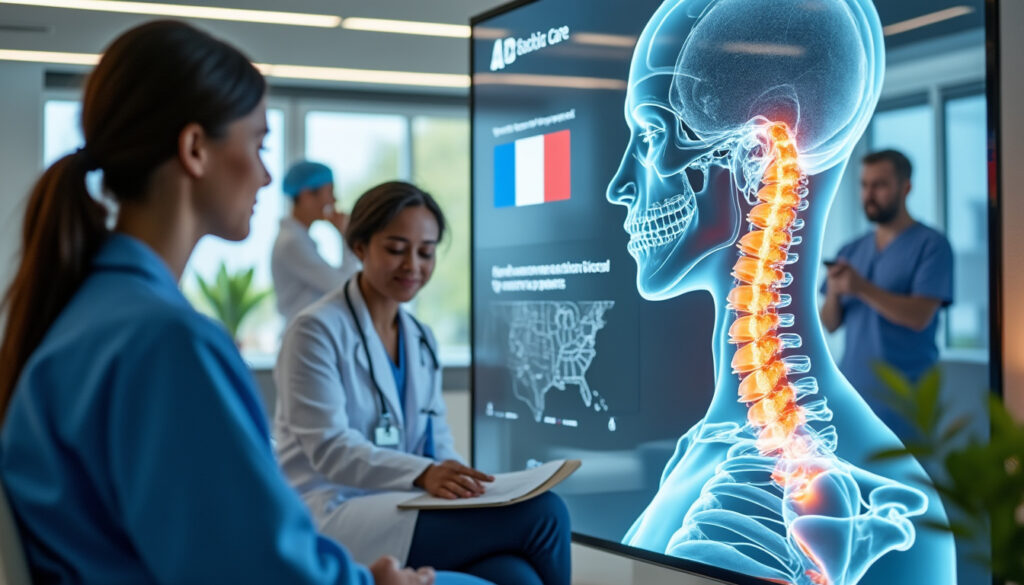
Chronic neck pain remains a significant challenge for thousands of residents in Quebec City every year, often leading them to seek effective spinal surgery options that minimize downtime and maximize long-term mobility. Among the recent advancements revolutionizing cervical spine care, the Cervical Disc Prosthesis stands out as a game-changing solution that addresses common pitfalls of traditional surgeries, specifically the debilitating post-surgery stiffness many patients fear. Rooted in cutting-edge biomechanics and supported by decades of clinical expertise, this innovative approach preserves the natural movement of the cervical spine while relieving debilitating nerve compression.
Access to state-of-the-art spinal surgery techniques remains a concern for many Canadians due to lengthy wait times and high costs within the local healthcare system. Fortunately, collaboration between Quebec and specialized surgical centers in France now offers an optimized transatlantic pathway that combines rigorous scientific evaluation, leading-edge technology, and holistic patient support. Spearheaded by Dr. Sylvain Desforges, an expert with over 30 years dedicated to spinal health, this journey from initial assessment to surgery and recovery is carefully coordinated to ensure both safety and personalization. The result is a unique patient-centered protocol that empowers individuals to regain mobility efficiently while minimizing potential complications associated with invasive cervical procedures.
Dynamic Surgical Solutions: How Cervical Disc Prostheses Preserve Natural Neck Mobility
The traditional approach to cervical spine surgery often involved spinal fusion, where two or more vertebrae are permanently joined to alleviate pain caused by damaged or herniated discs. While effective at stabilizing the spine, fusion invariably leads to loss of movement at the treated segment, contributing to overloading adjacent discs and accelerating degenerative changes—a condition known as adjacent segment disease.
In contrast, the surgical implantation of a Cervical Disc Prosthesis is designed to mimic the biomechanical behavior of a natural intervertebral disc. These prostheses, such as the ProDisc-C or Mobi-C, feature durable materials like titanium and advanced polymers that allow for flexion, extension, and rotational movements. By maintaining the segmental mobility, patients experience less mechanical stress on neighboring levels of the spine, resulting in a significant reduction of long-term arthritic complications.
One notable advantage of dynamic artificial discs is their ability to restore motion almost immediately post-implantation, enhancing the overall recovery process. For instance, a patient undergoing this type of minimally invasive surgery can anticipate a swift return to daily activities as the preservation of segment flexibility facilitates natural neck movements such as turning the head or looking up and down without discomfort or stiffness.
The interdisciplinary collaboration between surgeons, biomedical engineers, and rehabilitation specialists pushes the boundaries of implant design. French centers, recognized internationally for excellence in spinal care, utilize precise placement techniques aided by intraoperative radioscopic guidance to ensure implants achieve optimal positioning, directly impacting the lasting function of the prosthesis.
The outcome is a solution that addresses not only pain but also functional quality of life, challenging historic paradigms by enabling patients to maintain an active lifestyle after surgery without the usual postoperative limitations.

IntraSPINE® in Sherbrooke: Durable Solution for Chronic Low Back Pain
The management of chronic low back pain, a widespread condition affecting millions across Quebec and beyond, has reached a pivotal moment thanks to innovative medical technologies and coordinated care pathways. At the heart of this evolution lies the IntraSPINE implant,…
The Transatlantic Patient Journey: From Quebec Assessment to French Surgical Innovation
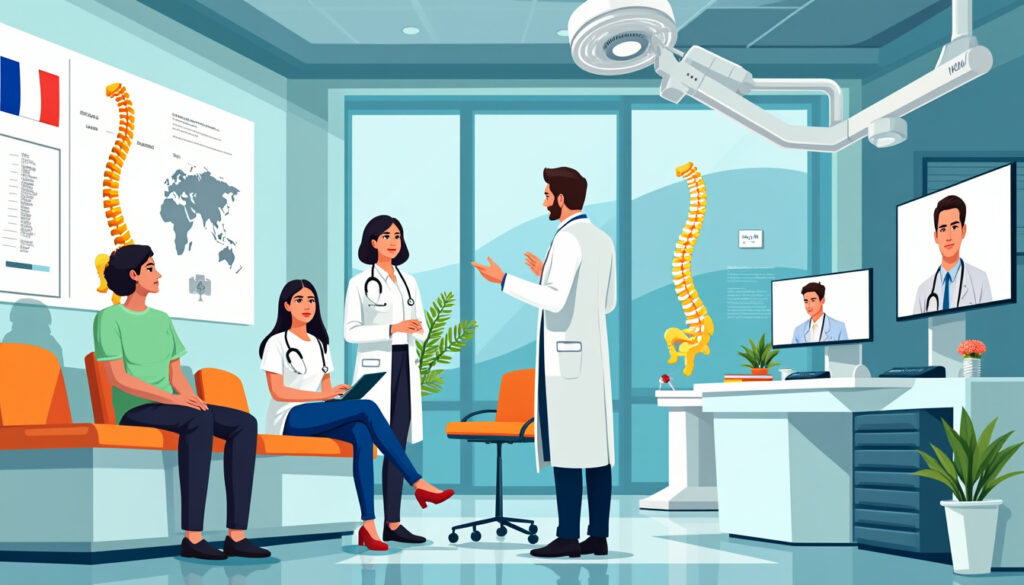
For patients in Quebec City considering surgery for severe cervical disc pathology, the pathway to advanced surgical care through the transatlantic partnership offers a well-orchestrated sequence that balances thorough evaluation, treatment readiness, and postoperative support.
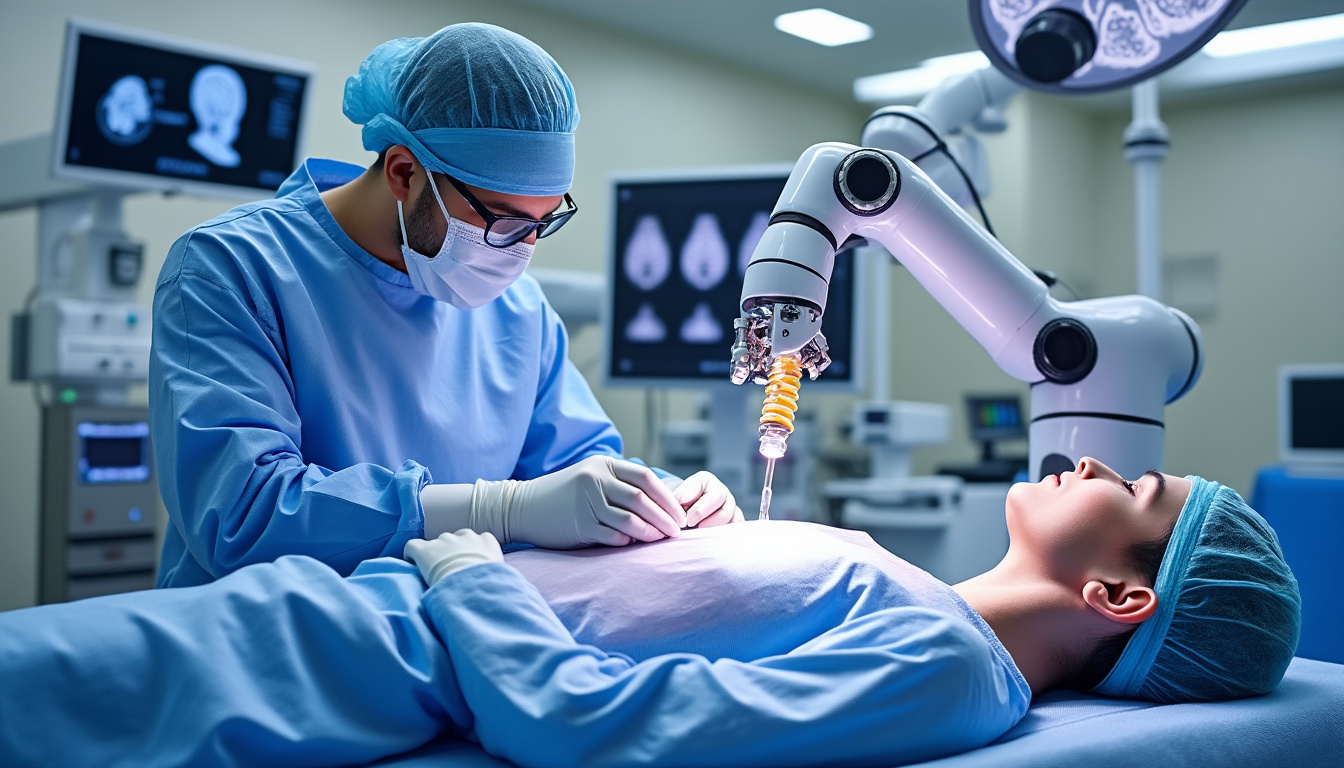
The initial stage is led by Dr. Sylvain Desforges and his expert team at the Clinique TAGMED, known for pioneering advanced conservative treatments including robot-assisted cervical neurovertébral decompression. This preliminary phase, ideally lasting 3 to 6 months, emphasizes spine preservation techniques and careful assessment to confirm whether surgical intervention becomes necessary. By adhering to evidence-based protocols and ethical standards focused on patient safety, TAGMED provides patients an opportunity to delay or avoid surgery if symptoms improve.
Should surgery be recommended, the patient is introduced to the coordinating agency Franchir which manages all logistical aspects of the medical stay in France. From selecting an appropriate specialist to organizing travel, accommodations, and medical appointments, the patient-centered coordination eliminates typical barriers of international healthcare access. This seamless integration also ensures compliance with Canadian medical regulations while benefiting from the French healthcare system’s expertise in minimally invasive spinal surgeries utilizing advanced implants such as the CerviFlex or MobilCouTech devices.
After the procedure, patients return to Quebec, where rehabilitation is overseen by Neurothérapie Montréal. This center specializes in personalized recovery protocols including controlled physical therapy to reestablish normal neck function, prevent post-surgery stiffness, and support long-term wellness. The consistent contact between Quebec and French teams underscores the importance of multidisciplinary collaboration.
This transatlantic model not only shortens waiting times often associated with Canadian public health but also mitigates financial and logistical costs faced by patients seeking care abroad, offering a unique holistic approach rarely accessible through other healthcare avenues.
Spine Surgery in Trois-Rivières: Reduce Pain and Preserve Mobility
In recent years, spine surgery in Trois-Rivières has evolved notably, combining advanced medical expertise with innovative technologies to deliver patient-centered care. This growing field addresses the increasing demand among Quebec residents seeking effective solutions for chronic back pain and mobility…
Minimally Invasive Techniques Enhancing Safety and Recovery in Cervical Spine Surgery
Minimally invasive surgery (MIS) represents a cornerstone of the modern approach to cervical disc replacement. This technique involves smaller surgical incisions, reduced tissue disruption, and targeted navigation to the affected vertebral segment. The benefits are manifold: minimized blood loss, shorter hospital stay—often just 24 hours—and lower infection rates.
In French partnered centers, MIS is coupled with advanced imaging modalities ensuring high precision during implant insertion. This translates into fewer postoperative complications and a recovery timeline that encourages early mobilization, crucial to preventing scar tissue formation and stiffness.
An example of such a technique is the anterior cervical approach, where surgeons access the spine through the front of the neck. This method ensures less muscular trauma compared to posterior approaches and offers direct visualization of the intervertebral disc for accurate prosthesis placement.
In addition, dynamic stabilization devices like TOPS and IntraSPINE complement disc replacement surgeries by providing segmental support while preserving spinal movement. These implants address specific cases involving modulated instability or degenerative syndromes without resorting to full fusion, thereby enhancing functional outcomes.
Patients benefit not only from the technical advancements but also from a comprehensive surgical protocol supervised by Dr. Desforges, who emphasizes scientific rigor and patient safety in every step from preoperative planning to postoperative follow-up.
Minimally Invasive Surgery in Longueuil: Reduce Hospital Stay Duration
In recent years, advances in spinal care have dramatically reshaped the treatment landscape for patients suffering from debilitating spinal conditions. Particularly in Longueuil, the emergence of minimally invasive surgery (MIS) techniques offers a transformative alternative to conventional open surgeries. These…
The Critical Role of Conservative Treatments Before Considering Surgery
Evidence consistently confirms that cervical spine surgery should be considered only after an exhaustive trial of conservative management. Dr. Sylvain Desforges highlights the importance of a dedicated 3- to 6-month program focusing on non-surgical care, especially before approving any surgical intervention.
At the forefront of this conservative approach is decompression neurovertébrale, a robotic-assisted traction therapy provided at Clinique TAGMED. This method gently reduces disc and nerve root pressure, often restoring function and alleviating pain without the risks of surgery. Patients receiving this treatment benefit from personalized protocols combining osteopathic manipulation, targeted exercises, and ergonomic guidance.
The rationale behind this preliminary period is twofold: to identify if symptoms can be controlled without surgery and to optimize the spine’s condition should surgery become unavoidable. Skipping this phase can lead to suboptimal outcomes and increased surgical risks.
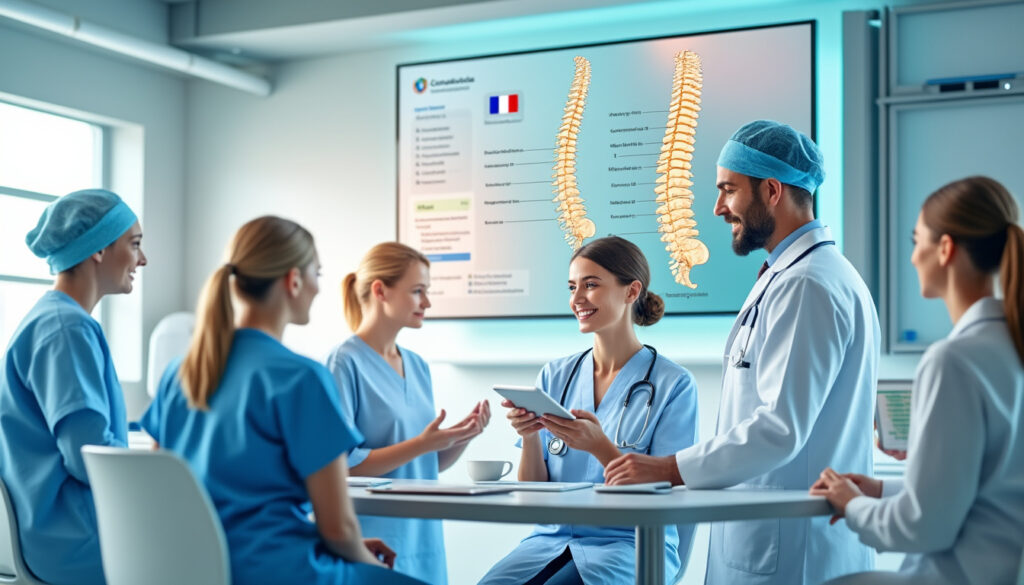
An interdisciplinary framework ensures patients are well informed about their options, including the indication, limitations, advantages, and expected progression of both conservative and surgical pathways, aiding in shared decision-making.
Many patients discover significant improvement after joining this robust program, underpinning the need for scientific and ethical prudence in managing cervical disc pathology.
IntraSPINE® in Laval: Modern Solution for Lumbar Stabilization
In the evolving landscape of orthopedic treatments, the city of Laval has become a hub for innovations addressing chronic lower back pain. Among the groundbreaking solutions gaining attention is the IntraSPINE device—a modern spinal implant designed to offer dynamic lumbar…
Postoperative Recovery and Rehabilitation: Keys to Preserving Neck Flexibility
After cervical disc prosthesis surgery, the rehabilitation phase is as critical as the operation itself to avoid post-surgery stiffness and optimize long-term mobility. Coordinated by the multidisciplinary team at Neurothérapie Montréal, each patient receives a tailored plan emphasizing early gentle mobilization followed by progressive strengthening exercises to restore function.
Patients are encouraged to begin light movements within days of surgery, under professional supervision, to prevent muscular atrophy and joint stiffness—a common issue if immobilization is prolonged. Temporary use of a soft cervical collar may be prescribed to reduce pain without compromising motion.
The rehabilitation timeline generally follows three stages:
- Initial phase (0-6 weeks): Pain management and gradual introduction of cervical movement.
- Intermediate phase (6 weeks to 3 months): Progressive muscle strengthening and load tolerance.
- Late phase (3-6 months): Return to daily activities and prevention of mechanical overload.
Patient education is imperative during this period, including guidance on posture, ergonomic adjustments, and lifestyle habits to maintain cervical spine health long term.
This approach fosters recovery that not only lessens postoperative discomfort but also sustains natural neck motion, critical for activities such as driving, work-related tasks, and recreation.

Neck Surgery in Montreal: Maintain Cervical Flexibility and Function
Neck conditions causing persistent pain or functional loss place a substantial burden on individuals and healthcare systems, especially in urban centers like Montreal. Surgical interventions targeting the cervical spine have evolved tremendously, aiming not only to relieve symptoms but to…
Distinctive Features of Cervical Disc Prosthesis: An Overview of Surgical Options and Implants
The landscape of cervical disc surgeries in France includes a variety of prosthetic devices, each designed to suit particular clinical scenarios based on patient anatomy, pathology, and surgical goals. Dr. Desforges’ team carefully evaluates each case to tailor the implant choice, prioritizing biocompatibility, durability, and biomechanical compatibility.
| Implant Name | Type | Estimated Lifespan | Preservation of Mobility | Advantages |
|---|---|---|---|---|
| Mobi-C | Dual-plate Mobile Bearing | 15-20 years | Excellent (flexion, extension, rotation) | Distributes mechanical loads evenly; reduces wear; quick recovery |
| ProDisc-C | Ball and socket design | 10-15 years | Good | Simple structure; durable titanium; widely used |
| Prestige LP | Metal-on-metal articulating disc | 12-18 years | Good | Stable; less polyethylene wear; suitable for younger patients |
| TOPS | Posterior dynamic stabilization | Varies | Dynamic segmental support | Ideal for facet joint instability; preserves motion; less invasive |
| IntraSPINE | Intervertebral spacer | Varies | Moderate | Alleviates mechanical pain; maintains intervertebral height |
This diverse portfolio ensures patients receive highly specialized care matching their pathology, a hallmark of the transatlantic network’s commitment to clinical excellence.

Disc Prosthesis in Lévis: Quick and Long-Lasting Results
Chronic back pain caused by degenerative disc disease continues to profoundly impact the quality of life for many residents in Lévis and the broader Quebec area. For decades, traditional spinal fusion surgery has been the primary solution for alleviating severe…
Economic and Human Benefits of Quebec-France Surgical Collaboration
Quebec patients facing long wait times for cervical spine surgery encounter not only physical distress but also economic and social burdens linked to prolonged disability. The established transatlantic collaboration offers a timely alternative, reducing waiting periods and expanding access to innovative surgical options often unavailable or costly in Canada.
Beyond faster intervention, the program orchestrates every phase—from preoperative evaluation to postoperative rehabilitation—with meticulous attention to cost containment and patient well-being. This comprehensive coordination decreases indirect expenses related to work absence, travel logistics, and administrative challenges that often accompany international treatment.
Moreover, patients benefit from a reassuring care environment emphasizing open communication and empowerment through educational resources. Dr. Desforges’ leadership infuses the process with scientific diligence, setting clear expectations and fostering shared decision-making.
Ultimately, this partnership exemplifies a patient-friendly model that balances cutting-edge medicine with humanized care, enhancing overall satisfaction and recovery outcomes for those choosing this path.

Motion Surgery in Terrebonne: Maintain Intervertebral Mobility
Back pain remains a widespread concern for many in Quebec, with traditional treatment pathways often imposing lengthy waiting periods and financial constraints. Recently, Motion Surgery in Terrebonne has emerged as a transformative option, attracting patients seeking spinal solutions that prioritize…
Essential List: Key Advantages of Cervical Disc Prosthesis Surgery
- Preservation of natural neck movement, reducing risk of adjacent segment degeneration
- Minimally invasive surgical techniques with faster recovery time and shorter hospital stay
- Advanced implant technology designed for durability and biomechanical compatibility
- Comprehensive multidisciplinary care including pre-op evaluation and post-op rehabilitation
- Access to exclusive surgical options through international collaboration
- Lower risk of post-surgery stiffness compared to spinal fusion
- Personalized treatment plans guided by rigorous scientific protocols and expert evaluation
What criteria determine eligibility for cervical disc prosthesis surgery?
Eligibility is based on a thorough evaluation including a 3 to 6 months trial of conservative treatment such as neurovertébral decompression. Patients with moderate disc degeneration without severe facet joint arthritis or major spinal instability are considered ideal candidates.
How long is the average hospital stay after cervical disc replacement?
Typically, the hospital stay is limited to 24 hours following minimally invasive cervical disc prosthesis surgery, allowing for rapid discharge without compromising patient safety.
Is full neck mobility restored after surgery?
The goal of cervical disc prosthesis is to restore neck flexibility close to natural movement, improving significantly on outcomes seen with traditional spinal fusion which restricts motion.
Are there any risks unique to cervical disc prosthesis surgery?
Risks include implant migration, infection, and potential nerve damage, although these are rare and managed through strict postoperative monitoring and rehabilitation protocols.
Is rehabilitation mandatory after cervical disc prosthesis implantation?
While traditional rehabilitation may not be mandatory for all patients, customized physical therapy and gentle exercises are strongly recommended to optimize recovery and sustain neck function.
For a preserved and natural cervical spine movement with minimized complications, and to learn more about this advanced surgical option, patients are encouraged to consult with Dr. Sylvain Desforges and his team. Detailed assessments and comprehensive care plans are available through Clinique TAGMED, ensuring a scientific, ethical, and patient-centric approach to cervical spine health.

Lumbar Disc Prosthesis in Saguenay: Durable and Approved Alternative
In the Saguenay region of Quebec, chronic lower back pain continues to present a significant challenge for many adults striving to maintain a high quality of life. Traditional treatment paths often involve long wait times and costly private care, which…