Cervical Disc Prosthesis in Quebec: Preventing Post-Operative Stiffness
August 8, 2026
Terrebonne Neck Herniation Care for Older Adults
August 8, 2026
In the evolving landscape of orthopedic treatments, the city of Laval has become a hub for innovations addressing chronic lower back pain. Among the groundbreaking solutions gaining attention is the IntraSPINE device—a modern spinal implant designed to offer dynamic lumbar stabilization with minimal invasiveness. IntraSPINE stands as a beacon of hope for patients suffering from lumbar disc degeneration and related conditions, combining advanced medical technology with an approach centered on preserving natural spinal mobility.
Dr. Sylvain Desforges, a pioneer in spine care with over 30 years of expertise, emphasizes the significance of integrating scientifically validated treatments like IntraSPINE to improve patient outcomes. His commitment to upholding rigorous ethical standards and evidence-based practices underlines the reliability of this technology in addressing lumbar issues that traditional therapies might struggle to resolve effectively.
Understanding the importance of pedagogy, Dr. Desforges ensures that patients and professionals alike gain a clear comprehension of how IntraSPINE functions, its benefits, indications, and the surgical journey involved. This approach demystifies complex spinal health concepts, empowering individuals to make informed decisions about their care pathway. Furthermore, his unique role in coordinating international patient journeys, especially between Canada and France, reflects a comprehensive and personalized treatment philosophy that transcends geographical boundaries.
Innovative Technology Behind IntraSPINE for Lumbar Stabilization
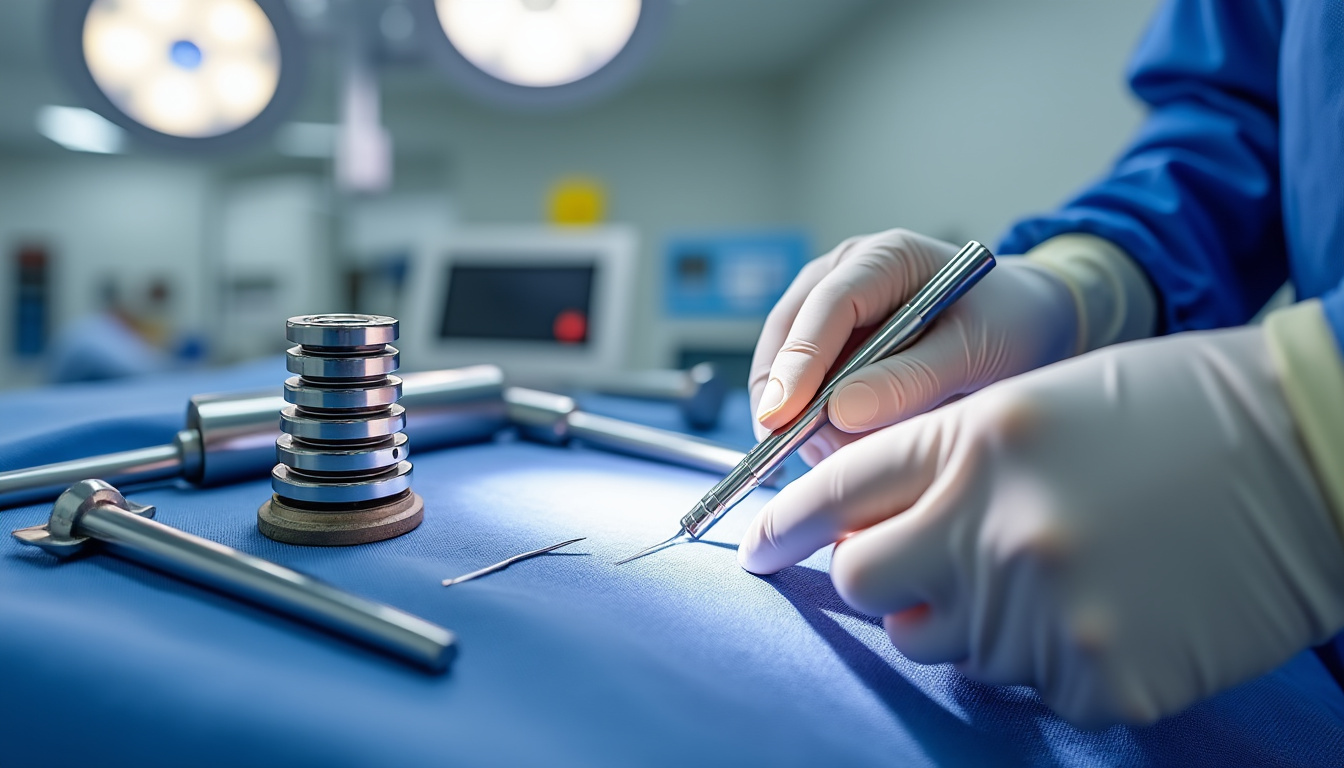
The IntraSPINE device represents a remarkable advancement in the field of spine surgery, crafted from flexible medical-grade silicone and covered with polyester fiber for optimal biocompatibility. Unlike rigid spinal fusion implants, IntraSPINE offers dynamic stabilization by sitting uniquely within the interspinous space while providing laminar support. This design respects the spine’s natural biomechanics, maintaining mobility between lumbar vertebrae from L1 to S1, which is crucial for preserving overall spinal health and function.
The device’s anterior portion contains a rigid “nose” which maintains foraminal height, thereby alleviating pressure on nerve roots and facet joints. Meanwhile, its flexible posterior tunnel ensures that spinal movements, such as flexion and extension, are not restricted, promoting a more natural range of motion post-surgery. Its silicone coating, enriched with an anti-adhesion film, minimizes tissue adhesions, a factor that contributes significantly to reducing postoperative discomfort and enhancing recovery.
Clinical Applications and Biomechanical Benefits
IntraSPINE is primarily indicated for patients with moderate functional impairment resulting from degenerative disc disease, facet joint arthropathy, or foraminal stenosis who have experienced relief of certain lumbar symptoms during spinal flexion. This dynamic interlaminar stabilization is particularly beneficial when conservative treatment over at least six months has not sufficiently alleviated pain.
Biomechanically, IntraSPINE works by enlarging the foraminal spaces, reducing stress on the facet joints, and redistributing load across the intervertebral discs. This approach mitigates further degeneration and supports the spine in maintaining its natural alignment and sagittal balance. Such biomechanical advantages lead to improved pain relief and enhanced functionality for patients, without the permanent rigidity associated with conventional fusion surgeries.
The simplicity and speed of the surgical procedure also enhance patient experience by reducing operative time and intraoperative blood loss. As a minimally invasive intervention, it respects surrounding soft tissues and maintains muscle integrity, which can significantly reduce postoperative recovery times compared to traditional spine surgeries found in other orthopedics treatments.
IntraSPINE® in Sherbrooke: Durable Solution for Chronic Low Back Pain
The management of chronic low back pain, a widespread condition affecting millions across Quebec and beyond, has reached a pivotal moment thanks to innovative medical technologies and coordinated care pathways. At the heart of this evolution lies the IntraSPINE implant,…
Unilateral Biportal Endoscopy (UBE): Complementary Minimally Invasive Technique
The surgery involving IntraSPINE is frequently complemented by the unilateral biportal endoscopic (UBE) technique for decompressive laminectomy and discectomy, especially in cases of large lumbar disc herniations. UBE employs two separate channels on the same side of the spine—one for visualization and the other for surgical instruments—allowing enhanced operation flexibility and superior visualization without extensive soft tissue disruption.
This technique offers advantages such as decreased scarring, lower risk of cerebrospinal fluid leaks, and preservation of vertebral stability, addressing some of the common complications associated with traditional open spine surgeries. Dr. Desforges highlights that integrating UBE with IntraSPINE allows for comprehensive neural decompression while simultaneously stabilizing the vertebral segment dynamically, balancing decompression and preservation of spinal kinematics.
Clinical Outcomes and Patient Recovery
Studies involving patients undergoing UBE combined with IntraSPINE implantation demonstrated significant reductions in leg and back pain, reflected in improved Visual Analog Scale (VAS) and Oswestry Disability Index (ODI) scores shortly after surgery and during mid-term follow-up. Radiological imaging also confirmed maintained posterior disc height and no progression of disc degeneration, signaling effective preservation of lumbar segment integrity.
Notably, patients who experienced this combined approach achieved early mobilization with the support of braces, minimized hospital stays, and no recorded surgery-related complications. These clinical outcomes illustrate how the technical precision of UBE and the dynamic nature of IntraSPINE synergize to produce superior patient benefits and enhanced quality of life.
Spine Surgery in Trois-Rivières: Reduce Pain and Preserve Mobility
In recent years, spine surgery in Trois-Rivières has evolved notably, combining advanced medical expertise with innovative technologies to deliver patient-centered care. This growing field addresses the increasing demand among Quebec residents seeking effective solutions for chronic back pain and mobility…
Patient Journey: From Evaluation to Transatlantic Care Coordination
For Quebec patients seeking advanced lumbar stabilization alternatives, Dr. Desforges plays a pivotal role in guiding the entire treatment pathway. His expertise in spinal evaluations respects the highest standards of Canadian and Quebecois medical ethics and regulations, ensuring safety and accuracy without performing diagnostic roles but providing thorough assessments that lay the groundwork for any therapeutic decision.
An essential part of the journey is a detailed evaluation phase where spinal pathologies are assessed objectively. Patients can then access cutting-edge surgical interventions such as IntraSPINE implantation in Laval, supervised by multidisciplinary teams experienced in combining surgical procedures with the latest technologies. Thanks to Dr. Desforges’ coordination, patients benefit from a seamless transatlantic pathway involving consultation, surgical planning, and postoperative care that extends from France back to Canada comprehensively.
This coordinated approach mitigates long wait times and high costs prevalent in private Canadian healthcare settings while delivering tailored care plans. The collaboration with platforms such as SOS Tourisme Médical exemplifies the optimized scheduling and quality assurance aspects that accompany this international treatment strategy.
TOPS™ in Gatineau: High-Performance Option for the Lumbar Spine
The landscape of spinal surgery has witnessed profound evolution, particularly for patients grappling with lumbar spine disorders such as spinal stenosis and spondylolisthesis. These conditions, increasingly prevalent among Quebec’s population, impose substantial limitations on mobility and quality of life. The…
Importance of Conservative Treatment Before Considering Surgery
Although surgical advancements like IntraSPINE offer remarkable benefits, Dr. Desforges stresses that surgery should be contemplated only after a thorough trial of conservative treatments lasting three to six months. This includes physical therapy, medical management, and notably, neurovertebral decompression techniques such as those available at the Clinique TAGMED, a leader in advanced non-surgical spine care.
The neurovertebral decompression method reduces pressure on discs and nerves through innovative technology, potentially eliminating or delaying the need for surgical intervention. Patients who have not explored this avenue are encouraged to undergo such treatments, as they represent a scientifically grounded, less invasive initial path.
The emphasis on evidence-based, non-surgical options reflects Dr. Desforges’ dedication to prioritizing patient safety and the least invasive effective interventions. This structured approach ensures that surgery like IntraSPINE implantation is appropriately indicated and reserved for cases where other modalities have proven insufficient.
Cervical Disc Prosthesis in Quebec City: Avoid Post-Surgery Stiffness
Chronic neck pain remains a significant challenge for thousands of residents in Quebec City every year, often leading them to seek effective spinal surgery options that minimize downtime and maximize long-term mobility. Among the recent advancements revolutionizing cervical spine care,…
What Distinguishes the IntraSPINE Service Experience in Laval
The services surrounding IntraSPINE in Laval stand out due to the integration of advanced medical devices, expert clinical teams, and adherence to ethical and scientific standards championed by Dr. Desforges. The clinic environment combines innovation with personalized care, ensuring full preoperative and postoperative support tailored to each patient’s unique clinical profile.
Critical differentiators include access to state-of-the-art technologies, including the minimally invasive UBE technique, and the selective use of premium spinal implants engineered to preserve mobility while enhancing lumbar spine stability. The team’s expertise, augmented by transatlantic experience, allows for continuous monitoring and adaptation of patient care pathways, supporting optimal recovery and sustained spine health.
- Minimized surgical impact through cutting-edge minimally invasive techniques
- Preservation of lumbar biomechanics to maintain natural spinal mobility
- Comprehensive care coordination across international healthcare providers
- Use of advanced implants like IntraSPINE approved for safety and efficacy
- Dedicated patient education and follow-up fostering informed decisions and confidence
Such a holistic model not only advances medical outcomes but also enhances patient trust and engagement, hallmarks of Dr. Desforges’ practice philosophy.
Minimally Invasive Surgery in Longueuil: Reduce Hospital Stay Duration
In recent years, advances in spinal care have dramatically reshaped the treatment landscape for patients suffering from debilitating spinal conditions. Particularly in Longueuil, the emergence of minimally invasive surgery (MIS) techniques offers a transformative alternative to conventional open surgeries. These…
Cost-Benefit Analysis of the Transatlantic Lumbar Stabilization Pathway
Choosing to undertake lumbar stabilization involving IntraSPINE in Laval through the coordinated international pathway offers substantial economic and human advantages. Financially, patients avoid the prohibitive costs often associated with private Canadian surgeries, which can be double or even triple the price of equivalent treatments in France due to systemic healthcare differences.
The transatlantic pathway also reduces waiting times significantly, which is vital for patients with chronic back pain who face long delays in the public Canadian system. Early intervention made possible by this route mitigates the progression of symptoms and potential disability, thus preserving productivity and quality of life.
On the human side, patients benefit from continuity of care established between experienced surgeons, osteopathic evaluation experts like Dr. Desforges, and rehabilitation teams. This comprehensive support network accelerates recovery and improves post-surgical outcomes by addressing not only the physical but psychological aspects of spine health.
| Aspect | Traditional Canadian Route | Transatlantic IntraSPINE Pathway |
|---|---|---|
| Waiting Time to Surgery | 6 to 18 months or more | 1 to 3 months |
| Cost Estimates | High (private care often over $20,000 CAD) | Moderate (competitive pricing in France) |
| Technological Advantage | Standard fusion techniques | Dynamic stabilization with IntraSPINE |
| Postoperative Recovery | Longer hospital stays, higher risk of complications | Short hospital stays, minimally invasive, early mobilization |
| Continuity of Care | Less coordinated, varied follow-up | Coordinated transatlantic multidisciplinary teams |
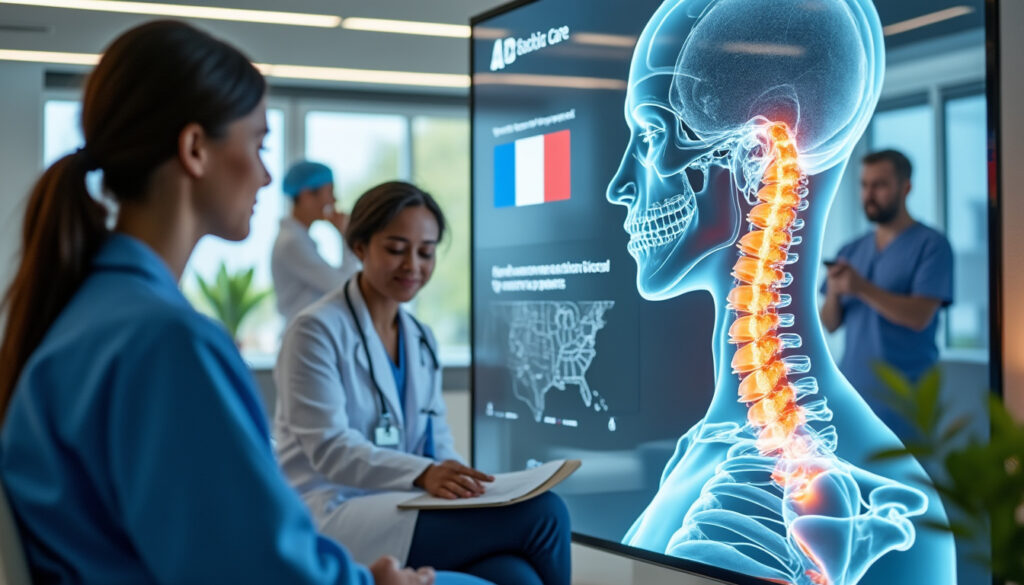
Neck Surgery in Montreal: Maintain Cervical Flexibility and Function
Neck conditions causing persistent pain or functional loss place a substantial burden on individuals and healthcare systems, especially in urban centers like Montreal. Surgical interventions targeting the cervical spine have evolved tremendously, aiming not only to relieve symptoms but to…
Patient Education and Empowerment in Lumbar Spine Health
Dr. Sylvain Desforges prioritizes patient education as an essential element of successful spine care. He provides clear, jargon-free explanations about the indications, procedure steps, potential risks, and expected outcomes associated with IntraSPINE implantation and complementary minimally invasive techniques.
This pedagogical approach enhances patient confidence, supports shared decision-making, and encourages active participation in rehabilitation. Patients are invited to ask questions and understand their condition fully, recognizing that each case is unique and requires individualized evaluation and treatment planning.
Accessible resources and continuous support form a cornerstone of this philosophy, ensuring patients can make informed choices about their health journeys, including when and how to consider surgical options within a holistic framework of lumbar health.
The above video offers a succinct introduction to the surgical method incorporating IntraSPINE technology, highlighting the benefits of dynamic stabilization combined with minimally invasive techniques.
This video details the UBE surgical approach, demonstrating why it is an excellent complement to IntraSPINE implantation by facilitating precise nerve decompression in lumbar spine surgery.
Disc Prosthesis in Lévis: Quick and Long-Lasting Results
Chronic back pain caused by degenerative disc disease continues to profoundly impact the quality of life for many residents in Lévis and the broader Quebec area. For decades, traditional spinal fusion surgery has been the primary solution for alleviating severe…
IntraSPINE in Laval: A Dynamic Future in Spine Surgery
As spinal care continues to innovate, IntraSPINE in Laval exemplifies the convergence of scientific rigor, ethical care, and patient-centered innovation. With extensive support from experts like Dr. Desforges and his team, patients can access proven dynamic spinal implants designed to alleviate back pain while preserving natural spinal mobility.
This modern medical technology, combined with a patient-friendly surgical pathway, sets a benchmark for future standards in lumbar spine surgery, representing hope for those seeking effective, less invasive, and long-lasting relief. Interested individuals are encouraged to explore options and discuss their cases with professionals specialized in lumbar spine evaluation and care.
For more information or to discuss your individual needs, please visit SOS Tourisme Médical contact page to initiate your personalized lumbar stabilization plan.
What conditions are best treated with the IntraSPINE device?
IntraSPINE is primarily indicated for lumbar degenerative disc disease, facet joint arthropathy, and foraminal stenosis, especially when patients have not responded to at least six months of conservative management.
How does IntraSPINE differ from traditional spinal fusion implants?
Unlike rigid fusion devices, IntraSPINE provides dynamic stabilization that preserves natural spinal motion, reduces stress on facet joints, and maintains foraminal height which helps prevent adjacent segment degeneration.
Is surgery the first treatment option for lumbar pain?
Surgery, including IntraSPINE implantation, should be considered only after exhausting conservative treatments such as physical therapy, medication, and advanced neurovertebral decompression methods offered at facilities like Clinique TAGMED.
What are the benefits of combining UBE with IntraSPINE implantation?
The unilateral biportal endoscopy technique allows for minimally invasive decompression with excellent visualization, while IntraSPINE provides dynamic stabilization, resulting in better pain relief, preserved spinal mobility, and reduced risk of complications.
How does international coordination enhance patient care?
Coordination between Canadian and French healthcare teams facilitates timely access to advanced spine surgery, ensures thorough pre- and post-operative care, and offers personalized pathways that respect each patient’s unique medical and cultural context.
Motion Surgery in Terrebonne: Maintain Intervertebral Mobility
Back pain remains a widespread concern for many in Quebec, with traditional treatment pathways often imposing lengthy waiting periods and financial constraints. Recently, Motion Surgery in Terrebonne has emerged as a transformative option, attracting patients seeking spinal solutions that prioritize…