Vaudreuil-Dorion Sciatica Relief After Failed Treatments
May 16, 2026
Mirabel Neck Herniation Recovery Using Decompression
May 16, 2026
Chronic low back pain remains a formidable challenge for healthcare providers and patients in Sherbrooke and across Quebec. Despite advances, many individuals face prolonged wait times and limited access to innovative treatments within the local healthcare system. Against this backdrop, the emergence of IntraSPINE offers a promising, minimally invasive intervention tailored to preserve spinal mobility while alleviating persistent pain. Sherbrooke’s adoption of this dynamic interlaminar stabilization device reflects a broader shift towards precision and patient-centered care in spinal health.
The significance of IntraSPINE extends beyond pain relief; it represents a convergence of biomechanics, cutting-edge materials, and clinical expertise aimed at optimizing functional outcomes. Spearheading this transformative approach in Quebec is Dr. Sylvain Desforges, whose 30-plus years of dedication to spinal evaluation and conservative care bring a rare blend of scientific rigor and empathic patient engagement. Through cross-Atlantic coordination and innovative treatment pathways, patients here can now access solutions that were once limited to European centers, all while receiving thorough guidance grounded in evidence-based practice.
Understanding IntraSPINE: A Breakthrough in Minimally Invasive Back Pain Therapy in Sherbrooke
IntraSPINE is an advanced device designed specifically to treat patients suffering from chronic low back pain related to degenerative disc disease spanning the lumbar segments from L1 to S1. What sets this implant apart is its unique dynamic interlaminar stabilization system that operates within the interspinous space, strategically positioned between the laminae of adjacent vertebrae. Constructed with medical-grade dimethyl siloxane and coated with pure polyethylene terephthalate, its innovative materials provide both durability and biocompatibility, ensuring long-term safety and performance.
This device does not simply immobilize the spine as traditional fusion surgeries do; rather, it supports the natural biomechanics of the lumbar region by allowing controlled movement. Through gentle tension on the interspinous ligaments and cushioning between vertebrae, the implant reduces nerve compression and mechanical stress—two primary contributors to pain. Such a dynamic approach restores function that many patients thought was permanently lost, promoting both symptom relief and improved mobility.
Clinical evidence from recent studies demonstrates that IntraSPINE maintains sagittal balance, a critical factor in overall posture and spinal health. Maintaining this alignment helps prevent further degenerative changes and reduces compensatory strain on adjacent spinal segments. Patients undergoing this treatment in Sherbrooke benefit from a minimally invasive procedure that typically involves short hospital stays and faster rehabilitation periods compared to more invasive options.
Because of its innovative nature, IntraSPINE is rapidly gaining recognition as a safe and effective alternative for patients intolerant of or unresponsive to conservative treatments. This device represents a notable evolution in back pain therapy, adding a powerful, motion-preserving tool to the armamentarium conceived by experts such as Dr. Desforges, whose leadership ensures implementation aligns with stringent scientific standards.
Minimally Invasive Surgery in Longueuil: Reduce Post-Surgical Risks
Minimally invasive surgery is redefining the landscape of patient care in Longueuil and beyond, offering transformative advantages in reducing post-surgical risks and enhancing recovery outcomes. Thanks to advances in healthcare technology, including laparoscopic and robotic-assisted techniques, patients now experience smaller…
Types of Spinal Surgery Available in France: Navigating Options Beyond Traditional Fusion
France has long been at the forefront of innovative spinal surgery techniques, offering patients a spectrum of interventions tailored to their condition and lifestyle. Dr. Sylvain Desforges leverages his extensive knowledge of these approaches to assist patients—especially those navigating transatlantic treatment options—in making informed decisions. The primary types of lumbar spine surgeries available in France include simple decompression, vertebral fusion, and motion-preserving surgeries such as the placement of the IntraSPINE implant.
Simple decompression surgeries focus on relieving direct nerve root pressure by removing bone or soft tissue impinging on neural structures. While often effective for immediate pain relief, they do not generally address underlying spinal instability and may offer only temporary benefit, sometimes necessitating further interventions down the line.
Vertebral fusion aims to stabilize segments of the lumbar spine by permanently joining two or more vertebrae with bone grafts and hardware. This technique offers durable pain relief for specific patterns of degeneration or instability but sacrifices natural spinal mobility. Additionally, fusion may accelerate degeneration at adjacent levels and typically involves longer hospitalization and rehabilitation.
In contrast, motion-preserving surgeries like the IntraSPINE implantation seek to maintain physiological spinal movement while providing stability. By preserving segmental mobility, patients often experience reduced postoperative stiffness and quicker functional recovery. However, as a relatively newer technology, it requires specialized surgical expertise and the collection of long-term outcomes is ongoing.
| Type of Surgery | Advantages | Disadvantages |
|---|---|---|
| Simple Decompression | Rapid nerve pain relief; Less invasive | Temporary effect; Possible need for revision |
| Vertebral Fusion | Stabilizes spine; Long-term management | Loss of mobility; Adjacent segment degeneration risk |
| Motion-Preserving (IntraSPINE) | Preserves movement; Less stiffness; Quicker recovery | Requires expert technique; Limited long-term data |
Through his role as founder and president of the Canadian Association of Manual & Osteopathic Medicine (ACMA) and the Canadian College of Osteopaths, Dr. Desforges ensures patients pursuing surgical care in France receive guidance aligned with international standards and ethical best practices. This collaboration bridges geographic divides making advanced spine care more accessible and personalized.
IntraSPINE® in Laval: Quick and Effective Recovery
Chronic lower back pain remains a pressing challenge for many active individuals across Quebec, impacting their mobility and overall quality of life. With healthcare access hurdles and lengthy wait times for spinal surgeries domestically, a pioneering collaboration has emerged linking…
Detailed Patient Journey: From Evaluation to Recovery with Expert International Coordination
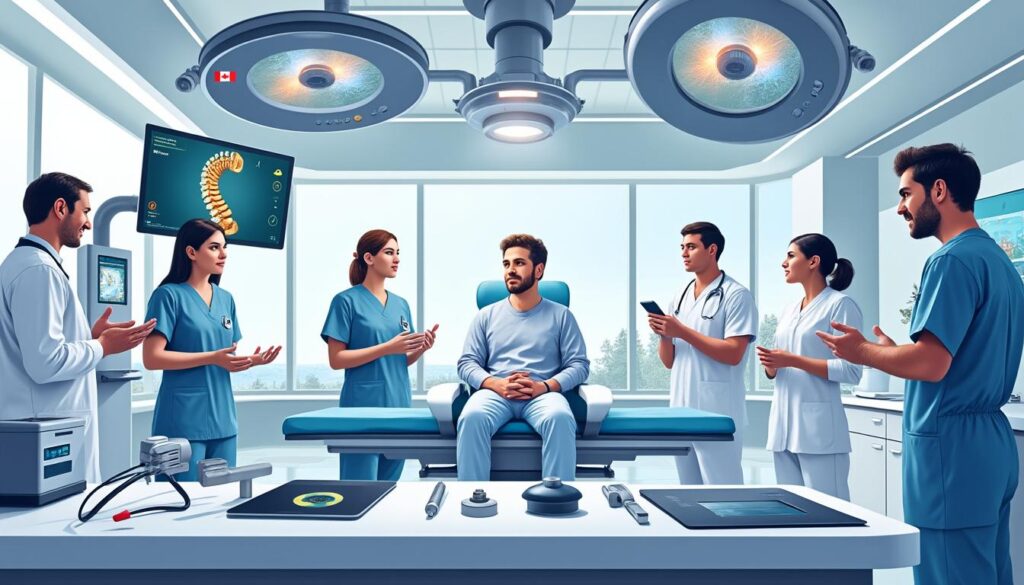
Effective spine care requires meticulous coordination through every phase of the patient journey, ensuring safety and optimal outcomes. Dr. Desforges’ expertise is instrumental in orchestrating a seamless transatlantic treatment pathway that spans initial evaluation, conservative therapy, surgery, and rehabilitation.
The process begins with a thorough clinical assessment conducted at clinics such as TAGMED in Sherbrooke, where advanced imaging complements physical examination to precisely identify spinal pathology. The expert evaluation includes quantifying pain, assessing spinal function, and determining suitability for various interventions. This comprehensive appraisal forms the foundation for a tailored plan.
Significantly, the emphasis is placed on completing an adequate course of conservative treatment—typically spanning three to six months—prior to contemplating surgery. Such non-invasive strategies include neurovertebral decompression, physical therapy, and adjunctive modalities like laser therapy, all aimed at reducing inflammation, enhancing spinal mobility, and controlling symptoms without immediate recourse to operative measures.
If conservative care does not sufficiently improve the patient’s condition, surgical options including the IntraSPINE implantation are considered. Dr. Desforges ensures patients are fully informed about the benefits and limitations of each choice, fostering shared decision-making grounded in transparent communication. Once surgery is planned, coordination with French surgical teams facilitates timely intervention, while post-operative care emphasizes rehabilitation and periodic follow-up to monitor integration and performance of the implant.
This integrated international model not only expedites access to innovative solutions but also creates a support framework spanning continents, ensuring continuity and quality of care for each patient’s unique condition.
Neck Surgery in Montreal: Preserve Cervical Mobility After Surgery
The management of cervical spine disorders presents unique challenges that often require innovative surgical techniques aimed not only at alleviating pain but also at preserving the natural mobility of the neck. In Montreal, patients seeking relief from cervical spine issues…
Biomechanical Benefits of IntraSPINE for Lumbar Spine Health and Function
At the core of IntraSPINE’s success lies its biomechanical design tailored to preserve and enhance lumbar spine function. Unlike rigid fusion surgeries that eliminate motion, the dynamic stabilization system maintains segmental mobility essential for daily activities and long-term spinal health.
Placed at the interspinous space near the instantaneous axis of rotation of lumbar vertebrae, the implant allows natural flexion and extension while simultaneously unloading vertebral discs and reducing nerve root compression. Patients often report decreased stiffness and improved range of motion, correlating with enhanced quality of life and reduced dependence on analgesics.
Scientific evaluations confirm several key functional improvements associated with IntraSPINE:
- Dynamic elastic support: This adaptive tensioning accommodates spinal movement while avoiding harmful excessive strain.
- Shock absorption: Silicone-based cushioning minimizes mechanical stress on vertebrae, delaying degenerative changes.
- Postural equilibrium: Preservation of sagittal balance supports better spinal alignment, reducing compensatory posture adjustments.
- Protection of adjacent segments: By spreading mechanical loads, adjacent vertebral areas are shielded from accelerated wear.
Such biomechanical advantages translate not only into symptom relief but also into preservation of structural integrity over time—an important consideration for patients seeking sustainable solutions. The dynamic nature of the device distinguishes it from traditional treatments and aligns well with Dr. Desforges’ philosophy of conservative, evidence-driven spinal care.
Disc Prosthesis in Lévis: Approved Surgical Innovation
In the evolving landscape of spine health, the advent of the Disc Prosthesis in Lévis marks a significant stride in surgical innovation. This breakthrough approved medical device offers patients an advanced option for conditions previously limited to traditional fusion surgery.…
Economic and Systemic Benefits of Coordinated Transatlantic Spine Care Programs
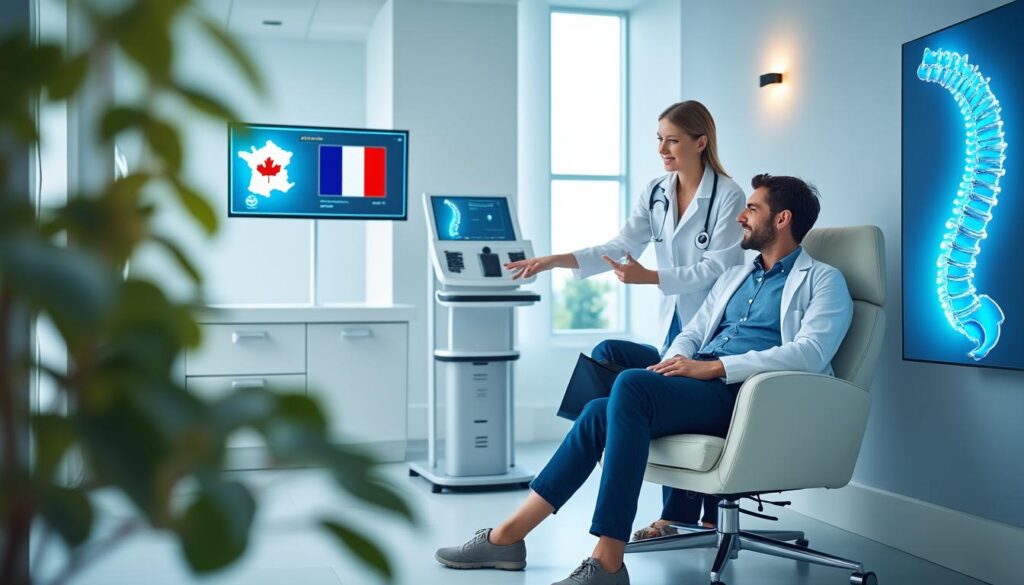
Cross-border medical collaboration has emerged as a practical and cost-effective option for Canadians experiencing prolonged waits or high costs for spine surgery domestically. Dr. Desforges fosters such partnerships, creating streamlined pathways between Quebec and French centers specializing in advanced interventions like IntraSPINE.
This transatlantic approach reduces total healthcare expenses by combining expert surgical care with more affordable procedure costs abroad. Patients benefit from shorter waiting periods, allowing earlier relief and potentially preventing chronic disability. Additionally, follow-up care integration ensures ongoing monitoring without compromising quality.
Some key advantages include:
- Financial savings: Accessing innovative surgery at a competitive cost reduces both direct and indirect healthcare expenditures.
- Improved scheduling: Avoiding domestic backlog accelerates timely treatment essential for better prognoses.
- Access to leading expertise: Collaborations with French neurosurgeons and orthopedists ensure usage of cutting-edge technologies and techniques.
- Comprehensive support: Patients receive personal guidance through complex logistical arrangements, reducing stress and enhancing satisfaction.
Through Dr. Desforges’ leadership, patients can navigate these international options smoothly, making a compelling case for transatlantic coordination as a model for the future of spine care.
Motion Surgery in Terrebonne: Maintain Intervertebral Mobility
In recent years, the landscape of spine surgery has witnessed transformative advancements, with Motion Surgery emerging as a pivotal innovation, particularly in Terrebonne. Unlike traditional spine operations that often focus on immobilizing affected segments, Motion Surgery prioritizes preserving natural intervertebral…
Conservative Care as a Critical Prior Step Before Surgical Interventions like IntraSPINE
Dr. Desforges consistently advocates that surgical options should only be pursued after diligent completion of conservative therapies lasting three to six months. This approach reflects both clinical evidence and ethical commitment, ensuring interventions like IntraSPINE implantation are appropriately reserved for patients who have not responded to less invasive treatments.
Crucially, if conservative care did not include modern neurovertebral decompression as offered at pioneering centers like Clinique TAGMED, patients are encouraged to undergo such therapies before considering surgery. This technique applies targeted traction to reduce disc and nerve pressure, often resulting in notable symptom improvement.
Other conservative measures include:
- Custom physical therapy aimed at strengthening lumbar support muscles and correcting posture
- Pain management through advanced laser treatments and shockwave therapy to reduce inflammation and promote tissue healing
- Patient education on lifestyle modifications and ergonomic adjustments
This multipronged conservative regimen not only enhances the potential for recovery without surgery but also optimizes surgical outcomes if a procedure like IntraSPINE becomes necessary.

Lumbar Disc Prosthesis in Saguenay: Approved and Safe Solution
Chronic lower back pain has long been a pervasive health challenge in the Saguenay region, significantly impacting the daily lives of many residents. In recent years, advances in spinal care have introduced promising alternatives to traditional spinal fusion surgery, offering…
Innovations in Spinal Surgery: Integrating Laser Therapy and Dynamic Implant Technologies
Spinal care has entered an exciting era where technology merges with personalized medicine to improve patient outcomes. Dr. Desforges integrates modalities such as laser therapy—which accelerates soft tissue repair and alleviates inflammation—with the biomechanically sophisticated IntraSPINE dynamic implant. This combination showcases the forefront of minimally invasive spine surgery.
Laser therapy minimizes tissue trauma, promotes faster recovery, and reduces chronic inflammation contributing to pain persistence. When paired with dynamic implants that preserve natural motion, patients often achieve superior functional results and reduced postoperative complications compared to traditional surgeries.
Key benefits of these innovations are:
- Less surgical disruption and reduced hospitalization time
- Accelerated return to daily activities and improved quality of life
- Decreased long-term degeneration risks through preservation of natural biomechanical function
These state-of-the-art treatments, led by clinicians like Dr. Desforges, push the limits of what is possible in chronic pain management and spine support, representing the future standard of care.
IntraSPINE® in Sherbrooke: Improve Posture and Reduce Pain
Chronic low back pain is a pervasive challenge that affects countless individuals in Sherbrooke and beyond, limiting daily activities and reducing overall quality of life. Amidst the growing demand for effective and durable solutions, the IntraSPINE implant has emerged as…
Dr. Sylvain Desforges: Pioneering Expert in Spinal Health and International Patient Coordination
With over 30 years of dedicated practice, Dr. Sylvain Desforges stands out as a pioneering expert in spinal evaluation and conservative care. Holding qualifications including B.Sc., D.O., and N.D., and serving as founder and president of the Canadian Association of Manual & Osteopathic Medicine and the Canadian College of Osteopaths, he embodies scientific rigor, ethical practice, and innovation.
Dr. Desforges’ unmatched expertise in assessing complex spinal pathologies allows for highly individualized treatment plans. His leadership extends into facilitating patients’ cross-border journeys from Canada to France, enhancing access to advanced technologies such as IntraSPINE, and ensuring compliance with diverse regulatory frameworks.
He emphasizes transparent communication and patient education, empowering individuals to understand their condition clearly and participate actively in their care decisions. Coordination with multi-disciplinary teams and international surgical partners exemplifies his commitment to optimizing outcomes and humanizing medical care.
Patients seeking to explore their back pain therapy options can engage with Dr. Desforges for a thorough evaluation that respects each unique clinical scenario and personal context.
For those interested in learning more or initiating a personalized assessment, please visit https://www.sostourismemedical.com/contact to connect with Dr. Desforges and his team. Together, you can explore effective, evidence-based strategies to regain your spinal health and quality of life.
What makes IntraSPINE a minimally invasive option for low back pain?
IntraSPINE is implanted using small incisions with minimal tissue disruption, allowing faster recovery and less postoperative pain compared to traditional fusion surgeries.
Who is an ideal candidate for IntraSPINE implantation?
A thorough evaluation by experts like Dr. Desforges assesses spinal stability and degeneration severity to determine if patients will benefit from motion-preserving dynamic stabilization.
Why complete conservative treatments before considering surgery?
Conservative therapies can alleviate symptoms and improve function without surgery, potentially avoiding the need for invasive procedures or enhancing surgical outcomes if surgery becomes necessary.
How does IntraSPINE help maintain spinal biomechanics?
The device supports natural spinal movement by cushioning vertebrae and tensioning ligaments, preserving flexibility and reducing mechanical stress that can lead to further degeneration.
What are the benefits of coordinating spine care internationally?
Cross-border care reduces wait times, ensures access to innovative treatments, lowers costs, and provides comprehensive support throughout the patient journey.
TOPS™ in Gatineau: Preserve Function and Reduce Lumbar Pain
In the evolving landscape of spine surgery, patients suffering from degenerative lumbar conditions are seeking solutions that not only alleviate pain but also preserve the natural function of the spine. The introduction of the TOPS (Total Posterior Spine) system in…