
IntraSPINE® in Sherbrooke: Fast Recovery After Surgery
October 26, 2025
Motion Surgery in Terrebonne: Limit Segment Wear
October 26, 2025
In Quebec, patients seeking effective alternatives to lumbar spinal fusion face extended waiting lists and considerable costs when pursuing private care. This reality drives many to explore transatlantic medical solutions, especially in France where advanced lumbar disc prosthesis technologies are more accessible and innovative. These interventions not only preserve lumbar motion but offer significant biomechanical and functional advantages over traditional fusion surgeries. With over three decades of experience, Dr. Sylvain Desforges stands as a recognized expert in spinal evaluation and patient guidance through such treatments. Leveraging evidence-based practices and cutting-edge technologies like the LP-ESP lumbar disc prosthesis, Dr. Desforges supports patients from Quebec in navigating the medical journey across continents seamlessly and safely.
The landscape of lumbar disc replacement has evolved substantially, featuring implants designed to mimic the natural disc’s function with multiple degrees of freedom and shock absorption capacity. This allows patients to maintain spinal flexibility post-surgery while reducing the risk of degeneration at neighboring disks. Moreover, transatlantic care pathways optimize treatment timelines and results through coordinated evaluation, surgery, and rehabilitation processes. This article unpacks the types of lumbar surgeries available in France, elaborates on the patient journey including preoperative conservative treatments, and explains why international collaboration is an emerging standard in addressing spinal health challenges.
Understanding the Types of Lumbar Spine Surgeries Available in France
France has positioned itself at the forefront of spinal surgeries, offering several innovative techniques that differ significantly from traditional fusion methods commonly performed in Quebec. The surgical options can be broadly categorized into three main types:
- Simple Decompression Surgery: Primarily aimed at relieving nerve root pressure caused by disc herniation or spinal stenosis, this procedure removes bulging disc material or bone spurs. It tends to preserve the native spinal structures and allows patients a swift recovery.
- Spinal Fusion: This conventional technique involves the surgical joining of two or more vertebrae to eliminate motion at painful segments. While effective in stabilizing the spine, it can lead to reduced mobility and potential adjacent segment degeneration over time.
- Motion-Preserving Lumbar Disc Prosthesis: Also known as total disc replacement (TDR), this advanced surgery substitutes the diseased intervertebral disc with an artificial implant designed to replicate natural biomechanics. Devices like the LP-ESP lumbar disc prosthesis provide six degrees of freedom, including shock absorption, aiming to maintain spinal mobility and reduce stress on adjacent segments.
Among the disc prostheses, the LP-ESP stands out due to its innovative one-piece viscoelastic design which differs from older two- or three-piece devices by allowing more physiological movement and reducing shear stress at the implant interface. Other notable implant manufacturers such as Medtronic, Zimmer Biomet, and Stryker also offer devices that contribute to motion preservation but may have different design philosophies or mechanical properties.
The choice among these surgical options depends on a thorough evaluation of the patient’s pathology, spinal anatomy, and previous treatment responses. Medical teams in France emphasize a personalized plan that aligns with functional goals, pain relief expectations, and long-term spine health.
| Type of Surgery | Key Features | Advantages | Potential Limitations |
|---|---|---|---|
| Simple Decompression | Removal of nerve compression sources | Preserves spinal anatomy, faster recovery | Does not address disc degeneration directly |
| Spinal Fusion | Vertebral segment fusion eliminating motion | Effective stabilization, pain relief | Reduced flexibility, risk of adjacent segment disease |
| Disc Prosthesis (TDR) | Artificial disc implant preserving motion | Maintains mobility, reduces adjacent stress | Requires careful candidate selection, limited insurance coverage |
This spectrum of options showcases France’s commitment to offering personalized and updated interventions to patients facing lumbar spine issues.


IntraSPINE® in Sherbrooke: Durable Solution for Chronic Low Back Pain
The management of chronic low back pain, a widespread condition affecting millions across Quebec and beyond, has reached a pivotal moment thanks to innovative medical technologies and coordinated care pathways. At the heart of this evolution lies the IntraSPINE implant,…
Step-by-Step Patient Journey for Lumbar Disc Prosthesis Treatment in France
The pathway to lumbar disc replacement surgery abroad involves meticulous planning and coordination to ensure patient safety, effective treatment, and positive outcomes. Dr. Sylvain Desforges, leveraging his expertise and international network, guides patients through this comprehensive journey.
1. Initial Evaluation and Conservative Treatment Assessment
Before contemplating surgery, patients undergo a detailed clinical and radiological evaluation to confirm diagnosis. An emphasis is placed on completing an adequate conservative management phase lasting between 3 to 6 months, which may include:
- Physical therapy and rehabilitation
- Medical pain management
- Advanced non-invasive interventions like neurovertebral decompression offered at facilities such as Clinique TAGMED
- Targeted osteopathic care and lifestyle modifications
If these treatments fail and symptoms remain debilitating, surgery may then be considered as a next step.
2. Transatlantic Coordination and Pre-Surgical Planning
Once surgical indication is established, Dr. Desforges coordinates with partnering French surgeons and clinics, ensuring all necessary information and diagnostics are transferred seamlessly. This international case management optimizes wait times and pre-surgical preparation through:
- Teleconsultations for patient education and consent
- Scheduling surgical slots early to reduce time without treatment
- Personalized implant selection tailored to biomechanical needs
- Multidisciplinary team involvement including anesthetists, physical therapists, and nutritionists
3. Surgery and Hospital Stay
The procedure typically requires a 2 to 3-day hospitalization. Postoperative care focuses on early mobilization to favor quicker recovery without compromising implant stability. The presence of a vascular surgeon during surgery minimizes risks related to anterior access.
4. Rehabilitation and Return to Quebec
After discharge, follow-up rehabilitation begins immediately, sometimes supported locally in Quebec through liaising rehabilitation teams to maintain treatment continuity. Dr. Desforges ensures that:
- Rehabilitation guidelines are clearly communicated
- Patients understand allowable activities and precautions
- Remote follow-up and evaluation of clinical progress via virtual platforms
This structured process highlights the strong emphasis on humanized care and communication at every stage of treatment.
| Patient Journey Stage | Key Steps | Patient Benefits |
|---|---|---|
| Evaluation | Diagnosis, conservative treatment, candidate selection | Confirms suitability, ensures non-surgical options exhausted |
| Coordination | International consultation, scheduling, pre-op work-up | Reduced wait times, personalized implant choice |
| Surgery | Disc prosthesis implant via anterior approach | Preservation of motion, pain relief |
| Rehabilitation | Supervised recovery plan, telemedicine follow-up | Optimized functional restoration |

Spine Surgery in Trois-Rivières: Reduce Pain and Preserve Mobility
In recent years, spine surgery in Trois-Rivières has evolved notably, combining advanced medical expertise with innovative technologies to deliver patient-centered care. This growing field addresses the increasing demand among Quebec residents seeking effective solutions for chronic back pain and mobility…
The Biomechanical Benefits of Lumbar Disc Prosthesis vs Fusion Surgery
One of the key motivations for lumbar disc replacement is preserving the natural spinal biomechanics that fusion surgery alters significantly. When vertebrae are fused, the treated level loses mobility, often leading to increased mechanical stress on adjacent discs and joints, potentially accelerating degeneration.
The LP-ESP lumbar disc prosthesis exemplifies an innovative implant designed to mitigate these issues by:
- Providing six degrees of freedom in movement including flexion, extension, lateral bending, axial rotation, and crucially, vertical translation with shock absorption.
- Maintaining elastic return properties which resist hypermobility and protect the facet joints from overload.
- Replicating the natural center of rotation variability seen in healthy intervertebral discs, a feature absent in traditional ball-and-socket implants.
Numerous studies underline that patients receiving motion-preserving devices report better functional outcomes, earlier return to activity, and fewer adjacent segment complications compared to fusion recipients. This aligns with findings reported by top industry innovators such as Globus Medical, DePuy Synthes, and NuVasive, whose products focus on preserving mobility.
| Biomechanical Parameter | Natural Disc | Fusion Surgery | Disc Prosthesis (e.g., LP-ESP) |
|---|---|---|---|
| Range of Motion (Flexion/Extension) | Up to 6° per segment | 0° (immobilized) | Approximately 4-6°, approaching natural |
| Shock Absorption | High | Absent | Present through viscoelastic materials |
| Adjacent Segment Load | Physiological | Increased stress leading to degeneration | Reduced stress, lower risk of adjacent disease |
Such technical advantages translate into long-term preservation of spinal health and quality of life enhancements, which often make disc prostheses a preferred option for carefully selected patients.

Cervical Disc Prosthesis in Quebec City: Avoid Post-Surgery Stiffness
Chronic neck pain remains a significant challenge for thousands of residents in Quebec City every year, often leading them to seek effective spinal surgery options that minimize downtime and maximize long-term mobility. Among the recent advancements revolutionizing cervical spine care,…
Conservative Treatment: Essential Step Before Considering Surgery
While lumbar disc prosthesis offers significant benefits, surgery should not be the first-line treatment for lumbar degenerative conditions. Dr. Sylvain Desforges emphasizes that a minimum period of 3 to 6 months of conservative therapy is crucial to assess whether surgery is warranted.
Conservative management typically includes:
- Physical therapy focusing on spinal stabilization and mobility restoration
- Use of neurovertebral decompression techniques, such as those provided by Clinique TAGMED, combining advanced equipment to alleviate pressure without invasive intervention
- Targeted osteopathy to improve spinal biomechanics and relieve muscular tension
- Pharmacologic interventions to manage pain and inflammation
- Education and lifestyle adjustments to prevent exacerbation
Failure to undertake or complete this conservative phase may lead to premature surgical decisions, possibly overlooking treatments capable of achieving symptom relief without the inherent risks of surgery. In keeping with evidence-based and ethical standards, this approach safeguards patient welfare and optimizes outcomes.
| Conservative Treatment | Purpose | Outcome Expectations |
|---|---|---|
| Physical Therapy | Improve strength and flexibility | Restore function, reduce pain |
| Neurovertebral Decompression | Non-invasive relief of disc pressure | Symptom alleviation, delays surgery |
| Osteopathy | Enhance spinal alignment and mobility | Decrease muscle tension and discomfort |
| Pain Management | Control inflammatory response | Improve quality of life |
This stepwise protocol not only aligns with the regulatory frameworks of Québec and Canada but also reflects Dr. Desforges’ commitment to patient-centered, scientifically rigorous care pathways.
Minimally Invasive Surgery in Longueuil: Reduce Hospital Stay Duration
In recent years, advances in spinal care have dramatically reshaped the treatment landscape for patients suffering from debilitating spinal conditions. Particularly in Longueuil, the emergence of minimally invasive surgery (MIS) techniques offers a transformative alternative to conventional open surgeries. These…
Economic and Human Advantages of the Canada-France Transatlantic Treatment Pathway
Accessing lumbar disc prosthesis treatment in France through a transatlantic care model offers significant benefits beyond the clinical realm. For Quebec patients, the approach serves as a solution to systemic barriers such as prohibitive costs and waiting times associated with private care locally.
Key advantages include:
- Cost Efficiency: Surgical rates and comprehensive care packages in France often present a more economical alternative compared to private surgery in Quebec, without compromising quality. Patients can access advanced technologies and expert teams without incurring excessive financial burden.
- Reduced Wait Times: Coordinated efforts between Dr. Desforges and French surgical teams prioritize earlier intervention, cutting down months or even years of waiting typical in domestic settings.
- Comprehensive Care Continuity: Integration of care phases — preoperative, surgical, and postoperative — ensures smooth transitions and optimizes recovery trajectories.
- Humanized Support: Patients receive attentive guidance, education, and reassurance throughout their journey, resulting in less anxiety and more informed decision-making.
This model exemplifies innovation in global health coordination and leverages Dr. Desforges’ unique position as a leader in spine care associations across Canada, augmenting patients’ trust and access to high-quality treatment worldwide.
| Benefit | Explanation | Patient Impact |
|---|---|---|
| Cost Savings | Lower surgery and hospital costs in France | Reduced financial strain |
| Shorter Wait | Prioritized scheduling and international coordination | Timelier treatment |
| Integrated Care | Continuity across evaluation, surgery, rehab | Smoother recovery |
| Personalized Support | Dedicated guidance and education | Increased confidence and motivation |
IntraSPINE® in Laval: Modern Solution for Lumbar Stabilization
In the evolving landscape of orthopedic treatments, the city of Laval has become a hub for innovations addressing chronic lower back pain. Among the groundbreaking solutions gaining attention is the IntraSPINE device—a modern spinal implant designed to offer dynamic lumbar…
Innovative Technologies Utilized in Lumbar Disc Prosthesis Surgery
French surgical centers incorporate state-of-the-art implants and equipment to maximize surgical success. Besides the LP-ESP implant’s unique viscoelastic and adhesion-molding technology, other devices from leaders in the spinal market are often used, including:
- Medtronic: Offering advanced spinal navigation and instrumentation systems that reduce intraoperative risk
- Zimmer Biomet: Providing implants with optimized biomechanics and tailored sizing
- Globus Medical: Known for innovative motion preservation solutions
- Stryker: Featuring intraoperative imaging and minimally invasive surgical tools
- DePuy Synthes: Broad portfolio supporting spinal fusion and arthroplasty with evidence-based designs
These technologies complement the surgical team’s expertise to enhance safety, accuracy, and functional outcomes. Surgeons carefully select implants that best match each patient’s spinal condition and biomechanical requirements.
| Technology Provider | Contribution to Surgery | Benefit to Patient |
|---|---|---|
| Medtronic | Spinal navigation systems | Enhanced surgical precision, reduced risk |
| Zimmer Biomet | Biomechanically optimized implants | Improved motion preservation |
| Globus Medical | Motion preservation technologies | Enhanced spinal function |
| Stryker | Minimally invasive tools, imaging | Less tissue disruption, faster recovery |
| DePuy Synthes | Fusion and arthroplasty implants | Versatility in spine care options |
Neck Surgery in Montreal: Maintain Cervical Flexibility and Function
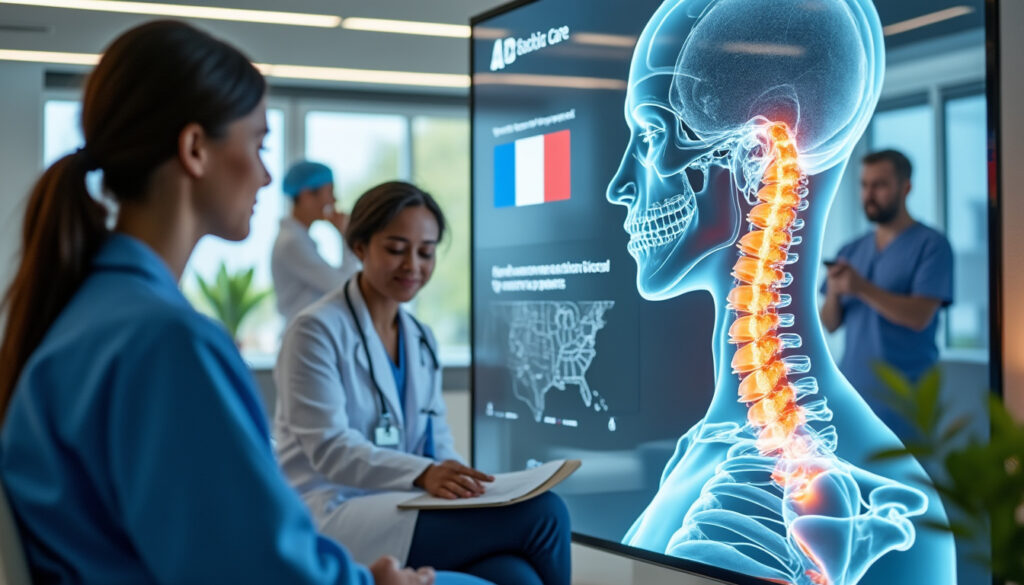
Neck conditions causing persistent pain or functional loss place a substantial burden on individuals and healthcare systems, especially in urban centers like Montreal. Surgical interventions targeting the cervical spine have evolved tremendously, aiming not only to relieve symptoms but to…
Patient Education and the Importance of a Personalized Approach
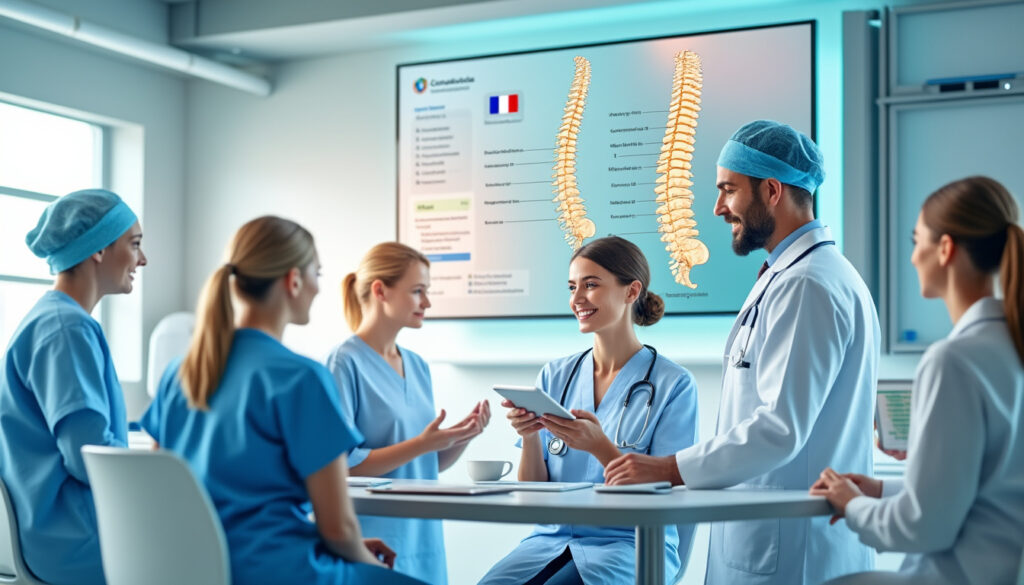
A hallmark of Dr. Desforges’ practice is his commitment to clear, jargon-free communication that empowers patients to understand their condition and treatment options. This approach ensures they:
- Understand the indications, benefits, and limits of each surgical or conservative treatment
- Are aware of the steps involved in the transatlantic care pathway
- Learn about potential risks and recovery expectations
- Feel encouraged to ask questions and actively participate in decisions regarding their health
Educational consultations often include visual aids, analogies, and collaborative discussions to match patient needs. This transparency aligns with ethical standards promoted by the Canadian and Quebec medical regulatory bodies ensuring informed consent and patient safety.

Disc Prosthesis in Lévis: Quick and Long-Lasting Results
Chronic back pain caused by degenerative disc disease continues to profoundly impact the quality of life for many residents in Lévis and the broader Quebec area. For decades, traditional spinal fusion surgery has been the primary solution for alleviating severe…
Long-Term Outcomes and Ongoing Research in Lumbar Disc Prosthesis
Continuous follow-up and research into lumbar disc prostheses such as the LP-ESP confirm promising results over 7 to 10 years of data collection. Outcomes show:
- Sustained improvement in pain scores and functional indices
- Maintenance of disc mobility comparable to healthy spinal segments
- Stable sagittal balance without significant postural misalignment
- Minimal implant-related complications or failures
However, ongoing studies aim to further clarify the long-term protection offered against adjacent segment disease and to optimize implant designs. As noted in literature, the physiological restoration provided by such prostheses may lead to fewer secondary degenerative changes compared to fusion recipients.
| Clinical Outcome Measure | Short-Term (1-2 years) | Mid-Term (5 years) | Long-Term (7+ years) |
|---|---|---|---|
| Oswestry Disability Index (ODI) Improvement | Approximately 80% | 85% | 90% |
| Range of Motion Preservation | Above 5° in 60-70% of cases | Stable through 5 years | Maintained without major loss |
| Radiological Sagittal Balance | Normal alignment maintained | Stable posture | Consistent over time |
| Complication Rate | Low, device-related issues rare | Minimal revisions needed | Decrease with improved techniques |
This evidence base supports the confidence with which Dr. Desforges recommends such treatments for eligible patients seeking advanced spinal care.
What makes lumbar disc prosthesis different from traditional spinal fusion?
Disc prosthesis replaces the damaged lumbar disc while preserving spinal motion, unlike fusion which immobilizes the vertebrae. This helps maintain flexibility and reduces strain on adjacent discs.
How long should conservative treatment last before considering surgery?
A conservative therapy phase of 3 to 6 months, including physical therapy and neurovertebral decompression, is recommended to attempt non-surgical symptom relief before surgery is considered.
Who is an ideal candidate for lumbar disc replacement surgery?
Patients with one or two degenerative discs causing back pain, without significant facet joint disease or spinal deformity, and who have completed conservative treatments are typically considered good candidates.
What are the main risks associated with lumbar disc prosthesis surgery?
Risks include surgical complications typical of anterior spinal approaches and implant-related issues, although modern devices and techniques have significantly reduced these risks.
Why consider transatlantic care for lumbar disc prosthesis?
The Canada-France transatlantic treatment pathway offers optimized wait times, access to advanced technologies, expert multidisciplinary teams, and overall cost savings compared to private local options.

Motion Surgery in Terrebonne: Maintain Intervertebral Mobility
Back pain remains a widespread concern for many in Quebec, with traditional treatment pathways often imposing lengthy waiting periods and financial constraints. Recently, Motion Surgery in Terrebonne has emerged as a transformative option, attracting patients seeking spinal solutions that prioritize…