understanding why experts advocate for partnered hospitals and surgeons
August 19, 2025
Herniated Disc and Sciatica: TAGMED’s Approach in Laval
October 23, 2025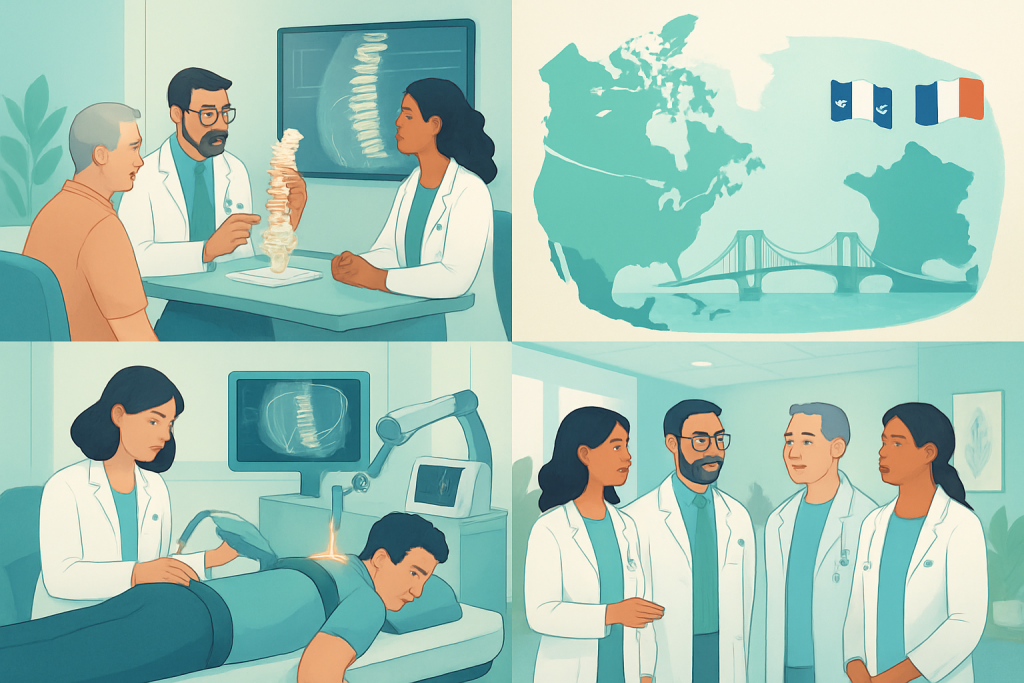
Chronic back pain and spinal disorders pose significant challenges worldwide, particularly for patients facing long waits and high costs within Quebec’s healthcare system. Across the Atlantic, France offers a compelling alternative by blending advanced surgical innovations with rigorous conservative care, international collaboration, and patient-centred approaches. With over 30 years of experience, Dr. Sylvain Desforges, an esteemed expert in spinal assessments and osteopathy, plays a pivotal role in guiding Quebec patients through these specialized transatlantic care pathways. By integrating cutting-edge technologies such as dynamic implants, robotic-assisted surgeries, and neurovertebral decompression therapies, France’s spinal surgery landscape not only addresses diverse pathologies but also prioritizes mobility preservation and accelerated recovery. This comprehensive model aligns with stringent scientific and ethical standards, providing a reassuring framework for those considering alternatives to prolonged surgery waiting periods or costly private options in Quebec.
Exploring Surgical Options in France Beyond Traditional Spinal Fusion
France’s spinal surgery paradigm extends well beyond the classic spinal fusion technique, offering a varied arsenal for tackling spinal pathologies with a focus on both mechanical stability and functional preservation. Understanding these surgical categories empowers patients and professionals alike in making informed decisions tailored to the unique presentation of spinal disorders.
Simple Surgery: Endoscopic and Minimally Invasive Decompression
These approaches aim to directly alleviate nerve compression due to conditions such as herniated discs or foraminal stenosis without major alteration of spinal architecture. Utilizing advanced optics and high-precision instruments, procedures are performed through small incisions, resulting in less tissue disruption, reduced pain, and faster recovery. Instruments from industry leaders like NuVasive and Stryker ensure surgical accuracy and safety.
Fusion Surgery (Arthrodesis): Stabilizing Complex Disorders
Reserved for cases involving spinal instability, severe spondylolisthesis, or deformities, fusion surgery permanently joins vertebrae to eliminate motion at painful segments. Innovations in implant materials and robotic guidance — using technologies by Medtronic, Zimmer Biomet, and DePuy Synthes — have significantly improved surgical precision and outcomes. However, fusion comes with potential drawbacks like adjacent segment degeneration and loss of natural movement, warranting cautious indication.
Motion Preservation Techniques: Dynamic Implants and Disc Prostheses
France is a frontrunner in deploying motion-preserving technologies that reduce the biomechanical stresses associated with fusion surgeries. Devices such as the TOPS system and Intraspine prostheses allow controlled mobility while stabilizing the spine to relieve pain. Patients benefit from preserved spinal flexibility and a reduced rate of adjacent segment damage – an important consideration for active individuals and athletes.
| Technique | Primary Indications | Key Advantages | Representative Technologies |
|---|---|---|---|
| Simple Surgery (Endoscopic, Minimally Invasive) | Radicular stenosis, herniated discs | Less invasive, rapid recovery | NuVasive, Stryker |
| Fusion Surgery (Arthrodesis) | Spinal instability, spondylolisthesis | Durable stabilization, pain relief | Medtronic, Zimmer Biomet, DePuy Synthes, Mazor robotic system |
| Motion Preservation Techniques | Degenerative disc disease without major instability | Maintains mobility, protects adjacent segments | TOPS, Intraspine (Safe Orthopaedics) |
These evolving alternatives, detailed further in resources like the Spine Surgery Alternatives podcast, emphasize patient-centred decision-making. Choosing the best fit depends on factors like age, activity level, pathology severity, and prior treatment history.


IntraSPINE® in Sherbrooke: Durable Solution for Chronic Low Back Pain
The management of chronic low back pain, a widespread condition affecting millions across Quebec and beyond, has reached a pivotal moment thanks to innovative medical technologies and coordinated care pathways. At the heart of this evolution lies the IntraSPINE implant,…
The Critical Role of Conservative Management Before Considering Surgery
A foundational principle established by experts like Dr. Sylvain Desforges and the team at Clinique TAGMED is that surgical intervention should only be contemplated after a thorough course of conservative treatments lasting 3 to 6 months. This approach not only aligns with international best practices but also prioritizes patient safety and functional preservation.
Why Prioritize Conservative Care?
- Non-invasive options may alleviate symptoms sufficiently, potentially avoiding surgery altogether.
- It allows careful evaluation of treatment response, offering insights into pain generators and pathology behavior.
- Robotic neurovertebral decompression therapy, as implemented at TAGMED, provides precise traction to relieve nerve impingement without surgical risks.
- Ergonomic advice and controlled mobilization exercises enhance posture and biomechanical loading.
TAGMED’s innovative neurovertebral decompression uses computer-controlled robotic systems to apply targeted, gentle traction tailored to each patient’s condition. Clinical evidence demonstrates this therapy often leads to significant symptom reduction, improving quality of life and functional capacity. This treatment exemplifies a scientifically grounded and ethical approach championed by Dr. Desforges’s dedicated team.
| Conservative Component | Purpose | Expected Outcome |
|---|---|---|
| Neurovertebral Decompression | Reduce nerve root pressure | Symptom relief, possible surgery avoidance |
| Ergonomic Guidance | Improve spinal alignment and loading | Prevention of symptom aggravation |
| Controlled Mobilization | Enhance spinal mobility | Improved function and pain reduction |
Patients are encouraged to fully engage in this phase before discussing surgical pathways. This aligns with recommendations outlined in current European guidelines and supports optimal long-term outcomes. Bypassing or shortening this essential stage can increase surgical risk and complicate recovery.

Spine Surgery in Trois-Rivières: Reduce Pain and Preserve Mobility
In recent years, spine surgery in Trois-Rivières has evolved notably, combining advanced medical expertise with innovative technologies to deliver patient-centered care. This growing field addresses the increasing demand among Quebec residents seeking effective solutions for chronic back pain and mobility…
Streamlining the Transatlantic Patient Pathway: From Quebec Evaluation to French Surgery and Back
Dr. Desforges’s expertise in coordinating care exemplifies the benefits of an integrated transatlantic approach, which merges Quebec’s rigorous patient assessment and conservative management with France’s advanced surgical technology and postoperative care infrastructure.
Key stages of this seamless journey include:
- Comprehensive Initial Evaluation: At Clinique TAGMED, Dr. Desforges conducts a meticulous assessment including medical history, imaging review, and biomechanical analysis, to tailor patient pathways.
- Conservative Treatment Phase: Patients undergo a minimum 3 to 6-month conservative management period, emphasizing neurovertebral decompression and functional rehabilitation.
- Personalized Surgical Coordination: Through partners such as Franchir, patients benefit from tailored surgeon and hospital selection in France, with all logistics arranged for optimal efficiency and comfort.
- Advanced Surgical Intervention: French surgical teams employ leading-edge implants and robotic navigation tools from companies like Medtronic, Zimmer Biomet, and Orthofix to perform precise and innovative procedures.
- Postoperative Rehabilitation in Quebec: Upon return, Neurothérapie Montréal ensures continuous rehabilitation, pain management, and functional recovery aligned with local health regulations.
| Stage | Responsible Entity | Primary Objective |
|---|---|---|
| Initial Evaluation | Dr. Sylvain Desforges & TAGMED | Detailed clinical assessment and care planning |
| Conservative Therapy | Clinique TAGMED | Symptom alleviation without surgery |
| Surgical Coordination | Franchir | Surgeon selection and logistic management |
| Surgical Intervention | French Surgical Teams | Precise, innovative treatment delivery |
| Postoperative Care | Neurothérapie Montréal | Rehabilitation and functional restoration |
By bridging continents and expertise, this coordinated flow reduces wait times, minimizes patient stress, and enhances clinical outcomes – a model of cross-border synergy in specialized care.


TOPS™ in Gatineau: High-Performance Option for the Lumbar Spine
The landscape of spinal surgery has witnessed profound evolution, particularly for patients grappling with lumbar spine disorders such as spinal stenosis and spondylolisthesis. These conditions, increasingly prevalent among Quebec’s population, impose substantial limitations on mobility and quality of life. The…
Biomechanical, Economic, and Human Benefits of French Spinal Surgery for Quebec Patients
Choosing French spinal surgery affords Quebec patients distinctive advantages across multiple dimensions:
Biomechanical Advantages
- Use of advanced implants like dynamic stabilization systems (e.g., TOPS, Intraspine) that preserve natural spinal motion.
- State-of-the-art 3D-printed customized implants from French innovators improving anatomical fit and reducing complications.
- Robotic-assisted surgery reducing surgeon variability, enhancing precision, and minimizing postoperative trauma.
- Preservation of adjacent segments, lowering the incidence of degenerative changes common after traditional fusion surgeries.
Economic Considerations
- Despite transatlantic travel costs, the overall package including surgery, accommodation, and postoperative care often costs less than costly private care in Quebec.
- Shorter waiting periods lead to reduced work absenteeism and improved quality of life.
- Bundled care models, facilitated by coordinators like Franchir, deliver logistical and financial predictability.
Human Factors and Personalization
- Continuous support from multidisciplinary teams reduces patient anxiety and encourages treatment adherence.
- Customized treatment plans and ongoing education foster empowerment and confidence.
- Compliance with both French and Quebec regulatory standards ensures ethical, transparent, and high-quality care.
This multifaceted value proposition makes French spinal surgery a compelling choice for Quebec patients seeking innovative, timely, and personally tailored solutions.
Cervical Disc Prosthesis in Quebec City: Avoid Post-Surgery Stiffness
Chronic neck pain remains a significant challenge for thousands of residents in Quebec City every year, often leading them to seek effective spinal surgery options that minimize downtime and maximize long-term mobility. Among the recent advancements revolutionizing cervical spine care,…
Technological Innovations Driving Excellence in French Spinal Care
French spinal centers harness a suite of medical technologies from global leaders to maximize surgical outcomes and patient safety:
- Robotic Surgical Systems: Platforms such as the Mazor X and eCential Robotics improve screw placement accuracy and minimize intraoperative risks.
- Advanced Imaging: EOS imaging and 3D navigation provide comprehensive spinal views aiding precise preoperative planning and intraoperative guidance.
- Cutting-Edge Implants: Dynamic stabilization and custom 3D-printed devices by companies like Medicrea, Evalina Spine, and Safe Orthopaedics revolutionize treatment personalization.
- Minimally Invasive and Endoscopic Techniques: Enhancing recovery trajectories by limiting tissue damage and promoting faster mobilization.
Such innovations reflect France’s commitment to blending biomechanical science with patient-centred care, as detailed in specialized educational programs offered by institutions like the Université de Bordeaux and the Société Française de Chirurgie Rachidienne.
| Technology | Purpose | Benefits |
|---|---|---|
| Robotic Assistance (e.g., Mazor X) | Precise instrument placement | Reduced complications, improved outcomes |
| 3D Imaging (EOS, Navigation) | Accurate spinal assessment | Better surgical planning, less radiation |
| 3D-Printed & Dynamic Implants | Anatomically tailored stabilization | Enhanced mobility, reduced adjacent degeneration |
| Minimally Invasive Surgery | Reduced tissue trauma | Faster recovery, lower infection rates |
Minimally Invasive Surgery in Longueuil: Reduce Hospital Stay Duration
In recent years, advances in spinal care have dramatically reshaped the treatment landscape for patients suffering from debilitating spinal conditions. Particularly in Longueuil, the emergence of minimally invasive surgery (MIS) techniques offers a transformative alternative to conventional open surgeries. These…
Understanding Functional Recovery: Navigating Postoperative Rehabilitation for Quebec Patients
The journey after spinal surgery is equally crucial as the procedure itself. Quebec patients returning from France benefit from a structured rehabilitation program designed to restore function, minimize pain, and facilitate reintegration into daily life.
Key rehabilitation components include:
- Individualized physical therapy tailored to the surgical procedure and patient condition.
- Pain management protocols integrating pharmacologic and non-pharmacologic methods.
- Gradual functional milestones emphasizing core stability, flexibility, and endurance.
- Psychological support addressing fears, motivation, and adaptation to physical changes.
- Telehealth follow-ups ensuring timely interventions and remote collaboration between French surgical teams and Quebec specialists.
Programs at facilities such as Neurothérapie Montréal are aligned with provincial standards and embed ongoing assessments to adjust care as recovery progresses. This comprehensive, tiered model ensures that patients maximize their surgical benefits while minimizing setbacks.
IntraSPINE® in Laval: Modern Solution for Lumbar Stabilization
In the evolving landscape of orthopedic treatments, the city of Laval has become a hub for innovations addressing chronic lower back pain. Among the groundbreaking solutions gaining attention is the IntraSPINE device—a modern spinal implant designed to offer dynamic lumbar…
How International Collaboration Enhances Spinal Treatment Decision-Making
The cross-border partnership between Quebec and France exemplifies how pooling expertise and resources improves patient care in spinal disorders. This synergy facilitates informed surgical decisions, better patient education, and harmonization of clinical protocols.
Role of Experts like Dr. Sylvain Desforges
With over 30 years of experience spanning osteopathy, neuromusculoskeletal diseases, and spinal evaluation, Dr. Desforges leads the initial patient assessment and conservatively guided management in Quebec. His role ensures patients are optimally prepared and only proceed to surgery when necessary. His involvement guarantees adherence to rigorous evidence-based and ethical standards.
Collaboration Highlights
- Shared databases and joint case reviews foster diagnostic accuracy.
- Mutual education initiatives promote the latest advances in motion preservation and minimally invasive surgery.
- Coordinated logistics reduce delays and patient stress.
- Alignment with regulatory guidelines in both jurisdictions ensures safety and transparency.
This model uplifts patient confidence and satisfaction while optimizing outcomes, symbolizing a pioneering standard for international spine care programs. For further insights, consult comprehensive analyses on cross-border spinal care.
Neck Surgery in Montreal: Maintain Cervical Flexibility and Function
Neck conditions causing persistent pain or functional loss place a substantial burden on individuals and healthcare systems, especially in urban centers like Montreal. Surgical interventions targeting the cervical spine have evolved tremendously, aiming not only to relieve symptoms but to…
Essential Considerations and Frequently Asked Questions About Spinal Surgery in France for Quebec Patients
- What are the typical wait times for surgery in France compared to Quebec?
In France, transatlantic coordination often limits wait times to a few weeks via organizations like Franchir, contrasting with Quebec where delays can extend to several months or years. - Is surgery in France cost-effective despite travel expenses?
Yes. When factoring in comprehensive care packages and reduced private care fees in Quebec, many patients experience overall savings. - Are motion-preserving implants available in France but not in Quebec?
Indeed, advanced devices such as the TOPS system and Intraspine prostheses are more accessible in France, providing benefits unavailable in many Canadian centers. - How is postoperative care managed after surgery abroad?
Specialized rehabilitation in Quebec, managed by centers like Neurothérapie Montréal, ensures continuity through personalized physical therapy and pain management in line with local standards. - Is prior conservative therapy mandatory before surgery consideration?
Absolutely. A minimum of 3 to 6 months of intensive conservative treatment, including neurovertebral decompression at facilities such as TAGMED, is essential to minimize unnecessary surgeries and optimize outcomes.
For more information or to discuss your specific case, please visit https://www.sostourismemedical.com/contact.

Disc Prosthesis in Lévis: Quick and Long-Lasting Results
Chronic back pain caused by degenerative disc disease continues to profoundly impact the quality of life for many residents in Lévis and the broader Quebec area. For decades, traditional spinal fusion surgery has been the primary solution for alleviating severe…