Comprehensive Insights into Quality and Certification of Devices
November 13, 2025Blainville Neck Herniation Recovery Without Medication
November 13, 2025The increasing prevalence of cervical spine disorders in Quebec City has prompted innovative approaches to surgical treatment, focusing not only on pain relief but also on preserving the natural mobility of the neck. Cervical disc prosthesis represents a breakthrough in spine care, offering patients a dynamic alternative to traditional fusion surgeries. Leveraging over 30 years of experience, Dr. Sylvain Desforges, an esteemed expert in spinal evaluation and care coordination, brings together cutting-edge technologies and transatlantic medical collaborations to optimize patient outcomes. This article delves into the state-of-the-art cervical disc prosthesis options available in Quebec City, the surgical journey from assessment to rehabilitation, and the distinctive advantages of pursuing advanced cervical treatments that restore and maintain neck mobility over time.
Understanding Cervical Disc Prosthesis Technologies: An Overview of Innovations in Quebec City
Multiple cervical artificial disc technologies have been developed worldwide to replace degenerated intervertebral discs, and Quebec City now benefits significantly from these advancements. Unlike conventional fusion surgeries that immobilize the affected spinal segments, cervical disc prostheses aim to preserve or restore the cervical spine’s natural range of motion, aligning closely with biomechanical principles.
Artificial cervical discs come in an array of sizes, shapes, and designs, utilizing materials carefully selected for durability, biocompatibility, and functional performance. Common materials include titanium, known for promoting bone growth and corrosion resistance; cobalt-chrome alloys, valued for their strength; and polyethylene, which allows smooth articulation without producing imaging artifacts on MRI scans. These characteristics are essential for minimizing long-term complications and ensuring the prosthesis withstands the mechanical demands of daily activities.
The design concepts fall mainly into three bearing types: constrained (fused with limited motion), semi-constrained (offering controlled mobility), and unconstrained (allowing more freedom but with reduced stability). Articulation mechanisms commonly include ball-and-socket and saddle-shaped configurations, each facilitating different multidirectional neck movements while maintaining safety and durability.
Patients considering cervical disc prosthesis at institutions like the Clinique TAGMED, where Dr. Desforges collaborates, benefit from bespoke evaluations that consider the anatomical, pathological, and biomechanical nuances of each case. This ensures an optimal match between the device and the patient’s individual needs, ultimately maximizing the chance of a successful and lasting outcome.
| Aspect | Details | Significance |
|---|---|---|
| Materials | Titanium, Cobalt-Chrome, Polyethylene | Strength, biocompatibility, MRI compatibility |
| Bearing Types | Constrained, Semi-Constrained, Unconstrained | Balance between motion and stability |
| Articulation Mechanisms | Ball-and-Socket, Saddle | Facilitates multidirectional motion |
| Design Goals | Full endplate coverage, minimal height for decompression | Load distribution, nerve relief, preserving motion |
To explore the rich variety of cervical artificial disc replacement methods and their technological nuances, one may find detailed insights in advanced cervical artificial disc replacement technologies, which highlight the latest trends adopted within Quebec City and beyond.

IntraSPINE® in Sherbrooke: Durable Solution for Chronic Low Back Pain
The management of chronic low back pain, a widespread condition affecting millions across Quebec and beyond, has reached a pivotal moment thanks to innovative medical technologies and coordinated care pathways. At the heart of this evolution lies the IntraSPINE implant,…
Types of Cervical Spine Surgeries in Quebec City: Simple Replacement, Fusion, and Motion Preservation
Cervical spine surgery aims to alleviate nerve compression, restore stability, and ease debilitating pain. In Quebec City, patients have access to a spectrum of surgical options tailored to their clinical situation and lifestyle preferences, each with distinct biomechanical and functional implications.
The primary surgical approaches include:
- Simple Cervical Disc Replacement: This technique involves excising the damaged disc and inserting an artificial cervical disc to retain natural motion at the treatment segment. It is particularly favorable for patients with isolated disc degeneration without significant instability.
- Spinal Fusion Surgery: This older method fuses two or more vertebrae to eliminate motion at the painful segment, effectively reducing nerve irritation but often sacrificing mobility and potentially increasing stress on adjacent segments.
- Motion-Preserving Surgeries: Including more advanced cervical disc prostheses and dynamic stabilization devices like the Motion Preservation portfolio, these techniques focus on maintaining the spine’s natural kinematics while protecting neurological structures.
Each approach offers distinct advantages and potential drawbacks, making patient evaluation critical. Factors such as age, activity level, cervical spine alignment, and previous treatments must be considered. For instance, rigid fusion might be reserved for multi-level disease or severe instability, whereas a prosthetic disc like CerviFlex or NeoDisc may be preferable for maintaining mobility and quality of life in younger, active patients.
Biomechanical studies have demonstrated that prosthetic implants such as DiscRenew and CerviRestore can preserve segmental movement closely resembling native discs, reducing the risk of adjacent segment degeneration commonly observed after fusion surgeries. The durability of these devices has been a focus of ongoing research, reaffirming their role as a modern alternative to fusion.
| Surgery Type | Purpose | Pros | Cons |
|---|---|---|---|
| Simple Disc Replacement | Restore motion, relieve pain | Preserves neck flexibility, less stress on adjacent vertebrae | Not suitable for severe instability |
| Fusion Surgery | Eliminate motion, stabilize spine | Effective in multi-level disease, strong stability | Loss of mobility, risk of adjacent segment disease |
| Motion-Preserving Techniques | Restore natural mechanics | Maintains mobility, reduces long-term issues | Requires careful patient selection, newer technology |
For patients exploring comprehensive surgical options, referencing resources such as modern solutions for cervical disorders offers valuable perspectives on treatment success rates and expected outcomes.
Spine Surgery in Trois-Rivières: Reduce Pain and Preserve Mobility
In recent years, spine surgery in Trois-Rivières has evolved notably, combining advanced medical expertise with innovative technologies to deliver patient-centered care. This growing field addresses the increasing demand among Quebec residents seeking effective solutions for chronic back pain and mobility…
Patient Pathway for Cervical Disc Prosthesis in Quebec City: From Assessment to Transatlantic Care Coordination
The surgical journey for those considering cervical disc prosthesis involves meticulous planning, comprehensive evaluation, and collaborative care to ensure safety, efficacy, and a smooth transition throughout treatment stages.
Dr. Sylvain Desforges emphasizes a structured, evidence-based pathway involving:
- Initial Clinical Evaluation: Detailed patient history and physical examination to identify symptoms and functional limitations.
- Advanced Imaging and Diagnostics: MRI, CT scans, and dynamic X-rays to assess spinal integrity, nerve involvement, and suitability for prosthetic implantation.
- Conservative Treatment Review: Prior to surgery, exploring 3 to 6 months of non-surgical therapies including physical therapy, pharmacological interventions, and especially innovative approaches like neurovertebral decompression at Clinique TAGMED.
- Shared Decision-Making: Presenting surgical options with detailed explanations of risks, benefits, and expected functional improvements.
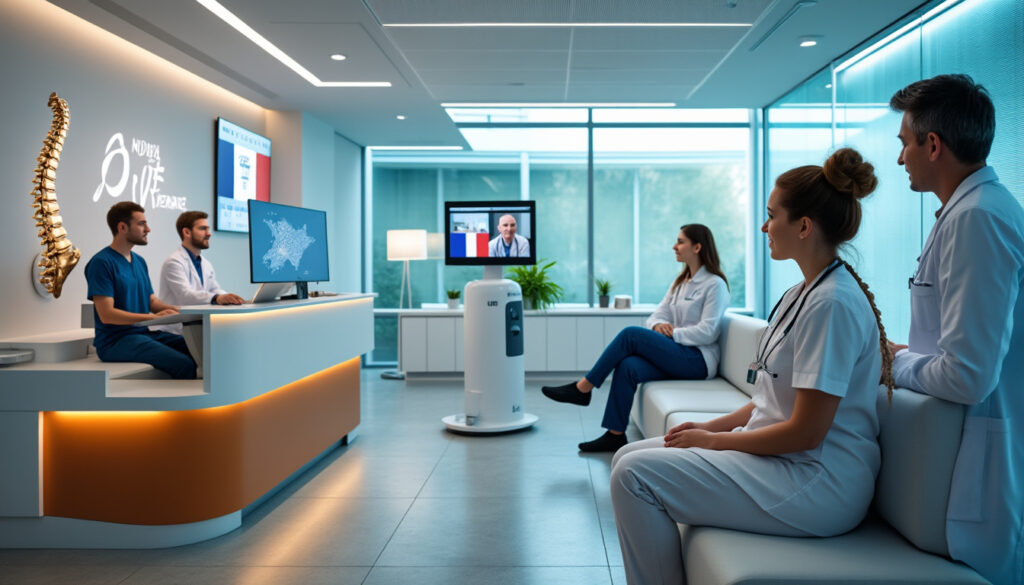
- Surgery Scheduling and Planning: Coordination between Canadian and French surgical teams for patients opting for transatlantic care, ensuring timely access to specialized techniques unavailable locally.
- Postoperative Rehabilitation: Customized programs emphasizing pain control, mobility restoration, and gradual return to activities under multidisciplinary supervision.
- Follow-up and Long-term Monitoring: Regular clinical check-ups and imaging to verify prosthesis integration and detect any complications early.
This pathway is uniquely supported by a collaborative network spanning Quebec and France, benefiting from Dr. Desforges’ leadership and partnerships that streamline patient journeys while emphasizing personalized care and knowledge transfer across borders.
| Stage | Key Activities | Patient Benefit |
|---|---|---|
| Evaluation | Clinical and radiological assessment | Targeted diagnosis and personalized plan |
| Conservative Therapy | Neurovertebral decompression, physical therapy | Reduces unnecessary surgery, optimizes healing |
| Surgical Intervention | Prosthesis implantation | Restores motion, alleviates pain |
| Rehabilitation | Mobilization and therapy | Supports recovery and functionality |
| Follow-up | Monitoring and adjustment | Ensures long-term success |
Recognizing the complexity of spine disorders, this pathway reflects Dr. Desforges’ commitment to rigorous evaluation and ethical innovation, helping patients make informed decisions in a reassuring environment. Further details on this comprehensive patient journey can be found at highly specialized cervical interventions in Quebec City.

TOPS™ in Gatineau: High-Performance Option for the Lumbar Spine
The landscape of spinal surgery has witnessed profound evolution, particularly for patients grappling with lumbar spine disorders such as spinal stenosis and spondylolisthesis. These conditions, increasingly prevalent among Quebec’s population, impose substantial limitations on mobility and quality of life. The…
Benefits of Transatlantic Spine Surgery: Enhanced Access, Expertise, and Personalized Care
For Quebecois patients facing long delays or prohibitive costs in private care, the option of coordinated transatlantic spine surgery offers significant advantages. Dr. Desforges, as a pioneer with global networks, facilitates seamless clinical integration between Canadian and French surgical teams, unlocking advanced treatments such as state-of-the-art cervical disc prostheses unavailable or limited in Quebec.
Advantages include:
- Access to Innovative Technologies: Devices like DurabiDisc and MobilisCerv provide enhanced durability and performance, reflecting newer generations of prosthetic designs.
- Reduced Waiting Times: Transatlantic coordination enables patients to access timely surgical care without extensive local delays.
- Comprehensive Multidisciplinary Support: From preoperative education to postoperative monitoring, teams collaborate transnationally for holistic management.
- Cost Optimization: Competitive pricing structures and comprehensive care plans reduce overall financial burden.
- Personalized Treatment Pathways: Care plans attentively tailored through joint consultations and continuous feedback loops.
This model particularly benefits patients requiring motion-preserving surgeries and those with complex cases requiring careful biomechanical alignment. Dr. Desforges’ role addresses not only clinical evaluation but acts as a care navigator, ensuring patients understand procedures thoroughly and receive continuous support both before and after surgery.
| Benefit | Description | Impact on Patient Experience |
|---|---|---|
| Innovative Implants | Access to newest prosthetic designs with improved motion and durability | Enhanced function and long-term satisfaction |
| Timely Care | Reduced surgical waitlists through international collaboration | Decreased symptom duration and improved outcomes |
| Holistic Support | Integrated multidisciplinary teams offering education, therapy, and follow-up | Increased patient confidence and adherence |
| Cost Effectiveness | Optimized treatment expenses via streamlined resources | Lower financial stress and accessibility |
| Custom Care Pathways | Tailored clinical strategies adapted to individual patient needs | Improved personalized outcomes and satisfaction |
Those interested in an innovative and well-supported approach to cervical spine surgery can explore the comprehensive benefits at preserving cervical spine mobility through advanced prostheses.
Cervical Disc Prosthesis in Quebec City: Avoid Post-Surgery Stiffness
Chronic neck pain remains a significant challenge for thousands of residents in Quebec City every year, often leading them to seek effective spinal surgery options that minimize downtime and maximize long-term mobility. Among the recent advancements revolutionizing cervical spine care,…
Before Surgery: Importance of Conservative Management Including Advanced Neurovertebral Decompression
In Quebec City, a fundamental aspect of responsible spine care involves exhausting conservative management methods prior to surgical intervention. Dr. Desforges staunchly advocates for a 3 to 6-month period of non-invasive treatments to optimize outcomes and reduce unnecessary surgeries, in line with provincial and national medical standards.
Key components include:
- Physical Therapy: Targeted exercises to strengthen neck musculature and improve posture.
- Pharmacologic Pain Management: Use of anti-inflammatory and analgesic medications as appropriate.
- Innovative Conservative Therapies: Particularly neurovertebral decompression techniques offered by centers such as Clinique TAGMED, which utilize advanced technology to relieve nerve compression without surgery.
The neurovertebral decompression involves a sophisticated system designed to gently and precisely separate vertebral segments, reducing pressure on the discs and nerve roots. This method has demonstrated efficacy in alleviating pain and improving mobility, often enabling patients to avoid or delay surgery altogether.
If conservative measures fail or if neurological deficits progress despite treatment, then surgical options including cervical disc prosthesis are reconsidered. This adherence to progressive care guarantees that surgery remains a last resort and is pursued with clear justification and patient consent.
| Conservative Treatment | Purpose | Typical Duration |
|---|---|---|
| Physical Therapy | Strengthen muscles, improve flexibility | 3-6 months |
| Medication | Manage pain and inflammation | As needed |
| Neurovertebral Decompression | Reduce nerve pressure non-invasively | Up to 6 months |
Patients considering advanced conservative treatments or seeking detailed guidance on these approaches can find expert advice and scientific rationale at strategies to maximize cervical spine flexibility and avoid postoperative stiffness.
Minimally Invasive Surgery in Longueuil: Reduce Hospital Stay Duration
In recent years, advances in spinal care have dramatically reshaped the treatment landscape for patients suffering from debilitating spinal conditions. Particularly in Longueuil, the emergence of minimally invasive surgery (MIS) techniques offers a transformative alternative to conventional open surgeries. These…
Unique Value of Clinique TAGMED for Conservative and Preoperative Spine Care in Quebec
Clinique TAGMED stands out as a premier center in Quebec City, specializing in advanced conservative treatments of spinal disorders including state-of-the-art neurovertebral decompression. As founder and president of the ACMA and the Collège des Ostéopathes Canadiens, Dr. Desforges has fostered an environment of rigorous scientific practice and ethical innovation at TAGMED.
The clinic offers:
- Highly Specialized Conservative Treatments: Delivering care designed to minimize surgical intervention by restoring natural spinal function.
- Access to Cutting-Edge Technologies: Including laser therapies, dynamic implants examination, and precise evaluation of spinal pathology.
- Personalized Patient Education: Comprehensive explanation of conditions and tailored pathways to support informed decision-making.
The integration of multidisciplinary specialists ensures that each patient’s pathway is optimized from initial consultation to potential advanced surgical planning. Patients benefit from an empathetic team dedicated to minimizing discomfort while maximizing functional recovery, fully respecting all regulatory requirements as per Québec and Canada guidelines.
| Service | Benefit | TAGMED Advantage |
|---|---|---|
| Neurovertebral Decompression | Non-invasive pain relief | Advanced technology with proven effectiveness |
| Laser Therapy | Enhanced tissue healing | Cutting-edge equipment and protocols |
| Patient Education | Improved adherence and understanding | Clear, jargon-free communication and counseling |
More information on TAGMED’s role and offerings is available at the official TAGMED website, underscoring its position as a leader in the Quebec spine care community.
IntraSPINE® in Laval: Modern Solution for Lumbar Stabilization
In the evolving landscape of orthopedic treatments, the city of Laval has become a hub for innovations addressing chronic lower back pain. Among the groundbreaking solutions gaining attention is the IntraSPINE device—a modern spinal implant designed to offer dynamic lumbar…
Selecting the Right Cervical Disc Prosthesis in Quebec City: Innovations and Clinical Outcomes
Choosing an appropriate cervical disc prosthesis involves intricate mechanical, biological, and patient-centered considerations. Devices such as FlexiCerv, EnduraSpine, and MobilisCerv have demonstrated clinical benefits for preserving range of motion while effectively decompressing neural elements.
Key attributes to consider in prosthesis selection include:
- Full coverage of vertebral endplates: To distribute load evenly and minimize stress concentration.
- Minimal disc height necessary for nerve decompression: Avoiding facet joint distraction which could limit motion.
- Durability and biocompatibility: Using materials and designs that resist wear and integrate well with bone.
- Safety mechanisms to prevent prosthesis migration: Such as metal stops and specialized anchoring features.
Clinical studies continue to report improved neck disability indices and pain relief with prostheses preserving mobility compared to fusion. Devices like the popular DurabiDisc have demonstrated long-term stability and patient satisfaction, standing as a superior choice in Quebec City’s specialized centers.
| Prosthesis | Material | Range of Motion | Unique Feature |
|---|---|---|---|
| FlexiCerv | Titanium-Polyethylene | Wide motion preservation | Enhanced fixation and load distribution |
| EnduraSpine | Cobalt-Chrome Alloy | Durable with semi-constrained articulation | Metal stops to prevent migration |
| MobilisCerv | Polyethylene Core with Titanium Endplates | Reflects natural disc kinematics | Optimized for minimal facet distraction |
To learn more about the selection process and innovative devices, patients are encouraged to review expert commentary such as modern alternatives to fusion surgery, ensuring fully informed choices.
Neck Surgery in Montreal: Maintain Cervical Flexibility and Function
Neck conditions causing persistent pain or functional loss place a substantial burden on individuals and healthcare systems, especially in urban centers like Montreal. Surgical interventions targeting the cervical spine have evolved tremendously, aiming not only to relieve symptoms but to…
Achieving Optimal Recovery: Rehabilitation and Long-Term Follow-Up After Cervical Disc Prosthesis
Postoperative care following cervical disc prosthesis implantation is crucial to ensure restored mobility, pain resolution, and sustained spinal health. Rehabilitation programs designed by Dr. Desforges and specialized teams focus on gradual muscle strengthening, posture correction, and functional retraining tailored to each patient’s baseline and progress.
Core rehabilitation components include:
- Early Mobilization: Encouraging neck movement as tolerated to prevent stiffness and promote healing.
- Physical Therapy Exercises: Customized routines that include range of motion, strengthening, and proprioceptive training.
- Patient Education: Teaching ergonomic principles and lifestyle adjustments to prolong implant lifespan and reduce discomfort.
- Periodic Clinical Assessment: Scheduled visits and imaging allow for early detection of issues and prompt intervention.
Moreover, preserving cervical motion has shown positive impacts on adjacent segments by reducing compensatory stress. This translates to fewer secondary surgeries and sustained quality of life improvements. Patients transitioning between Quebec and France receive coordinated care plans ensuring consistency and comprehensive monitoring across borders.
| Rehabilitation Phase | Focus | Expected Outcomes |
|---|---|---|
| Immediate Post-op | Pain control, prevent stiffness | Comfort and early mobility |
| Intermediate | Muscle strengthening and flexibility | Improved function and reduced pain |
| Long-Term | Maintenance and lifestyle integration | Sustained mobility and quality of life |
Interested patients can gain practical insights by visiting approaches to avoid postoperative stiffness and improve neck flexibility after surgery.

Disc Prosthesis in Lévis: Quick and Long-Lasting Results
Chronic back pain caused by degenerative disc disease continues to profoundly impact the quality of life for many residents in Lévis and the broader Quebec area. For decades, traditional spinal fusion surgery has been the primary solution for alleviating severe…
Frequently Asked Questions About Cervical Disc Prosthesis in Quebec City
What are the main benefits of cervical disc prosthesis compared to fusion surgery?
Cervical disc prostheses maintain natural neck motion, reduce stress on adjacent vertebrae, and minimize long-term complications such as adjacent segment degeneration, offering improved overall quality of life.
How long does the recovery typically take after cervical disc prosthesis surgery?
Recovery varies by patient but usually involves a phased rehabilitation over several months, starting with immediate mobility and progressing to strength and flexibility training under specialist guidance.
Is surgery immediately required for cervical disc problems?
Surgery is recommended only after a careful evaluation and completion of 3 to 6 months of conservative treatments, including specialized therapies such as neurovertebral decompression.
What makes transatlantic care coordination beneficial?
It provides faster access to innovative surgical technologies, comprehensive multidisciplinary care, and personalized treatment planning, optimizing patient outcomes and satisfaction.
How does Clinique TAGMED support preoperative care?
TAGMED offers advanced conservative therapies, including neurovertebral decompression and laser treatments, combined with patient education, aiming to preserve spinal health and potentially avoid surgery.