Motion Surgery: Reduce Pain and Preserve Mobility
October 25, 2025
IntraSPINE® in Gatineau: Gentle and Effective Approach
October 25, 2025
The evolving landscape of spinal care offers groundbreaking hope to patients grappling with cervical disc disorders, especially in Quebec City. Traditional treatments often involved invasive fusion surgeries that limited spinal mobility and required long recovery times. Today, cervical disc prosthesis represents a transformative surgical advancement designed to restore natural movement and alleviate chronic neck pain. This article dives into the core of these innovative procedures, highlighting their clinical superiority and long-term benefits while providing a detailed understanding of patient pathways from initial evaluation to recovery.
Dr. Sylvain Desforges, a pioneer with more than 30 years of experience and founder of leading Canadian osteopathic and spinal care institutions, plays a critical role in shaping these advances. His comprehensive approach, integrating rigorous scientific standards and ethical practice, ensures patients receive personalized care tailored to their unique conditions. The collaboration between cutting-edge technologies and international surgical expertise, especially across the Canada-France transatlantic corridor, enhances patient outcomes and access.
With an aging population and a rise in degenerative spinal conditions, the demand for motion-preserving alternatives has never been higher. Artificial cervical disc replacement, involving state-of-the-art devices such as the BagueraC prosthesis, Mobi-C, and Prestige LP, stands as a beacon of innovation. Patients in Quebec now benefit from world-class evaluation, multidisciplinary care coordination, and access to advanced implant technology typically unavailable domestically. This article uncovers the nuances of cervical prosthesis surgery, emphasizing its clinical results, surgical processes, patient journey, and integrated transatlantic healthcare model.
Types of Cervical Disc Prosthesis and Their Role in Preserving Neck Mobility
The cervical spine’s complexity demands solutions that do not compromise its extensive range of motion. Unlike traditional fusion surgeries that immobilize spinal segments, cervical disc prostheses aim to replace damaged discs while maintaining natural motion and flexibility, critical for day-to-day activities including head rotation and neck bending.
Modern disc prostheses come in several designs, categorized generally as single-level and multi-level implants, with materials and biomechanics engineered to mimic natural disc functions. Implants like the Mobi-C and Prestige LP are among the most widely recognized, utilizing advanced materials such as titanium alloys combined with polyethylene cores or ceramic surfaces to ensure durability and compatibility.
- Mobi-C: Approved by the FDA for one or two-level replacements, offering multidirectional motion with a mobile polyethylene core that adapts to dynamic spinal movements.
- Prestige LP: Features ceramic-on-ceramic articulating surfaces promoting exceptional wear resistance and longevity while preserving cervical biomechanics.
- BagueraC Prosthesis: Developed with viscoelastic materials specifically designed to replicate the shock absorption and flexibility characteristics of natural discs.
These implants are meticulously designed to enable a natural range of motion (ROM), reducing adjacent segment disease risk that is more common following fusion procedures. For example, a 10-year study on the BagueraC prosthesis demonstrated motion preservation in approximately 87% of patients, maintaining an average ROM of 7.4°, thus reinforcing the value of motion-preserving surgery.
| Implant Model | Spinal Region | Material | Key Features | Intended Use |
|---|---|---|---|---|
| Mobi-C | Cervical | Titanium alloy, polyethylene core | Multidirectional motion, FDA approved for 1-2-level | Cervical radiculopathy, disc degeneration |
| Prestige LP | Cervical | Ceramic-on-ceramic | High wear resistance, durable | Long-term motion preservation |
| BagueraC | Cervical | Viscoelastic polymer and titanium | Shock absorption, maintains ROM | Degenerative cervical disc disease |
The selection of these devices depends on multiple factors such as patient anatomy, specific pathology, and surgeon preference. Dr. Sylvain Desforges’s expertise in evaluation allows patients to understand the suitability of each option in the context of their unique clinical picture, reassuring them with a clear explanation of benefits and limitations.

Disc Prosthesis in Lévis: Maintain Natural Mobility
In the evolving landscape of spinal health, the pursuit of innovative solutions for chronic back pain and degenerative disc conditions has never been more critical. Residents of Lévis and surrounding regions seeking pathways beyond the limitations of traditional spinal fusion…
The Patient Journey for Cervical Disc Prosthesis Surgery: From Evaluation to Rehabilitation
Embarking on the pathway to cervical disc replacement begins with an in-depth evaluation process that transcends simple diagnosis. Dr. Sylvain Desforges’s approach integrates a comprehensive history review, functional assessments, and radiological studies (MRI, CT scans) to identify the exact nature of spinal pathology and determine candidacy for prosthetic intervention.
This evaluation also critically includes a thorough understanding of prior conservative treatments undertaken, ensuring that surgery is considered only after exhaustive non-invasive options have been attempted for at least 3 to 6 months. In particular, advanced conservative therapies like neurovertebral decompression and laser therapy, as delivered at the Clinique TAGMED, form a vital step in this staged management approach.
- Initial Consultation and History Taking: Detailed pain mapping, neurological symptoms, and impact on daily activities.
- Diagnostic Imaging: Assessing disc degeneration, herniation extent, and spinal alignment.
- Functional Assessment: Range of motion tests and neurological exams to certify functional impairment.
- Review of Conservative Treatment: Ensuring adequate trials of non-surgical management including physiotherapy and decompression.
Once surgical candidacy is confirmed, the patient enters a collaborative planning phase involving multidisciplinary discussions with orthopedic surgeons, neurosurgeons, and rehabilitation specialists. This phase discusses surgical techniques, choice of prosthesis, expected outcomes, and post-operative care.
| Step | Description | Expected Timeline |
|---|---|---|
| Comprehensive Evaluation | Medical history, imaging, functional tests | 1-2 weeks |
| Conservative Treatment Trial | Physiotherapy, neurovertebral decompression, laser therapy | 3-6 months |
| Surgical Planning | Multidisciplinary team coordination, patient education | 2-4 weeks |
| Surgery and Hospital Stay | Cervical disc prosthesis implantation, typically under 2 hours | 1-3 days inpatient |
| Postoperative Rehabilitation | Gradual resumption of activity, supervised physiotherapy | 4-12 weeks |
This seamless progression, often enhanced through Dr. Desforges’ transatlantic collaboration with French surgical centers, affords patients access to the latest implant technologies and optimizes recovery trajectories via shared expertise and patient-centered protocols.

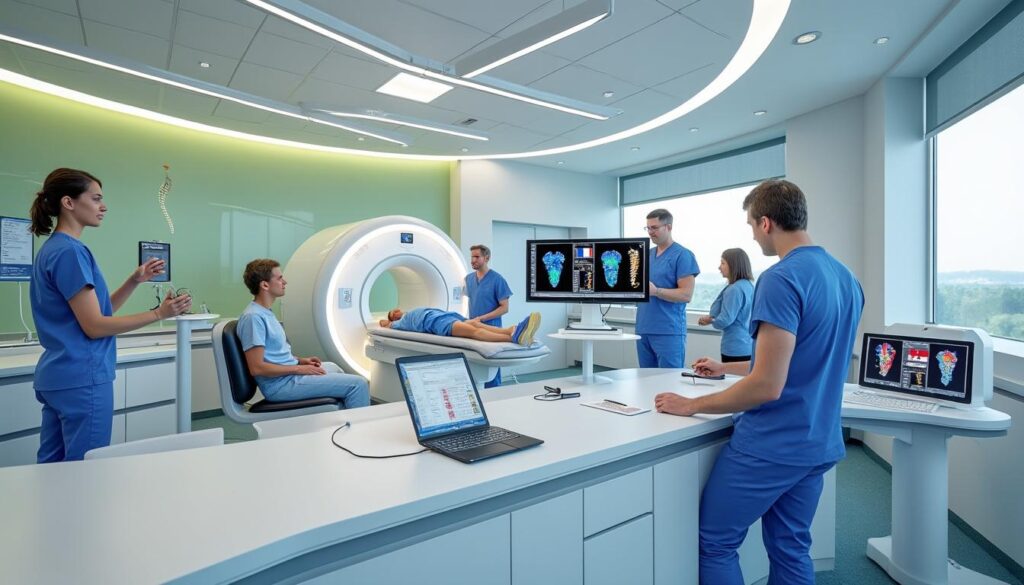
Motion Surgery in Terrebonne: Advanced Techniques Available in France
With over three decades of dedicated expertise in spine care, I have witnessed firsthand the evolution of surgical options aimed at improving quality of life for those living with spinal disorders. Among these advances, Motion Surgery stands out in Terrebonne…
Biomechanical Advantages of Cervical Disc Prosthesis Compared to Fusion Surgery
Preserving spinal motion is a pivotal advantage of cervical disc prosthesis over traditional fusion surgery. Fusion, while effective in stabilizing the affected vertebral segment, restricts movement and alters adjacent segment load distribution, often accelerating degenerative changes in neighboring discs. Conversely, disc prostheses maintain near-normal kinematics, thereby reducing the risk of adjacent segment disease and associated repeat interventions.
Detailed biomechanical studies underscore that prosthetic implants like the Mobi-C and BagueraC allow natural flexion, extension, lateral bending, and axial rotation. This preservation directly correlates with improved functional outcomes, decreased stiffness, and better patient satisfaction.
- Maintained range of motion: Average 7.4° ROM sustained over 10 years in clinical studies.
- Reduced adjacent segment degeneration: Stable adjacent disc height and less stress transfer compared to fusion.
- Minimized post-operative stiffness: Crucial for tasks such as driving, sporting, and occupational activities.
| Aspect | Cervical Disc Prosthesis | Fusion Surgery |
|---|---|---|
| Range of Motion (ROM) | Preserved (approx. 7.4°) | Significantly reduced or eliminated |
| Adjacent Segment Disease | Lower incidence with motion preservation | Higher risk due to altered biomechanics |
| Recovery Time | Faster return to light activity (2-4 weeks) | Longer convalescence, potential for chronic stiffness |
| Patient Satisfaction | Higher reported quality of life and mobility | May decrease due to loss of motion and discomfort |
Dr. Desforges emphasizes this biomechanical rationale during patient education, explaining how motion surgery aligns better with natural anatomy and lifestyle demands.
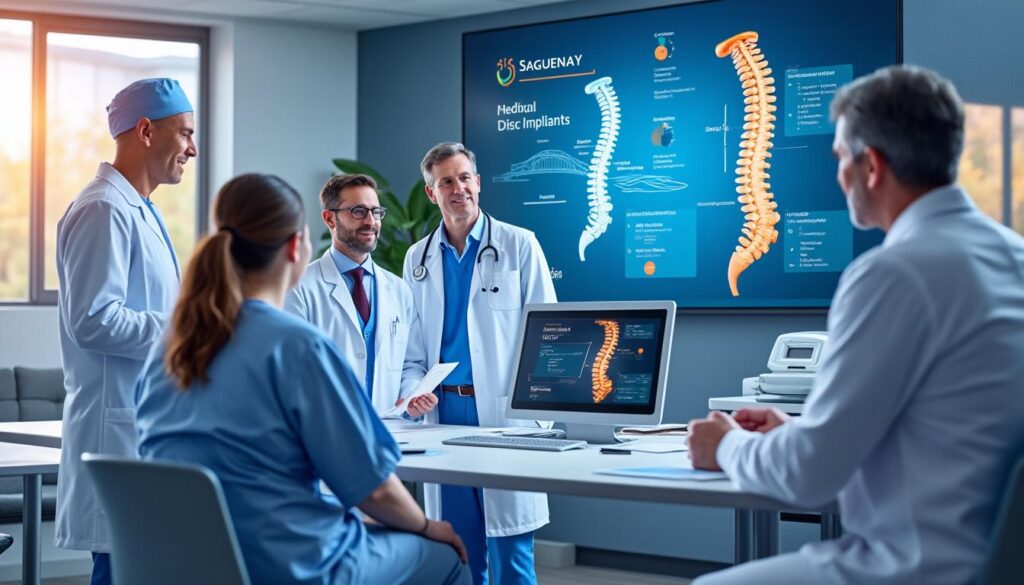
Lumbar Disc Prosthesis in Saguenay: Long-Lasting Relief After Surgery
Chronic back pain rooted in lumbar disc degeneration challenges many patients in Saguenay and beyond, urging exploration of innovative solutions to restore spine health and quality of life. Traditional spinal fusion surgeries, though effective for stabilizing painful segments, have notable…
International Coordination and Transatlantic Patient Support for Quebec Patients
One of the most innovative aspects of care led by Dr. Sylvain Desforges is the coordination of transatlantic medical pathways, bridging Quebec patients with expert surgical teams in France. This unique approach optimizes access to cutting-edge implants and surgical techniques such as those offered by major global manufacturers like Medtronic, Zimmer Biomet, and NuVasive. It also leverages established medical tourism platforms like SOS Tourisme Médical to facilitate logistics and personalized navigation throughout the surgical journey.
Such collaboration enhances the speed of surgical access, frequently reducing wait times compared to domestic public healthcare schedules. Furthermore, the cross-border model includes preoperative assessment, surgical intervention, and comprehensive post-operative monitoring via telemedicine and follow-ups in Quebec, ensuring continuity and personalized care.
- Faster scheduling: Access to expert surgeons and latest implant models without extended waitlists.
- Cost-effectiveness: Competitive pricing reduces financial barriers to premium care.
- Integrated follow-up: Bi-national coordination guarantees seamless recovery support.
- Custom care plans: Tailored strategies leveraging diverse surgical approaches and technologies.
| Feature | Benefit for Quebec Patients |
|---|---|
| International Surgical Expertise | Access to French and Canadian leading spine surgeons |
| Cutting-edge Implants | Availability of top-tier devices from leaders such as DePuy Synthes, Centinel Spine, and Globus Medical |
| Medical Tourism Support | Assistance with logistics, insurance, and local accommodation arrangements |
| Postoperative Telemedicine | Real-time monitoring and virtual consultations to optimize recovery |
This international framework reflects Dr. Desforges’s commitment to ethical, evidence-based, and patient-centered care that transcends borders, continually pushing the envelope on accessibility and clinical excellence.
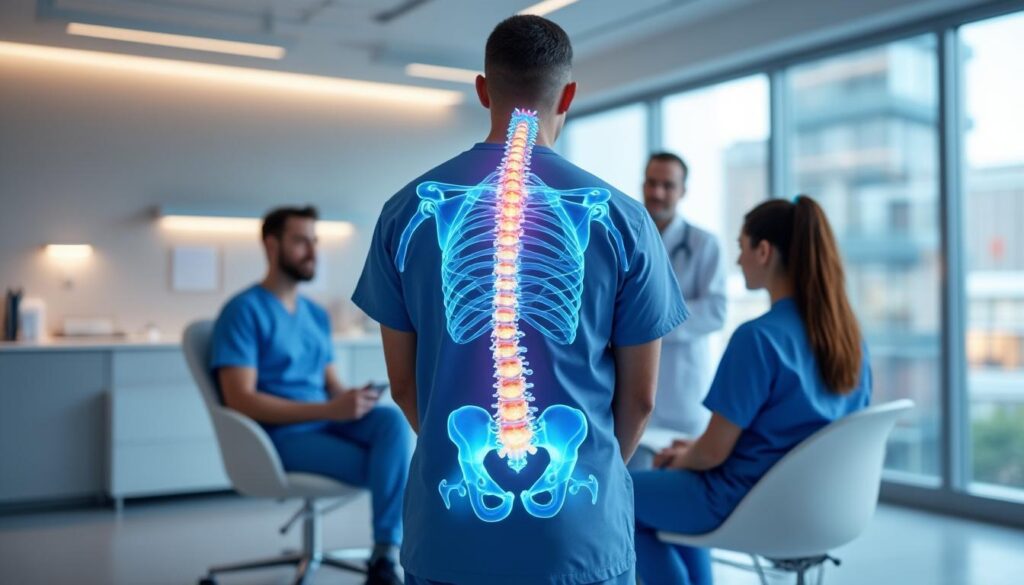
IntraSPINE® in Sherbrooke: Maintain Lumbar Function
In the modern management of lumbar spine conditions, patients in Sherbrooke and across Quebec are increasingly presented with innovative solutions that prioritize maintaining natural spinal function while alleviating debilitating pain. Among these advancements, the IntraSPINE device has emerged as a…
Conservative Treatments Before Considering Cervical Disc Prosthesis Surgery
Before surgery, it is essential patients complete comprehensive conservative management for at least 3 to 6 months. Dr. Desforges’s dedication to evidence-based care at Clinique TAGMED exemplifies this principle, offering advanced non-surgical therapies for cervical disc conditions.
These interventions include:
- Neurovertebral decompression: Utilizing advanced mechanical decompression devices to relieve pressure on affected discs non-invasively.
- Laser therapy: Applying targeted low-level laser treatment to promote tissue healing and reduce inflammation.
- Physiotherapy and Rehabilitation: Strengthening surrounding musculature and improving biomechanical support.
- Pharmacological management: Short-term use of anti-inflammatory and analgesic medications to control symptoms.
Completing these conservative measures not only optimizes surgical candidacy but can sometimes obviate the need for surgery altogether by promoting natural recovery. Should symptoms persist despite these treatments, surgical options such as artificial disc replacement become a well-justified next step.
| Conservative Treatment | Intended Outcome | Duration |
|---|---|---|
| Neurovertebral Decompression | Reduce disc pressure and nerve impingement | Variable, typically weeks to months |
| Laser Therapy | Promote tissue healing and reduce inflammation | Several sessions over weeks |
| Physiotherapy | Strengthen supportive musculature and improve posture | 3 to 6 months |
| Anti-inflammatory Medication | Symptom management for acute pain | Short-term use |
This conservative-first philosophy aligns with the standards set by Canadian and Québec health authorities, offering patients an ethically grounded and personalized roadmap to recovery.
Minimally Invasive Surgery in Longueuil: Reduce Post-Surgery Pain
Minimally invasive surgery in Longueuil is transforming the patient experience by significantly reducing post-surgery pain and accelerating recovery times. With advances in surgical techniques such as laparoscopic and robotic-assisted procedures, patients can benefit from smaller incisions, less tissue damage, and…
Innovative Surgical Techniques and Implant Technologies Used in Quebec City
The surgical landscape in Quebec City benefits from the integration of cutting-edge techniques and implant technologies that maximize outcomes while minimizing risks. Artificial cervical disc prostheses now incorporate materials and designs from world leaders such as LDR (now part of Zimmer Biomet), Medtronic, and Simplify Medical among others.
Minimally invasive approaches allow surgeons to carefully excise degenerated discs, precisely position implants, and preserve adjacent tissues. Intraoperative navigation and laser-assisted decompression enhance accuracy, decreasing operative time and patient trauma. Some prostheses also feature dynamic motion capabilities that better replicate physiological kinematics and improve long-term durability.
- High-grade biomaterials: Titanium alloys and ceramics for enhanced biocompatibility and wear resistance.
- Dynamic implant designs: Replicating natural shock absorption and flexibility.
- Minimally invasive surgery: Small incisions and tissue sparing.
- Advanced imaging guidance: Real-time intraoperative assistance enhancing implant placement accuracy.
| Technology/Feature | Benefit | Leading Manufacturers |
|---|---|---|
| Dynamic Disc Prosthesis | Preserves motion and reduces wear | Zimmer Biomet, Centinel Spine |
| Minimally Invasive Techniques | Lower tissue trauma, faster recovery | Medtronic, DePuy Synthes |
| Laser-Assisted Decompression | Improved precision and reduced complications | Spinal Kinetics, Simplify Medical |
| Intraoperative Navigation | Enhanced implant placement accuracy | Aesculap, Globus Medical |
These advancements not only enhance surgical outcomes but also support Dr. Desforges’s commitment to ethical care by minimizing risk and improving patient safety within Canadian regulatory standards.
Neck Surgery in Montreal: Maintain Natural Cervical Flexibility
Neck surgery remains a crucial consideration for patients suffering from severe cervical spine disorders where conservative treatments have failed. In Montreal, access to specialized care offers patients the opportunity to explore advanced surgical solutions designed to maintain natural cervical flexibility—an…
Long-Term Clinical Results Demonstrating Safety and Efficacy of Cervical Disc Prostheses
Extensive clinical data collected over the past decade affirms the robust safety profile and functional durability of cervical disc prostheses. One landmark study evaluating the BagueraC implant over 10 years confirmed:
- Low complication rates: 1% reoperation rates with no implant migration or dislocation reported.
- Excellent pain control: Approximately 83% of patients reported being pain-free postoperatively.
- Preservation of neurological function: High rates of maintained motricity and sensitivity without impairment.
- Motion preservation: Almost 87% of patients retained segmental motion at treated levels.
- Prevention of adjacent segment degeneration: Stable adjacent disc height maintained over long-term follow-up.
| Clinical Outcome | Observed Result |
|---|---|
| Reoperation Rate | 1% |
| Motion Preservation Rate | 86.6% |
| Pain-Free Patients | 82.7% |
| Neurological Function Preservation | Motricity 98.8%, Sensitivity 96.3% |
| Adjacent Disc Height Stability | Maintained over 10 years |
These findings corroborate the analysis by respected spine research platforms and emphasize the evolution of patient care toward less invasive and motion-conserving approaches, meeting patient expectations and quality of life goals.
Disc Prosthesis in Lévis: Fast and Lasting Results
In the realm of spinal care, patients battling chronic back pain and degenerative disc diseases continuously seek solutions that offer not just symptom relief but also the restoration of natural spinal function. Disc prosthesis, or artificial spinal disc replacement, has…
Human-Centered and Ethical Approach in Cervical Disc Prosthesis Care
At the core of spinal care innovation is an unwavering commitment to scientific integrity and patient dignity. Dr. Sylvain Desforges places a premium on transparent communication and education, demystifying complex surgical options to ensure patients can make informed decisions.
He adheres strictly to Québec and Canadian regulations, including guidance from the Collège des médecins du Québec, with an emphasis on evidence-based practice and patient safety. This also involves stresses on:
- Patient autonomy: Encouraging questions and dialogue to suit individual values and concerns.
- Personalized care plans: Recognizing that each patient’s pathology and lifestyle are unique.
- Ethical innovation: Only recommending surgery after thorough conservative treatment trials.
- Multidisciplinary collaboration: Integrating osteopathic, surgical, and rehabilitation expertise for comprehensive care.
This approach ensures that patients feel supported and confident throughout their journey, ultimately fostering better surgical outcomes and satisfaction.
Motion Surgery in Terrebonne: Reduce Postoperative Complications
In the evolving landscape of spine care, Motion Surgery in Terrebonne represents a groundbreaking approach that offers patients a significant advantage in reducing postoperative complications while preserving spinal mobility. Traditional spinal surgeries have long been associated with challenges, including stiffness,…
Call to Action: Personalized Evaluation and Access to Advanced Care
Given the complexity and individualized nature of cervical disc disorders, a personalized expert evaluation is crucial to determine the best treatment trajectory. Patients in Quebec are encouraged to seek comprehensive assessments under the expert guidance of Dr. Sylvain Desforges, who brings a unique combination of osteopathic expertise, scientific rigor, and international collaboration.
With access to pioneering technologies, rigorous ethical standards, and a patient-centered care model, there is an unprecedented opportunity to benefit from motion-preserving cervical disc prosthesis surgeries by leveraging transatlantic partnerships.
For more information or to discuss your specific spinal condition, please visit this contact page to initiate a tailored consultation designed to optimize your spinal health and quality of life.
What are the main benefits of cervical disc prosthesis over traditional fusion surgery?
Cervical disc prosthesis preserves natural spinal motion, reduces the risk of adjacent segment degeneration, and typically offers faster recovery and better overall neck flexibility compared to fusion surgery.
How long does cervical disc prosthesis surgery take, and what is the recovery period?
Surgical procedures usually last about 1.5 to 2 hours, with light activities possible within 2 to 4 weeks, depending on individual healing and rehabilitation adherence.
Is surgery the first option for cervical disc disease?
No, surgery is considered only after 3 to 6 months of comprehensive conservative treatment, including therapies like neurovertebral decompression and laser therapy to alleviate symptoms.
How does Dr. Sylvain Desforges support patients through the surgical journey?
Dr. Desforges offers expert evaluations, educates patients with clear and accessible information, collaborates with multidisciplinary teams, and facilitates international surgical access and post-operative follow-up.
Are advanced implants like BagueraC safe and effective in the long term?
Yes, long-term studies demonstrate excellent safety, maintained motion, and low complication rates, validating their use in clinical practice for cervical disc replacement.