Herniated Disc in Mirabel: Key Questions for Your Osteopath and Insights into Neurovertebral Decompression Therapy
July 14, 2026
Preparing for Surgery in France: Key Indications, Benefits, and Limitations
July 15, 2026
Back pain continues to be a pervasive health challenge affecting millions worldwide, especially those in the Québec region who often encounter prolonged wait times for specialized spine treatments. In Lévis, an innovative surgical option, the disc prosthesis, is emerging as a beacon of hope for individuals seeking advanced, effective interventions that preserve spinal function while relieving chronic discomfort. This approach, supported by pioneering work from experts like Dr. Sylvain Desforges, demonstrates how combining evidence-based medicine with cutting-edge technology can revolutionize spinal health care. As awareness grows, more patients look toward this proven solution for regaining mobility and a pain-free lifestyle.
The essence of the disc prosthesis lies in its ability to replace damaged spinal discs with artificial discs designed to mimic natural movement and maintain spinal balance. Unlike traditional fusion surgeries that limit mobility by rigidly stabilizing vertebral segments, disc replacement offers a minimally invasive technique fostering quicker recovery and sustained spinal biomechanics. This approach especially suits active patients longing to return to daily activities without restrictions induced by spinal stiffness or persistent pain.
The collaboration between Canadian spine care authorities and French medical institutions brings unique advantages, offering patients access to world-class expertise and innovative surgical techniques often unavailable locally. With specialists like Dr. Desforges orchestrating transatlantic care pathways, the patient journey is streamlined, ensuring comprehensive evaluation, treatment, and post-operative rehabilitation within a patient-centered framework. This synergy embodies a future-forward healthcare model blending technology, compassion, and rigorous medical oversight.
Understanding Disc Prosthesis and Its Role in Spinal Health Restoration
Disc prosthesis, commonly referred to as spinal disc replacement, is a surgical intervention aimed at alleviating chronic back pain caused by degenerative disc disease or disc herniation. The procedure involves substituting the impaired intervertebral disc with an artificial implant, restoring the essential cushioning and flexibility between vertebrae. This innovative technique aligns with the contemporary focus on preserving natural spinal motion and enhancing long-term outcomes.
The artificial disc is engineered to mimic the biomechanical properties of a healthy disc, allowing for a range of motion that includes flexion, extension, and rotation. By maintaining this natural movement, the risk of adjacent segment degeneration—a common complication in fusion surgeries—is significantly reduced. In Lévis, the availability of advanced prosthetic devices such as the LP-ESP lumbar prosthesis integrates decades of research and collaboration from renowned French research centers, ensuring exceptional durability and biomechanical performance.
Operation by skilled teams guided by thorough patient assessments, like those led by Dr. Sylvain Desforges, guarantees the selection of appropriate candidates. These candidates are typically younger, active patients with isolated degenerative disc disease who have explored conservative treatments without success. The procedure’s minimally invasive nature accelerates patient recovery, enabling many to resume normal daily activities within 2 to 3 months.
In assessing disc prosthesis, it is essential to comprehend the balance between surgical innovation and patient safety. Experts emphasize the importance of comprehensive evaluation and adherence to stringent Quebec and Canadian medical regulations to ensure ethical and effective care. Dr. Desforges’ approach embodies this philosophy: thorough diagnostic evaluations precede any surgical consideration, preserving patient welfare and promoting evidence-based medical decisions.
IntraSPINE® in Sherbrooke: A Long-Lasting Solution for Chronic Lower Back Pain
Chronic lower back pain remains one of the most pressing health concerns in Sherbrooke and beyond, impacting millions and often diminishing daily quality of life. Despite the prevalence of lumbar discomfort, many face limited access to cutting-edge treatments amidst lengthy…
Innovative Surgical Techniques for Spinal Disorders: Fusion, Stabilization, and Disc Replacement
The landscape of spinal surgery has expanded significantly, presenting patients various treatment avenues for managing conditions such as degenerative disc disease, spinal stenosis, and herniated discs. The main surgical methods comprise traditional fusion, dynamic stabilization, and disc prosthesis—all offering distinct benefits tailored to individual patient needs.
Spinal Fusion Surgery: Established but with Limitations
Spinal fusion, or arthrodesis, remains a widely utilized intervention where two or more vertebrae are permanently joined to halt painful movements. This operation often yields immediate pain relief by restricting motion at the affected segment. However, the downside is the consequent loss of mobility, which can shift biomechanical stress to adjacent discs, prompting further degeneration and potential recurring pain.
Many patients subsequently experience a diminished quality of life due to restricted spinal flexibility, leading to challenges in daily tasks and reduced physical activity. Despite its long-standing usage, fusion surgery’s side effects have encouraged the search for less invasive alternatives that protect spinal motion and reduce long-term complications.
Dynamic Stabilization: Bridging Stability with Movement
The emergence of dynamic stabilization techniques reflects an innovative approach that balances structural support with preserving some degree of spinal motion. This method involves the implantation of devices that stabilize the spine while allowing controlled movement, recently incorporating advanced materials and biomechanics tailored for durability and flexibility.
This surgical alternative provides relief without the rigid immobilization seen in fusion, promoting patient comfort and function. Nonetheless, the technology is relatively new and its long-term outcomes continue to be evaluated, making it advisable for patients to consult experts like Dr. Desforges to determine suitability based on individual pathology.
Disc Prosthesis: Preserving Mobility with Proven Outcomes
Among these options, disc prosthesis stands out for its dual ability to maintain natural spinal motion and provide enduring pain relief. By replacing the degenerated disc with an artificial implant tailored to replicate physiological functions, this method allows patients to retain flexibility and reduce the risk of adjacent segment disease.
In Lévis, this cutting-edge procedure benefits from French-approved implants and surgical protocols that have demonstrated excellent long-term results. According to studies, patients undergoing disc replacement report faster hospital discharge and quicker return to normal activities, a vital advantage for those pursuing an active lifestyle.
Tables contrasting these methods clarify the benefits and drawbacks:
| Criteria | Spinal Fusion | Disc Prosthesis | Dynamic Stabilization |
|---|---|---|---|
| Mobility After Surgery | Significant loss of movement | Preserved natural motion | Partial movement retention |
| Hospital Stay | 5 to 7 days | 3 to 4 days | 3 to 5 days |
| Return to Normal Activities | 4 to 6 months | 2 to 3 months | 3 to 4 months |
| Long-term Complications | Adjacent segment degeneration common | Reduced adjacent segment stress | Ongoing research needed |
| Cost | Higher local surgery cost | Optimized via international care pathways | Moderate to high |
For more insights on advanced surgical options, exploring resources such as disc prosthesis in Lévis approved surgical innovation offers comprehensive information.
Herniated Disc Care in Sainte-Julie: Why TAGMED’s Neurovertebral Decompression Therapy Stands Out
In the vibrant community of Sainte-Julie, back pain—particularly that stemming from herniated discs—has become a widespread concern affecting people from all walks of life. The relentless search for effective, non-invasive treatments has brought renewed attention to a pioneering therapy that…
The Patient Journey Towards Disc Prosthesis: From Evaluation to Rehabilitation
Embarking on a spinal disc replacement journey requires a meticulously structured pathway led by experts who prioritize personalized care and scientific rigor. Early stages emphasize thorough evaluation overseen by Dr. Sylvain Desforges, whose 30+ years of clinical experience ensure patients receive precise assessments tailored to their condition.
The process commences with an initial consultation, involving detailed medical history review and diagnostic imaging to pinpoint disc degeneration severity and exclude other spinal pathologies. This comprehensive evaluation ensures only patients meeting strict eligibility criteria proceed, qualifying candidates predominantly include those experiencing chronic lumbar pain related to isolated degenerative disc disease.
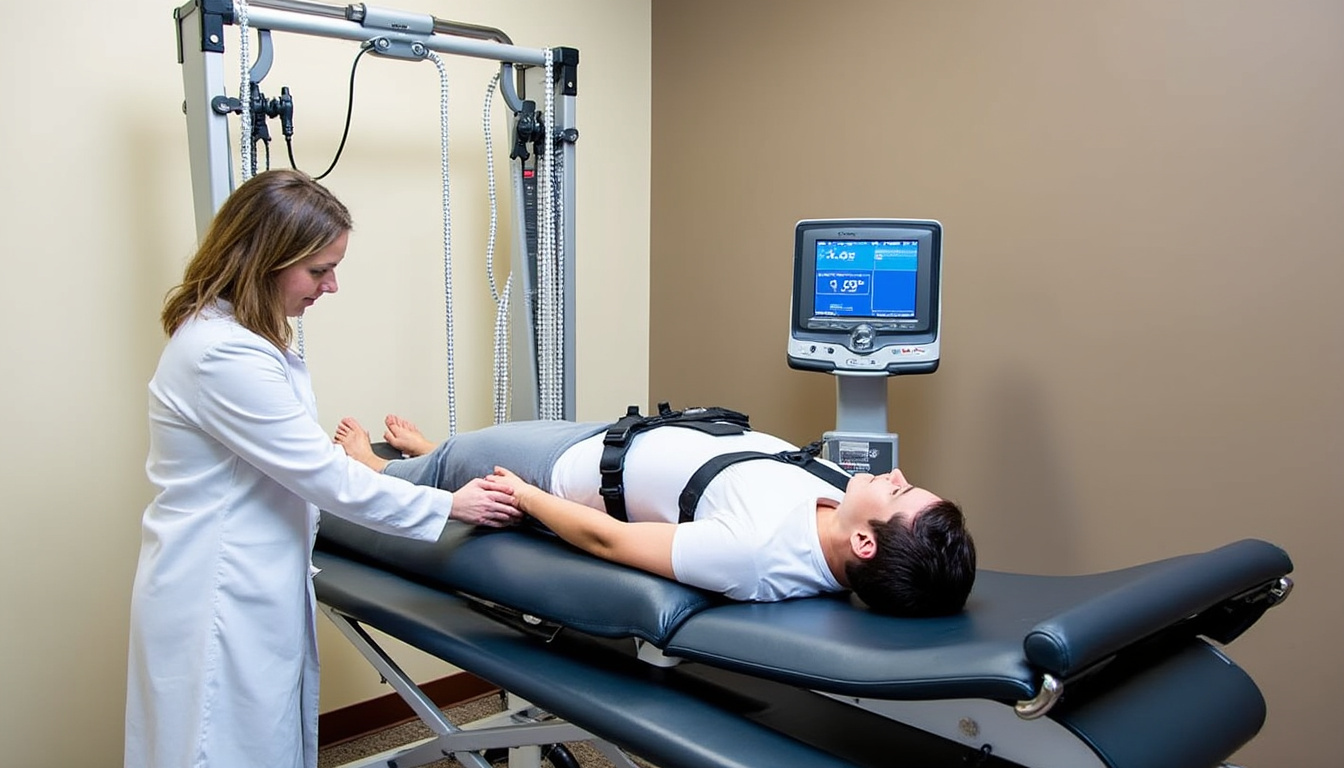
Crucially, conservative treatment attempts, like neurovertebral decompression therapy available at Clinique TAGMED, are strongly encouraged prior to contemplating surgery. This step not only helps mitigate symptoms but also gauges whether surgical intervention is warranted. Neurovertebral decompression gently alleviates nerve pressure, promoting functional recovery and frequently contributing to significant pain relief. If these non-surgical approaches prove insufficient after a period of 3 to 6 months, surgical options are considered.
Coordination between Canadian specialists and French surgical teams assures smooth transition into operative care and post-operative follow-up. The transatlantic partnership led by professionals like Dr. Desforges minimizes wait times and ensures access to leading-edge surgical techniques and dynamic implants approved in France but less available locally.
Post-surgery, residents of Québec can trust in a structured rehabilitation program emphasizing gradual physical conditioning, spine-strengthening exercises, and lifestyle adjustments to support long-term spinal health. This collaborative approach between international providers and local rehabilitation teams embodies a patient-centric model prioritizing safety, efficacy, and holistic recovery.
Back Surgery in Trois-Rivières: Alleviating Pain While Preserving Mobility
In Trois-Rivières, Quebec, the persistence of back pain affects a substantial portion of the population seeking effective and personalized solutions. Back pain, often caused by spinal disorders or herniated discs, can drastically diminish quality of life, limiting mobility and causing…
Advantages of Transatlantic Medical Collaboration for Québec Patients
The emergence of international healthcare partnerships offers Québec patients multiple benefits when facing complex spinal conditions. By leveraging expertise from renowned French centers, patients gain access to innovative surgical implants, advanced minimally invasive procedures, and comprehensive care pathways often constrained by local healthcare system limitations.
This transatlantic integration, championed by Dr. Sylvain Desforges, optimizes medical timelines and cost efficiency. Patients avoid prolonged local waitlists and benefit from personalized treatment plans developed through cross-border communication between multidisciplinary teams. French facilities provide world-class surgical environments, while Canadian teams ensure post-operative continuity of care within patients’ communities.
This global cooperation uniquely positions disc prosthesis surgery as an accessible, effective, and patient-centered solution in Lévis and beyond. Platforms like SOS Tourisme Médical facilitate this pathway by coordinating logistics, consultations, and ongoing support, guaranteeing transparency and comfort throughout the treatment journey.
Key benefits of this model include:
- Reduced surgical wait times through coordinated scheduling
- Access to cutting-edge technology including dynamic implants
- Comprehensive care encompassing pre-operative preparation and rehabilitation
- Enhanced patient safety through adherence to international standards
- Cost optimization eliminating excessive local healthcare expenses
Disc herniation remains a significant health concern in Pointe-Claire, impacting the lives of a diverse population ranging from labor-intensive workers to the aging community. The condition, characterized by the displacement or rupture of the intervertebral disc, often leads to debilitating…
Essential Role of Conservative Treatments Prior to Surgery
A cornerstone of responsible spine care is the exhaustive exploration of non-surgical therapies before considering invasive procedures. Conservative treatments provide opportunities to reduce pain, improve function, and sometimes avoid surgery altogether. Dr. Sylvain Desforges champions this philosophy, emphasizing treatments such as:
- Neurovertebral decompression therapy to alleviate nerve pressure
- Precision osteopathic manual therapies to restore spinal alignment
- Advanced laser therapy promoting tissue healing and inflammation reduction
- Shockwave treatment aiding recovery from chronic musculoskeletal conditions
At Clinique TAGMED, these modalities are integrated into personalized care plans that consider each patient’s unique clinical picture. Patients benefit from close monitoring and staged rehabilitation, ensuring treatment efficacy and tailoring subsequent steps accordingly.
Furthermore, undergoing conservative therapies solidifies patients’ understanding of their spinal health, fostering a participatory approach to care that aligns with modern ethical standards and regulatory guidelines enforced by Quebec and Canadian medical authorities.
TOPS™ in Gatineau: A High-Performance Solution for Lumbar Spine Care
In a region where chronic back pain increasingly affects quality of life, the quest for advanced and effective lumbar spine treatments is paramount. Lumbar spinal stenosis, a prevalent condition among Quebec’s aging population, often imposes persistent discomfort and mobility limitations.…
Specific Innovations and Specialized Services Available in Lévis
Offering disc prosthesis solutions in Lévis leverages a blend of advanced technologies and expert clinical teams, spearheaded by professionals committed to elevating spinal care standards. Patients here have unique access to:
- Dynamic artificial disc implants designed to closely replicate natural spinal biomechanics and ensure long-term durability
- Neurovertebral decompression equipment delivering precise, non-invasive nerve pressure relief
- Innovative laser and shockwave therapies aiding recovery and minimizing inflammation following surgery
- Comprehensive pre- and post-operative support ensuring smooth transitions and optimal rehabilitation
- Cross-border coordination with French surgical centers for access to cutting-edge minimally invasive surgeries
Such specialized services distinguish the Lévis care pathway by combining medical innovation with holistic, compassionate patient engagement. This approach empowers individuals to make informed decisions about their spinal health and promotes better overall outcomes.
Extensive information about these solutions can be found in resources like disc prosthesis in Lévis full restoration of spinal function, highlighting recovery trajectories and patient testimonials confirming treatment effectiveness.
At Gouin Clinic, the landscape of herniated disc therapy has entered a transformative era marked by the integration of Personalized Treatment Plans and breakthrough Neurovertebral Decompression Therapy. This non-surgical approach is revolutionizing how spinal disorders are managed, offering patients an…
Empowering Patients Through Clear and Accessible Education on Disc Prosthesis
Understanding spinal disc replacement involves navigating complex medical concepts that can often feel overwhelming. Dr. Sylvain Desforges dedicates significant effort to translating these technicalities into intuitive, patient-friendly explanations. This educational approach equips patients and healthcare professionals alike with a clear comprehension of:
- Indications: Which symptoms and conditions make patients candidates for disc prosthesis
- Limitations: When alternative treatments or diagnostic paths might be more appropriate
- Benefits: Expected outcomes including pain relief, restored mobility, and improved quality of life
- Procedural steps: What to anticipate before, during, and after the surgery
This transparency reduces anxiety, reinforces trust, and encourages patients to actively participate in their care decisions. Such clarity is paramount given the evolving nature of spinal surgical technologies and the personalized nuances each patient presents.
The value of expert-led education is evident in testimonials where patients report feeling respected, heard, and adequately supported throughout their treatment journey. Information portals providing accessible content, like those coordinated by Dr. Desforges, contribute substantially to demystifying spine surgery and promoting ethical medical practices.
Cervical Disc Prosthesis in Quebec: Preventing Post-Operative Stiffness
Neck pain is one of the most common musculoskeletal complaints in Quebec, affecting a significant portion of the population annually. Often rooted in degenerative cervical disc diseases or herniated discs, this persistent discomfort severely impacts daily life and mobility. Fortunately,…
Dr. Sylvain Desforges: A Pioneer in Spine Care Excellence and Patient-Centered Innovation
With more than three decades of dedicated clinical involvement, Dr. Sylvain Desforges stands at the forefront of spinal health expertise. Possessing credentials including B.Sc., D.O., and N.D., he has founded key institutions such as the Alliance Canadienne de Médecine Alternative (ACMA), the Canadian College of Osteopaths, and Clinique TAGMED.
His pioneering work in managing spinal disorders leverages rigorous scientific standards, ethical care, and progressive technologies. Dr. Desforges’ patient evaluation methods are renowned for their depth and holistic scope, ensuring comprehensive understanding of each individual’s condition prior to proposing interventions.
His role in orchestrating international patient pathways between Québec and France exemplifies his commitment to expanding access to innovative care modalities, such as neurovertebral decompression and dynamic implants, which are sometimes unavailable in Canada. His leadership ensures that patients are not only recipients of medical advancements but also partners in the therapeutic journey, receiving empathetic, personalized support through every stage.
Patients seeking spinal care can confidently approach Dr. Desforges’ team, assured of a partnership marked by expertise, transparency, and genuine compassion.
The prevalence of herniated disc conditions in Blainville has sparked considerable discussion and misconceptions about their causes, symptoms, and treatments. While the pain and disability associated with this spinal disorder are well documented, the emergence of non-surgical options such as…
A Closer Look at Recovery and Long-Term Outcomes Following Disc Prosthesis
Recovery timelines following spinal disc replacement tend to be significantly shorter than those associated with classical fusion surgery. Most patients return to ordinary activities, including work and light exercise, within two to three months due to the preservation of spinal mobility and minimally invasive techniques employed during surgery.
Long-term follow-up studies highlight sustained pain relief and improved function up to and beyond ten years post-operation. These outcomes emphasize the prosthesis’s ability to restore spinal balance and reduce the mechanical stress on adjacent spinal segments, which often causes further degeneration in fusion patients.
Rehabilitation protocols include tailored physical therapy focused on strengthening core muscles, improving posture, and gradually increasing activity levels. Regular medical evaluations ensure progress is on track and address any concerns promptly. This comprehensive care model, supported by expert teams in Lévis and coordinated with international partners, fosters a reassuring recovery journey.
Understanding these aspects empowers patients to approach spinal disc replacement with realistic expectations and confidence in lasting benefits. For detailed procedural insights and post-operative care guidelines, consult specialized resources like disc prosthesis in Lévis – a reliable long-term solution.
Who is eligible for a disc prosthesis?
Patients suffering from chronic lower back pain due to isolated degenerative disc disease may be suitable candidates after a comprehensive evaluation by their healthcare provider.
What advantages does neurovertebral decompression provide?
This treatment reduces nerve pressure and improves spinal function, making it a valuable conservative therapy before considering surgery.
How long does recovery take after disc prosthesis surgery?
Many patients return to their normal activities within 2 to 3 months following the procedure, benefiting from the minimally invasive approach and preserved mobility.
What cutting-edge technologies are available in Lévis for spine care?
Options include dynamic artificial discs, neurovertebral decompression, and advanced supportive therapies such as laser and shockwave treatments.
How is post-operative follow-up managed effectively?
A competent medical network conducts ongoing assessments focusing on rehabilitation to optimize recovery and minimize complications after surgery.