Motion Surgery in Terrebonne: Limit Segment Wear
October 26, 2025
Neck Surgery in Montreal: Advanced Motion Technology
October 26, 2025
In the ongoing pursuit of effective treatments for degenerative disc disease and other spinal disorders, the emergence of disc prostheses represents a significant advancement. Particularly, the approval and reimbursement of artificial disc replacement procedures in France have opened new avenues for patients seeking alternatives to traditional spinal fusion surgeries. These innovations hold particular promise for patients in Quebec, especially in regions like Lévis, where access to timely spinal care can be limited by wait times and costs. Understanding the surgical options available, the advantages of transatlantic healthcare coordination, and the comprehensive care pathways designed for optimal outcomes is essential for making informed decisions in spine health management.
With over 30 years dedicated to spinal health assessment and osteopathic expertise, Dr. Sylvain Desforges has pioneered personalized, science-based approaches that guide patients from diagnosis to post-operative recovery. Collaborating with international partners across Canada and France, and advocating for advanced conservative therapies before surgical intervention, Dr. Desforges embodies ethical innovation and patient-centered care. This article explores the landscape of disc prosthesis surgery in France, emphasizing the rigorous evaluation process, cutting-edge technologies, and coordinated patient journeys that make this approach an increasingly valuable option for Quebecois patients considering spine surgery abroad.
Types of Disc Prosthesis Surgery Offered in France
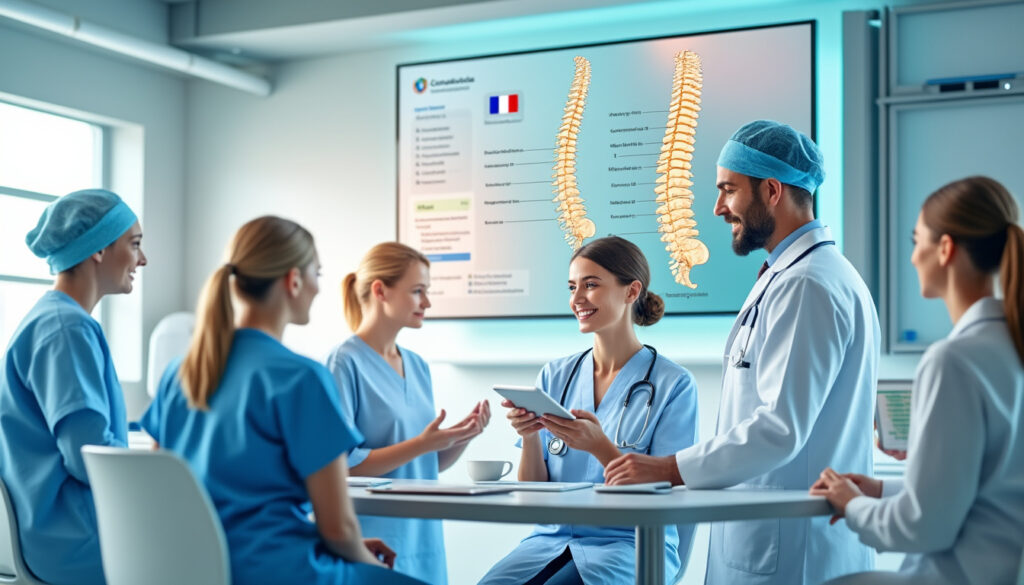
Disc prosthesis surgery in France encompasses several innovative approaches to treat degenerative disc disease by maintaining or restoring spinal motion rather than eliminating it through fusion. The primary categories of disc replacement techniques include simple disc replacement, spinal fusion, and motion-preserving surgeries, each with distinct applications tailored to the patient’s specific pathology.
Simple Disc Replacement involves the removal of a damaged intervertebral disc with subsequent implantation of an artificial disc prosthesis designed to replicate natural spinal motion. Devices like the Mobi-C cervical disc prosthesis are widely used in France and have demonstrated excellent outcomes in preserving neck mobility while alleviating pain caused by herniated or degenerated cervical discs. This anterior approach procedure targets patients who have exhausted conservative care and present with persistent symptoms related to disc pathology.
Spinal Fusion Surgery, by contrast, is a long-standing surgical option where two or more vertebrae are permanently joined to stabilize the spine. Although effective in reducing pain caused by motion at the affected level, fusion eliminates natural movement and can predispose adjacent levels to accelerated degeneration. France continues to offer fusion surgeries for certain indications; however, the ongoing evolution in implant technologies has favored motion-preserving solutions for many patients.
Motion-Preserving Surgeries have gained momentum due to their biomechanical advantages. Artificial discs, such as those offered by companies like Spineway, aim to maintain physiological movement by mimicking the viscoelastic properties of natural discs. These devices reduce stress on adjacent spinal levels, potentially decreasing the incidence of adjacent segment disease. In addition, dynamic implants are increasingly preferred for lumbar as well as cervical spine applications, supported by long-term clinical data, such as those detailed in pertinent peer-reviewed studies.
- Simple disc replacement: Focuses on restoring disc height and motion.
- Spinal fusion: Provides stability but sacrifices natural movement.
- Motion-preserving implants: Designed to maintain spinal biomechanics and reduce adjacent segment degeneration.
| Type of Surgery | Primary Goal | Common Implant Examples | Advantages | Limitations |
|---|---|---|---|---|
| Simple Disc Replacement | Restore disc function and mobility | Mobi-C, LDR Medical | Preserves motion, reduces adjacent level strain | Suitable only for selected patients; requires intact facet joints |
| Spinal Fusion | Stabilize affected vertebrae | Medtronic Implants, DePuy Synthes Systems | Effective pain relief, wide applicability | Loss of mobility, risk of adjacent segment disease |
| Motion-Preserving Surgery | Maintain natural spinal kinematics | Spineway, Centinel Spine devices | Biomechanical advantages, reduces adjacent segment degeneration risk | Long-term data still maturing for some devices |
The approved disc prosthesis devices in France, including cutting-edge models from global leaders like Medtronic and ZimVie’s Mobi-C, represent the forefront of surgical possibilities that patients in Lévis and Quebec broader regions can access through carefully coordinated medical tourism pathways.

IntraSPINE® in Sherbrooke: Durable Solution for Chronic Low Back Pain
The management of chronic low back pain, a widespread condition affecting millions across Quebec and beyond, has reached a pivotal moment thanks to innovative medical technologies and coordinated care pathways. At the heart of this evolution lies the IntraSPINE implant,…
Key Stages in the Patient Pathway for Disc Prosthesis Surgery in France
Under the expert supervision of professionals such as Dr. Sylvain Desforges—who has over three decades of experience in spine evaluation and osteopathy—patients embarking on spine surgery abroad benefit from meticulously structured pathways ensuring safety, efficacy, and personalized care.
The journey begins with a thorough multidisciplinary evaluation, incorporating advanced imaging, biomechanical assessments, and osteopathic evaluations to identify precise disc pathology. This initial step is crucial to differentiate cases where disc prosthesis is indicated versus those that may respond favorably to conservative management.
Step 1: Comprehensive Assessment and Conservative Treatment Prioritization
Before considering surgery, patients must undergo at least 3 to 6 months of conservative treatment, emphasizing modalities that include physical therapy, osteopathic care, and modern decompression technologies such as neurovertical decompression available at the Clinique TAGMED. This priority reflects a commitment to safety and evidence-based practice, ensuring that surgery is only contemplated when less invasive options have not achieved lasting relief.
Step 2: Pre-Surgical Coordination and Planning
Once surgical candidacy is confirmed, liaison with partner surgical teams in France begins. This transatlantic coordination involves detailed case discussions, insurance clarifications, and scheduling of personalized treatments with experienced spine surgeons specializing in disc prosthesis. Patients receive education on the procedure’s risks, benefits, and expectations through accessible communication methods tailored by Dr. Desforges’ pedagogical approach.
Step 3: Surgical Intervention and Hospital Stay
Patients undergo surgery in accredited French clinics equipped with the latest technology and staffed by expert multidisciplinary teams. Surgical approaches align with international best practices, utilizing CE-marked implants like Mobi-C and devices from manufacturers such as Spineway and Zimmer Biomet. The hospital stay duration is typically brief due to minimally invasive techniques, enhancing recovery speed and reducing complications.
Step 4: Post-Operative Care and Rehabilitation
Following discharge, patients benefit from a tailored rehabilitation program, integrating physiotherapy, osteopathic monitoring, and remote follow-up support, often coordinated between French and Canadian specialists. This seamless transition prioritizes continued spinal health optimization, emphasizing mobility preservation and functional restoration.
The entire pathway highlights the ethical rigor and longitudinal expertise that Dr. Desforges provides, ensuring patient safety and best outcomes in line with Quebec and Canadian medical regulations.
- Initial conservative care with potential neurovertical decompression
- Detailed transatlantic case evaluation and procedure planning
- Minimally invasive surgical approach using CE-marked implants
- Comprehensive post-surgical rehabilitation bridging France-Canada collaboration
| Stage | Description | Key Actors | Duration | Patient Expectations |
|---|---|---|---|---|
| Assessment & Conservative Care | Initial diagnosis and non-surgical treatment | Dr. Desforges, osteopaths, physiotherapists | 3–6 months | Symptom management, possible avoidance of surgery |
| Pre-Surgical Coordination | Case review and surgical preparation | Multidisciplinary French and Canadian teams | 1–2 months | Understanding procedure, scheduling surgery |
| Surgery & Hospital Stay | Disc prosthesis implantation | Specialized spine surgeons and OR teams | 3–5 days | Procedure outcome, early recovery |
| Post-Operative Rehabilitation | Recovery and functional restoration | Rehabilitation specialists, osteopaths | 3–6 months | Regained mobility and reduction of pain |

Spine Surgery in Trois-Rivières: Reduce Pain and Preserve Mobility
In recent years, spine surgery in Trois-Rivières has evolved notably, combining advanced medical expertise with innovative technologies to deliver patient-centered care. This growing field addresses the increasing demand among Quebec residents seeking effective solutions for chronic back pain and mobility…
Biomechanical and Clinical Advantages of Disc Prosthesis Over Fusion Techniques
Disc prosthesis offers compelling biomechanical benefits, especially for patients who prioritize preservation of spinal function and range of motion. Unlike spinal fusion—which rigidly joins vertebrae eliminating intervertebral movement—artificial discs seek to retain physiological kinematics while relieving pain and neurological symptoms.
Biomechanical Benefits:
- Motion Preservation: Prostheses such as Mobi-C allow the cervical spine to maintain flexion, extension, lateral bending, and rotation, which supports daily functional activities and quality of life.
- Reduced Adjacent Segment Stress: By preserving natural motion, these devices decrease the mechanical load transferred to adjacent discs and vertebral levels, potentially preventing future degeneration or the need for further surgery.
- Restoration of Disc Height: Artificial implants restore normal disc spacing, decompressing nerve roots and alleviating symptoms like radiculopathy or myelopathy.
Clinical results have shown that patients receiving disc prostheses generally experience faster recovery times and better long-term outcomes compared to fusion patients. The implants offered by manufacturers such as Centinel Spine and LDR Medical reflect decades of research and iterative design improvements.
| Aspect | Disc Prosthesis | Spinal Fusion |
|---|---|---|
| Preservation of Movement | Maintained physiological spinal motion | Eliminated motion at fused levels |
| Risk to Adjacent Discs | Lower due to motion preservation | Higher risk of adjacent segment degeneration |
| Recovery Time | Typically shorter, less post-op discomfort | Often longer, requires extensive rehabilitation |
| Long-Term Outcomes | Favourable with appropriate indications | Effective but potential for subsequent issues |
Patient stories from Quebec who chose disc prosthesis in Lévis and underwent procedures in France endorse the approach’s real-world benefits—not only in pain relief but also in the ability to return to active lifestyles more quickly.

Cervical Disc Prosthesis in Quebec City: Avoid Post-Surgery Stiffness
Chronic neck pain remains a significant challenge for thousands of residents in Quebec City every year, often leading them to seek effective spinal surgery options that minimize downtime and maximize long-term mobility. Among the recent advancements revolutionizing cervical spine care,…
Economic and Healthcare System Benefits of Transatlantic Disc Prosthesis Care
For many Quebec patients, the public healthcare wait times and out-of-pocket expenses for specialized spine surgeries present significant barriers. Coordinating surgical care in France, where disc prosthesis procedures have gained official reimbursement and recognition, delivers both economic and system-level advantages.
Cost Efficiency: Procedures like the Mobi-C implantation are reimbursed by the French health insurance system, reducing the financial burden on patients. Opportunities to bundle care with advanced conservative treatments, such as those at the Clinique TAGMED, further optimize spending by potentially avoiding surgery or decreasing rehabilitation needs.
Reduced Wait Times: France’s network of specialized clinics offers more immediate access to spine surgeons trained in modern prostheses, contrasting with the longer queues commonly experienced in Quebec public systems.
Continuity of Care and Quality Assurance: Close collaborations between Canadian and French providers guided by Dr. Desforges ensure compliance with Quebec’s regulatory requirements and guarantee continuity of care from initial evaluation to post-operative follow-up.
- Access to state-of-the-art implants with reimbursement
- Integration of advanced conservative care pre- and post-surgery
- Shorter surgical wait times and faster return to daily life
- Transparency and ethical care coordination
| Benefit | Transatlantic Care in France | Local Quebec Public System |
|---|---|---|
| Wait Time | Weeks to a few months | Often 6 months to over a year |
| Cost to Patient | Partially reimbursed; cost-effective | Limited coverage; high out-of-pocket for private care |
| Access to Innovation | Immediate access to CE-marked dynamic implants | Limited availability of advanced prostheses |
| Patient Support | Coordinated multilingual care teams | Variable follow-up and support services |
Such an approach empowers patients from Quebec, particularly those in Lévis, to choose timely, cutting-edge care without the financial strain and excessive delays that can compromise spinal health.

Minimally Invasive Surgery in Longueuil: Reduce Hospital Stay Duration
In recent years, advances in spinal care have dramatically reshaped the treatment landscape for patients suffering from debilitating spinal conditions. Particularly in Longueuil, the emergence of minimally invasive surgery (MIS) techniques offers a transformative alternative to conventional open surgeries. These…
Ensuring Patient Safety and Ethical Standards in International Spine Care
The transatlantic partnership for disc prosthesis surgery maintains a stringent focus on patient safety, ethical medical practices, and adherence to Quebec and Canadian health regulations. Dr. Sylvain Desforges’ role exemplifies this commitment through his thorough evaluations, ensuring that surgery is introduced only after conservative measures have been properly exhausted and that patient candidacy is appropriate.
Key elements of safety and ethics include:
- Evidence-Based Practice: Treatment plans rely on the latest clinical studies and device approvals, such as the 10A* rating from the Orthopaedic Data Evaluation Panel for devices like Mobi-C.
- Regulatory Compliance: Only CE-marked implants with proven benefits are utilized, in compliance with both French and Canadian medical standards.
- Comprehensive Informed Consent: Patients receive clear, jargon-free explanations of risks, benefits, and alternatives, embodying Dr. Desforges’ pedagogy.
- Continuous Monitoring: Post-operative follow-up includes collaboration between French surgeons and the patient’s osteopathy team in Quebec, ensuring early detection of issues.
| Patient Safety Aspect | Description |
|---|---|
| Device Validation | Only clinically proven, CE-certified prostheses with robust data are employed. |
| Pre-Surgical Screening | Comprehensive assessments exclude patients suited to conservative care only. |
| Patient Education | Clear communication avoids misunderstandings and anxiety. |
| Follow-Up Coordination | Transatlantic team collaboration ensures seamless recovery monitoring. |
This rigorous approach safeguards patients and reinforces trust in international healthcare collaborations, helping individuals from Quebec to feel confident in their care journey.
IntraSPINE® in Laval: Modern Solution for Lumbar Stabilization
In the evolving landscape of orthopedic treatments, the city of Laval has become a hub for innovations addressing chronic lower back pain. Among the groundbreaking solutions gaining attention is the IntraSPINE device—a modern spinal implant designed to offer dynamic lumbar…
The Role of Advanced Conservative Treatments Before Considering Surgery
It is essential to underline that disc prosthesis surgery should not be a first-line treatment. Patients with spinal disc disorders must initially explore comprehensive conservative therapies to manage pain and functional impairment.
At the forefront of non-surgical spine care, the Clinique TAGMED in France specializes in advanced conservative options including neurovertical decompression, osteopathy, laser therapy, and tailored rehabilitation protocols. Dr. Desforges emphasizes that if patients have not yet undergone these innovative treatments, particularly neurovertical decompression, they should complete a course of at least 3 to 6 months prior to surgery evaluation.
This phased approach has multiple benefits:
- Potentially avoid surgery by achieving meaningful symptom relief
- Improve surgical outcomes if surgery is subsequently needed by enhancing pre-operative spinal health
- Empower patients with knowledge and involvement in their care trajectory
- Reduce risks associated with premature surgical intervention
| Treatment Phase | Goals | Techniques | Expected Outcomes |
|---|---|---|---|
| Conservative Care | Manage symptoms non-invasively | Neurovertical decompression, laser therapy, osteopathy | Symptomatic relief, improved mobility |
| Surgical Evaluation | Assess candidacy after conservative care | MRI, biomechanical assessment, expert evaluation | Appropriate selection for surgery or continued conservative care |
| Surgery & Rehab | Restore spinal function | Disc prosthesis implantation, targeted rehab | Improved quality of life and sustained mobility |
By promoting these advanced conservative strategies before surgery, the overall patient experience and long-term prognosis improve significantly, stressing the holistic nature of spine care facilitated by Dr. Desforges and the partnered teams.
Neck Surgery in Montreal: Maintain Cervical Flexibility and Function
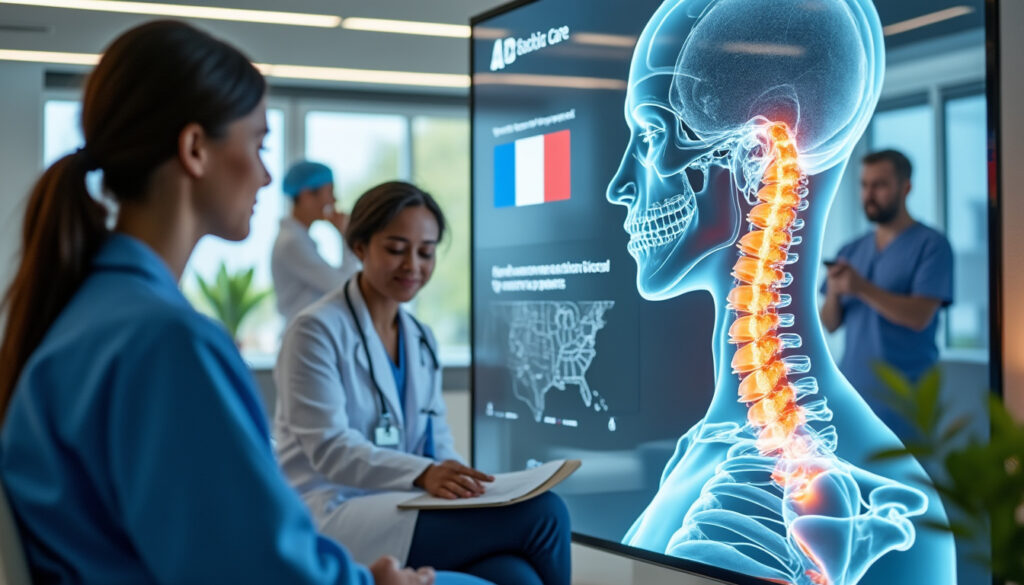
Neck conditions causing persistent pain or functional loss place a substantial burden on individuals and healthcare systems, especially in urban centers like Montreal. Surgical interventions targeting the cervical spine have evolved tremendously, aiming not only to relieve symptoms but to…
Patient Experience: Personalized Support and Human-Centered Care
Every patient’s journey with disc prosthesis surgery in France begins with personalized support principles embedded in Dr. Desforges’ comprehensive care philosophy. Recognizing that each case is unique, the approach stresses empathy, clarity, and motivation throughout the treatment pathway.
Key elements of this patient-centered care encompass:
- Thorough Communication: Complex medical information is shared in simple terms, enabling patients and their families to understand the nature of disc prosthesis surgery and alternatives. Dr. Desforges’ expertise in osteopathy bridges the gap between technical data and patient experience.
- Emotional Support: Pre- and post-surgical counseling helps reduce anxiety and fosters confidence in recovery plans.
- Accessibility and Follow-Up: Access to both French and Quebec-based teams ensures patients feel supported both during their time abroad and upon return home.
- Individualized Care Plans: Rehabilitation and lifestyle guidance are customized to each patient’s occupational and personal needs, enhancing adherence and satisfaction.
| Support Aspect | Implementation |
|---|---|
| Communication | Accessible information sessions and materials |
| Emotional Counseling | Pre- and post-treatment psychological support |
| Follow-Up Coordination | Cross-border collaboration for care continuity |
| Tailored Rehab | Customized physiotherapy and lifestyle coaching |
This human-centered approach reassures patients facing new treatment modalities abroad and encourages proactive engagement throughout their spine health journey.

Disc Prosthesis in Lévis: Quick and Long-Lasting Results
Chronic back pain caused by degenerative disc disease continues to profoundly impact the quality of life for many residents in Lévis and the broader Quebec area. For decades, traditional spinal fusion surgery has been the primary solution for alleviating severe…
Innovations and Industry Leaders in Disc Prosthesis Technology
The field of disc prosthesis has rapidly evolved thanks to ongoing research, technological refinement, and collaboration among leading medical device companies. Representatives such as Medtronic, ZimVie, DePuy Synthes, Globus Medical, Zimmer Biomet, NuVasive, Spinal Kinetics, Aesculap, Centinel Spine, LDR Medical, and Stryker continuously push the boundaries in quality and innovation.
The approval of the Mobi-C cervical disc prosthesis in the French public and private sectors in 2023 represents a milestone, backed by a 10A* rating from the UK’s Orthopaedic Data Evaluation Panel, indicating long-term safety and effectiveness. Such validation inspires confidence in patients and providers alike, facilitating broader adoption of motion-preserving solutions.
- CE-marked products ensuring European regulatory compliance
- Long-term clinical evidence supporting implant durability and safety
- Minimally invasive implantation techniques reducing surgical trauma
- Collaborative innovation integrating biomechanical insights and patient feedback
| Company | Flagship Disc Prosthesis | Key Feature | Regulatory Status |
|---|---|---|---|
| Medtronic | Prestige LP Cervical Disc | Bone-sparing, adaptive motion | CE marked, FDA approved |
| ZimVie | Mobi-C Cervical Disc | Multi-level application, motion preservation | CE marked, FDA approved, reimbursed in France |
| DePuy Synthes | ProDisc-L Lumbar Disc | Viscoelastic polymer core | CE marked |
| Globus Medical | Inflatable lumbar disc | Minimally invasive insertion | CE marked |

Motion Surgery in Terrebonne: Maintain Intervertebral Mobility
Back pain remains a widespread concern for many in Quebec, with traditional treatment pathways often imposing lengthy waiting periods and financial constraints. Recently, Motion Surgery in Terrebonne has emerged as a transformative option, attracting patients seeking spinal solutions that prioritize…
Coordination of Cross-Border Spine Care: From Lévis to France and Back
The transatlantic coordination of disc prosthesis care exemplifies the fusion of medical expertise, technological innovation, and patient-centered service. With Dr. Sylvain Desforges acting as a pivotal figure, the journey for Quebec patients—especially those from Lévis—involves meticulously planned stages that connect specialized Canadian osteopathy with French surgical excellence.
Highlights of this coordination include:
- Pre-Travel Evaluations: Detailed assessments and conservative care follow-ups occur locally, minimizing travel until surgery is indicated.
- Travel and Accommodation Support: Partnerships with medical tourism platforms such as SOS Tourisme Médical facilitate logistics, ensuring patient comfort and safety abroad.
- Multidisciplinary Communication: Continuous interaction between osteopaths, physiotherapists, surgeons, and care coordinators on both continents enhances clinical decisions.
- Post-Surgical Monitoring: Shared digital health platforms provide real-time updates and coordinated rehabilitation strategies after patient return.
| Coordination Element | Function | Benefit |
|---|---|---|
| Local Evaluation | Determine surgery eligibility | Minimize unnecessary travel |
| Travel Logistics | Manage flights, accommodation | Ensure safe, comfortable experience |
| Interprofessional Communication | Coordinate care plans | Optimize clinical outcomes |
| Post-Operative Rehab | Ongoing monitoring and therapy | Support recovery and long-term health |
Such detailed collaboration, led by experts including Dr. Desforges, enables Quebec patients to benefit fully from the leading disc prosthesis therapies available in France while maintaining continuity of care.
What are the main types of disc prosthesis surgery available in France?
France offers simple disc replacement, spinal fusion, and motion-preserving surgeries. The Mobi-C cervical disc prosthesis is a popular CE-marked implant designed to restore mobility while treating degenerative disc disease.
Why is conservative treatment important before considering disc prosthesis surgery?
Conservative treatment, lasting at least 3 to 6 months including modalities like neurovertical decompression, aims to manage symptoms and improve spinal function non-surgically. Surgery is recommended only if these treatments fail to provide lasting relief.
How does the transatlantic care coordination improve patient outcomes?
Coordination between Canadian and French specialists ensures comprehensive evaluations, personalized surgical planning, and seamless post-operative rehabilitation, reducing risks and promoting recovery.
What are the benefits of disc prosthesis compared to spinal fusion?
Disc prostheses preserve natural spine motion, reduce stress on adjacent segments, speed up recovery, and maintain quality of life better than fusion, which immobilizes segments and may accelerate degeneration elsewhere.
Which clinics specialize in advanced conservative care related to disc problems?
Clinique TAGMED in France specializes in advanced non-surgical treatments including decompression neurovertical therapy and osteopathy, playing a crucial role in managing spine disorders before opting for surgical solutions.