IntraSPINE® in Laval: Enhanced and Lasting Recovery Solutions
June 7, 2026
Saint-Jérôme Neck Herniation Prevention Strategies
June 7, 2026
In the evolving landscape of spine surgery, disc prosthesis in Lévis represents a significant leap forward for patients seeking durable and safe solutions for back pain relief. With over three decades of clinical experience, Dr. Sylvain Desforges, a pioneer in spinal health evaluation, champions innovative approaches grounded in scientific rigour and ethical standards. The intricate balance between minimally invasive techniques and advanced orthopedic solutions sets a promising new standard for patients struggling with debilitating spinal conditions. This article explores the nuances of disc prosthesis, placing emphasis on key advancements available both in Quebec and France, while highlighting how international collaboration enhances patient outcomes.
Back pain remains one of the leading causes of disability worldwide. Many patients face long wait times and high costs in private healthcare systems. By leveraging the synergy between Quebec’s medical expertise and French surgical innovations, patients can experience optimized care pathways that combine personalized assessments, cutting-edge implants, and state-of-the-art technologies such as neurovertebral decompression and dynamic implants. This transatlantic coordination ensures that individuals receive the highest possible standard of care, reducing downtime and improving biomechanical functioning post-surgery.
Strategically focusing on patient education and empowerment, Dr. Desforges advocates for a comprehensive understanding of surgical alternatives, emphasizing that disc prosthesis should only be considered after extensive conservative treatments have been pursued. This perspective shelters patient safety and maximizes the longevity of spinal function, respecting the unique complexity of each clinical case.
Innovative Types of Disc Prosthesis Surgery Available in Lévis and France
Disc prosthesis surgery offers a spectrum of options tailored to individual spinal pathologies, ranging from simple disc replacement to fusion and motion-preserving techniques. These options are designed to restore spinal biomechanics, alleviate pain, and enhance patient mobility to improve quality of life.
Simple Disc Replacement – Preserving Motion
Simple disc replacement involves removing the damaged intervertebral disc and replacing it with an artificial disc that mimics natural disc function. This procedure is minimally invasive and focuses on preserving spinal motion, unlike traditional fusion methods that restrict movement. The durability and flexibility of modern artificial discs, endorsed by French orthopedic experts, make this an attractive option for patients aiming to maintain an active lifestyle.
This approach is particularly relevant for lumbar and cervical spinal segments, which bear significant mechanical loads. For example, the lumbar disc prosthesis in Saguenay has been recognized for maintaining mobility over the long term, enhancing patient’s biomechanical function without compromising spinal stability. Patients experience quicker recovery compared to fusion surgeries and enjoy continued movement that prevents adjacent segment degeneration.
Fusion Surgery – A Time-Tested Orthopedic Solution
Spinal fusion surgery involves joining two or more vertebrae to eliminate painful motion. While fusion is effective in stabilizing the spine, it reduces flexibility and can accelerate wear on adjacent segments. Nevertheless, it remains an essential intervention when disc replacement is contraindicated. The decision between fusion and prosthetic disc replacement is based on a thorough evaluation of the spine’s mechanical and neurological status, a process where Dr. Desforges’s expertise plays a crucial role in guiding patients through available options.
Motion-Preserving Technologies – The Future of Spine Surgery
Advancements in motion-preserving disc prostheses reflect an ethical commitment to optimizing patient function and minimizing long-term complications. Implant designs have evolved to include dynamic devices that adapt to spinal biomechanics in real time. This innovation reduces the risk of adjacent segment disease and enhances the overall durability of surgical outcomes. It also exemplifies Dr. Desforges’s commitment to introducing advanced technologies validated by evidence-based medicine to his practice.
- Preserves natural spinal movement
- Minimally invasive with reduced recovery times
- Decreases the risk of adjacent segment degeneration
- Durable implants with long-term safety profiles
These diverse surgical types and innovations reflect the sophisticated level of care accessible to patients in Lévis and through international partnerships with France.

IntraSPINE® in Sherbrooke: Durable Solution for Chronic Low Back Pain
The management of chronic low back pain, a widespread condition affecting millions across Quebec and beyond, has reached a pivotal moment thanks to innovative medical technologies and coordinated care pathways. At the heart of this evolution lies the IntraSPINE implant,…
Spine Surgery in Trois-Rivières: Reduce Pain and Preserve Mobility
In recent years, spine surgery in Trois-Rivières has evolved notably, combining advanced medical expertise with innovative technologies to deliver patient-centered care. This growing field addresses the increasing demand among Quebec residents seeking effective solutions for chronic back pain and mobility…
Comprehensive Patient Journey: From Evaluation to Postoperative Care
The pathway toward disc prosthesis surgery is intricate and requires a highly personalized approach to optimize outcomes. Dr. Sylvain Desforges integrates over 30 years of experience in the evaluation of spinal conditions to ensure patients receive tailored recommendations that reflect both biomechanical and neurological health.
Initial Evaluation and Conservative Management
Before considering surgical intervention, patients undergo a comprehensive assessment that includes clinical examination, imaging, and biomechanical analysis. Dr. Desforges’s role as an expert in spinal evaluation is instrumental in guiding patients through this process, discerning when conservative care has been adequately exhausted.
Conservative treatments typically span 3 to 6 months and incorporate physiotherapy, pharmacological approaches, and advanced therapies like neurovertebral decompression offered at the renowned Clinique TAGMED. The aim is to reduce pain and inflammation, improve spinal function, and possibly avert the need for surgery.
Preoperative Preparation and Transatlantic Coordination
When surgery becomes appropriate, Dr. Desforges coordinates a seamless transatlantic pathway connecting Quebec patients with elite surgical teams in France. This collaboration, supported by platforms such as SOS Tourism Medical, guarantees optimized scheduling, personalized operative planning, and compliance with safety regulations in both countries.
During this phase, patients receive comprehensive education about the procedure, implant options, and postoperative expectations. This thorough preparation not only mitigates anxiety but also fosters active patient participation in their recovery journey.
Surgical Procedure and Hospital Stay
The minimally invasive techniques employed minimize trauma to surrounding tissues, thus accelerating recovery and reducing hospital stay length. Implant selection is carefully tailored by surgeons familiar with the latest artificial disc technologies proven durable and safe, leveraging the benefits highlighted in surgical centers in Lévis and France.
Postoperative Rehabilitation and Return to Quebec
Post-surgery, patients undergo structured rehabilitation programs emphasizing early mobilization, spinal alignment restoration, and pain management. Close follow-up continues upon returning to Quebec, ensuring long-term spinal health and functionality.
| Patient Journey Stage | Key Components | Role of Dr. Desforges and Partners |
|---|---|---|
| Evaluation | Comprehensive spinal assessment | Expert evaluation guiding decision-making |
| Conservative Treatment | Physiotherapy, decompression, medications | Recommendation to attempt before surgery |
| Preoperative Planning | Implant selection, surgical scheduling | Transatlantic coordination and patient education |
| Surgery | Minimally invasive disc prosthesis implantation | Collaboration with top surgeons in France and Canada |
| Postoperative Care | Rehabilitation and monitoring | Ongoing support and evaluation upon return |

TOPS™ in Gatineau: High-Performance Option for the Lumbar Spine
The landscape of spinal surgery has witnessed profound evolution, particularly for patients grappling with lumbar spine disorders such as spinal stenosis and spondylolisthesis. These conditions, increasingly prevalent among Quebec’s population, impose substantial limitations on mobility and quality of life. The…
Cervical Disc Prosthesis in Quebec City: Avoid Post-Surgery Stiffness
Chronic neck pain remains a significant challenge for thousands of residents in Quebec City every year, often leading them to seek effective spinal surgery options that minimize downtime and maximize long-term mobility. Among the recent advancements revolutionizing cervical spine care,…
Biomechanical Advantages of Artificial Disc Prosthesis in Spinal Health
The artificial disc has revolutionized the way back pain relief and spinal function restoration are approached. Its design prioritizes preserving or replicating physiological motion, a leap from traditional fusion’s rigid constraints. This biomechanical perspective is essential to understanding why disc prostheses are increasingly favored for patients in Lévis and beyond.
Preservation of Spinal Kinematics
Unlike spinal fusion, which immobilizes the vertebral segment, the artificial disc maintains motion, allowing natural bending, twisting, and shock absorption. This feature reduces biomechanical stress on adjacent vertebrae, effectively lowering the incidence of adjacent segment disease. Clinical data from lumbar disc prosthesis cases demonstrate lower rates of reoperation and sustained patient satisfaction over time.
Enhanced Load Distribution and Shock Absorption
The artificial disc mimics the spine’s natural ability to distribute mechanical forces during daily activities. This balanced load sharing protects facet joints and surrounding soft tissues, mitigating secondary degenerative changes often accelerated by fusion techniques. Patients report significant improvements in mobility and reduced stiffness, fostering long-term spinal health.
Durability and Safety Profile
Contemporary disc prostheses utilize biomaterials with enhanced wear resistance and biocompatibility, ensuring long-lasting implantation. Dr. Desforges emphasizes selection of implants that have undergone rigorous clinical trials and regulatory approval, guaranteeing patient safety aligned with Canadian and Quebec standards.
- Improved mobility and flexibility after surgery
- Reduction in pain due to better mechanical function
- Decreased risk of degeneration in neighboring discs
- Minimally invasive implantation reduces surgical trauma
- Validated material quality ensures durability over years
Minimally Invasive Surgery in Longueuil: Reduce Hospital Stay Duration
In recent years, advances in spinal care have dramatically reshaped the treatment landscape for patients suffering from debilitating spinal conditions. Particularly in Longueuil, the emergence of minimally invasive surgery (MIS) techniques offers a transformative alternative to conventional open surgeries. These…
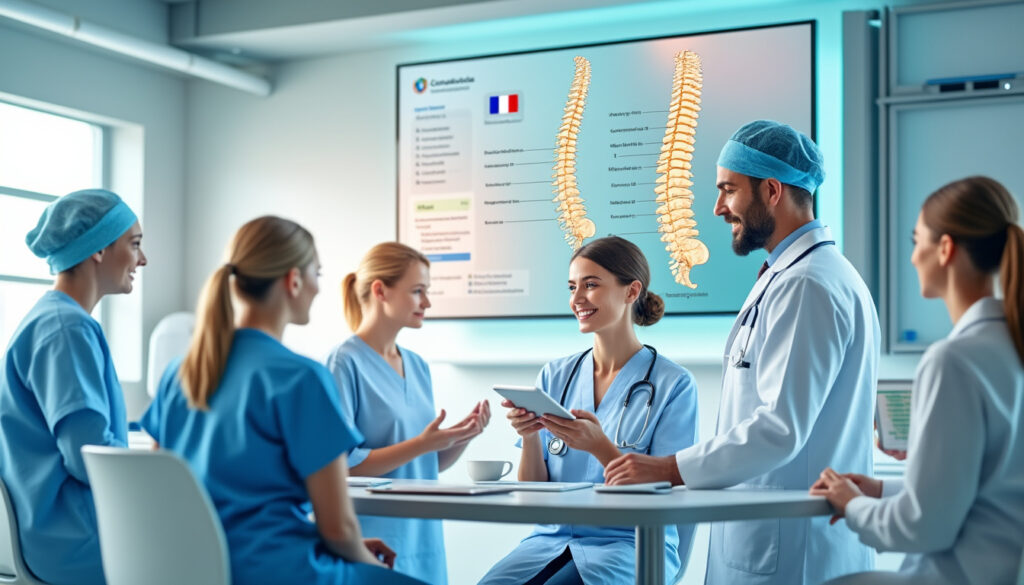
IntraSPINE® in Laval: Modern Solution for Lumbar Stabilization
In the evolving landscape of orthopedic treatments, the city of Laval has become a hub for innovations addressing chronic lower back pain. Among the groundbreaking solutions gaining attention is the IntraSPINE device—a modern spinal implant designed to offer dynamic lumbar…
Economic and Human Benefits of the Transatlantic Treatment Pathway
The collaboration between Quebec and France in offering disc prosthesis surgery provides a valuable alternative to patients facing excessive wait times or financial barriers in private Canadian healthcare. This innovative transatlantic approach offers not only biomedical benefits but also significant economic and human advantages.
Cost Efficiency and Access
While spine surgery costs in Quebec can be prohibitive or involve long waitlists, the Franco-Canadian partnership offers competitive pricing without compromising quality. The pathway streamlines administrative procedures and leverages insurance frameworks to minimize out-of-pocket expenses. This efficiency enables patients to access durable and safe disc prosthesis solutions without undue financial stress.
Optimized Scheduling to Reduce Waiting Times
One of the most challenging obstacles for patients with spinal disorders is the wait for surgery. This international collaboration prioritizes expediting surgical planning and hospital stays, allowing patients to undergo procedures within months rather than years. Such time savings positively impacts patients’ physical and emotional well-being, preventing deterioration and avoiding chronic disability.
Human-Centered Care and Patient Empowerment
Dr. Desforges’s approach emphasizes empathy and clear communication throughout the patient journey. By thoroughly explaining complex surgical and postoperative concepts in accessible language, patients gain confidence in their treatment decisions. The integration of multidisciplinary teams, including osteopaths, physiotherapists, and surgeons, reinforces a well-rounded support system encouraging optimal recovery.
- Reduction in costs compared to long-term private care in Quebec
- Shorter wait times enabling earlier intervention
- Personalized multidisciplinary follow-up during all stages
- Enhanced patient understanding and involvement in care decisions

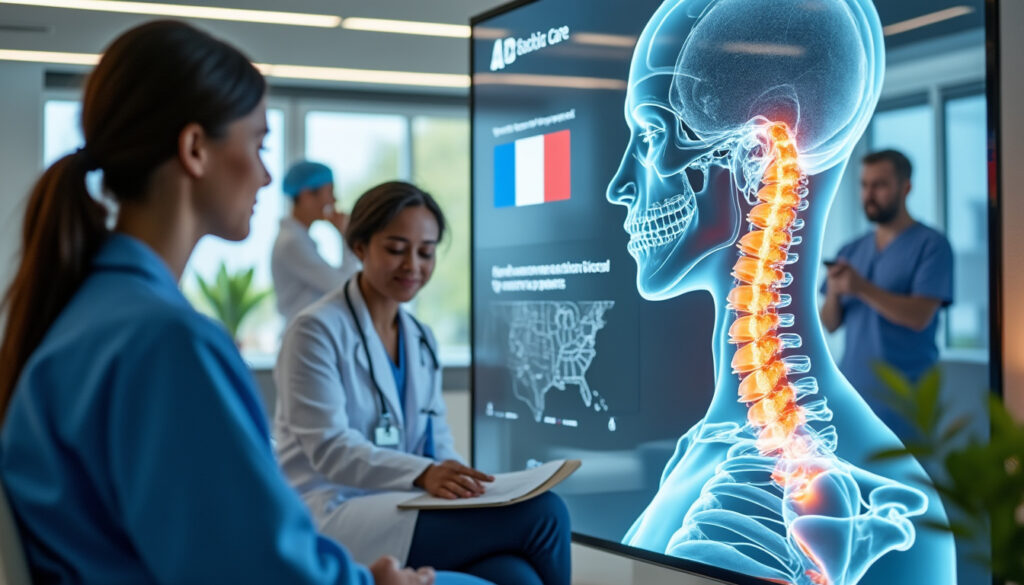
Neck Surgery in Montreal: Maintain Cervical Flexibility and Function
Neck conditions causing persistent pain or functional loss place a substantial burden on individuals and healthcare systems, especially in urban centers like Montreal. Surgical interventions targeting the cervical spine have evolved tremendously, aiming not only to relieve symptoms but to…

Disc Prosthesis in Lévis: Quick and Long-Lasting Results
Chronic back pain caused by degenerative disc disease continues to profoundly impact the quality of life for many residents in Lévis and the broader Quebec area. For decades, traditional spinal fusion surgery has been the primary solution for alleviating severe…
Conservative Treatment as a Prerequisite Before Considering Surgery
In keeping with ethical and evidence-based practice, Dr. Desforges underscores that disc prosthesis surgery should be regarded as a last resort after comprehensive conservative management has been attempted for at least three to six months. This approach safeguards patients from premature surgical interventions and maximizes functional recovery.
Advanced Non-Surgical Therapies at Clinique TAGMED
Clinique TAGMED, renowned for its innovative approach to non-invasive spine care, offers advanced therapies including neurovertebral decompression, laser therapy, and tailored osteopathic interventions. These treatments can alleviate symptoms and improve spinal mechanics, sometimes eliminating the need for surgery altogether.
Importance of Thorough Evaluation and Patient Education
Dr. Desforges’s expertise in spinal pathology evaluation ensures that patients understand their condition fully and are guided toward appropriate therapies. He stresses the role of education in preparing patients to engage actively with their treatment plans, enhancing adherence and success rates.
Criteria Indicating When Surgery is Necessary
Failure of conservative treatments, progressive neurological deficits, or persistent disabling pain may necessitate surgical intervention. Each case undergoes detailed analysis to confirm that disc prosthesis is the safest and most effective option, tailored to patient-specific anatomical and functional considerations.
| Conservative Treatments | Examples | Goals |
|---|---|---|
| Physiotherapy | Targeted exercises, manual therapy | Improve flexibility and strength |
| Neurovertebral Decompression | Non-invasive spinal traction | Alleviate nerve compression |
| Laser Therapy | Low-level laser treatment | Reduce inflammation and pain |
| Pharmacological Management | Anti-inflammatories, pain relievers | Control symptoms |
Distinctive Features and Added Value of Services by Dr. Sylvain Desforges
Bridging more than 30 years of clinical expertise and pioneering leadership, Dr. Sylvain Desforges brings unparalleled value to patients navigating spinal health challenges. Holding degrees including B.Sc., D.O., and N.D., he founded the ACMA, the Collège des Ostéopathes Canadiens, and TAGMED – institutions at the forefront of spinal care innovation.
Rigorous Scientific Standards and Ethical Commitment
Dr. Desforges’s practice embodies rigorous adherence to evidence-based protocols and compliance with both Quebec and Canadian medical regulations. His dedication to patient safety is matched by a continual pursuit of cutting-edge technologies, such as durable artificial discs and dynamic implants, ensuring treatment options reflect the highest scientific standards.
Pedagogical Approach Facilitating Informed Decision-Making
Complex spine concepts are demystified through clear and compassionate explanations. This pedagogy empowers patients and fellow professionals to comprehend not only the advantages but also the limitations and necessary precautions of proposed treatments, fostering confident and informed consent.
Seamless Coordination of International Care Pathways
A hallmark of Dr. Desforges’s service lies in the personalized coordination of transatlantic patient journeys, linking Canadian patients with esteemed French surgical teams. This comprehensive oversight minimizes logistical barriers, optimizes timing, and assures continuity of care before, during, and after surgery, enhancing outcomes and patient satisfaction.
- Expert evaluations tailored to individual spinal pathologies
- Access to advanced conservative treatments prior to surgery
- Coordination with top-tier surgical partners in France
- Postoperative follow-up ensuring lasting spinal health
- Patient education fostering autonomy and trust
Patient Empowerment and Encouragement to Seek Personalized Care
Understanding that every spine condition is unique, Dr. Desforges encourages patients to approach their care with curiosity and confidence. Open dialogue, questions, and thorough evaluations are vital to crafting a treatment plan aligned with each individual’s lifestyle and expectations.
The pathway to durable and safe spinal health through disc prosthesis in Lévis and beyond is not a solitary journey. It is enriched by multidisciplinary teams, international collaboration, and a steadfast dedication to ethical, patient-focused care. Patients are motivated to actively engage with clinicians and seek evaluations to discover the most suitable options for their specific conditions.
For more information or to discuss your case, visit https://www.sostourismemedical.com/contact to begin your personalized consultation.
What is a disc prosthesis and how does it differ from spinal fusion?
A disc prosthesis is an artificial disc implanted to replace a damaged spinal disc, preserving natural spinal motion. Unlike spinal fusion, which immobilizes the joint by fusing adjacent vertebrae, disc prostheses allow movement, reducing stress on nearby spinal segments.
Who is a candidate for disc prosthesis surgery?
Candidates typically include patients with symptomatic degenerative disc disease who have failed at least three to six months of conservative therapy, including neurovertebral decompression. A thorough evaluation is essential to determine suitability, considering spinal alignment, bone quality, and neurological status.
What are the main benefits of choosing disc prosthesis surgery?
The key benefits include preservation of spinal mobility, decreased risk of adjacent segment degeneration, minimally invasive surgery leading to quicker recovery, and durable implant materials designed for long-term safety.
How does the transatlantic care pathway optimize patient outcomes?
By coordinating evaluations, surgical scheduling, and postoperative rehabilitation across Quebec and France, the transatlantic pathway reduces waiting times, leverages advanced surgical technologies, and ensures continuity of care guided by experts such as Dr. Desforges.
Why is conservative treatment essential before considering surgery?
Conservative treatments help reduce symptoms and improve spinal mechanics, possibly obviating the need for surgery. Surgery is only proposed after thorough attempts with therapies like neurovertebral decompression, physiotherapy, and laser treatments to ensure the patient’s safety and optimize outcomes.