Addressing Disc Herniations in Sainte-Thérèse: Essential Questions for Your Osteopath and Insights on Neurovertebral Decompression Treatment
November 1, 2025
Pointe-Claire Lumbar Disc Treatment Without Invasive Surgery
November 1, 2025
Chronic lumbar pain remains a pervasive challenge affecting millions across Quebec and Canada, disrupting daily activities and diminishing quality of life. In the pursuit of innovative yet personalized spinal care, the IntraSPINE device emerges as a groundbreaking solution, offering a novel approach to managing degenerative lumbar conditions. Grounded in advanced biomechanics and designed for motion preservation, this interlaminar spinal implant is reshaping expectations for lumbar interventions. Patients and practitioners alike are drawn to its promise of reduced recovery time, maintained spinal flexibility, and long-lasting relief. Situated in Laval, the integration of IntraSPINE within a coordinated framework of international care enhances accessibility and clinical outcomes.
Expertise is pivotal in navigating the complex landscape of spinal disorders and treatment options. Dr. Sylvain Desforges, with over three decades of experience and distinguished qualifications (B.Sc., D.O., N.D.), stands at the forefront of this evolution. As founder and president of leading institutions such as the ACMA and the Canadian College of Osteopaths, Dr. Desforges synergizes scientific rigor with ethical patient-centered care. His commitment to advancing spinal health through evidence-based innovations and transatlantic collaboration offers Quebec patients a comprehensively structured pathway from evaluation to recovery. This article delves into the multifaceted nature of IntraSPINE care, illuminating surgical options, patient journeys, and the biomechanical advantages that distinguish this therapy within contemporary spine health management.
Understanding IntraSPINE: A Breakthrough in Lumbar Motion-Preserving Surgery
The IntraSPINE device represents a paradigm shift in the surgical management of chronic lumbar pain, underpinning a strategy that balances stability with mobility preservation. Traditional lumbar fusion surgeries, such as posterior lumbar interbody fusion (PLIF), have long provided mechanical stability by rigidly immobilizing affected vertebral segments. Despite their efficacy, these approaches often lead to adverse biomechanical consequences including lumbar stiffness, motor dysfunction, and the development of adjacent segment disease (ASD).
In contrast, the IntraSPINE implant introduces dynamic stabilization through its innovative design. Constructed from medical-grade dimethyl siloxane with a polyethylene terephthalate covering, the device is positioned within the interlaminar space, specifically targeting the laminae. This placement allows for expansion of foraminal openings and decompression of facet joints, simultaneously preserving natural sagittal balance and segmental motion.
Key Features and Clinical Advantages of the IntraSPINE Device
- Dynamic stabilization: The device’s flexible anterior portion is filled with medical silica gel, enlarging the space near the ligamentum flavum and decompressing neural elements while the hollow posterior supports maintain motion.
- Motion preservation: Unlike fusion techniques that eliminate intervertebral movement, IntraSPINE maintains physiologic spinal mobility, reducing the risk of adjacent segment overload.
- Minimally invasive implantation: The surgical approach is less traumatic than fusion procedures, resulting in shorter operative times, less blood loss, and accelerated recovery.
- Biomechanical balance: By maintaining natural lordosis and the sagittal profile, patients benefit from improved comfort and function postoperatively.
Recent clinical outcomes from reputable sources affirm the efficacy of IntraSPINE in treating lumbar disc degeneration, segmental instability, and facet joint syndromes, among others. Evidenced improvements encompass pain reduction, enhanced functional capacity, and patients’ return to active lifestyles. For additional technical insights, official documentation from manufacturers and medical analyses provide in-depth understanding; among these resources, the comprehensive device specifications and clinical data offer valuable information for informed decision-making.
| Characteristic | Traditional Fusion (PLIF) | IntraSPINE Device |
|---|---|---|
| Motion Preservation | No (Rigid fixation) | Yes (Dynamic stabilization) |
| Risk of Adjacent Segment Disease (ASD) | High | Lower |
| Surgical Invasiveness | High (Extensive posterior column destruction) | Minimal (Interlaminar insertion) |
| Biomechanical Impact | Significant alteration of load distribution | Preserves sagittal balance and load |
| Typical Indications | Advanced disc degeneration, instability | Disc degeneration, post-discectomy, facet pain |
As an expert deeply involved in spinal evaluation, Dr. Desforges advocates that understanding these nuances empowers patients and professionals to choose interventions aligned with both medical evidence and individual needs. The IntraSPINE has notably become a cornerstone option for Canadian patients accessing care in France, with clinics emphasizing personalized use of such advanced devices in tailored surgical strategies.
IntraSPINE® in Sherbrooke: Durable Solution for Chronic Low Back Pain
The management of chronic low back pain, a widespread condition affecting millions across Quebec and beyond, has reached a pivotal moment thanks to innovative medical technologies and coordinated care pathways. At the heart of this evolution lies the IntraSPINE implant,…
Comprehensive Surgical Options in France: Expanding Horizons for Canadian Patients
France is recognized for its forward-thinking approaches to spinal surgery, offering a diverse array of interventions beyond those commonly accessible in Canada. This is particularly impactful for Quebec residents, including those from regions such as Laval, Montreal, and Saguenay, who face long wait times or limited access to advanced devices locally.
Available surgical options in French clinics for lumbar spine issues typically include:
- Simple decompression surgeries: Primarily aimed at relieving nerve root compression without instrumentation, these procedures are appropriate for mild disc herniations or spinal stenosis cases with minimal instability.
- Fusion surgeries (PLIF, TLIF): Designed to provide rigid spinal segment stabilization, fusion is reserved for advanced degeneration or confirmed instability with the objective of halting further degeneration.
- Motion-preserving surgeries: Utilizing devices such as IntraSPINE, Coflex, and other dynamic stabilizers that maintain segmental mobility while providing symptomatic relief.
Each category entails distinct biomechanical and recovery profiles:
| Surgical Type | Indications | Benefits | Limitations |
|---|---|---|---|
| Simple Decompression | Spinal stenosis, mild disc herniation | Minimal invasiveness, quick recovery | Does not address spinal instability |
| Fusion (PLIF/TLIF) | Severe degeneration, spinal instability | High stability, robust long-term results | Higher risk of adjacent segment disease, longer immobility |
| Motion Preservation (IntraSPINE) | Disc degeneration, segmental instability | Preserves motion, decreases ASD risk, less invasive | Technique-dependent, limited long-term data |
This breadth of options benefits Canadian patients by providing alternatives when conservative care in Quebec has been exhausted. Moreover, the integration of advanced implants like IntraSPINE in French surgical centers, supported by manufacturers such as The Spine Market Group and Cousin Biotech, equips surgeons with tools that may not yet be widespread in Canada.
Spine Surgery in Trois-Rivières: Reduce Pain and Preserve Mobility
In recent years, spine surgery in Trois-Rivières has evolved notably, combining advanced medical expertise with innovative technologies to deliver patient-centered care. This growing field addresses the increasing demand among Quebec residents seeking effective solutions for chronic back pain and mobility…
The Essential Role of Conservative Treatment Prior to Surgical Intervention
Robust evidence and clinical ethics reinforce that any surgical consideration for lumbar spine disorders should only proceed after a sufficient trial of conservative therapies. For most chronic lumbar pain conditions, especially those associated with disc degeneration or mild instability, a 3 to 6 months period of diligent non-surgical care can provide significant symptom relief and functional improvement.
Conservative care pathways include:
- Targeted physiotherapy and osteopathic interventions: Focusing on spinal biomechanics to enhance mobility and strength.
- Neurovertebral decompression therapy: Offered distinctively at the Clinique TAGMED, this innovative technique alleviates nerve root pressure via specialized mechanical decompression.
- Pain management protocols: Combining pharmacological and non-pharmacological approaches tailored to individual patient needs.
- Patient education: Facilitating lifestyle modifications and ergonomic adjustments to support long-term spinal health.
Adhering to these stages not only respects clinical guidelines but also optimizes surgical outcomes by improving tissue condition and patient preparedness. Dr. Desforges underscores the necessity for patients who have not yet undergone neurovertebral decompression therapy to explore this conservative option fully before considering surgery. Eliminating premature surgical decisions preserves patient safety and maximizes therapeutic effectiveness.
| Conservative Treatment Component | Objective | Expected Outcome |
|---|---|---|
| Physiotherapy and Osteopathy | Restore spinal mobility and strength | Improved function and pain reduction |
| Neurovertebral Decompression | Relieve nerve root compression | Reduced neuropathic symptoms |
| Pain Management | Control inflammation and discomfort | Stabilize symptoms |
| Education and Lifestyle Modification | Promote self-care and prevention | Long-term spinal health maintenance |

TOPS™ in Gatineau: High-Performance Option for the Lumbar Spine
The landscape of spinal surgery has witnessed profound evolution, particularly for patients grappling with lumbar spine disorders such as spinal stenosis and spondylolisthesis. These conditions, increasingly prevalent among Quebec’s population, impose substantial limitations on mobility and quality of life. The…
Coordinating Transatlantic Care: Streamlining Patient Journeys from Canada to France
International coordination plays a vital role in unlocking access to progressive spinal care beyond local limitations. The partnership fostered under the guidance of Dr. Sylvain Desforges exemplifies the benefits of transatlantic collaboration, providing Quebec patients with direct access to French surgical expertise, advanced technologies, and comprehensive multidisciplinary support.
This care model encompasses several critical stages:
- Initial Evaluation: Comprehensive assessments including clinical, biomechanical, and imaging analyses by Dr. Desforges and his team to ensure accurate diagnosis and treatment personalization.
- Conservative Treatment Completion: A rigorously supervised period of non-invasive therapies, prominently neurovertebral decompression at Clinique TAGMED.
- Surgical Planning: Collaborative case discussions with French surgeons to determine the most suitable procedure, emphasizing options like IntraSPINE implantation.
- Travel and Logistic Support: Efficient arrangements encompassing documentation, accommodation, and patient-centered communication to reduce delays.
- Postoperative Rehabilitation: Customized recovery protocols facilitated by specialized rehabilitation centers, such as VitalSpine Rehab, enhancing functional restoration.
- Follow-up Care: Continued remote monitoring combined with in-person evaluations back in Quebec to sustain favorable outcomes.
| Care Stage | Description | Provider Examples | Patient Outcome |
|---|---|---|---|
| Evaluation | Detailed clinical and imaging assessment | Dr. Sylvain Desforges – SpineCare Solutions, Laval Spine Clinic | Precise diagnosis guiding therapy |
| Conservative Care | 3-6 months trial of physical and decompression therapies | Clinique TAGMED | Symptom relief, reduced surgical need |
| Surgical Planning | Collaborative surgical selection with French centers | NeuroBack Innovations, Advanced Spine Devices | Tailored, evidence-based intervention |
| Logistics | Travel, accommodation, scheduling support | Precision SpineWorks, RestorePoint Health | Minimized wait and stress |
| Rehabilitation | Postoperative physical therapy and rehab | VitalSpine Rehab, EnduraSpine Medical | Accelerated functional recovery |
| Follow-up | Remote and in-person assessments | Laval Spine Clinic | Long-term spinal health maintenance |
This structured pathway empowers patients with continuity, clarity, and confidence throughout their spine care experience. It represents a holistic philosophy blending technical innovation with compassionate support, an approach pioneered by leaders such as Dr. Desforges.
As a complement to clinical explanations, this video details the IntraSPINE procedure, illustrating the minimally invasive implantation technique and motion-preserving benefits, helping prospective patients grasp the practical aspects of this innovative treatment.
Cervical Disc Prosthesis in Quebec City: Avoid Post-Surgery Stiffness
Chronic neck pain remains a significant challenge for thousands of residents in Quebec City every year, often leading them to seek effective spinal surgery options that minimize downtime and maximize long-term mobility. Among the recent advancements revolutionizing cervical spine care,…
Biomechanical and Functional Benefits of IntraSPINE Over Fusion Surgery
The lumbar spine’s complex architecture necessitates treatments that respect its delicate balance between flexibility and stability. The IntraSPINE device’s design directly addresses this by maintaining physiological kinematics, unlike fusion procedures which eliminate segmental motion and create biomechanical stressors on adjacent levels.
Biomechanical advantages include:
- Preservation of intervertebral disc height and foraminal dimensions: This reduces nerve compression and supports natural disc hydration.
- Maintenance of natural lordosis and sagittal balance: Critical for efficient load distribution and reduced risk of compensatory disorders.
- Reduction in adjacent segment disease incidence: By preserving motion, the device mitigates excessive loading that leads to degeneration above or below fused segments.
- Enhanced rehabilitation potential: Patients experience less stiffness and can engage in functional activities sooner than after fusion.
| Biomechanical Parameter | Fusion Surgery | IntraSPINE |
|---|---|---|
| Segmental Motion | Absent (Segment immobilized) | Preserved (Dynamic) |
| Load on Adjacent Segments | Elevated (Risk of ASD) | Reduced (Normalized load distribution) |
| Disc Height Over Time | Variable, often diminished | Maintained or improved |
| Recovery Duration | Extended | Shorter and smoother |
The biomechanical harmony afforded by IntraSPINE often translates into improved patient satisfaction and sustained functional independence. It is a particularly fitting option for active individuals aiming to resume daily activities without compromising spinal health in the long term.
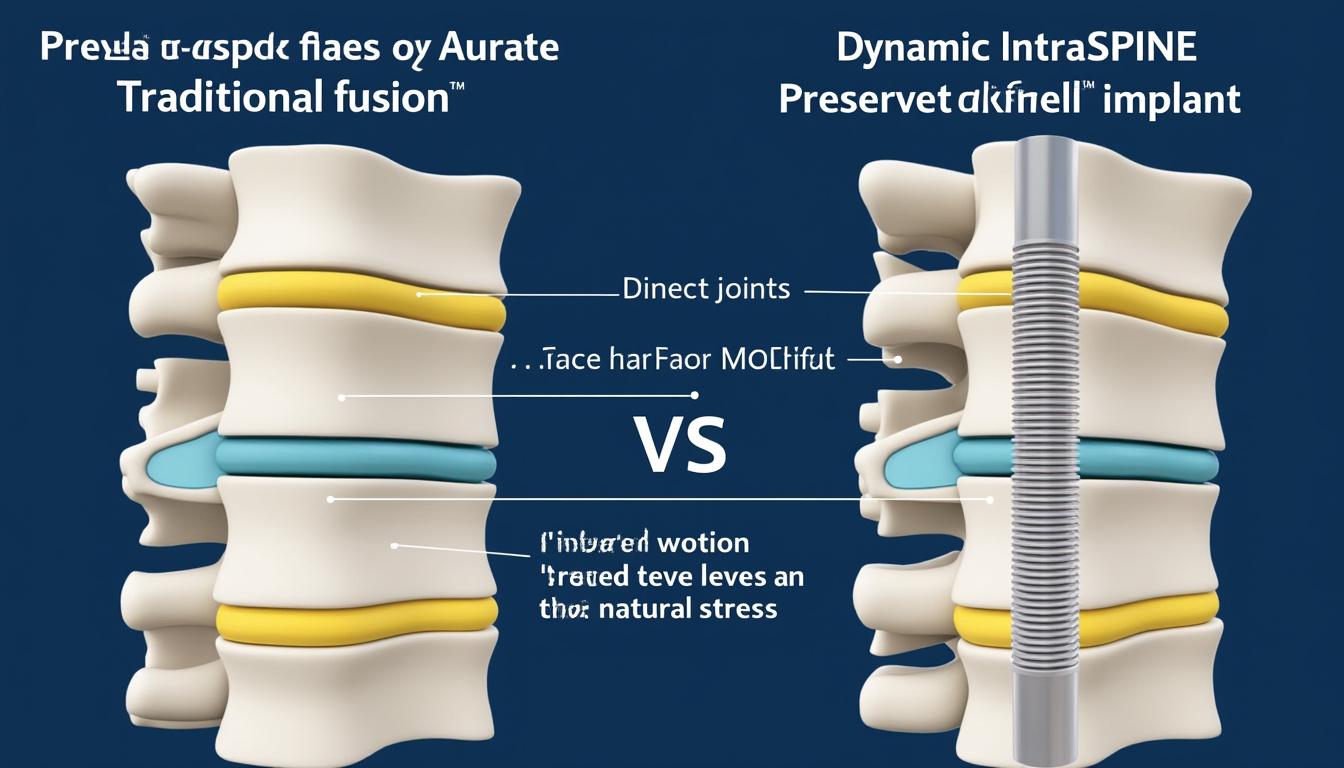
This video provides an engaging explanation of how dynamic spinal implants like IntraSPINE function biomechanically, clarifying comparative advantages for patients exploring contemporary lumbar surgery options.
Minimally Invasive Surgery in Longueuil: Reduce Hospital Stay Duration
In recent years, advances in spinal care have dramatically reshaped the treatment landscape for patients suffering from debilitating spinal conditions. Particularly in Longueuil, the emergence of minimally invasive surgery (MIS) techniques offers a transformative alternative to conventional open surgeries. These…
Human-Centered Care and Ethical Considerations in International Spine Treatment
Scientific innovation alone does not define quality spinal care. The integration of ethics, patient education, and transparency is essential to ensuring positive outcomes. Dr. Sylvain Desforges exemplifies this by prioritizing rigorous evaluation, patient autonomy, and adherence to regulatory standards such as those mandated by Quebec’s Collège des médecins.
His approach ensures that patients receive:
- Clear and accessible explanations: Complex spinal conditions and treatment choices are communicated without excessive jargon, facilitating informed consent.
- Transparent discussion of risks and benefits: Patients understand realistic expectations, procedural steps, and recovery timelines.
- Personalized support: Psychological readiness and individualized care plans address unique patient needs.
- Collaboration with multidisciplinary teams: Integrating expertise from osteopathy, physiotherapy, surgery, and rehabilitation ensures comprehensive care.
These ethical commitments are particularly crucial in managing transatlantic care, where patients entrust their health across borders and cultures. The partnership between Canadian and French centers enables a seamless experience grounded in trust and professionalism.
| Ethical Component | Implementation in Practice | Patient Benefit |
|---|---|---|
| Patient Education | Use of lay language and detailed informational materials | Empowerment through understanding |
| Risk Communication | Balanced discussion of potential complications and alternatives | Informed decision-making |
| Personalized Care | Tailored treatment plans considering lifestyle and anatomy | Higher satisfaction and adherence |
| Multidisciplinary Collaboration | Regular coordination meetings among healthcare professionals | Holistic support and safety |
IntraSPINE® in Laval: Modern Solution for Lumbar Stabilization
In the evolving landscape of orthopedic treatments, the city of Laval has become a hub for innovations addressing chronic lower back pain. Among the groundbreaking solutions gaining attention is the IntraSPINE device—a modern spinal implant designed to offer dynamic lumbar…
The Economic and Lifestyle Advantages of Transatlantic SpineCare for Quebec Patients
Beyond medical considerations, economic and human aspects significantly influence the decision to pursue international spinal care involving the IntraSPINE device. Quebec’s healthcare system, while offering robust public coverage, often faces prolonged wait times for spinal surgery. This delay can intensify disability, prolong pain, and impact social and occupational participation.
By accessing care in France through coordinated programs led by experts such as Dr. Desforges, patients benefit from:
- Reduced wait times: Surgical intervention timelines are compressed from potentially over a year locally to mere weeks.
- Access to cutting-edge technology: Devices including those from industry leaders like Cousin Biotech and Morulaa Healthtech ensure state-of-the-art options.
- Comprehensive care packages: Inclusion of rehabilitation and post-operative support minimizes unforeseen expenses.
- Maintained mobility and faster return to activity: Motion-preserving surgeries reduce the risk of chronic stiffness and aid quicker reintegration into daily life.
- Holistic patient experience: Warm, multidisciplinary environments encourage mental well-being alongside physical recovery.
| Aspect | Typical Local Care (Quebec) | Transatlantic SpineCare (France) |
|---|---|---|
| Time to Surgery | 6-12+ months or more | Weeks with coordinated planning |
| Technology Access | Limited advanced implants | State-of-the-art devices like IntraSPINE |
| Recovery Programs | Standardized rehabilitation | Personalized, multidisciplinary protocols |
| Cost | Potentially high out-of-pocket or insurance-dependent | Competitive bundled service packages |
| Patient Experience | Fragmented care and long waits | Continuous, personalized coordination |
Neck Surgery in Montreal: Maintain Cervical Flexibility and Function
Neck conditions causing persistent pain or functional loss place a substantial burden on individuals and healthcare systems, especially in urban centers like Montreal. Surgical interventions targeting the cervical spine have evolved tremendously, aiming not only to relieve symptoms but to…
Personalized Postoperative Rehabilitation: Key to Lasting Success
Successful lumbar spine surgery extends beyond the operating room; rehabilitation plays a pivotal role in restoring function and preventing recurrence. Postoperative care following IntraSPINE implantation or other motion-preserving interventions is tailored to maximize recovery velocity and patient independence.
Rehabilitation programs involve:
- Gradual mobilization: Early initiation of movement to encourage spinal flexibility and prevent adhesions.
- Strengthening exercises: Targeting core muscles to support the lumbar region effectively.
- Postural training: Educating patients on ergonomics to safeguard surgical outcomes.
- Multidisciplinary support: Integration of osteopathy, physiotherapy, and specialized spine rehabilitation facilities such as VitalSpine Rehab and EnduraSpine Medical.
These comprehensive programs are designed in alignment with the surgical technique, ensuring optimized biomechanical restoration and reduced risk of complications. Throughout the rehabilitation process, continuous evaluation by the care team led by experts like Dr. Desforges ensures timely adjustments and patient reassurance.

Disc Prosthesis in Lévis: Quick and Long-Lasting Results
Chronic back pain caused by degenerative disc disease continues to profoundly impact the quality of life for many residents in Lévis and the broader Quebec area. For decades, traditional spinal fusion surgery has been the primary solution for alleviating severe…
Accessible Information and Guidance for Quebec Lumbar Pain Patients
Patients seeking solutions for lumbar pain are often overwhelmed by complex terminology and treatment decisions. Dr. Sylvain Desforges emphasizes accessible education, ensuring every patient fully understands their spinal condition, therapeutic options, and the rationale behind each step of care. By fostering transparency and open dialogue, patients feel encouraged to actively participate in their healing journey.
Ways patients can engage include:
- Requesting detailed spinal evaluations that specify benefits and limitations of available treatments.
- Exploring conservative therapies such as neurovertebral decompression at specialized centers like Clinique Blainville.
- Discussing surgical alternatives openly, weighing the merits of options like IntraSPINE against traditional fusion surgery.
- Leveraging international care coordination for seamless access to top-tier experts and facilities abroad.
This patient-centered philosophy aims to reduce anxiety and empower informed decisions, respecting the unique nature of each case and the individual’s goals. For those prepared to explore IntraSPINE and transatlantic care options, initiating contact with trusted providers is a critical first step.
For further inquiries or to discuss your specific case, please reach out via the SOS Tourism Medical contact page. Personalized evaluations and guidance are available to help Quebec patients navigate the complexities of lumbar spine care and consider innovative solutions tailored to their health journey.
What is the main advantage of the IntraSPINE device compared to traditional fusion surgery?
The IntraSPINE device provides dynamic stabilization, preserving natural lumbar spine motion, which reduces the risk of adjacent segment disease commonly associated with rigid fusion procedures.
How long should patients undergo conservative treatment before considering lumbar surgery?
Experts recommend a trial of 3 to 6 months of conservative therapies, including neurovertebral decompression at specialized centers like Clinique TAGMED, to optimize conditions before surgical consideration.
Is the IntraSPINE suitable for all types of lumbar degenerative conditions?
IntraSPINE is most appropriate for selected cases such as disc degeneration, lumbar instability, or chronic facet pain. Comprehensive evaluation by experienced professionals is necessary to determine suitability.
How does the transatlantic care pathway improve patient outcomes?
Coordinated care between Canada and France ensures reduced wait times, access to advanced devices, personalized treatment plans, and multidisciplinary postoperative rehabilitation, leading to enhanced recovery and satisfaction.
Where can Quebec patients begin their evaluation for IntraSPINE treatment?
Quebec patients can start by contacting providers through the SOS Tourism Medical contact platform to receive expert evaluations and personalized recommendations tailored to their lumbar spine condition.