Mascouche Lumbar Disc Care Without Steroid Injections
May 16, 2026
Châteauguay Neck Pain Relief After Failed Physiotherapy
May 16, 2026
Chronic back pain affects countless individuals in Saguenay, often stemming from degenerative conditions of the lumbar spine. While spinal fusion has been a conventional surgical approach to alleviate pain and stabilize the vertebrae, it frequently sacrifices natural spinal mobility and sometimes results in complications classified as spinal fusion failure. For patients who have undergone fusion without satisfactory relief, innovative advancements in lumbar disc prosthesis offer renewed opportunities to restore spinal function and enhance quality of life. These modern devices replace degenerated discs, preserving motion and reducing strain on adjacent vertebral segments. Considering the economic and waitlist challenges faced by patients within Quebec’s healthcare system, transatlantic medical collaborations have emerged, providing access to cutting-edge artificial disc replacement surgery available in France.
As a pioneer in spine care with over 30 years of expertise, Dr. Sylvain Desforges champions evidence-based, ethical approaches that prioritize patient safety and personalized care. By coordinating cross-border management and facilitating access to advanced minimally invasive surgery and post-surgery rehabilitation, he supports patients in Saguenay and beyond in overcoming the limitations of traditional fusion treatments. Understanding the biomechanics and clinical pathways linked to lumbar disc prosthesis is essential for informed decision-making, positioning this solution as a durable and human-centered alternative.
Understanding Lumbar Disc Prosthesis for Restoring Mobility After Spinal Fusion Failure
The lumbar spine relies on intervertebral discs to cushion and facilitate the flexible movement of the vertebrae. Degenerative Disc Disease (DDD) gradually deteriorates these cushions, causing chronic lower back pain, nerve compression, and impaired function. Historically, spinal fusion surgery became the “gold standard” for severe DDD, immobilizing affected vertebral levels to alleviate pain. Despite initial relief, many patients face complications over time, including reduced spinal mobility, pseudarthrosis (incomplete fusion), device failure, and degeneration of adjacent discs. These challenges culminate in what specialists term spinal fusion failure, leaving patients with persistent or recurrent pain and limited motion.
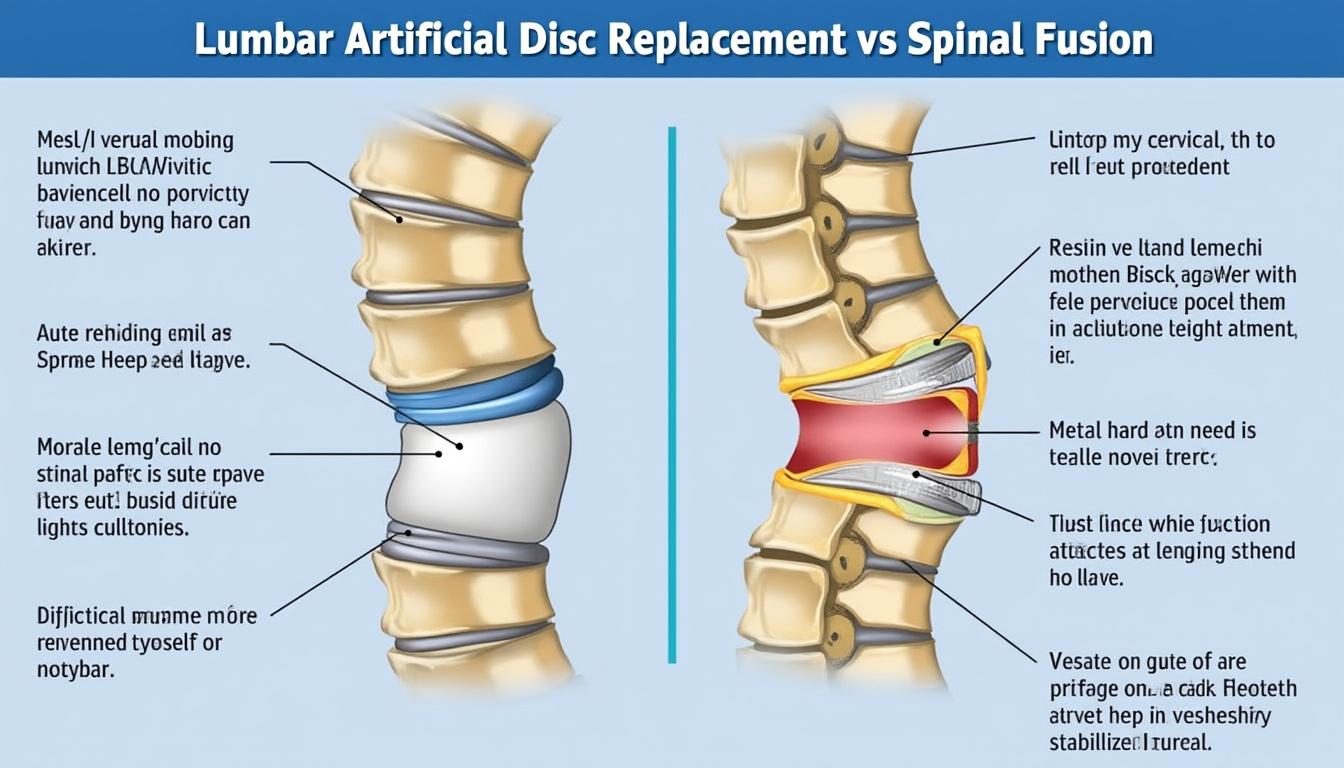
In contrast, Lumbar Disc Prosthesis (also known as Total Disc Arthroplasty or Artificial Disc Replacement) preserves segmental mobility by substituting the damaged disc with an artificial implant designed to mimic natural motion. This innovation enables flexion-extension, lateral bending, and axial rotation, which are critical for maintaining spinal balance and function. The procedure typically involves an anterior mini-open retroperitoneal surgical approach that minimizes tissue disruption and enhances recovery speed.
Long-term clinical studies, including data spanning over two decades with thousands of patients, have validated the safety and efficacy of lumbar disc prostheses, demonstrating sustained pain relief, improvement in disability indices, and notably reduced rates of adjacent segment disease compared to fusion surgeries. Patients with prior unsuccessful fusion or discectomy surgeries have also shown comparable outcomes with prosthetic replacements, emphasizing this approach as a viable salvage procedure. These findings are reassuring for Saguenay patients considering alternatives after spinal fusion failure.
The preservation of natural spinal mobility has been linked to less stress on nearby discs and a decreased likelihood of requiring future surgical interventions. Moreover, the use of modern implants, such as the ProDisc-L, with a semiconstrained ball-and-socket design, ensures controlled motion with excellent implant longevity. These devices are manufactured using medical-grade metals and polyethylene, adhering to rigorous safety standards.
Integrating lumbar disc prosthesis within patient care pathways demands a comprehensive evaluation by experts adept in assessing complex spine pathologies. Dr. Desforges’ expertise, combining osteopathy and medical qualifications, ensures that each patient’s condition is thoroughly analyzed, optimizing surgical candidacy and tailoring follow-up rehabilitation strategies to maximize outcomes.

IntraSPINE® in Sherbrooke: Durable Solution for Chronic Low Back Pain
The management of chronic low back pain, a widespread condition affecting millions across Quebec and beyond, has reached a pivotal moment thanks to innovative medical technologies and coordinated care pathways. At the heart of this evolution lies the IntraSPINE implant,…
Types of Lumbar Spine Surgeries Available in France: From Simple Procedures to Motion-Preserving Implants
France has evolved as a leading hub for specialized spine surgeries, offering a range of options adapted to the unique pathology and needs of each patient. Understanding the surgical spectrum is important for those exploring transatlantic care.
Simple Discectomy and Decompression
One of the less invasive procedures, discectomy involves the surgical removal of herniated disc material that compresses nerve roots, thereby relieving pain and neurological symptoms. This outpatient surgery is performed when conservative treatments have failed to resolve radicular pain. While effective, discectomy does not restore disc height or spinal mobility and may leave patients vulnerable to recurrent degeneration.
Spinal Fusion Surgery
Spinal fusion remains a prevalent treatment for DDD where two or more vertebrae are permanently joined to eliminate motion at painful segments. Surgeons utilize bone grafts and instrumentation such as screws and rods to encourage bone growth between vertebrae. Fusion provides stability and pain relief but at the expense of segmental motion, leading to altered spinal biomechanics and increased risk of adjacent segment degeneration. Fusion surgery typically requires longer hospital stays and postoperative rehabilitation.
Artificial Lumbar Disc Replacement (Total Disc Arthroplasty)
The hallmark of motion-preserving spine surgery, artificial disc replacement surgery removes the degenerated disc and replaces it with a prosthetic implant that replicates the disc’s natural function. Implants like ProDisc-L allow for mobility in flexion, extension, lateral bending, and axial rotation while maintaining proper disc height and spinal alignment. This minimally invasive approach accelerates recovery, diminishes long-term complications related to fusion, and can be offered to select patients with 1 or 2 level DDD. It is also suitable for individuals with failed prior discectomy or fusion, converting spinal fusion failure into an opportunity for improved spine function.
Hybrid Surgeries and Multi-Level Procedures
For complex cases involving multiple contiguous levels of degeneration, surgeons may combine artificial disc replacement with spinal fusion in a hybrid approach. This strategy attempts to balance stability with preserved mobility, optimizing biomechanical outcomes. France’s advanced surgical centers offer extensive expertise in these complex interventions alongside comprehensive perioperative care.
French surgical teams emphasize rigorous preoperative assessment, including advanced imaging, bone density testing, and clinical evaluations to identify ideal candidates while minimizing risks. Patients gain access to expert postoperative rehabilitation, leveraging innovations such as neurovertébral decompression and dynamic implant technologies.
Understanding these surgical options helps patients from Saguenay and Quebec to consider well-informed choices in their cross-border care journey, facilitated by clinical coordination spearheaded by Dr. Desforges.
Spine Surgery in Trois-Rivières: Reduce Pain and Preserve Mobility
In recent years, spine surgery in Trois-Rivières has evolved notably, combining advanced medical expertise with innovative technologies to deliver patient-centered care. This growing field addresses the increasing demand among Quebec residents seeking effective solutions for chronic back pain and mobility…
Comprehensive Patient Journey: From Lumbar Evaluation to Post-Surgery Rehabilitation
The pathway for patients considering lumbar disc prosthesis abroad is intricate, spanning initial evaluations to long-term follow-up after surgery.
Detailed Spine Evaluation and Diagnostic Workup
It begins with a thorough clinical assessment, where patient history, symptom patterns, and neurological status are meticulously documented. Radiographic exams, including standing flexion-extension X-rays and MRI scans, provide insight into the health of vertebral bodies, discs, and nerve roots. Patients above certain ages undergo bone mineral density scans to rule out osteoporosis, which contraindicates implant placement. Dr. Desforges’ evaluation combines this scientific rigor with osteopathic insight to discern mechanical and functional deficits, guiding personalized treatment strategies.
Pre-Surgical Conservative Management
Before progressing to surgery, patients are encouraged to complete between 3 to 6 months of conservative treatments to alleviate symptoms and delay surgery where possible. This period typically involves physical therapy, analgesics, osteopathic care, and advanced interventions such as neurovertébral decompression therapy, offered at the renowned Clinique TAGMED in France. When adequate improvement is not achieved, surgical options become the next step.
International Coordination and Travel Logistics
Dr. Desforges facilitates an integrated transatlantic medical journey, helping patients from Saguenay navigate insurance, travel, and multidisciplinary medical consultations. This collaboration ensures timely access to French specialists while respecting Québec and Canadian healthcare regulations and patient safety standards. Coordinated communication between Canadian and French teams supports optimal surgical planning and implementation.
The Surgical Procedure and Hospital Stay
Minimally invasive lumbar disc prosthesis surgery involves an anterior approach that minimizes muscle trauma and blood loss. Hospitalization is typically brief, with enhanced recovery protocols leading to early mobilization. Patients receive individualized pain management and education on postoperative care.
Postoperative Rehabilitation and Long-Term Monitoring
Post-surgery rehabilitation is critical to restoring spine function and includes physical therapy tailored to the artificial disc’s biomechanical properties. Regular follow-up assessments by Dr. Desforges and partner clinics evaluate pain relief, mobility restoration, and implant integrity. Long-term studies confirm sustained improvements can persist for over 20 years with proper management.
This comprehensive patient journey underscores the importance of expert evaluation, conservative care prior to surgery, and meticulous coordination across disciplines and borders for safe, effective lumbar disc prosthesis outcomes.

TOPS™ in Gatineau: High-Performance Option for the Lumbar Spine
The landscape of spinal surgery has witnessed profound evolution, particularly for patients grappling with lumbar spine disorders such as spinal stenosis and spondylolisthesis. These conditions, increasingly prevalent among Quebec’s population, impose substantial limitations on mobility and quality of life. The…
Biomechanical Benefits of Artificial Disc Replacement Compared to Spinal Fusion
Artificial disc replacement’s primary advantage lies in its ability to maintain natural spinal biomechanics, contrasting with the immobility introduced by spinal fusion.
Preservation of Physiological Motion
Unlike fusion surgery, which rigidly fixes vertebrae, lumbar disc prostheses allow flexion-extension, lateral bending, and axial rotation at the treated levels. This preservation facilitates spinal balance and natural posture adaptations during movement. Clinical imaging studies have demonstrated that patients retain significant range of motion even decades post-implantation, with no evidence of implant loosening or wear when surgical technique is carefully applied.
Reduced Degeneration of Adjacent Segments
Multiple research publications confirm that spinal fusion accelerates degenerative changes on adjacent vertebral levels due to altered load distributions. Artificial disc replacement mitigates this risk by maintaining segmental mobility, thus protecting surrounding discs and reducing the need for subsequent surgeries.
Improved Clinical Outcomes and Patient Function
Patients undergoing artificial disc replacement report greater improvement in back pain relief, leg pain reduction, and enhanced physical function compared with those undergoing fusion. Significant decreases in Oswestry Disability Index (ODI) and Visual Analog Scale (VAS) scores have been observed consistently across large cohorts with long-term follow-up. In cases of failed fusion or post-discectomy syndrome, disc prosthesis offers a reliable salvage solution.
Enhanced Recovery and Economic Advantages
Because disc replacement preserves motion and involves less invasive procedures, the recovery time and postoperative rehabilitation can be shorter than fusion, resulting in quicker return to work and daily activities. From a socioeconomic perspective, this translates into cost savings both for patients and healthcare systems burdened by long wait times and extensive rehabilitation protocols within Quebec.
This biomechanical and clinical evidence illustrates why artificial lumbar disc replacement is gaining popularity among patients seeking effective and durable solutions after spinal fusion failure.

Cervical Disc Prosthesis in Quebec City: Avoid Post-Surgery Stiffness
Chronic neck pain remains a significant challenge for thousands of residents in Quebec City every year, often leading them to seek effective spinal surgery options that minimize downtime and maximize long-term mobility. Among the recent advancements revolutionizing cervical spine care,…
Essential Criteria and Indications Before Considering Lumbar Disc Prosthesis Surgery
Not every patient with back pain or prior spinal fusion is a candidate for lumbar disc prosthesis. Rigorous selection criteria ensure safety and effectiveness of the procedure.
- Confirmed Diagnosis of Degenerative Disc Disease: Radiographic evidence of one or two contiguous lumbar discs showing degeneration using MRI and X-rays without significant facet joint involvement or stenosis.
- Persistent Low Back Pain: Patients experiencing disabling symptoms for longer than two years despite thorough conservative treatments.
- Failed Conservative Management: Completion of a minimum of 3 to 6 months of therapies including physical therapy, medication, and neurovertébral decompression as available at the Clinique TAGMED.
- Bone Quality Assessment: Adequate bone density confirmed by DXA scan (T-score ≥ -1.0) to reduce implant risk.
- Anterior Surgical Access Feasibility: Anatomical suitability verified through imaging to enable safe anterior approach for implant placement.
- Exclusion of Contraindications: Including severe spondylolisthesis, facet joint osteoarthritis, metabolic diseases, infections, tumors, or significant spinal stenosis.
The expertise of an experienced evaluator such as Dr. Desforges is critical in integrating clinical, radiographic, and functional data to determine candidacy, thereby minimizing complications and ensuring personalized treatment.
Minimally Invasive Surgery in Longueuil: Reduce Hospital Stay Duration
In recent years, advances in spinal care have dramatically reshaped the treatment landscape for patients suffering from debilitating spinal conditions. Particularly in Longueuil, the emergence of minimally invasive surgery (MIS) techniques offers a transformative alternative to conventional open surgeries. These…
Advantages of Transatlantic Coordination for Saguenay Patients Opting for Surgery in France
Cross-border management of lumbar disc prosthesis cases brings numerous benefits to Saguenay residents seeking effective alternatives unavailable or delayed within local healthcare systems.
Optimized Access and Reduced Wait Times
Due to Quebec’s increasing demand for spinal surgeries, wait times for fusion or other procedures can stretch over months or years. Surgical centers in France have streamlined access facilitated through partnerships championed by Dr. Desforges. Patients gain timely surgical appointments and reduction in prolonged suffering.
Advanced Surgical Technology and Expert Teams
French spine centers are at the forefront of minimally invasive spine surgery, incorporating state-of-the-art implants, dynamic decompression modalities, and meticulous surgical techniques. Continuous innovation ensures superior functional restoration and low complication rates.
Comprehensive Preoperative and Postoperative Care
The transatlantic model emphasizes holistic patient management, including thorough evaluation, perioperative support, and a tailored rehabilitation program that optimizes recovery. This continuum extends into monitored return-to-home care in Saguenay, supported by multidisciplinary teams and cutting-edge communication platforms.
Cost-Effectiveness and Enhanced Patient Experience
While initial expenses may seem higher, overall healthcare costs are often reduced through fewer complications, faster recovery, and decreased need for additional surgeries. Patients also benefit from travel assistance and personalized attention, fostering confidence and alleviating fears related to international surgery.
Dr. Desforges’ role as a liaison and guide throughout this journey ensures each patient’s evaluation, surgical plan, and follow-up are executed with scientific rigor, ethical consideration, and compassionate support.
IntraSPINE® in Laval: Modern Solution for Lumbar Stabilization
In the evolving landscape of orthopedic treatments, the city of Laval has become a hub for innovations addressing chronic lower back pain. Among the groundbreaking solutions gaining attention is the IntraSPINE device—a modern spinal implant designed to offer dynamic lumbar…
Specific Services and Innovations Offered by Clinique TAGMED and Associated Teams
The Clinique TAGMED stands as a beacon of innovation in conservative spine care and surgical collaboration, integrating advanced therapies and specialized implant options for lumbar disc prosthesis patients.
The clinic leverages cutting-edge neurovertébral decompression protocols to optimize pre-surgical status, often improving symptom control and functionality. This non-invasive therapy targets nerve root compression and inflammatory processes without the risks linked to surgery.
TAGMED is also distinguished by its meticulous selection of dynamic implants with proven long-term durability, such as the ProDisc-L, offering patients alternatives that align with their biomechanical needs. The clinic’s surgical partners are renowned for minimally invasive techniques, reducing hospital stays and facilitating accelerated recovery.
Beyond surgery, TAGMED’s multidisciplinary teams provide comprehensive rehabilitation services, nutritional guidance, and psychological support, ensuring patients recover physically and mentally from their spinal disorders. This well-rounded care model reflects Dr. Desforges’ commitment to evidence-based, ethical medicine and patient-centered education.
Neck Surgery in Montreal: Maintain Cervical Flexibility and Function
Neck conditions causing persistent pain or functional loss place a substantial burden on individuals and healthcare systems, especially in urban centers like Montreal. Surgical interventions targeting the cervical spine have evolved tremendously, aiming not only to relieve symptoms but to…
Critical Timing: Conservative Treatments Before Considering Surgery
It is imperative to acknowledge that surgery should not be the first-line treatment for degenerative lumbar spine conditions. Clinical experience and scientific evidence emphasize a minimum of 3 to 6 months of conservative therapy, including advanced interventions like neurovertébral decompression, before contemplating artificial disc replacement.
Failure to exhaust conservative measures may result in avoidable surgical risks and suboptimal outcomes. The advanced neurovertébral decompression offered at the Clinique TAGMED exemplifies state-of-the-art conservative care that many patients have not accessed prior to surgery consideration.
Patients should be guided to understand that lumbar disc prosthesis is a highly effective treatment, but only when carefully indicated following sufficient attempts with non-invasive therapies. This philosophy, rooted in ethical clinical practice, underpins Dr. Desforges’ approach in patient evaluations and shared decision-making.

Disc Prosthesis in Lévis: Quick and Long-Lasting Results
Chronic back pain caused by degenerative disc disease continues to profoundly impact the quality of life for many residents in Lévis and the broader Quebec area. For decades, traditional spinal fusion surgery has been the primary solution for alleviating severe…
Empathetic Guidance Toward Informed and Personalized Spine Care Choices
Facing spinal pain and complex surgical decisions can be daunting. Patients deserve a transparent, supportive environment with clear explanations of their condition, treatment options, and expected outcomes.
Dr. Desforges emphasizes a compassionate and educational approach. He avoids unnecessary jargon and encourages patients to ask questions, engage actively in their care, and consider all facets—from biomechanical implications to lifestyle goals.
Every case is unique. Hence, the lumbar disc prosthesis journey’s success depends on thorough evaluation, individualized surgical planning, and dedicated postoperative rehabilitation tailored to the patient’s anatomy and circumstances. This humanized care boosts confidence and motivation in patients from Saguenay confronting the challenges of spinal fusion failure.
Encouragement to Start Your Evaluation for Personalized Spine Care
Whether you are dealing with persistent back pain after spinal fusion or seeking alternatives to prolonged wait times for spine surgery in Quebec, there is hope for restored mobility and pain relief through lumbar disc prosthesis based on cutting-edge French surgical innovations.
Contact the expert teams coordinating your care across the Canada-France corridor. Begin with a comprehensive evaluation by Dr. Sylvain Desforges who will guide you through secure, scientifically grounded, and ethically delivered care pathways.
To learn more or to discuss your individual case, visit this dedicated contact page and take the first step toward reclaiming your spine health with confidence and support.
What distinguishes lumbar disc prosthesis from traditional spinal fusion?
Lumbar disc prosthesis preserves natural spine motion by replacing degenerated discs with artificial implants, whereas fusion immobilizes vertebral segments. Prosthesis reduces adjacent segment degeneration and often provides quicker recovery and better long-term function.
Who is an ideal candidate for artificial disc replacement surgery?
Ideal candidates are patients with confirmed degenerative disc disease at one or two contiguous lumbar levels, experiencing chronic disabling pain despite conservative treatment, with adequate bone density and suitable anatomy for anterior access.
Can lumbar disc prosthesis be performed after a failed fusion surgery?
Yes, artificial disc replacement can be an effective salvage procedure for patients experiencing persistent pain or mobility issues after spinal fusion failure, providing restored motion and pain relief.
Why is conservative treatment important before considering lumbar disc prosthesis?
Conservative therapies, including neurovertébral decompression, should be attempted for at least 3 to 6 months to optimize symptoms and avoid unnecessary surgery. Surgery is recommended only when non-invasive measures fail.
How does the international coordination improve patient outcomes?
Cross-border collaboration ensures timely access to advanced surgical techniques, multidisciplinary care, and postoperative rehabilitation, reducing wait times and enhancing personalized treatment experience for patients from Saguenay.