
Can Preoperative Preparation in France Help Patients Avoid Surgery?
November 4, 2025
Essential Steps to Prepare for Simple, Fusion, or Motion Surgeries: What You Need to Know
November 5, 2025
Mastering the intricacies of medical logistics and accommodation is paramount for patients undergoing complex procedures, especially when international travel and advanced spinal surgeries are involved. In 2025, the growing demand for transatlantic medical care, such as patients journeying from Quebec to France, underscores the necessity for meticulous planning that goes beyond simple booking arrangements. Effective preparation involves synchronizing surgical timelines, securing specialized implants like TOPS and Intraspine, and establishing accommodations that support recovery while ensuring proximity to healthcare facilities. Institutions and specialized agencies like Franchir and SOS Tourisme Médical have become linchpins in this process, orchestrating seamless transitions from evaluation and transport to postoperative follow-up.
This article explores comprehensive strategies for medical logistics management and patient accommodation, accentuating best practices for optimized healthcare delivery. It also highlights innovations in inventory tracking, coordination between multidisciplinary teams, and integration with hospitality providers like Hilton Hotels and Marriott International to enhance patient comfort. By understanding these multifaceted demands and deploying technology-driven solutions, healthcare providers and facilitators ensure that each patient’s journey is efficient, secure, and ultimately successful.
Understanding Key Challenges in Medical Logistics for International Patients
The realm of medical logistics for international patients presents unique challenges that require scrupulous attention to detail and coordinated efforts. At the core lies the management of highly specialized surgical implants tailored to spinal surgeries, where timing, quality, and regulatory compliance are paramount. Handling these devices, such as those produced by renowned manufacturers like Medtronic and BD (Becton, Dickinson and Company), demands precision not only because of their complexity but also due to strict certifications including CE marking and FDA approvals. A lapse in availability or delivery can critically disrupt surgical schedules, jeopardizing patient outcomes.
Coordination across countries adds layers of complexity, involving multiple stakeholders: surgeons, hospital logistics, transport companies, customs authorities, and medical facilitators. Each entity must align to ensure a fluid process, from implant dispatch to operative installation. Legal and regulatory requirements governing cross-border transport and storage of medical supplies must be strictly followed to protect product integrity and patient safety. This challenge is compounded when managing cold chain requirements for sensitive pharmaceuticals and biological samples.
Examples of efficient solutions emphasize technology utilization. Automated inventory systems enable real-time monitoring of stock levels, expiration dates, and batch tracking, thus preempting shortages and overstocks. Such systems facilitate anticipation of implant needs aligned with surgical schedules, minimizing disruption. Successful logistics operations often rely on integrated platforms that fuse communications between suppliers like Cardinal Health and hospital management, streamlining order processing while providing full supply chain transparency.
List of Primary Challenges in Medical Logistics Management
- Ensuring availability and traceability of personalized surgical implants
- Coordinating multiple international actors, including medical teams and logistics providers
- Compliance with cross-border regulatory and customs requirements
- Managing cold chain and other specialized storage needs
- Mitigating risks of delays that can affect patient health outcomes
Example Table: Surgical Implant Logistics Challenges and Solutions
| Challenge | Impact | Mitigation Strategy | Relevant Stakeholders |
|---|---|---|---|
| Implant availability delays | Postponed surgery, increased patient anxiety | Advanced inventory monitoring and early ordering | Suppliers, hospital logistics, patient coordinators |
| Regulatory non-compliance | Customs clearance issues, legal penalties | Dedicated regulatory compliance teams and training | Customs brokers, legal advisors, suppliers |
| Cold chain failure | Compromised implant or drug efficacy | Specialized refrigerated transport and storage | Logistics providers, pharmaceutical manufacturers |
The top priority remains maintaining a streamlined, compliant supply chain to maximize the efficiency and safety of the surgical procedure while reducing overall costs and patient distress. For enhanced insights, comprehensive guidelines on these challenges can be found by exploring advanced resources on healthcare logistics and effective medical supply chain management.

Understanding Sciatic Pain: Key Symptoms and When to Seek Medical Advice
Sciatic pain is a prevalent condition impacting a wide demographic, manifesting primarily as intense pain radiating from the lower back down the leg. This pain stems from irritation or compression of the sciatic nerve, a major nerve extending through the…

The Stepwise Role of Functional Recovery in Achieving Successful Outcomes
The journey to full recovery following spinal surgery is often complex and multifaceted, demanding a meticulously structured approach to ensure optimal functional outcomes. In recent years, the concept of functional recovery through a stepwise approach has garnered significant attention in…
Strategic Stock Management and Surgical Equipment Planning
Successful spinal surgery coordination depends heavily on adaptive stock management and detailed planning of surgical equipment inventories. Personalized implants like dynamic systems TOPS or B-DYN require individual patient assessment and meticulous preparation long before the operating day. In 2025, healthcare institutions integrate computerized inventory platforms that monitor implant lot numbers, expiration dates, and usage history to comply with regulatory standards while ensuring availability.
These intelligent systems provide automatic alerts when stocks approach critical thresholds, prompting timely reorder processed in alignment with scheduled surgeries. The integration of supply chain data with hospital information systems enables seamless coordination with surgical teams, who may adjust equipment needs remotely based on intraoperative findings or evolving patient condition. Suppliers such as Philips Healthcare and Stryker play a vital role by delivering customized instrumentation sets alongside implants, ensuring smooth operational workflow.
Effective coordination avoids complications caused by equipment shortages or gaps in sterilization cycles, both of which could delay surgery or increase risks. Further complicating matters, the rise of minimally invasive surgical techniques demands specialized, often single-use devices, necessitating agile procurement practices. Hospitals must balance cost efficiency with patient safety, leveraging real-time inventory visibility to reduce excess stock without risking critical shortages.
Key Elements of Surgical Stock Planning
- Real-time inventory tracking linked to patient cases
- Automated reorder systems integrated with surgical schedules
- Customization options based on patient-specific surgical planning
- Collaboration among suppliers and hospital staff for inventory optimization
- Utilization of predictive analytics to forecast implant demand
Comparative Table of Stock Management Features
| Feature | Description | Benefits | Applicable Technologies |
|---|---|---|---|
| Automated alerts | Notifications for low stock and expiry risks | Prevents surgical delays and wastage | AI-enabled inventory platforms |
| Patient-linked stock management | Inventory correlated to scheduled operations | Ensures right implant for right patient, on time | Integrated Hospital Information Systems (HIS) |
| Supplier collaboration portals | Real-time sharing of stock and demand data | Enhances communication and reduces errors | Cloud-based logistics platforms |
Hospitals are increasingly adopting these advanced management tools to avoid critical pitfalls in spinal surgery logistics. For those interested in in-depth supply chain strategies, the best practices outlined at healthcare supply chain implementation provide excellent guidelines.

Transatlantic Patient Journey: Insights into Indications, Benefits, and Challenges
The emergence of the Transatlantic Patient Journey as a strategic model within healthcare continues to capture attention for its innovative potential, especially in specialized fields such as spinal surgery. This cross-border care pathway integrates rigorous medical evaluation from Quebec with…
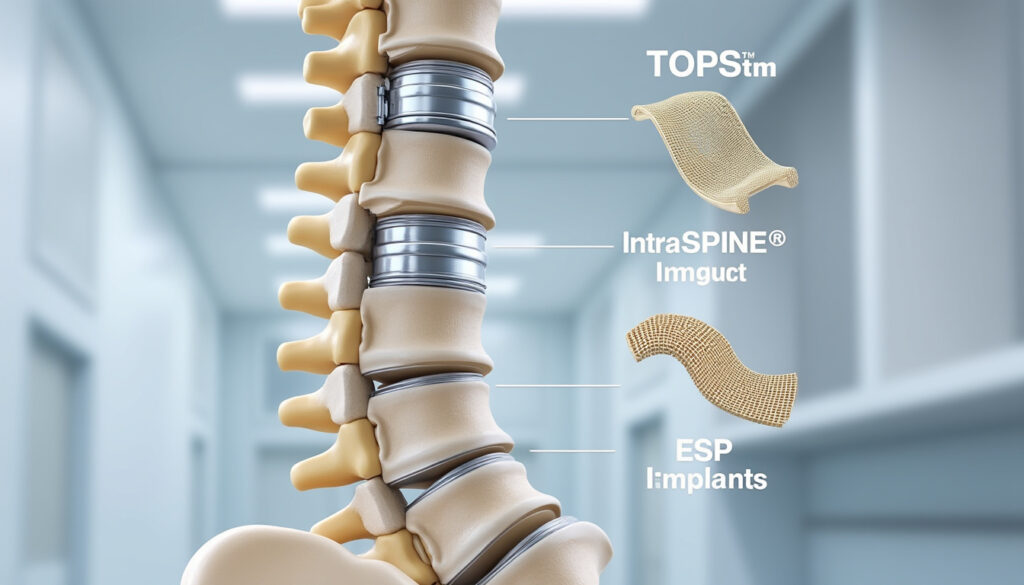
The evolving field of spinal surgery is witnessing a transformative shift, fueled by cutting-edge implant technologies such as TOPS, Intraspine, and ESP. These innovative implants redefine treatment possibilities by emphasizing preservation of natural spinal mechanics, while ensuring durable stabilization and…
Enhancing Cooperation Between Surgical Teams and Partner Institutions
An essential component of effective medical logistics and accommodation is the seamless collaboration between surgeons, hospitals, and facilitation agencies. Medical journeys from Quebec to French centers such as CHU Le Mans, Toulouse, and Bordeaux demand coordinated scheduling to reduce patient wait times and optimize surgical outcomes. Renowned surgeons specializing in spinal procedures offer innovative approaches using implants like Intraspine and ESP approved by regulatory bodies.
Facilitators like Franchir streamline patient orientation and ensure all logistical elements—transportation, accommodation, material supply—are synchronized. This partnership approach enables quicker access to cutting-edge techniques, vital in managing complex cases that require high precision and timely intervention. Close communication between healthcare teams leads to adjustments in surgical planning, conforming to patient needs and material availability in real time.
Furthermore, compliance with international healthcare standards assures not just clinical excellence but also confidence for patients engaging in cross-border care. The involvement of major players such as Roche Diagnostics and Siemens Healthineers injects advanced diagnostics support and equipment throughout this coordinated ecosystem, promoting more accurate preoperative assessments and postoperative monitoring.
Core Aspects of Surgical and Institutional Coordination
- Integrated scheduling to minimize delays between evaluation and surgery
- Collaborative procurement aligned with surgical timelines
- Proactive patient education and orientation services
- Multidisciplinary team meetings involving international partners
- Real-time communication platforms tailored for healthcare coordination
Partner Hospital Characteristics for Spinal Surgery
| Centre Hospitalier | Specialty | Available Implants | Average Intervention Delay |
|---|---|---|---|
| CHU Le Mans | Dynamic Spinal Surgery | TOPS, Intraspine | 4 to 6 weeks |
| CHU Toulouse | Cervical and Lumbar Disc Prostheses | Articulated Disc Prosthesis | 3 to 5 weeks |
| CHU Bordeaux | Arthrodesis and Stabilization | B-DYN, ESP | 5 to 7 weeks |
This highly structured collaboration array enhances the patient experience, reducing uncertainties related to wait times and surgical procedure expectations. Patients also benefit from healthcare logistics backed by industry giants such as Stryker, ensuring premium-quality implants and instruments are used throughout the care continuum. To explore further the dynamics of surgical partnerships, visit a resource on patient care pathways and orientation.


Preparing for Surgery in France: Key Indications, Benefits, and Limitations
In an evolving global healthcare landscape, France emerges as a beacon of advanced surgical expertise, particularly attracting international patients seeking expedited and innovative medical interventions. Patients from regions experiencing long wait times, such as Quebec, increasingly view France as an…

Unveiling the Hidden Benefits of Quality and Certification in Devices
The landscape of device manufacturing and clinical application in 2026 has been fundamentally shaped by the rigorous interplay between quality management and certification processes. Within this complex framework, the hidden benefits of adhering to international standards and obtaining relevant certifications…
The Critical Role of Accommodation in International Patient Recovery
Beyond medical logistics, accommodation constitutes an integral pillar supporting successful recovery for international patients. Selecting lodging near medical centers facilitates convenient access to consultations, diagnostics, and postoperative care. Providers such as Hilton Hotels and Marriott International have adapted offerings to meet patients’ specific recovery needs, introducing accessible rooms and special services tailored for convalescence.
Important factors influencing accommodation choice include sanitary standards, dietary options aligned with postoperative diets, availability of transportation to healthcare facilities, and round-the-clock medical assistance. Some hotels co-locate rehabilitation areas, allowing patients to receive therapeutic interventions without traveling extensively. Platforms like Airbnb also serve as complementary options for families seeking homelike environments.
Logistics firms such as FM Logistic and Bolloré Logistics contribute by managing patients’ personal belongings and ensuring delicate medical equipment is transported securely to lodging. This comprehensive accommodation strategy transforms the stay from a passive rest period into an active component of the healing trajectory.
Accommodation Features Supporting Patient Recovery
- Proximity to healthcare facilities for easy access to appointments
- Specialized rooms with accessibility adaptations
- Nutrition services designed for postoperative healing
- On-site or nearby availability of medical or paramedical support
- Reliable transportation and assistance for patients and companions
Table: Accommodation Options Around Key French Medical Centers
| City | Accommodation Type | Distance from Medical Center | Dedicated Services |
|---|---|---|---|
| Le Mans | 3-Star Hotels, Medicalized Apartments | 500 m to 1 km | Private transport, tailored diet plans |
| Toulouse | Medical Residences, Airbnb with Adaptations | 800 m to 1.5 km | 24/7 Assistance, personalized monitoring |
| Bordeaux | 4-Star Hotels, Internal Private Clinics | 300 m to 800 m | Physiotherapy rooms, paramedics on call |
This integration of hospitality and healthcare undoubtedly elevates patient satisfaction, promoting quicker recovery and reducing readmissions. Readers seeking more detailed accommodations strategies may consult articles that delve into the nuances of medical logistics and accommodation transformations.
Why Experts Advocate for Comprehensive Preoperative Evaluations
In the complex and demanding field of spinal surgery, the emphasis on comprehensive preoperative evaluations has become a fundamental pillar supporting successful surgical outcomes. These evaluations, far beyond mere routine checks, integrate detailed analyses of patient health, surgical risk assessments,…
The Future of Surgery Lies in Stepwise Functional Recovery
The evolution of surgical care in 2026 reveals a compelling shift toward approaches that prioritize the holistic recovery of patients, moving beyond traditional metrics like length of hospital stay or mortality rates. This modern paradigm highlights the principle that the…
Leveraging Technology and Innovation for Medical Logistics Excellence
Technological advancement in healthcare logistics has considerably reshaped how supplies are tracked, managed, and delivered to surgical centers globally. State-of-the-art tools incorporating artificial intelligence and IoT sensors enable real-time stock visibility and predictive analytics to forecast implant needs with striking accuracy. Equipment manufacturers such as Siemens Healthineers and GE Healthcare actively contribute technological solutions as key partners within this ecosystem.
The implementation of RFID and barcode tagging systems ensures every implant and related surgical instrument is traceable from manufacturer to patient. This detailed documentation not only meets stringent regulatory requirements but also drastically reduces risks linked to counterfeit products or misplaced materials. Digital platforms support smooth coordination, aggregating data across suppliers, hospitals, and transport intermediaries.
Moreover, integrating these data repositories with patient electronic health records further optimizes surgical planning and postoperative evaluation, laying the groundwork for continuous quality improvement. Importantly, compliance with GDPR and other international data privacy regulations is pivotal in safeguarding patient information throughout the logistics chain.
Innovations Driving Logistics Efficiency in Healthcare
- AI-powered inventory management for predictive supply chain control
- RFID and barcode systems for enhanced traceability and safety
- Cloud platforms enabling real-time communication between stakeholders
- Integration with electronic health records to align logistics and clinical data
- Strict adherence to data privacy regulations (GDPR compliance)
Technology Overview Table for Medical Logistics
| Technology | Function | Key Advantages | Major Providers |
|---|---|---|---|
| RFID Tagging | Tracking implants and surgical equipment | Improved traceability and product security | Philips Healthcare, Medtronic |
| Artificial Intelligence | Predictive analysis for stock needs | Proactive management and reduced shortages | GE Healthcare, Siemens Healthineers |
| Cloud Collaboration Platforms | Stakeholder communication and data integration | Streamlined coordination and workflow | Cardinal Health, BD |
This cutting-edge technological framework propels healthcare logistics towards unprecedented reliability and responsiveness. To explore more best practices for resilient supply chains, resources such as healthcare logistics best practices can be invaluable.

Organizing a Medical Stay: Practical Insights for Transatlantic Patients
For patients traveling from Quebec to France for spinal surgery, the medical stay is a complex journey requiring synchronized efforts among international healthcare providers, logistics companies, and hospitality services. Initial assessment often takes place under the care of specialists like Dr. Sylvain Desforges at TAGMED in Canada, who oversee conservative treatments and prepare the surgical plan tailored to each patient’s condition.
Once surgery is recommended, patient orientation and travel booking are managed by agencies such as Franchir, which select appropriate hospitals and coordinate flights, ground transport, and lodging details. The surgery then proceeds in renowned French centres known for pioneering procedures involving implants like TOPS or Intraspine, with postoperative follow-up arranged by services including Neurothérapie Montréal to ensure continuous care upon return.
This integrated pathway reduces delays and stress, providing patients with a seamless experience backed by expert coordination. For example, a Quebec patient suffering severe lumbar pain was successfully guided through this process, benefiting from minimal wait times and comprehensive post-surgery rehabilitation, highlighting the value of this orchestrated approach.
Essential Steps for a Well-Coordinated Medical Stay
- Initial patient evaluation and treatment planning in the home country
- Coordination of travel and accommodation services
- Selection of surgical center with expertise and relevant implant availability
- Completion of surgery with multidisciplinary support
- Postoperative care planning including rehabilitation and follow-up logistics
Medical Stay Coordination – Example Overview
| Stage | Service Provider | Key Responsibilities |
|---|---|---|
| Evaluation | TAGMED (Quebec) | Assess patient condition, initiate conservative treatment |
| Orientation & Booking | Franchir (France) | Arrange hospital selection, flights, accommodation, local transport |
| Intervention | CHU Partners (Le Mans, Toulouse, Bordeaux) | Perform surgery using approved implants |
| Follow-up | Neurothérapie Montréal | Oversee rehabilitation and patient monitoring post-return |
This well-established framework ensures continuity of care and patient confidence, representing a gold standard in medical logistics. For more detailed guidance, exploring the role of medical orientation from Quebec in care pathways offers a comprehensive perspective.
Developing Expertise and Training in Medical Logistics Management
As medical logistics complexity increases, specialized training has become vital for professionals orchestrating these multifaceted operations. Proficiency in advanced inventory systems, regulatory environments, and patient-centered logistics is necessary to optimize healthcare delivery. Institutions like the University of Bordeaux offer Diplomas (DU) and Inter-University Diplomas (DIU) in spine surgery logistics, enhancing skills across health sectors.
Professionals learn efficient supply chain management, process optimization, and compliance strategies essential for reducing delays and ensuring safety. Continuous education covers emerging technologies such as robotic-assisted surgery and 3D-printed implants, factors increasingly shaping the operational landscape. Strengthening these competencies contributes directly to patient well-being by guaranteeing seamless medical journeys from diagnosis to recovery.
Training programs focus on skills development including supply stock control, workflow analysis, and regulations adherence. These areas foster improved coordination between caregivers and logistic teams, reduce medical errors, and maintain care quality. Providers like CKS Santé and StudySmarter support such curricula to prepare future experts capable of managing international patient logistics efficiently.
Core Competencies Developed in Medical Logistics Training
- Effective medical supply stock management
- Performance analysis of hospital supply chains
- Design of healthcare logistics strategies
- Integration of digital innovations and regulatory compliance
- Patient-centered logistics coordination
Training Outcomes and Patient Benefits
| Competence | Objective | Benefit for Patients |
|---|---|---|
| Supply chain management | Ensure continual availability of medical devices | Avoid delays and interruptions for scheduled surgeries |
| Process analysis | Optimize material and information flow | Minimize errors and improve multidisciplinary coordination |
| Regulatory compliance | Uphold quality and legal standards globally | Guarantee patient safety and care excellence |
Developing this expertise represents a strategic investment in healthcare systems, empowering operators to manage increasingly international patient flows with professionalism. More comprehensive learning paths can be examined through specialized resources on medical assistant exam success strategies.
Maîtriser la Logistique Médicale et l’Hébergement : Astuces Essentielles pour une Préparation Efficace
Sélectionnez un thème ci-dessous pour découvrir des conseils clés sur la gestion, la coordination et la planification en logistique médicale et hébergement.
Gestion logistique médicale
- Évaluez avec précision les besoins en matériel selon la taille et spécialité de l’établissement.
- Mettez en place un suivi rigoureux pour éviter la rupture de stocks critiques.
- Utilisez un système de traçabilité numérique pour optimiser les flux et réduire les pertes.
Gestion inventaire chirurgical
- Organisez les instruments par type et fréquence d’utilisation pour un accès rapide.
- Prévoyez des contrôles réguliers pour vérifier la stérilisation et l’état du matériel.
- Adoptez un inventaire numérique pour automatiser les commandes en fonction des seuils.
Coordination internationale santé
- Communiquez clairement avec les différents acteurs (hôpitaux, autorités, transporteurs).
- Respectez les normes sanitaires et douanières internationales pour éviter les blocages.
- Planifiez avec anticipation les livraisons et la gestion des imprévus en zone étrangère.
Planification hébergement patients
- Préparez des solutions d’hébergement adaptées aux besoins médicaux et familiaux.
- Assurez la proximité avec les établissements de soins pour un accès rapide.
- Employez des outils digitaux pour coordonner les réservations et la logistique d’accueil.
Intégration technologique
- Implémentez des logiciels de gestion intégrée pour suivre l’ensemble de la chaîne d’approvisionnement.
- Exploitez les données en temps réel pour anticiper les besoins et adapter les approvisionnements.
- Utilisez des plateformes collaboratives pour améliorer la communication entre équipes.
What are the primary challenges in managing medical logistics for international patients?
The main challenges include rigorous management of personalized implant stocks, coordination among multiple actors including surgeons and transporters, and compliance with cross-border regulatory requirements to ensure a smooth and secure patient journey.
How does digitalization enhance hospital logistics management?
Digital tools facilitate real-time stock tracking, automate reordering, improve traceability of medical devices through RFID and barcodes, and optimize scheduling of procedures via predictive analytics.
What types of accommodation are recommended for post-surgical stays?
Accommodations near medical centers that offer accessibility adaptations, medical support services, and tailored dietary provisions help ensure patient comfort and swift access to postoperative care.
What is Franchir’s role in organizing international medical stays?
Franchir provides expert patient orientation to the best surgical centers in France and manages comprehensive travel logistics including flights, accommodation, and local transportation, ensuring personalized patient care.
Who supports patients with postoperative follow-up after surgery in France?
Neurothérapie Montréal takes charge of postoperative rehabilitation and personalized monitoring upon the patient’s return to Canada, offering continuous and tailored care.