A Comprehensive Guide to Conservative Treatments Versus Surgical Options
November 23, 2025
Initial Assessments and Exams: Insights and Experiences Shared
November 23, 2025
The process of recovering from spinal surgery has evolved significantly, especially for patients undergoing procedures abroad. In the context of surgeries performed in France for Canadian patients, particularly from Quebec, the adoption of a stepwise functional recovery approach now stands as a pivotal element. This carefully structured methodology offers a tailored rehabilitation plan that respects the biological healing phases and adapts progressively to the patient’s clinical status and the nature of the intervention performed. By integrating advanced neuromodulation technologies and cross-border healthcare coordination, this model exemplifies modern medicine’s focus on individualized care and comprehensive recovery.
At the core of this approach lies a detailed clinical pathway that avoids the pitfalls of premature or overly aggressive rehabilitation. Instead, it fosters progressive improvement through therapeutic steps carefully calibrated by specialists. This system delivers measurable patient care outcomes, reinforcing both physical and psychological well-being after spinal interventions such as discectomies, spinal fusions, and disc prostheses. Moreover, partnerships between healthcare providers in Quebec and France enrich the recovery process, ensuring continuity of care across continents. With a strong scientific basis and a focus on patient-centric care, the stepwise recovery paradigm is redefining rehabilitation in spinal surgery.
Fundamental Principles of Stepwise Functional Recovery in Spine Surgery Rehabilitation
Stepwise functional recovery revolves around respecting the natural healing timeline after spinal surgery while applying graded therapeutic interventions. Its essence is to protect the delicate balance between promoting mobility and ensuring adequate tissue repair, effectively reducing complications like chronic neuropathic pain or post-laminectomy syndrome. This progressive framework integrates patient-specific factors such as surgical technique, spinal segment involved, and individual response to therapy.
Clinical practice illustrates that the recovery for an arthrodesis differs vastly from that of a motion-preserving surgery with disc prostheses or a simple discectomy. Hence, the rehabilitation program segments the recovery into distinct stages or paliers, each with defined goals and clinical constraints. This tailoring enhances patient safety, boosting confidence and facilitating optimal functional outcomes in daily and occupational activities.
The following core components define the method:
- Biological phase adherence: Recognizing phases such as inflammation, repair, and remodeling to time therapeutic loads appropriately.
- Adaptive therapy progression: Modifying activity levels and exercise intensity in line with ongoing clinical assessments.
- Individualized care plans: Considering surgical specifics and patient comorbidities to customize rehabilitation.
- Regular neurofunctional evaluations: Employing neurological and muscular function tests to refine recovery steps.
- Psychological dimension integration: Addressing anxieties, depression, and motivation as integral to physical recovery.
- Incorporation of neuromodulation: Utilizing advanced technologies like repetitive transcranial magnetic stimulation (rTMS) to modulate pain and enhance neuroplasticity.
| Type of Surgery | Duration of Initial Stage (Weeks) | Main Objectives | Clinical Constraints |
|---|---|---|---|
| Discectomy / Foraminotomy | 1–3 | Pain reduction and basic mobility restoration | Avoid strenuous efforts and sudden twisting motions |
| Motion Surgery (Disc Prosthesis) | 1–2 | Maintain and restore segmental mobility | Preserve implant stability and avoid overload |
| Arthrodesis / Segmental Fusion | 4–8 | Safeguard bone healing and target muscle strengthening | Partial immobilization and limit excessive loading |
Adopting this rigorous rehabilitation framework as part of comprehensive patient care is supported by institutions such as the Haute Autorité de Santé in France, reflecting its clinical value and relevance.

Understanding Sciatic Pain: Key Symptoms and When to Seek Medical Advice
Sciatic pain is a prevalent condition impacting a wide demographic, manifesting primarily as intense pain radiating from the lower back down the leg. This pain stems from irritation or compression of the sciatic nerve, a major nerve extending through the…

The Stepwise Role of Functional Recovery in Achieving Successful Outcomes
The journey to full recovery following spinal surgery is often complex and multifaceted, demanding a meticulously structured approach to ensure optimal functional outcomes. In recent years, the concept of functional recovery through a stepwise approach has garnered significant attention in…
Structured Calendars for Recovery Milestones and Activity Resumption after Spinal Surgery
A well-organized calendar for activity resumption post-surgery is indispensable for achieving a successful stepwise recovery process. It balances the need to initiate physical action promptly without jeopardizing healing. Early mobilization reduces the risk of immobilization-induced complications, such as thrombosis or muscle atrophy, while the timing for work and sport is judiciously adjusted depending on surgical complexity and patient progress assessments.
Clinical pathways dictate initial encouragement of ambulation within days, progressing from short, frequent walks to longer and more demanding sessions. Work reintegration varies by occupational demands:
- Those with primarily desk-based roles benefit from earlier return, often within 4–6 weeks post-op, provided ergonomic adjustments are implemented.
- Manual labor requires longer convalescence, typically 8–12 weeks, with lingering restrictions on lifting and dynamic tasks to avoid strain.
- Sports activities, from leisure to competitive levels, are introduced cautiously, normally after three months for light activities, extending beyond six months for high-intensity participation.
These gradations mitigate the risk of relapse or secondary injury while facilitating progressive improvement aligned with the patient’s clinical trajectory. Neuromodulation techniques, including rTMS, further support these phases by enhancing neuromuscular coordination and psychological readiness, improving the overall rehabilitation experience.
| Type of Activity | Typical Postoperative Timeline | Key Recommendations |
|---|---|---|
| Walking | First 0–7 days | Begin with short sessions; incorporate rest to avoid fatigue |
| Sedentary Work | 4–6 weeks | Use ergonomic setups and frequent breaks to minimize stiffness |
| Manual or Physical Work | 8–12 weeks | Monitor load carefully; avoid vibrations and heavy lifting |
| Leisure Sports (Light) | 3–6 months | Choose low-impact activities such as swimming and cycling |
| Competitive/Intensive Sports | 6–12 months | Ensure comprehensive functional evaluation before resumption |
The precision and clarity of this plan epitomize the clinical pathway that underlies effective rehabilitation and patient care following spinal surgery. This model is well documented in recognized frameworks for functional recovery and rehabilitation pathways.

Transatlantic Patient Journey: Insights into Indications, Benefits, and Challenges
The emergence of the Transatlantic Patient Journey as a strategic model within healthcare continues to capture attention for its innovative potential, especially in specialized fields such as spinal surgery. This cross-border care pathway integrates rigorous medical evaluation from Quebec with…
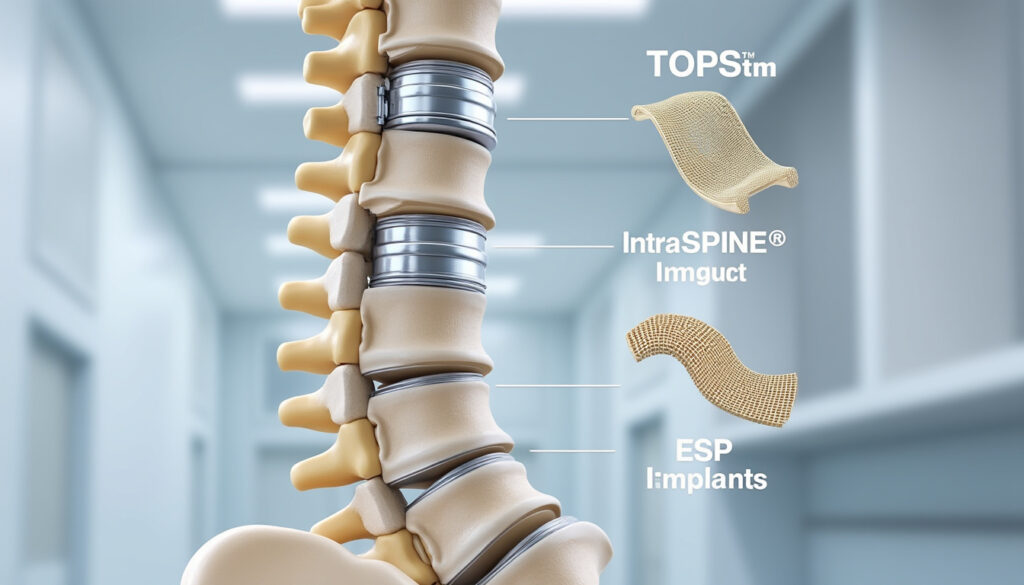
The evolving field of spinal surgery is witnessing a transformative shift, fueled by cutting-edge implant technologies such as TOPS, Intraspine, and ESP. These innovative implants redefine treatment possibilities by emphasizing preservation of natural spinal mechanics, while ensuring durable stabilization and…
Neuromodulation: Enhancing Pain Management and Functional Improvement during Postoperative Recovery
Among innovations shaping post-op care, neuromodulation techniques exemplify a significant leap in managing difficult symptoms and promoting progressive improvement. Facilities like Neurothérapie Montréal utilize repetitive transcranial magnetic stimulation (rTMS) and complementary methods such as BrainPort and PoNS to address chronic pain, neurofunctional deficiencies, and psychological hurdles encountered by spinal surgery patients.
This technology offers multifaceted benefits:
- Pain alleviation: Neuropathic pain often resists traditional painkillers, but rTMS modulates cortical pathways to provide sustained relief.
- Functional neuro-restitution: It accelerates muscle coordination recovery and improves post-laminectomy syndrome outcomes.
- Psychological support: The reduction of anxiety and depressive symptoms fosters patient engagement with rehabilitation programs.
- Neuroplasticity promotion: Facilitates brain reorganization necessary for regaining motor control and sensory integration.
| Neuromodulation Technique | Indications Post-Surgery | Clinical Benefits | Typical Treatment Duration |
|---|---|---|---|
| rTMS (Repetitive Transcranial Magnetic Stimulation) | Neuropathic pain, post-laminectomy syndrome, mood disorders | Persistent pain reduction, functional gains, mood stabilization | 4–8 weeks |
| BrainPort | Sensory retraining, stroke rehabilitation, concussion | Improved balance and coordination | Variable by individual case |
| PoNS (Portable Neuromodulation Stimulator) | Neuromuscular recovery, chronic pain management | Enhanced neuroplasticity and motor recovery | Variable duration |
The integration of these advances into the broader therapeutic steps marks the next frontier in healthcare, effectively merging technology with tailored patient care pathways. More on practical applications is available through resources such as full-service rehabilitative therapy platforms.
Case Example: Patient Journeys Illustrating Stepwise Functional Recovery Success
Real patient cases bring life to theoretical frameworks. Consider Antoine, a 42-year-old who underwent a cervical disc prosthesis insertion in France. Postoperative care employed a regimented recovery schedule augmented by rTMS and focused physiotherapy, enabling him to return to competitive hockey within six months without residual pain. Another example is Claire, aged 58, recovering from a lumbar fusion with persistent neuropathic symptoms. Neuromodulation significantly alleviated her pain and improved daily activity engagement. Lastly, Samuel, who struggled with post-op anxiety after spinal fusion, experienced enhanced mental resilience and rehabilitation adherence thanks to combined neurological and psychological support.
These patient stories underscore the critical role of stepwise rehabilitation combined with innovative neuromodulatory modalities, highlighting a paradigm that other healthcare providers can emulate to maximize patient-centered outcomes.
Preparing for Surgery in France: Key Indications, Benefits, and Limitations
In an evolving global healthcare landscape, France emerges as a beacon of advanced surgical expertise, particularly attracting international patients seeking expedited and innovative medical interventions. Patients from regions experiencing long wait times, such as Quebec, increasingly view France as an…

Unveiling the Hidden Benefits of Quality and Certification in Devices
The landscape of device manufacturing and clinical application in 2026 has been fundamentally shaped by the rigorous interplay between quality management and certification processes. Within this complex framework, the hidden benefits of adhering to international standards and obtaining relevant certifications…
Comprehensive Rehabilitation Strategies for Managing Postoperative Challenges in Spinal Surgery
Recovery after spinal surgery often confronts patients and clinicians with complex challenges such as pain syndromes, functional limitations, and psychological distress. Stepwise functional recovery addresses these by offering a structured pathway that emphasizes ongoing assessment and responsiveness.
Effective rehabilitation strategies include:
- Pain management: Combining pharmacological treatments with physical therapy and neuromodulation to reduce chronic pain.
- Muscle strengthening and conditioning: Gradual reintroduction of loads to restore spinal stability and function.
- Psychological interventions: Cognitive behavioral approaches and motivational support integrated within care pathways.
- Use of assistive technologies: Employing robotics and 3D imaging for precise surgical planning and postoperative rehabilitation monitoring, as emerging in French clinics.
- Multidisciplinary coordination: Ensuring collaboration amongst surgeons, therapists, neurologists, and mental health professionals.
| Rehabilitation Component | Purpose | Implementation Examples |
|---|---|---|
| Pain Alleviation | Limit persistent neuropathic and mechanical pain | rTMS, conventional analgesics, tailored physical therapy |
| Strength & Conditioning | Restore muscular support to the spine | Progressive weight-bearing exercises, neuromuscular training |
| Psychological Care | Enhance patient motivation and reduce distress | Mental health counseling integrated with therapy sessions |
| Technological Support | Improve surgical precision and rehab outcomes | 3D imaging, robotics-assisted navigation, wearable sensors |
| Team Coordination | Ensure cohesive patient-centered care | Regular multidisciplinary meetings and shared clinical tools |
Emerging evidence indicates that integrating such comprehensive measures within stepwise recovery not only accelerates the recovery timeline but also improves patient satisfaction and long-term spinal health. Programs embracing these strategies align with best practices and represent the leading edge in post-acute care.
Why Experts Advocate for Comprehensive Preoperative Evaluations
In the complex and demanding field of spinal surgery, the emphasis on comprehensive preoperative evaluations has become a fundamental pillar supporting successful surgical outcomes. These evaluations, far beyond mere routine checks, integrate detailed analyses of patient health, surgical risk assessments,…
The Future of Surgery Lies in Stepwise Functional Recovery
The evolution of surgical care in 2026 reveals a compelling shift toward approaches that prioritize the holistic recovery of patients, moving beyond traditional metrics like length of hospital stay or mortality rates. This modern paradigm highlights the principle that the…
Cross-Border Collaboration in Functional Recovery: The Quebec-France Model
One hallmark of exemplary patient care in contemporary spinal surgery is the seamless collaboration between international healthcare providers. The partnership between Quebec-based organizations and French medical centers exemplifies this with coherent patient pathways encompassing preoperative preparation, surgery, and postoperative stepwise rehabilitation.
This model ensures:
- Continuity of care: Coordinated handoffs supported by shared clinical data and direct communication channels.
- Patient-centric scheduling: Tailored plans respecting patient timelines and logistical needs for travel and recovery.
- Administrative and regulatory support: Assistance with documentation, insurance, and follow-up healthcare access across countries.
- Innovative program integration: Combining French surgical expertise with Quebec’s neuromodulatory and rehabilitative services.
- Outcome tracking: Use of clinical mapping tools enhancing real-time monitoring and adaptation of therapeutic steps.
This cross-border initiative elevates the standard of patient care and exemplifies the evolution of global health services. Interested parties can learn more about the integrated support frameworks at how stepwise functional recovery transforms patient care in Quebec.
| Key Collaboration Aspect | Benefits | Examples |
|---|---|---|
| Data Sharing and Communication | Improved decision-making and adaptability | Shared electronic records, teleconference meetings |
| Personalized Care Coordination | Patient satisfaction and adherence to recovery plan | Individualized therapy scheduling and follow-up |
| Administrative Assistance | Smooth navigation of healthcare systems | Facilitated insurance and travel logistics |
| Innovative Rehabilitation Integration | Enhanced outcomes from diverse expertise | rTMS therapy supported by clinical monitoring |
| Outcome Monitoring Tools | Proactive management and quality control | Clinical Mapping Tool |
Innovation and Continuous Education in Spine Surgery Recovery Pathways
Ongoing professional development and innovation underpin the excellence of stepwise functional recovery strategies. In 2025, updated programs in France, such as the DIU Chirurgie du Rachis and the FICV Spinal Solution Course, equip surgeons and therapists with cutting-edge knowledge to navigate complex cases effectively. Incorporating novel techniques from robotic-assisted surgery to advanced neuromodulation invigorates traditional rehabilitation protocols with evidence-based improvements.
Key educational highlights include:
- Advanced spinal endoscopy techniques, improving minimally invasive approaches.
- Integration of 3D imaging and robotics in surgical navigation for optimized outcomes.
- Development of functional recovery protocols emphasizing progressive and patient-tailored care.
- Interdisciplinary training promoting cohesive patient care planning.
These education platforms reinforce healthcare professionals’ capacity to manage diverse spinal pathologies while advocating for recovery processes aligning with individualized clinical pathways and therapeutic steps. Patients benefit directly through enhanced care quality and innovative therapeutic opportunities.
| Program | Description | Focus Areas | Link |
|---|---|---|---|
| DIU Chirurgie du Rachis (SFCR) | Inter-university diploma providing specialty training in spine surgery | Minimally invasive surgery, recovery strategies | More info |
| FICV Spinal Solution Course | Comprehensive spine surgery course emphasizing clinical pathway innovation | Endoscopic techniques, functional recovery, patient care | Details |
| EuroSpine Endoscopic Spine Course | Focus on state-of-the-art endoscopic spine interventions | Cutting-edge procedural skills, rehabilitation integration | Course outline |
Measuring Success: Clinical Outcomes and Patient Satisfaction in Stepwise Recovery Programs
Assessing the effectiveness of stepwise functional recovery relies on systematic monitoring of clinical outcomes and patient experience metrics. Evidence highlights notable reductions in postoperative pain, improved functional capabilities, and enhanced mental health indicators when rehabilitation aligns with progressive care pathways.
Primary success markers include:
- Pain Reduction: Patients report significant decreases in neuropathic and chronic back pain within three months.
- Functional Gains: Measurable improvements in muscle strength and coordination accelerate return to daily life activities.
- Complication Prevention: Stepwise progression reduces mechanical complications, such as false motions or re-injury risks.
- Psychological Status: Lower incidence of anxiety and depression correlates with integrated support systems.
- Medication Load Decrease: Reduced reliance on painkillers improves overall quality of life.
| Benefit | Description | Measured Impact |
|---|---|---|
| Pain Management | 40% average reduction in pain intensity over 3 months | Clinically significant pain relief supported by patient reports |
| Functional Recovery | 30% average increase in motor capacity | Reported through objective neuromuscular assessments |
| Complication Prevention | 25% decrease in reported adverse events | Lower frequency of mechanical recurrence or secondary injury |
| Psychological Support | Over 90% patient satisfaction with mood improvements | Correlation with enhanced therapy adherence and outcome |
The implementation of these programs not only transforms patient recovery but also optimizes healthcare resource utilization and supports high-quality care delivery. For more resources and outcome data, platforms like rehabilitation resources provide valuable insights.
Stepwise Functional Recovery: Heart of the Care Pathway
Explore each phase of patient recovery in a stepwise manner. Click on the steps below to discover the functional focus and therapeutic goals.
Related Keywords for Context
- Stepwise Recovery
- Functional Recovery
- Care Pathway
- Rehabilitation
- Patient Care
- Recovery Process
- Healthcare
- Therapeutic Steps
- Progressive Improvement
- Clinical Pathway
What is stepwise functional recovery?
It is a graduated and personalized rehabilitation method that respects the body’s natural healing phases after spinal surgery to optimize recovery and reduce complications.
How is the schedule for resuming activities organized?
Return to activities is graduated according to the type of surgery and patient progress, including walking immediately post-discharge, work resumption from 4 to 12 weeks, and sports generally after three months or more.
What are the benefits of neuromodulation in postoperative care?
Techniques like rTMS help alleviate chronic pain, accelerate neuromuscular recovery, and support mental health in patients after surgery.
Does Neurothérapie Montréal support postoperative patients from surgeries in France?
Yes, they provide personalized follow-up, neurofunctional assessments, and innovative approaches to support patient convalescence.
Can I plan my postoperative recovery with SOS Tourisme Médical?
Absolutely, SOS Tourisme Médical guides Quebec patients through the entire preparatory process, from surgeon selection in France to managing administrative aspects of the recovery journey.