
Stepwise Functional Recovery: The Heart of the Care Pathway
November 23, 2025
Quality and Certification of Devices: Insights and Experiences from Industry Experts
November 23, 2025
Initial assessments and exams serve as the cornerstone of successful outcomes in many professional fields, particularly in complex environments such as medical surgery and education. These evaluations lay the groundwork for personalized strategies, ensuring that methodologies align closely with individual needs and circumstances. In 2025, the landscape of initial assessments encompasses a broad spectrum of tools including diagnostic testing, formative assessment practices, and insights derived from accumulated exam experiences. The process involves deliberate assessment strategies to provide educational feedback or clinical evaluations that significantly influence learning outcomes and patient care.
In the context of spinal surgery, especially for patients navigating an international treatment pathway, such as those from Quebec seeking care in France, initial assessments are not merely procedural steps but integral for tailoring interventions. Similarly, in education, student evaluations initiate targeted learning plans that foster more effective knowledge acquisition. Across these disciplines, the nuanced role of exams and assessments highlights their contribution beyond straightforward measurement: they catalyze continuous improvement through feedback loops and data-driven adjustments.
Understanding the Critical Role of Initial Assessments and Exams in Specialized Fields
Initial assessments, whether in healthcare or education, are designed to establish a detailed baseline of an individual’s current status. These assessments utilize precise diagnostic testing complemented by structured questionnaires that reveal functional limitations, cognitive proficiencies, or levels of pain and discomfort relevant to the domain.
For example, in spinal surgery, questionnaires assess dimensions such as pain intensity and functional impairment, painting a comprehensive picture of the patient’s condition prior to surgical intervention. This approach ensures that the choice of surgical technique—be it an arthrodesis, dynamic stabilization, or disc prosthesis—is grounded in a robust understanding of patient-specific factors. Initial exams extend to advanced imaging diagnostics like MRI or CT scans, analyzed rigorously to detect contraindications and optimize patient eligibility.
- Establish baseline functionality or knowledge.
- Identify specific needs and tailor approaches accordingly.
- Facilitate communication across multidisciplinary teams.
- Support informed decision-making for treatment or learning pathways.
- Enable continuous monitoring and adaptation through feedback integration.
Within education, initial assessments initiate formative assessment cycles that frame subsequent instruction through tailored interventions. The use of diagnostic tests identifies learners’ existing skills, gaps, and learning preferences, forming a pivotal reference for efficient curriculum design that maximizes meaningful learning outcomes.
It is essential to weave into practice the assessment insights drawn from these early exams and to understand how exam experiences—patient or student—can guide future strategies. Resources detailing principles of good practice, such as those outlined by the University of Washington on assessment and evaluation, emphasize balancing outcome focus with the learner’s or patient’s experience as foundational.
| Aspect of Initial Assessment | Purpose | Impact |
|---|---|---|
| Questionnaires and Surveys | Quantify subjective experiences such as pain or quality of life | Enable personalization of post-operative care or instructional methods |
| Imaging and Diagnostic Testing | Provide objective evidence of physiological status or skill mastery | Guide procedural decisions or curriculum adjustments |
| Neurofunctional and Cognitive Evaluations | Assess nervous system or cognitive processing capabilities | Customize rehabilitation or support strategies |


Understanding Sciatic Pain: Key Symptoms and When to Seek Medical Advice
Sciatic pain is a prevalent condition impacting a wide demographic, manifesting primarily as intense pain radiating from the lower back down the leg. This pain stems from irritation or compression of the sciatic nerve, a major nerve extending through the…

The Stepwise Role of Functional Recovery in Achieving Successful Outcomes
The journey to full recovery following spinal surgery is often complex and multifaceted, demanding a meticulously structured approach to ensure optimal functional outcomes. In recent years, the concept of functional recovery through a stepwise approach has garnered significant attention in…
Optimizing Assessment Strategies for Comprehensive Initial Evaluations
The crafting of effective initial assessments requires careful attention to methodology and measurement accuracy. In clinical settings, standardized questionnaires validated at an international level are employed to assess parameters such as lumbar and cervical pain, disability indices, and overall health status. Tools like the Oswestry Disability Index (ODI) or Neck Disability Index (NDI) furnish quantifiable scores facilitating reliable patient evaluation.
Ensuring the accessibility and comprehensibility of assessment instruments is equally important. This includes supporting patients in completion, sometimes involving their family members, to improve the quality of data collected. Such inclusiveness contributes to more objective feedback and better aligns clinical pathways with patient experiences. These best practices mirror educational approaches highlighted in the initial assessment guidelines accessible via platforms such as education sector resources.
- Utilize scientifically validated tools for data consistency.
- Ensure patient or student accessibility and understanding.
- Maintain confidentiality and promote sincerity in responses.
- Incorporate multiple respondent perspectives when applicable.
- Update assessment instruments in line with medical and pedagogical advancements.
This strategic approach to assessment design serves two key purposes: enhancing initial accuracy and creating a feedback culture integral to continuous improvement. Between 2023 and 2025, clinical units have increased patient engagement in standardized assessments significantly, reaching participation rates of over 60%, reflecting heightened patient involvement in their healthcare journey.
| Assessment Tool | Use Case | Example Impact |
|---|---|---|
| Visual Analog Scale (VAS) for Pain | Measure real-time intensity and fluctuations in pain | Adjust conservative or surgical interventions accordingly |
| Quality of Life Surveys (SF-36, EQ-5D) | Assess broad physical, mental, and social well-being | Inform personalized rehabilitation and psychological support |
| Specific Disability Indexes (e.g., NDI) | Pinpoint cervical spine limitations contributing to disability | Guide surgical technique choice and postoperative therapy |

Transatlantic Patient Journey: Insights into Indications, Benefits, and Challenges
The emergence of the Transatlantic Patient Journey as a strategic model within healthcare continues to capture attention for its innovative potential, especially in specialized fields such as spinal surgery. This cross-border care pathway integrates rigorous medical evaluation from Quebec with…
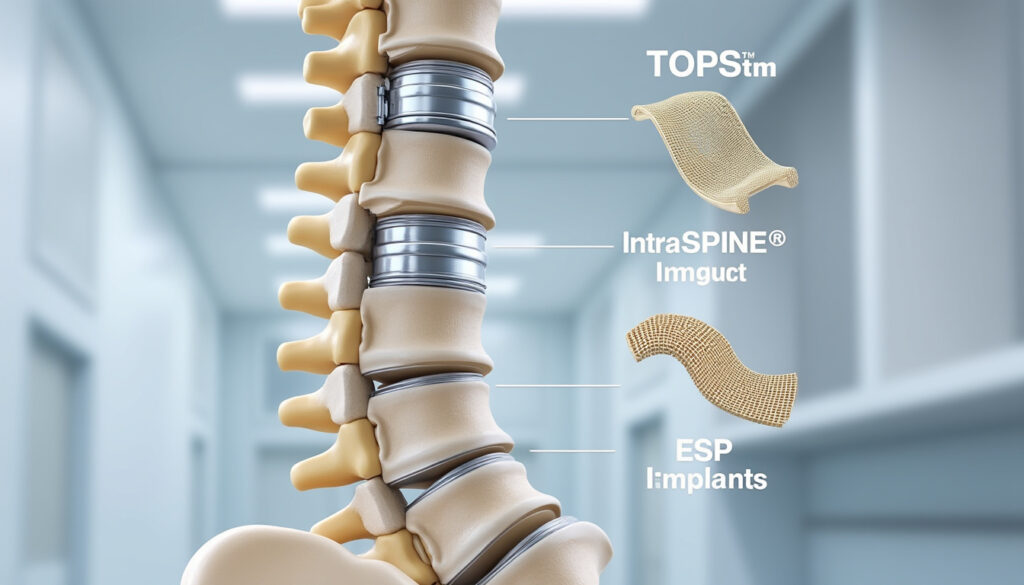
The evolving field of spinal surgery is witnessing a transformative shift, fueled by cutting-edge implant technologies such as TOPS, Intraspine, and ESP. These innovative implants redefine treatment possibilities by emphasizing preservation of natural spinal mechanics, while ensuring durable stabilization and…
Integrative Diagnostic Testing: Enhancing Patient Eligibility and Surgical Planning
Diagnostic testing transcends the realm of initial evaluations by anchoring surgical candidacy decisions in objective evidence. For patients from Quebec preparing for spine procedures in Europe, the medical coordination extends broadly: preliminary imaging, neurological functional assessments, and multidisciplinary case reviews fortify clinical judgment. Experts such as Dr. Sylvain Desforges and his team at TAGMED have institutionalized rigorous protocols to synthesize all available data, ensuring that only patients fitting the stringent eligibility criteria proceed to surgery.
All diagnostic information is carefully analyzed, spanning MRI and CT scan evaluations, neurophysiological testing, and functional examinations. The collaborative dialogue incorporating specialists from both continents creates a seamless, patient-focused pathway that minimizes perioperative risks and elevates functional outcomes.
- Validate appropriateness of surgical intervention through consensus.
- Optimize selection of surgical method for individual pathology.
- Reduce complication rates via thorough case analysis.
- Coordinate cross-border logistics for patient care continuity.
- Employ latest technologies, such as robot-assisted decompression, for targeted treatment.
Robust initial exams also enhance logistical preparation for international treatment, promoting efficient resource utilization during hospitalization. Postoperative protocols designed and monitored by teams at Neurothérapie Montréal exemplify the integration of diagnostic data and patient-reported outcomes to optimize recovery trajectories. Further context on advanced diagnostic techniques and their relevance to assessment strategies is detailed effectively by educational platforms like learning guides.
| Diagnostic Test | Focus | Effect on Surgical Pathway |
|---|---|---|
| Magnetic Resonance Imaging (MRI) | Detailed visualization of spine pathology | Informs precise surgical approach |
| Computed Tomography (CT) Scan | Structural detail of bone anatomy and lesions | Supports implant or prosthesis selection |
| Neurofunctional Evaluation | Assessment of neurological status and nerve function | Adjusts rehabilitation and surgical planning |


Preparing for Surgery in France: Key Indications, Benefits, and Limitations
In an evolving global healthcare landscape, France emerges as a beacon of advanced surgical expertise, particularly attracting international patients seeking expedited and innovative medical interventions. Patients from regions experiencing long wait times, such as Quebec, increasingly view France as an…

Unveiling the Hidden Benefits of Quality and Certification in Devices
The landscape of device manufacturing and clinical application in 2026 has been fundamentally shaped by the rigorous interplay between quality management and certification processes. Within this complex framework, the hidden benefits of adhering to international standards and obtaining relevant certifications…
Leveraging Patient Experiences and Feedback to Refine Assessment and Care Pathways
Patient experience plays a pivotal role in the refinement of initial assessments and exam procedures. Integrating systematic feedback collected through structured questionnaires amplifies understanding beyond quantitative data, revealing nuanced insights into patient confidence, information clarity, and emotional support throughout their surgical journey.
Many Quebec patients have noted the reassuring teamwork between medical centers in Montreal and their French surgical counterparts, highlighting clear communication facilitated by SOS Tourisme Médical. Such testimonials bolster trust and guide improvements in preoperative counseling and postoperative care. This cooperative ethos corresponds to evidence-based guidelines advocating for patient-centered feedback loops in care coordination frameworks, as discussed in comprehensive reviews available at the National Academies Press (Assessment in Practice).
- Capture qualitative experiences to complement quantitative measures.
- Identify communication gaps and opportunities for enhancement.
- Inform healthcare professional training programs with real-world insights.
- Develop patient-focused resources and psychological support offerings.
- Facilitate continuous care improvement through stakeholder collaboration.
This reflective process encourages a culture of openness where patients and medical teams jointly contribute to elevating safety, efficacy, and emotional well-being across the treatment continuum. These practices represent the forefront of contemporary assessment insights, emphasizing the tangible value of integrating exam experiences for meaningful patient engagement.
| Patient Feedback Area | Positive Reports | Potential Improvements |
|---|---|---|
| Inter-institutional Coordination | Efficient communication and smooth logistics | Enhance pre-surgery information delivery |
| Emotional and Psychological Support | Presence of compassionate care teams | Expand psychoeducational materials and programs |
| Information Transparency | Clarity regarding surgical options and risks | Integrate multimedia tools for patient education |

Why Experts Advocate for Comprehensive Preoperative Evaluations
In the complex and demanding field of spinal surgery, the emphasis on comprehensive preoperative evaluations has become a fundamental pillar supporting successful surgical outcomes. These evaluations, far beyond mere routine checks, integrate detailed analyses of patient health, surgical risk assessments,…

The Future of Surgery Lies in Stepwise Functional Recovery
The evolution of surgical care in 2026 reveals a compelling shift toward approaches that prioritize the holistic recovery of patients, moving beyond traditional metrics like length of hospital stay or mortality rates. This modern paradigm highlights the principle that the…
Continuous Quality Improvement Enabled by Data Analysis and Educational Feedback
The analytical review of assessment results and patient feedback ushers in a continuous quality improvement cycle, ensuring best practices evolve alongside emerging evidence. Employing rigorous statistical methods to interpret trends informs targeted refinements in care pathways or educational delivery models.
This systematic process enables the development and delivery of tailored training activities, enhances interdisciplinary collaboration, and fosters transparency between professionals and patients. The goal is to sharpen the alignment between clinical or educational objectives and actual experiences, maximizing learning outcomes or therapeutic benefits.
- Statistically analyze patient and student data to detect patterns.
- Provide personalized feedback to support individual progress.
- Organize workshops and professional development informed by data.
- Incorporate emerging technologies such as remote monitoring tools.
- Maintain open communication channels to build trust.
In 2025, many healthcare teams leverage patient-reported outcome measures (PROMs) and formative assessment insights to enhance responsiveness and personalize interventions with greater precision. Such efforts are essential in settings requiring complex coordination, like surgical pathways that span international borders.
| Quality Indicator | Role | Observed Benefits |
|---|---|---|
| Patient Satisfaction Rate | Measures perceived quality of care and communication | Improved patient-provider relationships and treatment adherence |
| Average Time to Intervention | Enhances workflow efficiency and patient throughput | Reduced waiting times and optimized surgical planning |
| Postoperative Complication Rates | Tracks safety and effectiveness of interventions | Decreased complications owing to better candidate selection |
Initial Assessments and Exams (Aperçus et Expériences Partagés)
Select a category below to explore interactive insights and real experiences.
Select a category above to view details.
Keywords (Mots-Clés)
- Initial Assessments
- Exams
- Assessment Insights
- Exam Experiences
- Student Evaluation
- Diagnostic Testing
- Formative Assessment
- Assessment Strategies
- Learning Outcomes
- Educational Feedback
Empowering Patients and Students Through Transparent Initial Assessment Processes
Transparency in initial assessments enhances engagement and confidence for both patients and learners. Informing them about the purpose, process, and utilization of assessment data encourages cooperation and nurtures a shared responsibility model.
Providing clear instructions, addressing common concerns, and openly discussing outcomes helps mitigate anxiety and builds trust. For instance, medical platforms and educational portals routinely feature FAQ sections explaining the role of diagnostic testing and learning assessments, paralleling guidance given by institutions such as the initial assessment resources community.
- Clarify goals and expectations of initial assessments.
- Ensure confidentiality and ethical handling of data.
- Offer preparatory guidance for questionnaire and exam completion.
- Use testimonials and case studies to illustrate process benefits.
- Encourage ongoing dialogue through feedback mechanisms.
This patient- and student-centered approach fosters empowerment and promotes a culture of openness pivotal for optimum health management and educational growth.
| Communication Aspect | Strategies for Transparency | Expected Outcomes |
|---|---|---|
| Assessment Purpose Explanation | Pre-assessment briefing sessions or digital materials | Reduced stress and increased cooperation |
| Privacy Assurance | Strict data protection policies and anonymized results | Encouraged honest participation |
| Guided Preparation | Instructional aids and family involvement encouragement | Higher data quality and completeness |
Emerging Innovations Shaping the Future of Initial Assessments and Exams
Technological advancements are propelling the evolution of initial assessments, making them more precise, efficient, and patient- or learner-friendly. Innovations in 3D imaging, artificial intelligence-assisted diagnostic platforms, and automated formative assessment tools are revolutionizing how initial evaluations are conducted.
For spinal surgery, eCential Robotics provides platforms integrating 3D modeling with robotic-navigation systems to enhance surgical precision and lower risks. Educational environments simultaneously embrace adaptive learning systems that dynamically adjust content and assessment strategies based on real-time formative assessment feedback. These technologies align with the overarching trend of utilizing data-driven insights to tailor individualized experiences.
- 3D imaging integration facilitates detailed anatomical analysis.
- AI-supported diagnostics improve accuracy and reduce human error.
- Adaptive formative assessments customize learning pathways dynamically.
- Remote assessment tools expand accessibility and monitoring capabilities.
- Digital platforms streamline data collection and interdisciplinary communication.
The continuous incorporation of such innovative solutions is critical for enhancing the value of initial assessments and exams throughout 2025 and beyond, ensuring optimized outcomes and resource efficiency. For further professional development or educational insights, courses from organizations like classroom assessment principles and the National Academies’ assessment frameworks offer valuable guidance.

What is the primary purpose of initial assessments in the preoperative surgical process?
They systematically collect standardized data on pain, quality of life, and functional limitations to personalize surgical and postoperative care plans.
What essential diagnostic tests must be completed before spinal surgery in France?
Comprehensive MRI and CT scan analyses provided by the patient, alongside neurofunctional evaluations, ensure precise surgical planning and patient eligibility.
How can candidates confirm their suitability for spinal surgery in France?
A thorough review of assessment questionnaires and diagnostic exams by dedicated interdisciplinary teams validates the absence of contraindications and matches the surgical technique to the patient’s needs.
What kind of support follows surgery for spinal patients?
Personalized follow-up led by Neurothérapie Montréal offers rehabilitative protocols and emotional support to optimize recovery.
How should patients prepare for initial assessments and exams?
Gather all medical documents, imaging results, and complete questionnaires as honestly as possible, potentially with assistance from family to ensure comprehensive information.