Saint-Eustache Non-Surgical Herniated Disc Care for Seniors
May 15, 2026
Vaudreuil-Dorion Neck Pain Relief with Spinal Decompression
May 15, 2026
Back pain is a pervasive health challenge affecting millions globally, with the lumbar spine often at the heart of debilitating symptoms. As innovations reshape spinal care, the introduction of the TOPS system in Gatineau heralds a transformative era in lumbar spine treatment. This advanced motion-preserving facet replacement device offers a compelling option that maintains spinal stability without compromising mobility, addressing common concerns about traditional fusion surgeries and their impact on adjacent segments. For many Quebec patients, faced with long wait times and expensive private alternatives, access to such technology through coordinated international care pathways represents a beacon of hope that marries cutting-edge science with compassionate clinical guidance.
With over 30 years of expertise in spine health and a leadership role spanning organizations like the Canadian College of Osteopaths and TAGMED, Dr. Sylvain Desforges exemplifies the rigorous, ethical, and innovative approach required to navigate these complex therapeutic avenues. His commitment to patient education, evidence-based evaluation, and international coordination helps demystify the surgical journey while optimizing outcomes. The TOPS system’s arrival thus marks not only a technological milestone but also the maturation of a patient-centric model that incorporates detailed preoperative assessment, conservative treatment integration, surgical excellence, and personalized rehabilitation plans transcending geographical borders.
Comprehensive Understanding of the TOPS System: Revolutionizing Lumbar Spine Care
In the realm of lumbar spine interventions, preserving motion while ensuring stability has long posed a clinical dilemma. The TOPS (Total Posterior Spine) system reimagines treatment paradigms by providing a dynamic alternative to conventional fusion surgery that often sacrifices segmental mobility. Unlike spinal fusion, which rigidly locks vertebrae together and thereby increases stress on adjacent segments—leading to a cascade of degeneration known as adjacent segment disease—the TOPS implant preserves nearly natural multiaxial motion while stabilizing the spine effectively after decompression.
Developed over two decades by Premia Spine and recently approved by the FDA, the TOPS device is designed for patients aged 35 to 80 presenting with moderate to severe lumbar spinal stenosis and Grade I degenerative spondylolisthesis from L3 to L5. It consists of a precision-engineered polymer cushion connected via four crossbars anchored to polyaxial pedicle screws, replicating the native facet joint’s function. This construct facilitates balanced motion across flexion, extension, lateral bending, and axial rotation axes—motions vital to everyday function and posture.
Clinical evidence has shown significant benefits associated with the TOPS system. For instance, data from a pivotal U.S. FDA trial involving 302 patients demonstrated superior outcomes compared to transforaminal lumbar interbody fusion (TLIF), the current gold standard. Patients receiving the TOPS implant not only reported greater improvements in disability scores and back pain relief but also maintained their preoperative range of motion without increased reintervention rates. This breakthrough aligns with Dr. Sylvain Desforges’ philosophy that preserving biomechanics reduces long-term complications and enhances quality of life by maintaining physiologic spinal function.
Key advantages of the TOPS System include:
- Multidimensional mobility preservation, facilitating natural spinal kinematics
- Enhanced stability after decompression without rigid fixation
- Reduction of stress on adjacent segments, mitigating degeneration risks
- Compatibility with established spinal fixation hardware for integration in diverse surgical settings
- FDA-approved for lumbar spinal stenosis and degenerative spondylolisthesis, offering validated clinical benefit
For a detailed exploration of the system’s technology and clinical outcomes, consult resources such as Premia Spine’s official TOPS information or in-depth analyses like the FDA summary of trial results available through orthopedic news platforms.
IntraSPINE® in Sherbrooke: Durable Solution for Chronic Low Back Pain
The management of chronic low back pain, a widespread condition affecting millions across Quebec and beyond, has reached a pivotal moment thanks to innovative medical technologies and coordinated care pathways. At the heart of this evolution lies the IntraSPINE implant,…
Distinguishing Lumbar Surgical Approaches: Fusion, Decompression, and Motion-Preserving Surgery
Choosing an appropriate lumbar spine surgery requires nuanced decision-making, balancing the patient’s pathology, functional demands, and prior treatment history. Dr. Desforges advocates for a clear understanding of the three principal surgical categories used in Quebec and internationally:
Simple Decompression Surgery
This approach involves removing bone, ligament, or tissue compressing spinal nerves—procedures like laminectomy or facetectomy—without implant placement. While effective at alleviating nerve impingement and related symptoms, simple decompression does not address spinal stability and thus suits patients without evidence of segmental instability.
Spinal Fusion Surgery
Fusion surgery links two or more vertebrae mechanically, eliminating motion at the target level to stabilize the spine. This method is indicated in cases of segmental instability or severe spondylolisthesis but sacrifices natural movement, potentially accelerating degeneration at adjacent segments. Fusion remains a mainstay of spinal surgery but presents a trade-off between stability and motion preservation.
Motion-Preserving Surgery (e.g., TOPS System)
The innovative TOPS system belongs to this category, offering a dynamic re-stabilization that preserves physiologic motion post-decompression. Indicated for patients with symptomatic lumbar spinal stenosis and degenerative Grade I spondylolisthesis, it supports recovery of segmental mobility and reduces biomechanical stresses leading to adjacent segment disease. This category is gaining traction as an evolutionary step beyond fusion.
| Type of Surgery | Primary Goal | Motion Preservation | Typical Indications |
|---|---|---|---|
| Simple Decompression | Relieve nerve root compression | No | Lumbar spinal stenosis without instability |
| Spinal Fusion | Stabilize unstable spinal segment | No | Spondylolisthesis, segmental instability |
| Motion-Preserving Surgery (TOPS) | Stabilize while maintaining motion | Yes | Lumbar stenosis, degenerative spondylolisthesis |
Through years of clinical observation and research, Dr. Desforges underscores that patient selection and scientific evaluation are crucial to harnessing the benefits of these technologies, alongside rigorous patient-centred education.
Spine Surgery in Trois-Rivières: Reduce Pain and Preserve Mobility
In recent years, spine surgery in Trois-Rivières has evolved notably, combining advanced medical expertise with innovative technologies to deliver patient-centered care. This growing field addresses the increasing demand among Quebec residents seeking effective solutions for chronic back pain and mobility…
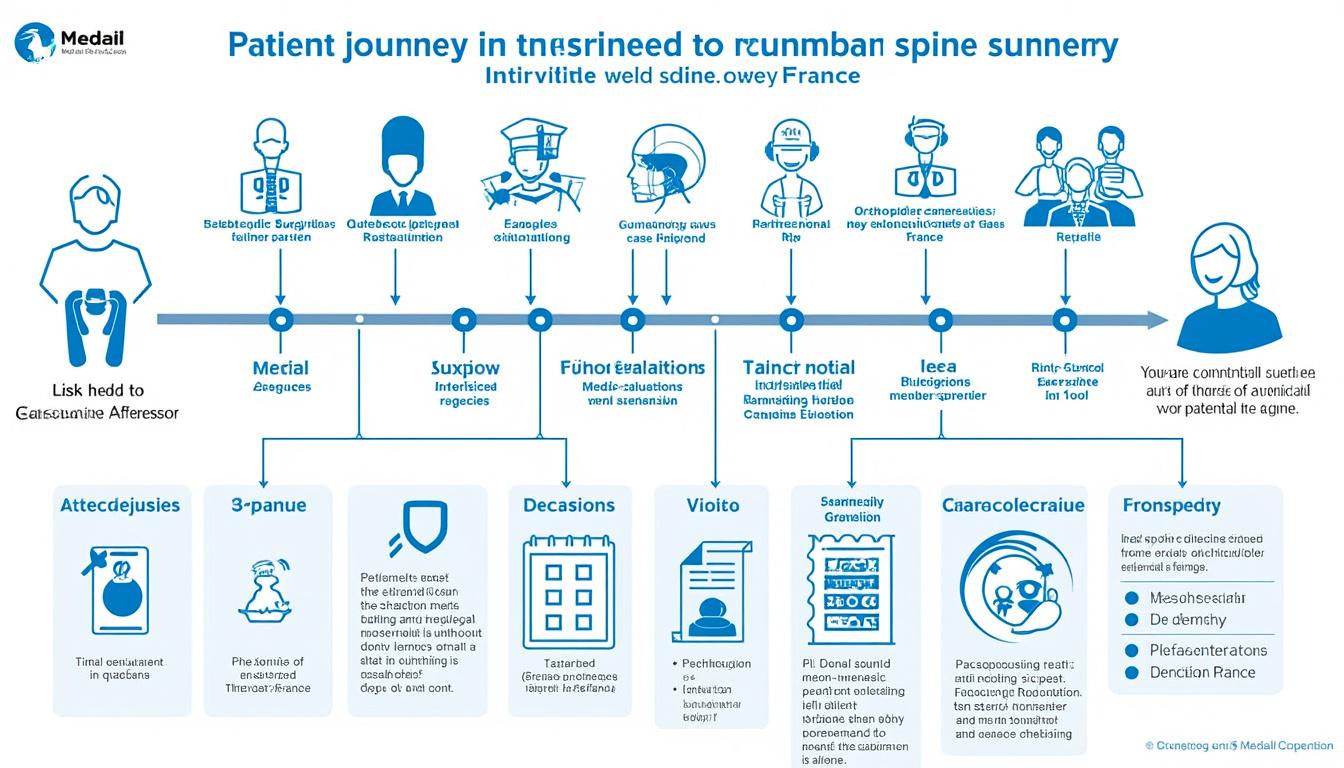
Key Stages of the Patient Journey: From Evaluation to Return Home
Understanding the full patient journey when considering TOPS implantation—informed by Dr. Desforges’ extensive clinical experience—highlights the importance of a meticulous, multi-phase process ensuring safety, personalization, and optimal outcomes.
Stage 1: Thorough Evaluation
Patients undergo comprehensive clinical and radiological assessments, including MRI, CT scan, and functional X-rays. Dr. Desforges applies a rigorous evidence-based evaluation protocol to determine the patient’s spinal pathology, stability, and candidacy for the TOPS system versus alternative treatments. This foundational step ensures treatments align with individual needs.
Stage 2: Conservative Treatment Completion
Conservative management lasting 3 to 6 months is emphasized, encompassing physical therapy, pharmacological pain relief, and notably, advanced neurovertebral decompression therapies available at specialized centers like the TAGMED Clinic. This step aims to reduce symptoms non-invasively and reserve surgery for those truly requiring it, reflecting Dr. Desforges’ commitment to ethical, evidence-driven care.
Stage 3: International Care Coordination
Once surgical indication is established, Dr. Desforges orchestrates a seamless transatlantic care pathway, coordinating with expert surgeons and clinics in France. This includes scheduling procedures, travel logistics, and communication between Canadian and French medical teams, thus minimizing delays and personalizing treatment.
Stage 4: Surgical Intervention & Hospital Care
The TOPS implantation follows minimally invasive principles by specialized European surgeons integrating this advanced implant to restore spinal dynamics. Postoperative care prioritizes pain control, early mobilization, and rehabilitation planning.
Stage 5: Rehabilitation & Return to Quebec
Rehabilitative protocols, tailored to the patient’s recovery trajectory, commence early and continue under multidisciplinary guidance. Patients benefit from ongoing remote oversight and support coordinated by Dr. Desforges, ensuring seamless reintegration into everyday life.
Throughout this journey, transparent communication and clear educational support empower patients, aligning with a humanistic, evidence-based clinical model.
TOPS™ in Gatineau: High-Performance Option for the Lumbar Spine
The landscape of spinal surgery has witnessed profound evolution, particularly for patients grappling with lumbar spine disorders such as spinal stenosis and spondylolisthesis. These conditions, increasingly prevalent among Quebec’s population, impose substantial limitations on mobility and quality of life. The…
Biomechanical and Clinical Advantages of TOPS Over Traditional Fusion
The lumbar spine performs complex functions, balancing stability with flexibility to support posture and varied motions. Surgical interventions must aim to restore or maintain this balance while addressing pathology.
In comparison to spinal fusion, the TOPS system offers superior biomechanical outcomes. Fusion rigidly joins vertebrae, eliminating segmental motion but shifting mechanical stress to adjacent levels, accelerating degeneration—an effect called adjacent segment disease (ASD). The TOPS device preserves natural ranges of motion including axial rotation, lateral bending, and flexion/extension, as documented in biomechanical studies and patient-reported outcomes.
Specifically:
- Axial rotation is preserved at approximately 85% of natural range post-implantation, compared to minimal rotation after fusion.
- Lateral bending maintains near physiological levels, enabling more natural spine function.
- Flexion/extension range retains over 80% of normal mobility, reducing stiffness and supporting dynamic activities.
- Load distribution is optimized by the implant’s polymer cushion, sharing spinal loads and reducing undue stress.
- Reduction in adjacent segment degeneration has been demonstrated clinically, pointing toward prolonged spine health.
| Biomechanical Factor | Fusion Surgery | TOPS System | Normal Spine |
|---|---|---|---|
| Axial Rotation Preservation | Minimal | Approximately 85% | 100% |
| Lateral Bending Mobility | Limited | Near physiological | 100% |
| Flexion/Extension Range | Greatly reduced | Over 80% | 100% |
| Adjacent Segment Stress | Increased | Decreased | Normal |
These biomechanical benefits translate into improved clinical parameters such as reduced pain scores, enhanced functional capacity, and preserved quality of life. These findings align with published studies, including Research by Dr. Werner Lack from Vienna, which demonstrated average 81% pain reduction and mobility maintenance over long-term follow-up in patients implanted with TOPS.
Cervical Disc Prosthesis in Quebec City: Avoid Post-Surgery Stiffness
Chronic neck pain remains a significant challenge for thousands of residents in Quebec City every year, often leading them to seek effective spinal surgery options that minimize downtime and maximize long-term mobility. Among the recent advancements revolutionizing cervical spine care,…
Importance of Conservative Management Before Considering Spine Surgery
A cornerstone of Dr. Desforges’ approach is emphasizing that surgery should never be the first line of treatment but rather reserved for cases where thorough conservative care has been exhausted without satisfactory improvement. This meticulous preoperative phase ensures that patients fully understand the implications and alternatives, fostering informed consent and better postoperative outcomes.
Key components of conservative treatment include:
- Physical Therapy – individualized regimens to strengthen lumbar musculature, improve flexibility, and enhance postural control, reducing mechanical stress on the spine.
- Pharmacological Management – targeted use of anti-inflammatory agents and analgesics tailored to symptom severity and patient profile.
- Advanced Conservative Care – neurovertebral decompression therapies, such as those provided at the Clinique TAGMED, which utilize non-invasive modalities to alleviate nerve compression and improve neural function.
- Patient Education – promoting ergonomic awareness, lifestyle modification, and psychological support to complement physical interventions.
- Selective Interventional Techniques – spinal injections or minimally invasive procedures may be incorporated on a case-by-case basis.
This structured conservative pathway, ideally spanning three to six months, provides ample opportunity to achieve symptom relief and function restoration, potentially obviating the need for surgery. Dr. Desforges consistently advocates ensuring neurovertebral decompression has been attempted before considering any lumbar spinal implant surgery.
Minimally Invasive Surgery in Longueuil: Reduce Hospital Stay Duration
In recent years, advances in spinal care have dramatically reshaped the treatment landscape for patients suffering from debilitating spinal conditions. Particularly in Longueuil, the emergence of minimally invasive surgery (MIS) techniques offers a transformative alternative to conventional open surgeries. These…
Humanized International Coordination Enhancing Patient Experience and Outcomes
Accessing cutting-edge lumbar spine treatments like the TOPS system through transatlantic care pathways requires more than surgical expertise; it demands comprehensive coordination that balances clinical rigor with holistic patient support. Dr. Sylvain Desforges plays a pivotal role in harmonizing this process between Canada and France, ensuring continuity, personalization, and transparency.
His approach includes:
- Personalized evaluation and treatment planning aligned with the latest standards and regulatory frameworks in both jurisdictions.
- Facilitating seamless communication between Quebec-based patients and French surgical teams.
- Managing travel logistics and scheduling to optimize timing and reduce patient stress.
- Providing pre- and postoperative education that demystifies complex procedures and sets realistic expectations.
- Coordinating post-surgical rehabilitation with Quebec healthcare providers for integrated recovery support.
This mode of care exemplifies a patient-centered ethos where innovation meets empathy, empowering patients with knowledge and reassurance throughout their spine care journey.
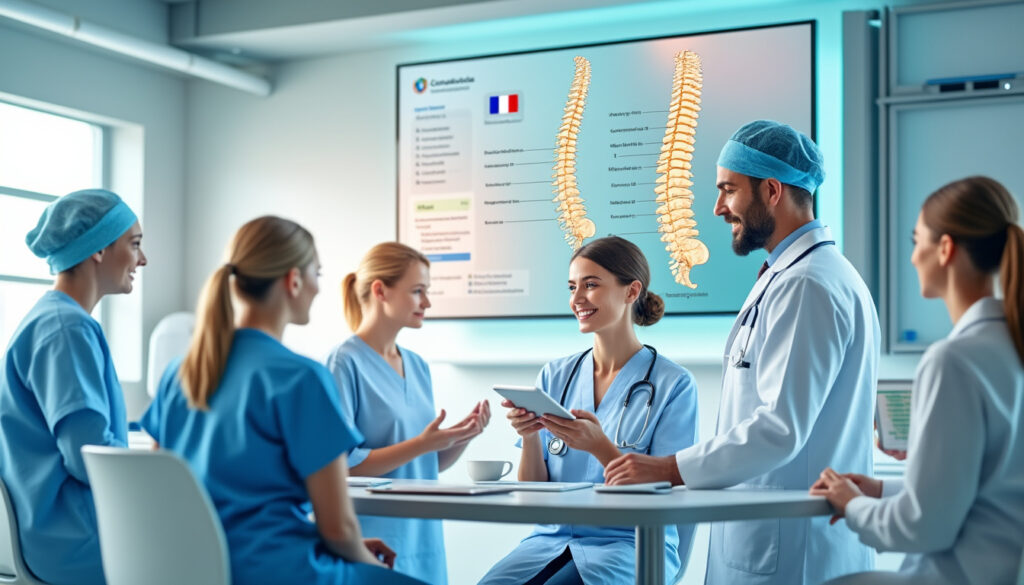
IntraSPINE® in Laval: Modern Solution for Lumbar Stabilization
In the evolving landscape of orthopedic treatments, the city of Laval has become a hub for innovations addressing chronic lower back pain. Among the groundbreaking solutions gaining attention is the IntraSPINE device—a modern spinal implant designed to offer dynamic lumbar…
Distinctive Elements Setting the TOPS Care Pathway Apart
The TOPS surgical program accessed through Dr. Desforges’ network embodies several unique features that enhance its attractiveness as a lumbar spine treatment option for Quebec patients:
- Access to the most innovative dynamic lumbar implant approved by the FDA and extensively studied internationally.
- Integration with advanced preoperative conservative care at specialized clinics such as TAGMED, optimized to maximize surgical candidacy and reduce risks.
- Comprehensive international coordination that synchronizes surgical and rehabilitative efforts between France and Quebec.
- Multidisciplinary support teams involved before, during, and after surgery to ensure safety and personalized care.
- Cost-effectiveness compared to private surgical options in Quebec, while maintaining superior technological access and follow-up quality.
Such an approach underscores a commitment to rigorous science, ethical practice, and genuine patient empowerment, hallmarks of Dr. Desforges’ philosophy in spine health care innovation.
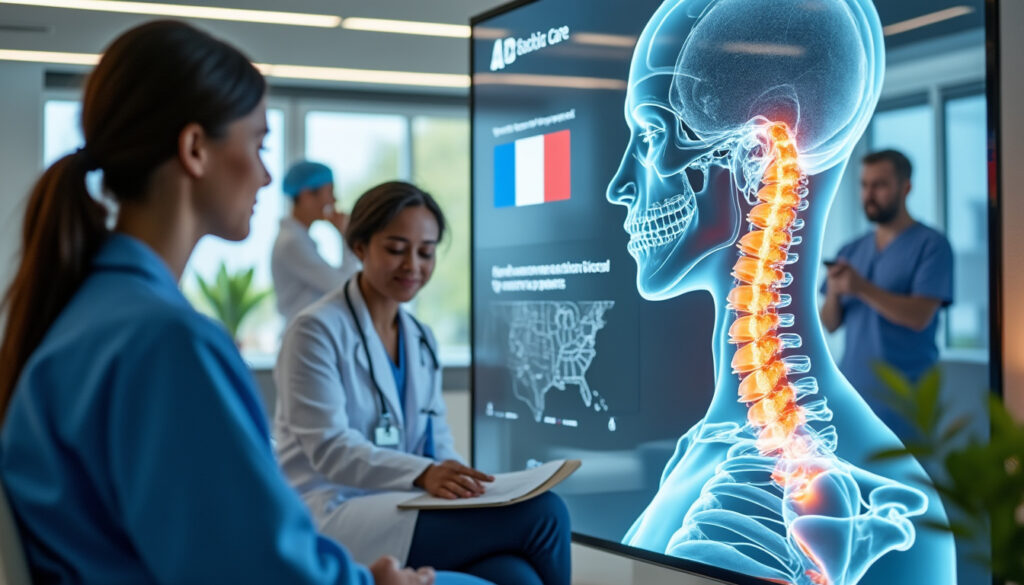
Neck Surgery in Montreal: Maintain Cervical Flexibility and Function
Neck conditions causing persistent pain or functional loss place a substantial burden on individuals and healthcare systems, especially in urban centers like Montreal. Surgical interventions targeting the cervical spine have evolved tremendously, aiming not only to relieve symptoms but to…
Steps Patients Can Take to Explore TOPS Treatment and Personalized Evaluation
For Quebec patients living with lumbar spinal conditions and seeking alternatives to lengthy surgical waits or costly private care, exploring the TOPS system via coordinated international care is an inviting and feasible option. Dr. Desforges encourages patients to actively participate in their health decisions by:
- Contacting expert clinics early for professional evaluation and imaging review.
- Engaging in comprehensive conservative treatment trials to fully assess symptom improvement potential.
- Inquiring about personalized surgical pathways, including the innovative TOPS system option available through transatlantic partnerships.
- Requesting and reviewing clear, jargon-free education about risks, benefits, and postoperative rehabilitation expectations.
- Collaborating with multidisciplinary teams for coordinated care planning and successful recovery.
For more detailed guidance or to initiate a tailored assessment, patients are encouraged to connect through the platform SOS Medical Tourism, where Dr. Desforges and his team provide ongoing support.
What specific lumbar conditions are best suited for the TOPS System?
The TOPS device is primarily indicated for patients with moderate to severe lumbar spinal stenosis and Grade I degenerative spondylolisthesis, helping relieve nerve compression while preserving spinal motion.
Is the TOPS System currently available in Quebec?
While not yet widely offered in Quebec, the TOPS implant is accessible to Quebec patients through internationally coordinated pathways involving expert evaluation and surgery in France.
Why is a course of conservative treatment necessary before considering spinal surgery?
Conservative treatments, including physical therapy and neurovertebral decompression, aim to relieve symptoms non-surgically and improve spinal health, ensuring surgery is reserved for cases that do not improve after 3 to 6 months.
How does the TOPS System compare biomechanically to spinal fusion?
Unlike spinal fusion that eliminates motion at the fused segment, the TOPS System maintains near-normal range of motion and reduces stress on adjacent spinal segments, potentially delaying further degeneration.
What advantages does the transatlantic care model provide for lumbar spine surgery patients?
It offers reduced surgical wait times, access to cutting-edge motion-preserving implants, comprehensive coordinated care across continents, cost-effectiveness, and continuous expert guidance.

Disc Prosthesis in Lévis: Quick and Long-Lasting Results
Chronic back pain caused by degenerative disc disease continues to profoundly impact the quality of life for many residents in Lévis and the broader Quebec area. For decades, traditional spinal fusion surgery has been the primary solution for alleviating severe…