
Saint-Eustache Chronic Sciatica Managed Non-Surgically
June 28, 2026
Conservative Treatments vs. Surgery: Navigating the Core of Care Pathways
June 28, 2026
In the vibrant urban area of Villeray–Saint-Michel–Parc-Extension, back pain remains a significant health challenge, especially as many residents contend daily with strenuous physical tasks and prolonged sedentary postures. Among the leading causes of such discomfort is the herniated disc, a spinal condition that can severely impact mobility and quality of life. Understanding the intricate causes and risk factors unique to this bustling Montréal district helps in tailoring effective treatment strategies that respect patients’ lifestyles and health needs.
One of the most promising advances in managing herniated disc symptoms without resorting to invasive surgery is neurovertebral decompression therapy. Supported by robust clinical data and innovative technology, this technique offers hope for those seeking relief and improved spinal health. Expert osteopaths at Clinique TAGMED, under the guidance of Dr. Sylvain Desforges, provide personalized evaluations and cutting-edge care that align with the highest standards of medical ethics and scientific rigor.
Understanding the Mechanics and Genesis of Herniated Discs in Villeray–Saint-Michel–Parc-Extension
The spinal column, a vital support structure comprising 33 vertebrae, is divided into cervical, thoracic, lumbar, sacral, and coccygeal segments. Between these vertebrae lie intervertebral discs, which act as shock absorbers thanks to their unique composition: a gel-like nucleus surrounded by a tough fibrous ring. In Villeray–Saint-Michel–Parc-Extension, the demands of urban living, such as extended periods of sitting or repetitive heavy lifting, commonly strain these discs.
When the outer fibrous ring develops fissures or tears, the inner gel material can protrude, pressing on neighboring nerves and causing pain, numbness, or weakness. This process accounts for nearly 90% of herniated discs occurring in the lumbar region, the part of the spine most heavily engaged during standing or lifting activities. Additionally, approximately 8% of hernias affect the cervical spine, where frequent neck movements and awkward positions during commutes add mechanical stress.
Dr. Sylvain Desforges, with more than 35 years of clinical expertise, specializes in comprehensive evaluations that consider such biomechanical factors along with patient history. His approach avoids rushing into diagnostic conclusions, instead emphasizing detailed assessments to inform personalized non-invasive treatments. For those intrigued by the intricate pathophysiology of spinal disc injuries, exploring resources like Medical News Today’s overview of spinal conditions can provide valuable insights into their genesis and progression.

IntraSPINE® in Sherbrooke: A Long-Lasting Solution for Chronic Lower Back Pain
Chronic lower back pain remains one of the most pressing health concerns in Sherbrooke and beyond, impacting millions and often diminishing daily quality of life. Despite the prevalence of lumbar discomfort, many face limited access to cutting-edge treatments amidst lengthy…
Risk Factors Influencing Herniated Disc Development in the Local Population
Analyzing herniated disc risk in a district like Villeray–Saint-Michel–Parc-Extension requires integrating demographic, occupational, and lifestyle components. The age group most vulnerable ranges from 30 to 50 years old, due to natural disc dehydration and decreased resilience. Interestingly, the risk slightly declines after age 50 because the nucleus hardens and is less prone to herniation.
Gender differences also play a role, with men statistically displaying higher incidences, attributed partly to physically demanding occupations and anatomical variations. Familial predisposition is another critical consideration; genetic factors may weaken disc structures or affect healing capacity, making some individuals more susceptible.
The occupational habits prevalent in this district—ranging from desk jobs with prolonged sitting to manual labor requiring heavy lifting—contribute significantly. Improper postures, such as slouching or repetitive bending without support, increase the risk. Additionally, environmental factors like sedentary lifestyle, smoking, and overweight magnify spinal strain and hinder natural recovery.
Here is a summary list outlining key risk factors in the district:
- Age: Primarily 30-50 years
- Sex: Higher prevalence in males
- Genetics: Family history of spinal disorders
- Occupation: Prolonged sitting, heavy manual work
- Lifestyle: Smoking, inactivity, excess weight
- Morphology: Tall stature, pregnancy-induced spinal load
Understanding these elements helps healthcare providers deliver targeted advice tuned to local dynamics. Detailed practical recommendations for prevention can be explored at an expert-driven guide on herniated disc prevention, emphasizing postural care and lifestyle optimization.
Herniated Disc Care in Sainte-Julie: Why TAGMED’s Neurovertebral Decompression Therapy Stands Out
In the vibrant community of Sainte-Julie, back pain—particularly that stemming from herniated discs—has become a widespread concern affecting people from all walks of life. The relentless search for effective, non-invasive treatments has brought renewed attention to a pioneering therapy that…
Identifying Clinical Signs and Symptoms of Herniated Disc Among Residents
The manifestations of herniated discs depend heavily on the affected spinal level and the degree of nerve compression. For many residents of Villeray–Saint-Michel–Parc-Extension, the first sign is often acute lower back pain resembling lumbago, followed by nerve-root pain or sciatica radiating down a leg.
Paresthesia—including tingling, prickling, or numbness—is common, often localized in limbs corresponding to compressed nerves. Muscular weakness may also develop, posing risks for trips or falls due to impaired motor function. More alarming signs, such as incontinence, signal severe nerve involvement requiring immediate medical attention.
Cervical herniations present differently, with patients experiencing sharp neck pain radiating into arms or hands, often coupled with diminished sensitivity or motor control. Recognizing these symptoms early enables timely intervention, reducing the burden of chronic pain.
Those seeking comprehensive symptom descriptions and initial evaluative steps may benefit from checking reliable sources like the Mayo Clinic’s symptom guide, which clearly explains warning signs and encourages early consultation.
Back Surgery in Trois-Rivières: Alleviating Pain While Preserving Mobility
In Trois-Rivières, Quebec, the persistence of back pain affects a substantial portion of the population seeking effective and personalized solutions. Back pain, often caused by spinal disorders or herniated discs, can drastically diminish quality of life, limiting mobility and causing…
Precise Diagnostic Workup: Cornerstone of Personalized Care in Villeray–Saint-Michel–Parc-Extension
Diagnosis begins with a meticulous patient history and detailed physical examination to assess spinal mobility, muscle strength, reflex integrity, and pain localization. These assessments help pinpoint the probable disc and nerve root affected.
Imaging studies play an essential role. Standard X-rays exclude bone abnormalities such as fractures or scoliosis but cannot visualize soft tissues. Magnetic Resonance Imaging (MRI) remains the gold standard, providing detailed images of disc protrusions and nerve compression with non-invasive precision. Computed Tomography (CT) scans complement MRI when contraindications exist or when more detailed bony anatomy is needed.
Electromyography (EMG) and nerve conduction studies may be employed selectively to evaluate the functional impact on nerves.
The following table outlines the primary diagnostic tools:
| Diagnostic Test | Purpose | Advantages | Limitations |
|---|---|---|---|
| X-ray | Detect bone issues (fractures, deformities) | Quick, widely available | Does not show soft tissue |
| MRI | Visualize discs, nerves, and soft tissues | Highly detailed, non-invasive | Contraindicated in some patients |
| CT Scan | Detailed bone structure imaging | Excellent bone resolution | Less effective for soft tissues, radiation exposure |
| EMG/Nerve Conduction | Assess nerve function | Measures neurological impact | Invasive, used selectively |
Clinique TAGMED is known for integrating these diagnostics into their care protocols, ensuring patients receive precisely targeted neurovertebral decompression treatments. This methodical approach supports best practice in spinal health management and underscores the expertise of Dr. Sylvain Desforges in this specialization.
Disc herniation remains a significant health concern in Pointe-Claire, impacting the lives of a diverse population ranging from labor-intensive workers to the aging community. The condition, characterized by the displacement or rupture of the intervertebral disc, often leads to debilitating…
Neurovertebral Decompression: A Revolutionary Non-Surgical Treatment in Villeray–Saint-Michel–Parc-Extension
Neurovertebral decompression technology offers a compelling alternative to surgery by gently reducing pressure on herniated discs and affected nerves. Using sophisticated equipment, the spine is carefully stretched to create a negative pressure environment, encouraging the disc material to retract and relieving nerve compression.
This approach minimizes the risks associated with invasive procedures and corticosteroid injections, providing a safer pathway for many patients. Treatment sessions are complemented by tailored ergonomic and lifestyle advice to enhance recovery and prevent recurrence.
Patients in Villeray–Saint-Michel–Parc-Extension, although served primarily via TAGMED’s locations in Terrebonne and Ville Mont‑Royal, benefit from this cutting-edge therapy combined with compassionate, expert guidance from evaluation through post-treatment rehabilitation.
Numerous clinical trials validate the effectiveness of neurovertebral decompression. According to a 2023 meta-analysis published in Annals of Palliative Medicine, non-invasive decompression significantly reduces pain and improves function in lumbar disc herniation cases, supporting its growing role in contemporary spinal health strategies.

At Gouin Clinic, the landscape of herniated disc therapy has entered a transformative era marked by the integration of Personalized Treatment Plans and breakthrough Neurovertebral Decompression Therapy. This non-surgical approach is revolutionizing how spinal disorders are managed, offering patients an…
Supplementary Lifestyle and Preventive Measures to Sustain Spinal Health
Successful management following neurovertebral decompression includes rigorous focus on prevention to avoid recurrence. Maintaining a healthy body weight, quitting smoking, and engaging consistently in appropriate physical activity are vital steps toward durable spinal wellness.
Adopting ergonomically sound postures during work, especially for individuals in desk-based roles or manual labor, can markedly decrease spinal load. Simple modifications like bending at knees rather than waist when lifting or using supportive chairs reduce harmful pressures on the intervertebral discs.
Regular targeted exercises—such as swimming, stretching, and core strengthening—fortify spinal musculature and improve flexibility. Physiotherapists often guide patients through tailored programs emphasizing these elements.
Summary of key preventive tips:
- Avoid prolonged slouching and repetitive stressful posture
- Engage in consistent, back-friendly physical exercises
- Maintain optimal body weight to decrease disc strain
- Adopt ergonomic workplace arrangements
- Cease smoking to enhance disc vascularization and healing
This comprehensive approach harmonizes innovative therapy with lifestyle adaptations, maximizing therapeutic outcomes and fostering long-term spinal health among the local population.

Cervical Disc Prosthesis in Quebec: Preventing Post-Operative Stiffness
Neck pain is one of the most common musculoskeletal complaints in Quebec, affecting a significant portion of the population annually. Often rooted in degenerative cervical disc diseases or herniated discs, this persistent discomfort severely impacts daily life and mobility. Fortunately,…
Multidisciplinary Support and International Coordination for Patient-Centered Care
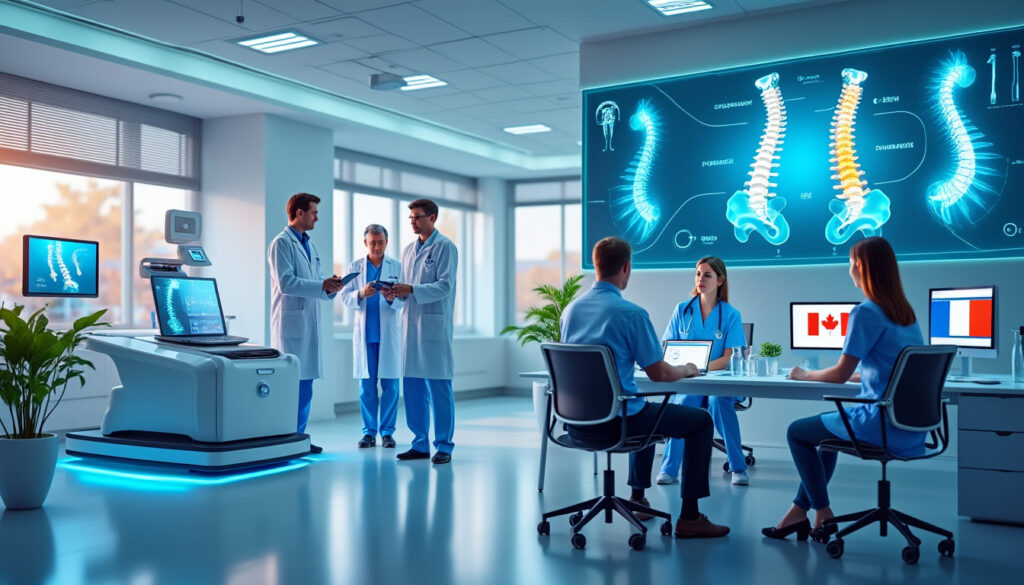
Dr. Sylvain Desforges is uniquely positioned as a pioneer in neurovertebral decompression, combining over 35 years of clinical experience with leadership roles including founding the Alliance Canadienne de Médecine Alternative and the Canadian College of Osteopaths. His commitment to excellence is reflected in TAGMED’s multidisciplinary model, where osteopathy, physical therapy, and advanced medical technologies converge.
Villeray–Saint-Michel–Parc-Extension patients also benefit from Dr. Desforges’ transatlantic collaborations with renowned spine surgeons and clinics in France, facilitated through platforms such as SOS Tourisme Médical. This international coordination streamlines care timelines and integrates surgical and conservative approaches when necessary, ensuring seamless patient journeys.
Such exceptional standards in patient care are underpinned by strict adherence to Quebec and Canadian health regulations, with a firm focus on scientific evidence, ethics, and personalized treatment pathways.
The prevalence of herniated disc conditions in Blainville has sparked considerable discussion and misconceptions about their causes, symptoms, and treatments. While the pain and disability associated with this spinal disorder are well documented, the emergence of non-surgical options such as…
Comprehensive Treatment Options with Dr. Sylvain Desforges at Clinique TAGMED
At Clinique TAGMED, individuals suffering from herniated discs in the broader Montréal region receive holistic and innovative care tailored to their specific conditions. Beyond neurovertebral decompression, Dr. Desforges utilizes complementary technologies like laser therapy and shockwave treatment to reduce inflammation and accelerate healing.
The combination of advanced diagnostic tools, precise osteopathic techniques, and patient education ensures each care plan addresses the root causes of spinal disc injury rather than only treating symptoms. This approach fosters real progress in spinal health, often avoiding the need for surgical intervention.
Patients are encouraged to contact the clinic for a thorough evaluation and personalized treatment recommendations. Comprehensive support before, during, and after treatment underscores the clinic’s dedication to empowering patients throughout their recovery.
To explore promising alternatives to traditional surgery and long wait times characteristic of the Canadian healthcare system, detailed information is available at this informative article on herniated disc treatment options.

What are the main benefits of neurovertebral decompression for herniated disc?
Neurovertebral decompression provides significant pain relief, reduces nerve pressure, and improves mobility without the risks associated with surgery, making it a safe and effective conservative treatment option.
Can neurovertebral decompression completely avoid the need for surgery?
For many patients, especially those with mild to moderate herniation, neurovertebral decompression can effectively manage symptoms and promote healing, potentially eliminating the need for surgical intervention.
How long does a typical neurovertebral decompression program last?
Programs usually consist of 15 to 25 sessions over several weeks, customized according to the severity of the herniation and patient response.
Which lifestyle changes support recovery after treatment?
Maintaining proper posture, engaging in regular low-impact exercise, controlling body weight, and avoiding smoking are essential steps to sustain spinal health post-treatment.
What symptoms indicate a herniated disc emergency?
Sudden incontinence, severe leg weakness, or loss of walking ability are urgent symptoms requiring immediate medical evaluation to prevent lasting damage.
Minimally Invasive Surgery in Longueuil: Reducing Hospital Stays for Faster Recovery
In recent years, a transformative wave has swept through spinal healthcare in Longueuil, aiming to revolutionize treatment experiences for patients suffering from back disorders. This shift stems from a growing demand for procedures that minimize hospital stays without compromising efficacy.…