
Herniated Disc in Villeray–Saint-Michel–Parc-Extension: Exploring Causes, Risk Factors, and Neurovertebral Decompression Treatment
June 28, 2026
Patient Recovery Stories: At the Heart of the Care Journey
June 28, 2026
The debate between conservative treatments and surgical interventions has become increasingly nuanced within the management of spinal disorders. As healthcare evolves in 2026, patients and clinicians alike face intricate care pathways that must balance efficacy, safety, cost, and patient-specific factors. Conservative treatments offer non-invasive therapy options that often serve as the cornerstone for initial management, seeking to reduce pain and improve quality of life without exposing patients to the inherent risks of surgery. Alternatively, surgical intervention remains indispensable for certain structural injuries or when conservative care fails to deliver the desired outcomes. The decision-making process is guided not only by clinical indications but also by a personalized evaluation of patient expectations and long-term functional goals.
Recent advances in both domains have reshaped treatment landscapes. Innovative minimally invasive surgical techniques now coexist with sophisticated conservative modalities such as neurovertebral decompression, enabling precise and patient-centered care coordination. Notably, a growing trend involves transatlantic collaboration, particularly between medical centers in Quebec and France, facilitating access to specialized operative technologies alongside robust conservative management. This internationalized care model emphasizes seamless transitions from diagnosis through recovery, supported by multidisciplinary teams ensuring continuity and optimized outcomes. Exploration of these pathways underscores the importance of rigorous outcome evaluation and patient management strategies tailored to individual needs, thereby reinforcing a balanced approach to spinal health in modern clinical practice.
Understanding Conservative Treatments and Their Role in Patient Management
Conservative treatments encompass a broad array of non-invasive therapies aimed at alleviating pain, improving mobility, and enhancing function without resorting to surgery. These modalities often include physical therapy, medication management, activity modification, and specialized interventions such as neurovertebral decompression. The goal is to harness the body’s intrinsic healing processes while reducing inflammation and mechanical stress on the spine.
One of the hallmark conservative approaches is neurovertebral decompression, particularly the robotically controlled techniques pioneered at the Clinique TAGMED in Quebec. This method involves precise, computer-driven traction designed to gently relieve pressure from herniated discs or nerve roots, fostering pain relief and functional recovery. Clinical experience indicates that a conservative care period of three to six months using such therapies significantly decreases the likelihood of surgical intervention, confirming the vital role of thorough, evidence-based conservative treatment protocols in spine care.
Furthermore, conservative treatments provide an essential diagnostic window. By observing patient response to non-invasive therapies, clinicians can better discern the nature and severity of the pathology, guiding personalized decisions on whether to pursue surgical options. This stepwise pathway is clinically recommended by leading spinal societies globally, reflecting the growing consensus that early conservative care aligns with improved risk-benefit profiles and patient satisfaction.
Incorporating patient management principles, conservative treatment emphasizes patient education and active involvement. Multidisciplinary teams including physiotherapists, pain specialists, and psychologists collaborate to deliver comprehensive care tailored to individual lifestyles and preferences. This holistic approach helps maintain quality of life and mobility while addressing psychological impacts related to chronic spinal conditions.
For more detailed insights, patients considering conservative versus surgical pathways may find valuable information in discussions about comparing conservative and surgical spine treatment, which illuminates how to choose the optimal path based on clinical and personal factors.

Understanding Sciatic Pain: Key Symptoms and When to Seek Medical Advice
Sciatic pain is a prevalent condition impacting a wide demographic, manifesting primarily as intense pain radiating from the lower back down the leg. This pain stems from irritation or compression of the sciatic nerve, a major nerve extending through the…
Indications for Surgical Intervention in Spinal Disorders: When Is Surgery Essential?
Surgical intervention remains a critical component of spinal care in cases where conservative treatments have been insufficient or when structural abnormalities necessitate correction. The key indications for surgery include advanced disc herniation, spinal instability, severe neurocompression, deformities such as spondylolisthesis, and refractory chronic pain impacting quality of life or neurological function.
In France, the development of cutting-edge surgical techniques has revolutionized patient outcomes. Three broad categories dominate: spinal fusion, motion preservation procedures, and minimally invasive endoscopic surgeries. Spinal fusion, or arthrodesis, immobilizes vertebral segments to stabilize the spine, indicated mainly in cases threatening spinal integrity. Although effective, fusion sacrifices segmental mobility and may impose biomechanical stress on adjacent segments, necessitating careful patient selection and advanced implant technology to minimize complications.
Motion preservation techniques have emerged as dynamic alternatives that maintain spinal flexibility while addressing pathological disc segments. Prosthetic discs and implants such as TOPS and Intraspine represent biomechanical innovations that suit younger or more active patients with localized spinal disease. For example, cervical disc prostheses made by manufacturers like Cousin Spine offer patients sustained mobility with reduced secondary arthrosis risk. This surgical pathway, however, demands rigorous preoperative evaluation to ensure biomechanical compatibility and clinical appropriateness, often provided by spine experts specialized in advanced diagnostics.
Advancements in minimally invasive and endoscopic surgery allow targeted interventions with minimal tissue disruption. These approaches contribute to reduced postoperative pain, expedited recovery, and shorter hospital stays. Endoscopic lumbar techniques efficiently address disc herniation and spinal canal stenosis, offering precision and safety margins impossible in traditional open surgery. The adoption of robotic-assisted systems, approved recently by regulatory bodies like the FDA, further enhances surgical accuracy and outcomes, reflecting the integration of technology in modern spinal surgery.
To comprehensively understand when surgical options are indicated, reviewing expert analyses on conservative versus surgical treatments in orthopaedics can provide perspective on balancing procedural necessity with clinical risks.

The Stepwise Role of Functional Recovery in Achieving Successful Outcomes
The journey to full recovery following spinal surgery is often complex and multifaceted, demanding a meticulously structured approach to ensure optimal functional outcomes. In recent years, the concept of functional recovery through a stepwise approach has garnered significant attention in…
The Journey Through Care Pathways: Balancing Conservative and Surgical Options
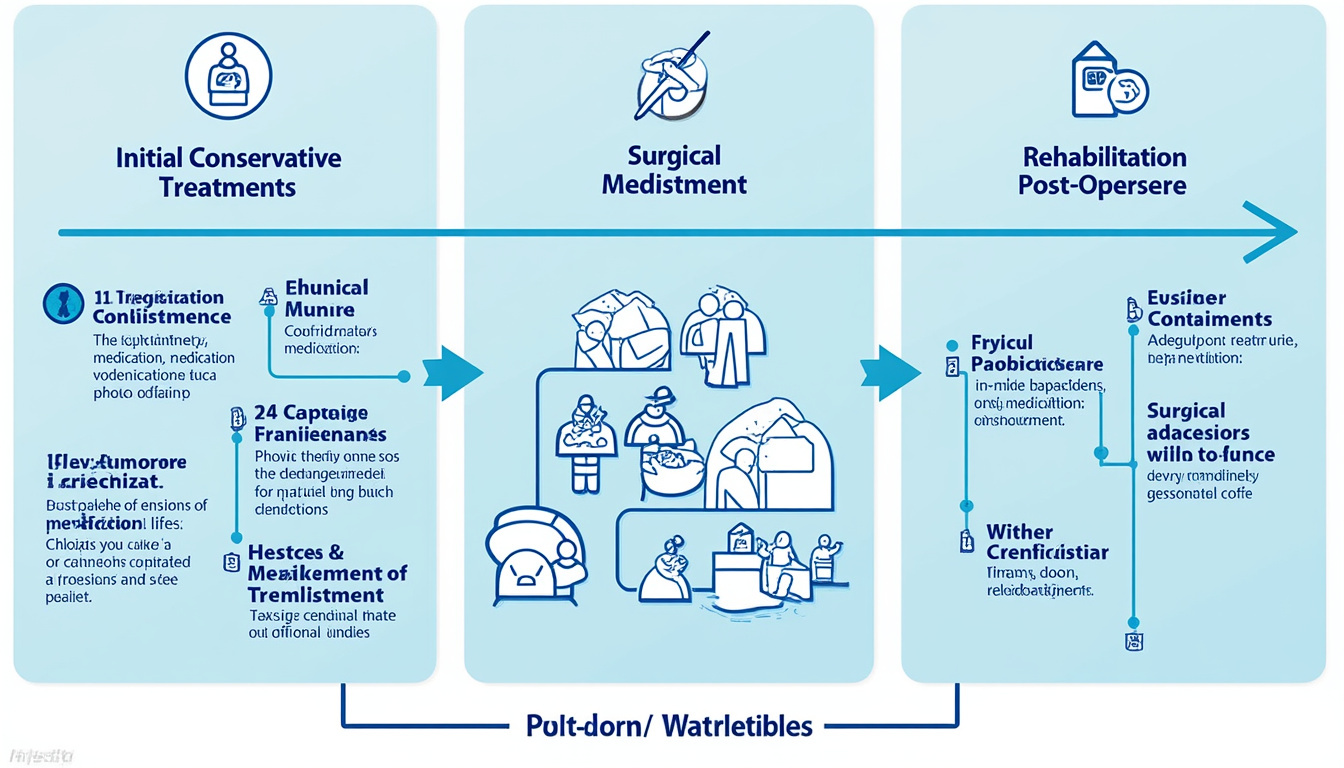
Navigating care pathways for spinal disorders involves a deliberate, stepwise approach that prioritizes the least invasive and lowest risk treatment options initially, advancing only when necessary. This “treatment ladder” model enhances patient safety, optimizes healthcare resources, and personalizes therapy sequences according to individual response.
Initially, foundational conservative care integrates non-invasive strategies emphasizing pain relief, inflammation control, and functional restoration. As an example, at TAGMED, patients embark on programs that include robotic neurovertebral decompression, supervised physical therapy, and pain management tailored to their clinical presentation. Success here minimizes or delays the need for surgical intervention.
If conservative protocols fall short, escalation to surgical assessment ensues, distinguished by in-depth imaging, functional analysis, and multidisciplinary consultation. Transatlantic coordination between Quebec and French specialists enables timely access to advanced surgical technologies while ensuring comprehensive preoperative planning.
Postoperative care is equally critical, involving personalized rehabilitation programs developed collaboratively by institutions like Neurothérapie Montréal, which provide attentive follow-up to prevent complications and maximize functional recovery. This integrated pathway demonstrates a modern, evidence-informed paradigm in patient management that values continuity and outcome evaluation at every stage.
Exploring practical guides on navigating the treatment ladder from conservative care to spine surgery offers patients and clinicians frameworks to understand this systematic progression and decision-making process.

Transatlantic Patient Journey: Insights into Indications, Benefits, and Challenges
The emergence of the Transatlantic Patient Journey as a strategic model within healthcare continues to capture attention for its innovative potential, especially in specialized fields such as spinal surgery. This cross-border care pathway integrates rigorous medical evaluation from Quebec with…
Innovative Technologies Enhancing Surgical Intervention Outcomes in 2026
The technological renaissance in spinal surgery has ushered in revolutionary tools that redefine operative precision and patient safety. Particularly, 3D imaging and robotic navigation platforms have garnered wide adoption, allowing surgeons to visualize complex anatomies and execute interventions with unparalleled accuracy.
eCential Robotics’ FDA-cleared systems exemplify these cutting-edge surgical innovations, offering capabilities that minimize tissue trauma and enhance implant placement. Such advancements reduce intraoperative risks, shorten operative times, and contribute to expedient patient recovery—hallmarks of next-generation care.
Complementarily, implant designs like dynamic stabilization devices provide biomechanical benefits that align with contemporary treatment philosophies emphasizing motion preservation and segmental balance. The synergy of robotics, imaging, and sophisticated implant technology translates into optimized surgical results and reduced complication rates.
Industry analysis and clinical data consistently demonstrate these innovations as essential drivers of improved long-term outcomes for patients undergoing spinal surgery, marking a significant evolution in treatment options since earlier decades. This progress is mirrored in surgical departments like the Clinique du Pré in France, where protocols integrate these tools into everyday practice.
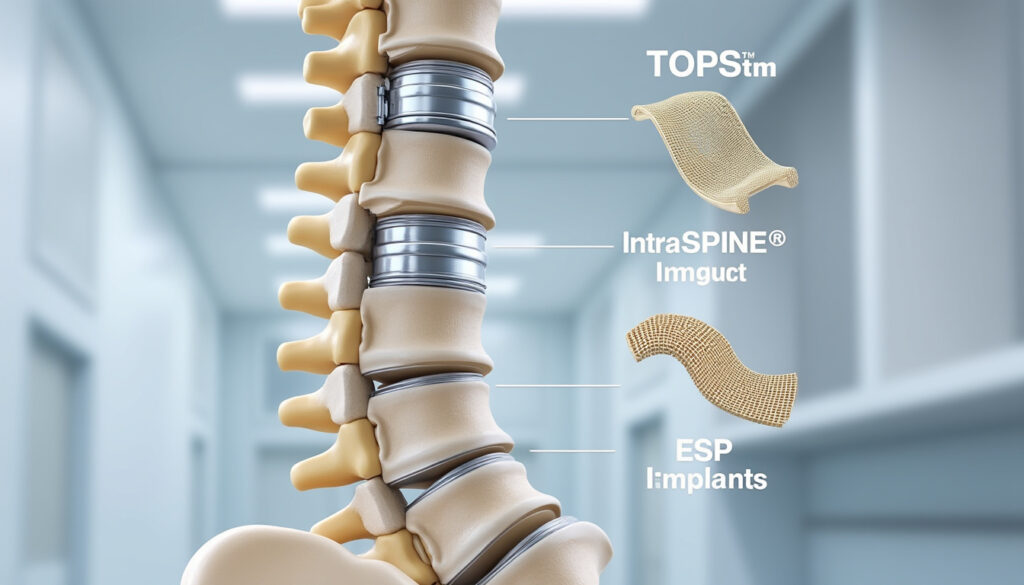
The evolving field of spinal surgery is witnessing a transformative shift, fueled by cutting-edge implant technologies such as TOPS, Intraspine, and ESP. These innovative implants redefine treatment possibilities by emphasizing preservation of natural spinal mechanics, while ensuring durable stabilization and…
Coordination of Care Across International Borders: The Quebec-France Model
One of the most remarkable advancements in spinal care pathways involves the structured collaboration between healthcare providers in Quebec and France. This model ensures patients receive timely, high-quality, and personalized care, leveraging each region’s unique clinical strengths and technological advantages.
Initial patient evaluations and conservative treatments are often performed at centers like TAGMED in Quebec, where extensive expertise in neuromodulation and decompression supports evidence-based decision-making. When surgery becomes necessary, organizations such as Franchir coordinate the referral process to French surgical centers renowned for specialization in advanced fusion, motion preservation, and minimally invasive procedures.
This partnership streamlines logistical elements including travel, accommodation, and perioperative care, eliminating barriers to access and enhancing patient confidence. Furthermore, postoperative follow-up conducted by Neurothérapie Montréal sustains recovery support, exemplifying a transatlantic continuum of care seamlessly aligned with patient needs.
Beyond practicalities, this model embeds ethical considerations by promoting shared decision-making, transparency, and patient education, fostering an environment in which healthcare decisions are collaborative and informed. The Quebec-France care pathway is a leading example of internationalized patient management validated by outcome evaluations and patient satisfaction studies.

Preparing for Surgery in France: Key Indications, Benefits, and Limitations
In an evolving global healthcare landscape, France emerges as a beacon of advanced surgical expertise, particularly attracting international patients seeking expedited and innovative medical interventions. Patients from regions experiencing long wait times, such as Quebec, increasingly view France as an…
Economic and Quality-of-Life Implications of Conservative Versus Surgical Treatment Decisions
Healthcare decisions regarding spinal disorders significantly impact both economic and quality-of-life dimensions. Conservative treatments generally entail lower upfront costs and fewer risks, making them attractive in reducing financial strain and surgical complications. Yet, they demand patient adherence and may require prolonged therapy durations.
Surgery, while costlier and associated with perioperative risks, often offers definitive correction, especially in structurally unstable or severe cases where conservative care falls short. Innovations reducing hospital stay durations and improving recovery processes have contributed to more cost-effective surgical pathways, especially when integrated within international collaborative care networks.
Quality of life outcomes must weigh symptom relief, functional independence, and psychosocial wellbeing. Conservative care maintains daily functioning with minimal disruption but may not suffice for progressive or debilitating conditions. Surgery tends to offer significant symptom and disability improvement but requires careful management of recovery and potential complications.
The following table compares core features of both treatment pathways in 2026 clinical practice, assisting clinicians and patients in making informed choices:
| Aspect | Conservative Treatments | Surgical Intervention |
|---|---|---|
| Invasiveness | Non-invasive, low risk | Invasive, higher risk |
| Recovery Time | Prolonged, gradual | Shorter after surgery with rehabilitation |
| Cost | Lower upfront costs | Higher upfront but potentially cost-effective long term |
| Suitability | Early-stage or mild-to-moderate symptoms | Structural lesions, failed conservative care |
| Outcome Predictability | Variable, depends on adherence | More predictable for select pathologies |
Insights on these differences and their clinical implications can be further explored through comprehensive reviews like those found at the pros and cons of conservative versus surgical treatments.

Unveiling the Hidden Benefits of Quality and Certification in Devices
The landscape of device manufacturing and clinical application in 2026 has been fundamentally shaped by the rigorous interplay between quality management and certification processes. Within this complex framework, the hidden benefits of adhering to international standards and obtaining relevant certifications…
Key Components for Optimizing Treatment Outcomes in Modern Spine Care
Effective patient management within spinal care demands an integrated approach encompassing rigorous assessment, personalized treatment planning, multidisciplinary collaboration, and ongoing evaluation. These components form the backbone of successful conservative and surgical pathways.
Accurate diagnosis and functional evaluation, leveraging advanced imaging and clinical expertise, permit tailored interventions aligned with patient-specific pathologies and expectations. Multidisciplinary teams ensure interprofessional communication, facilitating optimal therapy sequencing and addressing comorbidities.
Post-treatment follow-up focuses on enhancing the recovery process, preventing complications, and supporting rehabilitation. Patient education remains vital, empowering individuals to participate actively in their care, enhancing adherence, and improving outcomes.
Incorporating innovative tools such as robotic-assisted procedures and computerized traction systems further refines treatment precision and safety. The integration of transatlantic care coordination exemplifies how collaboration elevates therapy quality and patient experience.
The list below outlines crucial steps in managing spinal patients effectively:
- Comprehensive clinical and radiological assessment
- Initial trial of conservative treatments with regular evaluation
- Timely referral for surgical consultation if indicated
- Utilization of minimally invasive and motion-preserving surgical techniques
- Structured postoperative rehabilitation and monitoring
- Patient education and psychological support throughout the care continuum
- Interdisciplinary communication to tailor individualized care plans
Conservative Treatments vs. Surgery: Navigating the Core of Care Pathways
| Aspect | Conservative Treatments | Surgical Intervention |
|---|

Why Experts Advocate for Comprehensive Preoperative Evaluations
In the complex and demanding field of spinal surgery, the emphasis on comprehensive preoperative evaluations has become a fundamental pillar supporting successful surgical outcomes. These evaluations, far beyond mere routine checks, integrate detailed analyses of patient health, surgical risk assessments,…
Addressing Common Concerns and Misconceptions About Treatment Options
Patients often encounter confusion when deciding between conservative treatments and surgery. Clear communication and education mitigate misconceptions, enabling informed healthcare decisions.
A common misunderstanding is that surgery is always the definitive or “best” treatment; however, many spinal conditions respond well to non-invasive therapy, and surgery is reserved for specific clinical scenarios.
Another concern regards the risks involved with surgery, including complications like infection or neurological deficits. Surgical advancements, including minimally invasive methods and robotic assistance, have substantially reduced these risks, but candidacy must be carefully evaluated.
Conversely, some patients worry that conservative treatments are insufficient or unduly prolonged. While treatment duration may be longer, the minimized risk of complications and preservation of quality of life make this pathway appealing when appropriate.
Reliable resources providing balanced views on these pathways, such as the detailed exploration of various treatment modalities, offer clarity on neck disc pain management without surgery, help patients navigate these concerns effectively.
The Future of Surgery Lies in Stepwise Functional Recovery
The evolution of surgical care in 2026 reveals a compelling shift toward approaches that prioritize the holistic recovery of patients, moving beyond traditional metrics like length of hospital stay or mortality rates. This modern paradigm highlights the principle that the…
Emerging Trends and Future Directions in Conservative and Surgical Spine Care
As spine care continually evolves, emerging trends signal promising directions for both conservative and surgical treatments. Integration of artificial intelligence tools is enhancing diagnostic accuracy and streamlining treatment personalization. Wearable technologies and telemedicine are expanding access to conservative therapy and facilitating remote monitoring of patient progress.
Surgical innovations continue with the refinement of robotic platforms and biomaterials that improve implant integration and functionality. Research into motion preservation devices and biologic therapies aims to further reduce the need for fusion and enhance natural tissue regeneration.
Moreover, international collaborations and standardized care pathways, such as those pioneered between Quebec and France, model future healthcare delivery frameworks emphasizing patient-centric and outcome-driven care. Ongoing education for clinicians via dedicated programs including the Diplôme Inter-Universitaire de Chirurgie du Rachis affords clinicians the skills required to adapt to these innovations responsibly.
These advances hold promise to optimize recovery processes and quality-of-life outcomes while minimizing risks and healthcare costs, underscoring a holistic vision for spinal patient management.
What are the primary advantages of conservative treatments over surgery in spine care?
Conservative treatments offer non-invasive options with lower risk profiles and the potential to improve symptoms without exposing patients to the risks associated with surgery, such as infection or neurological complications. They also support maintaining mobility and can delay or avoid the need for surgical intervention.
When is surgical intervention most strongly recommended for spinal disorders?
Surgical intervention is recommended when structural instability, severe neurological compromise, or failure of extensive conservative treatment occurs. Specific cases include advanced disc herniation, spondylolisthesis, or deformities threatening spinal function and quality of life.
How does the transatlantic care model between Quebec and France improve patient outcomes?
This international model ensures comprehensive care continuity—from conservative management and precise diagnosis in Quebec, to access to advanced surgical procedures in France, followed by post-operative rehabilitation support back in Canada—maximizing safety, minimizing delays, and enhancing recovery.
What recent technological innovations have most impacted modern spinal surgery?
Technologies such as robotic navigation platforms, 3D imaging, and motion preservation implants have significantly improved surgical precision, minimized tissue trauma, and enhanced functional outcomes, reducing complications and facilitating faster recovery.
Why is patient education integral to successful management of spinal disorders?
Educating patients fosters informed healthcare decisions, promotes adherence to treatment plans, and reduces anxiety related to conditions and procedures. This comprehensive approach supports a holistic recovery process and improves overall satisfaction with care.