Disc Herniation in Pointe-Claire: A Beginner’s Guide and Neurovertebral Decompression Treatment Options
June 8, 2026
IntraSPINE® in Laval: Innovative Treatment for Chronic Low Back Pain
June 9, 2026
Neck pain is a growing concern among the population of Quebec, profoundly affecting daily life and work productivity. With advances in medical science, innovative solutions such as the cervical disc prosthesis have emerged as promising options, aiming not just to alleviate pain but to preserve the natural mobility of the cervical spine. This transformational approach caters particularly to patients facing degenerative disc disease or herniated discs who seek alternatives to fusion surgery that immobilizes spinal segments. Dr. Sylvain Desforges, a distinguished spine care expert with over 30 years of clinical experience, plays a pivotal role in advancing these treatments in Quebec. By blending scientific rigor, ethical standards, and innovative technology, he provides patients with integrated pathways to improved spinal health, often coordinating care transatlantically with leading French centers. This integration optimizes surgical outcomes, accessibility, and personalized care plans in an evolving landscape of spinal surgery.
Quebec residents now have access to comprehensive evaluations and tailored treatment journeys that emphasize motion preservation through minimally invasive techniques and advanced implants. The cervical disc prosthesis stands at the forefront of these developments, offering durable, approved solutions designed to maintain intervertebral mobility, reduce adjacent segment degeneration, and ultimately enhance quality of life. In this detailed exploration, we will unravel the fundamentals, clinical indications, patient pathways, and innovative strategies surrounding cervical disc replacement, while highlighting how Dr. Desforges’ expertise and collaborations elevate spine care standards in Quebec.
Cervical Disc Prosthesis Fundamentals: Preserving Intervertebral Mobility in Quebec
The cervical disc prosthesis represents a revolutionary shift in spinal surgery. Unlike traditional fusion procedures, which immobilize affected spinal segments causing biomechanical strain on adjacent vertebrae, artificial disc replacement aims to restore natural kinematics of the cervical spine. This innovative implant substitutes a damaged intervertebral disc with a prosthesis designed to replicate physiological motion, promoting spinal flexibility, load transmission, and minimizing the risk of acceleration in degenerative disc disease elsewhere.
Understanding the implant design: Modern cervical disc prostheses utilize ball-and-socket or mobile core mechanisms that allow flexion, extension, lateral bending, and axial rotation. These devices are tailored to the unique anatomical and functional parameters of each cervical segment, thereby respecting the complex biomechanics of the neck.
Clinical rationale and implications: By maintaining intervertebral mobility, patients experience less stiffness and more natural movement, which correlates with improved functional outcomes and patient satisfaction. Motion preservation also diminishes the stress on adjacent discs, reducing the likelihood of secondary degeneration. This is especially pertinent for younger, active patients aiming to preserve spinal function without compromising long-term spine health.
In Quebec, where degenerative cervical spine conditions are increasingly prevalent, this approach offers a meaningful alternative to fusion surgery. Clinical criteria for candidate selection typically include patients with symptomatic single-level cervical disc herniation or degenerative disc disease refractory to conservative treatments, who demonstrate no severe arthritic changes or spinal instability.
Dr. Sylvain Desforges emphasizes that a comprehensive preoperative assessment is crucial. This includes advanced imaging modalities such as MRI and CT scans, combined with clinical evaluation to determine the extent of disc damage, facet joint status, and overall spinal alignment. Such thorough evaluations guide personalized treatment plans, ensuring optimal implantation and long-term success.
Detailed insights into approved and durable cervical disc prostheses can further help patients and practitioners understand the evolving standards and technologies available in Quebec.
IntraSPINE® in Sherbrooke: A Long-Lasting Solution for Chronic Lower Back Pain
Chronic lower back pain remains one of the most pressing health concerns in Sherbrooke and beyond, impacting millions and often diminishing daily quality of life. Despite the prevalence of lumbar discomfort, many face limited access to cutting-edge treatments amidst lengthy…
Comprehensive Patient Evaluation and Surgical Indications for Cervical Disc Replacement
Every successful intervention starts with a precise evaluation of the patient’s condition. Dr. Sylvain Desforges advocates a detailed initial consultation to assess the symptoms, functional impairment, and the anatomical characteristics of the cervical spine. This patient-centered process ensures a tailored approach that matches the specific needs and health status of each individual.
Key indications for cervical disc prosthesis consideration include:
- Chronic cervico-brachial neuralgia caused by a soft disc herniation unresponsive to prolonged conservative therapy (typically 3 to 6 months).
- Single-level cervical disc involvement with minimal to no severe osteoarthritic changes.
- Relatively young and active patients motivated to maintain cervical spine mobility and avoid fusion-related stiffness.
- Absence of spinal instability or deformity that contraindicates motion preservation devices.
Pre-surgical diagnostics involve dynamic X-rays, MRI, and sometimes CT to gauge the spine’s structural integrity. Dr. Desforges highlights the importance of evaluating facet joints and the posterior elements of the cervical vertebrae to confirm the suitability of disc replacement. Cases with severe arthrosis or multi-level pathology might require alternative approaches, such as spinal fusion or decompression without implant placement.
Multidisciplinary input, often coordinated across borders with French surgical teams, is a distinctive feature of this process at Clinique TAGMED. This coordination facilitates access to advanced implant options and minimally invasive surgical techniques not yet widespread in Canada, ensuring optimal patient outcomes and adherence to strict medical regulations.
For patients seeking more thorough understanding of surgical indications and options, resources such as expert spinal surgery services in Montreal provide comprehensive information and second-opinion evaluations aligned with current evidence-based practices.
Herniated Disc Care in Sainte-Julie: Why TAGMED’s Neurovertebral Decompression Therapy Stands Out
In the vibrant community of Sainte-Julie, back pain—particularly that stemming from herniated discs—has become a widespread concern affecting people from all walks of life. The relentless search for effective, non-invasive treatments has brought renewed attention to a pioneering therapy that…
Step-by-Step Patient Journey for Cervical Disc Prosthesis Surgery in Quebec
Embarking on the path towards cervical disc prosthesis is a structured, patient-focused process designed to maximize success and safety. Dr. Desforges ensures that his patients experience personalized, continuous care from the first contact through post-operative rehabilitation.
The typical patient journey includes the following key phases:
- Initial comprehensive evaluation: A thorough clinical assessment complemented by high-resolution imaging tools helps diagnose the underlying pathology accurately and confirms the candidacy for artificial disc replacement.
- Conservative treatment trial: Prior to surgery, patients undergo non-surgical interventions such as neurovertebral decompression therapy, physical therapy, and pharmacological management for at least 3 to 6 months.
- Surgical consultation and planning: Detailed discussion about surgery options, implant selection, procedural logistics, and expected outcomes, often involving transatlantic coordination with leading French spine surgery centers.
- Preoperative preparation: Includes medical clearances, scheduling, and patient education on perioperative care and rehabilitation.
- Surgical intervention: The operation involves minimally invasive techniques and implantation of dynamic cervical disc prostheses, facilitating quick recovery and preservation of intervertebral mobility.
- Postoperative follow-up: Regular monitoring to evaluate pain control, mobility restoration, and implant integration with personalized rehabilitation plans.
This care pathway is supported by a multidisciplinary team committed to ethical, evidence-based practice, reflecting Dr. Desforges’ dedication to nurturing informed and empowered patients. Such a comprehensive approach reduces postoperative complications and enhances long-term spine health.
More about patient experiences and surgical journeys can be found on dedicated platforms explaining quick and effective interventions available in Quebec and France.
Back Surgery in Trois-Rivières: Alleviating Pain While Preserving Mobility
In Trois-Rivières, Quebec, the persistence of back pain affects a substantial portion of the population seeking effective and personalized solutions. Back pain, often caused by spinal disorders or herniated discs, can drastically diminish quality of life, limiting mobility and causing…
Neurovertebral Decompression: An Essential Conservative Treatment Before Surgery
Dr. Sylvain Desforges places strong emphasis on exhausting non-surgical methods such as neurovertebral decompression to alleviate pressure on cervical nerve roots before considering surgical intervention. This strategy reflects his holistic philosophy that prioritizes patient safety, functional improvement, and reduction of invasive procedures when possible.
Benefits of neurovertebral decompression therapy:
- Effective reduction of radicular pain and neurological symptoms without surgery.
- Improved motor function and daily activity capabilities.
- Increased likelihood of avoiding or delaying surgical intervention.
- Enhanced patient tolerance for surgery if ultimately required, by reducing inflammation and improving spinal alignment prior to operation.
Clinique TAGMED has implemented advanced protocols combining osteopathic techniques, laser therapy, and targeted neurovertebral decompression equipment to optimize outcomes. This integrative approach offers patients a significant chance to improve without immediate recourse to surgery and highlights Quebec’s leading role in combining scientific rigor with innovative care.
Disc herniation remains a significant health concern in Pointe-Claire, impacting the lives of a diverse population ranging from labor-intensive workers to the aging community. The condition, characterized by the displacement or rupture of the intervertebral disc, often leads to debilitating…
Biomechanical and Economic Advantages of Transatlantic Spine Surgery Collaboration
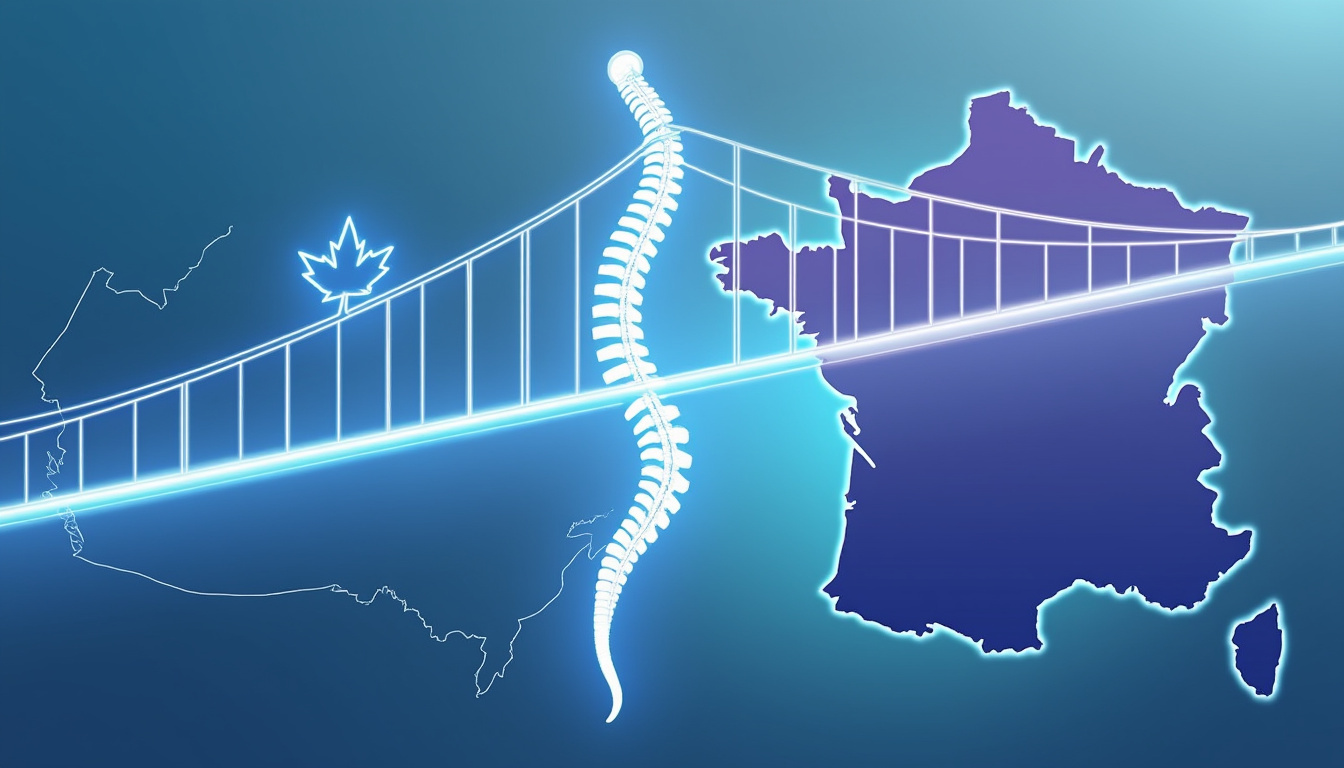
The collaboration between Quebec clinics and French surgical centers represents a groundbreaking model that benefits patients biomechanically and economically. By enabling access to state-of-the-art cervical disc prostheses and minimally invasive surgical techniques overseas, patients receive care that preserves spinal mobility and fosters rapid functional recovery.
Comparison of transatlantic surgical pathways versus local private care in Quebec:
| Aspect | Advantages of Transatlantic Pathway | Local Private Care in Quebec |
|---|---|---|
| Waiting Time | Significantly reduced through organized international coordination | Often long and unpredictable |
| Total Cost | Controlled expenses with integrated care and billing support | Higher fees and less insurance coverage |
| Access to Technology | Use of cutting-edge dynamic cervical implants and advanced surgical methods exclusive abroad | Limited availability and less reimbursement for advanced implants |
| Multidisciplinary Follow-Up | Coordinated care across Canadian and French teams with rigorous monitoring | Less integrated and fragmented follow-up practices |
Such transatlantic partnerships ensure that Quebec residents can benefit from the latest advances in motion-preserving spinal surgery without excessive financial burden or lengthy delays. These initiatives reflect Dr. Desforges’ commitment to ethical innovation and patient-centered care that transcends borders.
TOPS™ in Gatineau: A High-Performance Solution for Lumbar Spine Care
In a region where chronic back pain increasingly affects quality of life, the quest for advanced and effective lumbar spine treatments is paramount. Lumbar spinal stenosis, a prevalent condition among Quebec’s aging population, often imposes persistent discomfort and mobility limitations.…
Advanced Technologies Driving Cervical Spine Motion Preservation in Quebec
Maintaining intervertebral mobility in the cervical spine requires not just expert clinical judgment but access to state-of-the-art technology. Dr. Sylvain Desforges integrates cutting-edge spinal implants, laser therapy, and computer-assisted minimally invasive approaches to deliver superior outcomes at his clinics in Montreal and Terrebonne.
Technological innovations include:
- Dynamic cervical disc prostheses: Devices engineered to mimic natural disc motion, reducing biomechanical stress and enhancing post-operative flexibility.
- Neurovertebral decompression tables: Advanced non-invasive equipment that enables precision decompression therapy before or in lieu of surgery.
- Laser therapy and shockwave treatment: Complementary modalities that expedite tissue healing, pain relief, and inflammation reduction.
- Computer-guided minimally invasive surgical techniques: Enhanced accuracy in prosthesis placement, reducing tissue trauma, and accelerating recovery.
These technologies, combined with Dr. Desforges’ clinical experience and multidisciplinary team, distinguish TAGMED as a hub for innovation and compassionate spine care in Quebec. For further insights on artificial disc technology and cervical spine treatment breakthroughs, visit advanced artificial disc replacement therapies.
At Gouin Clinic, the landscape of herniated disc therapy has entered a transformative era marked by the integration of Personalized Treatment Plans and breakthrough Neurovertebral Decompression Therapy. This non-surgical approach is revolutionizing how spinal disorders are managed, offering patients an…
Preserving Quality of Life Through Motion-Preserving Spinal Surgery
The fundamental purpose of cervical disc prosthesis is to restore and protect the natural function of the spine, thus improving patients’ quality of life. Chronic neck pain and restricted mobility can hinder daily activities, employment, and overall wellbeing. Dr. Desforges’ approach prioritizes motion preservation, enabling patients to return to their routines with reduced pain and enhanced spinal function.
Rehabilitation post-disc replacement focuses on controlled mobility exercises, avoidance of excessive loading, and gradual reintegration into active lifestyles. Patients often report greater satisfaction due to maintained flexibility and reduced stiffness compared to fusion surgery counterparts.
Dr. Desforges’ philosophy strongly supports educating patients about their individualized treatment options and the long-term benefits of artificial disc replacement. This patient empowerment is vital in fostering adherence to therapy and successful outcomes. The combination of expert evaluation, advanced technology, and personalized care reinforces the standing of cervical disc prosthesis as a preferred choice in Quebec’s evolving spine care landscape.
Cervical Disc Prosthesis in Quebec: Preventing Post-Operative Stiffness
Neck pain is one of the most common musculoskeletal complaints in Quebec, affecting a significant portion of the population annually. Often rooted in degenerative cervical disc diseases or herniated discs, this persistent discomfort severely impacts daily life and mobility. Fortunately,…
Frequently Asked Questions about Cervical Disc Prosthesis
What is the expected lifespan of a cervical disc prosthesis?
Modern cervical disc prostheses are designed for durability, often lasting 15 to 20 years or more, depending on the patient’s activity level and adherence to medical advice.
What are the risks associated with cervical disc replacement surgery?
Like all surgeries, risks include rare neurological complications, infections, implant wear or migration. Patient selection by experts like Dr. Desforges helps minimize these risks.
Are cervical disc replacement treatments covered by insurance in Quebec?
Generally, private insurance in Quebec does not cover these procedures, whereas certain organized treatment pathways in France may benefit from specific agreements to reduce costs.
When should surgery be considered for cervical disc disease?
Surgery is typically recommended if symptoms persist despite 3 to 6 months of conservative care or if neurological symptoms worsen, emphasizing motion preservation strategies.
What alternatives exist to cervical disc prosthesis?
Alternatives include spinal fusion (arthrodesis) or decompression without stabilization, depending on the patient’s spinal condition and surgical indications.
The prevalence of herniated disc conditions in Blainville has sparked considerable discussion and misconceptions about their causes, symptoms, and treatments. While the pain and disability associated with this spinal disorder are well documented, the emergence of non-surgical options such as…