Understanding Sciatic Pain: Key Symptoms and When to Seek Medical Advice
July 28, 2026
IntraSPINE® in Laval: Approved Intervention for Chronic Low Back Pain
July 29, 2026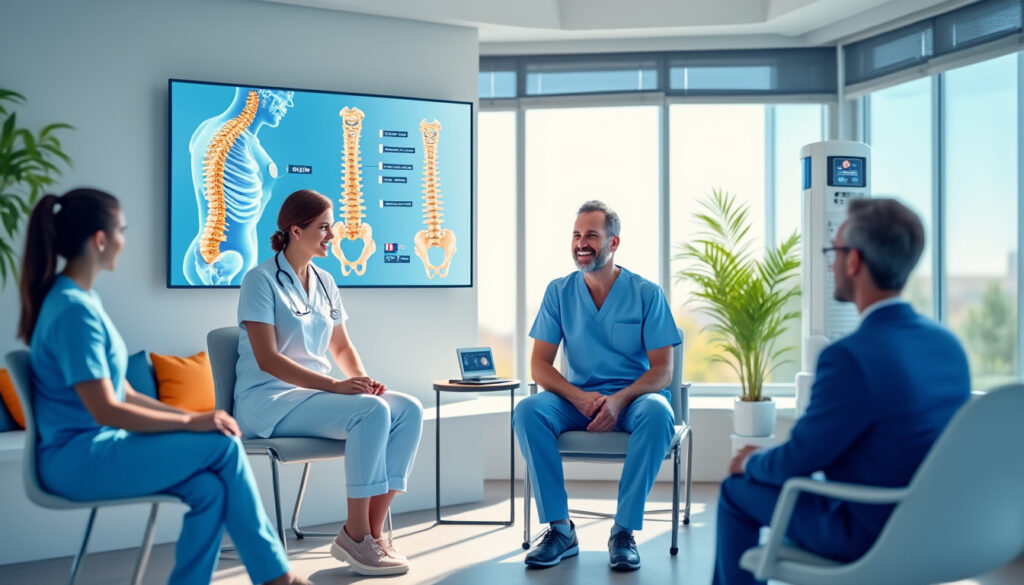
The burden of cervical spine disorders continues to rise across Quebec, profoundly impacting the daily lives of thousands who struggle with persistent neck pain and limited mobility. Traditional surgical approaches like arthrodesis, which immobilize affected segments, often bring unwanted side effects, leading patients and clinicians to seek alternatives that prioritize both pain relief and functional preservation. One such innovation gaining momentum is the cervical disc prosthesis — a cutting-edge biomedical solution designed to mimic the natural movement of the cervical spine while effectively alleviating discomfort. In collaboration with leading medical teams across Quebec and France, experts like Dr. Sylvain Desforges are championing this approach, integrating rigorous evaluation protocols and interdisciplinary care paths to offer patients a safe, tailored, and scientifically grounded treatment option. This article explores emerging surgical techniques, international cooperation, and patient-focused rehabilitation models that together are transforming spinal healthcare and restoring life-changing mobility for Quebecers.
The Evolution of Cervical Spine Surgery in Quebec: From Immobilization to Mobility Preservation
Historically, surgical treatment for cervical spine disorders has relied heavily on fusion techniques aiming to stabilize the spine by immobilizing affected segments. While this approach can reduce pain by eliminating pathological movement, it often sacrifices the natural biomechanics of the neck, increasing stress on adjacent levels and accelerating degenerative changes over time. Advances in orthopedic surgery and biomedical engineering have gradually shifted the paradigm toward motion-preserving solutions such as artificial disc replacement, where damaged discs are substituted with innovative implants that safeguard cervical mobility.
In Quebec, these developments are evident as clinics adopt minimally invasive spinal surgery techniques and dynamic implants offering improved patient outcomes. Unlike traditional fusion, the cervical disc prosthesis allows for continued movement, maintaining a more physiological range of motion in all planes. This not only helps reduce the risks associated with neighboring segment degeneration but also contributes to faster functional recovery and better quality of life.
The impact is tangible in clinical practice. For example, patients previously hesitant about surgery due to concerns over stiffness or prolonged rehabilitation now have access to alternatives that address their neck pain without compromising flexibility. Testimonials highlight significant improvements in daily activities and reductions in discomfort months after surgery. The expertise at facilities like Clinique TAGMED, where comprehensive patient evaluations are conducted by seasoned professionals led by Dr. Sylvain Desforges, underscores Quebec’s commitment to integrating these innovations with patient-centered care.
Emerging evidence also stresses the importance of selecting the right candidate for cervical disc prosthesis through exhaustive assessments, including advanced imaging and functional testing. This ensures that interventions target patients most likely to benefit, optimizing surgical success rates. The practice embodies Dr. Desforges’ holistic and evidence-based philosophy, prioritizing tailored, cautious progression from conservative treatments to surgical innovation only when truly warranted.
IntraSPINE® in Sherbrooke: A Long-Lasting Solution for Chronic Lower Back Pain
Chronic lower back pain remains one of the most pressing health concerns in Sherbrooke and beyond, impacting millions and often diminishing daily quality of life. Despite the prevalence of lumbar discomfort, many face limited access to cutting-edge treatments amidst lengthy…
Understanding the Cervical Disc Prosthesis: Design, Function, and Biomechanical Advantages
Cervical disc prostheses represent a sophisticated leap forward in spinal surgery, offering a structural and functional replacement for damaged intervertebral discs that preserves the mechanical behavior of the cervical column. These implants are fashioned using biocompatible materials such as titanium, polyethylene, and sometimes advanced polymers designed to absorb shock and mimic disc elasticity.
Two leading types of cervical disc prostheses frequently used in Quebec and internationally include:
- ProDisc-C: Featuring a mobile core that replicates natural disc movement, this implant adapts dynamically, providing excellent mobility across flexion, extension, and rotation planes.
- Mobi-C: Incorporating double mobile plates, it improves load distribution and minimizes stress concentration on surrounding vertebrae, reducing the likelihood of accelerated degeneration.
Such implant designs contrast sharply with the rigidity imposed by traditional arthrodesis, which eliminates segmental motion altogether. By allowing physiological movements to continue unabated, cervical disc prostheses contribute not only to pain relief but also to a prolonged preservation of spine health. Recent clinical data indicate these devices may significantly reduce the incidence of adjacent segment disease, a common complication following fusion surgery.
Implant placement requires meticulous surgical precision to align devices accurately with vertebral endplates and preserve spinal canal integrity. Surgeons skilled in minimally invasive spinal surgery techniques utilize real-time imaging to optimize implant positioning, facilitating faster post-operative recovery and minimizing complications.
From a biomechanical standpoint, these prostheses recreate essential disc functions: cushioning, load-bearing, and facilitating motion. By redistributing mechanical forces naturally and supporting the cervical vertebrae during dynamic activities, patients regain functional capacity with less risk of chronic pain recurrence.
For patients seeking detailed technical insights or weighing their surgical options, resources like the comprehensive Cervical Disc Prosthesis overview in Quebec provide clear, evidence-based guidance authored by experts in spinal care.
Herniated Disc Care in Sainte-Julie: Why TAGMED’s Neurovertebral Decompression Therapy Stands Out
In the vibrant community of Sainte-Julie, back pain—particularly that stemming from herniated discs—has become a widespread concern affecting people from all walks of life. The relentless search for effective, non-invasive treatments has brought renewed attention to a pioneering therapy that…
Dr. Sylvain Desforges: Bringing Expertise and Innovation to Cervical Spine Care in Quebec
At the forefront of spinal care in Quebec, Dr. Sylvain Desforges stands out as a leading expert with over 30 years of clinical experience dedicated to improving outcomes for patients with spinal disorders. Equipped with formal qualifications including a Bachelor of Science, Doctor of Osteopathy, and Doctor of Naturopathy, he uniquely combines scientific rigor with empathetic, holistic patient care.
Dr. Desforges’ pioneering role as founder and president of the Alliance Canadienne de Médecine Alternative (ACMA), the Canadian College of Osteopaths, and Clinique TAGMED positions him at the nexus of innovation and collaboration in alternative and surgical spine treatments. His approach stresses comprehensive patient evaluations, ensuring that all conservative options are exhausted before considering surgical interventions like cervical disc prosthesis implantation.
Under his leadership, Clinique TAGMED has integrated advanced spinal decompression technologies, laser therapy, and dynamic implants, offering patients access to non-invasive and minimally invasive options rarely found elsewhere in Quebec. This bridge between traditional osteopathic methods and cutting-edge surgical techniques enables patients to pursue customized pathways toward recovery, backed by evidence-based standards and ethical oversight aligned with the Collège des médecins du Québec.
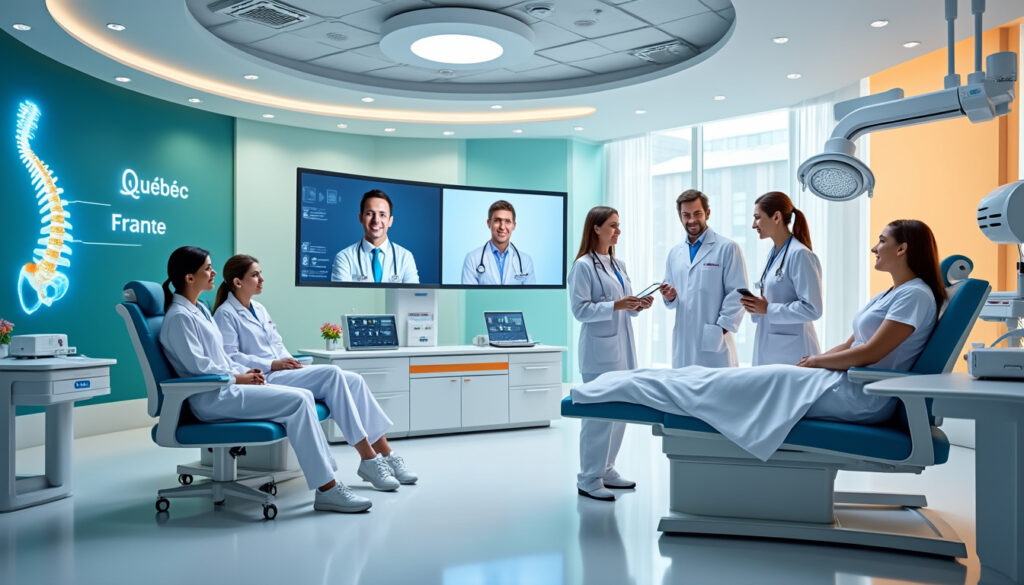
Dr. Desforges also plays a vital role in managing the transatlantic patient journey, coordinating with specialized spine centers in France and medical tourism platforms such as SOS Tourisme Médical. This collaboration improves access to pioneering cervical disc prosthesis surgeries and associated rehabilitative care, ensuring top-tier outcomes while streamlining logistics and support throughout the patient experience.

Back Surgery in Trois-Rivières: Alleviating Pain While Preserving Mobility
In Trois-Rivières, Quebec, the persistence of back pain affects a substantial portion of the population seeking effective and personalized solutions. Back pain, often caused by spinal disorders or herniated discs, can drastically diminish quality of life, limiting mobility and causing…
International Collaboration: Optimizing Cervical Disc Surgery Access between Quebec and France
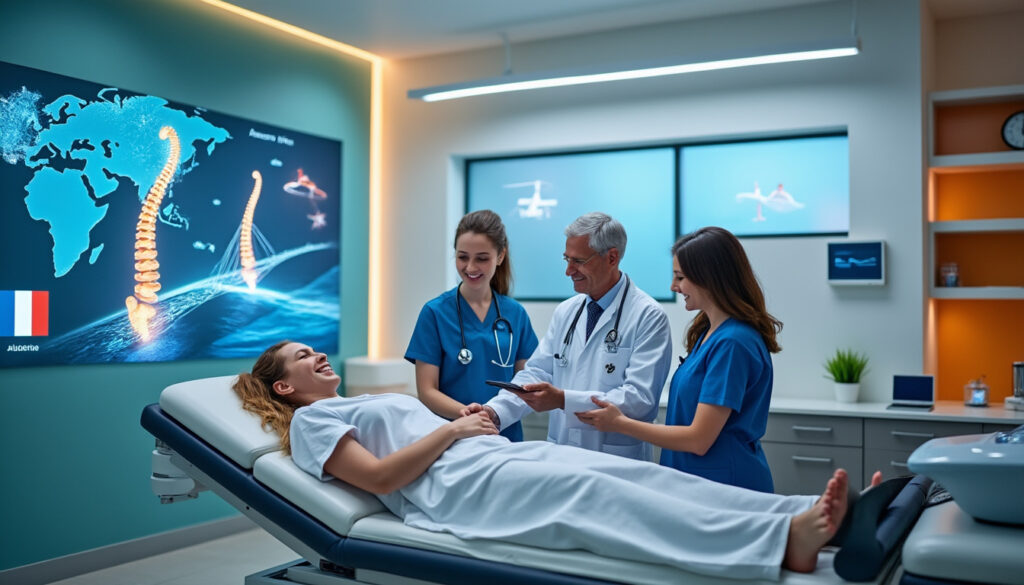
The rising demand for advanced cervical disc prosthesis procedures in Quebec has catalyzed stronger international partnerships, notably with leading French spinal surgery centers. This transatlantic collaboration promotes timely access to innovative implants and surgical expertise that may not be widely available domestically, ensuring Quebec patients benefit from proven, approved solutions.
Central to this coordination is the company Franchir, which meticulously organizes travel logistics, hospital admissions, and accommodation, alleviating patient stress and facilitating seamless treatment journeys. Such integrated care networks demonstrate how multidisciplinary collaboration can overcome systemic barriers such as lengthy surgical wait times or limited specialty access.
Upon returning from their surgeries abroad, patients continue receiving comprehensive follow-up and tailored rehabilitation plans through institutions like Neurothérapie Montréal. This continuity guarantees that post-operative recovery is carefully monitored and optimized, helping patients regain mobility and return to active lifestyles with confidence.
This model blends the strengths of Quebec’s expertise in spinal decompression and conservative therapies with France’s advanced surgical platforms, guided by Dr. Desforges’ commitment to evidence-based practice and patient-centered ethics. Ultimately, it reflects a dynamic approach where geographic boundaries do not limit the quality of care available to those suffering from cervical spine disorders.
Disc herniation remains a significant health concern in Pointe-Claire, impacting the lives of a diverse population ranging from labor-intensive workers to the aging community. The condition, characterized by the displacement or rupture of the intervertebral disc, often leads to debilitating…
The Essential Role of Conservative Treatment Before Considering Cervical Disc Prosthesis Surgery
Ethical and clinical standards emphasize that surgical intervention should be a last resort after carefully exhausted conservative treatment options. In cervical spine care, this principle is critical for patient safety, outcome optimization, and resource stewardship.
Dr. Sylvain Desforges and his team at Clinique TAGMED embody this approach through the specialized use of neurovertebral decompression therapy. This non-invasive technique, administered over a three- to six-month period, aims to alleviate nerve compression by gently stretching the spinal column and improving disc hydration, often relieving pain and enhancing function without surgery.
Only when such advanced conservative therapies fail to provide significant, lasting relief is surgery considered, and even then, eligibility assessments are rigorous. This ensures that each patient’s individual circumstances guide treatment decisions, underlining that cervical disc prosthesis surgery is appropriate only when truly warranted by clinical necessity.
Supporting data suggests that incorporating an extended phase of conservative care reduces unnecessary surgeries and empowers patients to make informed decisions about their spinal health. They benefit from experiencing less invasive interventions first and understanding potential outcomes thoroughly before progressing to surgical options.
Patients who successfully complete this phase often experience improved baseline function and reduced surgical risk, creating better conditions for successful recovery if surgery becomes necessary. This strategic sequencing aligns closely with contemporary orthopedic surgery standards and fosters collaborative communication between conservative care providers and surgeons to personalize care pathways.
TOPS™ in Gatineau: A High-Performance Solution for Lumbar Spine Care
In a region where chronic back pain increasingly affects quality of life, the quest for advanced and effective lumbar spine treatments is paramount. Lumbar spinal stenosis, a prevalent condition among Quebec’s aging population, often imposes persistent discomfort and mobility limitations.…
Comparing Surgical Options: Arthrodesis Versus Artificial Disc Replacement
When addressing cervical spine pathology requiring intervention, surgeons usually weigh two main operative choices: traditional arthrodesis (spinal fusion) and artificial disc replacement via cervical prostheses. Understanding their distinct advantages and limitations is fundamental for patient education and shared decision-making.
| Surgical Approach | Key Characteristics | Biomechanical Impact | Patient Benefits | Potential Drawbacks |
|---|---|---|---|---|
| Arthrodesis (Spinal Fusion) | Immobilization of affected vertebral segments through bone fusion | Eliminates motion at surgical site; alters load distribution | Effective pain relief; stabilizes unstable segments | Loss of mobility; increased adjacent segment degeneration risk |
| Artificial Disc Replacement | Insertion of dynamic prosthesis mimicking natural disc movement | Preserves physiological range of motion; maintains biomechanics | Retention of neck mobility; reduced risk of adjacent degeneration | Requires precise implant placement; potential implant-related risks |
While spinal fusion remains appropriate in some complex cases, artificial disc replacement increasingly emerges as a first choice for eligible patients aiming to sustain cervical functionality. Surgeons guided by experts like Dr. Sylvain Desforges carry out detailed evaluations to individualize treatment, recognizing that this innovative surgery not only addresses neck pain but also supports long-term spine health.
For more on surgical alternatives and the careful clinical decision process behind them, see preserving natural mobility with cervical disc prostheses in Quebec.
At Gouin Clinic, the landscape of herniated disc therapy has entered a transformative era marked by the integration of Personalized Treatment Plans and breakthrough Neurovertebral Decompression Therapy. This non-surgical approach is revolutionizing how spinal disorders are managed, offering patients an…
Patient Rehabilitation After Cervical Disc Prosthesis: A Critical Phase for Long-Term Success
Post-operative rehabilitation is crucial to optimize outcomes following cervical disc prosthesis surgery. Early mobilization balanced with protective measures encourages proper implant integration and restoration of range of motion. A carefully designed rehab program supports muscle reconditioning, pain management, and functional retraining, all tailored to individual patient needs.
Rehabilitation timelines typically span several months, during which multidisciplinary teams including physiotherapists, osteopaths, and neurologists collaborate closely. Patients benefit from personalized programs focused on:
- Gradual cervical spine mobilization to prevent stiffness.
- Strengthening postural and cervical musculature to support spinal stability.
- Pain control through therapeutic modalities such as laser therapy and shockwave treatment.
- Education on ergonomics and lifestyle modifications to protect spinal health.
Success stories such as those of Mrs. Tremblay, a 52-year-old Quebecois patient, highlight the transformative potential of this approach. Following her cervical prosthesis implantation abroad, coordinated follow-up care in Quebec facilitated rapid recovery of movement and sustained pain relief, underscoring the value of an integrative patient journey.
The rehabilitative expertise at institutions like Neurothérapie Montréal ensures that patient progress is monitored rigorously, and adjustments to care plans are made proactively, maximizing functional restoration and quality of life.
Cervical Disc Prosthesis in Quebec: Preventing Post-Operative Stiffness
Neck pain is one of the most common musculoskeletal complaints in Quebec, affecting a significant portion of the population annually. Often rooted in degenerative cervical disc diseases or herniated discs, this persistent discomfort severely impacts daily life and mobility. Fortunately,…
Innovations in Cervical Disc Prostheses: Materials, Mechanics, and Future Directions
The future of cervical disc prostheses continues to evolve with research focused on enhancing implant materials, improving biomechanical performance, and integrating smart technologies for better clinical monitoring.
Recent advances include the development of viscoelastic implants that closely mimic the natural intervertebral disc’s capacity to absorb shocks and adapt dynamically under varying loads. For example, the Prestige LP model featuring metallic articulation enhances durability and mechanical stability, potentially extending implant lifespan and patient satisfaction.
Research into biomaterials prioritizes biocompatibility and wear resistance to reduce inflammation and implant-related complications. Moreover, dynamic spinal implants with adjustable centers of rotation are being tested to align more precisely with individual patient anatomies and movement patterns, improving personalized care.
Alongside mechanical improvements, integration of sensor technology inside implants is an emerging trend. These “smart implants” aim to provide real-time feedback on implant position, stress distribution, and early detection of potential issues such as loosening or infection, thereby facilitating proactive clinical management.
As these innovations mature, they offer promising opportunities to refine cervical disc prosthesis outcomes, reduce revision rates, and further reduce recovery time. Patients in Quebec stand to benefit from these cutting-edge technologies thanks to the proactive efforts of experts like Dr. Sylvain Desforges and his international partners.
For detailed technical specifications and clinical performance data, the latest prosthesis brochures provide comprehensive insights into current implant options.
What are the risks associated with cervical disc prosthesis surgery?
As with any surgical intervention, risks include infection, implant displacement, and persistent pain. Careful patient evaluation and surgical precision minimize these risks.
How long does rehabilitation take after cervical disc prosthesis surgery?
Rehabilitation typically spans several months, with personalized programs designed to fully restore neck mobility and function.
Is the cervical disc prosthesis surgery covered by RAMQ in Quebec?
Coverage depends on clinical assessment and previous treatment history. Patients are encouraged to discuss specific modalities with their healthcare provider.
What is the success rate of cervical disc prosthesis procedures?
Studies indicate high patient satisfaction and significant improvement in quality of life following surgery.
How does cervical disc prosthesis compare to traditional spinal fusion?
Unlike fusion, prosthesis maintains natural neck motion and reduces adjacent segment degeneration risks, though it requires precise surgical technique.
The prevalence of herniated disc conditions in Blainville has sparked considerable discussion and misconceptions about their causes, symptoms, and treatments. While the pain and disability associated with this spinal disorder are well documented, the emergence of non-surgical options such as…