IntraSPINE® in Laval: Accelerated Recovery Following Lumbar Surgery
July 17, 2026
Mirabel Neck Herniation Prevention for Active Adults
July 17, 2026
Back pain is a pervasive health issue affecting millions of people worldwide, often resulting from degenerative conditions of the spinal discs. As medical science advances, innovative solutions emerge offering hope and relief beyond traditional therapies. Among these, disc prosthesis stands out as a cutting-edge option for patients seeking an effective treatment for degenerative disc disease and related spinal problems. In Lévis, this technology is gaining recognition as an approved solution with proven benefits for restoring spinal function and reducing chronic pain.
The journey toward recovery from spinal disc complications is multifaceted. Understanding the options available, especially in the context of international care opportunities, is crucial for patients in Quebec facing long wait times or high costs in private healthcare. The advent of minimally invasive spine surgery techniques, combined with advanced artificial discs approved in Europe and North America, provides a promising pathway for improving quality of life. Highlighting expertise in this domain, Dr. Sylvain Desforges brings over three decades of experience in spine care, guiding patients through a personalized, scientifically rigorous evaluation and management process.
Exploring Types of Lumbar Disc Prostheses: What Patients in Lévis Need to Know
The lumbar spine, composed of five vertebrae and intervertebral discs, plays a fundamental role in flexibility and load-bearing. When degenerative disc disease occurs, damaging these discs, it often leads to debilitating pain and limited movement. Lumbar disc replacement surgery entails removing the diseased disc and substituting it with an artificial disc designed to preserve or restore natural spinal mechanics.
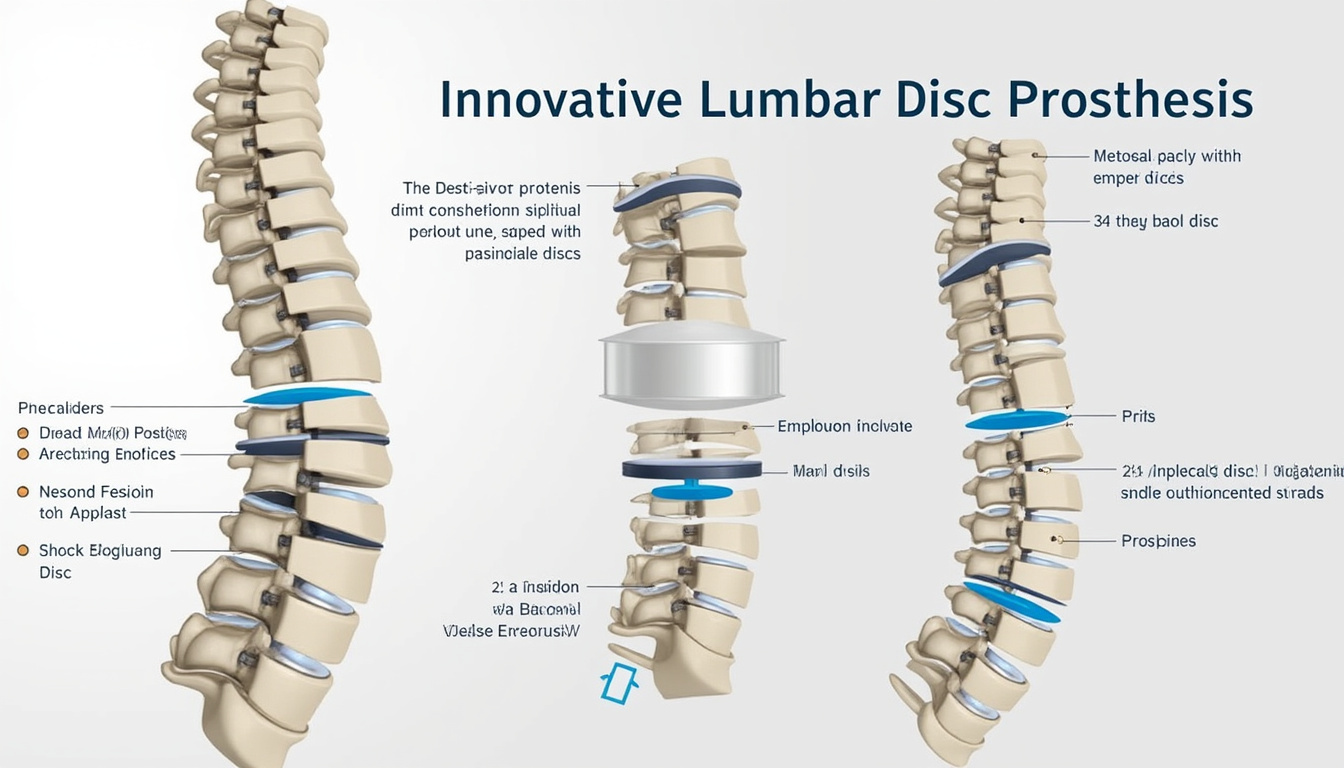
Various lumbar disc prostheses have been developed over the years, each differing in design, materials, and biomechanical function. Among the internationally recognized implants, the Prodisc-L, an FDA-approved device, has served patients reliably in North America. The Prodisc-L features two metallic endplates with a plastic inlay to mimic the natural spacing and motion between vertebrae. It is indicated for patients with confirmed single or two-level degenerative disc disease who have not responded to at least six months of conservative therapy.
The ActivL artificial disc, versatile in sizing, allows controlled movement through a plastic core within metal endplates, aiming to reduce pain while maintaining mobility. European-developed discs like the M6-L and the innovative Lumbar LP-ESP Disc Prosthesis from France have introduced viscoelastic designs that absorb shock more naturally, replicating physiological disc behavior more closely than earlier devices. The LP-ESP, for example, uses a soft cushion of polycarbonate urethane combined with a silicone core with compressible beads, allowing better shock absorption and flexibility.
These modern devices are typically made of biocompatible materials such as titanium alloys, with porous coatings promoting bone integration for long-term stability. Such features minimize the immune response while optimizing mechanical fixation. Understanding these varied options empowers patients to discuss their specific needs and eligibility during thorough evaluations led by experts, ensuring the best individualized treatment approach.

IntraSPINE® in Sherbrooke: Durable Solution for Chronic Low Back Pain
The management of chronic low back pain, a widespread condition affecting millions across Quebec and beyond, has reached a pivotal moment thanks to innovative medical technologies and coordinated care pathways. At the heart of this evolution lies the IntraSPINE implant,…
Step-by-Step Patient Journey for Disc Prosthesis Surgery in Lévis
The pathway to successful disc prosthesis treatment involves multiple carefully coordinated stages, especially for patients considering a transatlantic care approach between Quebec and France. Dr. Sylvain Desforges plays a pivotal role in this journey, leveraging his extensive expertise in spinal evaluation to assist patients in navigating these stages smoothly.
Initially, a thorough assessment takes place, involving clinical examination, imaging studies such as MRI or CT scans, and a review of the patient’s comprehensive medical history. This step allows precise identification of the affected spinal level and disc pathology, distinguishing candidates who may benefit from surgery from those better suited for conservative care.
Next is the multidisciplinary planning phase, where spine surgeons, osteopaths, physiotherapists, and radiologists collaborate to map an individualized treatment plan. Patients receive detailed explanations about the surgical options, implant types available, potential risks, and expected outcomes, facilitating informed decision-making. Further, in this phase, logistical arrangements for travel, hospitalization, and post-surgical rehabilitation—often split between French clinics and Canadian follow-up centers—are established, supported by platforms like SOS Tourisme Médical.
Post-surgery, patients transition into a rehabilitation program focused on restoring mobility and strengthening spinal support muscles under the guidance of local healthcare teams. Dr. Desforges ensures this phase is closely monitored, integrating innovative modalities like neurovertebral decompression when indicated to maximize recovery. Follow-ups continue remotely or in-person, emphasizing patient safety and quality of care.
This carefully structured care continuum exemplifies a modern, effective model combining community-based evaluation and state-of-the-art surgery abroad, optimized for timely intervention and comprehensive outcome-focused support.
Spine Surgery in Trois-Rivières: Reduce Pain and Preserve Mobility
In recent years, spine surgery in Trois-Rivières has evolved notably, combining advanced medical expertise with innovative technologies to deliver patient-centered care. This growing field addresses the increasing demand among Quebec residents seeking effective solutions for chronic back pain and mobility…
The Biomechanical and Economic Advantages of Transatlantic Spine Surgery
Opting for disc prosthesis surgery in Lévis, with part of the treatment occurring in France, offers substantial advantages from both a biomechanical and economic perspective. The procedure preserves natural spinal motion by replacing only the damaged disc rather than fusing vertebrae, which can often lead to adjacent segment disease and reduced mobility.
Biomechanically, artificial discs such as the LP-ESP provide shock absorption and maintain spinal curvature, reducing stress on neighboring vertebrae and preserving the overall balance of the lumbar region. This helps patients regain functional independence faster with less chronic pain. Advanced implants are designed to absorb rotational forces and enable natural side-to-side, forward, and backward movements, mimicking the physiological behavior of healthy discs.
Economically, pursuing surgery in France, where these innovative technologies are approved and widely used, often results in shorter wait times and access to cutting-edge devices not yet common in Canadian centers. Combined with expert pre- and postoperative management by Dr. Desforges and his team, this pathway minimizes indirect costs related to prolonged disability, repeated consultations, and ineffective treatments. Patients benefit from a transparent, coordinated service tailored to their condition, reducing uncertainty and optimizing outcomes.
Such international collaborations exemplify a patient-centered model whereby expertise transcends borders, offering Quebec patients access to superior care modalities and advanced solutions such as the innovative LP-ESP lumbar prosthesis, developed through years of research in France.

TOPS™ in Gatineau: High-Performance Option for the Lumbar Spine
The landscape of spinal surgery has witnessed profound evolution, particularly for patients grappling with lumbar spine disorders such as spinal stenosis and spondylolisthesis. These conditions, increasingly prevalent among Quebec’s population, impose substantial limitations on mobility and quality of life. The…
Conservative Care First: Essential Precautions Before Considering Surgery
A critical principle in managing degenerative disc disease is prioritizing conservative treatments prior to any surgical intervention. Surgery, including disc prosthesis implantation, is considered only after patients have undergone a minimum of three to six months of evidence-based nonoperative care. This approach aligns with guidelines established by regulatory bodies such as the Collège des médecins du Québec, where patient safety and efficacy guide decision-making.
Conservative care encompasses a wide range of therapies including physical therapy, osteopathic manipulations, medications, lifestyle modifications, and importantly, advanced neurovertebral decompression techniques available at specialized centers like the Clinique TAGMED. The latter employs minimally invasive methods to alleviate nerve compression, potentially reducing pain and improving function without surgery. This step is vital considering that some patients initially deemed candidates for surgery may experience significant symptom resolution with these modalities.
Patients should receive thorough education on these options, which Dr. Desforges ensures through clear, accessible explanations focusing on indications, potential benefits, and limitations. When conservative care fails to yield meaningful improvement, surgical pathways can then be explored with confidence, backed by comprehensive assessments and tailored surgical plans.
This cautious, stepwise methodology not only enhances patient outcomes but also respects the ethical and scientific rigor Dr. Desforges advocates throughout his practice.

Cervical Disc Prosthesis in Quebec City: Avoid Post-Surgery Stiffness
Chronic neck pain remains a significant challenge for thousands of residents in Quebec City every year, often leading them to seek effective spinal surgery options that minimize downtime and maximize long-term mobility. Among the recent advancements revolutionizing cervical spine care,…
Cutting-Edge Technologies in Disc Prosthesis: From Laser to Dynamic Implants
The field of spine surgery is rapidly evolving, with technological innovations contributing to safer, more effective treatments. Among these advances, the use of dynamic implants, laser-aided procedures, and next-generation prosthetic materials are transforming patient care.
The LP-ESP disc prosthesis demonstrates how biomechanical and material science innovations can converge to offer superior shock absorption and durability. Composed mostly of titanium with a deformable polycarbonate urethane core, the implant reduces allergic risk and minimizes wear particles, addressing key challenges seen in earlier designs.
Additionally, the application of minimally invasive surgical techniques reduces tissue trauma, blood loss, and recovery time. Laser technology in spine surgery assists in precise decompression of nerve tissues, often complementing disc replacement procedures and enhancing overall outcomes.
Dynamic implants maintain natural spinal motion, avoiding the limitations and complications of spinal fusion. This approach is crucial in preserving patients’ quality of life, reducing risks of adjacent segment degeneration, and allowing a more rapid return to daily activities.
The continuous collaboration between research institutions like Université Paris VI and innovative companies such as Spineway reflects the commitment to integrating science and clinical practice. For patients in Lévis and beyond, these innovations mean access to treatments that were scarcely imaginable a decade ago.
Minimally Invasive Surgery in Longueuil: Reduce Hospital Stay Duration
In recent years, advances in spinal care have dramatically reshaped the treatment landscape for patients suffering from debilitating spinal conditions. Particularly in Longueuil, the emergence of minimally invasive surgery (MIS) techniques offers a transformative alternative to conventional open surgeries. These…
International Coordination: A Seamless Transatlantic Healthcare Experience
One of the remarkable elements in the modern spine care paradigm is the transatlantic coordination that supports Canadian patients accessing services in France. This bespoke support system covers every aspect—from initial evaluation to surgical scheduling and post-surgical rehabilitation—aiming for maximum efficiency and personalized care.
Dr. Desforges’s unique role as a pioneer and coordinator is pivotal here. His deep understanding of both Canadian and French healthcare regulations and networks enables him to facilitate communication between patients and international medical teams. This advocacy ensures medical compliance, patient safety, and optimized scheduling, dramatically cutting down wait times that patients might face in Quebec.
Frameworks like SOS Tourisme Médical play an active role in this process, managing logistics and providing comprehensive support services during patients’ stays abroad, including language assistance, accommodation, and transport.
Importantly, this model is not only about surgery but extends to complete care pathways, with monitoring and rehabilitation services available locally in Quebec, coordinated by Dr. Desforges’s team to ensure continuity and ongoing support. For many patients, this represents a humanized, motivated approach that transforms potentially daunting medical journeys into structured, hopeful recovery experiences.
IntraSPINE® in Laval: Modern Solution for Lumbar Stabilization
In the evolving landscape of orthopedic treatments, the city of Laval has become a hub for innovations addressing chronic lower back pain. Among the groundbreaking solutions gaining attention is the IntraSPINE device—a modern spinal implant designed to offer dynamic lumbar…
Distinctive Services and Added Value in Spine Care through International Collaboration
What truly differentiates the disc prosthesis treatment pathway facilitated by Dr. Desforges and his network is the integration of scientific rigor, advanced technology, and human-centered care culture. Patients benefit from access to innovative prostheses like the LP-ESP and other state-of-the-art implants not yet available in Canada, offering options tailored to their unique spinal conditions.
The process includes:
- Complete pre-surgical evaluation with an emphasis on personalized assessment and prognosis based on the latest evidence.
- Careful selection of implants chosen for durability, biomechanical compatibility, and safety.
- Access to minimally invasive surgical techniques performed in highly specialized French centers, reducing hospital stays and complications.
- Comprehensive postoperative support, including advanced physical therapy, neurovertebral decompression, and psychosocial assistance.
- Coordination of care before, during, and after surgery to maximize patient comfort, safety, and functional recovery.
Moreover, the collaboration provides a continuity rarely achievable in isolated national frameworks, combining both depth of expertise and breadth of service availability. This comprehensive approach is echoed in patient testimonials praising the compassionate, professional, and effective care they received under this program.

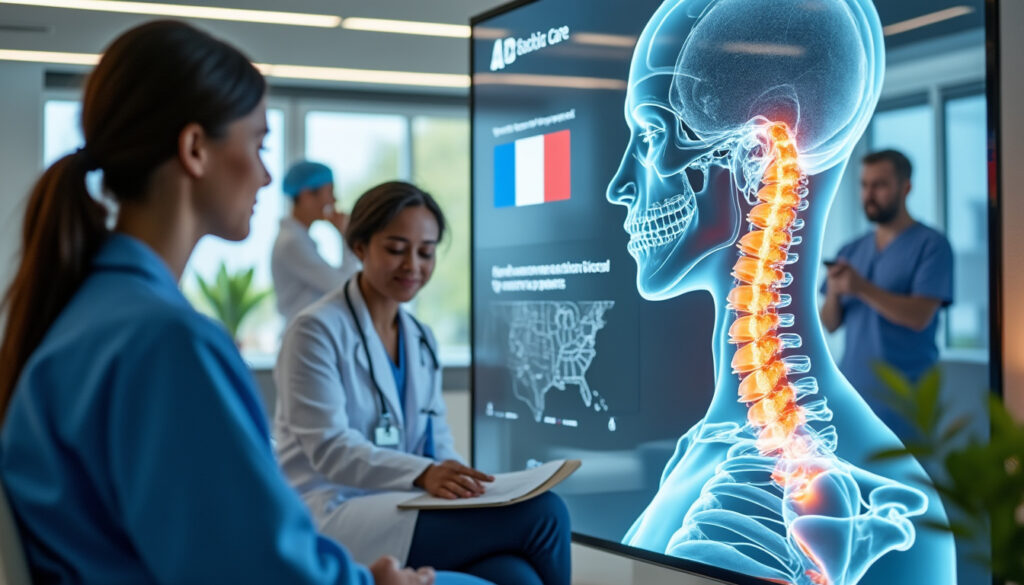
Neck Surgery in Montreal: Maintain Cervical Flexibility and Function
Neck conditions causing persistent pain or functional loss place a substantial burden on individuals and healthcare systems, especially in urban centers like Montreal. Surgical interventions targeting the cervical spine have evolved tremendously, aiming not only to relieve symptoms but to…
Encouragement and Accessible Support for Patients Seeking Spinal Disc Relief
Facing spinal surgery can feel overwhelming, but informed and committed guidance makes a significant difference. Dr. Sylvain Desforges champions transparency and patient education, inviting individuals to actively participate by asking questions and understanding their treatment options thoroughly.
Each case is unique, requiring personalized evaluations that respect individual histories, expectations, and physical conditions. Patients are encouraged not to rush decisions and to consider all modalities, especially conservative treatments available before contemplating surgical intervention.
Those living in Quebec interested in exploring these advanced disc prosthesis solutions in Lévis and the associated international pathway are urged to connect to the professional network and resources available. Early consultation and evaluation pave the way to tailored, effective care plans fostering confidence and hope.
For more information or to discuss your individual case, please contact the clinic or request an evaluation and take a decisive step toward renewing your spinal health.

Disc Prosthesis in Lévis: Quick and Long-Lasting Results
Chronic back pain caused by degenerative disc disease continues to profoundly impact the quality of life for many residents in Lévis and the broader Quebec area. For decades, traditional spinal fusion surgery has been the primary solution for alleviating severe…
Comparison Table of Notable Lumbar Disc Prostheses
| Prosthesis | Material Composition | Motion Preservation | Shock Absorption | FDA/CE Approval Status | Suitable Indications |
|---|---|---|---|---|---|
| Prodisc-L | Metal (Titanium alloy) and plastic inlay | Yes – natural spacing and motion | Moderate | FDA approved | Single or two-level degenerative disc disease |
| ActivL | Mixed metal endplates, plastic insert | Yes – controlled front to back motion | Moderate | FDA approved | Degenerative disc disease at lumbar levels |
| Lumbar LP-ESP | 99% Titanium with polycarbonate urethane core | Yes – viscoelastic, natural motion | High – shock absorbing | CE approved (Europe) | Treatment-resistant lumbar discopathy, recurrent herniated disc |
| M6-L | Polycarbonate urethane nucleus, titanium endplates | Yes – multidirectional controlled motion | High | CE approved (Europe) | Advanced lumbar disc degeneration cases |
What distinguishes disc prosthesis from spinal fusion surgery?
Disc prosthesis aims to preserve natural spinal motion by replacing only the damaged disc, whereas spinal fusion restricts motion by joining vertebrae permanently. Prostheses reduce the risk of adjacent segment degeneration and often allow quicker recovery.
Is disc prosthesis suitable for every patient with back pain?
No. Disc prosthesis is indicated primarily for patients with confirmed degenerative disc disease who have not improved after thorough conservative treatments over several months. A detailed evaluation is essential to determine appropriateness.
What are the benefits of the LP-ESP disc prosthesis?
The LP-ESP model provides enhanced shock absorption and viscoelastic behavior closely mimicking natural discs. Made primarily of titanium, it has a high biocompatibility and long-term stability, making it a valued option for treatment-resistant cases.
How does international coordination improve patient care?
Transatlantic collaboration ensures timely access to advanced surgical techniques and implants unavailable locally, comprehensive logistic support, and continuity of care through coordinated follow-up services in the patient’s home country.
Why is a minimum period of conservative care necessary before considering surgery?
This approach minimizes unnecessary surgeries, ensures all noninvasive treatments have been exhausted, and helps identify patients who will truly benefit from surgical intervention, thus optimizing outcomes and safety.