Comprehensive Guide to Simple Surgery, Fusion Techniques, and Motion Preservation
June 27, 2026
Pointe-Claire Lumbar Disc Bulge Rehabilitation Without Surgery
June 27, 2026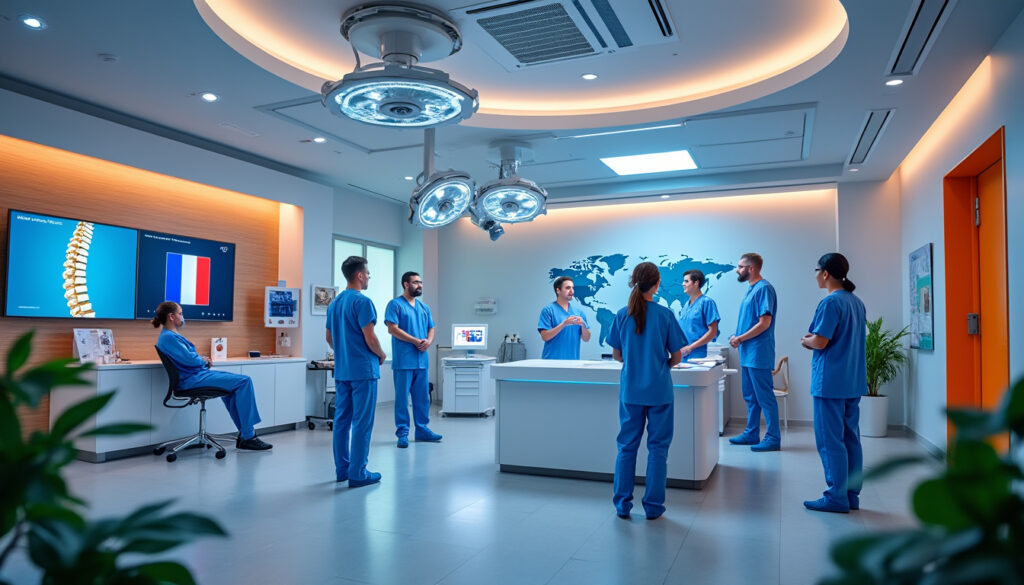
The quest for effective relief from chronic back pain has led many patients in Québec to explore innovative surgical options. Faced with prolonged wait times and the often prohibitive costs of private care, individuals are increasingly turning their attention to advanced disc prosthesis procedures offered in Lévis and specialized centers in France. These interventions promise not only rapid recovery but also the preservation of natural spinal function—fundamental to maintaining quality of life.
Under the guidance of Dr. Sylvain Desforges, a recognized expert with more than 30 years of dedication to spine care, patients receive exemplary evaluation and care coordination. Dr. Desforges’ multidisciplinary expertise, combined with his roles as founder and president of leading osteopathic and medical organizations, ensures that each treatment journey is anchored in rigorous scientific standards and ethical patient advocacy. The transatlantic collaboration between Québec and France exemplifies an innovative approach, blending the strengths of Canadian patient-centered care and the latest French surgical technologies.
Types of Disc Prosthesis Surgery Available in Lévis and France: Preserving Mobility and Relieving Pain
In treating degenerative or herniated disc conditions, the surgical landscape has evolved past traditional fusion, emphasizing methods that preserve spinal mobility. At the forefront are three main surgical categories accessible in centers around Lévis and France: simple disc replacement, spinal fusion, and motion-preserving disc arthroplasty.
Simple Disc Replacement involves excising the damaged disc and inserting an artificial implant designed to restore disc height and flexibility. These implants are often composed of durable metal endplates anchoring into adjacent vertebrae, sandwiching a polymer core that mimics natural disc movement. For instance, cervical prostheses like Mobi-C and Prestige LP have demonstrated effective motion preservation in clinical practice, with FDA approval enhancing their credibility. Surgical approaches typically use anterior neck or abdominal incisions under general anesthesia, ensuring minimal soft tissue disruption.
Conversely, Spinal Fusion Surgery remains the choice for cases where spinal stability demands more rigid intervention. By fusing vertebrae, motion at the affected segment is eliminated, offering substantial pain relief but with trade-offs such as increased stress on adjacent spinal levels. Patients from Québec often inquire about this technique versus motion-preserving alternatives, weighing the benefits against potential long-term biomechanical consequences.
Motion-Preserving Disc Arthroplasty exemplifies the new frontier, where surgical teams combine artificial disc replacement with mechanisms that maintain natural spinal mechanics. These hybrid procedures, sometimes coupling arthroplasty with fusion at other levels, provide tailored solutions for complex degenerative cases. Scientific evidence supports faster recovery, diminished adjacent segment disease, and enhanced function postoperatively. Such innovation is part of the standard at leading Lévis surgical centers and expert facilities in France, where advanced implants and meticulous surgical protocols converge.
In summary, choosing the appropriate surgical technique depends on several factors including the extent of disc degeneration, spinal stability, and patient-specific anatomical considerations. The critical role of expert evaluation by seasoned professionals like Dr. Desforges cannot be overstated in this decision-making process.

IntraSPINE® in Sherbrooke: Durable Solution for Chronic Low Back Pain
The management of chronic low back pain, a widespread condition affecting millions across Quebec and beyond, has reached a pivotal moment thanks to innovative medical technologies and coordinated care pathways. At the heart of this evolution lies the IntraSPINE implant,…
Step-by-Step Patient Journey for Spine Surgery: From Evaluation to Return to Québec
Navigating the complexities of spine surgery, especially when traversing international healthcare systems, demands meticulous planning and expert coordination. Dr. Sylvain Desforges leverages over three decades of experience to guide patients through a seamless pathway, ensuring both medical excellence and humanized support.
The journey initiates with a comprehensive evaluation, incorporating MRI and CT imaging to precisely map intervertebral disc pathology. Dr. Desforges’ profound insight extends beyond standard diagnostic criteria, incorporating biomechanical assessments and patient-specific symptomatology. His commitment to evidence-based practice ensures that candidates for surgery have exhausted a full spectrum of conservative treatments, prioritizing therapies such as neurovertebral decompression offered at Clinique TAGMED.
Should surgical intervention become necessary, Dr. Desforges coordinates with high-caliber surgical centers in Lévis and France, streamlining appointments to minimize delays. Patients benefit from preoperative education sessions that clarify expectations, operative details, and rehabilitation plans, reducing anxiety and fostering adherence.
The surgery itself typically lasts around 60 minutes for single-level disc replacement, conducted under general anesthesia with minimally invasive techniques. Postoperative care includes monitored recovery in specialized suites, where nursing staff skilled in spine surgery facilitate initial mobilization and pain management. Patients may wear soft collars following cervical procedures and initiate physiotherapy early, focusing on gradual restoration of flexibility and strength.
Hospital stays average about 10 days, with a broader recovery phase spanning 4 to 10 weeks depending on occupational demands and individual healing. Throughout, Dr. Desforges remains accessible for remote consultations, ensuring continuity of care upon patient return to Québec. This integrated transatlantic collaboration empowers patients with quick access to state-of-the-art surgery while maintaining close contact with trusted local resources.
Spine Surgery in Trois-Rivières: Reduce Pain and Preserve Mobility
In recent years, spine surgery in Trois-Rivières has evolved notably, combining advanced medical expertise with innovative technologies to deliver patient-centered care. This growing field addresses the increasing demand among Quebec residents seeking effective solutions for chronic back pain and mobility…
Benefits of Minimally Invasive Disc Prosthesis Surgery: Biomechanical and Human-Centered Advantages
Minimally invasive disc prosthesis surgery represents a paradigm shift in spine care, combining technological sophistication with patient-focused outcomes. By replacing the damaged disc without fusing vertebrae, this approach preserves natural spinal mechanics, enabling greater mobility and comfort.
Biomechanically, artificial disc implants utilize dual metal endplates securely anchored to vertebral bodies, flanking a polymer nucleus permitting multi-axial motion similar to native discs. This innovation considerably reduces the risk of adjacent segment degeneration—a complication often encountered with spinal fusion where motion is eliminated, and stress is transferred to neighboring discs. For example, FDA-approved devices like the prodisc C SK and prodisc L exemplify these designs, offering durable solutions for cervical and lumbar conditions respectively.
Patients undergoing these interventions often experience reduced postoperative pain, faster ambulation, and shorter hospitalizations. The minimally invasive nature of the surgery limits muscle and soft tissue trauma, which correlates with quicker functional recovery. Furthermore, the technology’s safety is supported by extensive research and rigorous approval processes, reinforcing patient confidence in the procedure.
From a human perspective, retaining natural spinal motion significantly enhances quality of life post-surgery. Patients report higher satisfaction levels due to restored activity capabilities and decreased reliance on pain medication. This is particularly important for active individuals wishing to maintain or return to dynamic lifestyles without compromising spinal health.
Clinics like TAGMED complement the surgical offering with advanced conservative therapies such as neurovertebral decompression, underscoring a holistic treatment philosophy that prioritizes non-invasive care when appropriate and optimizes surgical outcomes when surgery is indicated.


Cervical Disc Prosthesis in Quebec City: Avoid Post-Surgery Stiffness
Chronic neck pain remains a significant challenge for thousands of residents in Quebec City every year, often leading them to seek effective spinal surgery options that minimize downtime and maximize long-term mobility. Among the recent advancements revolutionizing cervical spine care,…
Essential Role of Conservative Treatments Prior to Surgery: Ensuring Optimal Outcomes
While surgical innovation provides hope for many, disc prosthesis surgery should only be considered after a dedicated course of conservative treatments spanning 3 to 6 months. This protocol mitigates unnecessary surgical exposure and improves overall patient outcomes.
Conservative therapies include physical therapy focusing on spinal stabilization, judicious use of pain medications, targeted injections, and notably, neurovertebral decompression techniques available at the Clinique TAGMED. This advanced approach utilizes specialized devices to reduce nerve inflammation and restore spinal alignment non-surgically, often providing significant symptom relief.
For example, patients who have not previously undergone neurovertebral decompression often experience marked improvement, potentially avoiding surgery altogether. Those with persistent symptoms despite these interventions may become better surgical candidates, having completed a scientifically rigorous trial of conservative care.
Dr. Desforges emphasizes that this step is fundamental, ensuring surgery is offered in alignment with ethical standards and up-to-date Canadian and Québec medical regulations. This disciplined approach represents both a clinical and moral commitment to patient safety and long-term health preservation.
- Physical therapy targeting muscular support and flexibility
- Pain management including anti-inflammatory and analgesic medications
- Neurovertebral decompression to alleviate nerve pressure
- Lifestyle and ergonomic modifications to reduce spinal stress
- Regular monitoring and reassessment by spine health professionals
Minimally Invasive Surgery in Longueuil: Reduce Hospital Stay Duration
In recent years, advances in spinal care have dramatically reshaped the treatment landscape for patients suffering from debilitating spinal conditions. Particularly in Longueuil, the emergence of minimally invasive surgery (MIS) techniques offers a transformative alternative to conventional open surgeries. These…
Innovative Technologies and Techniques at the Forefront of Spine Surgery
Leading clinics in Lévis, in collaboration with French surgical centers, utilize cutting-edge technology to enhance safety and efficacy in spine surgery. These advances include:
- Minimally Invasive Microsurgical Techniques: Employing high-powered microscopes and specialized instruments, surgeons minimize tissue disruption while achieving precise disc removal and prosthesis placement.
- Dynamic Disc Implants: Engineered to replicate physiological spinal motion, these implants preserve natural biomechanics and reduce adjacent segment degeneration risks.
- Laser-Assisted Procedures: Minimally invasive laser therapy aids in reducing herniated disc volume and promoting faster recovery.
- Neurovertebral Decompression: Offered at TAGMED, this non-surgical method gently relieves nerve root pressure, improving blood flow and reducing inflammation pre or post-surgery.
- Telemedicine Coordination: Enables ongoing remote monitoring and patient education, ensuring continuity and responsiveness throughout the treatment timeline.
These innovations reflect Dr. Desforges’ commitment to integrating state-of-the-art science with ethical standards, ensuring patients receive not only effective treatment but also compassionate support consistent with Canadian and Québec healthcare regulations.
IntraSPINE® in Laval: Modern Solution for Lumbar Stabilization
In the evolving landscape of orthopedic treatments, the city of Laval has become a hub for innovations addressing chronic lower back pain. Among the groundbreaking solutions gaining attention is the IntraSPINE device—a modern spinal implant designed to offer dynamic lumbar…
Economic and Practical Advantages of the Transatlantic Treatment Pathway
For many patients in Québec confronted with long waiting lists and costly private care, the option to pursue disc prosthesis surgery through coordinated efforts between Canadian and French centers offers notable economic and practical benefits.
Reduced waiting times expedite patient access to expert surgeons and advanced treatments, minimizing prolonged disability and associated expenses related to lost productivity. Cost savings arise from more affordable surgical fees abroad, without sacrificing quality or regulatory compliance.
Moreover, the transatlantic pathway encompasses comprehensive packages covering initial evaluation, surgery, postoperative rehabilitation, and remote follow-up, preventing fragmentation of care and ensuring a smooth continuum from start to finish. Access to innovative implants not widely available in Canada further enhances therapeutic options for patients seeking durable, motion-preserving solutions.
This integrative approach is emblematic of future healthcare models that transcend geographical barriers while prioritizing patient safety, satisfaction, and personalized care plans.
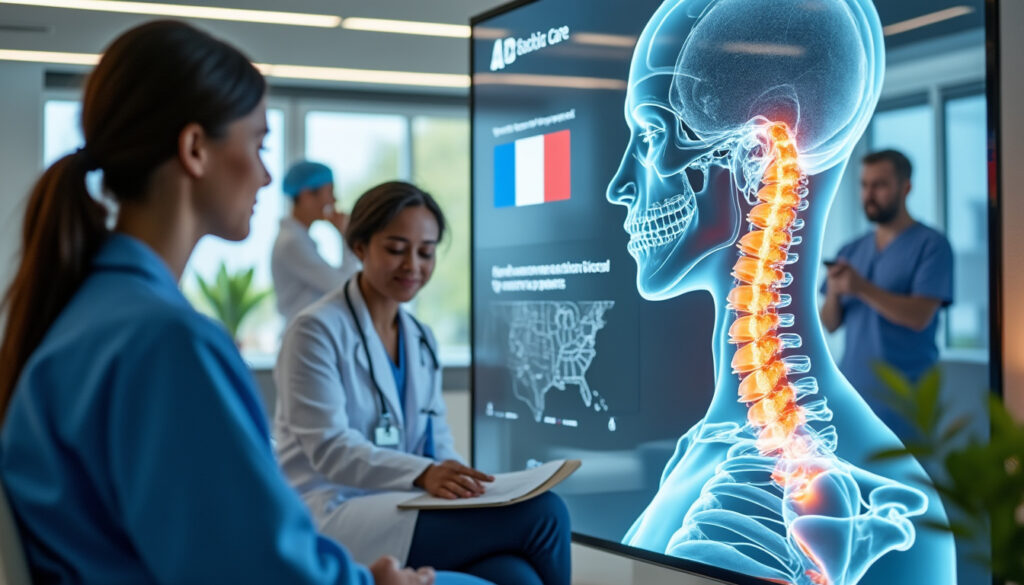
Neck Surgery in Montreal: Maintain Cervical Flexibility and Function
Neck conditions causing persistent pain or functional loss place a substantial burden on individuals and healthcare systems, especially in urban centers like Montreal. Surgical interventions targeting the cervical spine have evolved tremendously, aiming not only to relieve symptoms but to…
Role of Dr. Sylvain Desforges in Expert Evaluation and International Care Coordination
At the heart of this innovative spine care continuum is Dr. Sylvain Desforges, whose credentials include a B.Sc., D.O., and N.D., alongside founding leadership roles in the ACMA, the College of Canadian Osteopaths, and TAGMED. His pioneering contributions to the field of spinal pathology evaluation and patient accompaniment uniquely qualify him to orchestrate complex cross-border treatment plans.
Dr. Desforges ensures that each medical evaluation is rooted in stringent scientific evidence and ethical practice aligned with Canadian and Québec healthcare policies. His role extends beyond clinical assessment to personalized patient education, succinctly demystifying surgical indications, potential benefits, risks, and the rehabilitation journey.
This comprehensive support empowers patients, cultivating trust and easing anxiety through transparent communication. Dr. Desforges’ involvement guarantees not only access to meticulously vetted surgeons and technologies but also a patient-centered approach that embraces empathy alongside expertise.

Disc Prosthesis in Lévis: Quick and Long-Lasting Results
Chronic back pain caused by degenerative disc disease continues to profoundly impact the quality of life for many residents in Lévis and the broader Quebec area. For decades, traditional spinal fusion surgery has been the primary solution for alleviating severe…
Patient Empowerment and Accessible Support for Informed Decision-Making
Choosing surgical intervention demands thoughtful consideration of the risks, benefits, and alternatives. Dr. Desforges encourages patients to become active participants in their care, fostering open dialogue and guided decision-making based on individualized evaluation.
Understanding the nuances of disc prosthesis surgery, its limitations, recovery expectations, and the importance of adherence to postoperative rehabilitation equips patients to approach treatment confidently and realistically. The personalized nature of international coordination ensures continuity of care, mitigating the isolation often felt in complex medical journeys.
For individuals eager to explore tailored spine health solutions, connecting with Dr. Desforges’ experienced team represents a vital step. Patients are invited to initiate personalized assessment and consultation to receive expert recommendations attuned to their unique circumstances.
To discuss your spinal health and explore possibilities for quick and safe disc prosthesis procedures, please contact the SOS Tourisme Médical team. Expert guidance and innovative orthopedic care are closer than you may think.
| Type of Disc Prosthesis Surgery | Indications | Typical Recovery Time | Motion Preservation | Availability |
|---|---|---|---|---|
| Cervical Disc Prosthesis (e.g., Mobi-C, Prestige LP) | Degenerative disc disease at C3-C7, radiculopathy, myelopathy | 4-10 weeks | Yes | Lévis & France |
| Lumbar Disc Prosthesis (e.g., prodisc L, activL) | Moderate to severe lumbar disc degeneration L3-S1, chronic axial pain | 6-12 weeks | Yes | Lévis & France |
| Spinal Fusion Surgery | Severe instability, advanced degeneration, contraindications to replacement | 3-6 months | No | Québec & France |
What distinguishes disc prosthesis from traditional spinal fusion?
Disc prosthesis replaces the damaged disc while preserving spinal motion, whereas spinal fusion permanently immobilizes the affected segment. Motion preservation can reduce stress on adjacent discs and promote better functional outcomes.
How long is the recovery period after disc prosthesis surgery?
Recovery typically ranges from 4 to 10 weeks depending on the surgery location and patient activities. Early mobilization and physiotherapy support optimal healing while minimizing downtime.
Are these disc prosthesis surgeries safe and approved?
Yes, the disc prostheses used in Lévis and French clinics have received regulatory approvals and are backed by scientific studies ensuring safety and efficacy for their intended indications.
Is surgery necessary for every patient with disc degeneration?
Surgery is considered only after completing 3 to 6 months of conservative treatment including physical therapy and neurovertebral decompression. Not all patients will require surgery if symptoms improve with conservative care.
How does international coordination enhance patient care?
Transatlantic coordination accelerates access to advanced surgical options, provides cost-effective comprehensive care bundles, and ensures continuous patient support from evaluation through recovery, combining expertise from Québec and France.

Motion Surgery in Terrebonne: Maintain Intervertebral Mobility
Back pain remains a widespread concern for many in Quebec, with traditional treatment pathways often imposing lengthy waiting periods and financial constraints. Recently, Motion Surgery in Terrebonne has emerged as a transformative option, attracting patients seeking spinal solutions that prioritize…