A Comprehensive Guide to Comparing Spinal Care Practices in France and Quebec
November 3, 2025
Comprehensive Guide to Simple Surgery, Fusion Techniques, and Motion Preservation
November 4, 2025
In the bustling neighborhoods of Côte-des-Neiges–Notre-Dame-de-Grâce, persistent back pain stemming from herniated discs significantly impacts the daily lives of many residents. As urban living imposes both physical and mental stresses, effective and innovative treatment solutions have become a necessity. Among these solutions, the neurovertebral decompression therapy offered by the TAGMED Clinic emerges as a beacon of hope. This non-invasive method is gaining traction as a leading alternative to conventional surgery, blending cutting-edge technology and meticulous clinical expertise to restore spinal health and functionality without the trauma of surgical procedures.
With over 35 years of clinical experience, Dr. Sylvain Desforges spearheads this remarkable therapeutic approach at TAGMED, situated conveniently near Côte-des-Neiges and Notre-Dame-de-Grâce. His extensive credentials and pioneering leadership in osteopathy and neurovertebral decompression reinforce the clinic’s commitment to scientific rigor and patient-centered care. Patients benefit not only from treatment but also from comprehensive education about their condition and care pathway, fostering informed decision-making and empowerment. In this dense and active urban area, TAGMED’s state-of-the-art care strategies are transforming how herniated discs are managed, prioritizing comfort, precision, and improved mobility through technology like SpineMED and DRX9000 systems.
Understanding Herniated Discs in Côte-des-Neiges–Notre-Dame-de-Grâce: Symptoms and Daily Challenges
Herniated discs represent a prevalent spinal condition, particularly in densely populated urban centers such as Côte-des-Neiges–Notre-Dame-de-Grâce. This disorder occurs when the soft center of an intervertebral disc pushes through a crack in the tougher exterior casing, often compressing nearby nerves and eliciting a range of uncomfortable symptoms.
Common manifestations include:
- Lower back or neck pain: Often intense and debilitating, sometimes described as a sharp or burning sensation.
- Sciatica: An area-specific pain radiating from the lower spine down the leg due to sciatic nerve irritation.
- Neurological symptoms: Numbness, tingling, or a pins-and-needles sensation in extremities, indicating nerve involvement.
- Muscle weakness: Difficulty in performing certain movements, potentially affecting balance and coordination.
- Reduced spinal mobility: Stiffness and diminished flexibility hamper daily tasks such as bending or twisting.
Living with these symptoms in an active, urban setting presents unique challenges. Long hours spent seated at work, heavy reliance on computers, and lifestyle stress contribute to worsening symptoms. Recognizing and addressing these signs early is critical to preventing progression and long-term nerve damage. Comprehensive evaluation at specialized clinics like TAGMED ensures accurate diagnosis that differentiates herniated discs from other spinal conditions.
| Symptom | Associated Cause | Potential Consequence |
|---|---|---|
| Lower back pain | Lumbar nerve compression | Limits daily activity and mobility |
| Sciatica | Sciatic nerve irritation | Leg pain and difficulty walking |
| Numbness | Partial nerve injury | Reduced limb sensation |
| Muscle weakness | Motor nerve involvement | Risk of falls and imbalance |
Understanding these nuances is essential for targeted intervention. For residents seeking relief, resources such as detailed guides on herniated disc symptoms and treatments provide valuable background, supported by ongoing patient education at TAGMED.
IntraSPINE® in Sherbrooke: A Long-Lasting Solution for Chronic Lower Back Pain
Chronic lower back pain remains one of the most pressing health concerns in Sherbrooke and beyond, impacting millions and often diminishing daily quality of life. Despite the prevalence of lumbar discomfort, many face limited access to cutting-edge treatments amidst lengthy…
Neurovertebral Decompression Therapy: Revolutionizing Herniated Disc Treatment at TAGMED
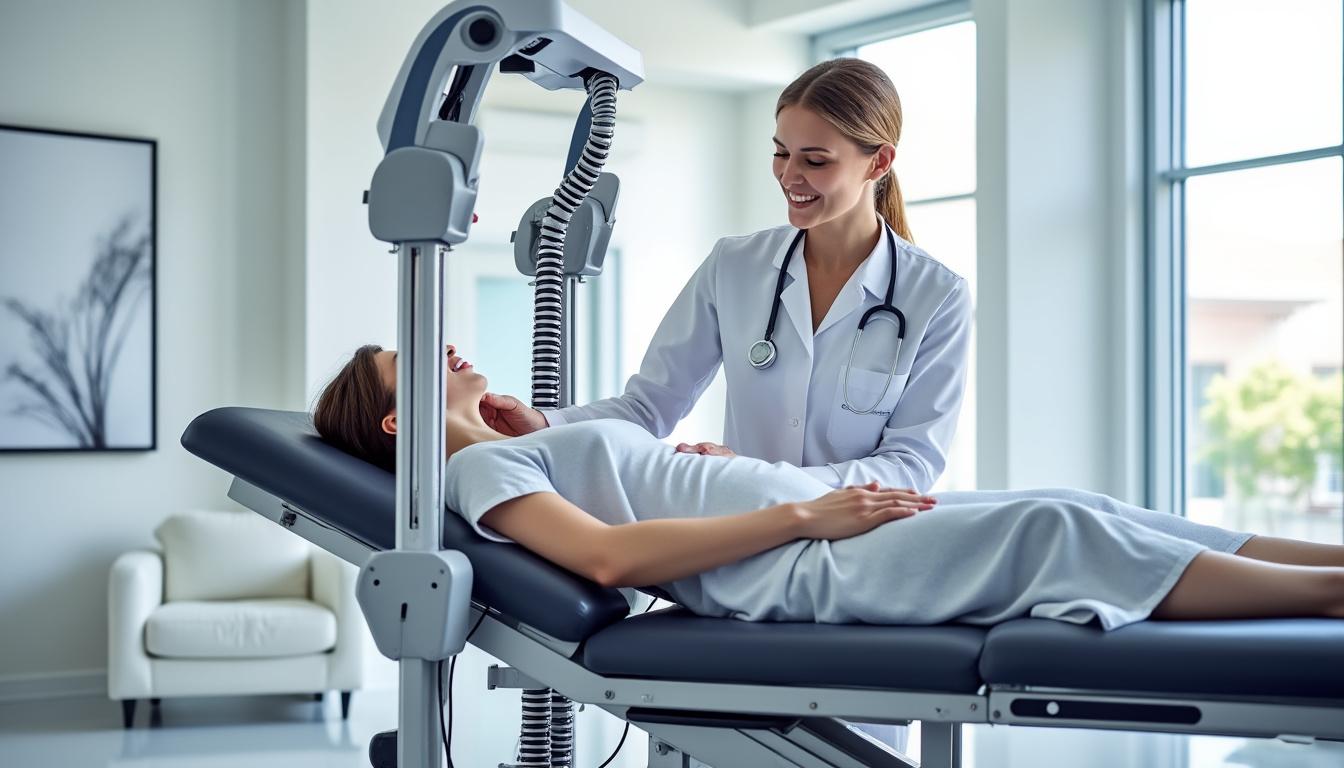
Faced with the challenges of invasive surgery, many patients in Côte-des-Neiges–Notre-Dame-de-Grâce are turning to neurovertebral decompression—a precise, non-invasive spinal treatment technique. This therapy involves the use of advanced traction systems such as SpineMED, DRX9000, and Vax-D to gently stretch the spine, relieving pressure on affected discs and nerves.
Key benefits include:
- Non-invasive nature: No incisions, anesthesia, or hospitalization required, significantly reducing risks and recovery time.
- Targeted pressure reduction: Controlled, segmental spinal traction specifically alleviates disc stress where it is needed most.
- Disc rehydration and regeneration: The decompression encourages nutrient flow and healing within the intervertebral discs, restoring flexibility and height.
- Neurological improvement: Diminished nerve compressive forces lead to reduced pain, improved sensation, and muscle strength restoration.
- Customizable treatment plans: Each protocol is individualized based on initial assessments, symptom progression, and patient tolerance.
| Feature | Description | Clinical Impact |
|---|---|---|
| Non-invasive | No surgical trauma or anesthesia | Lower complication risks and quicker recovery |
| Segmental Traction | Computerized control of applied force on spinal segments | Maximized relief for herniated discs |
| Progressive treatment | Session-by-session intensity adjustment over weeks | Optimized patient comfort and efficacy |
| Regenerative stimulation | Improved blood circulation and disc hydration | Promotes natural healing and disc rebuilding |
Supported by clinical evidence discussed in medical literature on spinal decompression in Côte-des-Neiges–Notre-Dame-de-Grâce, this treatment offers a promising alternative to surgery for many patients. The expert guidance by Dr. Sylvain Desforges ensures each individual benefits from the latest advancements and safe protocols.
Herniated Disc Care in Sainte-Julie: Why TAGMED’s Neurovertebral Decompression Therapy Stands Out
In the vibrant community of Sainte-Julie, back pain—particularly that stemming from herniated discs—has become a widespread concern affecting people from all walks of life. The relentless search for effective, non-invasive treatments has brought renewed attention to a pioneering therapy that…
TAGMED Clinic: A Canadian Leader in Advanced Spinal Decompression and Osteopathic Care
TAGMED stands out as a premier hub for addressing herniated discs through neurovertebral decompression complemented by osteopathic techniques. Located near Côte-des-Neiges–Notre-Dame-de-Grâce and Montréal North, its multidisciplinary team brings together chiropractors, osteopaths, physiotherapists, and pain management experts.
Distinctive aspects of TAGMED include:
- State-of-the-art equipment: Use of advanced products like DRX9000 and Aspen Medical Products, enabling precise and reproducible treatments.
- Thorough diagnostic process: Combined clinical exams and imaging (MRI, CT scans) crafted in collaboration with top spine surgeons to tailor treatment.
- Personalized care pathways: Continuous adjustments through regular evaluations ensure responsiveness to patient progress.
- Integration of complementary therapies: Therapeutic massage, laser treatment, and functional rehabilitation support recovery and sustain results.
- Accessible urban locations: Positioned strategically within reach of Côte-des-Neiges community to streamline patient journeys.
| Clinic Feature | TAGMED Advantage | Benefit to Patient |
|---|---|---|
| Multidisciplinary Team | Multiple expertise areas under one roof | Holistic, individualized patient care |
| Advanced Technology | High-tech tables and medical devices | Precision treatments and improved outcomes |
| Patient Follow-up | Scheduled evaluations and support | Adaptive plans yielding lasting improvements |
| Accessibility | Convenient Montréal locations | Easy appointment scheduling and continuity |
Patients appreciate how TAGMED emphasizes a compassionate and motivational atmosphere in which education and personalized follow-ups empower recovery. More information on specific treatments in areas like Côte-Saint-Luc and Montreal East can further assist residents in making informed choices about care.
Back Surgery in Trois-Rivières: Alleviating Pain While Preserving Mobility
In Trois-Rivières, Quebec, the persistence of back pain affects a substantial portion of the population seeking effective and personalized solutions. Back pain, often caused by spinal disorders or herniated discs, can drastically diminish quality of life, limiting mobility and causing…
Step-by-Step Experience of Neurovertebral Decompression at TAGMED
Patients considering neurovertebral decompression often wonder about the procedural details. At TAGMED, the process is designed to maximize comfort and precision, ensuring safety throughout the course.
- Preparation: Patients lie on a computerized decompression table equipped with adjustable harnesses tailored to their anatomy.
- Customization: The medical team inputs individual patient metrics, calibrating traction force and cycle timing accordingly.
- Decompression: The table performs gentle, controlled traction cycles targeting the precise lumbar or cervical disc involved.
- Monitoring: Clinical staff continuously supervise, adjusting parameters based on patient feedback and physiological response.
- Relaxation environment: Sessions, lasting about 30 to 45 minutes, often occur in calming settings with optional ambient sound to facilitate muscle relaxation.
| Treatment Phase | Description | Approximate Duration |
|---|---|---|
| Installation | Positioning and securing patient on table | 5 minutes |
| System adjustment | Setting traction parameters for patient | 10 minutes |
| Therapy application | Gradual spinal traction cycles | 30–45 minutes |
| Continuous observation | Monitor and adjust traction as needed | During session |
Generally, a full program includes 20 to 25 sessions over 4 to 6 weeks, producing sustainable relief. Most patients return immediately to their normal daily activities post-treatment, highlighting the convenience of this approach in busy urban lifestyles.
Disc herniation remains a significant health concern in Pointe-Claire, impacting the lives of a diverse population ranging from labor-intensive workers to the aging community. The condition, characterized by the displacement or rupture of the intervertebral disc, often leads to debilitating…
Comparing Neurovertebral Decompression to Other Herniated Disc Treatments in Côte-des-Neiges–Notre-Dame-de-Grâce
Choosing the right treatment for herniated discs involves evaluating invasiveness, efficacy, risk, and recovery implications. Neurovertebral decompression offers a balance of benefits, particularly when compared to surgery, medications, and conservative therapies such as physiotherapy or osteopathy.
| Treatment | Invasiveness | Duration | Risk Level | Effectiveness | Recovery Time |
|---|---|---|---|---|---|
| Neurovertebral Decompression | Non-invasive | 4 to 6 weeks | Low | High for uncomplicated herniations | Quick, no work interruption |
| Surgery (Laminectomy, Microdiscectomy) | Invasive | Single operation + extended rehab | Moderate to high | Variable, case-dependent | Weeks to months |
| Medications (NSAIDs, analgesics) | Non-invasive | Varied, often prolonged | Possible side effects | Temporary symptom relief | No interruption but long-term effects |
| Physiotherapy/Osteopathy | Non-invasive | 6 to 12 weeks | Low | Good for pain management and mobility | Gradual, no downtime |
This comprehensive comparison highlights the value of neurovertebral decompression as a well-rounded treatment aligning with both efficacy and patient lifestyle preferences. Insights are further enriched by sources like comparative analyses of spinal care options accessible for local residents.

TOPS™ in Gatineau: A High-Performance Solution for Lumbar Spine Care
In a region where chronic back pain increasingly affects quality of life, the quest for advanced and effective lumbar spine treatments is paramount. Lumbar spinal stenosis, a prevalent condition among Quebec’s aging population, often imposes persistent discomfort and mobility limitations.…
Emerging Surgical Innovations Near Montréal Complementing Conservative Care
While TAGMED prioritizes non-surgical intervention, recent minimally invasive surgical advancements remain noteworthy for complex cases. The Clinic Notre-Dame de Grâce near Gosselies has introduced an endoscopic method developed in Germany, reducing tissue trauma and postoperative recovery durations.
- Minimal incisions: Only a few millimeters necessary, drastically less tissue disruption.
- Lower blood loss: Precise muscle-sparing access minimizes intraoperative bleeding.
- Reduced infection risk: Closed surgical environments decrease postoperative complications.
- Faster recovery: Patients often discharged within two days, resuming activities weeks sooner.
- Specialized surgeon training: Expert involvement ensures high standards and consistent outcomes.
For patients whose condition exceeds the scope of conservative therapy at TAGMED, this innovative surgery provides a safe alternative. Personal accounts confirm meaningful improvements in pain and function soon after intervention.
At Gouin Clinic, the landscape of herniated disc therapy has entered a transformative era marked by the integration of Personalized Treatment Plans and breakthrough Neurovertebral Decompression Therapy. This non-surgical approach is revolutionizing how spinal disorders are managed, offering patients an…
Proactive Prevention and Supportive Strategies for Residents with Herniated Discs
Treatment success is amplified through proactive measures aimed at minimizing recurrence. For Côte-des-Neiges–Notre-Dame-de-Grâce residents, maintaining spinal health amidst urban demands includes several practical guidelines:
- Maintain proper posture: Align spine during sitting and standing; avoid prolonged static postures without breaks.
- Engage in regular physical activity: Incorporate core strengthening exercises, swimming, or yoga to support spinal muscles.
- Employ safe lifting techniques: Use knees and hips to lift, rather than straining the back.
- Manage body weight: Prevent excess spinal load by balanced nutrition and physical activity.
- Manage stress effectively: Stress-relieving practices can reduce muscle tension contributing to back pain.
- Early consultation: Seek expert assessment promptly upon lasting pain onset for optimized outcomes.
| Recommendation | Implementation | Health Benefit |
|---|---|---|
| Correct posture | Use of ergonomic chairs and supports | Decreases spinal disc stress |
| Physical exercise | Walking, swimming, yoga sessions | Strengthens spine and improves flexibility |
| Safe lifting | Bend knees and hips when carrying loads | Prevents disc injury |
| Weight control | Balanced diet and active lifestyle | Lessens disc compression forces |
Integrating these strategies with specialized interventions like those of TAGMED Montreal-Nord services ensures sustainable spinal wellness for the urban community.

Cervical Disc Prosthesis in Quebec: Preventing Post-Operative Stiffness
Neck pain is one of the most common musculoskeletal complaints in Quebec, affecting a significant portion of the population annually. Often rooted in degenerative cervical disc diseases or herniated discs, this persistent discomfort severely impacts daily life and mobility. Fortunately,…
The Societal and Economic Impact of Herniated Disc Treatments in Montreal
Beyond personal health, herniated discs impose notable societal costs affecting economic productivity and healthcare systems. Considerations include:
- High direct medical costs: Expenses from surgeries, imaging, therapy sessions, and post-treatment care.
- Work absenteeism: Lost wages and decreased workplace efficiency during recovery or chronic flare-ups.
- Public health burden: Increased demand on emergency and specialist services, affecting resource allocation.
- Psychological toll: Chronic pain can trigger anxiety, depression, and social withdrawal, further impacting quality of life.
- Benefits of nonsurgical treatments: Reduction of recovery duration and financial costs, with faster patient reintegration into work and society.
| Consequence | Economic Impact | Social Impact |
|---|---|---|
| Surgical intervention | High hospital and surgeon fees | Extended time off work |
| Medical leave | Reduced personal income | Isolation and stress |
| Frequent consultations | Accumulated healthcare costs | Unequal access to care |
| Non-invasive treatment | Controlled long-term expenses | Rapid return to daily activities |
Emphasizing treatments like neurovertebral decompression at TAGMED contributes significantly to alleviating these challenges. Combining advanced care with patient-centric efficiency creates a more sustainable healthcare ecosystem, especially important in urban Canadian centers.


The prevalence of herniated disc conditions in Blainville has sparked considerable discussion and misconceptions about their causes, symptoms, and treatments. While the pain and disability associated with this spinal disorder are well documented, the emergence of non-surgical options such as…
A Perspective by Dr. Sylvain Desforges on Non-Invasive Spinal Care Innovation
Dr. Sylvain Desforges, founder and president of TAGMED and Alliance Canadienne de Médecine Alternative, brings unparalleled expertise to spinal care. Emphasizing ethical practice and scientific evidence, he leads a paradigm shift toward patient-friendly, non-surgical therapies such as neurovertebral decompression.
Dr. Desforges advocates for:
- Precision in diagnosis and treatment: Careful focus on the affected spinal segments rather than generalized spine manipulation.
- Gradual, patient-tailored treatment plans: Emphasizing patience and tolerance to maximize safety and success.
- Integration of advanced technologies: Utilizing systems like DRX9000 alongside osteopathic manipulations to optimize outcomes.
- International collaboration: Coordinating care pathways between Québec and France, ensuring access to surgical innovations when necessary.
- Comprehensive patient empowerment: Education on spinal health and preventive strategies to sustain improvements.
His approach, articulated in various patient education resources and professional discussions such as comparative insight articles on spinal care in France and Quebec, highlights the evolving landscape where innovation meets ethics and compassion.
What immediate benefits can I expect from neurovertebral decompression therapy?
Most patients report rapid reduction in pain and enhanced mobility after just a few sessions, making daily activities more manageable.
Is the neurovertebral decompression treatment painful?
The procedure is generally painless; many describe a pleasant stretching sensation during sessions.
Can neurovertebral decompression help me avoid surgery?
For many, especially those with uncomplicated herniated discs, this therapy offers a valid, effective alternative to surgery.
How many sessions are typically needed for effective treatment?
Standard treatment plans involve 20 to 25 sessions over 4 to 6 weeks, adjusted based on individual symptom severity.
Are there any contraindications to neurovertebral decompression?
Patients with vertebral fractures, infections, or who are pregnant may not be suitable candidates; thorough medical evaluation is essential before beginning therapy.