Saint-Jérôme Chronic Disc Pain Managed with TAGMED
July 11, 2026
Postoperative Care After Back Surgery: Guidelines, Benefits, and Limitations
July 11, 2026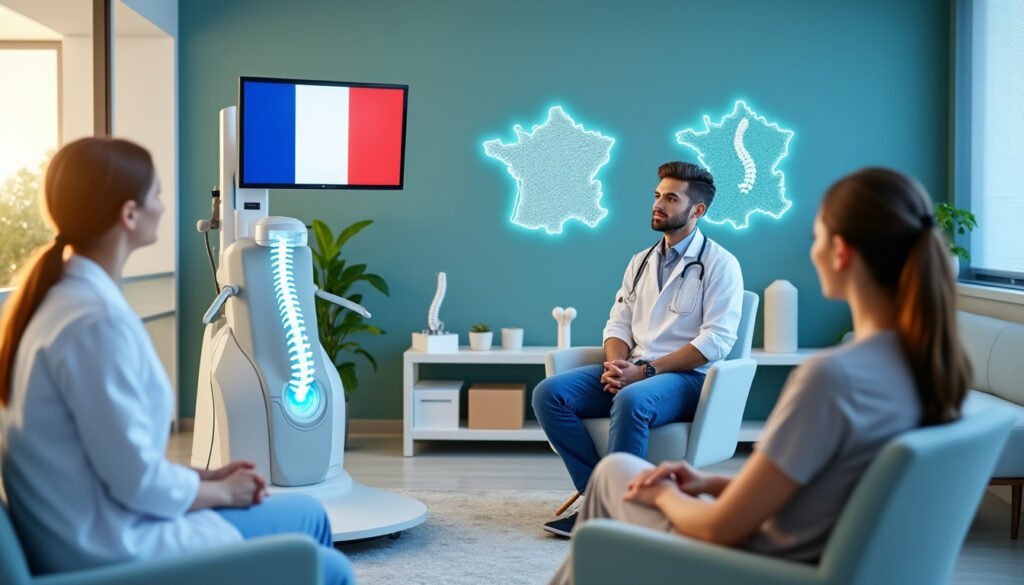
The growing concern over herniated discs in Saint-Bruno-de-Montarville reflects the broader challenges faced by many communities dealing with spinal health issues. This condition, often triggered by daily habits, occupational stresses, or age-related wear, manifests as a significant contributor to chronic back pain and reduced mobility. Residents encountering such spinal problems frequently search for accessible, effective, and especially non-surgical treatments that restore quality of life without excessive risk or downtime.
Among the treatments gaining attention is neurovertebral decompression therapy, a non-invasive method offering promising relief by targeting the root mechanical causes of typical disc herniations. Understanding the top warning signs that herald a herniated disc is essential for patients to seek timely evaluation and avoid severe complications. Knowledge of this condition’s underlying biomechanics, combined with advanced therapeutic technologies, enables personalized care plans that optimize patient outcomes.
Saint-Bruno-de-Montarville benefits from innovations led by professionals dedicated to comprehensive spinal care solutions, merging evidence-based practice with empathy and patient education. This approach not only diminishes pain and functional limitations but also redefines patient pathways through integrated clinical and technological advances. The following sections delve deeply into the hallmark symptoms needing immediate attention, the diagnostic protocols to confirm disc herniation, and how neurovertebral decompression can transform recovery trajectories with a focus on sustainable spinal health.
Understanding Herniated Disc Symptoms and Spinal Health Challenges in Saint-Bruno-de-Montarville
A herniated disc, medically characterized by the displacement of the nucleus pulposus beyond its normal confines due to a tear in the annulus fibrosus, is a common yet complex spinal condition. In Saint-Bruno-de-Montarville, the prevalence of such disorders is influenced by lifestyle factors including extended periods of sitting commonly observed in office workers, alongside repetitive manual tasks. These contribute to structural stress and eventual degenerative changes, particularly in the lumbar spine’s lower segments (L4-L5, L5-S1), where mechanical load is maximal.
The clinical presentation varies widely. Some individuals harbor asymptomatic herniations discovered incidentally during imaging for unrelated complaints, while others endure a spectrum of symptoms from localized lower back pain to radiculopathy involving intense, radiating limb pain. The severity and nature of disc herniation symptoms depend on the degree and location of nerve root compression, as well as nerve irritability from associated inflammation.
Typical back pain related to disc herniation in this region often intensifies with postural changes, especially prolonged sitting or bending forward. In cases where nerve roots are involved, patients describe sharp, burning or electric pain radiating down the sciatic nerve distribution or cervical radiculopathy for herniations located in the neck area.
In Saint-Bruno-de-Montarville’s medical community, an emphasis on early recognition of disc herniation symptoms is coupled with a rigorous diagnostic algorithm combining physical neurological examination and advanced imaging techniques, primarily MRI. Care providers like Dr. Sylvain Desforges underscore the importance of differentiating benign back discomfort from serious nerve compression to tailor interventions effectively and prevent chronic disability.
IntraSPINE® in Sherbrooke: A Long-Lasting Solution for Chronic Lower Back Pain
Chronic lower back pain remains one of the most pressing health concerns in Sherbrooke and beyond, impacting millions and often diminishing daily quality of life. Despite the prevalence of lumbar discomfort, many face limited access to cutting-edge treatments amidst lengthy…
Top 3 Warning Signs of Herniated Disc Necessitating Prompt Consultation in Saint-Bruno-de-Montarville
Recognizing the earliest and most critical symptoms of a herniated disc can alter the course of treatment significantly. Saint-Bruno-de-Montarville residents are advised to monitor closely for:
- Radiating Pain: Intense pain that extends from the back down the legs or arms along specific nerve distributions. This sciatica-like symptom often worsens with actions that increase intradiscal pressure like coughing or sneezing.
- Paresthesia: Sensory disturbances including numbness, tingling, or a pins-and-needles sensation often signal nerve involvement and should not be underestimated.
- Muscle Weakness: A decrease in muscular strength in the affected limbs, such as difficulty lifting the foot or gripping objects, heralds a more advanced nerve compression requiring urgent evaluation.
These signs extend beyond mere discomfort to reflect a neurological impact that can lead to permanent deficits if untreated. In particular, urgent signs such as saddle anesthesia or loss of bladder and bowel control demand immediate medical attention. This symptom cluster is adequately addressed in clinical guidelines endorsed by leading Canadian health authorities, and treatment plans prioritize early intervention to forestall irreversible nerve damage.
Patients experiencing these warning symptoms in Saint-Bruno-de-Montarville are encouraged to consult healthcare experts who integrate multidisciplinary perspectives, ensuring comprehensive evaluation. Dr. Sylvain Desforges, known for his expertise in neurovertebral decompression, advocates for immediate professional evaluation once these signs arise.
The role of Patient Education in Early Symptom Recognition
Educating patients to distinguish normal back pain from herniated disc-related symptoms is essential. Outreach programs and consultations focus on clear, jargon-free explanations that empower individuals to seek timely help. This educational effort improves compliance to therapeutic regimens and supports optimal spine health management.
Herniated Disc Care in Sainte-Julie: Why TAGMED’s Neurovertebral Decompression Therapy Stands Out
In the vibrant community of Sainte-Julie, back pain—particularly that stemming from herniated discs—has become a widespread concern affecting people from all walks of life. The relentless search for effective, non-invasive treatments has brought renewed attention to a pioneering therapy that…
Comprehensive Evaluation Techniques to Confirm Herniated Disc Diagnosis
The diagnostic process in Saint-Bruno-de-Montarville involves a detailed clinical assessment supported by imaging studies. The initial consultation gathers a full history—onset, duration, and exacerbating factors of symptoms—while physical exam emphasizes neurological function tests including muscle strength, sensory changes, reflexes, and specific provocative tests such as the straight leg raise to detect lumbar nerve irritation.
The magnetic resonance imaging (MRI) scan remains the gold standard for visualizing soft tissues, disc morphology, and nerve root impingement. It provides a precise map of the herniation’s location and helps discriminate between protrusion, extrusion, or sequestration variants. When MRI is contraindicated or unavailable, CT scans can be employed for osseous and some soft tissue details.
Importantly, imaging findings alone do not dictate treatment; they are interpreted alongside clinical symptoms and functional impairments to formulate individualized care strategies. Dr. Desforges integrates these findings with his osteopathic expertise to develop a holistic understanding of the patient’s condition.
Table: Diagnostic Workflow for Herniated Disc in Saint-Bruno-de-Montarville
| Step | Description | Purpose |
|---|---|---|
| Clinical History | Collect detailed symptoms and circumstances | Identify potential nerve involvement and symptom patterns |
| Physical Exam | Neurological tests including strength, sensation, reflexes | Detect objective signs of nerve root compression |
| MRI Scan | High-resolution spinal imaging | Confirm herniated disc presence, location, and severity |
| Additional Imaging | CT or X-rays if MRI contraindicated | Assess bony structures and guide treatment options |
Back Surgery in Trois-Rivières: Alleviating Pain While Preserving Mobility
In Trois-Rivières, Quebec, the persistence of back pain affects a substantial portion of the population seeking effective and personalized solutions. Back pain, often caused by spinal disorders or herniated discs, can drastically diminish quality of life, limiting mobility and causing…
Neurovertebral Decompression Therapy: A Non-Surgical Solution With Proven Benefits
Among innovative treatments for herniated discs in Saint-Bruno-de-Montarville, neurovertebral decompression stands out as a scientifically supported, non-invasive approach. Unlike traditional traction, modern decompression devices use controlled mechanical unloading to gently create a negative pressure inside the disc space, encouraging retraction of herniated material away from nerve roots and promoting disc healing.
This advanced therapy specifically suits patients with symptomatic disc herniations without urgent neurological deficits. Treatments involve multiple sessions over weeks, during which patients experience gradual pain relief and improved function. This approach markedly reduces the need for invasive spinal surgery and accelerates return to daily activities.
Clinical protocols at the Clinique TAGMED benefit from Dr. Sylvain Desforges’ leadership and meticulous patient-centric methodology. Using state-of-the-art spinal decompression tables integrated with complementary osteopathic and rehabilitative care, patients receive tailored programs to maximize therapeutic outcomes.
Scientific literature supports the efficacy of neurovertebral decompression, noting reductions in pain intensity, enhanced mobility, and positive morphological changes in disc structure allowing for sustainable recovery. This treatment aligns with the growing demand in Saint-Bruno-de-Montarville for affordable and effective spinal health solutions that incorporate technology and expertise.
Comparison of Treatment Modalities for Herniated Discs
| Treatment | Pros | Cons | Indications |
|---|---|---|---|
| Neurovertebral Decompression | Non-invasive, pain reduction, improved disc health | Requires multiple sessions, not for emergencies | Symptomatic herniations without major neurologic loss |
| Osteopathy | Improves spinal mobility, reduces musculoskeletal tension | Adjunctive therapy, does not treat the herniation itself | Supports conservative management |
| Surgical Intervention | Direct decompression, useful for severe cases | Invasive with inherent risks and longer recovery | Severe neurological deficits, failed conservative treatment |
Disc herniation remains a significant health concern in Pointe-Claire, impacting the lives of a diverse population ranging from labor-intensive workers to the aging community. The condition, characterized by the displacement or rupture of the intervertebral disc, often leads to debilitating…
Rehabilitation’s Critical Role in Post-Decompression Recovery in Saint-Bruno-de-Montarville
Comprehensive rehabilitation complements neurovertebral decompression therapy by rebuilding spinal stability and patient confidence. Targeted physical therapy focused on strengthening core musculature, including deep spinal stabilizers like the multifidus and transverse abdominis, is crucial for preventing recurrence and enhancing functional resilience.
Early-stage care employs gentle mobilizations and soft tissue treatments to alleviate muscle guarding and enhance joint flexibility. Progressing to individualized exercise regimens enables patients to regain controlled spinal motion and endurance.
Saint-Bruno-de-Montarville’s multidisciplinary teams, overseen by experts such as Dr. Desforges, ensure that rehabilitation plans align precisely with the patient’s evolving needs. This alignment improves outcomes, reduces chronic pain development, and empowers patients to maintain optimal spinal health long term.
Key Rehab Strategies Following Spinal Decompression
- Manual therapy to release muscle tension and joint restrictions
- Progressive core stabilization exercises tailored to patient tolerance
- Postural education and ergonomic advice for daily activities
- Gradual return to physical and occupational activities
- Continuous monitoring and adjustment of therapy based on response

TOPS™ in Gatineau: A High-Performance Solution for Lumbar Spine Care
In a region where chronic back pain increasingly affects quality of life, the quest for advanced and effective lumbar spine treatments is paramount. Lumbar spinal stenosis, a prevalent condition among Quebec’s aging population, often imposes persistent discomfort and mobility limitations.…
Common Misconceptions and Patient Concerns About Herniated Disc Treatment
Patients frequently harbor fears that surgical intervention is inevitable or that conservative treatments will cause worsening symptoms. It is vital to clarify that most herniated discs respond favorably to carefully monitored non-surgical therapies including neurovertebral decompression and osteopathy.
Contrary to beliefs that complete rest is required, active engagement in tailored exercise promotes neurological recovery and muscular support. Patients in Saint-Bruno-de-Montarville often benefit from educational discussions dispelling myths about timeline and outcomes, encouraging adherence to therapy.
Addressing these concerns proactively enhances patient motivation and facilitates adherence to the prescribed treatment plan whilst maintaining reassurance and a positive outlook.
At Gouin Clinic, the landscape of herniated disc therapy has entered a transformative era marked by the integration of Personalized Treatment Plans and breakthrough Neurovertebral Decompression Therapy. This non-surgical approach is revolutionizing how spinal disorders are managed, offering patients an…
Coordinated Patient Journey: Transatlantic Expertise Bridging Saint-Bruno-de-Montarville and International Spine Care
Dr. Sylvain Desforges plays an instrumental role in coordinating patient care across borders, linking Saint-Bruno-de-Montarville with leading spine centers in France through international medical tourism networks such as SOS Tourisme Médical. This transatlantic collaboration optimizes access to robotic surgical implants, laser therapies, and cutting-edge decompression technologies unavailable locally.
Such partnerships ensure personalized treatment pathways, minimize wait times, and adhere to rigorous clinical standards. This international coordination exemplifies an innovative model of patient care, blending expertise from Québec and Europe while monitoring patients closely through every step of their spinal health journey.


Cervical Disc Prosthesis in Quebec: Preventing Post-Operative Stiffness
Neck pain is one of the most common musculoskeletal complaints in Quebec, affecting a significant portion of the population annually. Often rooted in degenerative cervical disc diseases or herniated discs, this persistent discomfort severely impacts daily life and mobility. Fortunately,…
Essential Questions to Discuss with Your Osteopath or Healthcare Provider in Saint-Bruno-de-Montarville
Empowering patients with the right questions promotes deeper involvement and clearer understanding of their spinal condition and treatment options. Here are crucial inquiries recommended during consultations:
- What specific type and severity of herniated disc do I have, and how does it affect my nerves?
- Is neurovertebral decompression therapy suitable for my situation, considering my symptoms and lifestyle?
- What benefits and potential risks should I anticipate from decompression or complementary therapies?
- How many treatment sessions are typically recommended and at what frequency?
- What exercises or precautions should I adopt during and after therapy to support recovery?
Such open dialogue is fostered in specialized clinics like TAGMED, ensuring patient-centered care plans informed by the latest spinal health research. Patients can thus navigate their recovery with confidence, supported by evidence and expert guidance.
The prevalence of herniated disc conditions in Blainville has sparked considerable discussion and misconceptions about their causes, symptoms, and treatments. While the pain and disability associated with this spinal disorder are well documented, the emergence of non-surgical options such as…
Long-Term Impact of Herniated Disc on Quality of Life and the Promise of Neurovertebral Decompression
Chronic pain and restricted mobility from herniated discs negatively influence a patient’s daily existence and psychological well-being. Sleep disruption, reduced work participation, and social withdrawal commonly follow persistent symptoms. In Saint-Bruno-de-Montarville, this situation calls for therapies that not only alleviate pain but also restore functional autonomy.
Neurovertebral decompression offers a targeted approach that addresses the mechanical cause of disc-related nerve compression without surgery. This technique fosters progressive symptomatic relief, nerve function restoration, and improved spinal biomechanics. Patients report regaining active lifestyles and enhanced mental health as pain subsides and movement resumes comfortably.
Beyond individual benefits, regional healthcare systems note decreases in absenteeism due to back pain and lowered reliance on long-term analgesics, supporting the method’s social and economic value.
What symptoms should prompt a consultation for a possible herniated disc?
Persistent radiating pain, sensory changes such as numbness or tingling, and any muscle weakness in the limbs are key symptoms that require professional evaluation. Early diagnosis improves treatment success.
How does neurovertebral decompression therapy alleviate herniated disc pain?
This therapy creates a controlled mechanical distraction that decreases pressure on herniated discs and adjacent nerve roots, promoting natural healing and reducing pain.
Is surgery always necessary for herniated discs?
Surgery is reserved for severe cases involving significant neurological deficits or failure of conservative treatments. Most patients benefit from non-invasive methods like decompression and osteopathy under expert guidance.
What role does physical therapy play after decompression treatment?
Rehabilitation strengthens spinal stabilizer muscles, restores mobility, and prevents future herniation. Tailored exercises and postural education are essential for sustainable recovery.
Are there emergency warning signs for herniated discs?
Yes, symptoms such as loss of bowel or bladder control and saddle anesthesia require immediate medical attention as they indicate serious nerve compression.