Vaudreuil-Dorion Chronic Sciatica Relief After Failed Care
July 16, 2026
IntraSPINE® in Laval: Accelerated Recovery Following Lumbar Surgery
July 17, 2026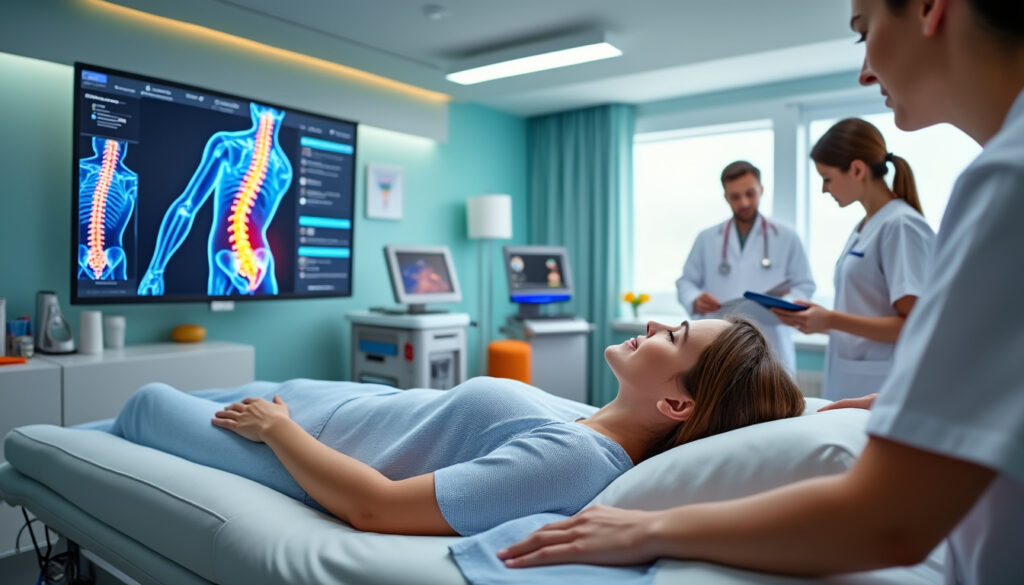
The herniated disc has become a significant health challenge in Saint-Jérôme, where sedentary lifestyles and demanding professions increasingly contribute to lumbar discomfort and spinal issues among the city’s working population. This escalating prevalence underscores a rising need for effective, non-invasive solutions that not only alleviate the debilitating pain but also restore mobility and improve the overall spinal health of affected individuals. Modern therapeutic advances offer hope through targeted therapy areas and neurovertebral decompression treatments that precisely address the problematic spinal segments while maintaining the spine’s natural function. These innovative approaches aim to relieve nerve root pressure, mitigate inflammation, and facilitate tissue regeneration, directly enhancing patients’ quality of life, work performance, and social engagement.
Within this clinical landscape, specialists in Saint-Jérôme are harnessing sophisticated technology and personalized care plans to confront the multifaceted impact of disc herniation. Treatment regimens combine controlled spinal traction with comprehensive functional rehabilitation, designed to meet the specific morphological characteristics and tolerances of each patient. This tailored methodology is increasingly endorsed not only for its efficacy but also for its alignment with scientific rigor, ethical medical standards, and patient safety mandates intrinsic to Quebec and Canadian healthcare protocols. As these progressive management strategies become more accessible, they offer a promising alternative to surgery for many, positioning targeted neurovertebral decompression at the forefront of spinal treatment innovation in the Laurentides region.
Precise Diagnostic Approaches to Herniated Disc in Saint-Jérôme
Understanding the specific nature and location of a herniated disc is critical for implementing a targeted therapy plan that will effectively relieve symptoms and restore function. In Saint-Jérôme, clinical evaluations emphasize a detailed assessment of both neurological and mechanical symptomatology. Patients frequently report lower back pain radiating to the legs, commonly referred to as lumbar radiculopathy, often accompanied by radicular paresthesias or muscle weakness. Such symptoms prompt thorough anamnesis, focusing on exacerbating factors including coughing and strenuous physical activity.
Neurological tests, such as the Lasègue straight leg raise and the SLUMP test, are routinely applied to confirm nerve root tension and irritation. These dynamic neurodifferential diagnostics provide essential insight into the functional integrity of spinal segments and nerve pathways. Beyond clinical examination, advanced imaging techniques, notably magnetic resonance imaging (MRI), establish anatomical confirmation by delineating disc protrusions and nerve root compression. MRI exams are judiciously prescribed, primarily in cases exhibiting neurological deficits or unsatisfactory response to conservative treatment protocols.
This precise correlation between clinical and imaging findings underpins patient selection for neurovertebral decompression therapies, ensuring that interventions are meticulously directed at symptomatic discs responsible for impaired spinal mechanics. Such disciplined patient stratification, championed by experts like Dr. Sylvain Desforges, enhances therapeutic outcomes and expedites physical and functional recovery. Indeed, this rigorous diagnostic framework distinguishes Saint-Jérôme’s approach, combining scientific integrity and patient-centric evaluation, pivotal for effective back pain relief.
IntraSPINE® in Sherbrooke: A Long-Lasting Solution for Chronic Lower Back Pain
Chronic lower back pain remains one of the most pressing health concerns in Sherbrooke and beyond, impacting millions and often diminishing daily quality of life. Despite the prevalence of lumbar discomfort, many face limited access to cutting-edge treatments amidst lengthy…
Targeted Therapy Areas: Understanding the Focused Impact Zones in Disc Herniation
The essence of successful non-surgical spinal treatment lies in precise targeting of the zones afflicted by disc herniation and their resultant nerve root compression. In Saint-Jérôme, therapeutic efforts are concentrated particularly on the lumbar intervertebral spaces—most notably at segments L4-L5 and L5-S1—which are statistically common loci for disc protrusions due to biomechanical stress points. These areas are where increased disc pressure disrupts local blood flow, initiates inflammatory cascades, and disturbs neural transmission, leading to characteristic pain and functional deficits.
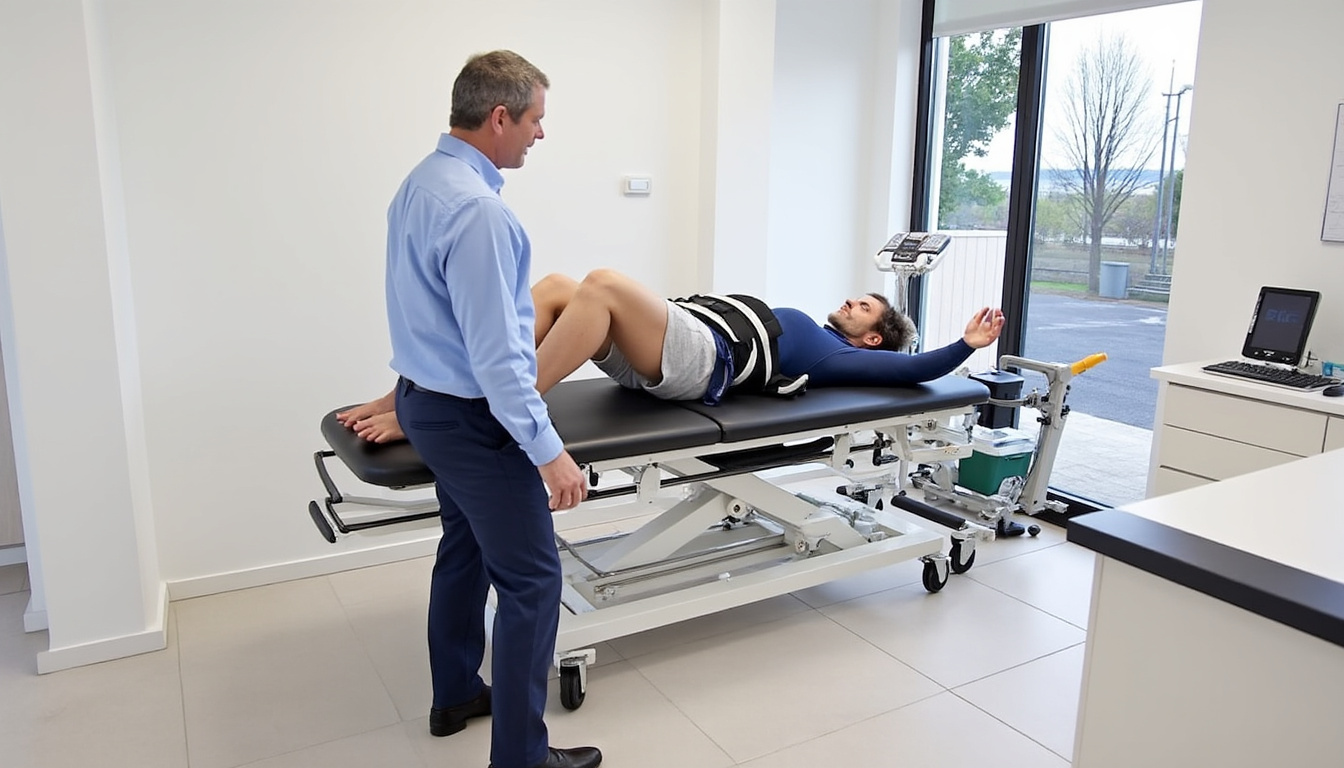
Neurovertebral decompression therapy implements a computationally controlled traction mechanism designed to gently restore disc height and reduce impingement. The therapy uses specialized harness systems and instrumented tables to isolate and decompress affected spinal segments, carefully modulating force to patient-specific tolerances. This dynamic targeting not only alleviates mechanical compression but promotes disc rehydration—a key factor in restoring the biomechanical cushioning function of the disc. Additionally, the procedure aims to inhibit the progression of symptom chronicity by encouraging a natural regenerative environment within the disc tissue.
During treatment, continuous monitoring and real-time adjustments ensure enhanced efficacy and patient comfort. The stabilizing harness maintains proper posture while specific spinal segments are slowly elongated, facilitating microcirculatory improvements and fostering tissue repair. This method exemplifies how the integration of technology and biomechanical principles offers a transformative approach to spinal care. As a result, many patients experience pragmatic reductions in pain levels and improvements in mobility that conventional therapies rarely achieve.
Herniated Disc Care in Sainte-Julie: Why TAGMED’s Neurovertebral Decompression Therapy Stands Out
In the vibrant community of Sainte-Julie, back pain—particularly that stemming from herniated discs—has become a widespread concern affecting people from all walks of life. The relentless search for effective, non-invasive treatments has brought renewed attention to a pioneering therapy that…
Clinical Evidence Supporting Neurovertebral Decompression in Saint-Jérôme
Data collected from local clinics and corroborated by recent meta-analyses emphasize neurovertebral decompression as an effective therapy for herniated discs. The treatment is associated with significant reduction in nerve root compression, enhanced segmental spinal mobility, and sustained pain relief. Clinical studies highlight key benefits including disc rehydration, reduction of inflammation, and improved tissue healing, collectively preventing progression toward chronic debilitating conditions.
Notably, a pooled incidence analysis indicated a regression rate of over 60% in patients undergoing non-surgical lumbar disc herniation treatments, indicating that targeted neurovertebral decompression can substantially promote natural healing processes. Furthermore, reduction in patient dependence on analgesics has been observed, alongside improvement in overall quality of life metrics. These findings are consistent with the outcomes observed at TAGMED Clinic under the expert evaluation of Dr. Sylvain Desforges, who prioritizes evidence-based, patient-centered care techniques.
Table 1 below enumerates critical clinical outcomes achievable through neurovertebral decompression therapy in comparison to conventional management approaches:
| Outcome Measure | Neurovertebral Decompression | Conventional Therapy |
|---|---|---|
| Reduction in Nerve Compression | Significant | Moderate to Minimal |
| Pain Relief (Short-Term) | Quick and Sustained | Variable, often transient |
| Improvement in Mobility | Marked and Progressive | Limited |
| Disc Rehydration and Regeneration | Promoted | Negligible |
| Risk of Chronic Pain Development | Reduced | Higher |
This evidence reinforces the role of neurovertebral decompression as a cornerstone in managing herniated discs in Saint-Jérôme, supporting its integration in multidisciplinary spinal health programs.
Back Surgery in Trois-Rivières: Alleviating Pain While Preserving Mobility
In Trois-Rivières, Quebec, the persistence of back pain affects a substantial portion of the population seeking effective and personalized solutions. Back pain, often caused by spinal disorders or herniated discs, can drastically diminish quality of life, limiting mobility and causing…
Therapy Protocols and Technological Innovations in Saint-Jérôme’s Neurovertebral Decompression
The standard therapy protocol for neurovertebral decompression in Saint-Jérôme integrates cutting-edge robotics and computer-assisted machinery that deliver controlled, adaptive traction. The sessions typically span 20 to 25 treatments, each lasting approximately 30 minutes, conducted under the vigilant supervision of experienced practitioners. The harness and support systems are customized for each patient to isolate target segments, enhancing precision.
Advanced devices employed in these clinics, like the SpineMED systems, contain sensors that continuously adjust traction forces to optimize decompression while ensuring patient safety by terminating sessions upon adverse responses. This technology ensures maximal efficacy without compromising comfort, allowing patients to remain relaxed and stabilized throughout the procedure.
Research illustrates that combining neurovertebral decompression with adjunctive therapies—including osteopathic manipulation, laser therapy, and functional physical rehabilitation—magnifies clinical benefits. This multimodal approach not only accelerates pain alleviation but fosters muscular strengthening and postural correction, essential for long-term spinal health.
Saint-Jérôme exemplifies a regional hub where innovation converges with patient care, supported by experts such as Dr. Sylvain Desforges, whose leadership in spinal decompression has set remarkable standards. Through his direction at TAGMED clinics, individuals receive comprehensive, tailored treatment plans leveraging technology and interdisciplinary expertise.
Disc herniation remains a significant health concern in Pointe-Claire, impacting the lives of a diverse population ranging from labor-intensive workers to the aging community. The condition, characterized by the displacement or rupture of the intervertebral disc, often leads to debilitating…
Rehabilitation After Neurovertebral Decompression: Maintaining Long-Term Spinal Health
Post-decompression rehabilitation is pivotal to consolidate gains and prevent relapses. In Saint-Jérôme, patients engage in progressive programs targeting muscular support, spinal flexibility, and postural awareness. Strategies encompass gentle mobilizations, strengthening of core stabilizers, ergonomic education, and lifestyle modifications to optimize spinal loading.
Therapists closely collaborate with osteopaths and physiotherapists to adapt the regimen according to evolving patient needs, emphasizing consistent follow-ups and functional milestone assessments. Patients are coached to maintain optimal hydration, manage body weight, and adopt stress reduction techniques to minimize muscular tension contributing to recurrent symptoms.
This phase not only enhances structural integrity but also addresses psychosocial factors that may influence chronic pain persistence, embodying a holistic, patient-centered recovery process. The meticulous follow-up advocated by Dr. Desforges ensures prompt adjustments in care, maximizing therapeutic longevity.
At Gouin Clinic, the landscape of herniated disc therapy has entered a transformative era marked by the integration of Personalized Treatment Plans and breakthrough Neurovertebral Decompression Therapy. This non-surgical approach is revolutionizing how spinal disorders are managed, offering patients an…
Socioeconomic and Regional Factors Affecting Herniated Disc Management in Saint-Jérôme
Saint-Jérôme’s demographic and economic landscape impacts access to and organization of spinal disorder treatments. The urban-rural mix and a workforce engaged in prolonged sedentary or manual activities predispose the population to high incidence rates of disc herniation and low back pain.
Healthcare infrastructure in the region has evolved to prioritize non-surgical treatments, recognizing patient preferences for conservative management and the economic burden of surgery. TAGMED Clinic and allied centers collaborate within a regional network that facilitates rapid referrals to neurovertebral decompression and comprehensive rehabilitation services. This coordination reduces delays and optimizes resource utilization.
Moreover, interdisciplinary teamwork, involving experts in osteopathy, physical therapy, and psychological support, fosters a biopsychosocial model tailored to local needs, enhancing patient adherence and outcomes. This systemic evolution aligns with Dr. Sylvain Desforges’ vision of innovative, accessible, and patient-centric spine care in Quebec.

Cervical Disc Prosthesis in Quebec: Preventing Post-Operative Stiffness
Neck pain is one of the most common musculoskeletal complaints in Quebec, affecting a significant portion of the population annually. Often rooted in degenerative cervical disc diseases or herniated discs, this persistent discomfort severely impacts daily life and mobility. Fortunately,…
Choosing Between Surgical Intervention and Neurovertebral Decompression: Criteria in Saint-Jérôme
While neurovertebral decompression represents a highly effective non-invasive option, specific clinical scenarios necessitate surgical intervention. These include profound motor deficits, cauda equina syndrome, or unrelenting radicular pain following an adequate trial of conservative care.
Clinical decision-making integrates advanced diagnostics, including electromyography and detailed MRI scans, to evaluate neurological compromise and spinal integrity. Less invasive microdiscectomy procedures may be considered for suitable candidates, but surgery inherently carries procedural risks such as infection or neurological injury.
In Saint-Jérôme, expert teams under the guidance of Dr. Desforges emphasize exhausting non-surgical options before surgery, promoting neurovertebral decompression as first-line treatment. This approach reduces exposure to surgical morbidity while ensuring patients receive timely operative care when medically imperative.
The prevalence of herniated disc conditions in Blainville has sparked considerable discussion and misconceptions about their causes, symptoms, and treatments. While the pain and disability associated with this spinal disorder are well documented, the emergence of non-surgical options such as…
Recommendations for Optimal Care Post-Neurovertebral Decompression in Saint-Jérôme
Sustaining treatment benefits post-therapy requires adherence to lifestyle adaptations and follow-up care. Patients are advised to implement ergonomic corrections especially in occupational settings, maintain muscle conditioning through targeted exercises, and preserve spinal disc health via hydration and weight management.
Ongoing osteopathic or physiotherapeutic support is encouraged to detect and remedy biomechanical imbalances early. Techniques to alleviate muscular tension and stress, including relaxation therapies, are also integral to reducing symptom recurrence.
Clear guidelines suggest prompt re-evaluation if symptoms flare or worsen, thereby ensuring timely modifications of the therapeutic regimen and preventing complications. This preventative stance exemplifies the comprehensive care philosophy championed by Dr. Sylvain Desforges and his team, dedicated to fostering enduring spinal wellness.
- Maintain ergonomic postures, especially during occupational tasks
- Engage in regular spinal-focused strengthening and stretching exercises
- Ensure optimal hydration and healthy body weight
- Participate in periodic osteopathic or physiotherapy assessments
- Practice relaxation and stress reduction techniques
- Seek immediate consultation if new or worsening symptoms emerge

Minimally Invasive Surgery in Longueuil: Reducing Hospital Stays for Faster Recovery
In recent years, a transformative wave has swept through spinal healthcare in Longueuil, aiming to revolutionize treatment experiences for patients suffering from back disorders. This shift stems from a growing demand for procedures that minimize hospital stays without compromising efficacy.…
Comprehensive Overview of Neurovertebral Decompression and Its Impact on Spinal Health
Neurovertebral decompression represents a sophisticated spinal treatment modality that addresses disc herniation by mechanical and physiological means. It leverages controlled traction to reduce intradiscal pressure, facilitating resolution of protrusion and attenuation of nerve root inflammation. This non-surgical treatment complements osteopathic and physical therapy interventions, collectively enhancing back pain relief and spinal function restoration.
Its scientific validation through clinical studies and patient outcomes positions this method as a pivotal option in contemporary spine care, particularly in Saint-Jérôme, where expertise by clinicians like Dr. Sylvain Desforges drives its implementation. As research evolves and new bioengineering advancements emerge—such as dynamic spinal implants and laser therapies—neurovertebral decompression protocols continue to adapt, promising even greater efficacy and patient-centric customization.
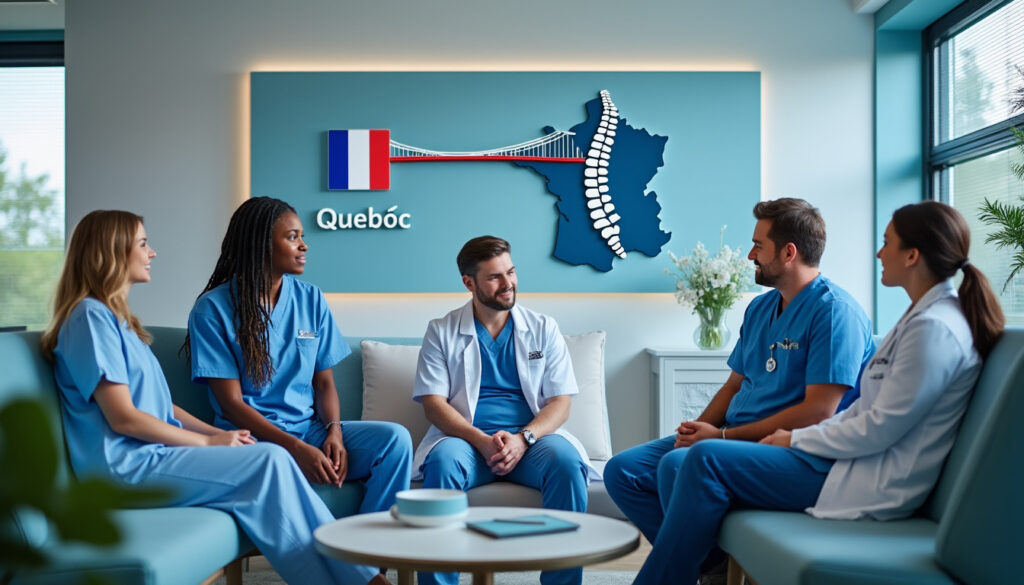
Patients are encouraged to engage proactively with healthcare professionals to understand the nuances of their condition, the indications and limitations of treatment, and to participate actively in their personalized care journey. The collaborative international networks, including transatlantic coordination between facilities in Canada and France, further underscore the innovation geared toward accessible and high-quality spinal health solutions.
What are the main symptoms indicating a herniated disc in Saint-Jérôme?
Typical symptoms include lower back pain radiating into the legs, numbness, muscle weakness, and reduced spinal mobility, often aggravated by physical activity or posture.
How many sessions of neurovertebral decompression are typically required?
Generally, treatment protocols involve 20 to 25 sessions spaced over several weeks, tailored to individual patient needs and responses.
Is neurovertebral decompression safe for elderly patients?
Yes, it is safe and effective for elderly patients when performed following a comprehensive medical evaluation that excludes contraindications like fractures or infections.
Can neurovertebral decompression help avoid surgery?
For many patients, this treatment offers a non-surgical alternative that significantly reduces symptoms, although surgery remains necessary for severe neurological complications.
Why is rehabilitation essential after decompression therapy?
Rehabilitation strengthens the spine, restores mobility, and prevents recurrence of disc herniation symptoms, solidifying the treatment’s long-term benefits.