Longueuil Sciatica Care for Chronic Disc Sufferers
May 15, 2026
Brossard Non-Surgical Recovery from Herniated Lumbar Discs
May 16, 2026
The increasing prevalence of chronic low back pain represents a significant challenge for healthcare systems around the world, notably in Canada and Quebec. Sherbrooke, as a hub of innovative medical practice, is at the forefront of advancing spinal health solutions. The introduction of IntraSPINE technology there has brought new hope to many experiencing debilitating lumbar pain and posture-related discomfort. Known for its dynamic approach to spinal stabilization, IntraSPINE offers a breakthrough in preserving joint mobility while alleviating symptoms commonly associated with degenerative disc disease and spinal stenosis.
Patients suffering from low back pain often face long waiting times for specialized care, leading to increased suffering and reduced quality of life. The minimally invasive nature of IntraSPINE implantation, designed to maintain full range of motion without compromising lumbar function, stands as a key advantage in addressing this problem. This cutting-edge medical device has been introduced to Sherbrooke’s clinical landscape thanks to collaborations between Canadian and French experts, ensuring the highest standards of assessment, surgical precision, and postoperative rehabilitation.
Relying on over 30 years of clinical and academic expertise, Dr. Sylvain Desforges stands out as a pivotal figure in spearheading these advances. His roles as founder and president of the ACMA, the Collège des Ostéopathes Canadiens, and TAGMED underscore his dedication to an integrated, evidence-based, and patient-centric approach to spine care. In this growing partnership between transatlantic medical communities, patients benefit not only from innovative technologies like IntraSPINE but also from meticulously coordinated care pathways tailored for optimized outcomes and safety.
Understanding IntraSPINE: A Modern Approach to Dynamic Lumbar Stabilization and Posture Correction
IntraSPINE represents a state-of-the-art interlaminar stabilization device engineered to address lumbar spine ailments while preserving natural spinal motion. Unlike traditional fusion surgeries that immobilize spinal segments, this implant is strategically positioned between the laminae — the posterior parts of vertebrae — to maintain biomechanical integrity and reduce stress on adjacent segments. This placement closer to the instantaneous axis of rotation differentiates IntraSPINE from interspinous implants, delivering superior posture correction and enhanced lumbar support.
The device itself is constructed from medical-grade dimethyl siloxane and encased in pure polyethylene terephthalate, materials chosen for their biocompatibility and durability. A silicone coating on its frontal extremity minimizes adhesions near delicate ligamentous structures, further optimizing patient outcomes. The implant comes in various sizes and incorporates an artificial ligament system to stabilize the targeted spinal level while promoting functional movement.
Such innovation is supported by rigorous biomechanical research demonstrating that IntraSPINE preserves full lumbar range of motion and sagittal balance, critical factors for sustained back pain relief and posture improvement. The device’s minimally invasive implantation, achievable through a small 4 mm incision, offers advantages such as reduced operative trauma, faster recovery, and lower risk of complications compared with more extensive spinal fusion procedures.
For patients confronting lumbar degenerative disc disease (DDD) and related syndromes such as neurogenic intermittent claudication, IntraSPINE corresponds to an advancement that respects the complex dynamics of the spinal canal. By stabilizing painful segments without rigidity, it supports spine therapy by balancing pain management needs with the patient’s desire to maintain an active lifestyle.
Learn more about IntraSPINE in Sherbrooke’s minimally invasive intervention to deepen your understanding of this advanced treatment option.
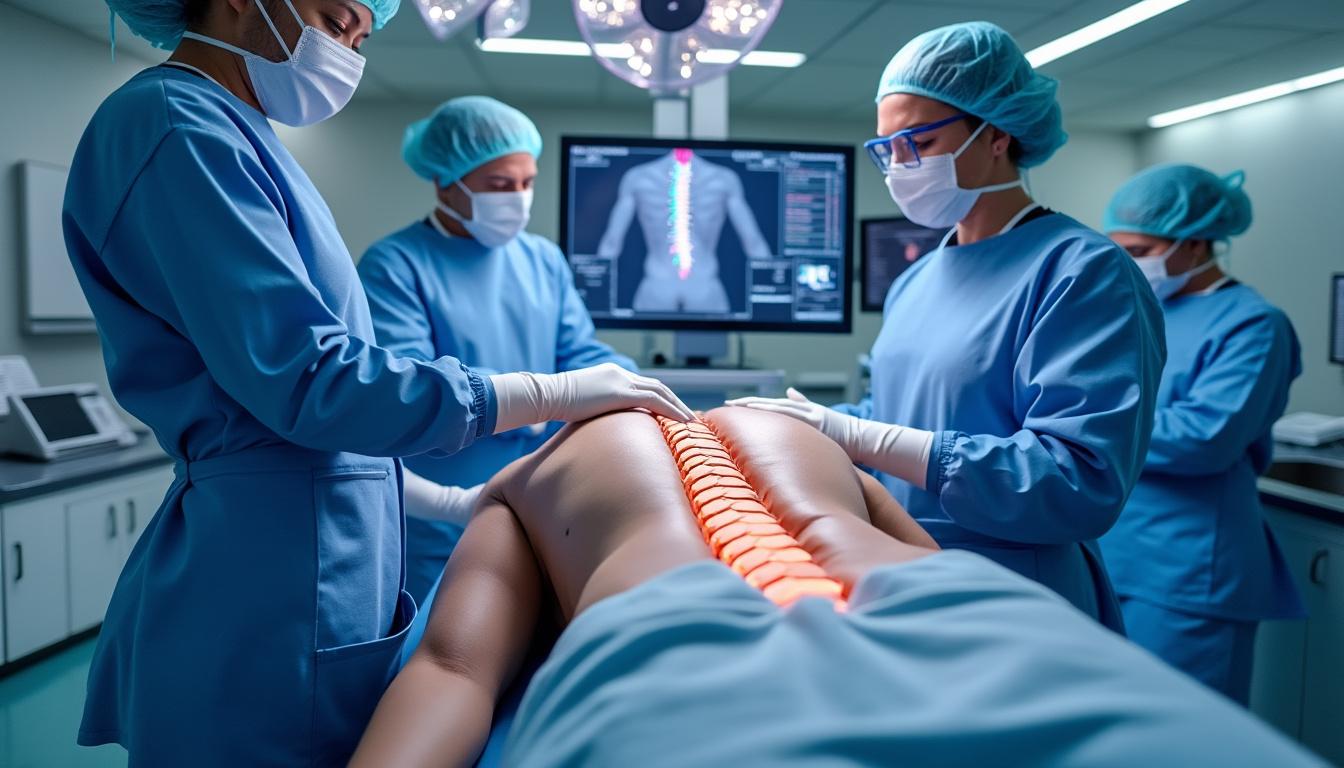
IntraSPINE® in Sherbrooke: Durable Solution for Chronic Low Back Pain
The management of chronic low back pain, a widespread condition affecting millions across Quebec and beyond, has reached a pivotal moment thanks to innovative medical technologies and coordinated care pathways. At the heart of this evolution lies the IntraSPINE implant,…
Minimally Invasive Surgery with IntraSPINE: What Patients Can Expect in Sherbrooke
Surgery involving the IntraSPINE device is distinguished by its minimally invasive nature, offering significant benefits particularly for those eager to optimize recovery times and minimize surgical risk. The procedure generally occurs through a monolateral or bilateral approach via a small skin incision, reducing tissue disruption commonly experienced in traditional open surgeries.
The surgical technique has been refined to ensure precise distraction and placement of the interlaminar device, which contributes to restoring normal disc height and preserving lumbar flexibility. This careful method decreases postoperative pain and allows patients to mobilize sooner, often with fewer complications related to wound healing or infection.
Rehabilitation afterward includes targeted lumbar support and spine therapy exercises tailored to restore muscular balance and encourage proper posture correction. Importantly, the surgical experience is supported by a multidisciplinary team, including osteopaths and physiotherapists, focusing on holistic patient care that Dr. Sylvain Desforges has championed throughout his career.
Patients are carefully evaluated preoperatively to confirm that conservative treatments—such as advanced decompression therapies available at the Clinique TAGMED—have been thoroughly explored for at least 3 to 6 months before considering surgery. This ensures the decision to proceed with IntraSPINE implantation is made only when absolutely necessary and medically justified.
Overall, Sherbrooke’s approach integrates high performance with patient safety and individualized planning, combining technology and expert clinical evaluation for optimal lumbar support and pain relief. This model attracts patients who are looking for alternatives to prolonged wait times or limited options in Quebec’s private care sector.
Discover how Sherbrooke preserves lumbar lordosis and function with IntraSPINE in a patient-friendly setting.
Spine Surgery in Trois-Rivières: Reduce Pain and Preserve Mobility
In recent years, spine surgery in Trois-Rivières has evolved notably, combining advanced medical expertise with innovative technologies to deliver patient-centered care. This growing field addresses the increasing demand among Quebec residents seeking effective solutions for chronic back pain and mobility…
Biometrics and Biomechanics: The Scientific Backbone of IntraSPINE Technology
One of the paramount strengths of IntraSPINE lies in its foundation in scientific rigor and biomechanical precision. The device is designed to interact harmoniously with the spine’s natural biomechanics, particularly emphasizing sagittal balance and the ability to maintain physiological ranges of motion.
Biomechanical studies highlight that IntraSPINE positioning near the interlaminar space provides a more accurate restoration of the disc height compared to interspinous process implants. This affects spinal kinematics beneficially, reducing abnormal vertebral translation and preserving adjacent segment mechanics, thereby preventing acceleration of degenerative changes often seen after fusion surgeries.
Furthermore, the materials and anatomical placement contribute to a low incidence of complications such as implant loosening, adjacent segment disease (ASD), or vertebral fractures—even among elderly patients with osteoporosis, a demographic increasingly affected by lumbar spinal stenosis.
For example, case reports have demonstrated that patients in their 80s with severe osteoporosis have achieved significant pain reduction and functional improvement following decompression complemented by IntraSPINE placement, with no implant failure or worsening of spondylolisthesis at one-year postoperative follow-up.
The biomechanical benefits of IntraSPINE translate into clinical value by enabling preserved spinal mobility, especially important for active adults wishing to maintain autonomy and quality of life despite degenerative conditions.
| Feature | Benefit | Clinical Impact |
|---|---|---|
| Interlaminar placement | Preserves full range of motion | Maintains natural spinal biomechanics |
| Medical-grade silicone coating | Prevents tissue adhesions | Reduces postoperative fibrosis and discomfort |
| Artificial ligament incorporation | Stabilizes operated segment | Limits excessive vertebral movement |
| Minimally invasive implantation | Smaller incision, less muscle damage | Faster recovery, reduced complications |
This comprehensive perspective underscores why IntraSPINE exemplifies modern, evidence-based innovation in spinal care—a hallmark of the approach championed by expert evaluators such as Dr. Sylvain Desforges. His commitment to scientific rigor and ethical practice ensures patients receive transparent education about the technology’s benefits and limitations.
TOPS™ in Gatineau: High-Performance Option for the Lumbar Spine
The landscape of spinal surgery has witnessed profound evolution, particularly for patients grappling with lumbar spine disorders such as spinal stenosis and spondylolisthesis. These conditions, increasingly prevalent among Quebec’s population, impose substantial limitations on mobility and quality of life. The…
Transatlantic Coordination: Bridging Quebec and France for Optimized Spine Care with IntraSPINE
The management of spinal disorders with devices like IntraSPINE benefits enormously from international collaboration, particularly between Canada and France. Sherbrooke serves as a clinical nexus where this synergy unfolds, facilitating transatlantic patient pathways that maximize access to high-quality care and innovative surgical techniques.
Dr. Desforges’ unique positioning as a pioneer and connector enables patients to navigate complex treatment journeys smoothly across healthcare systems. This includes initial comprehensive evaluations, treatment planning with French surgical partners, and postoperative follow-up coordinated by local teams in Quebec.
This transdisciplinary and transnational partnership integrates advanced technologies available in France, such as implants and decompression methodologies not routinely accessible in Canada, with Quebec’s expertise in osteopathy and conservative spine therapies. The result is a personalized and efficient care pathway that limits wait times, reduces treatment fragmentation, and ensures continuity throughout the entire care experience.
For patients, the value-added benefits of this model include:
- Access to cutting-edge surgical implants designed for motion preservation
- Shortened surgical waitlists compared to local healthcare provision
- Multifaceted pre- and postoperative care by experts in both public and private settings
- A patient-centered approach respecting cultural and linguistic preferences
This coordination exemplifies innovation not only in medical technology but also in healthcare delivery and patient engagement, setting new standards for spinal health services.
Cervical Disc Prosthesis in Quebec City: Avoid Post-Surgery Stiffness
Chronic neck pain remains a significant challenge for thousands of residents in Quebec City every year, often leading them to seek effective spinal surgery options that minimize downtime and maximize long-term mobility. Among the recent advancements revolutionizing cervical spine care,…
The Essential Role of Conservative Therapy Before Considering IntraSPINE Surgery
While surgical interventions like IntraSPINE implantation offer effective solutions for lumbar conditions, it is crucial to emphasize that surgery should only be considered after exhaustive conservative management has been completed. Patients are typically advised to undergo treatments spanning 3 to 6 months, including physical therapy, osteopathic care, and advanced decompression techniques.
In particular, the neurovertébral decompression therapy provided by the Clinique TAGMED represents a cornerstone of conservative spine management in Quebec. This approach utilizes cutting-edge technologies such as laser therapy and dynamic implants to alleviate symptoms without compromising structural integrity.
Completing such conservative measures prior to surgery ensures that the patient has maximized non-invasive options, permitting better-informed decisions and improved surgical outcomes. Moreover, it aligns with the ethical commitment to evidence-based medicine and patient safety upheld by Dr. Desforges and his multidisciplinary team.
Patients who have not yet experienced these specialized conservative treatments should be encouraged to consult with their healthcare providers or contact the Clinique TAGMED. Doing so can prevent unnecessary surgical risk and enhance overall spinal health through tailored, non-surgical modalities.
Explore how conservative care integrates with IntraSPINE for comprehensive back pain relief to guide your treatment journey effectively.
Minimally Invasive Surgery in Longueuil: Reduce Hospital Stay Duration
In recent years, advances in spinal care have dramatically reshaped the treatment landscape for patients suffering from debilitating spinal conditions. Particularly in Longueuil, the emergence of minimally invasive surgery (MIS) techniques offers a transformative alternative to conventional open surgeries. These…
Unique Advantages of IntraSPINE Services in Sherbrooke Compared to Local Care
The services offered in Sherbrooke surrounding IntraSPINE implantation stand out distinctly from conventional care options currently available in Quebec. A combination of advanced device selection, skilled evaluation by experts, and access to innovative surgical and rehabilitation tools underscore this uniqueness.
Key service advantages include:
- Technological innovation: Access to IntraSPINE, a device not widely available across Canada, offering superior dynamic stabilization and posture correction.
- Expert knowledge: Evaluations conducted by Dr. Sylvain Desforges, whose pioneering expertise ensures precision in determining candidacy and personalized care plans.
- Comprehensive care: Integration of pre- and postoperative services including conservative therapies, surgical procedures, and rehabilitative support within the same care network.
- Transatlantic experience: Incorporation of best practices and implants from France, paired with locally grounded follow-up ensuring patient comfort and culturally sensitive communication.
This comprehensive and innovative approach results in improved posture, spinal health, and measurable reductions in lumbar pain, freeing patients from the limitations imposed by degenerative spine conditions. Furthermore, it addresses systemic challenges such as healthcare access delays and high costs in private care, providing a tailored, effective alternative that patients trust.
IntraSPINE® in Laval: Modern Solution for Lumbar Stabilization
In the evolving landscape of orthopedic treatments, the city of Laval has become a hub for innovations addressing chronic lower back pain. Among the groundbreaking solutions gaining attention is the IntraSPINE device—a modern spinal implant designed to offer dynamic lumbar…
Patient Experiences and Motivations: A Closer Look at IntraSPINE Benefits in Sherbrooke
Patients suffering from chronic low back pain frequently express apprehension around surgical solutions due to concerns about invasiveness, recovery times, and long-term outcomes. The development of IntraSPINE technology, paired with Sherbrooke’s multidisciplinary and transatlantic care model, provides tangible reassurance and motivation to many.
Case studies from Sherbrooke have documented patients’ swift postoperative recovery, marked improvements in posture, and sustained relief from back pain symptoms. For elderly patients with complex comorbidities such as osteoporosis, IntraSPINE offers a less invasive alternative to fusion, reducing risks while restoring lumbar support. The ability to preserve natural lumbar motion also supports a return to daily activities without the stiffness and limitations often associated with fusion surgeries.
Extensive patient education and personalized treatment plans accompanied by detailed evaluation ensure that each individual feels supported throughout their healthcare journey. Dr. Desforges’ approach emphasizes open dialogue, encouraging patients to ask questions and participate actively in decisions about their care pathways.
Ultimately, the choice to pursue IntraSPINE reflects a deliberate, well-informed process rooted in science, safety, and tailored patient needs, contributing to improved quality of life and autonomy.
| Benefit of IntraSPINE | Patient Experience | Long-Term Outcome |
|---|---|---|
| Posture correction | Noticeable improvement in standing and walking alignment | Reduced risk of secondary spinal complications |
| Back pain relief | Significant reduction in pain scores within weeks | Enhanced daily function and activity levels |
| Minimally invasive procedure | Short hospital stay and quicker return to normal routines | Lower complication rates and patient satisfaction |
Neck Surgery in Montreal: Maintain Cervical Flexibility and Function
Neck conditions causing persistent pain or functional loss place a substantial burden on individuals and healthcare systems, especially in urban centers like Montreal. Surgical interventions targeting the cervical spine have evolved tremendously, aiming not only to relieve symptoms but to…
Promoting Informed Decisions: Support and Guidance Offered to Sherbrooke Patients
Making decisions about spine surgery can be overwhelming and full of uncertainties. That is why it is vital that patients receive clear, accessible information supported by a caring and knowledgeable team. Dr. Sylvain Desforges prioritizes ethical evaluation and thorough explanation of the indications, expected results, and limitations of treatments involving IntraSPINE technology.
Patients are encouraged to discuss their specific clinical situation openly and ask questions related to pain management, rehabilitation, and overall prognosis. Educational materials, supported by scientific evidence and clinical data, form part of the multidisciplinary approach to customize care pathways. Such transparency ensures that each patient’s journey respects their unique condition and health goals.
This pedagogical philosophy empowers patients to become active participants in their health decisions. It also fosters trust in the transatlantic collaboration and the advanced surgical offerings available at Sherbrooke’s clinics.
If you want to explore your options or receive an expert evaluation, do not hesitate to contact the clinic or request an assessment for personalized recommendations to begin your spinal health journey.
What conditions are best suited for IntraSPINE implantation?
IntraSPINE is primarily indicated for skeletally mature patients diagnosed with degenerative disc disease from L1 to S1 causing lumbar pain, numbness, or neurogenic intermittent claudication. It is also suitable for those who have not responded adequately to conservative treatments.
How does the IntraSPINE implant preserve spinal mobility compared to fusion?
Unlike fusion surgeries that restrict movement by permanently joining vertebrae, IntraSPINE maintains motion by dynamically stabilizing the interlaminar space. This allows patients to retain natural lumbar function and reduces the risk of adjacent segment disease.
Is surgery with IntraSPINE safe for patients with osteoporosis?
Clinical cases have shown successful outcomes in elderly patients with osteoporosis using IntraSPINE devices, thanks to the implant’s placement on strong vertebral structures and its design minimizing risk of fractures and implant failure.
What should I expect during recovery after IntraSPINE surgery?
Recovery involves a shorter hospital stay, pain management, lumbar support, and supervised rehabilitation exercises. Patients often experience rapid symptom relief and gradual improvement in posture and mobility.
Are there alternative treatments before considering IntraSPINE surgery?
Yes, it is recommended to complete 3 to 6 months of conservative care—including neurovertébral decompression therapies available at Clinique TAGMED—before opting for surgery to ensure all non-invasive options have been adequately explored.
Disc Prosthesis in Lévis: Quick and Long-Lasting Results
Chronic back pain caused by degenerative disc disease continues to profoundly impact the quality of life for many residents in Lévis and the broader Quebec area. For decades, traditional spinal fusion surgery has been the primary solution for alleviating severe…