Châteauguay Cervical Disc Care for Professionals
May 15, 2026
Pointe-Claire Lower Back Herniation Recovery Guide
May 15, 2026
Lower back pain remains one of the most pervasive health challenges worldwide, often hindering daily activities and diminishing quality of life. In 2026, patients in Quebec face extended wait times and limited access to innovative spinal treatments, prompting renewed interest in advanced yet minimally invasive solutions. The IntraSPINE implant, now approved and available in Sherbrooke, emerges as a revolutionary orthopedic device designed to address lumbar degenerative conditions while preserving natural spinal function. This dynamic stabilization system is gaining recognition for combining effective back pain relief with maintenance of motion, marking a significant milestone in spinal surgery. With an emphasis on rigorous scientific evaluation, patient safety, and integration of cutting-edge technologies, the IntraSPINE solution stands out as an effective alternative to traditional fusion surgeries. Its introduction supports a growing transatlantic collaboration that enables Canadian patients to access specialized care and innovative treatments typically unavailable locally.
This comprehensive article explores the multifaceted aspects of IntraSPINE in Sherbrooke, focusing on its biomechanical principles, clinical benefits, and procedural nuances. It also details the unique patient management pathway coordinated by experts such as Dr. Sylvain Desforges, a pioneer with over 30 years of experience in spine care, who ensures personalized evaluation and adherence to evidence-based standards. Highlighting the integration of neurovertebral decompression therapies available at the Clinique TAGMED, this guide stresses the necessity of completing conservative treatments prior to surgical consideration. Readers will discover how this approved minimally invasive approach addresses complex spinal pathologies efficiently, supports faster patient recovery, and opens new horizons for those seeking alternatives to conventional interventions.
Innovative Biomechanics of the IntraSPINE Implant: Preserving Natural Spinal Motion
The design and functionality of the IntraSPINE implant are grounded in an advanced understanding of spinal biomechanics, a domain where preserving natural motion is pivotal for long-term health. Unlike traditional fusion surgeries that rigidly immobilize lumbar segments—often leading to increased stress at adjacent levels—the IntraSPINE device offers a dynamic stabilization solution preserving much of the spine’s physiological range of motion.
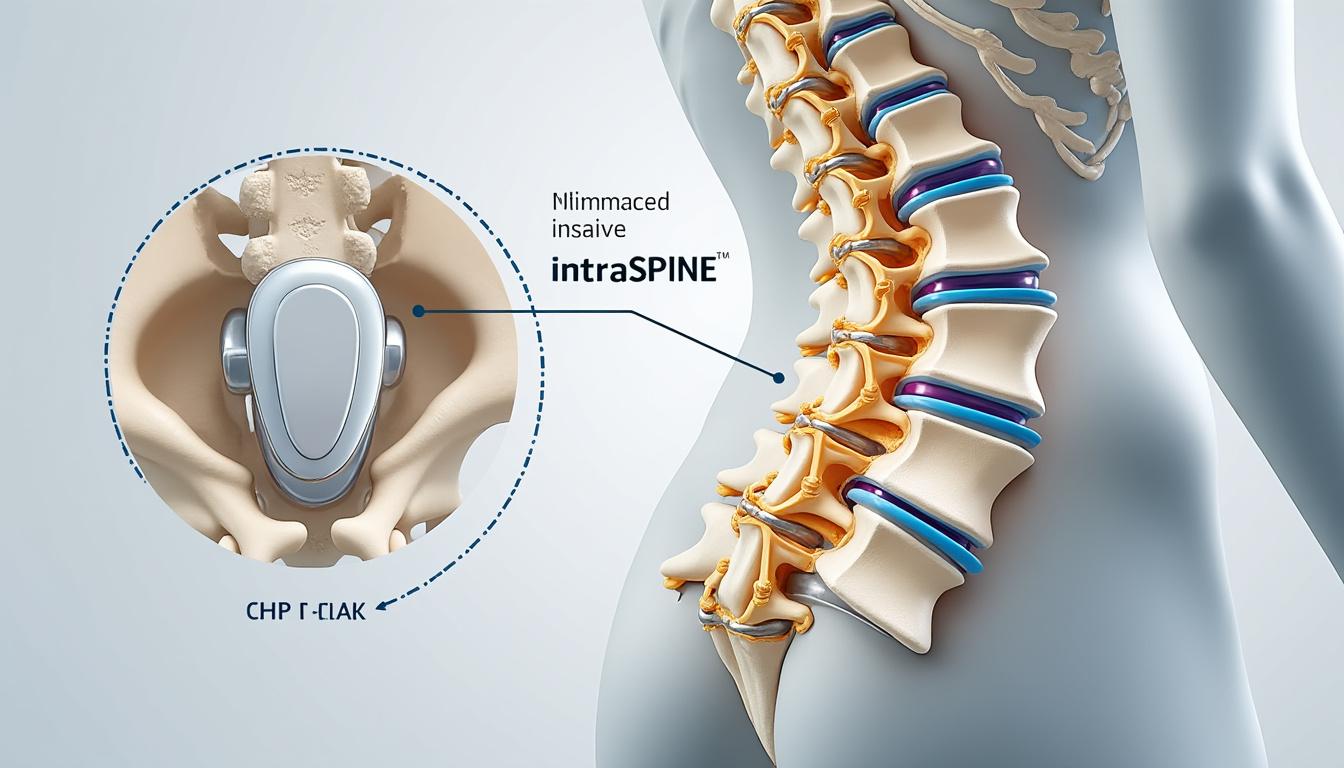
Positioned uniquely between the laminae and spinous processes, the device’s anterior interlaminar placement maintains the instantaneous axis of rotation (IAR), a critical biomechanical feature for balanced spinal movements. Crafted from biocompatible materials such as medical-grade dimethyl siloxane and polyethylene terephthalate, this implant exhibits elastic deformation zones. These zones provide controlled flexion and extension, which help maintain sagittal balance and reduce facet joint loading. Additionally, this positioning facilitates reopening of the neuroforamen and decreases disc pressure, all while avoiding the stiffness characteristic of fusion.
Maintaining segmental mobility offers several clinical advantages, including:
- Partial preservation of range of motion (ROM): Patients retain approximately 50% of movement at the treated level, mitigating compensatory hypermobility stresses on adjacent discs, which commonly precipitate degeneration.
- Reduction in adjacent segment degeneration (ASD): By conserving biomechanical function at the operated site, the long-term integrity of neighboring vertebrae and discs is better preserved.
- Improved pain relief and functional outcomes: Clinical studies suggest that outcomes in pain reduction and functional improvement with IntraSPINE implantation parallel those of fusion surgery, but with added benefits of quicker recovery and reduced surgical trauma.
These biomechanical distinctions make IntraSPINE a game-changer in spine treatment, especially for patients seeking to avoid the permanent limitations imposed by fusion. Sherbrooke’s access to this innovation provides new hope for individuals dealing with chronic lumbar pain and mobility restrictions.
IntraSPINE® in Sherbrooke: Durable Solution for Chronic Low Back Pain
The management of chronic low back pain, a widespread condition affecting millions across Quebec and beyond, has reached a pivotal moment thanks to innovative medical technologies and coordinated care pathways. At the heart of this evolution lies the IntraSPINE implant,…
Comparing IntraSPINE to Traditional Lumbar Fusion Surgery: Advantages in Mobility and Recovery
Traditional lumbar fusion surgery involves rigid fixation of vertebral segments, effectively eliminating motion to stabilize pathologically unstable spinal levels. While effective in resolving pain and instability, fusion frequently introduces biomechanical imbalances that accelerate adjacent segment degeneration, often requiring future revision surgeries. Herein lies a key advantage of the IntraSPINE minimally invasive solution: it strikes a balance between necessary stabilization and preservation of motion.
Key differences from fusion include:
| Parameter | IntraSPINE Implantation | Traditional Fusion |
|---|---|---|
| Operative Time | Approximately 72 minutes | Approximately 82 minutes |
| Intraoperative Blood Loss | ~65 ml | ~82 ml |
| Hospital Stay | ~9 days | ~11 days |
| Postoperative Segmental Mobility | ~50% ROM preserved | Almost none |
| Risk of Adjacent Segment Degeneration | Significantly lower | Higher risk |
Patients undergoing IntraSPINE implantation benefit from less surgical trauma, faster recovery times, and preservation of functional spinal mechanics. These factors contribute to reduced postoperative pain and enhanced overall quality of life. Furthermore, the minimally invasive nature of the procedure lowers complications related to blood loss and infection risks, reinforcing its role as a preferred option for suitable candidates.
For detailed insights into clinical outcomes and procedural specifics, readers can consult surgical reports and peer-reviewed studies showcasing this approved and safe procedure. Incorporating such evidence-based innovations emphasizes the commitment of Sherbrooke’s medical community to patient-centric and scientifically rigorous spine treatment.
Spine Surgery in Trois-Rivières: Reduce Pain and Preserve Mobility
In recent years, spine surgery in Trois-Rivières has evolved notably, combining advanced medical expertise with innovative technologies to deliver patient-centered care. This growing field addresses the increasing demand among Quebec residents seeking effective solutions for chronic back pain and mobility…
Essential Role of Conservative Treatments and Neurovertebral Decompression Before Surgery
One of the core principles guiding spine care recommended by Dr. Sylvain Desforges, with his extensive 30+ years’ experience, is that surgery — including IntraSPINE implantation — should be considered only after thorough conservative management. Patients are encouraged to complete at least 3 to 6 months of evidence-based non-surgical therapies before surgical options are explored.
Conservative management includes:
- Neurovertebral decompression therapy: This advanced approach, available at Centrale d’excellence like Clinique TAGMED in Sherbrooke, utilizes sophisticated protocols to relieve nerve root pressure gently, enhancing disc health and delaying the need for surgery.
- Physical therapy and targeted rehabilitation: Exercises aimed at increasing core strength and spinal stability help reduce pain and improve function.
- Pharmacological support: Anti-inflammatory medications and pain management strategies complement physical treatments.
- Complementary therapies: Approaches such as acupuncture and massage can support overall recovery and neurological function.
Skipping or shortening this phase may expose patients to unnecessary risks and suboptimal outcomes. In fact, many individuals experience significant symptom relief exclusively through these conservative measures, potentially postponing or avoiding surgery. For Quebecois patients particularly challenged by public healthcare delays, accessing such treatments at clinics with specialized expertise represents a vital step.
The multidisciplinary team led by Dr. Desforges at Clinique TAGMED ensures rigorous monitoring and personalized treatment adaptations, aligning with provincial and national safety regulations. This philosophy not only supports patient safety but also embodies ethical and innovative medical practice.
TOPS™ in Gatineau: High-Performance Option for the Lumbar Spine
The landscape of spinal surgery has witnessed profound evolution, particularly for patients grappling with lumbar spine disorders such as spinal stenosis and spondylolisthesis. These conditions, increasingly prevalent among Quebec’s population, impose substantial limitations on mobility and quality of life. The…
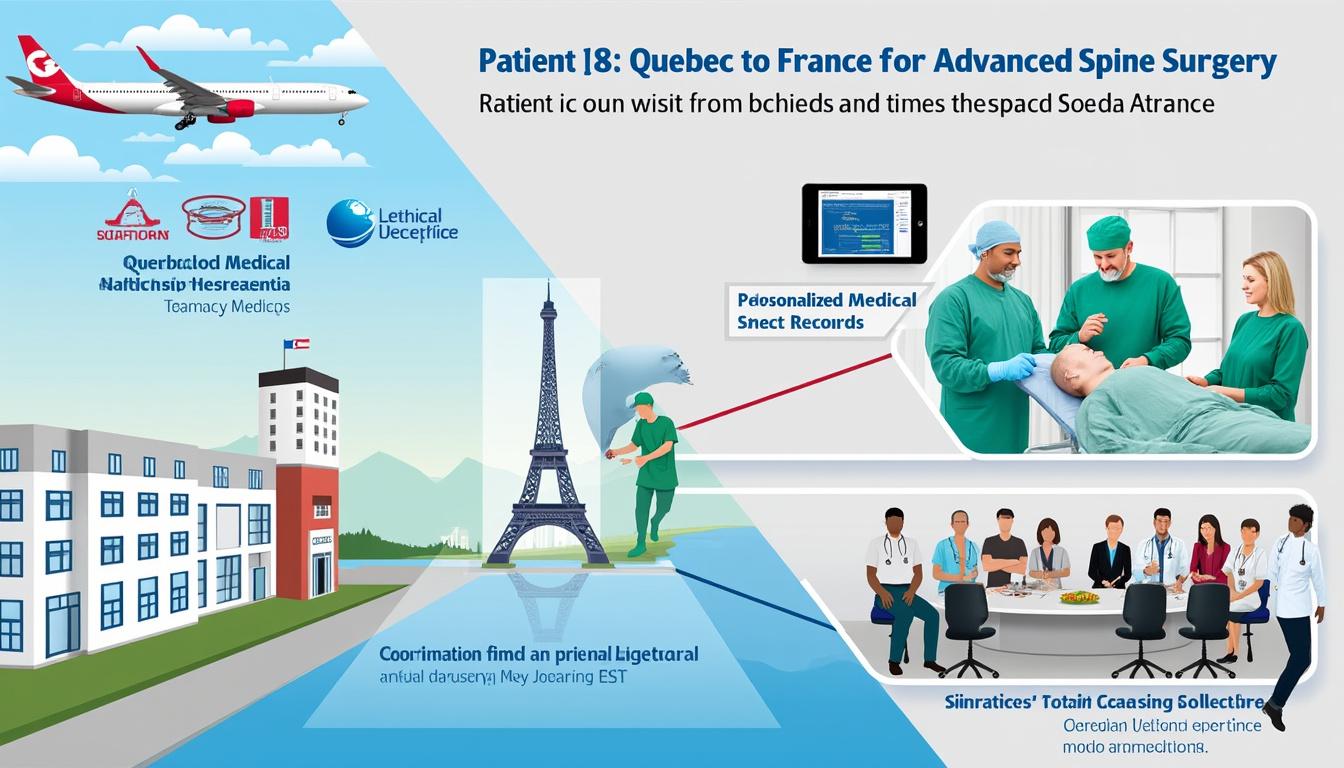
Structured Patient Pathway for Transatlantic Access to IntraSPINE Surgery and Care
The pathway to receiving IntraSPINE treatment in Sherbrooke and France exemplifies modern cross-border medical collaboration, geared toward optimizing patient experiences and clinical outcomes. Dr. Sylvain Desforges plays a pivotal role in guiding Quebec patients through this carefully coordinated transatlantic journey.
This process entails:
- Comprehensive evaluation in Quebec: This includes detailed clinical assessments, imaging reviews, and verification that prior conservative treatments were appropriately administered.
- Planning and coordination with European surgical centers: Partner hospitals such as those in Le Mans, Toulouse, and Bordeaux deliver expert surgical implantation using state-of-the-art robotic technology.
- Seamless patient logistics: Healthcare travel facilitators like SOS Tourisme Médical and Franchir orchestrate travel, accommodations, and bilingual assistance.
- Return to Quebec for rehabilitation: Patients receive specialized postoperative care and rehabilitation support from providers such as Neurothérapie Montréal, emphasizing multidisciplinary recovery and long-term spine health.
This integrated model significantly decreases delays inherent in local healthcare constraints, while ensuring patients benefit from cutting-edge surgical innovation endorsed by rigorous scientific scrutiny. Dr. Desforges’s expertise ensures that each patient undergoes personalized evaluation and clear communication, fostering shared decision-making and emotional reassurance during often stressful processes.
Cervical Disc Prosthesis in Quebec City: Avoid Post-Surgery Stiffness
Chronic neck pain remains a significant challenge for thousands of residents in Quebec City every year, often leading them to seek effective spinal surgery options that minimize downtime and maximize long-term mobility. Among the recent advancements revolutionizing cervical spine care,…
Technological Innovation Behind IntraSPINE: Robotic Assistance and Material Science
Beyond its biomechanical design, the success of IntraSPINE surgery in Sherbrooke rests heavily on advanced technological integration. Leading industry manufacturers, including Medtronic and Zimmer Biomet, have contributed cutting-edge robotics, preoperative 3D planning tools, and high-precision instrumentation to elevate surgical accuracy.
Robotic systems such as the Medtronic Mazor enhance implant positioning accuracy by guiding surgeons through customized 3D models of the patient’s spine. This reduces operative risks including malposition, unnecessary bone resection, and soft tissue damage.
Material science innovations also play a key role. The implant’s composition from flexible, biocompatible silicone and polyethylene terephthalate supports motion preservation and reduces implant-related complications. Surgeons benefit from ergonomically refined instruments designed for minimally invasive approaches, decreasing operative time and trauma.
These technological advances align with Sherbrooke’s vision for medical innovation in spine treatment, delivering procedures that maximize patient safety and recovery. Patients advised to explore these options can find comprehensive information within clinical documentation such as the IntraSPINE clinical evaluation.
Minimally Invasive Surgery in Longueuil: Reduce Hospital Stay Duration
In recent years, advances in spinal care have dramatically reshaped the treatment landscape for patients suffering from debilitating spinal conditions. Particularly in Longueuil, the emergence of minimally invasive surgery (MIS) techniques offers a transformative alternative to conventional open surgeries. These…
Postoperative Care and Rehabilitation: Keys to Successful IntraSPINE Outcomes
The journey does not end with surgery. Optimal recovery from IntraSPINE implantation depends on multimodal postoperative care designed to restore independence and prevent complications. A comprehensive rehabilitation strategy spearheaded by teams in Quebec, including Neurothérapie Montréal, underscores the importance of continued care.
Vital postoperative components include:
- Progressive physiotherapy: Tailored exercises focus on restoring spinal flexibility, core strength, and mobility.
- Neuromodulation therapies: Cutting-edge treatments like repetitive transcranial magnetic stimulation (rTMS) aid in neuroplasticity and pain modulation, contributing to enhanced comfort and function.
- Patient education: Empowering individuals to understand their postoperative limits, recognize warning signs, and maintain healthy spinal habits.
- Regular imaging and clinical monitoring: Ensures implant stability and early detection of adjacent segment issues.
Dr. Desforges’s patient-centered approach prioritizes seamless care transitions from international surgical facilities back to Quebec, fostering confidence and motivation through every care stage. This ethos facilitates rehabilitation success and long-term spine health preservation.
IntraSPINE® in Laval: Modern Solution for Lumbar Stabilization
In the evolving landscape of orthopedic treatments, the city of Laval has become a hub for innovations addressing chronic lower back pain. Among the groundbreaking solutions gaining attention is the IntraSPINE device—a modern spinal implant designed to offer dynamic lumbar…
Clinical Selection Criteria for IntraSPINE: Matching Patients to the Right Solution
Appropriate patient selection is critical for maximizing the benefits of IntraSPINE treatment and minimizing adverse events. The expertise of Dr. Desforges and collaborating surgeons ensures stringent assessment based on multiple clinical factors, thereby tailoring interventions to individual needs.
Typical inclusion criteria involve:
- Patients typically under 65 years old without advanced osteoporosis.
- Single-level lumbar degenerative disc disease with localized stenosis, especially at L4-L5.
- Persistent low back pain and radicular symptoms not sufficiently responsive to conservative therapies.
- Spinal stability without severe spondylolisthesis or significant instability.
- Imaging indicative of disc height loss but absence of large disc herniation or severe bony foraminal stenosis.
Conversely, exclusion factors include:
- Severe osteoporosis and poor bone quality.
- Multilevel spinal disease requiring fusion.
- Grade II or higher spondylolisthesis.
- Large disc prolapses unsuitable for dynamic stabilization.
- Significant foraminal bony stenosis.
Adherence to these criteria optimizes patient safety and outcome predictability. The decision-making process is underpinned by scientific evidence, regulatory compliance, and ethical standards championed by experts like Dr. Desforges. This ensures the implant’s biomechanical advantages are harnessed without compromising long-term spinal health.
Neck Surgery in Montreal: Maintain Cervical Flexibility and Function
Neck conditions causing persistent pain or functional loss place a substantial burden on individuals and healthcare systems, especially in urban centers like Montreal. Surgical interventions targeting the cervical spine have evolved tremendously, aiming not only to relieve symptoms but to…
Future Perspectives: Expanding Access and Innovations in Dynamic Spine Surgery
The ongoing evolution of dynamic spinal implants such as IntraSPINE represents a paradigm shift in managing lumbar degenerative disease. The integration of robotic-assisted surgery, improvements in biomaterials, and enhanced rehabilitation modalities promise broader patient eligibility and improved longevity of outcomes.
International collaborations foster not only clinical research but also knowledge exchange and training, contributing to expanded accessibility for Quebec patients through models such as the transatlantic partnership orchestrated by Dr. Desforges. Anticipated future trends include:
- Personalized medicine approaches utilizing artificial intelligence to tailor implants to individual spinal biomechanics.
- Advanced minimally invasive procedures that further reduce operative trauma and speed recovery.
- Integration of digital health platforms enabling remote patient monitoring and care coordination.
- Development of implants with longer lifespans using novel biomaterials.
- Expansion of patient-centric rehabilitation programs combining physical and neuromodulation therapies.
This forward-looking vision aligns with the overarching goal of preserving spinal function and quality of life while minimizing surgical risks, a mission passionately led by Dr. Desforges and his multidisciplinary team.
For Quebec patients considering this innovative, approved, and minimally invasive back pain solution, engaging with expert evaluation and coordinated care remains the best step forward. To learn more or discuss individual cases, visit SOS Tourisme Médical contact page for personalized guidance.
What makes the IntraSPINE implant different from traditional fusion surgery?
IntraSPINE preserves partial motion at the treated spinal segment, reducing stress on adjacent discs and supporting faster recovery, unlike fusion surgery which immobilizes the segment.
Is surgery with IntraSPINE recommended immediately after diagnosis?
Surgery is advised only after completing 3 to 6 months of conservative management including neurovertebral decompression therapies to optimize outcomes and avoid unnecessary interventions.
Can Quebec patients access IntraSPINE surgery through a coordinated international pathway?
Yes, Dr. Desforges coordinates evaluation in Quebec and surgery in expert centers in France, facilitated by services such as SOS Tourisme Médical, ensuring seamless transatlantic care.
What postoperative care supports the best recovery after IntraSPINE implantation?
A multidisciplinary rehabilitation program involving physiotherapy, neuromodulation, patient education, and imaging follow-up is essential for optimal long-term outcomes.
Are IntraSPINE implants certified for safety and efficacy?
Yes, IntraSPINE and similar dynamic spinal implants meet stringent CE and FDA certifications, ensuring compliance with international safety and performance standards.

Disc Prosthesis in Lévis: Quick and Long-Lasting Results
Chronic back pain caused by degenerative disc disease continues to profoundly impact the quality of life for many residents in Lévis and the broader Quebec area. For decades, traditional spinal fusion surgery has been the primary solution for alleviating severe…