Motion Surgery in Terrebonne: Preserving Natural Biomechanics
July 4, 2026
Laval Lumbar Disc Herniation Recovery Without Hospitalization
July 4, 2026
Chronic low back pain is an overwhelming condition affecting a vast number of individuals across Quebec and beyond, disrupting daily activities and diminishing quality of life. In Sherbrooke, an innovative solution has emerged that redefines the management of lumbar spine issues: the IntraSPINE implant. This device offers a dynamic approach to spinal stabilization, focusing on improving posture and delivering effective pain relief while preserving the natural mobility of the spine. Unlike traditional spinal fusion surgeries, IntraSPINE intervenes with an emphasis on maintaining physiological spine alignment and reducing biomechanical stress, setting new standards in spinal health care.
The integration of IntraSPINE in Sherbrooke’s clinical environment is spearheaded by Dr. Sylvain Desforges, whose expertise and dedication in spine evaluation spans more than 30 years. His foundational roles in the ACMA, Collège des Ostéopathes Canadiens, and TAGMED, alongside his commitment to rigorous scientific standards and patient-centered care, elevate this technology’s impact. By coupling advanced biomechanical innovation with a multidisciplinary and transatlantic collaboration, IntraSPINE offers patients not only relief but also a comprehensive care path designed for sustainable well-being.
This article unpacks the technical, clinical, and human aspects of IntraSPINE therapy in Sherbrooke, detailing the personalized journey from evaluation to recovery, the economic and biomechanical advantages of this technology, and the critical role of conservative treatments preceding any surgical intervention. For patients seeking alternatives to prolonged wait times and high costs in Quebec’s private sector, this approach heralds a promising hope grounded in science, ethics, and empathy.
Understanding IntraSPINE: A Dynamic Solution for Posture Improvement and Pain Relief in Sherbrooke
The IntraSPINE device has revolutionized how lumbar degenerative disorders are addressed by embracing dynamic stabilization principles rather than rigid fusion techniques. Specifically designed to be positioned in the interlaminar space between vertebrae, this implant supports the lumbar spine by reducing strain on damaged discs and preserving the natural lumbar lordosis, which is critical for optimal spinal alignment and posture.
This interlaminar implant differs markedly from interspinous spacers or traditional fusion methods. It aligns close to the spine’s natural axis of rotation, enabling the preservation of a functional range of movement. By maintaining this motion, IntraSPINE reduces the likelihood of adjacent segment degeneration—a common complication following lumbar fusion surgeries. Moreover, through a mini-invasive surgical approach developed under Dr. Desforges’ guidance, tissue trauma is minimized, supporting quicker recovery and reduced postoperative pain.
Indications for IntraSPINE implantation often include patients experiencing facetal syndromes, foraminal stenosis, degenerative disc disease, or mild segmental instability. Such conditions are sometimes inadequately addressed by conservative therapies alone but may not require complete immobilization via fusion. IntraSPINE therefore represents a tailored solution promoting both pain relief and spinal health preservation.
Aside from its technical merits, the IntraSPINE procedure incorporates an educational dialogue with patients, led by Dr. Desforges’ clear and jargon-free explanations. This transparency empowers patients to understand the benefits and limitations of the treatment thoroughly, fostering confidence and adherence to the care plan.
IntraSPINE® in Sherbrooke: Durable Solution for Chronic Low Back Pain
The management of chronic low back pain, a widespread condition affecting millions across Quebec and beyond, has reached a pivotal moment thanks to innovative medical technologies and coordinated care pathways. At the heart of this evolution lies the IntraSPINE implant,…
Key Stages of the Patient Journey with IntraSPINE in Sherbrooke
Embarking on treatment with IntraSPINE begins with a comprehensive evaluation under the expertise of Dr. Sylvain Desforges. This stage includes a detailed clinical and biomechanical assessment, focusing on the patient’s posture, movement dynamics, and prior therapeutic history. The purpose is to pinpoint spinal dysfunction accurately and assess candidacy for the IntraSPINE intervention without substituting any medical diagnosis.
Crucially, the surgical route is only pursued if a patient has undergone an extensive period — typically three to six months — of conservative treatment without satisfactory results. This conservative care must include modern neurovertebral decompression offered at the Clinique TAGMED, recognized for its advanced, evidence-based therapies in Quebec. This step ensures that surgery is a well-considered option after fully exploring non-invasive alternatives.
Once surgical candidacy is established, the protocol transitions to a personalized plan that includes a minimally invasive implantation. Hospitalization time is notably shorter than with traditional fusion, and early mobilization is strongly encouraged to maximize outcomes. Post-surgical follow-up incorporates coordinated surveillance from both Quebec and French clinical teams, leveraging Dr. Desforges’ transatlantic network to ensure smooth continuity of care.
Rehabilitation is essential to the journey, with a tailored program emphasizing gradual return to physical activity, maintenance of spine alignment, and muscular support. Allied therapies—ranging from targeted chiropractic adjustments to ergonomics training and physical therapy—are integrated into the recovery phase, promoting sustainable posture improvement and pain control.
Spine Surgery in Trois-Rivières: Reduce Pain and Preserve Mobility
In recent years, spine surgery in Trois-Rivières has evolved notably, combining advanced medical expertise with innovative technologies to deliver patient-centered care. This growing field addresses the increasing demand among Quebec residents seeking effective solutions for chronic back pain and mobility…
Biomechanical Advantages of IntraSPINE Compared to Traditional Spinal Fusion
The core appeal of IntraSPINE technology lies in the preservation of functional spinal mobility. Fusion surgery, while effective in stabilizing affected segments, inevitably sacrifices motion by permanently joining vertebrae. This rigid immobilization can lead to accelerated wear in adjacent segments, increasing the risk of further degeneration and pain.
In contrast, IntraSPINE maintains the physiological range of motion by stabilizing the spine dynamically. This not only supports postoperative pain relief but also fosters healthier spinal biomechanics, reducing abnormal stress on other vertebral levels. The device’s design emphasizes restoration of disc height and spinal posture, which contribute to better load distribution during everyday activities.
| Parameter | IntraSPINE (Dynamic Stabilization) | Traditional Lumbar Fusion |
|---|---|---|
| Mobility Preservation | Functional range of motion maintained | Segmental mobility eliminated |
| Impact on Adjacent Segments | Reduced risk of degeneration | Increased risk of adjacent segment disease |
| Hospital Stay | Typically shorter due to minimally invasive approach | Longer stay linked to greater surgical invasiveness |
| Recovery Period | Faster rehabilitation with early mobilization | Longer, often with movement restrictions |
This comparison clarifies why patients favor the IntraSPINE option when desiring pain relief without sacrificing an active lifestyle. The procedure’s mini-invasive nature also minimizes complications seen with traditional fusion surgeries such as extended scarring, infection risks, or chronic stiffness.
Cervical Disc Prosthesis in Quebec City: Avoid Post-Surgery Stiffness
Chronic neck pain remains a significant challenge for thousands of residents in Quebec City every year, often leading them to seek effective spinal surgery options that minimize downtime and maximize long-term mobility. Among the recent advancements revolutionizing cervical spine care,…
International Coordination Enhancing IntraSPINE Patient Care: Quebec-France Partnership
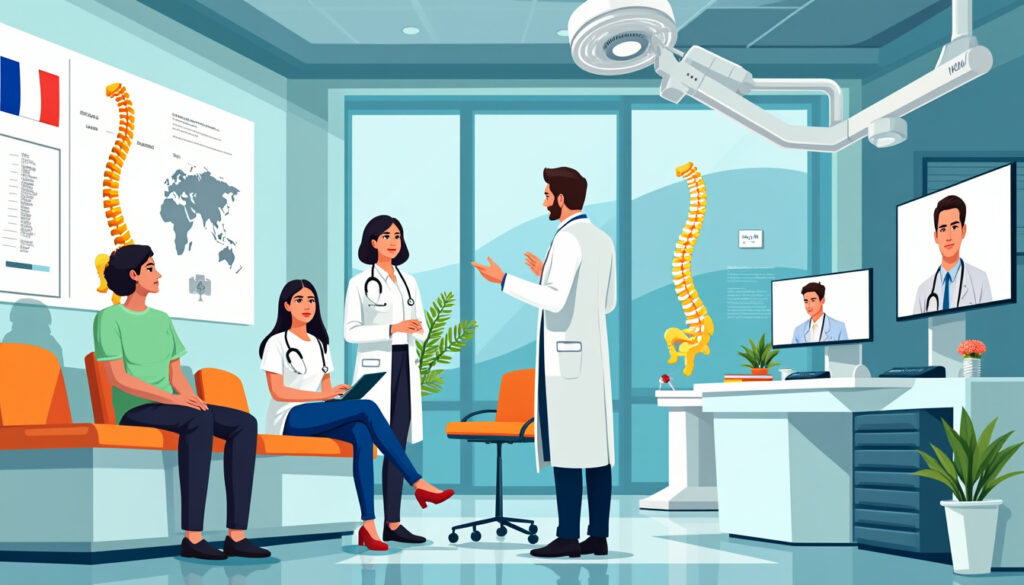
The success of IntraSPINE treatment in Sherbrooke is amplified by a unique transatlantic collaboration that Dr. Desforges has cultivated between Quebec and France. This partnership bridges gaps in healthcare delivery, merging French surgical innovations with rigorous Quebecois conservatory and rehabilitative practices.
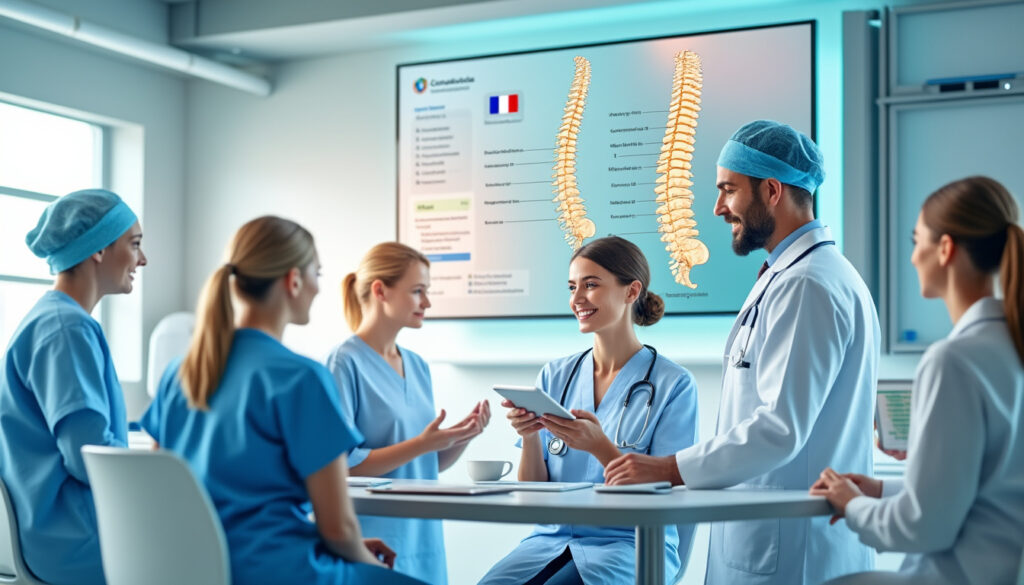
Patients benefit from thorough diagnostic discussions involving multidisciplinary experts across continents, ensuring a comprehensive diagnosis and personalized treatment plan. Partners include spine surgeons, osteopaths, physiotherapists, and specialized nurses harmonizing their efforts via platforms like SOS Tourisme Médical to optimize both logistics and clinical scheduling.
This international linkage shortens wait times significantly, a critical factor for Quebec patients often facing lengthy delays for specialized spine surgery. Moreover, it democratizes access to advanced implants and techniques not widely available in Canada, fulfilling both safety and innovation criteria under Canadian medical regulations and ethical standards.
The seamless coordination fosters patient trust, cultural sensitivity, and transparent communication, all pivotal for optimal clinical outcomes and patient satisfaction. This model represents a compelling prototype for future transnational healthcare collaborations in spine health management.
Minimally Invasive Surgery in Longueuil: Reduce Hospital Stay Duration
In recent years, advances in spinal care have dramatically reshaped the treatment landscape for patients suffering from debilitating spinal conditions. Particularly in Longueuil, the emergence of minimally invasive surgery (MIS) techniques offers a transformative alternative to conventional open surgeries. These…
Conservative Treatments: The Essential Preoperative Step Before Considering IntraSPINE
Dedicated conservative therapy is foundational before opting for IntraSPINE implantation. Dr. Sylvain Desforges, emphasizing scientific and ethical rigor, advocates for a minimum three to six months’ trial of non-surgical management, particularly highlighting advanced neurovertebral decompression techniques available at the Clinique TAGMED.
These treatments blend physical therapy, chiropractic care, and novel modalities such as laser therapy and extracorporeal shockwave. The goal is not only symptom relief but also functional improvement that can delay or even obviate the need for surgery.
- Personalized evaluation of symptoms and functional impact
- Application of osteopathy and precise physiotherapy protocols
- Utilization of targeted laser and shockwave therapies to stimulate tissue healing
- Monitoring and adaptation of treatment plans based on patient responses
- Patient education to enhance understanding of condition and treatment options
This careful, stepwise therapeutic process ensures that patients have exhausted appropriate conservative options, preserving surgical intervention for cases where it truly reflects the best interest for spinal health and quality of life.
IntraSPINE® in Laval: Modern Solution for Lumbar Stabilization
In the evolving landscape of orthopedic treatments, the city of Laval has become a hub for innovations addressing chronic lower back pain. Among the groundbreaking solutions gaining attention is the IntraSPINE device—a modern spinal implant designed to offer dynamic lumbar…
Real-World Outcomes: How IntraSPINE Transforms Quality of Life
Patients treated with IntraSPINE at Sherbrooke report significant improvements both in pain relief and functional status. For instance, a patient suffering from foraminal stenosis drastically improved their walking ability thanks to the implant’s dynamic decompression, avoiding extensive fusion surgery.
Others with persistent facetal pain syndromes have resumed daily activities unhindered by rigid spinal segments, an outcome credited to the device’s motion-preserving properties. The integration of adjunctive chiropractic adjustments and physical therapy further amplifies recovery quality and sustainability.
The following summary highlights common conditions warmly suited to IntraSPINE intervention:
- Facetal pain syndromes with localized lumbar discomfort
- Foraminal stenosis causing radicular symptoms and mobility challenges
- Degenerative disc disease without severe instability
- Mild ligamentous instability amendable to dynamic stabilization
- Cases where fusion might restrict necessary lumbar mobility
These clinical examples illustrate the device’s versatility and the pivotal role of expert evaluation in tailoring treatment plans that balance pain mitigation with preservation of spinal biomechanics.
Neck Surgery in Montreal: Maintain Cervical Flexibility and Function
Neck conditions causing persistent pain or functional loss place a substantial burden on individuals and healthcare systems, especially in urban centers like Montreal. Surgical interventions targeting the cervical spine have evolved tremendously, aiming not only to relieve symptoms but to…
Educating Patients: The Pillar of Informed Decision-Making in Sherbrooke’s Spine Care
Dr. Sylvain Desforges’ extensive experience and multidisciplinary qualifications (B.Sc., D.O., N.D.) enable him to guide patients through a transparent, jargon-free understanding of spinal conditions and treatment options. This patient-centric approach fosters confidence and empowered decision-making while honoring individualized health contexts.
Discussions prioritize clarity on the indications of IntraSPINE, procedural details, potential benefits, and limitations. The dialogue also includes safety protocols, rehabilitation expectations, and long-term spinal health objectives, ensuring that patients can actively participate and feel reassured.
Such pedagogy strengthens adherence to care pathways and aligns with ethical standards mandated by Quebec and Canadian health authorities. It also underscores the importance of patient questions and feedback, making every case a unique collaboration rather than a uniform protocol.

Disc Prosthesis in Lévis: Quick and Long-Lasting Results
Chronic back pain caused by degenerative disc disease continues to profoundly impact the quality of life for many residents in Lévis and the broader Quebec area. For decades, traditional spinal fusion surgery has been the primary solution for alleviating severe…
Complementary Technologies Integrated in the IntraSPINE Care Pathway
IntraSPINE’s success is augmented by a comprehensive integration of cutting-edge technologies aimed at optimizing spinal health restoration. Alongside the dynamic implant, patients benefit from access to neurovertebral decompression, laser therapy, and shockwave treatment, each contributing unique advantages to the overall spinal rehabilitation journey.
These therapies are coordinated within the multidisciplinary framework championed by Dr. Desforges, resulting in personalized, high-quality care that contrasts favorably with more conventional, fragmented approaches often seen elsewhere. This convergence of innovation and expertise reflects Sherbrooke’s position as a center of excellence in spine care.
The combination of minimally invasive surgical techniques, dynamic implants, and advanced conservative therapies supports faster rehabilitations, reduced postoperative discomfort, and improved long-term outcomes for patients seeking to reclaim active, pain-free lives.
Is IntraSPINE suitable for patients who engage in regular sports activities?
Yes, IntraSPINE is designed to preserve sufficient spinal mobility to allow patients to gradually resume sporting and physical activities. A tailored rehabilitation program supports this process.
What criteria determine eligibility for IntraSPINE surgery?
Eligibility is assessed through a detailed evaluation by Dr. Desforges that considers spinal instability levels, disc condition, and patient response to conservative treatments. Each case receives individualized analysis.
Does IntraSPINE replace traditional spinal fusion procedures?
IntraSPINE provides a less invasive alternative respecting spinal motion, but it is not a universal substitute for fusion surgery. The choice depends on pathology specifics and functional goals.
How much do IntraSPINE treatments cost and are they reimbursed?
Costs vary depending on individual treatment plans. Certain osteopathic and adjunct therapies may be eligible for private insurance reimbursement, according to policy terms.
What risks and limitations are associated with IntraSPINE?
While risks exist including stabilization failure or local complications, rigorous evaluation and transparent patient communication significantly mitigate these. Patients are fully informed before proceeding.
For more information or to discuss your case, please visit this page to obtain a personalized evaluation and begin your tailored spinal health journey.
Motion Surgery in Terrebonne: Maintain Intervertebral Mobility
Back pain remains a widespread concern for many in Quebec, with traditional treatment pathways often imposing lengthy waiting periods and financial constraints. Recently, Motion Surgery in Terrebonne has emerged as a transformative option, attracting patients seeking spinal solutions that prioritize…