Montreal Neck Pain Solutions That Avoid Surgery Risks
July 3, 2026
Motion Surgery in Terrebonne: Preserving Natural Biomechanics
July 4, 2026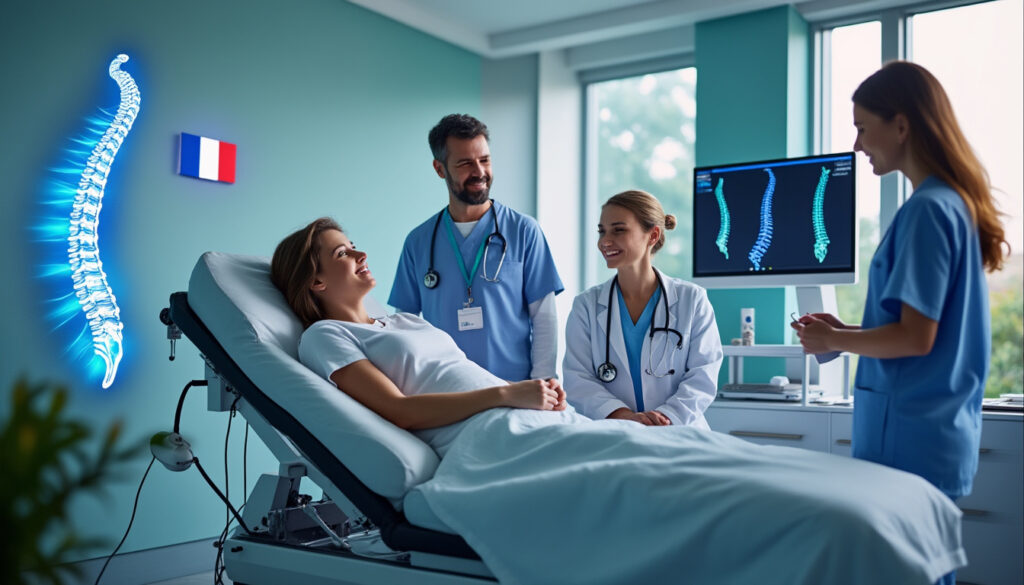
In the vibrant district of Le Sud-Ouest in Montréal, lumbar disc herniation surfaces as a pressing health challenge, profoundly impacting individuals across diverse professions and lifestyles. The condition extends beyond mere discomfort, affecting workers who endure repetitive physical exertion and those succumbing to prolonged sedentary postures, especially with the rise of telecommuting. Patients are increasingly inclined to seek effective, minimally invasive solutions that relieve their suffering without resorting to surgical interventions. Innovative techniques such as neurovertebral decompression have emerged at the forefront of therapeutic options, blending advanced technology and meticulous clinical expertise to offer hope and tangible improvements to those affected.
Yet, the considerations surrounding lumbar disc herniation extend beyond clinical efficacy. Understanding the financial implications, including treatment costs and the scope of medical reimbursements in Quebec’s healthcare system, is crucial for patients making informed decisions. These financial dimensions influence access to care and the choice between available options, from conservative management strategies to surgical procedures. Insights into the socio-economic texture of Le Sud-Ouest, combined with a nuanced overview of multidisciplinary care collaborations, shape a comprehensive view of spinal health management tailored to the community’s unique needs.
Lumbar Disc Herniation in Le Sud-Ouest: Pathophysiology and Daily Life Impact
Lumbar disc herniation represents a degeneration-driven compromise of the intervertebral discs nestled between vertebrae, which serve as vital shock absorbers of the spinal column. In Le Sud-Ouest, numerous lifestyle and environmental factors exacerbate this physiological wear and tear. The robust yet vulnerable annulus fibrosus develops fissures, allowing the soft gelatinous nucleus pulposus to displace and impinge upon adjacent nerve roots. This nerve compression triggers hallmark symptoms such as persistent lower back pain, sciatica, numbness, and muscular weakness.
Individuals in the community experience these symptoms with varying severity and origins. For example, a construction worker may find that repetitive heavy lifting intensifies his lumbar pain, while an office worker shifted to remote work grapples with discomfort from prolonged static postures. Additional contributors such as aging, obesity, and microtraumas from sports elevate risk profiles. The cumulative burden not only disrupts physical well-being but also induces psychological stress related to chronic pain and functional limitations.
Diagnosis begins with a thorough clinical assessment, supplemented by magnetic resonance imaging (MRI), enabling precise localization and extent evaluation of the herniated disc and its pressure on neural tissues. This diagnostic clarity informs personalized care pathways, ensuring treatments align with each patient’s condition. Collaborative efforts among healthcare providers in Le Sud-Ouest, including osteopaths, physiotherapists, and neurologists, fortify a patient-centered model that integrates scientific rigour with empathetic care.

IntraSPINE® in Sherbrooke: A Long-Lasting Solution for Chronic Lower Back Pain
Chronic lower back pain remains one of the most pressing health concerns in Sherbrooke and beyond, impacting millions and often diminishing daily quality of life. Despite the prevalence of lumbar discomfort, many face limited access to cutting-edge treatments amidst lengthy…
Innovations in Neurovertebral Decompression Therapy at Clinique TAGMED
Neurovertebral decompression has become a cornerstone of non-surgical intervention for lumbar disc herniation in Le Sud-Ouest. This cutting-edge therapy utilizes specialized traction tables that apply controlled, gentle tension along the spinal axis. By decreasing intradiscal pressure and alleviating nerve root compression, the technique promotes rehydration of the disc and reduces local inflammation, fostering an environment conducive to healing.
At Clinique TAGMED, under the guidance of Dr. Sylvain Desforges, a recognized expert with over three decades of experience, neurovertebral decompression is performed using state-of-the-art equipment complemented by real-time posture monitoring and neuromodulation technologies such as Pulse Align vibratory systems. This comprehensive approach prioritizes patient safety and comfort while adapting protocols to individual responses during treatment.
The therapy’s schedule usually encompasses multiple sessions over 4 to 8 weeks, aligning with clinical criteria and patient progress. This gradual, methodical regimen minimizes the risk of adverse effects and integrates seamlessly with adjunctive measures like osteopathic manipulation, targeted rehabilitation exercises, and patient education on ergonomics and lifestyle modifications. Particularly for patients wary of spinal surgery or those with contraindications for invasive procedures, this alternative embodies a promising pathway toward pain relief and functional restoration.
Herniated Disc Care in Sainte-Julie: Why TAGMED’s Neurovertebral Decompression Therapy Stands Out
In the vibrant community of Sainte-Julie, back pain—particularly that stemming from herniated discs—has become a widespread concern affecting people from all walks of life. The relentless search for effective, non-invasive treatments has brought renewed attention to a pioneering therapy that…
Assessing Healthcare Costs for Lumbar Disc Herniation Treatment in Le Sud-Ouest
Cost remains a pivotal concern for patients considering neurovertebral decompression treatment. A typical session at clinics like TAGMED ranges between 100 to 150 euros, influenced by the sophistication of the technology employed and the duration of the session. Initial consultations and follow-up visits, charged separately at approximately 50 to 100 euros, collectively contribute to the overall financial requirement.
Given the usual recommendation of 15 to 30 treatment sessions depending on the condition’s severity, patients may face an aggregate expense that warrants thoughtful financial planning. It’s essential to also factor in indirect costs such as transportation, potential work absence, and complementary therapies like physiotherapy or nutritional counseling, which often form integral components of a holistic recovery plan.
To accommodate these expenses, some clinics in the Southwest Region provide bundled packages or payment plans, facilitating broader accessibility while maintaining quality care. Such frameworks resonate with Dr. Desforges’ philosophy emphasizing individualized care combined with practical considerations for patients’ economic realities.
| Treatment Type | Average Cost per Session (€) | Typical Number of Sessions | Key Advantages | Limitations |
|---|---|---|---|---|
| Neurovertebral Decompression | 100 – 150 | 15 – 30 | Non-invasive, promotes disc healing, tailored treatment protocols | Long treatment course, total cost can accumulate |
| Chiropractic Therapy | 30 – 80 | Frequent sessions required | Lower initial cost, useful for musculoskeletal pain | Variable outcomes for complex herniation |
| Physiotherapy | 40 – 100 | High frequency | Personalized exercise plans, functional restoration | Cumulative expenses, intensive commitment |
| Steroid Injections | 300 – 1000 | Few sessions | Rapid pain relief | Temporary effect, potential side effects |
| Spinal Surgery | 5,000 – 15,000 | Single intervention | Definitive for severe cases | Risks and lengthy recovery |
Back Surgery in Trois-Rivières: Alleviating Pain While Preserving Mobility
In Trois-Rivières, Quebec, the persistence of back pain affects a substantial portion of the population seeking effective and personalized solutions. Back pain, often caused by spinal disorders or herniated discs, can drastically diminish quality of life, limiting mobility and causing…
Understanding Reimbursement Options for Herniation Treatment in Québec
In the context of the Québec healthcare system, reimbursement policies for neurovertebral decompression and associated treatments reflect varying coverage levels. The Régie de l’assurance maladie du Québec (RAMQ) primarily covers conventional medical services, leaving innovative procedures such as decompression therapy outside the universal coverage ambit. Consequently, many patients rely on private supplemental insurance plans offered by employers or personal health policies to offset these costs.
Moreover, certain private health insurers acknowledge osteopathic services and similar complementary therapies, leading to partial reimbursement opportunities for patients undergoing neurovertebral decompression.
Dr. Sylvain Desforges ensures transparent communication about financial responsibilities and assists patients in navigating insurance documentation and claims. Such clarity encourages informed choices and optimizes treatment adherence without undue financial stress. For those interested in verifying their coverage scope, resources and reimbursement guides are accessible through regional health associations and insurance providers.

Disc herniation remains a significant health concern in Pointe-Claire, impacting the lives of a diverse population ranging from labor-intensive workers to the aging community. The condition, characterized by the displacement or rupture of the intervertebral disc, often leads to debilitating…
Comparing Non-Surgical Herniation Treatments: Effectiveness and Financial Considerations
Faced with multiple treatment avenues, individuals in Le Sud-Ouest frequently weigh the relative advantages and constraints of available options. Neurovertebral decompression stands out by targeting mechanical factors underlying nerve root compression without surgical disruption. Its evidence-backed safety profile and potential to restore disc physiology appeal to patients prioritizing minimally invasive methods.
Conversely, chiropractic therapy offers affordability and accessibility but typically demands frequent visits with variable success in complex disc herniations. Physiotherapy contributes valuable functional rehabilitation through tailored exercises, though sustained commitment and costs are notable.
Steroid injections deliver fast symptomatic relief but lack long-term benefits and carry risks of side effects. Surgical interventions, while often effective for intractable cases, present higher risks, longer recuperation, and elevated expenses as outlined in previous sections.
The following comparative insights elucidate these distinctions through both clinical outcomes and economic lenses, enabling patients and providers alike to pursue personalized, balanced treatment plans.
At Gouin Clinic, the landscape of herniated disc therapy has entered a transformative era marked by the integration of Personalized Treatment Plans and breakthrough Neurovertebral Decompression Therapy. This non-surgical approach is revolutionizing how spinal disorders are managed, offering patients an…
Role of Postoperative Rehabilitation and Neurovertebral Decompression Integration
For patients progressing to spinal surgery due to lumbar disc herniation severity, rehabilitation assumes a critical function in restoring musculoskeletal balance and preventing relapse. Incorporating neurovertebral decompression within postoperative care strategies enhances recovery by alleviating residual spinal tension and improving joint mobility.
Clinique TAGMED’s multidisciplinary team coordinates manual therapies, physical conditioning, and education, fostering an integrated approach aligned with Dr. Desforges’ vision of comprehensive spine care. Patients often report improved comfort and function, facilitating more effective participation in strength-building and posture retraining activities.
This synergy underpins a holistic treatment continuum where decompression is not an isolated intervention but a complementary modality instrumental in optimizing long-term spinal health.

Cervical Disc Prosthesis in Quebec: Preventing Post-Operative Stiffness
Neck pain is one of the most common musculoskeletal complaints in Quebec, affecting a significant portion of the population annually. Often rooted in degenerative cervical disc diseases or herniated discs, this persistent discomfort severely impacts daily life and mobility. Fortunately,…
Lifestyle and Practical Advice to Support Neurovertebral Decompression Outcomes
Optimal outcomes for lumbar disc herniation treatment in Le Sud-Ouest extend beyond clinical interventions, embracing lifestyle modifications that strengthen the spine and mitigate recurrence risk. Recommendations frequently shared by Dr. Sylvain Desforges and his team include:
- Engaging in suitable physical activity such as walking, swimming, or Pilates to enhance back muscle strength.
- Maintaining ergonomic work environments by utilizing supportive seating and incorporating periodic breaks to relieve spinal stress.
- Managing body weight to reduce strain on the lumbar region.
- Adopting a balanced diet rich in vitamins D and C, and calcium to promote structural integrity.
- Practicing stress-reducing techniques like meditation to decrease pain perception and improve overall well-being.
These practical adjustments fortify therapeutic gains achieved through neurovertebral decompression, equipping patients with sustainable tools for spinal health management amid urban lifestyle challenges.


The prevalence of herniated disc conditions in Blainville has sparked considerable discussion and misconceptions about their causes, symptoms, and treatments. While the pain and disability associated with this spinal disorder are well documented, the emergence of non-surgical options such as…
Dr. Sylvain Desforges: Expertise, Multidisciplinary Coordination, and Patient-Centered Care in Le Sud-Ouest
Dr. Sylvain Desforges embodies exceptional clinical expertise with over 35 years dedicated to addressing lumbar disc herniation and related spinal disorders. Holding formal credentials including B.Sc., D.O., and N.D., he is the visionary founder and president of key organizations such as the Alliance Canadienne de Médecine Alternative and the Canadian College of Osteopaths.
At Clinique TAGMED in Le Sud-Ouest, Dr. Desforges orchestrates a team of skilled professionals delivering advanced non-surgical care incorporating neurovertebral decompression alongside innovative technologies like laser therapy and dynamic spinal implants. His commitment to evidence-based practice, ethical standards, and patient safety resonates through stringent adherence to Quebec’s medical regulations and guidelines set by the Collège des médecins du Québec.
Uniquely, Dr. Desforges facilitates international patient journeys, including transatlantic coordination with French healthcare providers, ensuring seamless access to expertise rarely available on the Canadian continent. Collaborations with premier spine surgeons, rehabilitation teams, and medical tourism platforms such as SOS Tourisme Médical enhance treatment timelines, quality, and personalization. He continuously educates patients and clinicians alike by translating complex spinal pathology into understandable information, empowering informed decision-making.
Clients seeking specialized evaluation and tailored herniation treatment pathways can consult directly with Dr. Desforges, accessing comprehensive support throughout the care continuum.
What are the initial symptoms of lumbar disc herniation?
Early signs include persistent lower back pain, numbness or tingling in the legs, and sometimes sciatica—a sharp, shooting pain radiating from the back to the legs.
Is neurovertebral decompression therapy painful?
Generally, this treatment is painless. The traction force applied is gentle and carefully calibrated to ensure patient comfort during sessions.
How many sessions are required before noticing improvement?
Typically, treatment courses last from 4 to 8 weeks with multiple sessions weekly. Many patients report pain relief within the first several sessions, though results vary individually.
Can neurovertebral decompression prevent the need for surgery?
Yes, when initiated timely, this therapy offers an effective non-surgical alternative that can reduce or eliminate the need for spinal surgery in many cases.
What lifestyle changes support long-term spinal health after treatment?
Maintaining proper posture, engaging in regular low-impact exercise, managing weight, eating nutritiously, and stress reduction techniques are vital to preventing recurrence.
Minimally Invasive Surgery in Longueuil: Reducing Hospital Stays for Faster Recovery
In recent years, a transformative wave has swept through spinal healthcare in Longueuil, aiming to revolutionize treatment experiences for patients suffering from back disorders. This shift stems from a growing demand for procedures that minimize hospital stays without compromising efficacy.…