The Role of Franchir in Patient Management and Its Influence on Surgical Decision-Making
June 18, 2026
Terrebonne Neck Pain Recovery for Disc Herniation Patients
June 18, 2026
Neck conditions affecting the cervical spine can profoundly impact one’s quality of life, especially when they involve chronic pain, nerve compression, or mobility limitations. Montreal, known for its cutting-edge medical facilities, offers a range of advanced surgical solutions focused on preserving cervical function while addressing these challenges. Innovations in minimally invasive techniques and motion-preserving implants are transforming neck surgery, allowing patients to maintain neck health and flexibility post-operation. However, choosing the right path requires careful evaluation by experienced professionals who understand the delicate balance between intervention and natural cervical preservation. This comprehensive overview highlights the surgical options available in Montreal and France, emphasizing evidence-based care and patient-centered approaches that provide hope for recovery, relief, and restored function.
Understanding the complexities of the cervical spine and spinal cord health is essential when exploring surgery as a treatment option. Patients benefit most when their care is guided by experts with decades of experience in assessing spinal pathologies and guiding them through tailored solutions. The journey from diagnosis through postoperative recovery demands a multidisciplinary, compassionate approach that values both scientific rigor and practical outcomes. For those considering neck surgery in Montreal, integrating transatlantic collaboration and expert guidance can optimize results, reduce waiting times, and enhance mobility preservation after surgery.
Comprehensive Overview of Cervical Spine Surgical Techniques in Montreal
The cervical spine, consisting of seven vertebrae, plays a vital role in supporting the head’s weight and enabling a wide range of motion, including rotation, flexion, and extension. Surgical interventions in Montreal aim not only to relieve symptoms such as pain, numbness, and weakness but also to preserve the natural movement of the cervical spine whenever feasible.
The three predominant categories of cervical spine surgery performed include:
- Simple decompression procedures: Focused on relieving pressure on nerves caused by herniated discs or spinal stenosis without fusing or immobilizing the vertebrae. These minimally invasive surgeries allow quick recovery and maintain neck mobility.
- Fusion surgeries: These involve the permanent joining of two or more vertebrae to stabilize segments affected by severe degeneration, instability, or deformity. While effective for stabilizing the spine, they often reduce cervical spine flexibility.
- Motion-preserving surgeries: Using dynamic implants such as the TOPS system or the CP-ESP prosthesis, these surgeries aim to maintain the range of motion postoperatively, providing an alternative to traditional fusion that might leave patients with neck stiffness.
Each surgical approach has specific indications and risks, and patient assessment by experienced evaluators is paramount to selecting the best option. This expertise is exemplified by pioneers like Dr. Sylvain Desforges, whose more than 30 years of experience and leadership in osteopathy and spine care has positioned him uniquely to guide patients through these complex decisions with clarity and compassion.

IntraSPINE® in Sherbrooke: Durable Solution for Chronic Low Back Pain
The management of chronic low back pain, a widespread condition affecting millions across Quebec and beyond, has reached a pivotal moment thanks to innovative medical technologies and coordinated care pathways. At the heart of this evolution lies the IntraSPINE implant,…
Step-by-Step Cervical Surgery Patient Pathway: From Evaluation to Postoperative Recovery
The journey toward neck surgery requires a structured and well-organized approach, ensuring every phase is tailored to the patient’s unique condition and goals. Under the expert guidance of clinicians familiar with both Canadian and French healthcare systems, patients experience a streamlined pathway that maximizes surgical care effectiveness and postoperative recovery.
1. Thorough Clinical and Diagnostic Evaluation
Patients begin their journey with a comprehensive evaluation to confirm diagnosis and explore all possible conservative treatments. This includes detailed clinical examinations, imaging studies such as MRI or CT scans, and a careful review of medical history. Dr. Sylvain Desforges plays a crucial role in assessing spinal pathologies to identify whether surgery is the most appropriate step after conservative care has been considered.
2. Conservative Management First
Before considering surgery, patients are advised to pursue 3 to 6 months of conservative treatments. This aligns with scientific guidelines and ethical standards, emphasizing patient safety and optimal outcomes. Advanced conservative techniques such as neurovertebral decompression, offered notably at the Clinique TAGMED in Montreal, provide pain relief and functional improvement without immediate surgical intervention.
3. Surgical Planning and Transatlantic Coordination
When surgery becomes necessary, the pathway leverages a transatlantic model connecting patients in Montreal with top-tier surgical facilities in France. This international coordination ensures access to innovations like dynamic implants unavailable in Canada, while local support networks assist with logistical arrangements including travel and accommodation. The interdisciplinary team focuses on minimizing wait times without compromising care quality.
4. Surgery and Hospital Stay
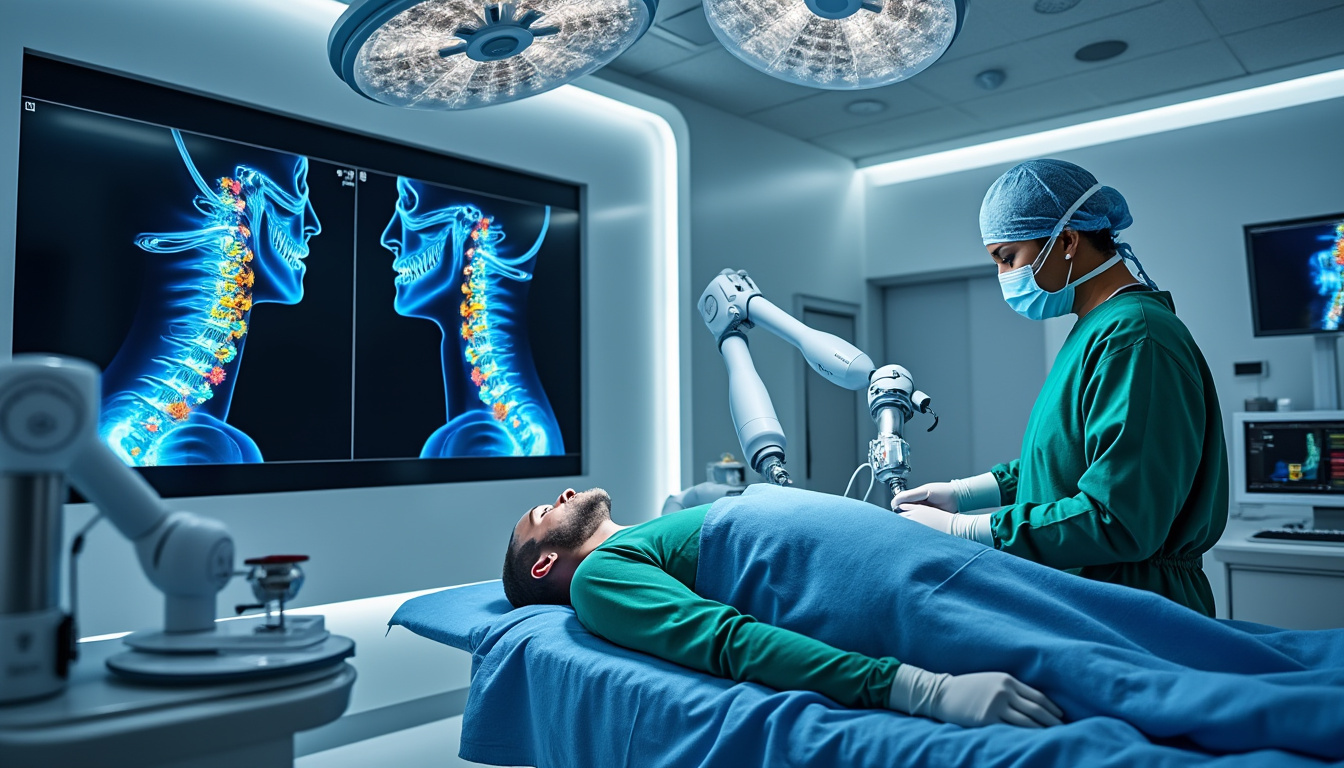
The operations themselves typically last around two hours, depending on the procedure’s complexity. French surgical teams employ state-of-the-art techniques such as robotic-assisted and endoscopic surgeries, reducing tissue damage and promoting quicker recovery. Patients usually spend just a few days post-surgery in hospital before returning to Montreal for continued care.
5. Postoperative Rehabilitation and Follow-Up
Returning home, patients benefit from coordinated postoperative care locally in Montreal, ensuring ongoing monitoring and rehabilitation support. This phase is critical for regaining neck mobility, managing pain, and preventing complications. The involvement of seasoned professionals, including those experienced in motion-sparing technologies, guarantees that recovery respects both individual needs and surgical outcomes.
This comprehensive pathway underscores the value of expert coordination and patient-centric treatment models, guiding patients through every stage with transparency and hands-on support.
Spine Surgery in Trois-Rivières: Reduce Pain and Preserve Mobility
In recent years, spine surgery in Trois-Rivières has evolved notably, combining advanced medical expertise with innovative technologies to deliver patient-centered care. This growing field addresses the increasing demand among Quebec residents seeking effective solutions for chronic back pain and mobility…
Scientific Rigor, Ethical Standards, and Innovation in Cervical Spine Surgery
At the heart of successful neck surgery lies strict adherence to scientific evidence, patient safety, and ethical practice. Montreal’s integration with French surgical expertise exemplifies a pioneering approach, leveraging the latest research and technologies in clinical decision-making.
Evidence-Based Treatment Decisions
Dr. Sylvain Desforges champions a culture of evidence-based medicine, insisting that surgical interventions are reserved for patients who have exhausted appropriate conservative treatments. This approach minimizes unnecessary surgeries and enhances patient trust. Only after 3 to 6 months of documented conservative care, including neurovertebral decompression when applicable, is surgery proposed as an option.
Advanced Surgical Technologies
France’s leading spine surgeons employ minimally invasive tools such as 3D navigation, robotic assistance, and laser technologies, allowing surgery with millimetric precision and minimal muscle disruption. Dynamic implants and novel prostheses enable motion preservation, tackling problems of post-surgical stiffness and adjacent segment disease that have limited traditional fusion techniques.
Ethics and Compliance with Regulatory Standards
All procedures comply with rigorous Canadian and Quebec regulations, including oversight by medical colleges and ethical committees. Patient safety, informed consent, and ongoing evaluation are cornerstones of clinical practice. This thoroughness fosters peace of mind for patients embarking on their surgical journey.
Given these factors, patients seeking neck surgery in Montreal can feel assured that their care reflects the highest standards of modern spinal surgery, maximizing both effectiveness and cervical function preservation.

Cervical Disc Prosthesis in Quebec City: Avoid Post-Surgery Stiffness
Chronic neck pain remains a significant challenge for thousands of residents in Quebec City every year, often leading them to seek effective spinal surgery options that minimize downtime and maximize long-term mobility. Among the recent advancements revolutionizing cervical spine care,…
Benefits of Transatlantic Surgical Care: Biomechanical, Economic, and Human Perspectives
The collaboration between Montreal and French spine centers offers distinct advantages beyond the quality of surgical techniques alone.
Biomechanical Advantages
Access to dynamic implants like the TOPS system and CP-ESP prostheses, which are not yet widely available in Canada, allows surgeons to preserve the natural motion of the cervical spine post-surgery. This reduces mechanical stress on adjacent vertebrae and lowers risks of future degenerative changes. Patients experience less neck stiffness compared to traditional fusion surgeries, promoting active lifestyles and improved quality of life.
Economic Advantages
Neck surgery abroad benefits from shorter wait times and significantly lower overall costs compared to private surgery in North America. Patients can often avoid public system delays that may exceed one to two years. With procedures starting around $35,800 CAD, the cost is approximately half that of equivalent private operations in Canada or the United States, making world-class surgical care more accessible.
Human-Centered Care
The patient journey is personalized and supported with empathy at every step. Transatlantic care models ensure patients are informed, reassured, and engaged. Support teams both in Montreal and France provide continuous communication, easing stress associated with international medical travel. This comprehensive support system plays a key role in patient satisfaction and successful recovery.
| Aspect | Montreal – Canadian Public System | Private Surgery (Canada/US) | Transatlantic Surgery with French Expertise |
|---|---|---|---|
| Average Wait Time | 1–2+ years | Weeks to Months | 2–3 months (including planning) |
| Estimated Cost | Covered by public healthcare | $40,000–$60,000+ CAD | Starting at $35,800 CAD |
| Access to Advanced Procedures | Limited | Available but costly | Comprehensive, including motion-preserving implants |
| Postoperative Local Support | Routine | Limited coordination | Full coordinated care in Montreal |
The benefits of this innovative transatlantic model highlight why many patients trust this approach to advance their spinal health without sacrificing quality or accessibility.

Minimally Invasive Surgery in Longueuil: Reduce Hospital Stay Duration
In recent years, advances in spinal care have dramatically reshaped the treatment landscape for patients suffering from debilitating spinal conditions. Particularly in Longueuil, the emergence of minimally invasive surgery (MIS) techniques offers a transformative alternative to conventional open surgeries. These…
Minimally Invasive Surgery and Motion-Preserving Innovations for Cervical Spine Disorders
Recent advances in minimally invasive surgery (MIS) revolutionize neck surgery, providing alternatives to traditional open procedures which often involve longer recovery and increased postoperative pain.
Minimally Invasive Techniques
Using advanced endoscopic technologies with high-definition 4K imaging and continuous irrigation, surgeons can perform decompression and discectomy using tiny incisions. This reduces muscle damage, blood loss, and scar tissue formation. Benefits for patients include shorter hospital stays, reduced pain, and faster return to daily activities.
Motion-Preserving Implants
Dynamic stabilization devices such as the IntraSPINE implant or the B-DYN system offer promising biomechanical outcomes. These technologies preserve neck flexibility, which is critical for overall spinal health and function. Unlike fusions, motion-preserving implants allow controlled spinal movement, which helps avoid adjacent segment degeneration.
Example: The TOPS System
The Total Posterior Spine (TOPS) System is FDA-approved and represents a breakthrough in cervical spine surgery. It stabilizes the spine after decompression but maintains natural, multi-directional motion. Patients undergoing surgery with such implants often report better range of motion and decreased postoperative stiffness.
Exploring these modern techniques with an expert who prioritizes neck preservation and postoperative recovery ensures a tailored approach that respects individual functional goals.
IntraSPINE® in Laval: Modern Solution for Lumbar Stabilization
In the evolving landscape of orthopedic treatments, the city of Laval has become a hub for innovations addressing chronic lower back pain. Among the groundbreaking solutions gaining attention is the IntraSPINE device—a modern spinal implant designed to offer dynamic lumbar…
The Critical Role of Conservative Treatments Before Considering Surgery
It is vital for patients to understand that surgery is typically a last resort. Effective conservative treatments can significantly improve symptoms related to cervical spine disorders and delay or avoid surgery altogether.
Experts emphasize completing at least 3 to 6 months of conservative care before surgical evaluation. These treatments include physical therapy, pharmacological management, and advanced techniques such as neurovertebral decompression offered by specialized clinics like Clinique TAGMED.
Neurovertebral decompression uses targeted mechanical forces to relieve nerve pressure and restore disc height, promoting natural healing without the invasiveness of surgery. This therapy offers a non-surgical option that can benefit many patients suffering from cervical disc herniation or stenosis. If these methods fail to deliver adequate relief, then surgical options can be considered with greater confidence.
By advocating for a conservative-first approach grounded in evidence, clinicians like Dr. Desforges reinforce patient safety, avoid unnecessary procedures, and help set realistic expectations for therapy outcomes and timelines.
Neck Surgery in Montreal: Maintain Cervical Flexibility and Function
Neck conditions causing persistent pain or functional loss place a substantial burden on individuals and healthcare systems, especially in urban centers like Montreal. Surgical interventions targeting the cervical spine have evolved tremendously, aiming not only to relieve symptoms but to…
Unique Features of Services and Added Value in International Neck Surgery Coordination
The international medical collaboration available for neck surgery patients offers more than just surgical expertise; it embodies comprehensive and personalized service that elevates patient care beyond expectations.
- Advanced Implants and Techniques: Access to the latest implants, including dynamic prostheses and minimally invasive tools unavailable in Canadian public or private sectors.
- Full Patient Support: Coordinated preoperative planning, travel logistics, and local postoperative care ensure that patients feel fully supported throughout their journey.
- Cutting-edge Hospitals and Teams: Partnered French centers employ the latest in robotic assistance, 3D navigation, and endoscopic visualization, optimizing success rates and minimizing complications.
- Tailored Surgical Plans: Each patient’s care plan is designed according to spine pathology, lifestyle, and personal goals, with emphasis on preserving cervical function and long-term well-being.
- Local Follow-Up Expertise: Montreal-based practitioners maintain continuous communication with the surgical teams abroad, providing seamless follow-up that is both convenient and reassuring.
This holistic, multidisciplinary model exemplified by Neurotherapy Montreal embraces innovation, empathy, and professionalism to create outcomes that matter.

Disc Prosthesis in Lévis: Quick and Long-Lasting Results
Chronic back pain caused by degenerative disc disease continues to profoundly impact the quality of life for many residents in Lévis and the broader Quebec area. For decades, traditional spinal fusion surgery has been the primary solution for alleviating severe…
Empathy and Patient Education: A Pillar in Surgical Decision-Making for Neck Health
Beyond technical success, the patient experience is paramount. Often, patients face anxiety about surgery, fears about recovery, and uncertainty about outcomes. Providing clear, jargon-free explanations helps reduce stress and empower informed decision-making.
Healthcare professionals with vast practical experience, including Dr. Sylvain Desforges — founder and president of major Canadian osteopathic associations — emphasize communication tailored to the patient’s understanding. This pedagogy covers:
- Detailed explanations of the cervical spine’s anatomy and function.
- Clarification of surgical procedures, indications, and expected results.
- Discussion of potential risks and postoperative lifestyle adaptations.
- Transparency about the steps in the international care pathway.
Humane care involves not only expert assessments but also empathetic listening and motivational support, encouraging patients to ask questions and actively participate in their treatment plans.

Motion Surgery in Terrebonne: Maintain Intervertebral Mobility
Back pain remains a widespread concern for many in Quebec, with traditional treatment pathways often imposing lengthy waiting periods and financial constraints. Recently, Motion Surgery in Terrebonne has emerged as a transformative option, attracting patients seeking spinal solutions that prioritize…
Encouraging Patients Toward Personalized Evaluations and Accessing Expert Care
Choosing a path to improve neck health through surgery is a deeply personal decision requiring a blend of professional guidance and patient readiness. Individuals experiencing prolonged neck pain or neurological symptoms despite conservative care should seek expert evaluation to explore their options.
Montreal patients benefit from direct access to evaluations that integrate local expertise with international surgical collaborations, offering tailored recommendations and streamlined care pathways.
For those curious about advanced neck surgery solutions combining scientific excellence with compassionate support, initiating contact with specialized teams is a vital first step. To learn more and discuss your individual case, do not hesitate to visit the consultation page and embark on a journey toward restored spinal function and pain relief.