Advancements in Minimally Invasive Surgery in Longueuil: Reducing Hospital Stay Duration
May 19, 2026
Blainville Lumbar Disc Rehabilitation Without Steroids
May 19, 2026
The management of cervical spine disorders presents unique challenges that often require innovative surgical techniques aimed not only at alleviating pain but also at preserving the natural mobility of the neck. In Montreal, patients seeking relief from cervical spine issues have access to advanced surgical solutions that prioritize maintaining cervical mobility after surgery, boosting overall quality of life. This is an area where expertise in evaluation, rigorous scientific methods, and patient-centered care converge, particularly under the stewardship of Dr. Sylvain Desforges, whose 30+ years of experience have shaped comprehensive approaches to neck surgery and postoperative recovery.
In a landscape where conventional treatments can lead to limited flexibility and prolonged rehabilitation, Montreal’s integration of modern minimally invasive spine surgery and motion-preserving implants opens promising avenues. Such advancements have been complemented by transatlantic collaborations linking Canadian patients to world-class surgical centers in France, enabling expedited access to cutting-edge technology and personalized care pathways. This cross-border coordination underscores a commitment to innovation and patient safety, aligned with regulated standards and meticulous scientific scrutiny.
Understanding Types of Neck Surgery in Montreal for Cervical Mobility Preservation
Patients confronted with cervical spine pathology must consider the variety of surgical options available, each tailored to specific conditions while aiming to safeguard the natural movement of the cervical spine. Neck surgery in Montreal now embraces a spectrum of procedures, ranging from simple decompression to advanced fusion and motion-preserving techniques.
Simple decompression surgeries, such as anterior cervical discectomy without fusion, focus on relieving nerve pressure caused by disc herniations or foraminal stenosis. These procedures are characterized by minimal invasiveness and preserve adjacent spinal segments from unnecessary stress, making them ideal for cases with localized nerve compression and minor instability.
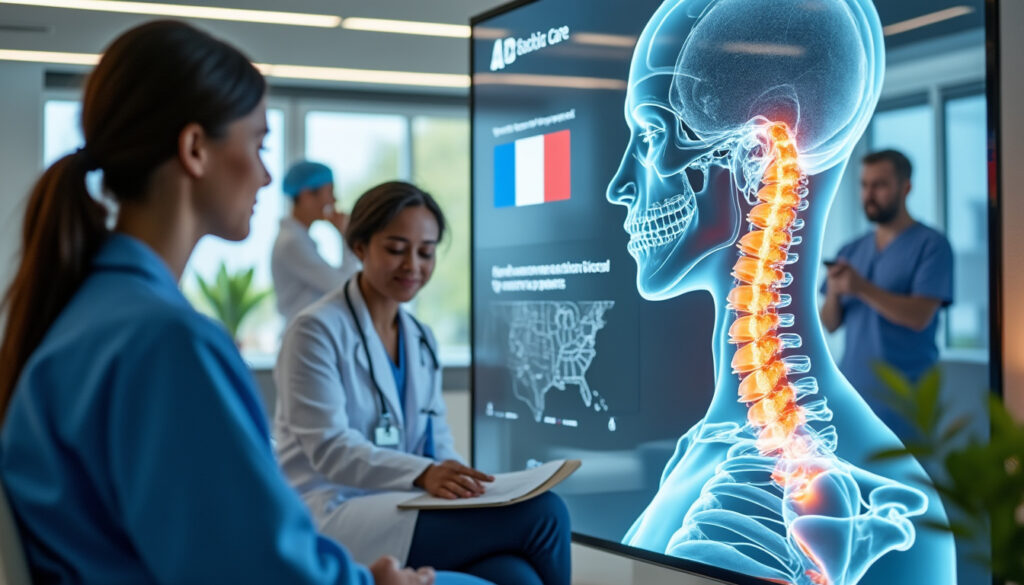
Increasingly favored are motion-preserving surgeries that employ dynamic implants like the FDA-approved TOPS system or viscoelastic prostheses such as CP-ESP. These innovations stabilize the spine post-decompression while maintaining physiological movements—flexion, extension, and rotation. They represent a paradigm shift away from traditional fusion toward maintaining the biomechanical integrity of the cervical spine.
Fusion surgeries remain a necessary intervention for advanced instability, multi-level degeneration, or spondylolisthesis. Techniques such as ALIF, PLIF, and TLIF offer reliable stabilization but may limit motion at the fused segment and potentially increase stress on adjacent vertebrae. Hence, the choice of fusion versus motion preservation depends on precise evaluation and patient-specific pathology.
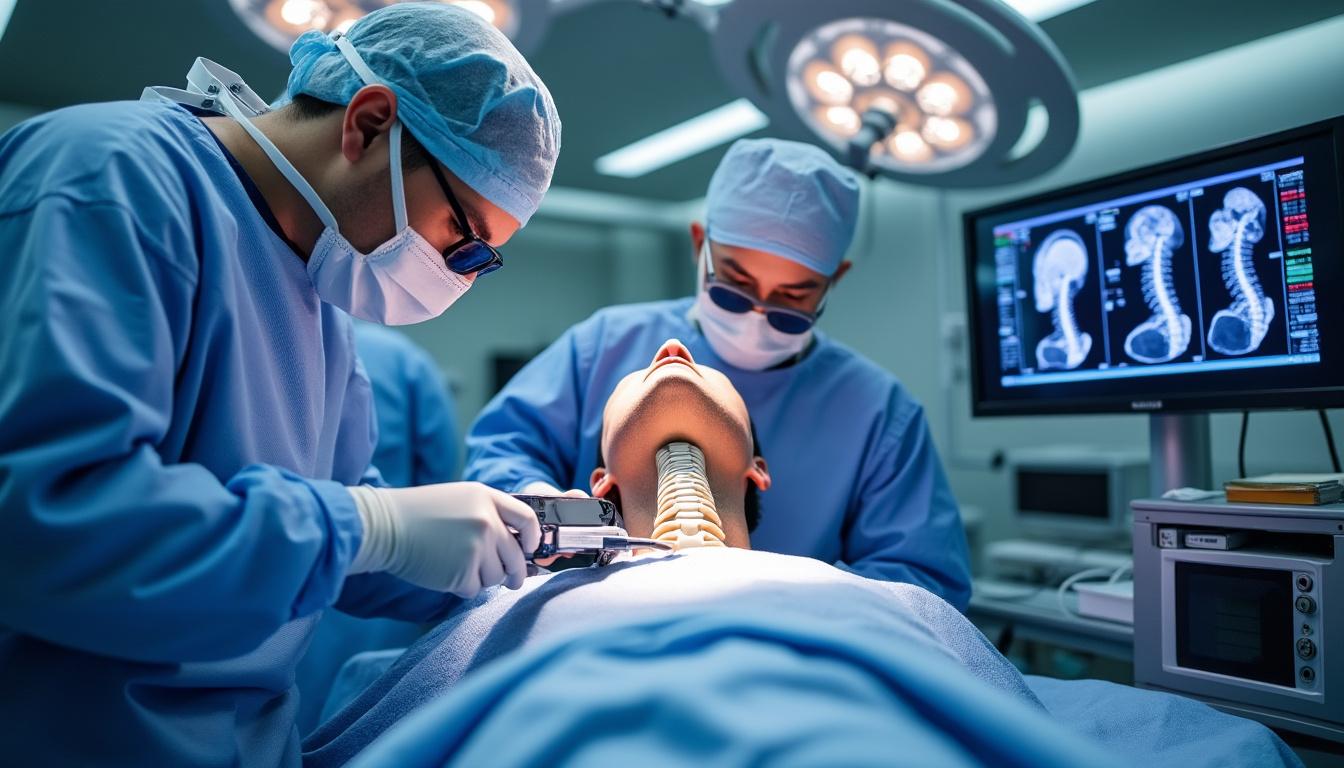
Endoscopic and minimally invasive approaches have revolutionized many of these interventions by reducing muscle damage, blood loss, and postoperative discomfort, thus accelerating recovery. This less invasive philosophy also conserves soft tissue and maintains cervical muscle function, which is critical to preserving postoperative mobility.
Dr. Desforges, with his extensive qualifications and leadership roles in osteopathic associations, emphasizes the importance of selecting surgical techniques compatible with preserving spinal flexibility. His evaluations carefully consider the patient’s clinical presentation, imaging, and functional status to recommend an approach that harmonizes effective decompression with motion preservation whenever possible.
Explore options in spine surgery with Montreal specialists.

IntraSPINE® in Sherbrooke: Durable Solution for Chronic Low Back Pain
The management of chronic low back pain, a widespread condition affecting millions across Quebec and beyond, has reached a pivotal moment thanks to innovative medical technologies and coordinated care pathways. At the heart of this evolution lies the IntraSPINE implant,…
Step-by-Step Patient Journey for Transatlantic Cervical Surgery and Care
For patients seeking timely and innovative treatment of cervical spine disorders in 2026, the carefully coordinated transatlantic pathway managed by Dr. Desforges and his team offers not only surgical expertise but smooth logistical and postoperative support.
Initial evaluation starts in Montreal, including thorough clinical assessments and advanced imaging, such as MRI and CT, to precisely characterize cervical pathology. Patients benefit from Dr. Desforges’s rigorous evidence-based evaluation, ensuring all conservative options have been explored before surgery is considered.
Preoperative planning involves selecting the ideal surgical technique and coordinating details for travel, hospital admission, and interpreter services. Partnering with specialized French spine surgery centers known for 3D navigation, robotic assistance, and advanced endoscopic procedures, this planning phase minimizes wait times, often compressing the process into 2 to 3 months.
Surgical intervention occurs in state-of-the-art French facilities where minimally invasive, motion-sparing techniques are standard. These centers implement implants unavailable in Canada, aiming to optimize long-term results, reduce postoperative stiffness, and maintain cervical mobility. Dr. Desforges’s comprehensive knowledge of these technologies bridges French surgical excellence and Canadian patient care.
Postoperative care and rehabilitation resume locally in Montreal with integrated teams focusing on neck rehabilitation designed specifically for preserving cervical spine function. This involves personalized physical therapy programs that reduce discomfort and encourage gradual restoration of natural movements.
The entire process demonstrates how international coordination enhances access, efficiency, and patient safety. This cohesive management respects Canadian medical standards while providing innovations foreign to North American markets, ensuring continuity of care without excessive delays or costs.
Learn more about preserving mobility after neck surgery in Montreal.

Spine Surgery in Trois-Rivières: Reduce Pain and Preserve Mobility
In recent years, spine surgery in Trois-Rivières has evolved notably, combining advanced medical expertise with innovative technologies to deliver patient-centered care. This growing field addresses the increasing demand among Quebec residents seeking effective solutions for chronic back pain and mobility…
Biomechanical and Economic Benefits of the Montreal-France Surgical Collaboration
The decision to embark on cervical spine surgery abroad brings unique biomechanical and economic advantages that transform patient outcomes beyond mere symptom relief. Dr. Desforges advocates for carefully weighing these benefits within the patient’s holistic context.
Biomechanically, surgeries utilizing motion-preserving implants offer discrete yet impactful benefits. By maintaining segmental mobility, these devices help prevent adjacent segment disease—a common complication when fusion alters spine dynamics. Preserving the natural kinematics of the cervical spine reduces abnormal mechanical stress, limiting future degeneration, and fostering more durable recovery.
Advanced technologies such as dynamic stabilization systems (e.g., TOPS and CP-ESP) support a natural range of motion averaging 7 to 9 degrees per treated level, a preservation unattainable with conventional fusion. Such outcomes directly translate into better functional performance, improved daily activities, and enhanced quality of life.
Economically, accessing surgery in France through Neurotherapy Montreal is cost-effective compared to private healthcare options in Canada. Procedures that start at approximately $35,800 CAD include comprehensive care, surgery, and postoperative follow-up—significantly lower than the $40,000 to $80,000 USD price range commonly seen in North American private clinics.
This price differential, combined with significantly shorter wait times (typically 2–3 months versus 1–2 years), makes the Montreal-France collaboration a practical choice. Patients receive expedited care without compromising quality, benefiting from rigorous French surgical standards and local Montreal support for perioperative and rehabilitation needs.
| Care Option | Average Wait Time | Estimated Cost | Key Benefits |
|---|---|---|---|
| Canadian Public System | 1-2+ years | Covered by public health | Fully funded, but long delays and limited surgeon choice |
| Private Surgery (Canada/US) | Weeks to Months | $40,000 – $80,000+ | Faster access, high cost, limited availability |
| Transatlantic Surgery via Montreal-France Partnership | 2-3 months | Starting at $35,800 CAD | No wait times, world-class surgeons, advanced technology, local follow-up |
Dr. Desforges supports this integrated model as a visionary approach blending scientific rigor, safety, and patient-centric innovation to optimize outcomes and patient satisfaction.

TOPS™ in Gatineau: High-Performance Option for the Lumbar Spine
The landscape of spinal surgery has witnessed profound evolution, particularly for patients grappling with lumbar spine disorders such as spinal stenosis and spondylolisthesis. These conditions, increasingly prevalent among Quebec’s population, impose substantial limitations on mobility and quality of life. The…
The Crucial Role of Conservative Treatment Before Considering Surgery
Surgeons and experts emphasize that neck surgery should only be considered after thoroughly attempting conservative measures for at least 3 to 6 months. This principle is foundational in Dr. Desforges’s patient evaluations to avert unnecessary surgical risks and promote less invasive recovery whenever possible.
Conservative treatments typically include:
- Physical therapy focusing on strengthening and mobility
- Pharmacological pain management
- Manual osteopathic treatments and chiropractic care
- Neurovertebral decompression therapy offered at specialized clinics like Clinique TAGMED
- Patient education and ergonomic modifications
The inclusion of neurovertebral decompression, a non-surgical technique utilizing advanced technology to relieve disc pressure and improve circulation, represents a crucial step before surgical consideration in Quebec. Patients not having received decompression therapy are encouraged strongly to pursue this option at facilities such as Clinique TAGMED prior to contemplating surgery.
This tiered, evidence-based strategy respects patient safety, avoids premature surgical interventions, and enhances the likelihood of better postoperative recovery with sustained cervical mobility.
Cervical Disc Prosthesis in Quebec City: Avoid Post-Surgery Stiffness
Chronic neck pain remains a significant challenge for thousands of residents in Quebec City every year, often leading them to seek effective spinal surgery options that minimize downtime and maximize long-term mobility. Among the recent advancements revolutionizing cervical spine care,…
Innovative Motion-Preserving Implant Technologies Redefining Neck Surgery
Recent advances in spinal implant design underscore the evolution of cervical surgery toward preserving natural neck function. Montreal’s access to French surgical expertise introduces patients to state-of-the-art dynamic implants that challenge the limitations of traditional fusion.
Leading motion-preserving implants include:
- TOPS System: Provides dynamic, posterior stabilization to maintain motion after decompression surgery, particularly effective for stenosis and spondylolisthesis.
- IntraSPINE: An interspinous device that offers pain relief and spine stabilization while allowing physiological flexibility.
- CP-ESP: A viscoelastic prosthesis mimicking the natural disc’s behavior, demonstrating promising outcomes in thousands of implantations worldwide.
- LP-ESP: Today’s new generation lumbar prosthesis closely replicates a healthy intervertebral disc’s elasticity and mechanical response.
- B-DYN: Designed to modulate lumbar movements flexibly, controlling excessive mobility without rigid restriction.
The challenge lies in surgical precision, device sizing, and proper endplate preparation to ensure stability and lasting function without provoking adjacent segment overload or device migration. Dr. Desforges’s attention to biomechanical principles and individualized care plans plays an essential role in optimizing results.
Clinical studies have confirmed these devices’ safety and efficacy, reducing rates of adjacent segment disease and postoperative stiffness commonly seen with fusion procedures. The integration of minimally invasive surgical approaches further improves patient recovery times and comfort.
Minimally Invasive Surgery in Longueuil: Reduce Hospital Stay Duration
In recent years, advances in spinal care have dramatically reshaped the treatment landscape for patients suffering from debilitating spinal conditions. Particularly in Longueuil, the emergence of minimally invasive surgery (MIS) techniques offers a transformative alternative to conventional open surgeries. These…
Optimizing Postoperative Care and Neck Rehabilitation to Preserve Mobility
The success of neck surgery extends beyond the operating room to meticulous postoperative care and tailored rehabilitation, which are indispensable to preserving cervical mobility.
Postoperative pain management prioritizes minimizing inflammation and discomfort through appropriate medication, often supplemented with nonsteroidal anti-inflammatory drugs to reduce heterotopic ossification, which can limit movement around the implant site. Early and well-guided physical therapy is vital, emphasizing:
- Gentle mobilization exercises to regain range of motion
- Strengthening deep cervical muscles to enhance stability
- Neuromuscular re-education tailored to individual recovery progress
- Patient education on posture and ergonomics to prevent reinjury
Such comprehensive rehabilitation protocols in Montreal leverage multidisciplinary teams under Dr. Desforges’s guidance to blend osteopathic principles with modern physiotherapy techniques, embodying a holistic approach to recovery and long-term cervical spine health.
Proper coordination of care ensures patients return to their daily activities sooner with reduced risks of stiffness or complications. Follow-up surveillance aided by imaging and clinical evaluation ensures any emerging issues are promptly addressed.
Discover tailored strategies to maintain cervical flexibility after surgery.
IntraSPINE® in Laval: Modern Solution for Lumbar Stabilization
In the evolving landscape of orthopedic treatments, the city of Laval has become a hub for innovations addressing chronic lower back pain. Among the groundbreaking solutions gaining attention is the IntraSPINE device—a modern spinal implant designed to offer dynamic lumbar…
Personalized Patient Evaluation: Dr. Desforges’s Expertise in Cervical Spine Disorders
With a career spanning over three decades and credentials including B.Sc., D.O., and N.D., Dr. Sylvain Desforges is recognized for his pioneering role in the osteopathic evaluation of spinal disorders. His clinical expertise encapsulates a deep understanding of spinal biomechanics, pathology, and patient-centered care pathways.
In his evaluations, Dr. Desforges applies a multidisciplinary lens that incorporates:
- Detailed patient history and symptom analysis
- Advanced imaging review integrating MRI, CT, and dynamic radiographs
- Assessment of biomechanical function and segmental mobility
- Consideration of conservative therapy progression and response
- Identification of surgical candidacy aligned with best evidence and patient goals
This rigorous, ethical, and scientifically grounded approach ensures surgical decisions are justified and tailored. It also includes educating patients on the benefits and limitations of each surgical and conservative option without unnecessary jargon, promoting informed decision-making grounded in clarity and trust.
Dr. Desforges’s leadership roles as founder and president of multiple osteopathic and spinal care organizations further attest to his commitment to advancing spine care innovation and standards of practice within Quebec, Canada, and internationally.
Neck Surgery in Montreal: Maintain Cervical Flexibility and Function
Neck conditions causing persistent pain or functional loss place a substantial burden on individuals and healthcare systems, especially in urban centers like Montreal. Surgical interventions targeting the cervical spine have evolved tremendously, aiming not only to relieve symptoms but to…
Empowering Patients: Encouragement and Action for Informed Neck Surgery Decisions
Facing cervical spine surgery can be daunting; however, empowering patients with knowledge and empathetic guidance is central to Dr. Desforges’s philosophy. Recognizing the individuality of each patient’s spinal health, he encourages open dialogue, questions, and transparency at every step.
Patients are invited to actively engage with their care providers, exploring alternatives, understanding risks, and setting realistic expectations regarding recovery timelines and functional outcomes. The combination of accessible communication and personalized care pathways fosters confidence and encourages patients to become advocates for their own health.
Beyond clinical expertise, Dr. Desforges and his team offer comprehensive support through every phase—from initial evaluation, through surgical planning and intervention abroad, to rehabilitation and return to life in Quebec.
The unique transatlantic collaboration model melds international surgical excellence with local, compassionate care to provide patients in Montreal and surrounding regions with an exceptional standard of neck surgery focused on preserving cervical mobility and quality of life.
For patients seeking personalized evaluations, surgical options, or further information, the invitation is clear: reach out to initiate a dialogue and explore pathways towards relief and improved function.
To take the next step in preserving your cervical spine health and mobility after surgery, and to discuss your individual case with an expert, please visit our contact page today.
What types of surgery are available to preserve cervical mobility after neck surgery?
Montreal offers simple decompression, motion-preserving surgeries using dynamic implants, and fusion techniques. Motion-preserving implants like the TOPS system and CP-ESP prostheses help retain natural cervical spine movement, while fusion is reserved for severe instability.
How is the transatlantic surgical pathway between Montreal and France structured?
Patients are evaluated and prepared in Montreal, travel to France for surgery at advanced centers, and return for postoperative care and rehabilitation locally. This coordinated approach reduces wait times and ensures continuity of care.
Why is conservative treatment important before considering neck surgery?
Conservative treatments, including neurovertebral decompression therapy at centers like Clinique TAGMED, are essential to attempt before surgery. Minimally invasive options and rehabilitation can alleviate symptoms and reduce the need for surgical intervention.
What advantages do motion-preserving implants provide compared to traditional fusion?
Motion-preserving implants maintain segmental mobility, prevent adjacent segment disease, allow natural neck movements, and generally lead to faster recovery and fewer complications related to stiffness.
What does postoperative care involve to support cervical spine mobility?
Postoperative care includes pain management, tailored physical therapy focusing on neck rehabilitation, and patient education to maintain posture and prevent reinjury, ensuring sustained cervical mobility after surgery.

Disc Prosthesis in Lévis: Quick and Long-Lasting Results
Chronic back pain caused by degenerative disc disease continues to profoundly impact the quality of life for many residents in Lévis and the broader Quebec area. For decades, traditional spinal fusion surgery has been the primary solution for alleviating severe…