Can Cousin Spine technology help us avoid surgery?
August 16, 2025
Cervical Herniated Disc Solutions in Terrebonne with Spinal Decompression
August 17, 2025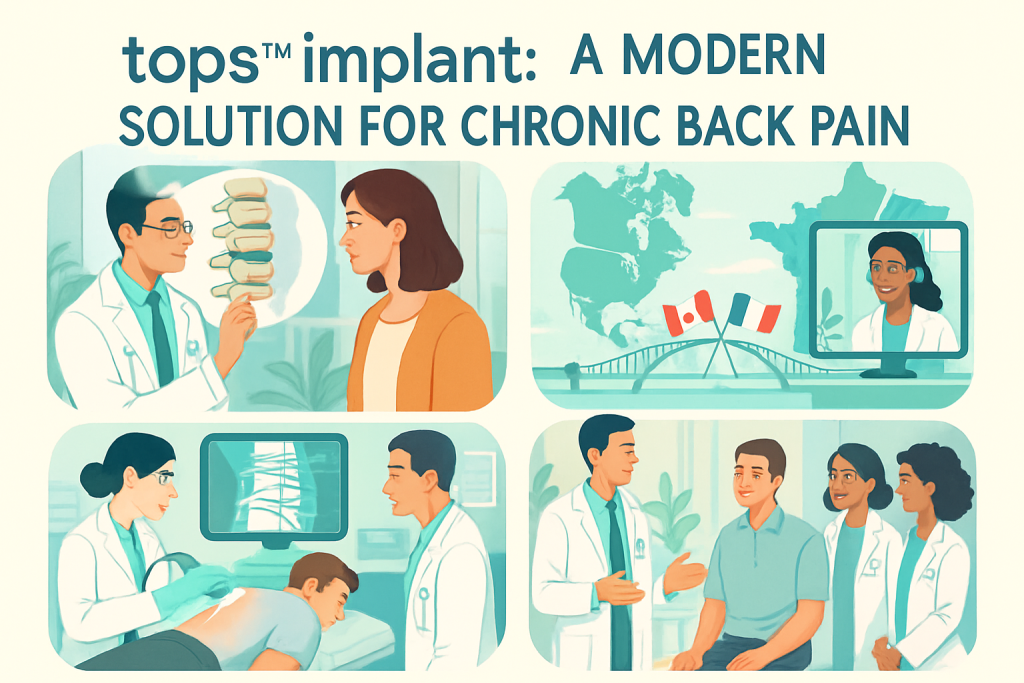
Chronic lower back pain, affecting millions globally, remains one of the most pervasive and debilitating health conditions. With traditional spinal fusion surgeries often leading to reduced mobility and prolonged recovery times, patients increasingly seek alternatives that promise both effective relief and preservation of spinal function. The Total Posterior Spine (TOPS) implant emerges as a groundbreaking innovation in this landscape, offering a solution that stabilizes the spine while maintaining its natural range of motion. This revolutionary treatment, approved and embraced by leading experts worldwide, presents hope for patients suffering from lumbar spinal stenosis, spondylolisthesis, and related conditions. In this article, we explore the multifaceted aspects of the TOPS implant—from its biomechanical advantages and patient-centered benefits to its role within the transatlantic medical collaboration that connects cutting-edge technologies between Canada and France. Patients and professionals alike will find here a thorough exposition crafted to demystify this state-of-the-art approach, highlighting opportunities for access, evaluation, and integration within comprehensive care pathways.
Understanding the TOPS Implant: Innovation Beyond Spinal Fusion
The TOPS System represents a paradigm shift in the treatment of lumbar spinal disorders. Unlike traditional spinal fusion, which permanently joins vertebrae and thereby limits spine flexibility, the TOPS implant is designed to preserve controlled spinal motion. This mobility retention is crucial for maintaining a patient’s quality of life and biomechanical balance. Clinically approved by the FDA and evaluated in rigorous studies, the device addresses conditions such as spinal stenosis and degenerative spondylolisthesis by replacing tissue removed during decompression surgery with a mechanical implant that supports natural movements—rotation, bending, flexion, and extension.
Dr. Sylvain Desforges, with over 30 years of experience as a leading osteopathic expert in spinal evaluation, underscores the uniqueness of the TOPS device. His multidisciplinary expertise allows a deep understanding of the biomechanical nuances and patient-specific considerations that determine surgical outcomes. The implant’s ability to combine stability with mobility represents an advancement beyond the capabilities of legacy devices from manufacturers such as Medtronic, Zimmer Biomet, and Stryker, who have traditionally dominated spinal hardware markets. This system offers an innovative alternative to fusion procedures that can lead to adjacent segment degeneration and long-term stiffness.
Key advantages of the TOPS implant include:
- Motion Preservation: Unlike fusion, the implant permits a controlled range of motion to facilitate normal spinal biomechanics.
- Stabilization: Provides secure support to vertebral segments compromised by degenerative conditions or injury.
- Removability: If future revision is required, the implant can be removed, offering flexibility in managing patient care over time.
These benefits foster faster recoveries and reduce long-term complications often seen with spinal fusion. Furthermore, the system’s contemporary design integrates innovations from leading industry players such as NuVasive, Alphatec Spine, and DePuy Synthes, reflecting a synthesis of best practices and engineering advances that elevate patient outcomes.
For an overview of the technology and clinical application, prospective patients and clinicians can visit this detailed resource on the TOPS System, which outlines device mechanics and procedural insights.

IntraSPINE® in Sherbrooke: Durable Solution for Chronic Low Back Pain
The management of chronic low back pain, a widespread condition affecting millions across Quebec and beyond, has reached a pivotal moment thanks to innovative medical technologies and coordinated care pathways. At the heart of this evolution lies the IntraSPINE implant,…
Comprehensive Patient Journey for TOPS Implant Surgery: From Evaluation to Recovery
Embarking on a journey toward spinal surgery is a profound decision, requiring meticulous evaluation and a well-coordinated treatment plan. Dr. Desforges stresses the importance of a rigorous, evidence-based approach to patient assessment. Before considering the TOPS implant, patients undergo a thorough examination including advanced imaging, clinical evaluation, and interdisciplinary consultations. This ensures precise identification of the spinal pathology and suitability for the implant.
The steps in the patient journey include:
- Conservative Treatment Assessment: Prior to surgery, patients must complete 3 to 6 months of conservative treatments. This often includes physical therapy, chiropractic care, medication, and specialized interventions such as neurovertebral decompression therapy—offered at the Clinique TAGMED in Laval, known for its advanced non-surgical modalities.
- Expert Evaluation: Following conservative management, a comprehensive re-evaluation determines candidacy for motion-preserving surgery. Dr. Desforges conducts detailed assessments with attention to biomechanical and neurological factors.
- Surgical Planning: Coordination between French surgical partners and Canadian clinical teams ensures personalized surgical strategies optimized for each patient’s condition and lifestyle.
- Procedure and Hospitalization: The implant procedure is performed in accredited clinics equipped with cutting-edge technology, emphasizing minimal invasiveness and rapid recovery protocols.
- Postoperative Care and Rehabilitation: Intensive rehabilitation focuses on restoring function while safeguarding implant integration, guided by standards compliant with Quebec and Canadian medical regulations.
- Return to Canada and Long-Term Monitoring: After discharge, patients receive continuous support through remote consultations, ensuring continuity of care in collaboration with local healthcare providers.
This structured pathway highlights Dr. Desforges’ commitment to scientific rigor, patient safety, and ethical practice. Such cross-border collaboration exemplifies efficient patient access to cutting-edge therapies while optimizing time and cost management advantages unavailable in the Quebec private care system.
| Step | Description | Key Considerations |
|---|---|---|
| Conservative Management | 3-6 months neurovertébrale decompression, physiotherapy, medication | Complete this phase before surgical evaluation; minimize risks |
| Evaluation & Planning | Expert assessment by Dr. Desforges; multidisciplinary review | Biomechanical analysis and candidacy determination |
| Surgery | Implantation of TOPS at specialized centers in France | Minimally invasive techniques; preservation of mobility |
| Rehabilitation | Postoperative care in line with Canadian medical protocols | Focus on mobility restoration and implant care |
| Follow-up | Remote monitoring and local follow-up in Quebec | Continuity of care and long-term support |
Spine Surgery in Trois-Rivières: Reduce Pain and Preserve Mobility
In recent years, spine surgery in Trois-Rivières has evolved notably, combining advanced medical expertise with innovative technologies to deliver patient-centered care. This growing field addresses the increasing demand among Quebec residents seeking effective solutions for chronic back pain and mobility…
Biomechanical and Functional Benefits of the TOPS Implant Compared to Fusion
The essence of the TOPS implant lies in its ability to stabilize compromised lumbar segments while preserving motion. Traditional spinal fusion sacrifices segmental mobility, leading to increased stresses on adjacent vertebrae and often accelerated degeneration. Motion-preserving implants like the TOPS device mitigate these issues by maintaining controlled physiological movements across the spinal segment.
Dr. Desforges emphasizes that patients benefit from:
- Retention of natural spinal kinetics: supporting activities such as bending, flexing, and rotating without rigidity.
- Reduced risk of adjacent segment disease: a common consequence of fusion where neighboring vertebrae deteriorate quicker due to altered movement patterns.
- Enhanced proprioceptive feedback: which aids in postural control and reduces fall risks.
Studies have demonstrated that the TOPS system achieves comparable or superior pain relief to spinal fusion, with lower rates of complications linked to implant failure or long-term stiffness. Such findings are affirmed in clinical research available through sources like St. Charles Spine Institute and recent FDA reports.
Prominent industry players, including Globus Medical and Orthofix, are advancing related technologies, building on TOPS’ success to innovate spinal implants further. This cross-pollination of knowledge continues to refine patient outcomes and expand indications for motion-preserving devices.

Cervical Disc Prosthesis in Quebec City: Avoid Post-Surgery Stiffness
Chronic neck pain remains a significant challenge for thousands of residents in Quebec City every year, often leading them to seek effective spinal surgery options that minimize downtime and maximize long-term mobility. Among the recent advancements revolutionizing cervical spine care,…
Transatlantic Care Coordination: Enhancing Patient Access and Outcomes
One of the distinctive features of the TOPS implant pathway available today involves the transatlantic collaboration bridging Canadian patients and French surgical centers. Dr. Desforges plays a pivotal role in facilitating this coordination, ensuring that each patient benefits from a seamless continuum of care. This approach tackles challenges common to Quebec’s healthcare system — particularly prolonged wait times for private spinal surgeries and the financial burdens associated with local care.
Through collaboration with platforms like SOS Tourisme Médical, patients gain expedited access to renowned French specialists and modern facilities. The partnership also fosters personalized treatment plans adapted to individual anatomies and lifestyles, resulting in:
- Reduced surgery wait times: quicker evaluation and scheduling compared to Quebec’s private system.
- Access to innovative technologies: such as implants and surgical techniques unavailable or limited in Canada.
- Cost-efficiency: often more affordable than private care options in Quebec, without compromising quality.
- Integrated pre- and post-operative support: ensuring continuity and monitoring tailored to the patient’s context.
This international framework is emblematic of Dr. Desforges’ dedication to ethical practice, patient advocacy, and high scientific standards, aligning with Canadian and Quebec regulations while leveraging global expertise.
Minimally Invasive Surgery in Longueuil: Reduce Hospital Stay Duration
In recent years, advances in spinal care have dramatically reshaped the treatment landscape for patients suffering from debilitating spinal conditions. Particularly in Longueuil, the emergence of minimally invasive surgery (MIS) techniques offers a transformative alternative to conventional open surgeries. These…
Minimally Invasive Surgical Techniques with the TOPS Implant
Advances in surgical techniques compliment the technological innovation of the TOPS implant. Minimally invasive surgery (MIS) methods reduce trauma to soft tissues, decrease blood loss, and accelerate recovery times. Expert surgical teams in France, partnering with Dr. Desforges’ Canadian evaluations, excel in MIS approaches for TOPS implantation.
Patients experience benefits including:
- Smaller incisions: resulting in less pain and scarring.
- Reduced hospital stay duration: often enabling discharge within days.
- Quicker return to daily activities: supported by targeted rehabilitation protocols.
Leading manufacturers such as Smith & Nephew and Boston Scientific contribute to developing surgical instruments that enhance these minimally invasive procedures, representing a collaborative advancement across the industry. Through experience and continual innovation, the surgical teams ensure that the integrity of spinal tissues and neurovascular structures is preserved, minimizing postoperative complications.
IntraSPINE® in Laval: Modern Solution for Lumbar Stabilization
In the evolving landscape of orthopedic treatments, the city of Laval has become a hub for innovations addressing chronic lower back pain. Among the groundbreaking solutions gaining attention is the IntraSPINE device—a modern spinal implant designed to offer dynamic lumbar…
The Essential Role of Conservative Treatment Before Considering Surgery
Before surgical intervention is contemplated, medical protocols uniformly emphasize an adequate trial of conservative treatment. Dr. Desforges champions this ethos, recognizing that many patients respond well to non-invasive therapies and may delay or avoid surgery altogether.
Conservative management includes:
- Physical therapy and rehabilitation: focusing on core strengthening and spinal mechanics.
- Advanced non-surgical modalities: such as neurovertebral decompression offered at the Clinique TAGMED, which has demonstrated success in alleviating symptoms.
- Pain management: including pharmacologic approaches and nerve blocks as appropriate.
- Patient education and lifestyle modifications: to support spine health and reduce aggravating factors.
Insisting on a conservative treatment period of 3 to 6 months ensures that surgery is reserved for cases where symptoms persist despite optimal non-surgical care, reflecting best ethical and scientific practices. For more information about these advanced conservative treatments, visit TAGMED’s therapeutic approach.

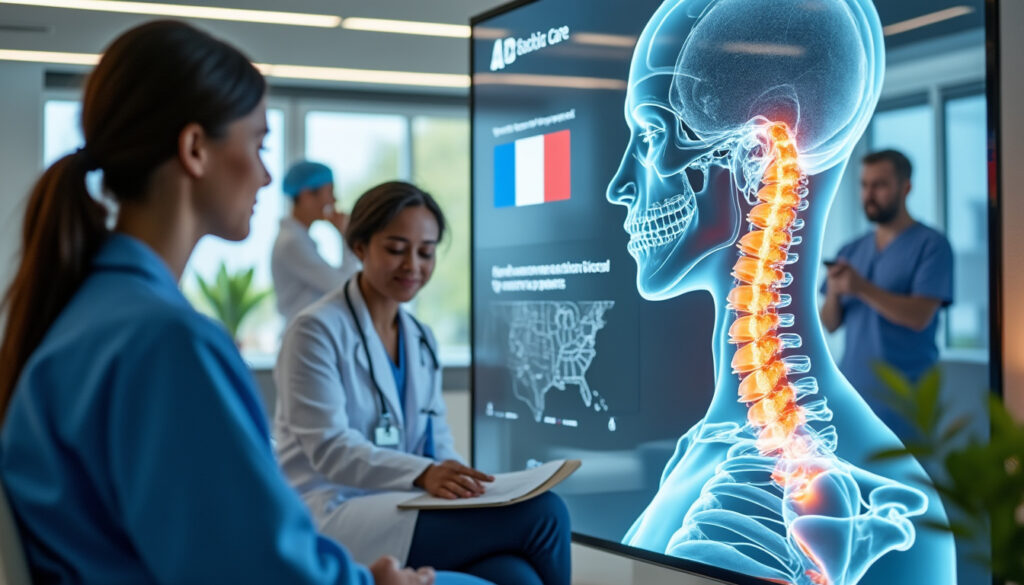
Neck Surgery in Montreal: Maintain Cervical Flexibility and Function
Neck conditions causing persistent pain or functional loss place a substantial burden on individuals and healthcare systems, especially in urban centers like Montreal. Surgical interventions targeting the cervical spine have evolved tremendously, aiming not only to relieve symptoms but to…
Distinctive Elements of the TOPS Implant Program: Beyond Technology
The TOPS implant program, as facilitated by Dr. Desforges and his international network, stands out by integrating technology with personalized, ethical, and scientific excellence. Distinguishing features include:
- Expertise and Leadership: Dr. Desforges’s involvement brings unparalleled experience, reflected in more than three decades of osteopathic care and leadership roles including founding the Association of Canadian Manual Osteopaths (ACMA).
- Scientific Rigor: adherence to evidence-based protocols aligns with Canadian healthcare standards and the College of Physicians’ guidelines.
- Innovative Implant Selection: the program’s commitment to the most effective devices, drawing on products from industry leaders like DePuy Synthes, Orthofix, and Zimmer Biomet.
- Comprehensive Patient Support: from initial assessment to long-term follow-up, the program offers multidisciplinary interventions, patient education, and tailor-made rehabilitation plans.
- International Coordination: seamless navigation of transatlantic surgical pathways with integrated communication among teams.
This holistic approach fosters patient confidence, mitigates risks, and accelerates recovery trajectories. By choosing this program, patients receive not only a surgical intervention but also a committed partnership throughout their spinal health journey.
Disc Prosthesis in Lévis: Quick and Long-Lasting Results
Chronic back pain caused by degenerative disc disease continues to profoundly impact the quality of life for many residents in Lévis and the broader Quebec area. For decades, traditional spinal fusion surgery has been the primary solution for alleviating severe…
Frequently Asked Questions About TOPS Implant Surgery
| Question | Answer |
|---|---|
| Who is a candidate for the TOPS implant? | Patients diagnosed with moderate to severe lumbar spinal stenosis or degenerative spondylolisthesis who have not responded to 3-6 months of conservative treatment may be considered candidates after expert evaluation. |
| How does the TOPS implant differ from spinal fusion? | The TOPS system stabilizes vertebrae while preserving natural spinal motion, unlike fusion which permanently immobilizes segments. |
| Is the TOPS implant reversible? | Yes, if revision surgery is needed, the implant can be removed or replaced without compromising spinal integrity. |
| What is the typical recovery time after TOPS surgery? | Recovery varies, but patients generally experience faster mobilization and return to activities compared to traditional fusion, often within a few weeks supported by rehabilitation. |
| Are there risks associated with TOPS implantation? | As with any surgery, risks exist; however, clinical studies indicate the procedure to be safe with fewer long-term complications than fusion. A thorough preoperative assessment helps mitigate potential issues. |
For more information or to discuss whether the TOPS implant may be the right option for you, please visit SOS Tourisme Médical contact page for expert personalized evaluation and advice.
Motion Surgery in Terrebonne: Maintain Intervertebral Mobility
Back pain remains a widespread concern for many in Quebec, with traditional treatment pathways often imposing lengthy waiting periods and financial constraints. Recently, Motion Surgery in Terrebonne has emerged as a transformative option, attracting patients seeking spinal solutions that prioritize…