Lumbar Disc Prosthesis in Sherbrooke: Preserve Natural Movement
October 26, 2025
Spine Surgery in Montreal: Cutting-Edge Surgical Innovation
October 26, 2025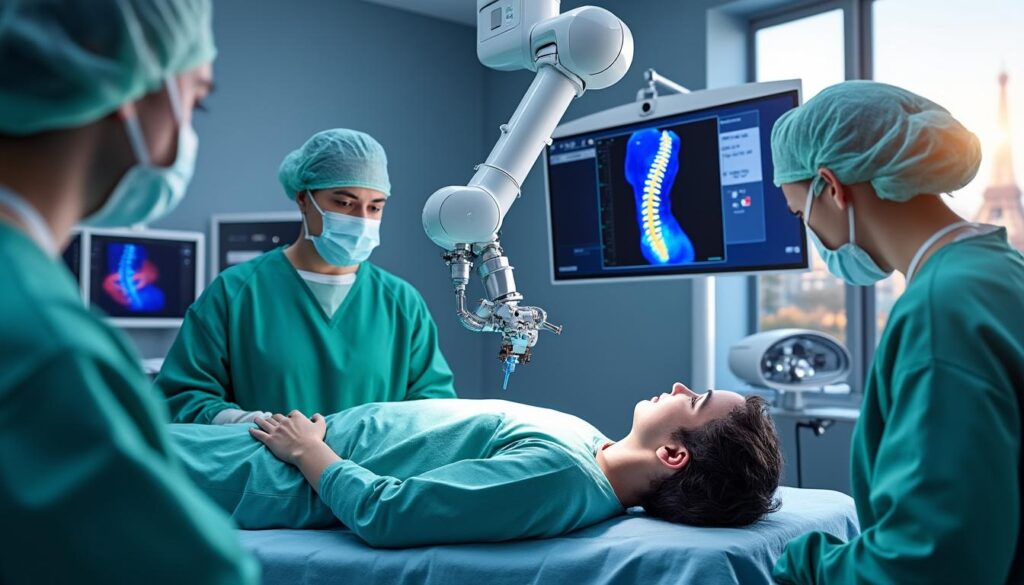
The relentless search for more efficient and patient-centric spinal treatments has paved the way for revolutionary advancements in spine surgery. Among these innovations, the TOPS System stands out as a beacon of hope for individuals suffering from lumbar spinal stenosis and degenerative spondylolisthesis. It offers an effective alternative to traditional spinal fusion (arthrodesis), addressing the complex interplay between spinal stability and motion preservation. In Gatineau, this technology has become a symbol of progress within the transatlantic care journey led by experts like Dr. Sylvain Desforges.
Patients facing extended wait times and escalating costs for private spine surgery in Québec now have options that not only reduce recovery time but also enhance quality of life. The TOPS System’s clinical success aligns with a rigorous evaluation process, highlighting the necessity of conservative treatments prior to surgical intervention. This article thoroughly explores the available surgical options in France, the comprehensive patient journey, and the compelling reasons behind embracing a transatlantic surgical pathway, emphasizing evidence-based, ethical, and personalized approaches.
Understanding the TOPS System: A New Paradigm in Spinal Stabilization in Gatineau
Developed by Premia Spine Ltd. and approved by the FDA in June 2023, the TOPS System is transforming spinal surgery by offering a dynamic alternative to spinal fusion for patients with degenerative spondylolisthesis and moderate to severe lumbar spinal stenosis. Unlike the traditional arthrodesis, which fuses vertebrae and restricts movement, the TOPS implant stabilizes the lumbar spine while preserving natural motion across multiple planes.
The device is anchored using pedicle screws and integrates flexible endplates that permit controlled axial rotation, lateral bending, flexion, and extension. This preservation of mobility contrasts with the rigidity caused by fusion, which often leads to adjacent segment degeneration over time. Clinical studies reveal a 76.7% success rate in patients at 24 months post-implantation, underscoring both efficacy and patient satisfaction.
Unlike fusion that permanently eliminates motion at the operated level, the TOPS System maintains physiological movement, fostering better biomechanical function and potentially reducing the risk of reoperation. This innovation is especially relevant for patients up to age 80, with degenerative spondylolisthesis grade I, localized from the L3 to L5 vertebral levels.
- Indications for use: Degenerative spondylolisthesis up to grade I and lumbar spinal stenosis with ligamentum flavum hypertrophy or facet joint capsule scarring.
- Mechanism: Posterior arthroplasty with pedicle screws and articulation to mimic natural spinal mechanics.
- Advantages: Spine stabilization without loss of movement, reduction in post-surgical pain, and potentially faster functional recovery.
- Contraindications: Disc herniation at the surgical level, spondylolisthesis beyond grade I, morbid obesity (BMI > 40), osteoporosis, infections, and multi-level nerve compression.
| Parameter | TOPS System | Traditional Fusion |
|---|---|---|
| Movement Preservation | Maintains lumbar spine motion | Eliminates motion at operated segments |
| Complication Risk | Lower risk of adjacent segment degeneration | Higher risk due to increased stiffness |
| Recovery Time | Generally quicker rehabilitation | Longer recovery due to bone fusion |
| Patient Eligibility | Grades I spondylolisthesis, age 35-80 | Broader, but with functional compromises |
| Reoperation Rates | Lower in 2-year follow-up studies | Higher due to adjacent segment issues |
Experts such as Dr. Sylvain Desforges actively champion the use of advanced technologies like the TOPS System, emphasizing their potential to redefine patient outcomes within a stringent framework of safety and scientific rigor. Institutions including Premia Spine, Orthovative, and leading manufacturers such as Zimmer Biomet, Medtronic, and NuVasive are continuously supporting research and improvements in dynamic spinal implants to enhance patient quality of life.
Minimally Invasive Surgery in Longueuil: Preserve Function and Speed Recovery
Minimally invasive surgery has transformed spine care by blending surgical innovation with patient-centered recovery goals. In Longueuil, Quebec, this approach is redefining how spinal conditions are treated, focusing on preserving function while significantly speeding up recovery time. With advances in…
The Spectrum of Surgical Options Available in France: Simple, Fusion, and Motion Preservation Techniques
France presents a broad portfolio of surgical treatments for spinal disorders, making it an attractive destination for Quebecois patients seeking timely, high-quality care. Importantly, these options extend beyond traditional arthrodesis to include simple decompression and innovative motion-preserving surgeries.
Simple Decompression Surgery is often the first surgical step, focusing on relieving nerve pressure by removing hypertrophic ligamentum flavum or bony overgrowth. This minimally invasive approach helps alleviate symptoms in cases of spinal stenosis without destabilizing the spine.
Spinal Fusion (Arthrodesis) involves permanently joining two or more vertebrae to eliminate painful motion segments. While effective at stabilizing the spine, this procedure restricts range of motion and may accelerate degeneration at adjacent levels, sometimes necessitating future surgeries.
Motion Preservation Techniques represent the cutting edge in spine surgery. Devices like the TOPS System or artificial disc replacements maintain spinal mobility while providing stability. These methods are particularly indicated for patients who meet strict clinical criteria, including those treated at specialized centers such as Clinique TAGMED. Motion-preserving devices offer several advantages:
- Improved postoperative mobility
- Reduced risk of adjacent segment disease
- Potentially better long-term quality of life
- Lower incidence of reoperation compared to fusion
| Surgical Option | Description | Benefits | Limitations |
|---|---|---|---|
| Simple Decompression | Nerve decompression without spinal fixation | Less invasive, shorter hospital stay | Not suitable for spinal instability |
| Spinal Fusion | Permanently joins vertebrae to stabilize | Strong spine stabilization | Loss of motion, adjacent segment risks |
| Motion Preservation | Implants maintain segmental motion post-surgery | Preserves mobility, lowers reoperation rates | Limited to specific patient profiles |
Dr. Desforges highlights that patient selection and precise evaluation according to Canadian and Quebec regulatory standards remain critical to optimize outcomes. His team works in coordination with French surgical centers, ensuring that each patient benefits from the best surgical option tailored to their condition, supported by an expert overview of alternative surgery in France.
Disc Prosthesis in Lévis: Maintain Natural Mobility
In the evolving landscape of spinal health, the pursuit of innovative solutions for chronic back pain and degenerative disc conditions has never been more critical. Residents of Lévis and surrounding regions seeking pathways beyond the limitations of traditional spinal fusion…
The Patient Journey: From Initial Evaluation to Postoperative Care Across the Atlantic
Embarking on a transatlantic surgical path requires careful navigation through several pivotal stages, balancing clinical rigor and compassionate support. With over 30 years of combined experience, Dr. Sylvain Desforges is uniquely positioned to coordinate this journey, ensuring seamless integration of care from Quebec to France and back.
The patient pathway typically unfolds through the following stages:
- Comprehensive Evaluation in Quebec: Detailed clinical assessment by Dr. Desforges, including imaging reviews and functional analyses, to confirm candidacy for surgical intervention, specifically considering innovative options like the TOPS System.
- Collaboration with French Surgical Partners: Close liaison with expert surgeons and specialty clinics such as Clinique TAGMED guarantees that the patient receives tailored recommendations, taking into account surgical indications and technological advances.
- Preoperative Conservative Treatment: Essential 3 to 6 months of conservative therapies, including targeted neurovertébral decompression, physiotherapy, and pain management, typically conducted at TAGMED, to maximize nonsurgical outcomes.
- Surgical Procedure in France: Hospital admission for surgery using selected implants and techniques, benefiting from advanced resources and surgical expertise.
- Postoperative Rehabilitation: Supervised recovery in rehabilitation centers, emphasizing gradual mobilization, pain control, and education to foster functional independence and prevent complications.
- Return to Quebec and Long-term Monitoring: Continued follow-up care coordinated by Dr. Desforges to monitor implant integrity, spinal function, and overall health metrics.
| Stage | Location | Key Components |
|---|---|---|
| Evaluation | Quebec | Clinical assessment, imaging, personalized planning |
| Conservative Treatment | TAGMED, Quebec | Neurovertébral decompression, physical therapy |
| Surgery | France | Advanced surgical techniques, implant placement |
| Rehabilitation | France/Quebec | Physiotherapy, pain management, functional training |
| Follow-up | Quebec | Monitoring implant function and patient progress |
This structured, multidisciplinary approach aligns with Dr. Desforges’ commitment to scientific excellence and patient safety, ensuring informed decision-making and personalized care throughout the journey. The transatlantic model also leverages partnerships like SOS Tourisme Médical to optimize scheduling and access, reducing delays common in public healthcare.
Motion Surgery in Terrebonne: Advanced Techniques Available in France
With over three decades of dedicated expertise in spine care, I have witnessed firsthand the evolution of surgical options aimed at improving quality of life for those living with spinal disorders. Among these advances, Motion Surgery stands out in Terrebonne…
Conservative Treatments: The Necessary Foundation Before Considering Surgery
Before exploring surgical options, it remains essential to exhaust conservative treatment avenues for a minimum of three to six months. This principle is foundational in Dr. Desforges’ practice, rooted in an evidence-based approach that values patient safety and the avoidance of premature surgery.
At the forefront of conservative care in Quebec is the Clinique TAGMED, known for its advanced neurovertébral decompression techniques that utilize innovative medical laser devices and dynamic therapies. These treatments address nerve compression non-invasively, often resulting in significant symptom relief and functional improvement.
Key conservative modalities include:
- Neurovertébral decompression with patented devices
- Targeted physiotherapy focusing on strengthening and mobility
- Pharmacological management tailored to individual needs
- Patient education to manage lifestyle and ergonomics
Failure to achieve adequate relief through these modalities, particularly if neurovertébral decompression has not been attempted, warrants reassessment before recommending surgical intervention. This cautious progression embodies Dr. Desforges’ principle of prioritizing patient well-being and informed choice in spine care.
| Conservative Treatment | Purpose | Expected Outcome |
|---|---|---|
| Neurovertébral Decompression | Reduce nerve root pressure | Pain relief, improved mobility |
| Physiotherapy | Strengthen supporting musculature | Enhanced spinal stability |
| Medication | Control pain and inflammation | Symptom management |
| Patient Education | Optimize lifestyle adjustments | Prevent further spinal stress |
Dr. Desforges stresses that surgery is a step taken only when conservative treatments have been fully optimized, in line with recognized Quebec and Canadian guidelines, ensuring treatment safety and efficacy.
Lumbar Disc Prosthesis in Saguenay: Long-Lasting Relief After Surgery
Chronic back pain rooted in lumbar disc degeneration challenges many patients in Saguenay and beyond, urging exploration of innovative solutions to restore spine health and quality of life. Traditional spinal fusion surgeries, though effective for stabilizing painful segments, have notable…
Biomechanical Advantages of the TOPS System Compared to Fusion Procedures
One of the most compelling reasons to consider the TOPS System is its ability to uphold the biomechanical integrity of the lumbar spine. Unlike fusion, which locks segments rigidly, the TOPS implant mimics physiological disc and facet joint motion. This unique articulation supports spinal loads while allowing controlled movement, which is crucial for distributing mechanical stress evenly and preventing adjacent segment deterioration.
Biological tissues experience less abnormal strain, reducing the cascade of compensatory degenerative changes commonly seen after fusion. For patients, this translates to:
- Preservation of natural range of motion
- Maintained spinal flexibility allowing daily functional activities
- Lower incidence of pain due to decreased stiffness
- Decreased likelihood of requiring additional surgeries
| Feature | TOPS System | Spinal Fusion |
|---|---|---|
| Range of Motion | Preserved in multiple planes (flexion, extension, rotation) | Eliminated at fused segments |
| Load Sharing | Dynamic distribution of forces through articulation | Increased stress at adjacent levels |
| Long-term Outcomes | Reduced adjacent segment disease in studies | Higher risk of degeneration at neighboring vertebrae |
| Patient Satisfaction | High, due to mobility retention and pain relief | Variable, often impacted by loss of motion |
Technological leaders such as Globus Medical, DePuy Synthes, and Stryker contribute to the advancement of devices that promote motion preservation, helping to redefine standards in spinal surgery. Dr. Desforges integrates knowledge from such innovative companies to provide superior patient care.
IntraSPINE® in Sherbrooke: Maintain Lumbar Function
In the modern management of lumbar spine conditions, patients in Sherbrooke and across Quebec are increasingly presented with innovative solutions that prioritize maintaining natural spinal function while alleviating debilitating pain. Among these advancements, the IntraSPINE device has emerged as a…
Economic and Human Benefits of the Transatlantic Patient Pathway
Choosing a transatlantic healthcare itinerary might initially seem daunting, but it offers significant economic and personal advantages that surpass many conventional options available domestically. For Quebec patients, delays in spinal surgery are often prolonged due to system pressures, and costs for private care remain prohibitive without insurance coverage or governmental support.
The opportunity to access high-quality, technically advanced surgery in France through coordinated programs led by Dr. Desforges circumvents these challenges. Key benefits include:
- Reduced waiting times: Surgical scheduling coordinated alongside French partners reduces delays substantially compared to public Canadian waitlists.
- Cost savings: Comprehensive packages minimize unexpected expenses, benefiting from differing healthcare economics and negotiated rates.
- Access to cutting-edge implants: Available technologies like the TOPS System might not always be accessible in Canada, offering patients access to the latest innovations.
- Personalized care coordination: Ongoing communication between Quebec and French teams ensures tailored management adapted to patient needs and preferences.
| Aspect | Domestic (Quebec) Care | Transatlantic Pathway |
|---|---|---|
| Waiting Time | Months to years | Weeks to months |
| Cost | High private costs or public system delays | Transparent all-inclusive packages |
| Access to Innovation | Limited in Canada | Access to TOPS and other advanced implants |
| Continuity of Care | Fragmented | Integrated transatlantic coordination |
Dr. Desforges’ humanistic approach ensures that patients feel supported throughout, with clear communication and realistic expectations. This model exemplifies how international collaboration can improve outcomes and patient satisfaction beyond traditional boundaries.
Minimally Invasive Surgery in Longueuil: Reduce Post-Surgery Pain
Minimally invasive surgery in Longueuil is transforming the patient experience by significantly reducing post-surgery pain and accelerating recovery times. With advances in surgical techniques such as laparoscopic and robotic-assisted procedures, patients can benefit from smaller incisions, less tissue damage, and…
The Importance of Scientific Rigor and Ethical Considerations in Spine Surgery
Dr. Sylvain Desforges’ extensive expertise, reflected through his B.Sc., D.O., N.D. qualifications, and leadership roles in the ACMA and the College of Canadian Osteopaths, ensures that every patient evaluation and recommendation adheres to the highest scientific standards and ethical principles. This commitment guarantees patient safety and treatment efficacy.
Adherence to regulatory frameworks, including those set by Quebec’s medical oversight bodies and the Canadian Medical College regulations, forms the backbone of clinical decision-making. The incorporation of evidence-based guidelines, continuous training, and technology assessment ensures that innovations like the TOPS System are deployed responsibly.
- Verification of patient eligibility through rigorous clinical and imaging protocols
- Use of validated outcome measures to track progress
- Transparent communication about risks, benefits, and alternatives
- Ethical obligation to explore conservative therapy fully before surgery
| Aspect | Practice under Dr. Desforges | General Medical Standards |
|---|---|---|
| Patient Evaluation | Comprehensive, multidisciplinary assessment | Basic clinical examination |
| Evidence Base | Science-driven, with ongoing research input | Variable depending on clinician |
| Innovation Integration | Balanced with safety and ethics | Often slow adoption of new technologies |
| Patient Communication | Clear, jargon-free explanations | Variable clarity |
This high standard of care fosters trust and enables patients to participate actively in treatment decisions, achieving better health outcomes and satisfaction.
Neck Surgery in Montreal: Maintain Natural Cervical Flexibility
Neck surgery remains a crucial consideration for patients suffering from severe cervical spine disorders where conservative treatments have failed. In Montreal, access to specialized care offers patients the opportunity to explore advanced surgical solutions designed to maintain natural cervical flexibility—an…
Collaboration and Coordination of International Care for Optimal Outcomes
Effective transatlantic patient management depends on seamless coordination between healthcare providers, leveraging technological platforms and strong partnerships. Dr. Desforges collaborates closely with surgical teams, specialty clinics such as Clinique TAGMED, and logistical facilitators to create a streamlined care pathway.
Key pillars of this model include:
- Preoperative assessments conducted locally with remote multidisciplinary reviews
- Facilitation of travel, lodging, and scheduling ensuring patient comfort and safety
- Real-time communication across teams for dynamic updates and collaborative decisions
- Postoperative rehabilitation and monitoring coordinated transatlantically to maintain continuity
| Collaboration Element | Function | Benefit |
|---|---|---|
| Multidisciplinary Evaluation | Combines expertise from osteopaths, surgeons, and rehabilitation specialists | Optimized diagnosis and treatment plans |
| Technology Integration | Use of cutting-edge surgical and communication tools | Increased precision and patient safety |
| Patient Navigation Support | Operational assistance in logistics and patient education | Reduced anxiety and enhanced patient engagement |
| Follow-up Coordination | Ensures consistent monitoring post surgery | Improved long-term outcomes |
The patient-centered model benefits from Dr. Desforges’ expertise and the continual evolution of platforms such as SOS Tourisme Médical, which reinforce the international bridge in healthcare.
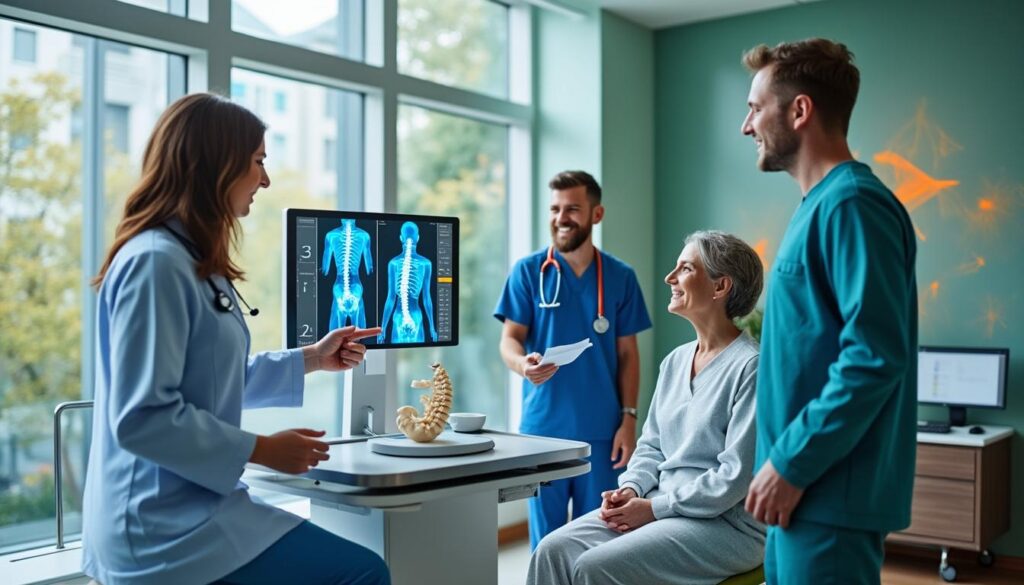
Disc Prosthesis in Lévis: Fast and Lasting Results
In the realm of spinal care, patients battling chronic back pain and degenerative disc diseases continuously seek solutions that offer not just symptom relief but also the restoration of natural spinal function. Disc prosthesis, or artificial spinal disc replacement, has…
Making an Informed Decision: Evaluations, Expectations, and Personalized Care
Choosing surgical intervention is a significant step that requires a balanced understanding of indications, limitations, and expected outcomes. Dr. Sylvain Desforges supports patients through every evaluation, offering detailed explanations of potential procedures like the TOPS System, as well as alternatives and conservative pathways.
Clear communication without unnecessary jargon empowers patients to make informed decisions tailored to their unique circumstances. Factors integral to this process include:
- Individualized risk-benefit analysis considering patient health status and preferences
- Exploration of all treatment options, including advanced conservative care at Clinique TAGMED
- Realistic timelines for recovery and rehabilitation
- Opportunities to discuss concerns and ask questions freely
| Decision Factor | Considerations Offered by Dr. Desforges | Patient Empowerment Outcome |
|---|---|---|
| Eligibility | Assessment of spinal condition and suitability for TOPS or other surgeries | Confidence in proceeding with safest option |
| Alternative Treatments | Emphasis on conservative strategies and multidisciplinary care | Reduced risk of unnecessary surgery |
| Recovery Expectations | Detailed timelines and functional goals outlined clearly | Preparedness for postoperative phase |
| Communication | Jargon-free, empathetic dialogue | Increased trust and satisfaction |
Patients are encouraged to actively participate in their care trajectory, ensuring a sense of control and optimism through transparent engagement.
What is the TOPS System and how does it differ from traditional spinal fusion?
The TOPS System is a mechanical spinal implant that stabilizes the lumbar spine while preserving motion. Unlike spinal fusion that locks vertebrae together, TOPS maintains natural spinal movement, reducing complications and improving recovery.
Who is a candidate for the TOPS implant procedure?
Candidates are typically between 35 and 80 years with Grade I degenerative spondylolisthesis, lumbar spinal stenosis, and no significant disc herniation, infection, or severe bone density issues.
Why is conservative treatment necessary before considering spinal surgery?
Conservative treatments, including neurovertébral decompression offered at Clinique TAGMED, are essential to relieve symptoms and improve spinal health without surgery. Surgery is considered only after 3 to 6 months if conservative care fails.
What are the advantages of the transatlantic surgery pathway to France?
This option reduces wait times, lowers costs, provides access to state-of-the-art implants such as the TOPS System, and ensures coordinated pre- and post-op care via expert teams in both Quebec and France.
How does Dr. Sylvain Desforges ensure patient safety and quality outcomes?
Through rigorous evaluations, adherence to evidence-based practices and ethical guidelines, and partnerships with leading surgical centers and cutting-edge implant manufacturers, Dr. Desforges ensures optimal patient-centric care.