La Prairie Lumbar Herniated Disc Rehabilitation for Athletes
May 15, 2026
Candiac Sciatica Relief Through TAGMED’s Advanced Protocol
May 15, 2026
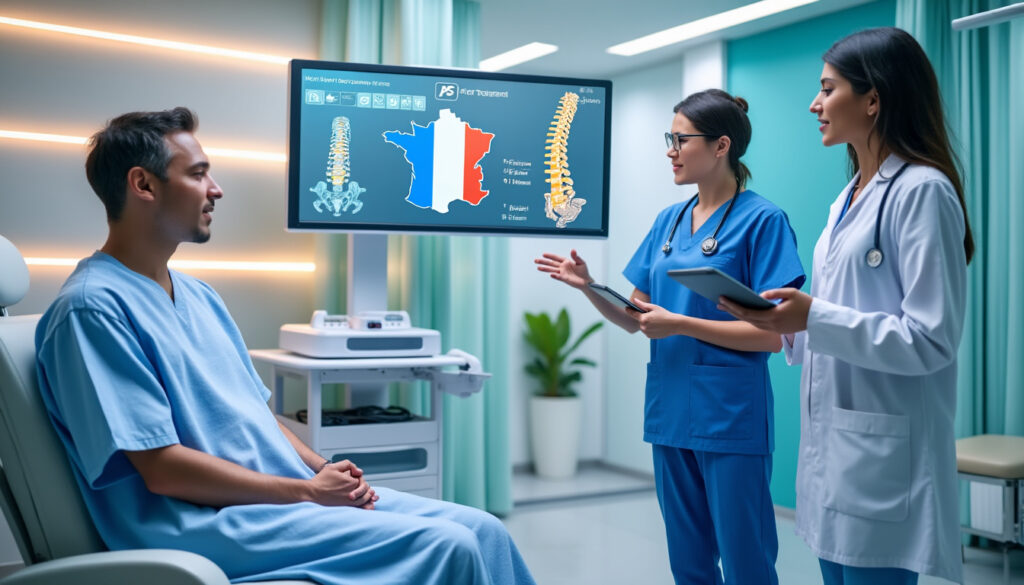
In 2026, an impressive advancement is reshaping spinal treatment options for patients confronting lumbar stenosis and degenerative spondylolisthesis. The emergence of the TOPS System in Gatineau represents a breakthrough in preserving spinal motion while delivering effective pain relief and stability. While traditional spinal fusion surgeries offer reliable stabilization, they often sacrifice the natural mobility of the lumbar spine, potentially accelerating degeneration in adjacent segments. This modern approach, supported by the expertise of Dr. Sylvain Desforges—a figure with over 30 years of dedication to spine care and international patient coordination—opens a promising avenue for Quebecois patients seeking cutting-edge, cost-effective treatments beyond local limitations.
The TOPS System, a sophisticated facet joint replacement technology approved by regulatory authorities such as the FDA and established in clinical practice on both sides of the Atlantic, allows dynamic stabilization after decompression surgery. It maintains near-normal spinal flexibility, thus addressing long-standing concerns related to stiffness and adjacent segment disease frequently encountered with fusion. Through a seamlessly coordinated transatlantic care pathway, patients receive personalized evaluation, preparation, surgery, and rehabilitation, guided by evidence-based protocols and humanistic support. This article explores the intricacies of the TOPS implant, its surgical indications, biomechanical benefits, and the comprehensive journey of lumbar stenosis patients managed through this innovative solution, making it an essential read for those considering advanced spinal treatments.
Understanding the TOPS System: A Motion-Preserving Innovation for Lumbar Spine Treatment
Treating lumbar spinal stenosis and related degenerative conditions calls for solutions balancing spinal stability with the preservation of natural motion. Traditional lumbar fusion surgery, while effective at immobilizing problematic segments, unfortunately curbs the physiological movements of the spine. This immobilization can cause increased mechanical stress on adjacent spinal levels, leading to what is termed adjacent segment disease (ASD), a challenging complication compromising long-term outcomes.
The TOPS System (Total Posterior Spine), developed by Premia Spine, ventures to upend this paradigm by being the first FDA-approved dynamic posterior arthroplasty implant designed specifically to preserve near-normal range of motion after lumbar decompression surgery. Unlike fusion, which permanently locks vertebrae, TOPS replaces the removed bony and soft tissue structures using a mechanical, flexible device that allows controlled rotation, bending, and extension while maintaining spinal stability.
Suitable for patients typically between L2 and L5 levels suffering from moderate to severe lumbar spinal stenosis, degenerative spondylolisthesis up to Grade I, and facet joint arthrosis, the TOPS implant offers a tailored approach preserving key mechanical functions of the spine. By stabilizing the vertebral segment dynamically, it protects neural structures and minimizes the biomechanical disturbances that often lead to degeneration of non-operated vertebrae. This attribute represents a tangible advancement in spinal treatment, especially for active adults seeking long-term function retention.
The device’s construction involves pedicle-screw fixation and a multiaxial mechanism allowing physiologic movements while restricting excessive motion that might compromise stability. Clinical follow-ups indicate that patients experience significant pain reduction, retention of mobility over 80% compared to normal function, and delayed progression of adjacent segment disease relative to fusion surgery cohorts.
To further understand the system’s benefits, comparison with fusion outcomes provides clear insight:
| Condition | Traditional Fusion Outcome | TOPS System Outcome |
|---|---|---|
| Lumbar Spinal Stenosis | Stabilizes but restricts mobility; risks adjacent degeneration | Maintains mobility while stabilizing; slows adjacent degeneration |
| Degenerative Spondylolisthesis | Rigid fixation; loss of segmental motion | Dynamic stabilization preserving segmental movement |
| Facet Joint Arthrosis | Limited symptom relief due to stiffness | Improved pain relief with preserved spine biomechanics |
Such mechanical and clinical advantages underpin why many experts, including Dr. Desforges, advocate for the TOPS System as a preferred alternative to fusion in appropriate cases. This innovation marks a turning point in lumbar stenosis management, emphasizing functional preservation alongside pain control.
Minimally Invasive Surgery in Longueuil: Shorter Recovery and Maintained Mobility
In the evolving landscape of spinal care, patients across Quebec increasingly seek minimally invasive surgical solutions to overcome the challenges posed by chronic back and neck conditions. In Longueuil, a hub of innovative spine treatments, these advanced procedures are transforming…
A Multistage Patient Care Pathway: From Comprehensive Evaluation to Transatlantic Lumbar Surgery
Patients experiencing lumbar spinal stenosis face complex decisions regarding their care journey. The introduction of the TOPS System necessitates an integrated pathway refined to optimize safety, efficacy, and personalized treatment—values championed by Dr. Sylvain Desforges, whose scientific rigor and compassionate support guide patients every step of the way.
The journey commences with a rigorous preoperative evaluation. This assessment includes detailed clinical examination and advanced imaging modalities such as MRI, CT scans, and functional X-rays. Dr. Desforges carefully analyzes spinal stability, neural compression, and the biomechanics of the affected lumbar segments. This step, rooted in scientific evidence, is essential to ascertain candidacy for the TOPS implant.
Crucially, before any surgical intervention is pursued, patients undergo conservative therapy for a period ranging from three to six months. This adheres strictly to contemporary best practices and ethical principles, ensuring that surgery is reserved for cases unresponsive to other treatments. Extensive non-surgical options include physical therapy aimed at strengthening spinal musculature, pharmacologic pain management, and notably, advanced neurovertebral decompression techniques offered at the renowned Clinique TAGMED. TAGMED’s state-of-the-art technology utilizes non-invasive modalities to alleviate nerve root compression, significantly reducing the need for surgical steps when successful.
After confirming surgical necessity, the next phase unfolds as a carefully orchestrated transatlantic collaboration. Dr. Desforges leverages established relationships with expert surgical teams in France, facilitating efficient scheduling and coordination. This international cooperation reduces wait times and ensures high standards of care, including access to implants like TOPS not commonly available in Quebec. Throughout hospitalization and surgery, patients receive attentive care focusing on postoperative pain control, early mobilization, and clear rehabilitation instructions.
Post-surgical recovery constitutes a vital segment of the pathway. Upon discharge, personalized rehabilitation plans designed to enhance functional recovery accompany ongoing remote monitoring by Dr. Desforges and his multidisciplinary team. Patients benefit from continuous support incorporating ergonomic education and gradual return to activity, underpinning the holistic, patient-centered model of care.
This well-structured approach addressing evaluation, treatment, surgery, and rehabilitation not only optimizes clinical outcomes but also offers patients clarity and reassurance throughout a potentially daunting treatment experience.
IntraSPINE® in Laval: Fast Recovery After Lumbar Intervention
The quest for effective solutions to chronic lumbar back pain continues to inspire innovative approaches in spine care. With over three decades of expertise, Dr. Sylvain Desforges stands at the forefront of this transformation, weaving scientific rigor, cutting-edge technology, and…
Types of Lumbar Spine Surgeries: Fusion, Motion-Preserving, and Decompression Explained
Understanding the range of lumbar surgical options is integral to patient empowerment and informed consent. The diversity of procedures serves to address different underlying pathologies, with varying implications for spinal motion and recovery.
Simple Decompression Surgery involves removing osseous or ligamentous structures compressing nerve roots without implant insertion. Common forms include laminectomy and facetectomy. These approaches are primarily indicated for patients with spinal stenosis absent significant instability, offering symptom relief but without mechanical segmental stabilization.
Spinal Fusion Surgery aims to permanently join two or more vertebrae following decompression. While highly effective in stabilizing segments exhibiting instability or listhesis, fusion irrevocably eliminates motion at the fused level. This rigidity often precipitates compensatory stress and degeneration at adjacent segments. Fusion remains indicated for cases with severe instability or multi-level degeneration but involves longer recovery and mobility limitations.
Motion-Preserving Surgeries, exemplified by the TOPS System, combine decompression with dynamic stabilization implants designed to maintain natural spinal movement. These options reduce the risk of adjacent segment degeneration by mimicking physiologic biomechanics. Advantageous for patients with moderate stenosis and degenerative spondylolisthesis, this category represents a forward-thinking alternative that supports long-term spinal health and functional quality of life.
The table below summarizes key distinctions among these surgical approaches:
| Surgery Type | Primary Goal | Motion Preservation | Common Indications |
|---|---|---|---|
| Simple Decompression | Relieve nerve compression | No | Lumbar stenosis without instability |
| Spinal Fusion | Stabilize unstable segments | No | Spondylolisthesis, severe listhesis, instability |
| Motion-Preserving (e.g., TOPS) | Stabilize while maintaining motion | Yes | Lumbar stenosis, degenerative spondylolisthesis |
Careful evaluation by experts such as Dr. Desforges is essential for matching surgical technique to patient-specific anatomy and needs, ensuring an evidence-based decision-making process.
Neck Surgery in Montreal: Maintain Cervical Flexibility
Neck surgery stands at a crossroads of medical innovation and patient-centered care in Montreal, evolving significantly to address the complexities of cervical spine conditions. For those enduring persistent neck pain and debilitating spinal disorders, surgery often serves as a critical…
Biomechanical Advantages of the TOPS Implant: Protecting the Lumbar Spine Long-Term
The lumbar spine functions by balancing dynamic flexibility with robust stability, facilitating complex ranges of motion such as flexion, extension, lateral bending, and rotation. When structural pathologies such as spinal stenosis disrupt this balance, interventions like decompression surgery become necessary but risk destabilizing posterior structures inherently supporting spinal biomechanics.
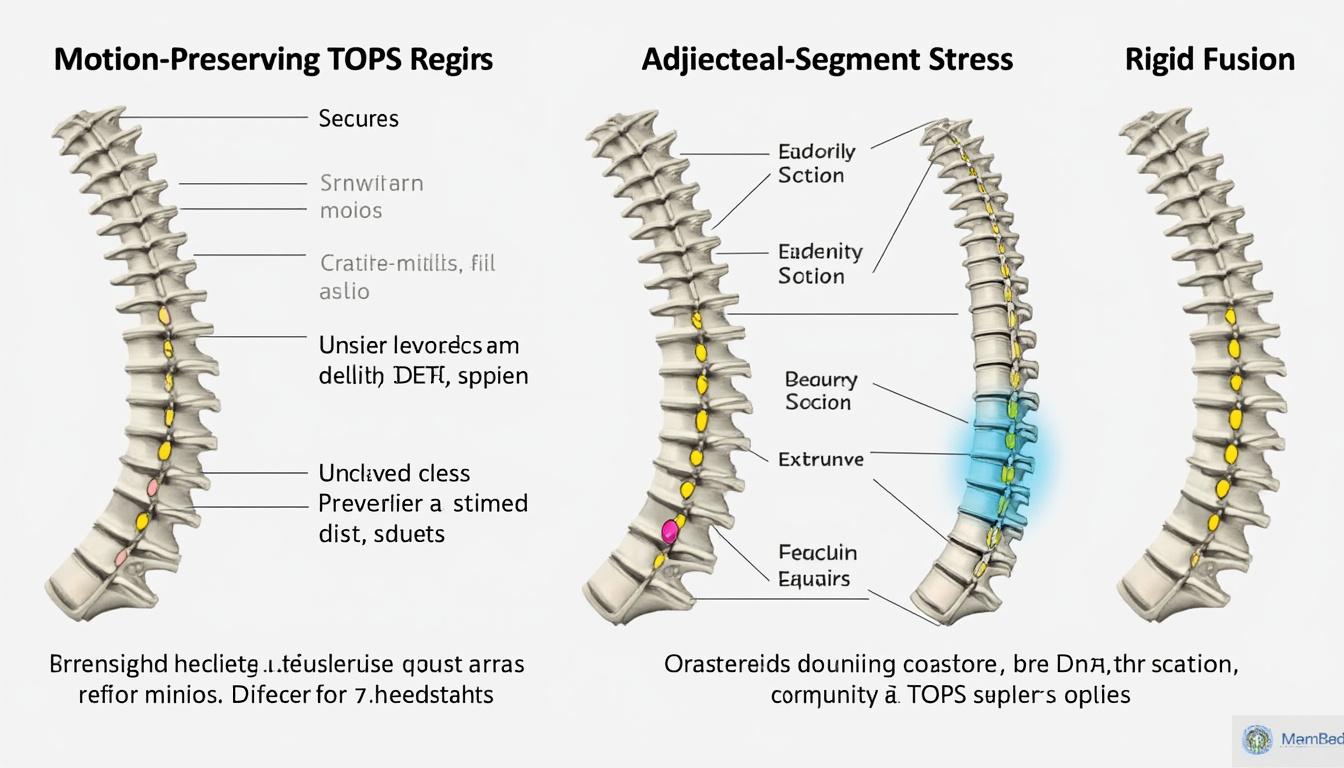
Traditional fusion sacrifices segment mobility, often transferring mechanical loads disproportionately to adjacent levels and hastening their degeneration, a critical concern in spinal surgery outcomes. The TOPS implant addresses this by offering dynamic stabilization, preserving essential multidirectional spinal movements while securing the surgical site.
Biomechanical studies demonstrate that the TOPS device retains over 85% of normal side-bending and axial rotation, and more than 80% of flexion/extension capacity post-implantation. This contrasts sharply with fusion outcomes presenting drastic motion restrictions. By maintaining near-physiologic kinematics, TOPS reduces abnormal stress concentrations, lowering the likelihood of adjacent segment disease and enhancing patient mobility and comfort.
The following table highlights biomechanical comparisons:
| Biomechanical Parameter | Post-Fusion Surgery | TOPS System | Normal Physiology |
|---|---|---|---|
| Axial Rotation Preservation | Minimal | Approximately 85% | 100% |
| Lateral Bending Mobility | Limited | Near physiological | 100% |
| Flexion/Extension Range | Significantly reduced | Over 80% | 100% |
| Adjacent Segment Stress | Increased | Decreased | Normal |
These biomechanical benefits translate clinically into preserved function and reduced long-term complications. Dr. Desforges emphasizes that such innovations exemplify the future of motion-preserving spine surgery. Recent studies reinforce the TOPS System’s capacity as a cost-effective and functional treatment solution.
Disc Prosthesis in Lévis: Approved and Effective Solution
Back pain is a pervasive health issue affecting millions of people worldwide, often resulting from degenerative conditions of the spinal discs. As medical science advances, innovative solutions emerge offering hope and relief beyond traditional therapies. Among these, disc prosthesis stands…
The Critical Role of Conservative Therapy Before Considering Lumbar Surgery
Before progressing to surgical options such as the TOPS implant, adherence to extended conservative treatment protocols is paramount to maximize patient safety and outcome efficacy. Dr. Sylvain Desforges advocates for a thorough trial period of 3 to 6 months utilizing non-surgical interventions tailored to individual patient presentations.
This phase involves multimodal approaches:
- Physical Therapy: Targeting lumbar stabilization and improved flexibility through customized regimens.
- Pharmacological Management: Utilizing anti-inflammatory medications and analgesics to moderate pain and inflammation.
- Advanced Neurovertebral Decompression: Offered exclusively by centers such as the Clinique TAGMED, this technique non-invasively relieves nerve impingement, improving neurological symptoms and occasionally removing the need for surgery.
- Patient Education: Emphasizing ergonomic adjustments and lifestyle modifications to prevent symptom exacerbation.
- Spinal Injections: Corticosteroid or anesthetic injections may be applied to reduce inflammation in selected cases.
Completion of this structured conservative phase ensures that surgery is reserved for those who truly require it, avoiding unnecessary interventions and their associated risks. Particularly when neurovertebral decompression has not yet been employed, TAGMED’s innovative therapies are invaluable tools ensuring that every opportunity to improve symptoms non-surgically is exhausted before surgery is contemplated.
This dedication to evidence-based, ethical practice underscores Dr. Desforges’ commitment to patient-centered care and safety in advancing spinal treatment.
Motion Surgery in Terrebonne: Innovative and Proven Results
Spinal disorders remain a leading cause of discomfort and disability worldwide, with Quebec seeing a steady increase in consultations for chronic back pain. At the intersection of medical innovation and patient-centered care, motion surgery in Terrebonne offers a revolutionary approach…
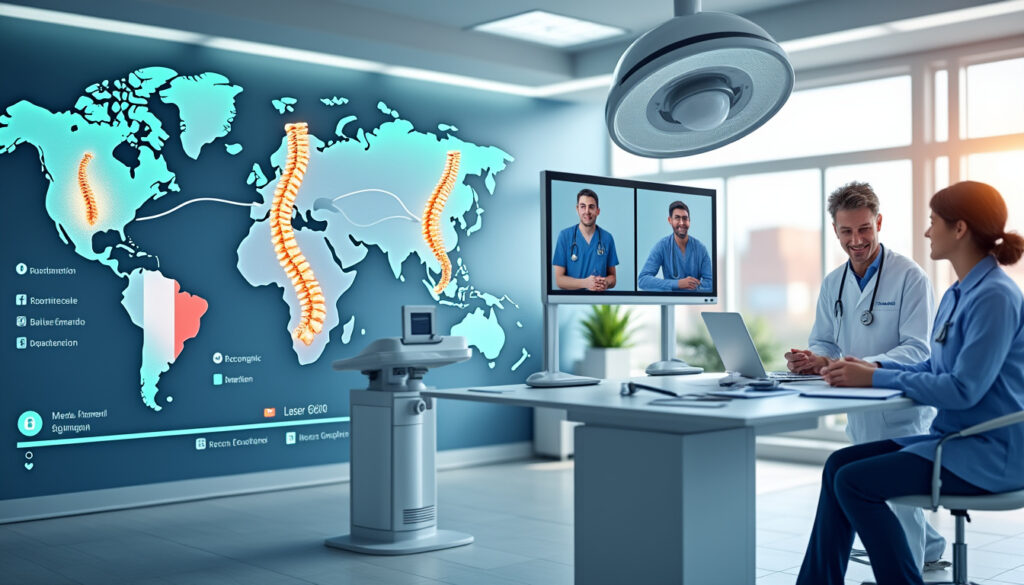
The Unique Benefits of a Transatlantic Patient Care Model for Lumbar Spinal Surgery
Quebec patients facing lumbar spinal stenosis often confront extended waiting periods and high costs within local healthcare systems, which can delay access to advanced surgical solutions. The transatlantic care model championed by Dr. Desforges provides an innovative and comprehensive alternative that optimizes clinical outcomes while respecting patient convenience and economic considerations.
This international collaboration offers several clear advantages:
- Reduced Wait Times: Access to expert spinal surgical centers in France expedites scheduling, reducing debilitating delays.
- Cost-Effectiveness: Comprehensive care packages include evaluation, surgical intervention, and rehabilitation with transparent pricing, often more affordable than Canadian private options.
- Access to Advanced Technologies: Patients benefit from implants such as the TOPS System, currently less accessible within Quebec’s healthcare market.
- Continuity of Care: Dr. Desforges provides ongoing evaluation and support before, during, and after surgery, ensuring cohesive management across international boundaries.
- Empathetic, Personalized Support: Emphasizing clear communication, patient education, and emotional reassurance in a culturally sensitive manner.
- Customized Rehabilitation: Postoperative plans are tailored remotely but thoroughly, aiding swift and safe return to daily life.
The table below contrasts key features of traditional Quebec spinal care versus the transatlantic care pathway:
| Aspect | Traditional Quebec Care | Transatlantic Care Model |
|---|---|---|
| Access to Surgery | Long wait times | Expedited scheduling via international cooperation |
| Technology Availability | Limited to local offerings | Access to innovative implants like TOPS |
| Cost | High private fees for prompt care | Transparent, all-inclusive packages |
| Continuity of Care | Fragmented follow-up | Integrated transatlantic management |
| Patient Education | Variable information | Dedicated expert guidance from Dr. Desforges |
This model demonstrates how blending scientific innovation with ethical, patient-focused coordination can redefine spinal care accessibility for Quebec patients. It exemplifies Dr. Desforges’ holistic approach that respects both the technical and human dimensions of treatment.
Lumbar Disc Prosthesis in Saguenay: Maintain Spinal Biomechanics
The rising prevalence of chronic back pain and lumbar spine conditions in Saguenay has prompted an increase in advanced orthopedic solutions designed to alleviate discomfort while maintaining optimal spinal functionality. Among these innovations, lumbar disc prosthesis stands out as a…
Innovative Complementary Lumbar Implants Beyond the TOPS System
While the TOPS System stands as a landmark in dynamic lumbar stabilization, the broader landscape of spinal implants includes a variety of innovative devices targeting specific pathologies and patient needs. Understanding these alternatives can illuminate the diverse therapeutic options available to patients under expert care.
Dynamic Lumbar Disc Prostheses replace degenerated intervertebral discs, preserving disc height and motion. These implants suit active individuals suffering primarily from degenerative disc disease and offer durable motion preservation.
Interspinous Spacers are minimally invasive devices inserted between spinous processes to alleviate symptoms of mild-to-moderate spinal stenosis by indirectly decompressing nerve roots. They preserve some motion but do not offer full segment stabilization.
Minimally Invasive Fusion Systems employ advanced technology to perform spinal fusion with reduced tissue disruption and faster recovery times. These systems are essential in cases of severe instability or multi-level degeneration where fusion remains necessary.
The following summary elucidates these implant types for clarity:
| Implant Type | Primary Function | Motion Preservation | Typical Indications |
|---|---|---|---|
| TOPS System | Posterior facet joint replacement | Yes | Lumbar spinal stenosis, spondylolisthesis |
| Dynamic Disc Prosthesis | Disc replacement | Yes | Degenerative disc disease |
| Interspinous Spacer | Indirect decompression | Partial | Mild to moderate spinal stenosis |
| Minimally Invasive Fusion | Stabilization via fusion | No | Severe instability, multi-level degeneration |
Customized recommendations by Dr. Desforges and his team leverage extensive clinical and biomechanical expertise, tailoring each patient’s implant selection to optimize functional outcomes and overall safety.

IntraSPINE® in Sherbrooke: Safe Minimally Invasive Procedure
In recent years, chronic back pain has escalated as a pressing health issue, significantly diminishing quality of life for many individuals, particularly in Quebec. Traditional spinal surgeries, while effective, often involve extensive recovery periods and can be associated with significant…
Empowering Patients with Clear, Accessible Information on Lumbar Spine Surgery Options
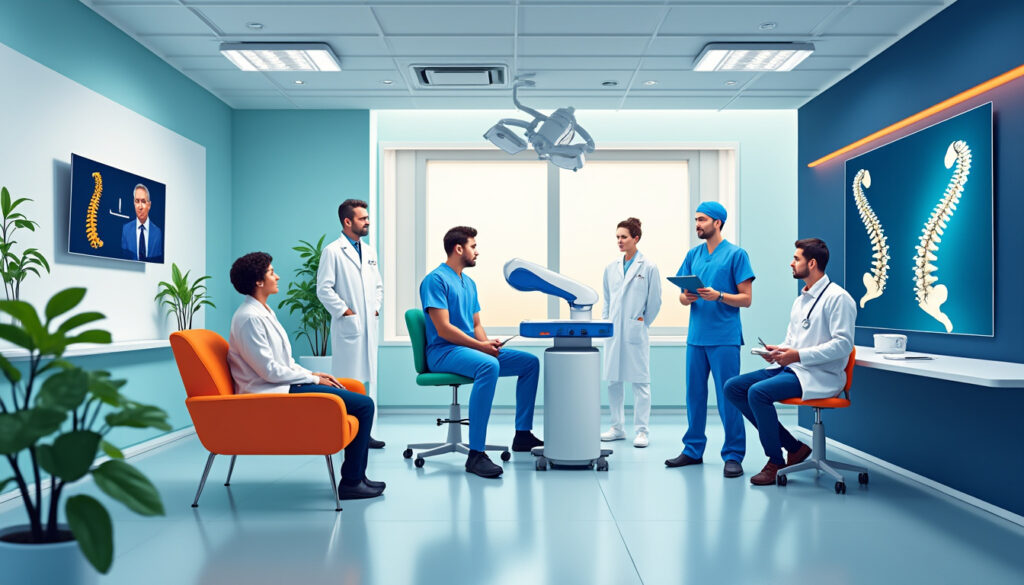
An informed patient is an empowered patient. Dr. Sylvain Desforges places great emphasis on providing comprehensible, jargon-free explanations of complex spinal surgical procedures to foster shared decision-making and reduce anxiety.
Essential components of this patient education include:
- Clear anatomical illustrations and straightforward descriptions of lumbar spine structure and function.
- Step-by-step walkthroughs of surgical techniques, highlighting differences between fusion, decompression, and motion-preserving implants like TOPS.
- Detailed discussion of advantages, limitations, and expected postoperative timelines, including rehabilitation stages.
- Open dialogue encouraging patients to ask questions and express concerns.
- Consideration of each patient’s lifestyle, values, and goals to individualize care plans.
This pedagogical approach provides reassurance while nudging patients towards evidence-based care choices. It is designed to accommodate the diverse educational backgrounds of patients and ensure that all participants in the care journey fully understand potential outcomes.
Those interested in a comprehensive evaluation and personalized strategy can connect through platforms such as SOS Medical Tourism, bridging expert assessment and surgical access seamlessly.
Spine Surgery in Trois-Rivières: Personalized Patient-Centered Intervention
The challenge of back health and spinal surgery has become increasingly critical for many patients in Trois-Rivières, Quebec. Lengthy waiting times for appropriate surgical interventions often transform the care journey into a frustrating experience. Against this backdrop, a promising international…
Invitation to Begin Your Personalized Lumbar Care Journey with Expert Guidance
For Quebec patients navigating the complexities of lumbar spinal stenosis treatment, the combination of innovative technology, rigorous evaluation processes, and international care coordination offers a uniquely empowering and effective care paradigm. Dr. Sylvain Desforges personally oversees the assessment and continuity of care across borders, ensuring that every individual receives evidence-based, ethical, and personalized treatment planning aligned with 30+ years of clinical and academic excellence.
If you are experiencing persistent back pain and are exploring advanced surgical options that prioritize long-term function and quality of life, consider scheduling a detailed evaluation to understand if the TOPS System or other innovative treatments suit your condition.
Contact us today to discuss your case with confidence and clarity: Start your personalized spine care consultation.
What conditions is the TOPS System best suited to treat?
The TOPS System effectively addresses lumbar spinal stenosis, degenerative spondylolisthesis up to Grade I, and facet joint arthrosis, with the aim of relieving pain while preserving segmental spine motion.
Is the TOPS System widely available to patients in Quebec?
Currently, the TOPS implant is not broadly accessible within Quebec’s hospitals but can be obtained through coordinated transatlantic pathways involving expert evaluation, surgery in France, and comprehensive follow-up with Dr. Desforges.
Why is conservative treatment emphasized before lumbar surgery?
Conservative treatment, including physical therapy and advanced non-surgical interventions like neurovertebral decompression, are encouraged for 3 to 6 months to maximize non-surgical symptom relief and avoid unnecessary surgery.
How does the TOPS System compare to traditional spinal fusion regarding mobility?
Unlike fusion, which eliminates motion at the treated segment, the TOPS System preserves dynamic movements such as bending and rotation, maintaining much more natural spinal mechanics and reducing adjacent segment degeneration.
What advantages does the transatlantic patient model offer Quebec patients?
This approach reduces wait times, provides access to cutting-edge implants like TOPS, reduces overall treatment costs, and ensures continuous expert guidance before, during, and after surgery.