Repentigny Sciatica Relief Through TAGMED’s Technology
May 18, 2026
Advancements in Minimally Invasive Surgery in Longueuil: Reducing Hospital Stay Duration
May 19, 2026
The prevalence of herniated discs remains a significant concern for residents of Montreal and the greater Quebec area, profoundly impacting quality of life due to persistent back pain and associated symptoms such as sciatica. As urban lifestyle factors intensify and the aging population grows, the demand for effective, non-surgical treatments has surged. Within this landscape, neurovertebral decompression therapy has emerged as a cutting-edge, evidence-based solution, offering hope for lasting relief and mobility restoration without invasive procedures. Clinics specializing in spinal treatment in Montreal combine sophisticated technology, expert evaluations, and comprehensive care tailored to each individual’s needs.
Understanding the expected relief duration post-treatment and the mechanisms behind neurovertebral decompression is essential for patients seeking alternatives to surgery. Montreal’s medical community benefits from experts like Dr. Sylvain Desforges, whose decades of experience and leadership shape innovative therapeutic approaches aligned with rigorous scientific and ethical standards. His clinics champion a patient-centric, multidisciplinary methodology that integrates osteopathic expertise with advanced physical therapies and neurovertebral decompression technology. These developments enable patients to embark on personalized care journeys optimized for efficacy and safety.
Causes, Symptoms, and Clinical Insights into Herniated Disc Prevalence in Montreal
The herniated disc condition predominantly affects the lumbar region of the spine, though cervical herniations are also observed. Discs act as cushions between vertebrae, absorbing shocks and providing flexibility. When the disc’s annulus fibrosus tears or degenerates, the nucleus pulposus can protrude, compressing adjacent nerve roots and resulting in pain, numbness, or weakness along nerve pathways.
In Montreal’s urban environment, risk factors accumulate. Lifestyle elements—including prolonged sitting, repetitive physical strain, and increasing obesity rates—contribute to accelerated disc degeneration and increased occurrences of herniated discs. For example, office workers commonly suffer from sustained poor posture, which exacerbates spinal stress. Additionally, trauma from accidents or heavy lifting may precipitate disc herniation episodes abruptly.
Clinically, patients present with lower back pain radiating into the legs (sciatica), tingling, or muscle weakness. Neuroimaging techniques such as MRI, readily accessible in Montreal, aid in differentiating herniated discs from other pathologies like spinal stenosis or muscle spasm. Accurate differential diagnosis is critical for formulating a suitable management plan that relies on the integration of clinical symptoms and imaging findings.
Awareness and understanding of these clinical nuances, especially by care providers with extensive spinal expertise, improve patient outcomes. The work of Dr. Sylvain Desforges exemplifies this integration, as his evaluations consider not only anatomical changes but also patient history and functional status to guide treatment decisively.

Cervical Disc Prosthesis in Quebec: Restoring Neck Mobility and Function
Chronic neck pain increasingly affects a growing number of patients across Quebec, profoundly impacting their quality of life and professional capabilities. As the quest for surgical solutions that not only alleviate discomfort but also preserve natural neck mobility intensifies, cervical…
Structured Medical Follow-up in Montreal for Comprehensive Herniated Disc Care
Montreal’s healthcare system offers structured pathways for managing herniated discs through personalized and multidisciplinary approaches. Initial evaluations encompass detailed patient history taking, physical examination, and appropriate imaging studies including MRI and X-rays. These form the basis for individualized treatment protocols.
Clinics like TAGMED, under the leadership of Dr. Sylvain Desforges, emphasize customized therapy plans that incorporate not only the severity of the herniation but also patient-specific factors such as age, activity level, and comorbid conditions. This approach optimizes the safety and efficacy of non-surgical interventions like neurovertebral decompression, osteopathy, and tailored physiotherapy.
The follow-up process involves frequent pain and mobility assessments and modifications to therapy intensity and duration. Adjunctive physiotherapy focuses on strengthening the core musculature and restoring postural balance, mitigating underlying biomechanical causes. Osteopathic manipulations alleviate muscular tension and realign spinal segments, complementing decompression therapy’s mechanical effects. Such synchronized multidisciplinary care reduces the need for premature surgical interventions and promotes functional recovery.
Cooperation among spinal care practitioners, physiotherapists, and osteopaths assures continuous monitoring and enhancement of patient outcomes, representing a model of integrated care characteristic of Montreal’s leading treatment centers.
Disc Herniation in Longueuil: Target Patients and Neurovertebral Decompression Treatment Explained
Disc herniation remains a widespread challenge in Longueuil, notably impacting a diverse patient population. The region’s active workforce, coupled with sedentary habits and occupational risks, has amplified the prevalence of nerve compression symptoms and chronic back pain. Addressing this escalating…
Neurovertebral Decompression Therapy: Mechanisms and Clinical Advantages in Montreal
Neurovertebral decompression therapy is an advanced, non-invasive procedure designed to relieve nerve pressure caused by herniated discs. This method employs computerized traction devices that apply controlled, gentle distraction forces to targeted spinal segments, increasing intervertebral space and reducing mechanical nerve irritation.
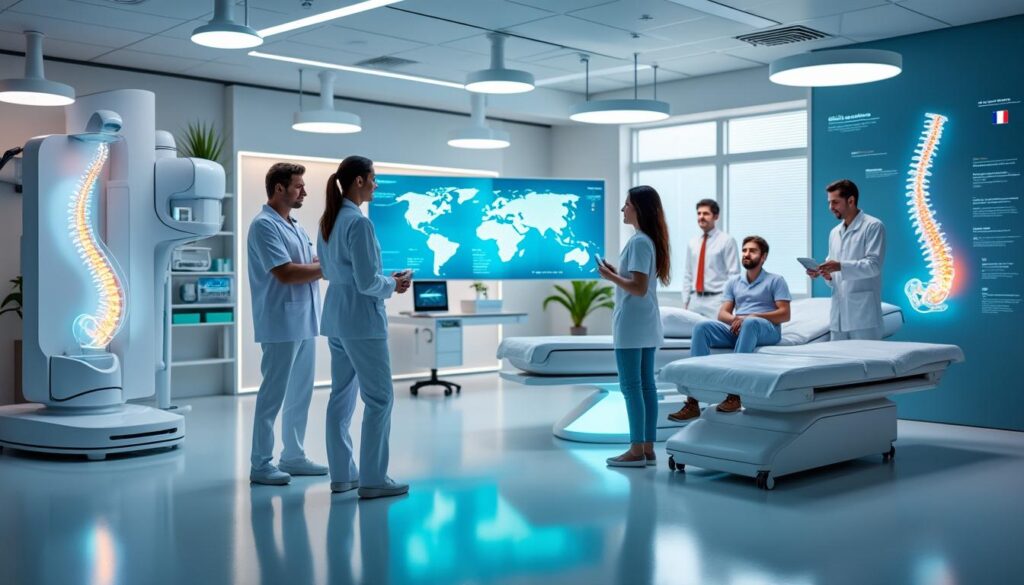
During a typical session at specialized Montreal clinics such as TAGMED, patients lie comfortably on a robotic decompression table programmed with precision software. These systems tailor traction forces individually, considering disc location and patient morphology to maximize treatment tolerance and safety. The decompression causes a negative pressure within the disc, encouraging retraction of herniated material and promoting enhanced hydration and nutrient exchange, which fosters disc healing.
Patients frequently report significant pain relief and enhanced mobility after only a few treatment sessions. Besides addressing symptoms, neurovertebral decompression reduces the possibility of surgical intervention by preserving spinal structure integrity. This technology reflects an intersection of innovation and clinical expertise central to Dr. Sylvain Desforges’ spinal care philosophy, aligning with evidence-based practices and patient-focused ethics.
Moreover, this therapy’s non-invasive nature promotes minimal discomfort and allows patients to resume daily activities immediately post-treatment, presenting a remarkable advantage over invasive surgery recovery periods.
Table: Key Features of Neurovertebral Decompression Therapy
| Feature | Clinical Benefit | Duration Per Session | Mode of Action |
|---|---|---|---|
| Computerized traction | Precise spinal segment targeting | 30 minutes | Controlled mechanical distraction to reduce nerve pressure |
| Customizable force settings | Tailored to individual patient morphology and pathology | N/A | Dynamic adaptation limits discomfort and optimizes decompression |
| Non-invasive approach | Reduced risk of complications compared to surgery | N/A | Encourages natural disc rehydration and healing |
| Immediate post-session recovery | Patient resumes normal activities | N/A | Minimizes interruption to daily life |
For further details on spinal decompression options, patients in Montreal can explore resources available at leading specialized clinics.

Advancements in Minimally Invasive Surgery in Longueuil: Reducing Hospital Stay Duration
In recent years, the landscape of surgical care in Longueuil has seen profound shifts driven by advancements in minimally invasive surgery (MIS). This revolutionary approach offers patients new hope by dramatically reducing hospital stays and accelerating the overall recovery process.…
Complementary Therapies to Enhance Neurovertebral Decompression Outcomes
Optimal management of herniated discs in Montreal involves a synergy of therapeutic modalities. Neurovertebral decompression produces mechanical decompression but benefits significantly from integration with manual and adjunctive therapies. Osteopathic care, delivered by experts such as Dr. Desforges, targets muscular imbalances, spinal alignment, and physiological regulation, thus enhancing the decompression effects.
Physiotherapy plays a crucial role in rehabilitation, emphasizing core strengthening, flexibility, and motor control retraining. Customized exercise regimens reduce relapse risks and empower patients to maintain spine health independently. Techniques such as McKenzie exercises and stabilization protocols have proven effectiveness for disc-related pain.
Advanced treatment technologies such as laser therapy and extracorporeal shockwave therapy further complement recovery by facilitating tissue repair and modulating inflammation. These approaches reduce pain intensity and promote functional restoration, supporting patients throughout their recovery cycle.
This integrated model, championed at institutions like Clinique TAGMED, ensures patients receive holistic care tailored to their unique clinical presentation and lifestyle, maximizing recovery potential and quality of life enhancement.
Herniated Disc in Laval: Advanced Equipment, Protocols, and Neurovertebral Decompression Treatment
In the vibrant region of Laval, the management of herniated discs has undergone a remarkable transformation, driven by technological advancements and a commitment to non-invasive treatments. This evolution addresses the growing need for effective spinal care solutions among Laval’s active…
Typical Relief Duration Following Neurovertebral Decompression and Influencing Factors
The relief duration after neurovertebral decompression therapy varies among patients, shaped by the herniation’s severity, symptom profile, and the patient’s engagement in follow-up care. Clinical findings support that approximately 90% of patients experience notable symptomatic improvement within 4 to 6 weeks of treatment commencement when adhering to prescribed protocols.
Factors positively influencing sustained relief include younger age, active participation in rehabilitation, and absence of significant comorbidities. Conversely, sedentary behaviors, persistent poor posture, and psychological stress may delay recovery or promote recurrence.
Dr. Sylvain Desforges emphasizes personalized follow-up schedules and periodic reassessments to optimize outcomes and intervene early upon symptom resurgence. Typical treatment programs span several weeks to a few months, integrating decompression sessions with osteopathy and physiotherapy to maintain benefits long-term.
Patients are encouraged to view decompression therapy as part of a continuous care pathway dedicated to spinal health preservation rather than a singular intervention, with preventive strategies embedded in their lifestyle.
IntraSPINE® Approved in Sherbrooke for Treating Chronic Lower Back Pain
Chronic lower back pain continues to be a significant health challenge worldwide, affecting individuals’ mobility, productivity, and overall quality of life. In Sherbrooke, Quebec, a major breakthrough in spinal health has emerged with the approval of IntraSPINE, an innovative and…
Why Rehabilitation is Central to Lasting Back Pain Relief from Disc Herniation in Montreal
Rehabilitation constitutes a foundational element for durable relief from herniated disc symptoms. Post-decompression, restoring spinal stability and muscular support is imperative to prevent recurrent disc injuries and chronic pain development. Physiotherapeutic regimens focus on strengthening lumbar and abdominal muscles, improving spinal biomechanics, and correcting postural faults.
Osteopathic sessions address residual soft tissue restrictions and optimize neural function, further complementing structural recovery. This collaborative approach enables a gradual and safe return to work, exercise, and recreational activities, supported by patient education on spine protection instincts and ergonomics.
Case studies from Montreal demonstration clinics attest that patients adhering strictly to comprehensive rehabilitation plans achieve better functional outcomes and a lower incidence of symptom relapse. Rehabilitation educates and empowers patients, underscoring the indispensable role of active participation in spinal health maintenance.

Neck Surgery in Montreal: Safeguarding Cervical Flexibility and Function
In Montréal, advancements in neck surgery have revolutionized the way patients approach treatment for cervical spine conditions. With increasing awareness about the importance of preserving both cervical flexibility and function, surgical options have evolved beyond traditional methods to integrate cutting-edge…
Choosing Between Surgery and Neurovertebral Decompression: Perspectives from Montreal Experts
While surgery remains a vital option in severe herniated disc cases characterized by neurological deficits or failed conservative care, Montreal’s specialists advocate neurovertebral decompression as a preferred first-line treatment for many patients. The minimally invasive nature, shorter recovery times, and lower complication rates position decompression therapy as an attractive alternative.
Detailed patient education conducted by Dr. Desforges ensures individuals understand the benefits and limitations of each pathway. The decision to proceed with surgery follows stringent guidelines aligned with Quebec medical regulatory standards and is reserved for clear clinical indications after exhaustive conservative management.
Statistics reveal that surgical rates for lumbar disc herniation have decreased with the adoption of advanced non-surgical spinal treatments, reflecting changing paradigms in spinal care towards innovation and patient safety. The personalized evaluation approach guarantees treatment aligns with each patient’s expectations and best clinical evidence.

In the serene community of Sainte-Anne-de-Bellevue, residents grappling with chronic back discomfort have access to groundbreaking and personalized care, prominently featuring neurovertebral decompression therapy. This innovative, non-invasive approach targets herniated discs, a condition prevalent among adults linked to aging, repetitive…
Effective Lifestyle Recommendations to Sustain Relief and Prevent Herniated Disc Relapses in Montreal
Achieving lasting relief from a herniated disc diagnosis requires more than therapeutic intervention; it hinges on lifestyle adaptations. Montreal patients are guided to:
- Maintain consistent, low-impact physical activity such as swimming, walking, or yoga to enhance spinal flexibility and muscular strength.
- Commit to personalized home exercise programs, focusing on core stabilization and postural corrections.
- Modulate body weight strategically to reduce excessive mechanical loading on spinal structures.
- Adopt ergonomic practices during sedentary tasks, particularly at workstations or when telecommuting, avoiding prolonged sitting without breaks.
- Remain vigilant for new symptoms such as limb numbness or weakness and promptly seek medical advice.
These measures, harmonized with regular clinical follow-up, form a protective framework valuable in Montreal’s fast-paced, urban environment, fostering sustained spine health and preventing functional decline.


Back pain caused by disc herniation is a growing concern in Boucherville, driven by increasingly sedentary lifestyles and the physical demands of modern work environments. The local healthcare community is witnessing more cases where displaced intervertebral discs press on spinal…
Technological Innovations and Clinical Expertise: Cornerstones of Herniated Disc Treatment in Montreal
The therapeutic success witnessed in Montreal’s herniated disc care results from harmonizing advanced technology with skilled clinical expertise. Institutions led by experts like Dr. Sylvain Desforges leverage state-of-the-art robotic decompression tables integrated with intelligent software for precise force modulation, ensuring safe and comfortable sessions.
Complementing these technologies is a team approach integrating osteopaths, physiotherapists, and other specialists who coordinate comprehensive care plans. A hallmark of these centers is clear patient communication, ethical practice adherence, and continuous scientific validation of treatment protocols.
Ongoing research and innovative treatment modalities, including dynamic spinal implants and laser therapies, maintain Montreal’s position at the forefront of spinal care. This approach enhances patient outcomes, highlighting the importance of combining technology and human-centered healthcare strategies.
For those seeking expert neurovertebral decompression treatment in Montreal, exploring options at clinics dedicated to herniated disc management provides direct access to this integrated care model.
This video showcases the clinical procedure of neurovertebral decompression therapy, highlighting patient experiences and technical aspects relevant to herniated disc care in Montreal.
Here, medical professionals discuss non-surgical approaches to managing back pain and herniated discs, reinforcing the benefits and patient outcomes associated with neurovertebral decompression therapy in urban settings.
What advantages does neurovertebral decompression offer compared to traditional pain medication?
Neurovertebral decompression targets the underlying mechanical causes of nerve compression, enabling potential disc retraction and natural healing. Pain medications generally mask symptoms without addressing the core issue.
Is the spinal decompression therapy session painful?
Most patients describe the therapy as comfortable and relaxing, with minimal or no pain during sessions due to precise control of traction forces.
How soon can improvements be expected after beginning neurovertebral decompression treatment?
Clinical data suggest many patients notice symptomatic relief within the first few sessions, with significant improvement typically evident after 4 to 6 weeks.
Can neurovertebral decompression replace the need for surgery in all cases?
While decompression is effective for a majority, surgery may remain necessary when severe neurological deficits or persistent symptoms occur despite conservative care.
Are there lifestyle changes needed to maintain relief post-treatment?
Yes, adhering to physical activity, ergonomic posture, weight management, and preventive exercises is crucial to sustain benefits and prevent symptom recurrence.