
Medical Logistics and Accommodation: Insights from an Industry Expert
May 23, 2026
Why Specialists Advocate for Spine Surgery in France: Key Insights and Recommendations
May 23, 2026
Chronic back pain remains a prevalent concern for individuals across Canada, and Sherbrooke is no exception. Daily challenges posed by lumbar discomfort and instability often limit personal and professional activities, diminishing quality of life. Fortunately, advances in spinal care have fostered innovative solutions that combine efficacy with preservation of natural spinal movement. Among these, the IntraSPINE implant emerges as a transformative option for patients seeking long-lasting relief without sacrificing mobility. By enhancing posture and providing dynamic stability, this device supports spinal health while addressing the underlying biomechanical challenges contributing to pain and dysfunction.
In Sherbrooke, the rising demand for effective and timely care coincides with increasing wait times in the public healthcare system, motivating patients to explore minimally invasive alternatives with accelerated recovery protocols. The IntraSPINE system offers precisely that balance: it revitalizes dynamic spinal support, restoring ergonomic alignment and encouraging healthier movement patterns. Coupled with the expert clinical guidance available at facilities like Clinique TAGMED under the leadership of renowned spine care expert Dr. Sylvain Desforges, patients embark on comprehensive journeys tailored to their unique needs and circumstances.
Understanding the IntraSPINE Implant: A Breakthrough in Dynamic Spine Support
The IntraSPINE implant represents an innovative medical device designed specifically for the lumbar spine’s interlaminar space. Constructed from advanced medical-grade materials including dimethyl siloxane and enveloped by pure polyethylene terephthalate, this device supports mechanical demands while ensuring biocompatibility and durability. Unlike traditional fusion surgeries that immobilize the affected vertebrae, IntraSPINE maintains the spine’s physiological motion, an essential factor for preventing adjacent segment degeneration and promoting overall spinal wellness.
Positioned strategically within the interlaminar area, the implant exerts a stabilizing influence that decompresses nerve roots, alleviating pain often caused by disc degeneration or stenosis. This anterior placement allows for more natural flexion and extension movements compared to posterior interspinous devices, thereby optimizing spinal biomechanics. Patients often describe increased comfort in daily activities and improved ergonomic posture following implantation.
Biomechanically, IntraSPINE acts as a shock absorber and dynamic spacer, distributing loads evenly and mitigating stress on compromised discs. Such design enhances spinal alignment, reducing abnormal movement patterns and protecting vulnerable structures. Furthermore, the minimally invasive procedure used to implant the device typically results in shorter hospital stays and quicker postoperative recovery, key considerations for active individuals aiming to resume their routines rapidly.
For those searching for a non-fusion surgical alternative that prioritizes both structural support and mobility, the IntraSPINE device provides a scientifically backed, patient-centric option supported by emerging clinical evidence. Learn more about the device and its specifications at IntraSPINE device details.
IntraSPINE® in Sherbrooke: A Long-Lasting Solution for Chronic Lower Back Pain
Chronic lower back pain remains one of the most pressing health concerns in Sherbrooke and beyond, impacting millions and often diminishing daily quality of life. Despite the prevalence of lumbar discomfort, many face limited access to cutting-edge treatments amidst lengthy…
Addressing Postural and Stability Challenges with IntraSPINE
Posture plays a vital role in spinal health and overall wellness. Poor spinal alignment not only contributes to discomfort and chronic pain but also exacerbates underlying degenerative conditions. The IntraSPINE implant enhances spinal stability by dynamically supporting the lumbar region while encouraging correct posture, ultimately facilitating healthier ergonomic habits in everyday life.
Many patients struggling with lower back pain experience instability caused by degenerative disc diseases or recurrent herniations. Conventional fusion surgeries, though effective in stabilizing, often restrict spine motion, which can lead to compensatory strain on neighboring vertebrae. In contrast, IntraSPINE preserves motion segments and promotes a natural rocking movement through its unique anterior-laminar placement, reducing the risk of further deterioration.
Protocols developed by experts at Clinique TAGMED include a detailed evaluation of spinal biomechanics to determine candidacy for this implant. Those treated with IntraSPINE report improved balance, reduced muscle fatigue, and better eradication of pain during activities involving spinal flexion or extension. The enhancement in posture and spinal alignment not only supports pain relief but also elevates daily ergonomic functioning, impacting occupational performance and physical activity positively.
In addition to physical benefits, the dynamic stabilization offered by IntraSPINE contributes to greater psychological wellness. Patients regain confidence in movement, knowing their spine is supported yet not overly constrained, which fosters motivation toward rehabilitation and a healthier lifestyle. This holistic improvement impacts the entire biopsychosocial spectrum of chronic back pain management.
For a detailed explanation on how IntraSPINE improves posture and reduces lumbar pain, consult this informative resource.
Herniated Disc Care in Sainte-Julie: Why TAGMED’s Neurovertebral Decompression Therapy Stands Out
In the vibrant community of Sainte-Julie, back pain—particularly that stemming from herniated discs—has become a widespread concern affecting people from all walks of life. The relentless search for effective, non-invasive treatments has brought renewed attention to a pioneering therapy that…
Comprehensive Patient Assessment and Care Pathways Under Dr. Sylvain Desforges’ Leadership
An essential aspect of successful spinal treatment involves a thorough and personalized patient evaluation. Dr. Sylvain Desforges, a pioneering expert with over 30 years in spine care, leads the assessment and care coordination at Clinique TAGMED in Sherbrooke. With formal qualifications including B.Sc., D.O., and N.D., Dr. Desforges has developed a meticulous clinical framework centered on patient safety, evidence-based practices, and holistic well-being.
Every treatment journey begins with a detailed functional and structural spinal evaluation, identifying biomechanical irregularities and potential neurological compromises. Given Dr. Desforges’ comprehensive expertise, patients receive clear explanations of their condition, available interventions, and realistic expectations tailored to their unique profile. This patient-centered approach encourages engagement and informed decision-making throughout the care pathway.
In many cases, conservative management prioritizes initial treatment phases, including neurovertebral decompression therapy – a less invasive technique aimed at alleviating nerve root pressure and restoring spinal space. Dr. Desforges advocates completing a rigorous 3-6 month period of such non-surgical treatment to optimize outcomes and often reduce surgical necessity.
Should the IntraSPINE implantation be indicated, Dr. Desforges ensures a seamless transition into surgical care with a team of highly trained specialists. Postoperatively, a structured follow-up program supports rehabilitation progress, monitoring implant integration and spinal function restoration. This multidisciplinary framework encompasses physiotherapy, laser therapy, and shockwave modalities to boost recovery phases.
Patients especially benefit from Dr. Desforges’ rare expertise in coordinating international care pathways, including collaborations with leading spine surgeons and clinics in France, ensuring timely access to advanced surgical technology alongside personalized support. This integration exemplifies his commitment to exemplary spinal health management founded on innovation and empathy.
Back Surgery in Trois-Rivières: Alleviating Pain While Preserving Mobility
In Trois-Rivières, Quebec, the persistence of back pain affects a substantial portion of the population seeking effective and personalized solutions. Back pain, often caused by spinal disorders or herniated discs, can drastically diminish quality of life, limiting mobility and causing…
How the Surgical Process for IntraSPINE Works and What to Expect
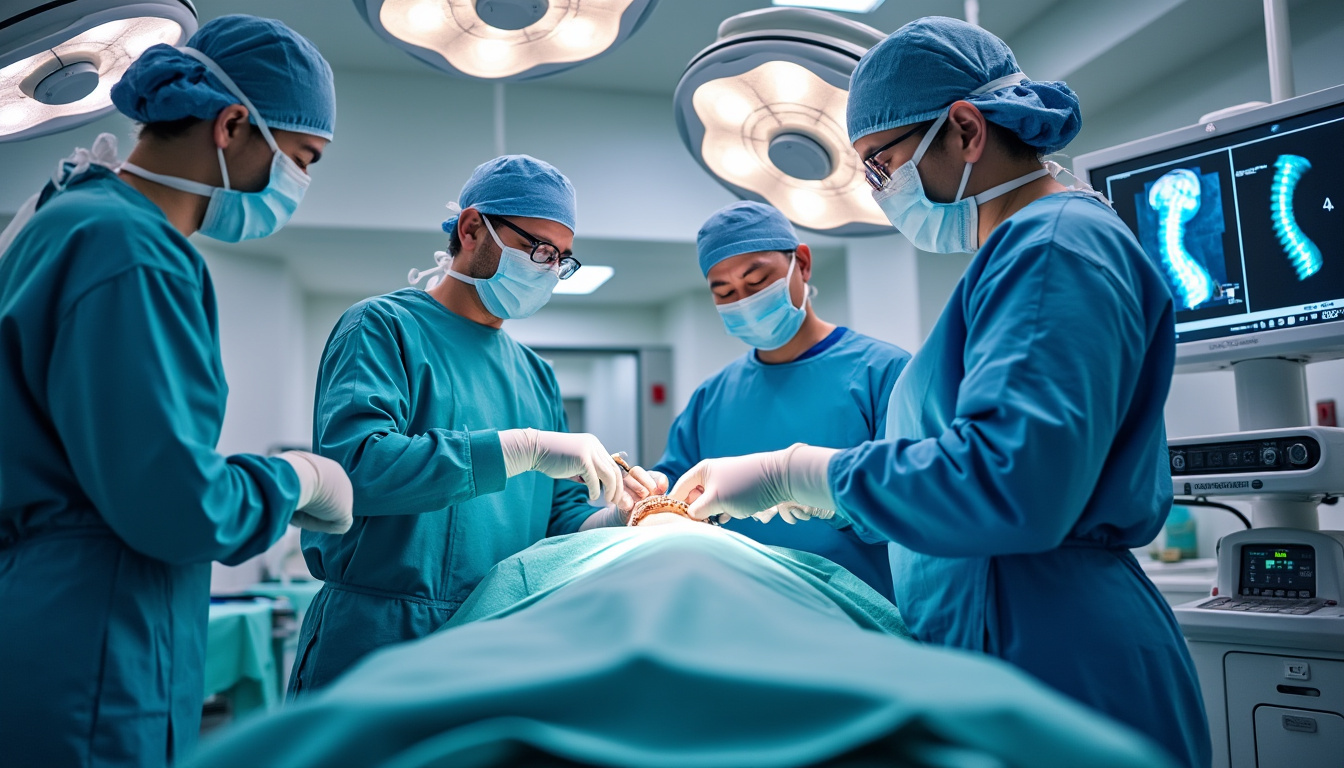
The implantation of the IntraSPINE device involves a minimally invasive surgical procedure designed to minimize tissue disruption while ensuring precise placement within the lumbar spine’s interlaminar space. Typically performed under general anesthesia, the operation is carefully planned using preoperative imaging and biomechanical assessments to tailor implant sizing and positioning for optimal stability and decompression.
The surgical technique focuses on preserving surrounding ligaments and musculature, enabling a faster postoperative recovery and reduced pain levels. Patients usually experience brief hospital stays compared to traditional fusion surgeries, with many discharged within 24 to 48 hours post-surgery.
Following implantation, a personalized rehabilitation protocol commences, emphasizing gradual mobility restoration, ergonomic reeducation, and strengthening exercises to support spinal alignment and posture. Dr. Desforges and his team closely monitor progress through scheduled follow-ups, adjusting treatments based on patient feedback and clinical assessments.
One of the device’s significant advantages lies in its reversibility; should any complications or changes in clinical status arise, the implant may be removed with minimal risk. This reversibility offers patients additional reassurance when choosing IntraSPINE as part of their spine management strategy.
To understand the stages and care involved in motion-preserving spine surgery, visit this detailed overview reflecting the patient-centered approach employed.
Disc herniation remains a significant health concern in Pointe-Claire, impacting the lives of a diverse population ranging from labor-intensive workers to the aging community. The condition, characterized by the displacement or rupture of the intervertebral disc, often leads to debilitating…
Innovative Technologies Supporting IntraSPINE Outcomes and Spine Wellness
Complementary to the mechanical benefits of IntraSPINE, several cutting-edge therapeutic modalities amplify patient results and enhance long-term spine support. For example, neurovertebral decompression techniques utilize specialized equipment to gently stretch and relieve compressed spinal discs, promoting natural healing processes.
Laser therapy integrates targeted photobiomodulation to stimulate tissue repair and reduce inflammation, while shockwave therapy enhances circulation and accelerates recovery. These combined approaches embody Dr. Desforges’ commitment to holistic, evidence-based spinal care rooted in scientific rigor and ethical practice.
Moreover, dynamic spinal implants like IntraSPINE reflect a new era of innovation where high-tech materials and refined biomechanical concepts converge to preserve spinal flexibility. These technologies are often unavailable in traditional health systems but accessible through Dr. Desforges’ network of French and Canadian collaborations, ensuring patients receive world-class options.
The multi-faceted approach not only promotes postural correction but also addresses the underlying physiological processes contributing to back pain and dysfunction. Patients at Clinique TAGMED often remark on improved spinal alignment and sustained wellness resulting from this integrative methodology.
TOPS™ in Gatineau: A High-Performance Solution for Lumbar Spine Care
In a region where chronic back pain increasingly affects quality of life, the quest for advanced and effective lumbar spine treatments is paramount. Lumbar spinal stenosis, a prevalent condition among Quebec’s aging population, often imposes persistent discomfort and mobility limitations.…
Patient Experience and International Coordination for Enhanced Care Quality
In 2026, patients experiencing chronic lumbar pain in Quebec increasingly seek care pathways that balance rapid intervention with high-quality outcomes. Dr. Desforges’ expertise extends beyond local clinical practice; he orchestrates transatlantic collaborations leveraging the strengths of Quebec and French healthcare systems.
This international coordination facilitates timely access to advanced diagnostics, innovative implants like IntraSPINE, and expert surgical teams specializing in motion preservation. By working with platforms such as SOS Tourisme Médical, patients benefit from streamlined scheduling, transparent communication, and personalized support through each step of their journey.
This model not only reduces waiting times but also optimizes patient education, ensuring individuals understand their diagnosis, procedural options, and recovery outlook. Empowered with knowledge, patients actively participate in decision-making processes, enhancing satisfaction and adherence to treatment plans.
Furthermore, this collaborative framework respects local healthcare regulations while expanding possibilities for specialized care not always available within Canadian public systems. The result is a comprehensive, reassuring experience that restores hope and function for those grappling with debilitating lumbar disorders.
At Gouin Clinic, the landscape of herniated disc therapy has entered a transformative era marked by the integration of Personalized Treatment Plans and breakthrough Neurovertebral Decompression Therapy. This non-surgical approach is revolutionizing how spinal disorders are managed, offering patients an…
Economic and Quality-of-Life Advantages Offered by IntraSPINE Treatment
Beyond clinical efficacy, the IntraSPINE implant delivers tangible economic benefits by reducing hospitalization duration, accelerating return to work, and minimizing chronic disability costs. Traditional fusion surgeries often entail lengthy recovery and extensive rehabilitation, imposing significant financial and social burdens.
In contrast, the dynamic stabilization approach of IntraSPINE leads to faster recuperation and decreased indirect costs related to work absences and long-term care. Patients regain postural control and pain relief in shorter time frames, facilitating earlier reintegration into professional and athletic activities.
Health economic analyses underscore that such innovative procedures can alleviate pressure on public healthcare resources by providing effective alternative solutions. These advancements also support patient independence, contributing positively to overall wellness and life satisfaction.
| Benefit | Traditional Fusion Surgery | IntraSPINE Implant |
|---|---|---|
| Hospital Stay Duration | 5-7 days | 1-2 days |
| Postoperative Mobility | Significantly restricted | Preserved natural motion |
| Recovery Timeline | 3-6 months | 4-8 weeks |
| Implant Reversibility | Not reversible | Removable if necessary |
| Impact on Adjacent Segments | Higher degeneration risk | Reduced risk due to dynamic support |
Cervical Disc Prosthesis in Quebec: Preventing Post-Operative Stiffness
Neck pain is one of the most common musculoskeletal complaints in Quebec, affecting a significant portion of the population annually. Often rooted in degenerative cervical disc diseases or herniated discs, this persistent discomfort severely impacts daily life and mobility. Fortunately,…
Empowering Patients Through Education and Personalized Care Planning
One of the hallmarks of Dr. Sylvain Desforges’ approach is prioritizing accessible, clear education about spinal health and treatment options. Patients are encouraged to understand the complexity of spinal disorders in approachable language, making informed choices without confusion or undue anxiety.
Explaining the principles of posture, spinal alignment, and dynamic stability enabled by devices like IntraSPINE empowers individuals to take an active role in their recovery. This education extends to identifying limitations and realistic outcomes, setting the groundwork for compliance and durable benefits.
At the outset, Dr. Desforges promotes a personalized care plan incorporating conservative therapies such as neurovertebral decompression before advancing to surgical options. Throughout, the emphasis remains on holistic wellness, ensuring patients feel supported physically and emotionally. This reassuring, compassionate tone fosters motivation and resilience against chronic pain challenges.
Patients interested in exploring this innovative intervention and comprehensive support pathway are invited to initiate discussions with the expert team at Clinique TAGMED or through associated platforms like SOS Tourisme Médical.
What is the IntraSPINE implant and how does it work?
The IntraSPINE implant is a dynamic spinal device placed in the interlaminar space of the lumbar spine to enhance stability while preserving natural spinal movement. It decompresses nerve roots and supports spinal alignment, offering relief from back pain related to disc degeneration.
Who is a candidate for IntraSPINE implantation?
Candidates typically have lumbar degenerative conditions that cause instability or nerve compression and have not sufficiently responded to conservative treatments like neurovertebral decompression. A thorough evaluation by experts such as Dr. Sylvain Desforges determines suitability.
What is the typical recovery timeline after IntraSPINE surgery?
Most patients experience shorter hospital stays of 1 to 2 days and a recovery period of 4 to 8 weeks, during which they engage in guided rehabilitation focusing on regaining posture and spinal function while minimizing pain.
How does IntraSPINE compare to traditional spinal fusion?
Unlike fusion surgery that restricts spine motion, IntraSPINE preserves natural movement, reduces adjacent segment stress, and is implanted via a minimally invasive procedure, allowing faster recovery and potential reversibility.
Can IntraSPINE be removed if needed?
Yes, the implant is designed to be reversible and can be safely removed if complications arise or patient condition changes, providing an added layer of security.
The prevalence of herniated disc conditions in Blainville has sparked considerable discussion and misconceptions about their causes, symptoms, and treatments. While the pain and disability associated with this spinal disorder are well documented, the emergence of non-surgical options such as…