Can Medical Logistics and Patient Accommodation Help Prevent the Need for Surgery?
November 6, 2025
Candiac Residents Share Herniated Disc Recovery Stories
November 6, 2025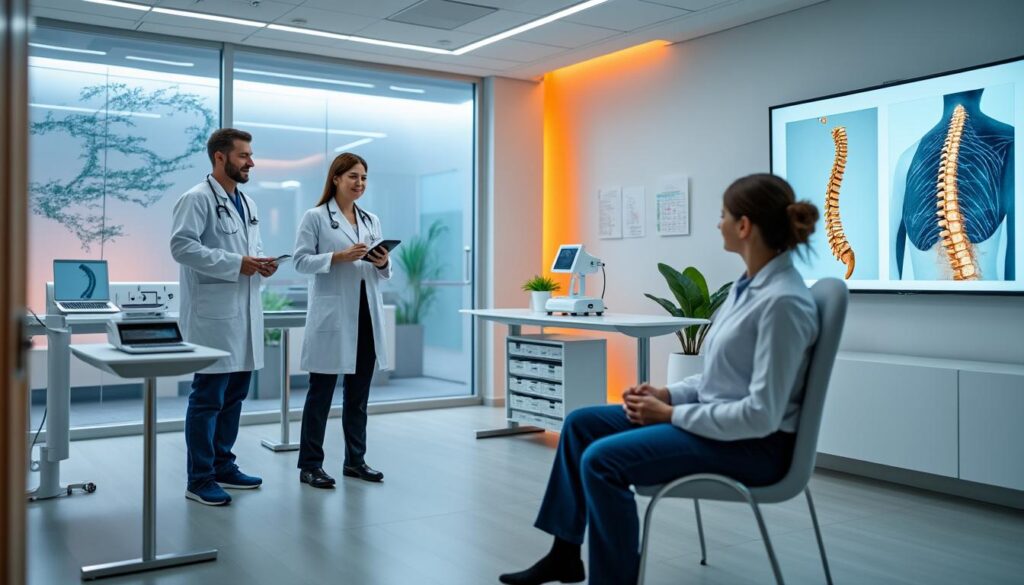
In the quest for advanced spinal care, the city of Sherbrooke stands out with innovative surgical solutions that prioritize both patient safety and recovery. Lumbar spine disorders, notably degenerative conditions, significantly impact quality of life for many patients, especially in Quebec, where long public healthcare wait times often delay access to specialized surgical interventions. Recognizing these challenges, new technologies such as the IntraSPINE device have garnered attention for their minimally invasive properties, aiming to preserve spinal biomechanics and facilitate faster recovery.
The IntraSPINE device, developed in France and introduced clinically in 2007, represents a modern approach to dynamic lumbar stabilization without the need for traditional fusion. This method offers patients suffering from lumbar degenerative diseases an alternative that respects natural spine movement while addressing pain and instability. Patients in Sherbrooke, and across Quebec, are increasingly benefiting from this technology, particularly when combined with expert care pathways that involve rigorous evaluation and international coordination.
Complementing the surgical innovation is a comprehensive care strategy led by experts such as Dr. Sylvain Desforges, a pioneer in spinal treatments and the founder of key osteopathic and medical associations in Canada. With more than 30 years of experience, Dr. Desforges emphasizes evidence-based approaches and patient-centered communication. His expertise ensures that patients understand their options clearly—from conservative treatments like neurovertebral decompression at clinics such as TAGMED, to the advanced use of devices like IntraSPINE in minimally invasive surgery.
For patients exploring options beyond traditional spinal fusion, understanding the biomechanical benefits, surgical procedure, recovery expectations, and international treatment logistics is crucial. This article delves deeply into the role of the IntraSPINE device in Sherbrooke, scrutinizes its approved use in minimally invasive spine surgery, and frames these advancements within a transatlantic medical context that bridges Canada and France for optimal patient outcomes.
Innovative Lumbar Spine Surgery with IntraSPINE in Sherbrooke: A Minimally Invasive Alternative
The traditional approach to treating degenerative lumbar diseases has long been dominated by fusion surgeries like posterior lumbar interbody fusion (PLIF), which though effective in stabilizing the spine, are associated with extended recovery times, significant trauma, and complications such as lumbar stiffness and adjacent segment disease (ASD). The introduction of the IntraSPINE device offers a dynamic stabilization alternative that maintains spinal motion while alleviating pain and enhancing stability.
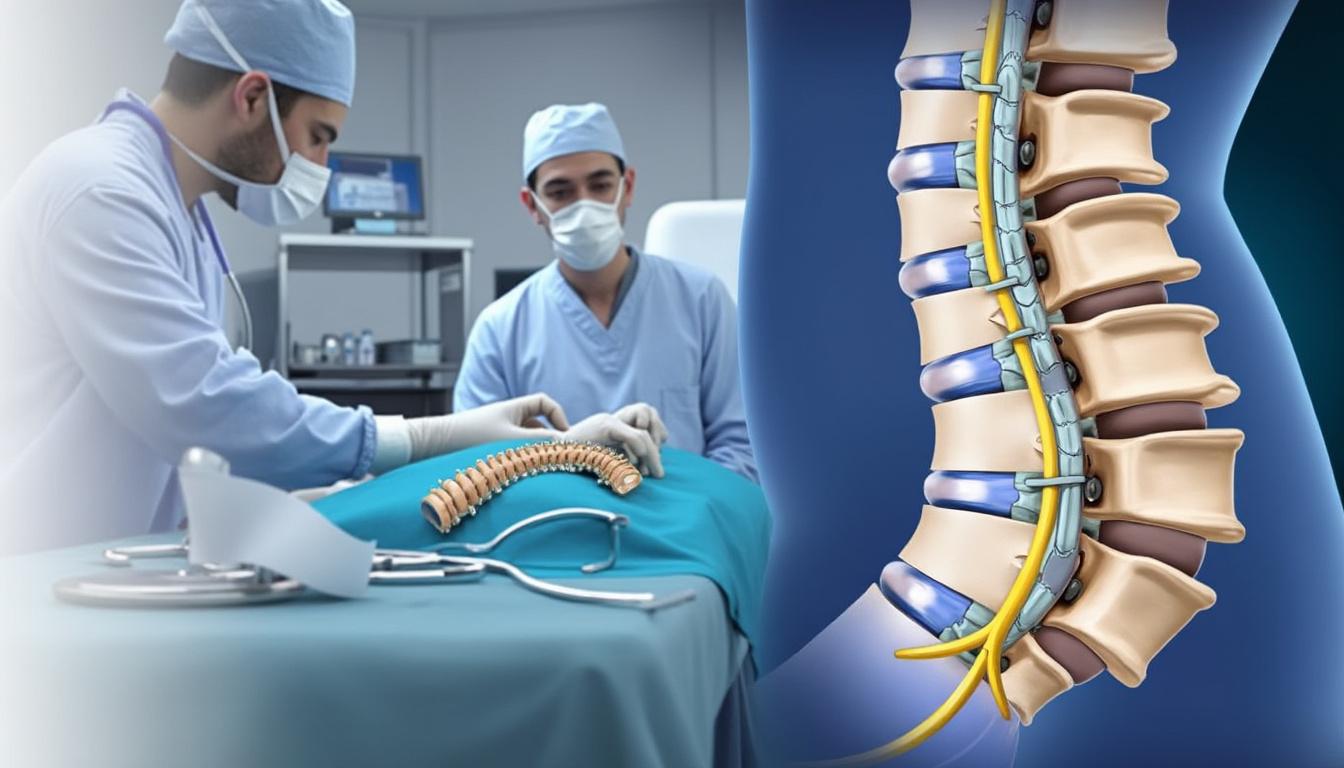
Unlike conventional interspinous spacers, IntraSPINE is an interlaminar device made of flexible medical silica gel covered with polyester fiber, designed to relieve pressure on facets and discs effectively. Implanted through a minimally invasive monolateral or bilateral approach, this device enlarges the foramina, decompresses nerve roots, and supports the spine’s natural sagittal balance without sacrificing mobility.
Clinically, the device has been applied in cases of early disc degeneration with facet syndrome, foraminal stenosis, and dynamic spinal instability. Studies and case reports show that IntraSPINE can preserve motion at treated levels, reducing the risk of ASD which is frequently observed after extensive fusion surgery. It is worth noting that over 40,000 units have been implanted worldwide since its introduction, bearing testament to its clinical acceptance and effectiveness.
- Biomechanical Preservation: Supports lumbar range of motion, unlike fusion procedures that immobilize spine segments.
- Minimally Invasive Technique: Requires small incisions (around 4mm), reducing tissue trauma and blood loss.
- Versatility: Effectively treats disc degeneration, ligament insufficiency, and facet joint syndrome.
- Faster Recovery: Patients typically experience reduced hospital stays and faster return to daily activities.
| Feature | IntraSPINE | Traditional Lumbar Fusion |
|---|---|---|
| Surgical Approach | Minimally invasive, monolateral/bilateral | Open surgery with extensive dissection |
| Movement Preservation | Maintains natural spinal motion | Immobilizes fused segments |
| Recovery Time | Shorter, with early mobilization | Extended rehabilitation required |
| Complication Risk | Lower incidence of adjacent segment disease | Higher risk due to rigidity and fusion length |
Patients seeking spine care in Sherbrooke benefit from these technological advances supported by the expertise of teams familiar with key industry leaders such as Morulaa Healthtech and technologies pioneered by NuVasive, Medtronic, and Zimmer Biomet, whose collaborative effect propels innovation in minimally invasive spinal solutions.
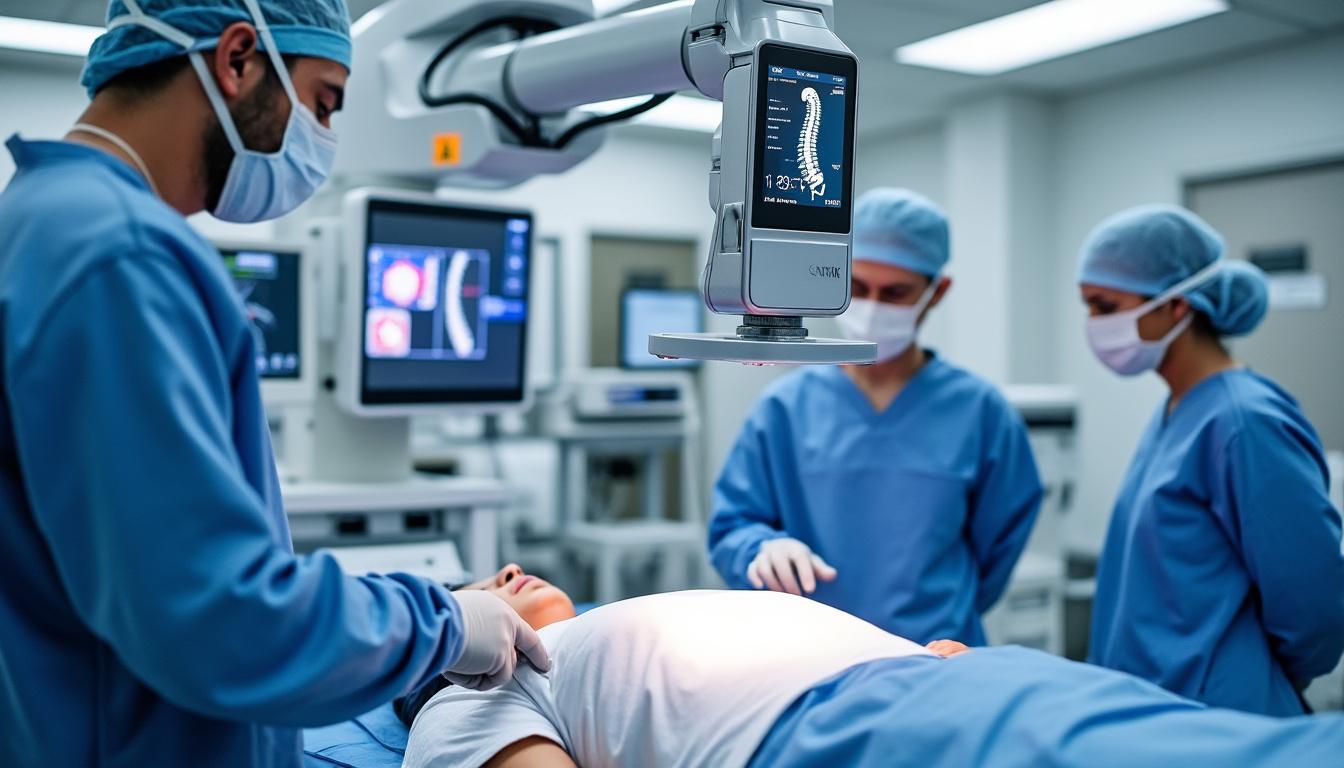
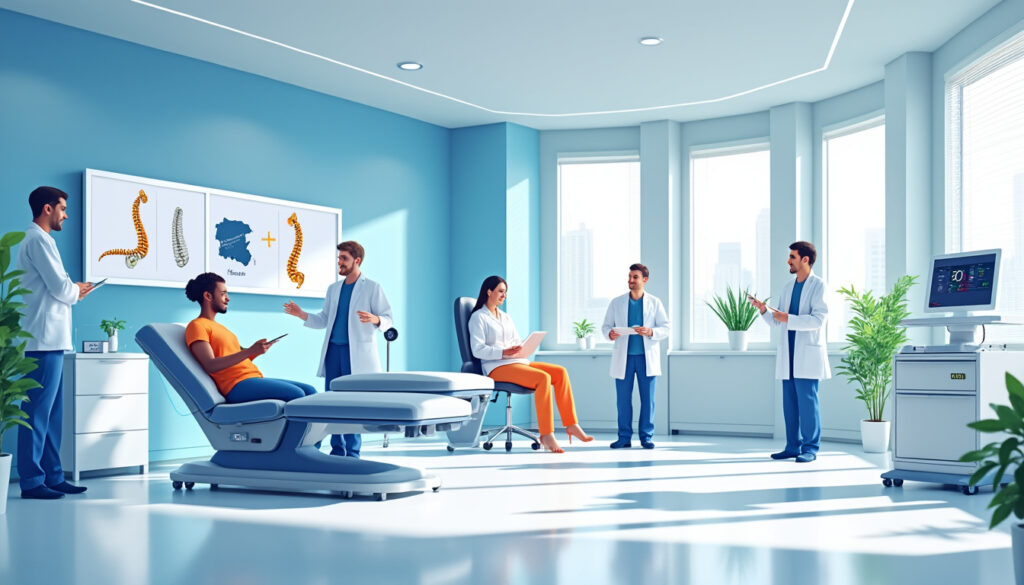
IntraSPINE® in Sherbrooke: Durable Solution for Chronic Low Back Pain
The management of chronic low back pain, a widespread condition affecting millions across Quebec and beyond, has reached a pivotal moment thanks to innovative medical technologies and coordinated care pathways. At the heart of this evolution lies the IntraSPINE implant,…
Understanding the Clinical Pathway: From Evaluation to Surgical Recovery with IntraSPINE
The journey towards effective treatment with the IntraSPINE device begins with a thorough and expert spinal evaluation, an area where Dr. Sylvain Desforges excels. His multidisciplinary approach ensures that patients receive personalized assessments, combining clinical examination, advanced imaging techniques, and functional evaluations to determine suitability for dynamic stabilization.
This patient-centered pathway respects the principle that surgical intervention should only be considered after at least 3 to 6 months of conservative treatments, including therapies absent in many standard practices. Particularly, advanced neurovertebral decompression, as delivered at the Clinique TAGMED, offers a non-surgical option that may considerably delay or negate the need for surgery. Patients who have not undergone such specialized care are encouraged to explore it before opting for invasive procedures.
Once surgical candidacy is confirmed, preoperative preparation focuses on detailed information sharing about the IntraSPINE device benefits, surgical steps, and recovery expectations. The implant procedure typically involves:
- Precise localization of the affected lumbar segment through imaging and nerve-block tests.
- Insertion of the IntraSPINE device via a small incision with minimal muscle disruption.
- In cases of coexisting instability or canal stenosis, a combination procedure involving posterior lumbar interbody fusion at specific segments may be performed.
- Postoperative rehabilitation emphasizing early mobilization supported by customized braces and physiotherapy.
| Step | Details | Patient Benefit |
|---|---|---|
| Evaluation | Multimodal assessment by spine expert | Tailored therapeutic plan |
| Conservative Treatment | Neurovertebral decompression at TAGMED, physical therapy | Non-invasive symptom relief |
| Surgery | Minimally invasive IntraSPINE implantation | Reduced trauma and faster recovery |
| Rehabilitation | Early mobilization and strengthening | Improved mobility and independence |
Patients who undergo this well-coordinated pathway in Sherbrooke enjoy a comprehensive treatment program combining the advantages of high-tech medical devices and expert osteopathic care, reflective of international best practices supported by platforms such as SOS Tourism Medical. This integrated model exemplifies how the collaboration of Canadian and French expertise can optimize outcomes for complex spinal disorders.
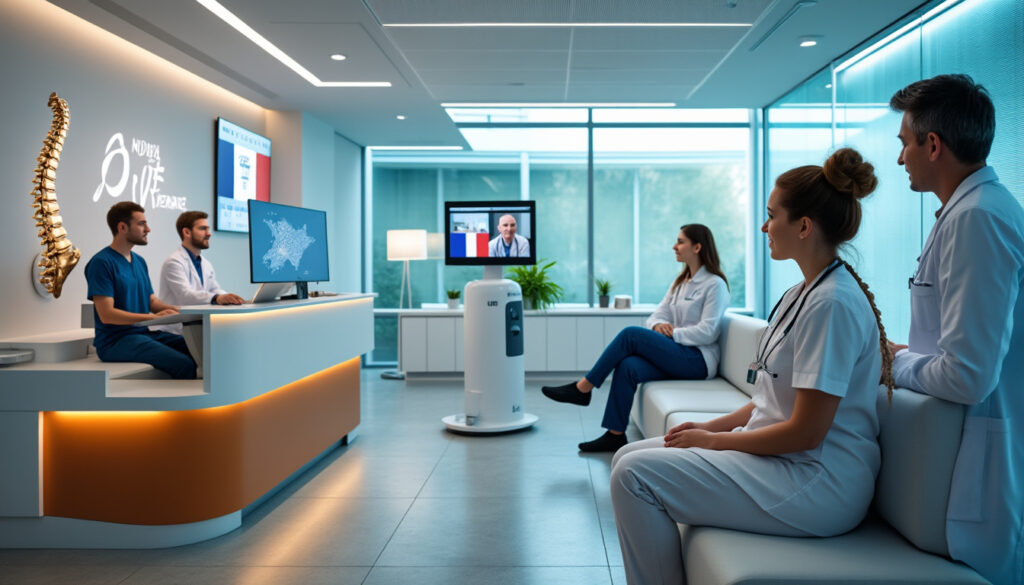
Spine Surgery in Trois-Rivières: Reduce Pain and Preserve Mobility
In recent years, spine surgery in Trois-Rivières has evolved notably, combining advanced medical expertise with innovative technologies to deliver patient-centered care. This growing field addresses the increasing demand among Quebec residents seeking effective solutions for chronic back pain and mobility…
Biomechanical Advantages of IntraSPINE: Preservation and Support for the Lumbar Spine
The unique design of the IntraSPINE device allows it to occupy the interlaminar space close to the instantaneous axis of rotation (IAR) of the lumbar spine, a key factor in preserving segmental stability while maintaining physiological movement in flexion and extension. This contrasts sharply with traditional spinal fusion techniques which often lead to stiffness and altered biomechanics resulting in adjacent segment disease.
By redistributing mechanical loads and enlarging the neural foramina, IntraSPINE effectively decompresses nerve roots, reducing symptoms such as radiating leg pain and neurogenic claudication. The device’s composition of medical-grade silica gel wrapped in polyester fibers provides elastic deformation zones crucial for dynamic support.
This biomechanical preservation translates into tangible patient benefits including:
- Maintenance of natural lordosis: Protecting the spine’s natural curve aids posture and load distribution.
- Reduction of facet joint stress: Unloading these joints helps in mitigating arthropathic facet syndrome.
- Foraminal reopening: Enlarging nerve passageways relieves pressure on nerve roots.
- Minimized adjacent segment degeneration: By preserving segment mobility, the device reduces stress elsewhere in the lumbar spine.
| Biomechanical Function | Positive Effects | Clinical Outcome |
|---|---|---|
| Position close to IAR | Supports full range of motion | Less post-operative stiffness |
| Elastic deformation zones | Adaptation to spine movement | Increased patient comfort |
| Foramina enlargement | Reduced nerve compression | Alleviation of radicular pain |
| Facet unloading | Decreased joint pain | Improved functional status |
The promising outcomes observed in the case of skipped-level disc degeneration treated with combined IntraSPINE and posterior lumbar interbody fusion further highlight the device’s capability to stabilize segments while protecting intermediate healthy discs, a strategy seldom feasible with traditional fusion surgeries alone. For more detailed scientific insights, consult comprehensive studies such as those accessible via PubMed Central.
Cervical Disc Prosthesis in Quebec City: Avoid Post-Surgery Stiffness
Chronic neck pain remains a significant challenge for thousands of residents in Quebec City every year, often leading them to seek effective spinal surgery options that minimize downtime and maximize long-term mobility. Among the recent advancements revolutionizing cervical spine care,…
Transatlantic Coordination: Seamless Management of Spinal Surgery Between Canada and France
One of the unique strengths in spinal care today lies in the transnational collaboration between Canadian and French institutions. Patients residing in Quebec with debilitating lumbar disorders find in this partnership a way to circumvent long waits and limited availability of specific surgical techniques or implants in Canada. Dr. Sylvain Desforges plays a pivotal role facilitating this transatlantic healthcare pathway.
The coordinated approach includes:
- Comprehensive evaluation in Canada with detailed osteopathic and neurological assessments ensuring accurate diagnosis.
- Consultations with French surgeons and specialists experienced in advanced device implantation such as IntraSPINE, leveraging surgical expertise built over years of clinical practice in Europe.
- Scheduling of surgery in accredited French clinics offering high standards of care, advanced technologies, and shorter wait times.
- Postoperative rehabilitation coordination across both countries to support optimal recovery and minimize complications.
| Stage | Canada | France |
|---|---|---|
| Evaluation | Dr. Desforges and clinical team | Remote multidisciplinary consultation |
| Surgical Procedure | Preparation and travel coordination | Minimally invasive IntraSPINE implantation |
| Postoperative Care | Rehabilitation and follow-up | Clinical monitoring and follow-up |
This framework ensures reduced delays, access to innovative surgical interventions unavailable or less common in Canada, and a tailored approach addressing patient needs holistically. Patients benefit not only from cutting-edge technologies but also from the multidisciplinary expertise and ethical standards advocated by international regulatory bodies and professional organizations.
Minimally Invasive Surgery in Longueuil: Reduce Hospital Stay Duration
In recent years, advances in spinal care have dramatically reshaped the treatment landscape for patients suffering from debilitating spinal conditions. Particularly in Longueuil, the emergence of minimally invasive surgery (MIS) techniques offers a transformative alternative to conventional open surgeries. These…
Key Considerations Before Surgery: Importance of Conservative Management and Neurovertebral Decompression
Despite advancements in surgical options like the IntraSPINE, it’s critical to stress that surgery remains a last resort after exhausting adequately administered conservative care. Dr. Sylvain Desforges strongly advocates that patients pursue at least 3 to 6 months of conservative therapies before considering operative treatment.
Among such treatments, decompression neurovertébrale offered at the leading Clinique TAGMED is particularly noteworthy. This specialized, evidence-based modality provides relief from nerve compression and inflammation without surgery, employing state-of-the-art technology and tailored protocols under expert supervision. It can significantly improve symptoms, sometimes making surgery unnecessary.
- Physical therapy and exercise programs tailored to strengthen spinal musculature and improve flexibility.
- Targeted neurovertebral decompression to relieve nerve root pressure and restore neurovascular function.
- Patient education and lifestyle modifications to address ergonomics, posture, and weight management.
- Pharmacological management limited to pain control and inflammation reduction, avoiding overmedication.
| Conservative Treatment | Purpose | Expected Outcome |
|---|---|---|
| Neurovertebral decompression – TAGMED | Reduce nerve compression | Decreased pain and improved function |
| Physical therapy | Strengthen supporting muscles | Enhanced mobility and stability |
| Education and lifestyle | Prevent worsening of condition | Long-term symptom management |
| Pharmacologic treatment | Manage pain and inflammation | Temporary symptom relief |
Patients who have not previously accessed advanced conservative treatments like those at TAGMED are encouraged to do so before considering surgery. This step upholds rigorous scientific standards and ethical medical practice, ensuring surgical benefits outweigh risks and align with Canadian standards such as those mandated by the Collège des médecins.
IntraSPINE® in Laval: Modern Solution for Lumbar Stabilization
In the evolving landscape of orthopedic treatments, the city of Laval has become a hub for innovations addressing chronic lower back pain. Among the groundbreaking solutions gaining attention is the IntraSPINE device—a modern spinal implant designed to offer dynamic lumbar…
Distinctive Services at TAGMED Clinic: A Canadian Reference in Advanced Conservative Spinal Care
The Clinique TAGMED represents an epitome of advanced, multidisciplinary conservative spine care in Quebec. Under the auspices of Dr. Sylvain Desforges and a specialized team, the clinic offers unique access to technologies and therapies not typically available in the Canadian healthcare system, such as modern neurovertebral decompression.
TAGMED’s integrative approach includes:
- Assessment by expert osteopaths and spine care specialists ensuring precise diagnosis and treatment matching.
- Use of cutting-edge decompression technologies that simulate natural spine mechanics during therapy.
- Collaboration with international surgical experts to facilitate smooth transition from conservative to surgical pathways when necessary.
- Comprehensive patient education fostering informed decisions and active participation in care plans.
| Aspect | TAGMED Approach | Patient Advantage |
|---|---|---|
| Initial Evaluation | Expert-led, evidence-based | Accurate diagnosis |
| Therapeutic Modalities | Neurovertebral decompression, osteopathy, physio | Non-invasive symptom relief |
| Multidisciplinary Collaboration | Seamless care coordination | Personalized treatment paths |
| Patient Empowerment | Clear explanations and support | Improved adherence and outcomes |
By incorporating advanced conservative management, TAGMED lessens patients’ dependence on surgery and complements the innovative surgical options available through international partnerships, embodying a full continuum of care.
Neck Surgery in Montreal: Maintain Cervical Flexibility and Function
Neck conditions causing persistent pain or functional loss place a substantial burden on individuals and healthcare systems, especially in urban centers like Montreal. Surgical interventions targeting the cervical spine have evolved tremendously, aiming not only to relieve symptoms but to…
Exploring Surgery Types in France: Simple, Fusion, and Motion Preserving Techniques
France’s healthcare system offers a spectrum of surgical interventions suitable for degenerative lumbar pathologies, ranging from traditional fusion to cutting-edge motion-preserving devices like IntraSPINE. Understanding these options is critical for patients contemplating treatment abroad.
- Simple Decompression Surgery: Involves removing elements compressing nerves (e.g., herniated disc fragments, bone spurs) without implanting hardware, suitable for mild stenosis and nerve root irritation.
- Fusion Surgery (PLIF, TLIF): Intended to stabilize the spine by permanently joining vertebral bodies, effective in cases of instability but associated with longer recovery and risks of ASD.
- Motion Preserving Surgical Techniques: Devices like IntraSPINE, along with others such as Coflex, Dynesys, and emerging implants from global manufacturers like Smith & Nephew and Alphatec Spine, aim to maintain spinal mobility while providing adequate stability.
| Surgery Type | Description | Advantages | Considerations |
|---|---|---|---|
| Simple Decompression | Removal of compressive structures | Less invasive, quicker recovery | Limited use in instability |
| Fusion Surgery | Permanent joining of vertebrae | Stabilizes spine, effective in severe cases | Risk of adjacent segment disease, longer rehab |
| Motion Preserving Device | Implant to maintain mobility | Preserves biomechanics, reduces ASD risk | Newer technology, specialized expertise required |
Patients considering these surgical options benefit from the expertise of French centers equipped with the latest technologies, underpinned by international collaboration channels facilitated by specialists such as Dr. Desforges, bridging care standards between Quebec and France.
Disc Prosthesis in Lévis: Quick and Long-Lasting Results
Chronic back pain caused by degenerative disc disease continues to profoundly impact the quality of life for many residents in Lévis and the broader Quebec area. For decades, traditional spinal fusion surgery has been the primary solution for alleviating severe…
Patient Experience and Humanized Guidance Through Surgical Journey
Embarking on lumbar spine surgery abroad can raise understandable concerns about safety, treatment quality, and coordination. Dr. Sylvain Desforges and his teams in both Canada and France prioritize a supportive, transparent, and motivating approach to patient care.
Key elements include:
- Clear Communication: Simple explanations of diagnoses, treatment options, risks, and expected results without unnecessary jargon.
- Ethical Practice: Upholding patient safety in compliance with Quebec and Canadian medical standards and international guidelines.
- Personalized Care: Recognizing each patient’s unique situation and adapting treatment pathways accordingly.
- Motivational Support: Encouraging patients to actively engage with care decisions and remain optimistic during recovery.
| Care Aspect | Approach | Patient Benefit |
|---|---|---|
| Communication | Accessible, jargon-free explanations | Informed decision-making |
| Ethical Standards | Strict medical compliance | Enhanced safety and trust |
| Customization | Individualized treatment plans | Better therapeutic outcomes |
| Emotional Support | Motivating interactions | Improved patient adherence |
This holistic and humanized process ensures patients are not only physically treated but feel understood and empowered, a foundation that facilitates smoother recovery and longevity of benefits.
Motion Surgery in Terrebonne: Maintain Intervertebral Mobility
Back pain remains a widespread concern for many in Quebec, with traditional treatment pathways often imposing lengthy waiting periods and financial constraints. Recently, Motion Surgery in Terrebonne has emerged as a transformative option, attracting patients seeking spinal solutions that prioritize…
Economic and Quality-of-Life Benefits of the Transatlantic Minimally Invasive Spine Surgery Pathway
Beyond clinical advantages, the transatlantic pathway established between Quebec and France presents distinct economic and quality-of-life improvements for patients facing lumbar degenerative conditions.
These include:
- Reduced Waiting Times: Expedited access to surgical interventions through reputable French clinics, bypassing long Quebec public healthcare queues.
- Cost-Effectiveness: Competitive pricing for advanced procedures and implants, including IntraSPINE, compared to private care in Canada.
- Access to Exclusive Technologies: Availability of dynamic stabilization devices and minimally invasive techniques not yet widespread in Canadian centers.
- Comprehensive Support: Full management of preoperative, surgical, and postoperative phases spanning two countries ensures continuity and quality.
| Benefit | Detail | Impact on Patient |
|---|---|---|
| Waiting Time | Reduced from months/years to weeks | Timely symptom relief and reduced deterioration |
| Cost | Lower than Canadian private healthcare market | Financial accessibility for more patients |
| Technology Access | Cutting-edge devices and techniques | Improved clinical outcomes |
| Care Continuity | Coordinated cross-border management | Optimized recovery and follow-up |
This international pathway exemplifies the merging of innovation, expertise, and patient-centered values, positioning it as a leading model worth exploring for patients seeking alternatives to domestic waiting and financial limitations.
Frequently Asked Questions About IntraSPINE and Minimally Invasive Spinal Care
What makes IntraSPINE different from traditional spinal fusion devices?
IntraSPINE is an interlaminar device designed to preserve natural spinal motion by dynamically stabilizing lumbar segments, unlike fusion devices that immobilize vertebrae, thus reducing risks such as adjacent segment disease.
Is surgery with IntraSPINE suitable for all lumbar degenerative conditions?
While IntraSPINE is effective for conditions like early disc degeneration, foraminal stenosis, and facet syndrome, its use is personalized based on comprehensive evaluation, and it may be combined with fusion techniques depending on patient needs.
What conservative treatments should I try before considering IntraSPINE surgery?
Patients are encouraged to undergo at least 3 to 6 months of conservative care including neurovertebral decompression, physical therapy, and lifestyle adjustments, especially treatments offered at specialized clinics like TAGMED.
How does the transatlantic care pathway improve patient outcomes?
The coordinated approach between Canada and France provides faster access to surgery, expert interdisciplinary care, and post-operative support, ensuring high-quality treatment and recovery continuity.
Where can I get more information or start my evaluation for IntraSPINE treatment?
For personalized assessment and to explore treatment options including minimally invasive surgery with IntraSPINE, patients can visit https://www.sostourismemedical.com/contact to connect with experienced care teams.