Candiac Lower Back Disc Bulge Solutions from TAGMED
May 16, 2026
Montreal Chronic Neck Pain Recovery Without Invasive Care
May 16, 2026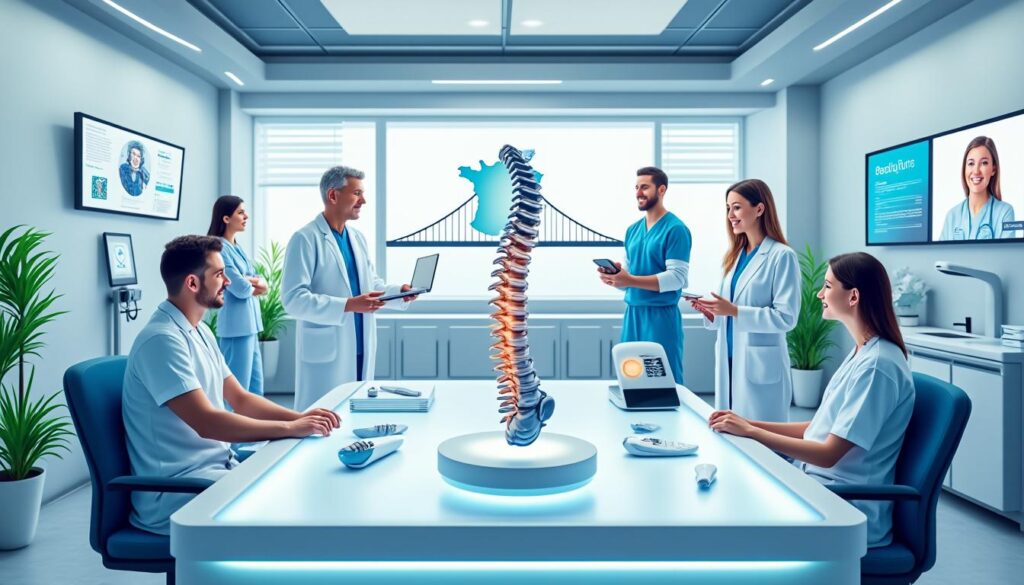
The management of cervical spine disorders has evolved significantly, especially with the introduction of advanced surgical options that not only relieve pain but also aim to preserve spinal motion. In Quebec City, patients facing stubborn neck pain and mobility limitations now have access to cutting-edge interventions like the cervical disc prosthesis. This innovative solution is designed to replace damaged discs while sustaining the neck’s natural flexibility and movement. With over 30 years of experience in spinal care, Dr. Sylvain Desforges has played a pivotal role in pioneering assessments and guiding patients through complex spinal issues, ensuring treatments are evidence-based and ethically sound. His work bridges scientific rigor with patient-centered care, facilitating pathways to effective therapies both in Quebec and internationally.
Understanding the challenges faced by patients in Quebec—limited access to timely specialized surgery and the high costs associated with private care—Dr. Desforges supports transatlantic medical tourism options. These options offer access to advanced spinal surgeries in France, where techniques like artificial disc replacement are more widely practiced and fine-tuned. This comprehensive approach combines a meticulous evaluation process, innovative technology, and personalized care to improve outcomes in spinal surgery. Patients benefit not only from advanced biomaterials and minimally invasive methods but also from streamlined care coordination that respects Quebec’s regulatory standards and promotes patient safety. The cervical disc prosthesis has emerged as a prominent alternative that maximizes post-surgical spinal mobility while minimizing complications such as stiffness or adjacent segment disease.
Understanding Cervical Disc Prosthesis: Restoring Neck Mobility with Innovation
A cervical disc prosthesis, also called an artificial disc replacement, is a revolutionary orthopedic surgery approach designed to treat degenerative disc disease or herniated discs causing debilitating neck pain and neurological symptoms. Unlike traditional fusion surgery that permanently restricts movement in the operated spinal segment, the prosthesis replaces the damaged disc with a dynamic implant that mimics natural disc mechanics.
Preserving post-surgical flexibility is crucial for maintaining spinal mobility and reducing the stress on adjacent vertebrae. This approach helps to avoid the long-term complications often seen with fusion, such as accelerated degeneration of neighboring discs. The key innovation in cervical disc prosthesis lies in the engineering of implants that allow controlled motion while stabilizing the spine. These implants are usually made from biocompatible materials like titanium and high-grade polyethylene, engineered to endure the complex forces of the cervical spine.
Dr. Sylvain Desforges explains that artificial disc replacement surgery offers a minimally invasive option that can swiftly relieve neck pain and neurological symptoms such as radiculopathy or myelopathy. Patients often experience quicker rehabilitation timelines compared to fusion procedures. Preservation of spinal mobility post-surgery enhances trunk balance, lowers muscle fatigue, and supports a more natural return to daily activities and work.
Examples of cervical disc prostheses include devices such as the Prestige LP and Mobi-C, which have earned regulatory approvals and are supported by extensive clinical data demonstrating sustained spinal mobility and patient satisfaction. The decision to use a cervical disc prosthesis depends on detailed patient evaluation, considering factors such as spinal alignment, disc height, and absence of advanced facet joint disease.
For those interested in exploring detailed benefits and patient outcomes, resources like this page on preserving cervical flexibility provide in-depth insights. It is important to note that not every patient is a candidate, underscoring the importance of expert preoperative assessments performed by professionals such as Dr. Desforges.

IntraSPINE® in Sherbrooke: Durable Solution for Chronic Low Back Pain
The management of chronic low back pain, a widespread condition affecting millions across Quebec and beyond, has reached a pivotal moment thanks to innovative medical technologies and coordinated care pathways. At the heart of this evolution lies the IntraSPINE implant,…
Types of Cervical Spine Surgeries Available in France: Simple, Fusion, and Motion-Preserving Options
France offers a broad spectrum of surgical interventions tailored to various cervical spine pathologies. These include simple decompression surgeries, fusion surgeries, and motion-preserving approaches such as cervical disc prosthesis implantation. Understanding the distinct approaches and their indications is essential for patients considering transatlantic medical routes from Quebec.
Simple decompression surgery targets nerve root or spinal cord impingement by removing herniated disc fragments or bone spurs without spinal instrumentation. This technique often suits cases where the structural integrity of the spine remains relatively intact.
Fusion surgery, a more traditional method extensively practiced worldwide, involves removing the diseased disc and stabilizing the vertebrae with bone grafts and metal hardware. While effective in pain relief, it results in the permanent loss of motion at the fused segment and can lead to increased biomechanical stress on adjacent levels.
Motion-preserving surgery, like artificial disc replacement, has gained significant traction in French orthopedic surgery since its approval for use in selected patients. This approach aims to maintain natural spinal dynamics, reducing the risk of adjacent segment degeneration. Surgeons in France use state-of-the-art implants and minimally invasive techniques to optimize recovery and long-term function.
Dr. Desforges underscores that the availability of these options is a remarkable advantage for Quebec patients seeking tailored cervical spine care. The surgical decision-making hinges on precise imaging studies, clinical evaluations, and patient preferences. France’s modern healthcare infrastructure supports innovative technologies such as dynamic implants, laser-assisted procedures, and intraoperative navigation, often not accessible in Canadian centers.
Below is a comparative overview of cervical spine surgery types commonly offered in France:
| Surgery Type | Goal | Movement Preservation | Recovery Time | Typical Indications |
|---|---|---|---|---|
| Simple Decompression | Relieve nerve/spinal cord pressure | Preserved | 4-6 weeks | Disc herniations with minimal structural compromise |
| Fusion Surgery | Stabilize spine and relieve pain | No | 3-6 months | Severe degeneration, instability, deformity |
| Cervical Disc Prosthesis | Restore mobility & relieve pain | Yes | 6-12 weeks | Degenerative disc disease, select herniations |
For those interested, further details on the rapid, effective interventions available with prosthetic surgery can be found at this resource. Dr. Desforges collaborates with French surgical partners, ensuring that Quebec patients receive clear, comprehensive counsel on these options balanced with conservative treatment history.
Spine Surgery in Trois-Rivières: Reduce Pain and Preserve Mobility
In recent years, spine surgery in Trois-Rivières has evolved notably, combining advanced medical expertise with innovative technologies to deliver patient-centered care. This growing field addresses the increasing demand among Quebec residents seeking effective solutions for chronic back pain and mobility…
Essential Patient Journey Steps for Cervical Spine Surgery Across the Atlantic
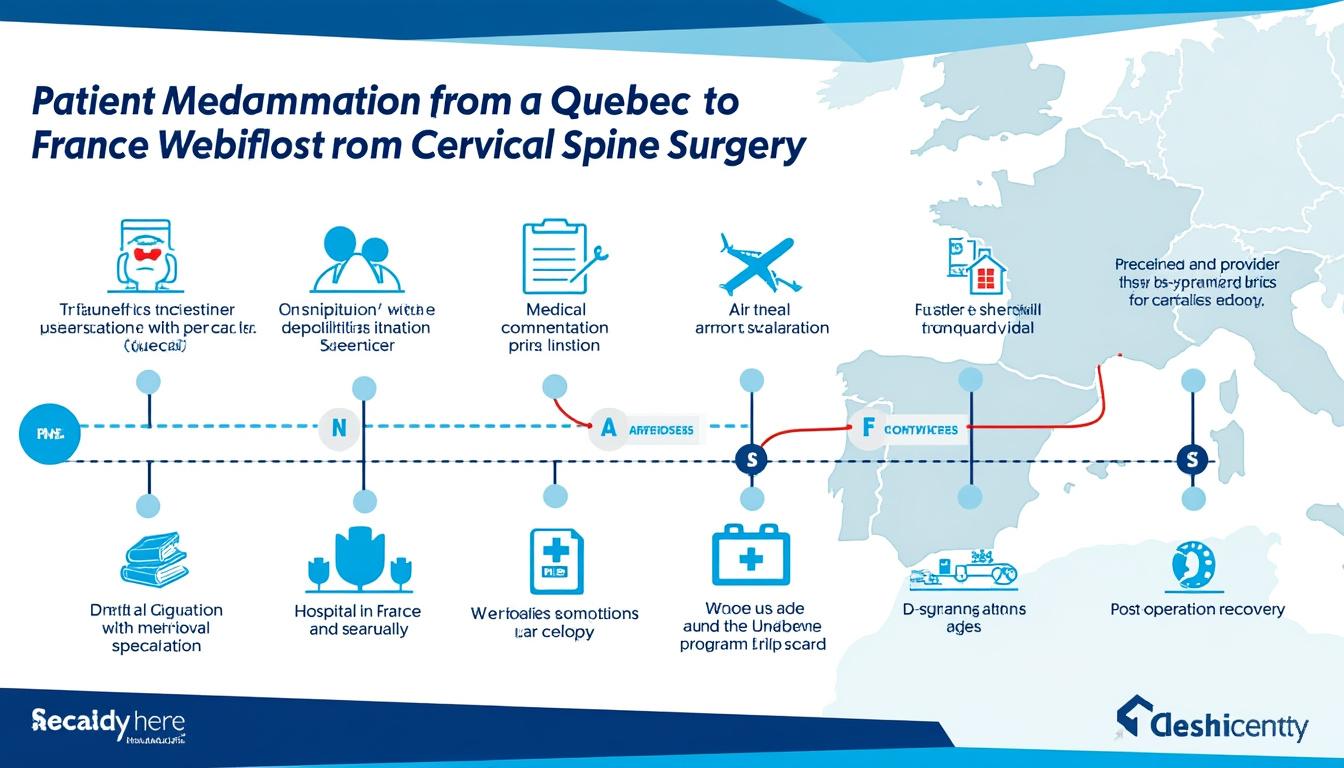
The transatlantic patient journey for cervical spine surgery requires careful coordination and personalized management at every stage to optimize outcomes and ensure safety. Dr. Desforges leads efforts in evaluating candidates, preparing them for surgery, and liaising between Quebec and French medical teams.
The journey begins with a detailed assessment including clinical history, imaging, and functional status evaluation conducted in Quebec. Using his extensive expertise, Dr. Desforges ensures that patients have exhausted conservative options before surgery is considered, maintaining ethical standards and evidence-based practice. He then facilitates referrals to specialized surgical centers in France.
Once surgical candidacy is confirmed, patients receive preoperative education covering surgical risks, expected benefits, implant types, and post-surgical rehabilitation paths. Close communication helps reduce anxiety and empowers patients to engage actively in their care.
Upon arrival in France, patients undergo final preoperative assessments and enjoy the support of a multidisciplinary team that includes surgeons, physiotherapists, and pain specialists. Surgery is typically performed using minimally invasive techniques, prioritizing rapid recovery.
Postoperative care involves intensive rehabilitation targeting restoration of spinal mobility, neck pain relief, and functional independence. Dr. Desforges remains available for remote follow-ups to support the patient’s return to Quebec and continuation of rehabilitation locally.
The transatlantic approach offers Quebec patients significant benefits including shortened wait times, access to superior technologies, and a personalized care continuum that integrates preoperative assessment, surgical treatment, and post-surgical rehabilitation. Detailed pathways and timelines are tailored according to individual cases, emphasizing safety and sustained well-being.

TOPS™ in Gatineau: High-Performance Option for the Lumbar Spine
The landscape of spinal surgery has witnessed profound evolution, particularly for patients grappling with lumbar spine disorders such as spinal stenosis and spondylolisthesis. These conditions, increasingly prevalent among Quebec’s population, impose substantial limitations on mobility and quality of life. The…
Why Completing Conservative Treatments Including Advanced Neurovertebral Decompression is Critical Before Surgery
Surgery should always be considered a last resort after a minimum of 3 to 6 months of conservative treatments have been thoroughly explored. This approach aligns with Dr. Desforges’ commitment to evidence-based and ethical care. Importantly, conservative management in cervical spine disorders now often includes advanced techniques such as neurovertebral decompression, which can provide substantial symptom relief and functional improvement without surgery.
The Clinique TAGMED in France represents a forefront center offering sophisticated conservative care modalities including laser therapy, dynamic implants, and high-precision neurovertebral decompression. These treatments aim to relieve nerve pressure non-invasively, reduce inflammation, and promote natural healing. Patients who undergo such comprehensive conservative care frequently experience significant reduction in neck pain and improved spinal function, sometimes eliminating the need for surgical intervention altogether.
Dr. Desforges advocates strongly for this step in the patient journey, especially for Quebec patients contemplating costly or invasive spinal surgeries. Undertaking neurovertebral decompression can optimize surgical candidacy by improving spinal alignment and diminishing inflammation prior to any operative procedure.
Key benefits of completing advanced conservative treatments include:
- Reduced postoperative complications: Healthier tissues and reduced inflammation translate into smoother recoveries.
- Improved functional outcomes: Patients often regain better mobility after surgery when preceded by conservative care.
- Potential avoidance of surgery: Some patients achieve remission through conservative means alone.
- Economical advantage: Optimized treatment sequencing can lower overall healthcare costs.
For Quebec patients interested in exploring these conservative options, the Clinique TAGMED remains a reference center offering personalized programs. Coordination with Dr. Desforges ensures continuity of care from Quebec to France and back, with transparent communication and patient educational resources.

Cervical Disc Prosthesis in Quebec City: Avoid Post-Surgery Stiffness
Chronic neck pain remains a significant challenge for thousands of residents in Quebec City every year, often leading them to seek effective spinal surgery options that minimize downtime and maximize long-term mobility. Among the recent advancements revolutionizing cervical spine care,…
Biometrics, Economics, and Human Dimensions of Transatlantic Spinal Surgery Coordination
The transatlantic approach to spinal surgery, particularly with advanced options like cervical disc prostheses, balances intricate biometrics with practical economic and humane considerations. Dr. Desforges’ unique expertise bridges anatomy, biomechanics, and patient experience to tailor optimal interventions.
Biometrically, the cervical disc prosthesis restores spinal kinematics closer to normal patterns by preserving natural disc height and motion. This prevents abnormal loading on adjacent spinal segments, thereby lowering long-term degeneration risks. For patients, this translates into sustained spinal mobility and decreased neck pain.
Economically, this transatlantic coordination addresses the challenges Quebec patients face with long wait times and high costs associated with private spinal surgery in Canada. Traveling to France often results in earlier intervention with access to superior surgical technologies and fewer complications, reducing indirect costs such as prolonged disability or repeated surgeries.
From a human perspective, Dr. Desforges prioritizes patient-centered communication, providing compassionate guidance throughout the journey. The assurance of rigorous scientific protocols and ethical oversight reassures patients navigating complex treatment decisions. Personalized care plans respect individual circumstances, cultural considerations, and the emotional impact of spinal disorders.
Outlined below are the multi-dimensional benefits of the transatlantic pathway:
- Accelerated access: Dramatic reduction in surgical wait times compared to provincial averages.
- Innovative surgical technology: Access to dynamic implants and minimally invasive techniques.
- Cost-effectiveness: Less overall healthcare burden due to fewer complications and optimized rehab.
- Enhanced rehabilitation: Rehabilitation programs integrating latest technology for better functional recovery.
- Comprehensive support: Continuous coordination between Quebec and France-based teams.
For more details on this cooperative approach, one can explore durable and approved cervical disc solutions proven effective over the long term.
Minimally Invasive Surgery in Longueuil: Reduce Hospital Stay Duration
In recent years, advances in spinal care have dramatically reshaped the treatment landscape for patients suffering from debilitating spinal conditions. Particularly in Longueuil, the emergence of minimally invasive surgery (MIS) techniques offers a transformative alternative to conventional open surgeries. These…
Distinctive Features of Services Provided by Dr. Sylvain Desforges and the Collaboration with Clinique TAGMED
What truly distinguishes the care offered by Dr. Sylvain Desforges is the combination of unparalleled expertise in spinal evaluation with access to advanced surgical and conservative modalities through well-established collaborations like those with Clinique TAGMED. His professional journey, including founding major osteopathy organizations and leading accolades in spinal care, reflects a commitment to innovation and scientific rigour.
The partnership with Clinique TAGMED enables Quebec patients to access cutting-edge conservative treatments such as neurovertebral decompression, laser therapy, and dynamic implant options unavailable or limited in Canadian settings. This integrated model ensures patients receive comprehensive care before, during, and after surgery.
Attributes of this unique service include:
- Expert spinal evaluation: Personalized assessments blending osteopathic and naturopathic insights that inform therapeutic strategies.
- Evidence-based practice: Strict adherence to international and Canadian guidelines guaranteeing patient safety and optimize outcomes.
- Transatlantic coordination: Seamless transitions between initial consultation in Quebec and surgical intervention in France.
- Educational focus: Clear communication demystifying complex surgical options to foster informed decisions.
- Technology access: Utilization of the latest implants and minimally invasive approaches paired with tailored rehabilitation.
Such care transcends simple treatment, encompassing a holistic, humanistic philosophy that motivates patients and supports lifelong spinal health principles.
IntraSPINE® in Laval: Modern Solution for Lumbar Stabilization
In the evolving landscape of orthopedic treatments, the city of Laval has become a hub for innovations addressing chronic lower back pain. Among the groundbreaking solutions gaining attention is the IntraSPINE device—a modern spinal implant designed to offer dynamic lumbar…
Key Considerations for Patient Rehabilitation After Cervical Disc Prosthesis Surgery
Successful patient rehabilitation is a cornerstone of functional recovery following cervical disc prosthesis surgery. The rehabilitation approach focuses on restoring spinal mobility, alleviating neck pain, and rebuilding muscular support without compromising the artificial disc’s function.
Rehabilitation programs emphasize gradual mobilization, pain management, and strengthening of cervical musculature. Early initiation of physical therapy under expert supervision is vital to minimize stiffness and optimize spinal kinetics. Exercises often include neck rotations, posture correction strategies, and neuromuscular coordination drills tailored to individual patient needs.
Dr. Desforges highlights that patient motivation and engagement play a pivotal role in rehabilitation success. Educational sessions clarify the importance of adherence to protocols, the timeline for expected improvements, and recognizing warning signs requiring medical attention.
A comprehensive rehabilitation outline typically covers:
- Phase 1 – Acute Postoperative Care: Pain control, gentle mobilization, and prevention of complications.
- Phase 2 – Functional Restoration: Targeted exercises to gradually increase range of motion and build cervical strength.
- Phase 3 – Return to Daily Activities: Ergonomic guidance and gradual reintroduction to occupational and leisure activities.
Moreover, the integration of advanced technologies such as laser therapy and dynamic tracking enhances personalized monitoring and boosts rehabilitation efficacy. Such modern rehabilitation approaches are accessible through the collaboration between Quebec-based and French healthcare providers.
For patients keen to learn more about rehab protocols and long-term spinal health, detailed information is available at restoring neck mobility after surgery.
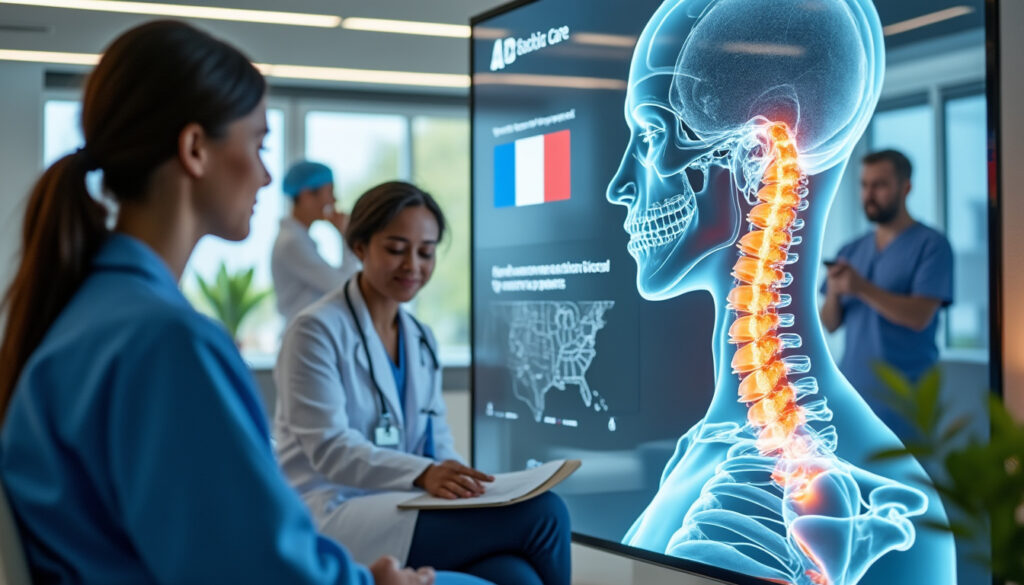
Neck Surgery in Montreal: Maintain Cervical Flexibility and Function
Neck conditions causing persistent pain or functional loss place a substantial burden on individuals and healthcare systems, especially in urban centers like Montreal. Surgical interventions targeting the cervical spine have evolved tremendously, aiming not only to relieve symptoms but to…
Patient Empowerment and the Importance of Informed Decision-Making in Spinal Surgery
At the heart of every spinal surgery journey lies the imperative of patient empowerment through clear, balanced information. Dr. Sylvain Desforges integrates his 30+ years of experience to demystify complex clinical concepts, helping patients grasp the benefits, risks, and realistic expectations of cervical disc prosthesis and other spinal surgeries.
Knowledgeable patients are better equipped to make decisions aligned with their personal values and lifestyle goals. Dr. Desforges emphasizes the importance of questioning, seeking second opinions, and understanding the full spectrum of conservative and surgical options. He advocates for a tailored assessment where each case is unique and requires individualized planning.
Patients are encouraged to:
- Engage actively: Ask detailed questions regarding procedures and recovery timelines.
- Evaluate alternatives: Understand conservative care possibilities, such as those offered at Clinique TAGMED.
- Set realistic goals: Focus on meaningful improvements in pain relief and mobility.
- Consult with experts: Use professional evaluations to guide treatment decisions.
The decision to pursue cervical disc prosthesis surgery should only be undertaken after a comprehensive diagnostic and therapeutic process that respects each patient’s unique needs and circumstances. This patient-centered philosophy reinforces trust, reduces anxiety, and fosters positive healing environments.

Disc Prosthesis in Lévis: Quick and Long-Lasting Results
Chronic back pain caused by degenerative disc disease continues to profoundly impact the quality of life for many residents in Lévis and the broader Quebec area. For decades, traditional spinal fusion surgery has been the primary solution for alleviating severe…
How to Begin Your Personalized Cervical Spine Care Journey: Contact and Evaluation
Beginning a cervical spine care journey that may lead to cervical disc prosthesis surgery involves a structured evaluation process emphasizing scientific accuracy and patient-centered ethics. Dr. Sylvain Desforges offers Quebec patients expert assessments informed by decades of clinical practice and organizational leadership in osteopathy.
Consultations involve a thorough review of medical history, physical examination, and review of imaging alongside lifestyle considerations. This comprehensive approach ensures that treatment recommendations—be they conservative or surgical—are truly individualized and evidence-based.
Patients interested in exploring this pathway can reach out to initiate their evaluation and discuss personalized recommendations. Dr. Desforges collaborates closely with international partners for seamless referrals to advanced surgical centers in France and maintains continuous communication during all care phases, including postoperative rehabilitation and return to Quebec.
For more information or to discuss your spinal health case, visit https://www.sostourismemedical.com/contact to start your personalized assessment and take confident steps toward neck pain relief and restored spinal mobility.
What is a cervical disc prosthesis and how does it differ from fusion surgery?
A cervical disc prosthesis is an artificial implant that replaces a damaged cervical disc and preserves spinal movement, unlike fusion surgery which eliminates motion at the affected segment by permanently joining vertebrae together.
Who is a candidate for cervical disc prosthesis surgery?
Candidates generally include patients with degenerative disc disease or cervical herniation who have not responded to 3-6 months of conservative treatments and have suitable spinal alignment and healthy facet joints, as determined by expert evaluators like Dr. Desforges.
Why is completing conservative care such as neurovertebral decompression important before considering surgery?
Conservative treatments help reduce inflammation and nerve pressure, sometimes relieving symptoms entirely and improving surgical outcomes if surgery becomes necessary. Advanced decompression therapies like those at Clinique TAGMED optimize patient health prior to surgery.
What advantages does transatlantic coordination of spinal surgery offer?
It provides access to advanced surgical technologies, reduced wait times, comprehensive personalized care, and cost-effective solutions by combining expertise from Quebec and French medical teams.
How can patients ensure the best rehabilitation outcomes after cervical disc prosthesis surgery?
Following a structured rehab program with graded mobilization, strength building, and education significantly improves pain relief and functional improvement while preserving implant function. Close collaboration between multidisciplinary teams supports this process.