
Terrebonne Lumbar Disc Herniation Care Without Surgery
May 16, 2026
Longueuil Sciatica Recovery for Sports-Related Disc Injuries
May 16, 2026
Neck surgery has undergone a remarkable transformation in Montreal, embracing modern motion techniques that prioritize preserving natural cervical spine mobility while effectively treating various cervical disorders. With increasing recognition of the importance of maintaining neck flexibility for overall quality of life, advanced spinal surgery options now offer both symptom relief and biomechanical restoration. Patients faced with severe neck pain, neurological disorders, or degenerative conditions find that minimally invasive surgical innovations provide a promising path forward without compromising motion.
Experts with decades of experience, such as Dr. Sylvain Desforges, play an indispensable role in guiding patients through personalized evaluations to determine the most appropriate surgical or conservative approach. His leadership in pioneering evidence-based, ethically responsible spinal care harmonizes rigorous scientific methodology with compassionate patient-centered support. The integration of advanced technologies, including dynamic implants, laser therapies, and neurovertébral decompression, complements Montreal’s commitment to enhancing patient outcomes through innovation.
Furthermore, the patient journey extends beyond local borders as collaborative transatlantic care pathways between Canada and France enable access to cutting-edge surgical options often unavailable domestically. This coordinated approach accelerates treatment timelines, reduces costs, and fosters continuity of care, all while maintaining robust standards of safety and efficacy. For those seeking alternatives to prolonged waits in the Quebec healthcare system, this model represents an advantageous and comprehensive solution.
Types of Neck Surgery in Montreal: Embracing Modern Motion Techniques for Cervical Spine Care
The complexity of cervical spine anatomy demands tailored surgical interventions that balance the necessity of symptom relief with the preservation of natural motion. In Montreal, patients can access diverse surgical modalities broadly grouped into simple decompression, fusion procedures, and motion-preserving surgeries. Each offers distinct clinical advantages and considerations.
Simple Decompression Procedures
Simple decompression surgeries aim to alleviate nerve root or spinal cord compression by removing offending tissues such as herniated disc material or bone spurs without fusing vertebrae. This approach preserves adjacent segment mobility and typically involves minimally invasive techniques, leading to reduced tissue trauma and accelerated recovery.
Examples include anterior cervical discectomy without fusion and posterior laminotomy, commonly indicated for radiculopathies caused by herniated discs or foraminal stenosis. Patients benefit from significant pain relief and improved neurological function with minimal loss of motion, making this an attractive option when appropriate.
Fusion Surgeries
Spinal fusion procedures such as anterior cervical discectomy and fusion (ACDF) remain a standard for stabilizing the cervical spine in cases of instability, severe degeneration, or trauma. By permanently uniting two or more vertebral segments, fusion restores stability and prevents further neurological compromise but comes at the cost of reduced motion at fused levels.
While effective for pain relief and preventing segmental instability, fusion can contribute to increased mechanical stress on adjacent segments potentially accelerating degeneration. Candidates for fusion undergo careful evaluation to weigh these benefits and risks, ensuring a choice tailored to their pathology and functional demands.
Motion-Preserving Surgeries
Innovations in cervical spine care have given rise to motion-preserving surgeries, which seek to maintain physiological neck movements postoperatively. Artificial disc replacement and dynamic stabilization systems exemplify this category, offering the biomechanical advantage of restoring or preserving a near-normal range of motion.
These procedures reduce postoperative stiffness and adjacent segment disease incidence, promoting long-term spinal health. However, patient selection criteria are stringent to optimize outcomes, with careful assessment of disc health, spinal alignment, and neurological status informing surgical candidacy.
| Type of Surgery | Motion Preservation | Recovery Time | Risks | Typical Indications |
|---|---|---|---|---|
| Simple Decompression | High | Short (weeks to months) | Minimal surgical trauma, occasional nerve irritation | Radiculopathy, mild stenosis |
| Fusion Surgery | Low (no motion at fused segment) | Moderate (months) | Adjacent segment disease, stiffness | Severe degeneration, instability |
| Motion-Preserving Surgery | High | Moderate | Device failure (rare), strict patient selection | Eligible degenerative disease, select radiculopathy |
For Montreal residents exploring their options, consulting with experienced evaluators such as Dr. Desforges ensures insights grounded in over 30 years of expertise. His emphasis on ethical, evidence-based care shines through in the careful matching of patient needs with technological advancements. Learn more about these surgical techniques and their suitability at neck surgery in Montreal preserving natural cervical function.

IntraSPINE® in Sherbrooke: Durable Solution for Chronic Low Back Pain
The management of chronic low back pain, a widespread condition affecting millions across Quebec and beyond, has reached a pivotal moment thanks to innovative medical technologies and coordinated care pathways. At the heart of this evolution lies the IntraSPINE implant,…
Spine Surgery in Trois-Rivières: Reduce Pain and Preserve Mobility
In recent years, spine surgery in Trois-Rivières has evolved notably, combining advanced medical expertise with innovative technologies to deliver patient-centered care. This growing field addresses the increasing demand among Quebec residents seeking effective solutions for chronic back pain and mobility…
Patient Journey for Neck Surgery: From Expert Evaluation to Postoperative Recovery in Montreal
A successful neck surgery experience hinges on a structured and personalized patient journey. Under the guidance of experts like Dr. Sylvain Desforges, this process entails several carefully coordinated phases designed to maximize safety, efficacy, and patient empowerment.
Initial Evaluation and Diagnostic Assessment
The journey begins with a comprehensive clinical history review, focusing on symptoms such as neck pain, neurological deficits, and prior conservative treatments. Neurological examination and advanced imaging modalities such as MRI and CT scans provide precise anatomical detail, essential for identifying the nature and extent of cervical spine pathology.
Collaborative evaluations with neurologists, orthopedic surgeons, physiotherapists, and osteopaths enrich the assessment, facilitating a holistic understanding of the patient’s condition. Critically, this stage involves reviewing prior non-surgical treatments, including physical therapy and neurovertébral decompression, to confirm that sufficient conservative management has been attempted over a minimum 3 to 6-month period.
Preoperative Preparation and Patient Education
Once surgery is deemed appropriate, preoperative planning emphasizes educating patients about risks, benefits, and realistic expectations. Prehabilitation activities—such as posture optimization and targeted exercises—enhance physical conditioning ahead of surgery.
Patients receive detailed guidance on surgical logistics, including the potential for transatlantic care arrangements that leverage France’s advanced surgical centers. The multidisciplinary team coordinates travel and hospitalization arrangements, assuring seamless care integration between local Montreal support and overseas surgical expertise.
Surgical Intervention and Immediate Postoperative Care
Surgical procedures favor minimally invasive approaches when feasible, minimizing soft tissue disruption and potential complications. Use of modern implants and motion-preserving devices aligns with biomechanical goals tailored to individual patient profiles.
Postoperative protocols engage early mobilization, pain management, and rigorous neurological monitoring. Ensuring neurological integrity and preventing complications is paramount, with encouragement of gentle neck movements to sustain cervical flexibility during recovery.
Rehabilitation and Long-Term Recovery Support
Rehabilitation programs coordinated locally in Montreal focus on restoring cervical strength, flexibility, and functional stability. These include guided exercises such as chin tucks, diagonal neck stretches, and shoulder mobility routines recommended for twice-daily practice over several months.
Regular follow-up appointments with Dr. Desforges and allied health professionals foster ongoing assessment and timely intervention as needed, improving long-term outcomes and minimizing risks such as adjacent segment degeneration.
- Detailed clinical assessment by a multidisciplinary team
- Advanced imaging techniques for precision diagnosis
- Prehabilitation emphasizing posture and strength
- Minimally invasive surgical options prioritizing motion preservation
- Coordinated postoperative care emphasizing early mobilization
- Structured rehabilitation protocols tailored to individual needs
- Consistent follow-up and complication monitoring
Patients interested in learning more about comprehensive neck surgery pathways can explore resources at Montreal’s spinal surgery specialists for holistic care approaches.

TOPS™ in Gatineau: High-Performance Option for the Lumbar Spine
The landscape of spinal surgery has witnessed profound evolution, particularly for patients grappling with lumbar spine disorders such as spinal stenosis and spondylolisthesis. These conditions, increasingly prevalent among Quebec’s population, impose substantial limitations on mobility and quality of life. The…

Cervical Disc Prosthesis in Quebec City: Avoid Post-Surgery Stiffness
Chronic neck pain remains a significant challenge for thousands of residents in Quebec City every year, often leading them to seek effective spinal surgery options that minimize downtime and maximize long-term mobility. Among the recent advancements revolutionizing cervical spine care,…
The Importance of Conservative Care Before Considering Neck Surgery: Insights from TAGMED Clinic
Conservative treatment remains the cornerstone of neck disorder management, ensuring surgery is only pursued when truly necessary. Dr. Sylvain Desforges emphasizes a minimum course of three to six months of evidence-based non-invasive therapies prior to surgical evaluation.
Among advanced conservative modalities, neurovertébral decompression stands out, particularly when delivered at specialized centers like the Clinique TAGMED. This technology decompresses nerve roots gently and effectively, often alleviating pain and functional deficits without surgical intervention.
Other conservative treatments integral to this phase include:
- Targeted physical therapy focusing on cervical flexibility and posture correction
- Manual osteopathic therapies addressing biomechanical imbalances
- Low-level laser therapy to reduce inflammation and promote tissue healing
Only when symptoms persist or worsen despite optimized conservative care should surgical options be considered. This approach minimizes risks, respects patient autonomy, and aligns with ethical mandates for rigorous clinical decision-making.

Minimally Invasive Surgery in Longueuil: Reduce Hospital Stay Duration
In recent years, advances in spinal care have dramatically reshaped the treatment landscape for patients suffering from debilitating spinal conditions. Particularly in Longueuil, the emergence of minimally invasive surgery (MIS) techniques offers a transformative alternative to conventional open surgeries. These…
IntraSPINE® in Laval: Modern Solution for Lumbar Stabilization
In the evolving landscape of orthopedic treatments, the city of Laval has become a hub for innovations addressing chronic lower back pain. Among the groundbreaking solutions gaining attention is the IntraSPINE device—a modern spinal implant designed to offer dynamic lumbar…
Advantages of Transatlantic Coordination for Cervical Spine Surgery: Enhanced Access and Personalized Care
The collaboration between Canadian medical evaluators and French surgical centers offers a compelling model for neck surgery patients seeking advanced treatment options. Dr. Desforges’ leadership in organizing transatlantic care pathways ensures patients benefit from a continuum of care spanning continents.
This model yields numerous advantages:
- Access to state-of-the-art implants like dynamic cervical disc prostheses unavailable or limited in Canada
- Shorter waiting times compared to traditional public healthcare schedules in Quebec
- Cost savings with overall expenses in France often below Canadian private care benchmarks
- Multilingual patient support and seamless logistics encompassing travel, accommodation, and medical coordination
- Close monitoring during rehabilitation both abroad and after returning home in Montreal
The integration of European CE-marked and FDA-approved devices with minimally invasive techniques exemplifies the cutting edge of spinal surgery. Patients thus experience outcomes combining symptom relief, maintained cervical flexibility, and improved long-term spine health.
Montreal’s patients can explore these collaborative pathways via dedicated organizations such as specialized neck surgery networks that facilitate access to international expertise.

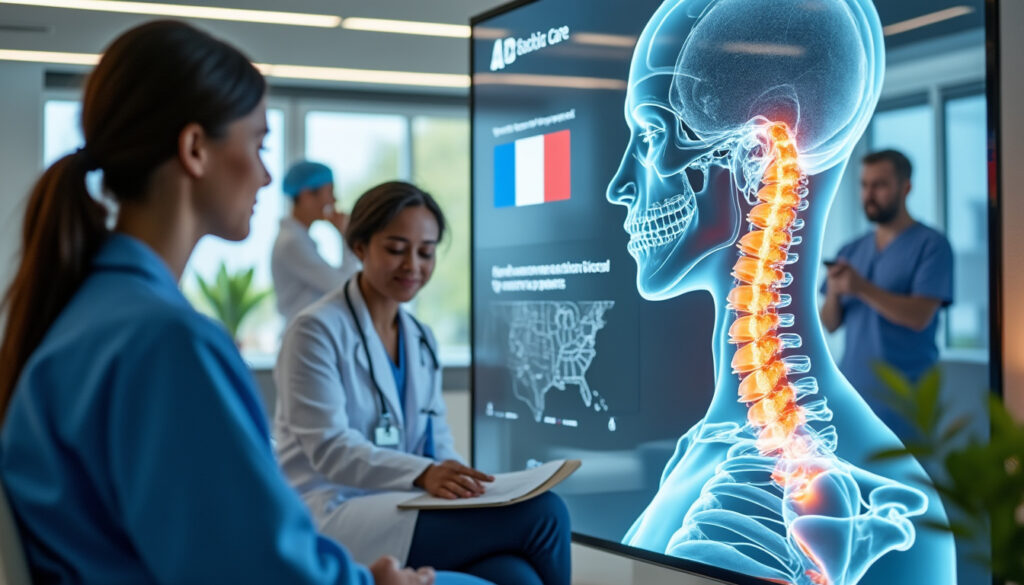
Neck Surgery in Montreal: Maintain Cervical Flexibility and Function
Neck conditions causing persistent pain or functional loss place a substantial burden on individuals and healthcare systems, especially in urban centers like Montreal. Surgical interventions targeting the cervical spine have evolved tremendously, aiming not only to relieve symptoms but to…

Disc Prosthesis in Lévis: Quick and Long-Lasting Results
Chronic back pain caused by degenerative disc disease continues to profoundly impact the quality of life for many residents in Lévis and the broader Quebec area. For decades, traditional spinal fusion surgery has been the primary solution for alleviating severe…
Minimally Invasive Surgical Techniques in Montreal: Reducing Recovery Time and Preserving Neck Mobility
Advances in minimally invasive surgery have revolutionized neck surgery, dramatically improving patient experiences by limiting soft tissue damage and accelerating recovery. Montreal clinics increasingly implement these techniques, favoring smaller incisions and precision instrumentation.
Key features of minimally invasive neck surgery involve:
- Targeted nerve decompression with endoscopic visualization
- Keyhole anterior cervical approaches minimizing muscular disruption
- Use of laser-assisted decompression techniques to improve tissue healing
- Implantation of dynamic devices supporting natural spinal mechanics
The patient benefits include reduced postoperative pain, shorter hospital stays, less scar tissue formation, and importantly, preservation of cervical range of motion. This is particularly vital for Montreal’s active population, where maintaining neck mobility directly corresponds with occupational and recreational demands.
Patients can deepen their understanding of minimally invasive options at trusted local providers such as private spine surgery centers and Mont-Royal’s specialized surgical teams, ensuring access to cutting-edge care.
Postoperative Rehabilitation: Essential Strategies to Restore and Maintain Cervical Function after Surgery
Following neck surgery, a well-structured rehabilitation program is essential for restoring cervical strength, flexibility, and functional capacity. Rehabilitation centers in Montreal emphasize individualized protocols integrating clinical evidence and expert guidance.
Core exercises designed to sustain mobility and reduce stiffness include:
- Chin tucks to enhance cervical stabilization
- Diagonal neck stretches promoting flexibility in multiple planes
- Arm circles and shoulder retractions supporting scapular stability and tension relief
Patients are advised to perform these exercises regularly, typically twice daily over several months, adjusting intensity based on professional monitoring. Additionally, manual therapies such as gentle spinal decompression and soft tissue mobilization complement exercise routines by addressing muscle tension and enhancing circulation.
Ongoing follow-up with specialized evaluators like Dr. Desforges ensures continuous progress evaluation and timely interventions if complications such as adjacent segment disease emerge.

Key Questions on Neck Surgery Answered by Experts
What symptoms suggest that neck surgery may be necessary?
Persistent neck pain, numbness or weakness in the arms, and loss of strength can indicate the need for surgical intervention when conservative treatments have failed.
Is neck surgery safe?
All surgeries carry some risks, but advances in minimally invasive techniques and meticulous surgical planning significantly reduce complications and improve safety.
How long is the recovery period after neck surgery?
Recovery varies depending on the procedure, with minimally invasive surgeries generally allowing faster return to normal activities within weeks to months.
What does postoperative follow-up involve?
Regular consultations monitor healing, assess rehabilitation progress, and often include coordinated care with physiotherapists to optimize outcomes.
What are the costs associated with neck surgery abroad?
Surgical costs overseas can be lower than private Canadian clinics, with comprehensive pricing beginning around $35,800 CAD including all related expenses.