
Laval Disc Herniation Care That Avoids Surgery Risks
November 8, 2025Unlocking Success: How Neurovertebral Decompression Transforms Recovery Journeys
November 9, 2025In the dynamic and growing community of Mirabel, lumbar disc herniation has become a common cause of debilitating back pain affecting adults across various professions and lifestyles. For many residents, finding effective, non-invasive treatment options is essential given the physical demands and varying activity levels present. Neurovertebral decompression therapy emerges as a cutting-edge solution tailored to alleviate the pressure exerted by herniated discs on spinal nerves, enhancing both pain relief and mobility.
As healthcare advances into 2025, Mirabel’s patients benefit from innovative spinal care strategies, supported by expert practitioners like Dr. Sylvain Desforges. His extensive clinical experience and pioneering role in the Canadian osteopathic community ensure that patients receive rigorously evaluated, personalized treatment plans. This article delves into who can benefit from neurovertebral decompression and examines the broader suite of available treatment modalities for lumbar disc herniation accessible within the region.
Understanding Lumbar Disc Herniation: Common Causes and Patient Profiles in Mirabel
Lumbar disc herniation refers to the displacement of intervertebral disc material beyond its normal confines in the lower back, often leading to nerve root compression. This condition is especially prevalent among adults aged 30 to 50 in Mirabel, a period characterized by intense professional and familial responsibilities, heightening the potential of disc injury due to repeated mechanical stress and lifestyle factors.
Key contributors to herniation in this community include:
- Occupational risks: Professionals engaged in manufacturing, logistics, and manual labor face repetitive postural strain and microtraumas.
- Sedentary behavior and excess weight: Muscle weakness and biomechanical imbalances accelerate disc stress.
- Genetic predispositions and past injuries: Congenital anomalies or previous trauma exacerbate vulnerability.
- Postural habits and lifestyle: Incorrect lifting techniques and prolonged sitting contribute substantially to spinal degeneration.
Recognizing these factors helps medical experts, like those at the Clinique TAGMED in Mirabel, develop targeted preventative and therapeutic strategies. Patients’ diverse profiles necessitate an approach that is not only clinically sound but also considerate of individual daily realities and occupational demands.
| Risk Factor | Implications for Disc Health |
|---|---|
| Age (30-50 years) | Peak incidence period for disc wear and tear symptoms |
| Sedentary Lifestyle & Overweight | Increased mechanical load accelerates disc degeneration |
| Occupational Postures | High repetition of load-bearing positions causing microtrauma |
| Genetic & Trauma History | Heightened susceptibility and faster lesion development |
Aligning these patient profiles with advanced diagnostic and therapeutic tools available locally enhances recovery potential and reduces long-term disability.

Disc herniation remains a prevalent and challenging spinal disorder, significantly affecting individuals’ quality of life, particularly in communities like Sainte-Julie. Characterized by a rupture or protrusion of the disc nucleus through the fibrous ring, this condition compresses adjacent nerve roots,…
Recognizing Symptoms and Their Impact on Quality of Life for Mirabel Residents
Symptoms of lumbar disc herniation vary based on the degree of disc displacement and nerve involvement, but common clinical manifestations observed in Mirabel include:
- Lumbar pain: Aggravated by prolonged sitting or physical exertion.
- Sciatic nerve pain or radiculopathy: Radiating discomfort along the sciatic nerve path, often reaching the legs.
- Muscle stiffness and spasms: Restricting mobility and heightening pain perception.
- Numbness or tingling sensations: Sensory deficits that sometimes impair gait balance.
- Progressive muscle weakness: A concerning sign of advancing nerve compression requiring urgent evaluation.
These symptoms contribute significantly to diminished daily function, work absenteeism, and psychological distress. Specialist teams in Mirabel employ a multidisciplinary approach combining osteopathy, physiotherapy, and neurosurgical collaboration to maximize patient outcomes.
| Symptom | Functional Consequences |
|---|---|
| Severe Lower Back Pain | Restricted ability in routine physical activities |
| Sciatic Radiation | Constant discomfort, limitation in mobility |
| Muscle Stiffness | Difficulty maintaining seated or standing positions |
| Numbness and Tingling | Increased risk of falls and impaired walking |
| Muscle Weakness | Progressive loss of independence |
Implementing treatments at facilities such as Solutions Dos Santé Mirabel provides an integrated pathway for pain management and functional restoration that directly addresses these challenges.

IntraSPINE® in Sherbrooke: Protecting and Enhancing Lumbar Function
The prevalence of chronic low back pain has surged globally, profoundly impacting individuals’ quality of life and productivity. Sherbrooke, Quebec, exemplifies this widespread challenge, with numerous patients seeking effective and sustainable relief from lumbar discomfort. Addressing this urgent need, the…
Precise Diagnostic Approach in Mirabel: Role of Imaging and Clinical Tests
For patients suspected of lumbar disc herniation, a definitive diagnosis requires a blend of thorough clinical assessment and advanced imaging technologies. The protocol followed by Mirabel’s expert healthcare providers includes:
- Detailed medical history and symptom review: Establishing an accurate clinical picture.
- Neurological examination: Checking for reflex changes, muscle strength, and sensory abnormalities.
- Magnetic Resonance Imaging (MRI): Gold standard for soft tissue visualization of discs and nerve roots.
- Computed Tomography (CT) scans: Supplementary for bony structure assessment when required.
- Electromyography (EMG): To pinpoint neurogenic involvement when clinical signs are ambiguous.
The synthesis of these results allows clinicians to craft a precise patient profile, essential for personalized treatment planning. This method aligns with practices highlighted in specialized institutions such as the Institut Vertébral des Laurentides and incorporates the latest technologies from global leaders like Medtronic and Zimmer Biomet.
| Diagnostic Tool | Purpose | Significance in Lumbar Herniation |
|---|---|---|
| Medical Interview | Symptom and history collection | Initial diagnostic orientation |
| Physical Examination | Neurological deficits assessment | Confirms nerve root impingement |
| MRI | Soft tissue and nerve root imaging | Core imaging to visualize herniated disc extent |
| CT Scan | Bone structure evaluation | Complements MRI in complex cases |
| EMG | Nerve conduction study | Precisely localizes nerve involvement |
Effective diagnosis drives optimal outcomes in neurovertebral decompression and other treatments, reducing the risk of unnecessary interventions.
In Sainte-Thérèse, a community marked by active lifestyles and significant physical demands, lumbar disc herniation emerges as a critical health concern affecting many individuals. The intricate nature of lower back pain, often stemming from discopathy, requires a precise and empathetic…
Conservative Treatments in Mirabel: First-Line Strategies and Follow-Up
Initial management of lumbar disc herniation typically favors conservative modalities emphasizing safety and gradual improvement. At the forefront in Mirabel are approaches that include:
- Medication: Strategic use of analgesics, NSAIDs, and muscle relaxants to reduce pain and inflammation.
- Relative rest: Limiting activities that amplify symptoms while encouraging gentle movement.
- Physiotherapy: Customized exercises focusing on muscular support, posture correction, and flexibility enhancement.
- Osteopathic care: Manual interventions promoting spinal mobility and muscular relaxation.
- Epidural steroid injections: Targeted inflammation reduction under image guidance.
The majority of Mirabel patients experience symptom reduction within six weeks through such management. However, continuous monitoring is essential to identify treatment resistance and prompt specialist referral. Expertise from local centers like PhysioVert Mirabel plays a pivotal role in delivering these programs effectively.
| Conservative Treatment | Benefits | Precautions |
|---|---|---|
| Medication (Analgesics, NSAIDs) | Pain relief, inflammation control | Potential gastrointestinal side effects |
| Relative Rest | Energy conservation and reduced aggravation | Avoid strict bed rest to prevent deconditioning |
| Physiotherapy | Strengthening and relapse prevention | Adherence to personalized plans essential |
| Osteopathy | Improved spinal biomechanics | Only by experienced practitioners |
| Epidural Steroid Injection | Rapid symptom relief | Temporary effects; requires precise administration |
Patients benefit from understanding their options, and Dr. Sylvain Desforges provides tailored guidance ensuring evidence-based treatment choices to optimize safety and efficacy.

In the bustling community of Saint-Hubert, where everyday life blends a range of physical and sedentary activities, the impact of discal hernia on spinal health is profoundly felt. This condition, frequently manifesting at the L5-S1 spinal segment, can dramatically disrupt…
Neurovertebral Decompression Therapy in Mirabel: Mechanism and Clinical Advantages
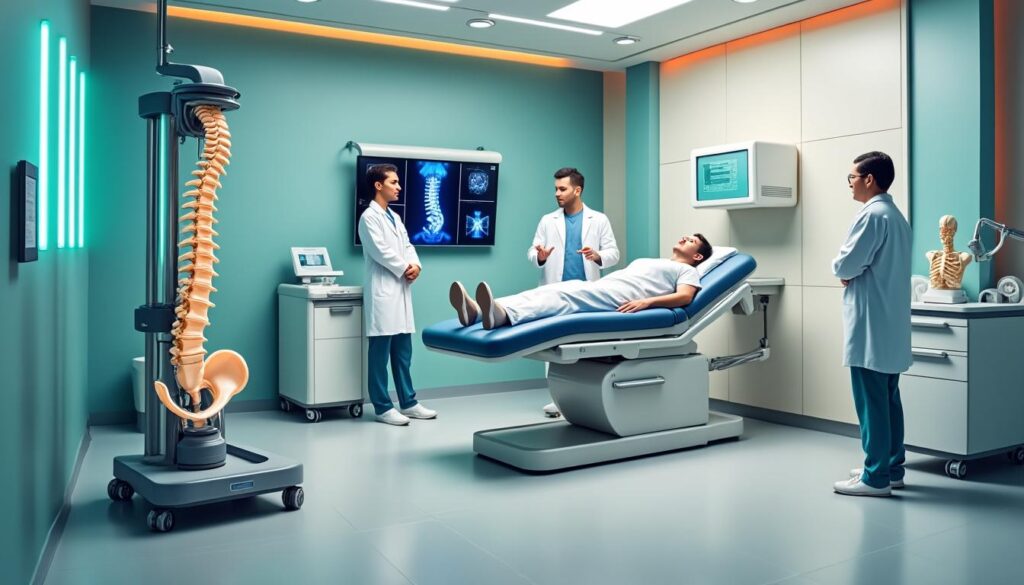
Neurovertebral decompression therapy has gained traction as an innovative non-surgical option that gently stretches the spinal column to increase intervertebral disc space. This negative pressure created promotes the repositioning of herniated disc material, reducing nerve root compression.
Its essential benefits encompass:
- Non-invasiveness: Avoids surgical risks while delivering effective relief.
- Reduction of nerve pressure: Directly alleviates radicular symptoms.
- Enhanced tissue repair: Stimulates local circulation and disc regeneration.
- Personalized treatment protocols: Adjusted to the patient’s specific severity and tolerance.
- Minimal side effects: Generally well tolerated compared to surgery or invasive interventions.
Clinics like TAGMED incorporate this therapy alongside advanced technologies from industry leaders such as Stryker and NuVasive, ensuring access to top-tier medical devices and methodologies. This integration underscores Dr. Sylvain Desforges’ commitment to innovation and scientific rigor in delivering high quality spine care.
| Advantages of Neurovertebral Decompression | Clinical Impact |
|---|---|
| Non-invasive Treatment | Safe alternative to surgery; outpatient sessions |
| Decrease in Pain | Relief from radicular and localized lumbar pain |
| Improved Mobility | Restored spinal function and range of motion |
| Low Risk of Side Effects | Less complication rate compared with surgical approaches |
| Customization | Adaptable protocols for different patient needs |
For patients exploring alternatives to surgery, neurovertebral decompression presents a scientifically grounded, patient-centered treatment, facilitated by a compassionate, expert care team.

The rising prevalence of Lumbar Disc Herniation in Saint-Léonard reflects the increasing demands of modern urban lifestyles. Persistent back pain has become a frequent yet often underestimated complaint, spurring many residents to seek effective and lasting solutions. Recognizing the complexity…
Personalized Treatment Protocols and Patient Monitoring in Mirabel
Neurovertebral decompression at TAGMED follows a meticulous protocol to maximize safety and therapeutic benefit. The framework includes:
- Initial comprehensive evaluation: In-depth clinical assessment, including imaging review, forming the foundation for treatment planning.
- Customized session scheduling: Typically 2 to 3 sessions weekly over 6 to 8 weeks, modulated to patient responsiveness.
- Ongoing symptom monitoring: Regular assessments to adapt therapy intensity and duration.
- Rehabilitation exercises integration: Specific muscle strengthening and stretching regimens encouraged alongside sessions.
- Patient education: Guidance on spinal hygiene and lifestyle changes to maintain improvements and reduce recurrence risk.
This personalized regimen ensures patients receive attentive care adapted to their evolving clinical picture, positioning Mirabel as a hub for evidence-backed neurovertebral decompression treatments.
| Treatment Stage | Objective | Typical Duration |
|---|---|---|
| Diagnostic Assessment | Identify hernia specifics and nerve involvement | 1-2 weeks |
| Active Decompression Sessions | Reduce disc pressure, alleviate symptoms | 6-8 weeks |
| Progress Monitoring | Adjust treatment plan for maximum effect | Throughout treatment period |
| Complementary Rehabilitation | Muscle strengthening and mobility preservation | Concurrent or post-decompression |
| Maintenance and Prevention | Long-term spine health support | Ongoing |
The expert-led care pathway, supervised by Dr. Sylvain Desforges, combines clinical expertise with patient-tailored therapy to optimize long-term outcomes and enhance quality of life.
In the bustling Southwest district of Montreal, lumbar disc herniation presents a significant public health challenge, affecting a diverse population ranging from young adults to seniors. This condition, often linked to debilitating back pain and nerve-related symptoms such as sciatica,…
Recognizing Limitations and Precautions for Neurovertebral Decompression in Mirabel
While neurovertebral decompression is a widely regarded non-invasive option, certain contraindications and precautions require vigilant attention. Awareness of these factors prevents complications and ensures patient safety, including:
- Contraindications: Vertebral fractures, active infections, spinal tumors, significant spinal instability.
- Precautionary considerations: Severe osteoporosis, inflammatory disorders, advanced neurological deficits.
- Populations excluded or cautiously approached: Pregnant women without specialized medical approval, patients with high cardiovascular risk.
- Requirement for ongoing medical supervision: Early detection of symptom progression or adverse reactions.
- Customized treatment adaptations: Modifications based on comorbidities and specific patient profiles.
This rigorous screening and follow-up system, practiced by specialists at Centre de Réadaptation Mirabel, exemplifies the ethical and scientific standards upheld throughout spinal care interventions in the region.
| Condition | Reason for Contraindication or Caution |
|---|---|
| Vertebral Fractures | Risk of worsening mechanical instability |
| Active Osteomyelitis or Disc Infection | Potential spread of infection due to traction |
| Spinal Tumors | Risk of severe local complications |
| Spinal Instability | Dangerous vertebral displacement under traction |
| Pregnancy (without specialist approval) | Uncertain effects on mother and fetus |
Patients presenting any of these contraindications are promptly directed toward alternative treatment modalities, reflecting the multidisciplinary and patient-first philosophy championed by Dr. Desforges and his team.
The dynamic neighborhood of Mercier–Hochelaga-Maisonneuve has seen a significant rise in cases of herniated disc-related back pain, with many residents facing chronic discomfort that interferes with work and daily activities. This ailment, which involves displacement or protrusion of spinal discs,…
Comparative Insights on Lumbar Disc Herniation Treatments Available in Mirabel
Patients faced with lumbar disc herniation in Mirabel have access to a comprehensive array of treatment options. Evaluating the invasiveness, recovery timeframe, and risk profiles provides clarity for informed decision-making.
| Treatment | Invasiveness Level | Average Recovery Duration | Potential Risks | Ideal Patient Profile |
|---|---|---|---|---|
| Conservative Management (Medicines, Physiotherapy) | Low | 4-8 weeks | Possible medication side effects | Patients with mild to moderate herniations |
| Neurovertebral Decompression Therapy | Non-invasive | 6-8 weeks | Minimal side effects, mostly transient discomfort | Individuals with moderate to severe herniations eligible for decompression |
| Surgical Intervention (Discectomy or Fusion) | Invasive | 4-6 weeks typical | Infection, anesthesia risks, recurrence of symptoms | Severe herniations unresponsive to conservative care |
Given these considerations, neurovertebral decompression stands out by combining efficacy with a low risk profile, frequently helping to bypass the need for surgery. Expert teams, familiar with technologies from Lumbar Decompression innovators and surgical device giants including DePuy Synthes and Boston Scientific, ensure patients receive optimal care matched to their condition.

Herniated discs are a frequent source of back pain and discomfort for residents of Ahuntsic-Cartierville, yet misconceptions and myths about this condition often complicate treatment and recovery. Many individuals suffer needlessly, uncertain of their options and hesitant about emerging therapies.…
Future Directions and Innovations in Neurovertebral Decompression for Mirabel
The field of spine care continues to evolve rapidly, and Mirabel is poised to benefit from several emerging trends in 2025 and beyond:
- Advanced traction equipment: Incorporating biomechanical precision and sensor feedback for tailor-made treatments.
- Enhanced interdisciplinary collaboration: Strengthening ties between osteopathy, neurosurgery, physiotherapy, and pain management.
- Telehealth and remote monitoring: Expanding access for active patients requiring flexible care schedules.
- Applied clinical research: Dedicated studies focusing on Mirabel’s population characteristics to refine therapy protocols further.
- Preventative programs: Personalized ergonomics, physical activity, and nutrition advice to reduce herniation recurrence.
These advancements reinforce Mirabel’s reputation as a forward-thinking community in spinal health, leveraging expertise from consultants like Dr. Sylvain Desforges and technologies powered by leading companies such as Spineology, Joimax, and Alphatec Spine for comprehensive, compassionate care.
Who is an ideal candidate for neurovertebral decompression therapy?
Patients with moderate to severe lumbar disc herniations, without fractures or infections, who seek a non-invasive alternative to surgery often benefit the most. A comprehensive evaluation by experts like Dr. Sylvain Desforges will determine your eligibility.
How many sessions are typically required for effective neurovertebral decompression treatment?
Most treatment plans range from 15 to 25 sessions over 6 to 8 weeks, with session frequency and duration customized to individual needs and response.
Can neurovertebral decompression completely avoid the need for surgery?
While many patients experience substantial symptom relief, avoiding surgery cannot be guaranteed in every case. Treatment plans are personalized to provide the best conservative alternatives and timely surgical referrals when necessary.
Are there risks or side effects associated with neurovertebral decompression?
This therapy is generally safe with minimal side effects; some patients report temporary stiffness or sensitivity. Contraindications include fractures, infections, and spinal instability which experts evaluate rigorously.
What role does patient education play in treatment outcomes?
Education on posture, spinal hygiene, and lifestyle modifications is fundamental to sustaining treatment benefits and preventing relapse, forming a key component of comprehensive care at clinics like TAGMED.