Lumbar Disc Herniation in Sainte-Thérèse: Pre-Treatment Assessment and Neurovertebral Decompression Therapy
December 3, 2025
Disc Herniation in Sainte-Julie: Success Rates, Clinical Studies, and Neurovertebral Decompression Treatment Insights
February 24, 2026
The prevalence of chronic low back pain has surged globally, profoundly impacting individuals’ quality of life and productivity. Sherbrooke, Quebec, exemplifies this widespread challenge, with numerous patients seeking effective and sustainable relief from lumbar discomfort. Addressing this urgent need, the IntraSPINE implant represents a groundbreaking advancement in spinal health, emphasizing lumbar function preservation and minimizing invasiveness. As a pioneering development in the field, this device has redefined therapeutic options for lumbar disorders, offering renewed hope for those burdened by persistent back pain.
Within this landscape of innovation, Dr. Sylvain Desforges, an esteemed figure with over three decades of experience in spinal care, plays a pivotal role. By integrating scientific rigor with empathetic patient engagement, Dr. Desforges champions interventions like IntraSPINE that support natural spinal biomechanics while reducing pain and enhancing mobility. His comprehensive and evidence-based approach ensures that patients in Sherbrooke and beyond receive tailored treatment pathways characterized by safety and efficacy.
IntraSPINE Implant: Revolutionizing Lumbar Function Preservation in Sherbrooke
The emergence of IntraSPINE as a minimally invasive spinal implant marks a significant milestone for patients grappling with lumbar instability and degenerative disc diseases. Unlike traditional fusion surgeries that restrict spinal mobility, this dynamic interlaminar device targets the interspinous space, positioned strategically between the laminae to stabilize the spine while allowing natural motion.
By cushioning the vertebrae and applying gentle tension to the interspinous ligaments, the IntraSPINE implant mitigates pain sources stemming from nerve compression and mechanical stress. Clinical trials reveal its capability to maintain sagittal balance and improve lumbar kinematics, thereby promoting a more physiological functional outcome.
Key advantages of IntraSPINE include:
- Preservation of natural spinal movement: The device’s elastic properties enable flexibility preserved within the lumbar segment.
- Reduction of nerve root compression: Improved decompression alleviates radicular pain without extensive tissue disruption.
- Quick recovery and reduced hospitalization time: The minimally invasive approach facilitates faster convalescence compared to fusion surgeries.
- Maintenance of sagittal alignment: By supporting proper posture correction, IntraSPINE aids in longer-term spinal health.
| Feature | Benefit | Clinical Impact |
|---|---|---|
| Interlaminar dynamic design | Preserves lumbar flexibility | Reduced stiffness post-implantation |
| Silicone-based cushioning | Shock absorption | Minimized mechanical stress on vertebrae |
| Minimally invasive implantation | Faster procedure and recovery | Shorter hospital stays and early mobilization |
For those interested in a comprehensive explanation of how IntraSPINE operates and its suitability, detailed resources can be found on specialized spinal health platforms. Dr. Desforges actively incorporates this device into treatment protocols aimed at lumbar enhancement and spinal protection.
IntraSPINE® in Sherbrooke: A Long-Lasting Solution for Chronic Lower Back Pain
Chronic lower back pain remains one of the most pressing health concerns in Sherbrooke and beyond, impacting millions and often diminishing daily quality of life. Despite the prevalence of lumbar discomfort, many face limited access to cutting-edge treatments amidst lengthy…
Comparative Overview of Lumbar Surgery Options in France: Bridging Expertise Across Borders
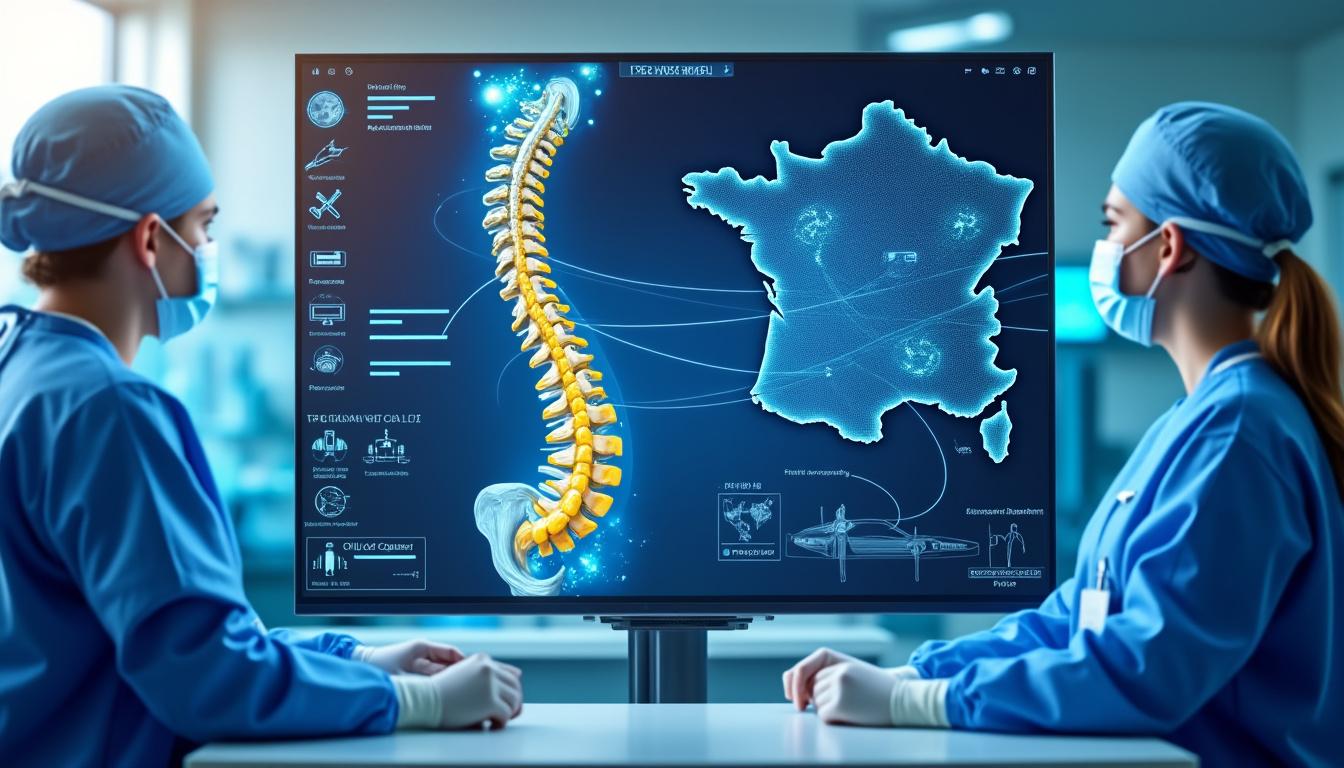
In understanding treatment pathways for lumbar disorders available internationally, France presents diverse surgical interventions tailored to patient needs. Within this context, Dr. Sylvain Desforges leverages his extensive knowledge to guide patients considering options such as simple decompression surgery, vertebral fusion, and motion-preserving surgeries like those involving the IntraSPINE implant.
Each intervention type presents distinct advantages and drawbacks, factors essential to personalized decision-making.
| Type of Surgery | Advantages | Disadvantages |
|---|---|---|
| Simple Surgery |
|
|
| Vertebral Fusion |
|
|
| Motion-Preserving Surgery (IntraSPINE) |
|
|
Understanding these options allows patients to make informed choices in conjunction with medical experts. Dr. Desforges highlights the importance of clinical evaluation and conservative therapy prior to surgical consideration, ensuring comprehensive patient care across borders.
Herniated Disc Care in Sainte-Julie: Why TAGMED’s Neurovertebral Decompression Therapy Stands Out
In the vibrant community of Sainte-Julie, back pain—particularly that stemming from herniated discs—has become a widespread concern affecting people from all walks of life. The relentless search for effective, non-invasive treatments has brought renewed attention to a pioneering therapy that…
The Patient Journey from Diagnosis to Recovery: Expert Guidance and Personalized Care
Effective management of lumbar conditions demands a carefully coordinated path beginning with precise evaluation. At Clinique TAGMED, under Dr. Sylvain Desforges’ guidance, patients undergo detailed assessments including clinical examination and advanced imaging to accurately capture the extent of spinal disorders.
The treatment strategy emphasizes an initial period of conservative care spanning three to six months. Techniques such as neurovertebral decompression aim to restore spinal health non-invasively, offering relief while avoiding premature surgery.
Once comprehensive evaluation and conservative treatments have demonstrated limited efficacy, surgical avenues such as IntraSPINE can be considered. Dr. Desforges ensures patients receive thorough information on benefits, risks, and postoperative expectations, fostering an open dialogue and shared decision-making.
- Initial assessment: Complete clinical evaluations and imaging.
- Conservative treatment: Physical therapies, spinal decompression, and pain management for 3–6 months.
- Surgery consideration: Personalized consultation regarding IntraSPINE or alternative interventions.
- Postoperative care: Rehabilitation focused on lumbar enhancement and spine support.
- Long-term follow-up: Regular evaluations to monitor implant integration and spinal function.
| Stage | Purpose | Typical Duration |
|---|---|---|
| Evaluation | Identify condition and plan treatment | 1-2 weeks |
| Conservative therapy | Reduce pain and improve function | 3-6 months |
| Surgical intervention | Address refractory cases or instability | 1 day (procedure) |
| Recovery and rehab | Enhance lumbar function post-implantation | Several weeks to months |
For patients considering the IntraSPINE approach, resources detailing the procedure’s minimally invasive nature and clinical outcomes are available through platforms like specialized spinal care websites.
Back Surgery in Trois-Rivières: Alleviating Pain While Preserving Mobility
In Trois-Rivières, Quebec, the persistence of back pain affects a substantial portion of the population seeking effective and personalized solutions. Back pain, often caused by spinal disorders or herniated discs, can drastically diminish quality of life, limiting mobility and causing…
Biomechanical Advantages of IntraSPINE and Its Role in Lumbar Enhancement
One of the most compelling aspects of the IntraSPINE device is its positive influence on spinal biomechanics and lumbar function. By situating the implant near the spine’s instantaneous axis of rotation, it facilitates natural rocking and flexion-extension movements crucial for maintaining dynamic spinal health.
Clinical evidence supports the utility of this implant in:
- Maintaining segmental mobility: Patients report improved trunk flexibility and reduced rigidity following implantation.
- Alleviating mechanical stress: Cushioning reduces vertebral loading, limiting degenerative progression.
- Supporting equilibrium: Preservation of sagittal balance ameliorates posture correction and reduces compensatory strain on adjacent segments.
| Biomechanical Feature | Effect | Patient Benefit |
|---|---|---|
| Dynamic elastic support | Adaptive spinal movements | Enhanced comfort and functionality |
| Interspinous ligament tensioning | Reduced nerve irritation | Pain relief and improved nerve function |
| Preservation of motion segments | Avoided stiffness and adjacent degeneration | Long-term structural health |
Such biomechanical advantages emphasize that IntraSPINE is not only a tool for back pain relief but also an effective means to protect lumbar function, aligning with holistic spinal health goals identified by experts like Dr. Desforges. Further scientific discussion on these biomechanical properties is documented in peer-reviewed studies accessible on medical research repositories.
Disc herniation remains a significant health concern in Pointe-Claire, impacting the lives of a diverse population ranging from labor-intensive workers to the aging community. The condition, characterized by the displacement or rupture of the intervertebral disc, often leads to debilitating…
Economic and Healthcare System Benefits of Transatlantic Patient Care Coordination
Cross-border collaboration between Canada and France, particularly within the realm of spinal treatments such as IntraSPINE, offers patients optimal access to innovative care while streamlining resources and costs. Dr. Sylvain Desforges facilitates international medical coordination, ensuring patient pathways are efficient and economically viable.
Advantages include:
- Cost-effectiveness: Combining expertise and access to specialized implants from France can reduce overall treatment expenses.
- Reduced wait times: Transatlantic coordination assists in bypassing prolonged surgical delays endemic to Canadian public healthcare.
- High-quality care: Collaborating with renowned French surgical teams and facilities guarantees advanced procedural options.
- Personalized journey: Patients benefit from continuous support before, during, and after intervention with clear communication across continents.
| Benefit Category | Impact | Example |
|---|---|---|
| Financial | Reduced direct and indirect healthcare costs | Lower hospitalization and rehab expenses |
| Logistical | Faster access to specialized interventions | Accelerated scheduling of IntraSPINE implantation in France |
| Clinical | Access to state-of-the-art technology and expertise | Collaboration with French spine surgeons leading innovation |
Patients interested in exploring this transatlantic pathway may consult Dr. Desforges and associated platforms for tailored recommendations and coordinated planning as illustrated on dedicated clinical discussion portals.
At Gouin Clinic, the landscape of herniated disc therapy has entered a transformative era marked by the integration of Personalized Treatment Plans and breakthrough Neurovertebral Decompression Therapy. This non-surgical approach is revolutionizing how spinal disorders are managed, offering patients an…
Conservative Treatments as the Foundation Prior to Lumbar Surgery Consideration
Maintaining a patient-first, evidence-driven approach, Dr. Desforges emphasizes conservative management as the cornerstone of lumbar care. Prior to contemplating surgery such as IntraSPINE, extended trials of non-invasive therapies allow optimization of spinal health and symptom control.
These treatments include:
- Neurovertebral decompression: Employs specialized traction to relieve nerve and disc pressure.
- Physical therapy: Customized regimens designed to strengthen lumbar musculature and improve posture.
- Pain management: Integrates modalities such as laser therapy and shockwave to attenuate inflammatory processes.
| Conservative Approach | Purpose | Outcome |
|---|---|---|
| Neurovertebral decompression | Reduce disc and nerve root pressure | Significant pain relief and improved function |
| Physical therapy | Strengthen supportive muscles | Enhanced postural control and spine support |
| Pain management techniques | Lower inflammation and discomfort | Decreased reliance on medication |
A detailed explanation of these therapies and their role in spinal health, as promoted by Dr. Desforges, can be found at specialized informational websites.
Cervical Disc Prosthesis in Quebec: Preventing Post-Operative Stiffness
Neck pain is one of the most common musculoskeletal complaints in Quebec, affecting a significant portion of the population annually. Often rooted in degenerative cervical disc diseases or herniated discs, this persistent discomfort severely impacts daily life and mobility. Fortunately,…
Innovative Technologies in Spine Care: Integrating Laser Therapy and Dynamic Implants
Bridging cutting-edge technology with compassionate patient management, Dr. Sylvain Desforges integrates novel treatments to advance outcomes for lumbar disorders. The incorporation of laser therapy and dynamic spinal implants, including IntraSPINE, exemplifies this commitment.
Laser therapy, by providing targeted tissue repair and anti-inflammatory effects, complements mechanical interventions to accelerate healing and pain reduction. Concurrently, dynamic implants enhance spinal stability without sacrificing natural motion, epitomizing a shift toward function-preserving spinal surgery.
- Laser therapy advantages: Minimizes tissue trauma, promotes rapid recovery, and reduces chronic inflammation.
- Dynamic implants innovation: Mimic physiological spinal movements while reinforcing structural integrity.
- Combined modalities: Facilitate comprehensive rehabilitation by addressing both biomechanical and biological healing aspects.
| Technology | Function | Patient Benefit |
|---|---|---|
| Laser therapy | Stimulates cell repair and relieves inflammation | Faster pain relief and tissue healing |
| IntraSPINE implant | Maintains spinal mobility and stabilizes lumbar region | Improved back pain relief and lumbar function |
More on these advancements and their clinical applications can be explored at leading spinal health platforms.
The prevalence of herniated disc conditions in Blainville has sparked considerable discussion and misconceptions about their causes, symptoms, and treatments. While the pain and disability associated with this spinal disorder are well documented, the emergence of non-surgical options such as…
Dr. Sylvain Desforges’ Unique Role in Coordinating Care and Enhancing Patient Experience
With over 30 years devoted to spinal health, Dr. Desforges stands as a beacon of expertise and innovation. His skillful integration of evaluation, conservative treatment, and advanced surgical options exemplifies a holistic patient-centered model. Beyond clinical proficiency, his engagement in transatlantic patient pathways reflects a commitment to accessibility and personalized care.
The expert’s leadership roles—including founding presidentships with several medical associations—underscore his dedication to scientific rigor and ethical practice. His efforts ensure that patients benefit from best practices and cutting-edge technologies like IntraSPINE, with seamless coordination between Canada and France.
- Comprehensive evaluation: Exhaustive clinical and imaging analysis to tailor treatment pathways.
- Patient education: Clear explanations of treatment options, fostering informed decision-making.
- International coordination: Facilitating access to advanced care across borders.
- Emphasis on ethics and safety: Adhering strictly to regulatory standards for quality and trustworthiness.
| Role Aspect | Contribution | Patient Impact |
|---|---|---|
| Expert evaluation | Identifies patient-specific spinal issues | Personalized treatment plans |
| Innovative care delivery | Integrates advanced technologies and therapies | Enhanced outcomes and faster recovery |
| Transatlantic management | Coordinates cross-border medical pathways | Reduced wait times and quality assurance |
Patients interested in discussing their spinal condition and potential treatment options, including IntraSPINE, are encouraged to visit the consultation portal for personalized evaluation and guidance.
What conditions is the IntraSPINE implant best suited for?
IntraSPINE is specifically designed for patients experiencing lumbar disc degeneration, lumbar instability, and associated back pain where preserving natural spinal motion is essential.
How long is the recovery period after IntraSPINE implantation?
Recovery typically ranges from a few weeks to several months depending on individual patient factors and adherence to rehabilitation protocols.
Are all patients with lumbar back pain candidates for IntraSPINE?
Patient candidacy requires thorough evaluation by experts like Dr. Desforges to determine suitability based on specific spinal health assessments.
Why prioritize conservative treatments before surgery?
Conservative therapies aim to reduce pain and improve lumbar function non-invasively, potentially eliminating the need for surgery or optimizing surgical outcomes if needed later.
What makes the IntraSPINE procedure minimally invasive?
The device’s implantation involves small incisions and reduced tissue disruption, enabling quicker recovery and less postoperative discomfort compared to traditional spinal surgeries.
Minimally Invasive Surgery in Longueuil: Reducing Hospital Stays for Faster Recovery
In recent years, a transformative wave has swept through spinal healthcare in Longueuil, aiming to revolutionize treatment experiences for patients suffering from back disorders. This shift stems from a growing demand for procedures that minimize hospital stays without compromising efficacy.…