How Medical Guidance from Quebec Enhances Patient Outcomes
November 8, 2025Motion Surgery in Terrebonne: Improve Posture and Reduce Pain
November 8, 2025Spine health remains a critical concern across diverse healthcare landscapes, significantly impacting patient outcomes and quality of life. This is particularly evident when comparing the spine care approaches in France and Quebec, two regions known for distinct healthcare frameworks yet united in their commitment to orthopedic research and medical best practices. The nuanced differences in how spine-related conditions are managed in these areas unveil unexpected insights that can drive healthcare innovation and improve patient satisfaction worldwide. As chronic back pain continues to challenge healthcare systems, analyzing these international variations provides a valuable lens for advancing spine care through comparative healthcare strategies.
The healthcare systems of France and Quebec exemplify unique models shaped by cultural, organizational, and technological influences. France Medical benefits from centralized protocols, advanced surgical options, and cutting-edge implant technologies, whereas Quebec Healthcare emphasizes accessibility and holistic care despite facing challenges like longer wait times and resource constraints. This contrast reveals how blending their complementary strengths can potentiate solutions for managing spinal conditions more effectively. Enhanced collaboration between French and Quebecois practitioners has fostered an international medicine approach, where multidisciplinary teams coordinate personalized care pathways that blend scientific rigor with empathetic patient management.
Insights drawn from this comparative analysis underscore the importance of a coordinated patient journey—from conservative treatments and robotic decompression to state-of-the-art surgeries employing devices like TOPS and Intraspine implants. France’s pioneering motion preservation techniques contrast with Quebec’s emphasis on chronic care management, highlighting opportunities for adopting innovative surgical and rehabilitation strategies. By addressing common pitfalls and leveraging international cooperation, spine care provision can evolve towards more timely interventions, reduced complications, and improved long-term functionality for patients.
Healthcare System Structures Shaping Spine Care in France and Quebec
The underlying architecture of healthcare systems in France and Quebec profoundly influences spine care accessibility, delivery methods, and patient outcomes. France operates a highly centralized healthcare system, characterized by a strong public sector with comprehensive coverage and rapid access to specialized spine care. In contrast, Quebec’s healthcare system is governed by a provincial mandate, balancing public healthcare provisions with private services addressing patient demands and waitlist management.
France’s approach is rooted in structured certification programs, such as the Diplôme Inter-Universitaire (DIU) in spinal surgery, ensuring surgeons adhere to rigorous standards supported by university programs and professional bodies like the Société Française de Chirurgie Rachidienne (SFCR). This centralized regulation drives consistency in clinical protocols and quality assurance. Conversely, Quebec integrates varied clinical practices grounded in a multidisciplinary methodology, incorporating physiotherapy, chiropractic care, and patient-centered rehabilitation, albeit often hindered by longer waiting periods before accessing specialized surgical services.
Key organizational distinctions include:
- Centralization vs. Decentralization: French healthcare centralizes spine care delivery, facilitating specialized centers equipped with the latest technology and innovation hubs. Quebec’s decentralized system offers flexibility but occasionally results in fragmented care coordination.
- Certification and Training: France leverages formal university diplomas (DIU) to maintain surgical excellence, while Quebec’s training emphasizes integrated, holistic care models combining multiple therapeutic disciplines.
- Accessibility: Patients in France benefit from expedited specialist consultations and a wealth of private clinics augmenting public hospitals, whereas Quebec patients often contend with longer wait times, which can exacerbate spinal pain management challenges.
| Aspect | France Medical System | Quebec Healthcare System |
|---|---|---|
| Healthcare Organization | Centralized with specialized spine centers | Decentralized with mixed public-private services |
| Training and Certification | Focused on rigorous DIU programs and SFCR guidelines | Holistic education integrating multiple disciplines |
| Patient Access | Faster specialist access and surgical options | Longer wait times, especially for surgical interventions |
| Technological Integration | Advanced implants and robotic-assisted techniques | Growing interest, less widespread availability |
This structural contrast underpins the variations in patient outcomes and choice of therapeutic pathways, a theme explored further through clinical and surgical innovations.

Understanding Sciatic Pain: Key Symptoms and When to Seek Medical Advice
Sciatic pain is a prevalent condition impacting a wide demographic, manifesting primarily as intense pain radiating from the lower back down the leg. This pain stems from irritation or compression of the sciatic nerve, a major nerve extending through the…
Innovative Surgical Techniques and Implant Technologies in France Medical
The spectrum of spinal surgical techniques in France encompasses a variety of approaches tailored to specific pathologies, each driven by innovation and biomechanical advancement. The range includes simple decompressive surgeries, fusion arthrodesis, and motion preservation procedures employing next-generation implants such as TOPS and Intraspine. These treatments reflect a cutting-edge orthopedic research focus, reinforcing France’s role as a leader in spine surgery innovation.
Simple surgical interventions in France often utilize endoscopic or minimally invasive methods aimed at decompressing irritated nerve roots caused by disc herniation or spinal stenosis. Benefits include reduced tissue trauma, lower infection risk, and accelerated recovery times. For example, ambulatory procedures allow patients—especially those suffering from sciatica-like lombo-radiculalgia—to resume daily activities faster, which contrasts sharply with longer treatment courses commonly observed in Quebec Healthcare.
Fusion surgeries target severe vertebral instabilities or spondylolisthesis by immobilizing affected spinal segments. French surgeons incorporate biomechanically sophisticated implants developed in partnership with industry leaders like Cousin Spine and Premia Spine. These implants not only reinforce spinal stability but also minimize long-term complications, enhancing patient function and pain relief durability.
Motion preservation techniques represent the frontier of spine care, conserving vertebral segment mobility via disc prostheses or dynamic implants such as the TOPS system. These devices help prevent adjacent segment degeneration, a common complication following traditional fusion surgery. While emerging in Quebec, these innovative solutions remain more established in France, offering a quality-of-life advantage for patients prioritizing functional preservation.
| Technique | Main Indications | Key Advantages | Patient Benefits |
|---|---|---|---|
| Simple Surgery (Endoscopic, Minimally Invasive) | Disc herniation, radicular stenosis | Less invasive, low infection risk | Faster recovery, rapid symptom relief |
| Spinal Fusion (Arthrodesis) | Severe vertebral instability, spondylolisthesis | Enhanced stability with advanced implants | Long-term pain control, structural integrity |
| Motion Preservation (Disc prostheses, Dynamic Implants) | Degenerative disc disease without major instability | Maintains mobility, reduces adjacent segment stress | Improved quality of life, preserved spinal function |
These surgical advancements are supported by a robust clinical framework and multidisciplinary care coordination, enhanced through international collaborations focused on optimizing patient outcomes.

The Stepwise Role of Functional Recovery in Achieving Successful Outcomes
The journey to full recovery following spinal surgery is often complex and multifaceted, demanding a meticulously structured approach to ensure optimal functional outcomes. In recent years, the concept of functional recovery through a stepwise approach has garnered significant attention in…
Transatlantic Patient Pathways: Bridging Care Between Quebec and France
Given Quebec’s challenges with wait times and regional care variability, an emerging solution is the transatlantic pathway, enabling patients to access advanced spine surgical care in France. This pathway orchestrates a seamless journey, ensuring patient safety, ethical care, and comprehensive post-operative management. Key stakeholders—including the Dr. Sylvain Desforges-led evaluation in Quebec and the organizational support from entities like Franchir and SOS Tourisme Médical—facilitate personalized and coordinated spine care.
The process is structured into four pivotal stages:
- Initial Evaluation and Conservative Treatment: Patients assessed at TAGMED clinics in Quebec undergo specialized conservative care, including robot-assisted neurovertébral decompression, supervised extensively to optimize non-surgical outcomes.
- Specialist Referral and Surgical Planning: Franchir manages the selection of expert French surgeons and organizes logistical aspects such as travel, accommodation, and scheduling, ensuring smooth patient flow.
- Advanced Surgical Intervention in France: Surgery is performed in centers of excellence equipped with state-of-the-art tools, offering interventions customized to patient needs with innovative implants and minimally invasive techniques.
- Post-operative Rehabilitation in Quebec: Upon return, comprehensive rehabilitation from Neurothérapie Montréal supports recovery through personalized kinetic therapies and pain management.
This integrative model exemplifies how international medicine collaboration respects local medical standards while expanding therapeutic options. It mitigates traditional barriers to timely spine surgery, improving functional recovery and patient satisfaction across continents.
| Stage | Responsible Entity | Objectives | Services Provided |
|---|---|---|---|
| Patient Evaluation | Dr. Sylvain Desforges; TAGMED Clinics | Comprehensive assessment; conservative care trial | Robot-assisted spinal decompression, ergonomic advice |
| Referral Coordination | Franchir | Surgeon and center selection; travel logistics | Appointment scheduling, travel and accommodation coordination |
| Surgery | French Spine Centers and Surgeons | Personalized surgical intervention with advanced technology | Minimally invasive surgery; advanced implant implantation |
| Post-op Rehabilitation | Neurothérapie Montréal | Functional recovery; pain management | Customized physical therapy; progressive rehabilitation |

Transatlantic Patient Journey: Insights into Indications, Benefits, and Challenges
The emergence of the Transatlantic Patient Journey as a strategic model within healthcare continues to capture attention for its innovative potential, especially in specialized fields such as spinal surgery. This cross-border care pathway integrates rigorous medical evaluation from Quebec with…
Economic and Biomechanical Benefits of France’s Spine Surgery for Quebec Patients
Substantial advantages emerge when Quebec patients utilize France’s advanced spine surgery offerings, spanning biomechanical, economic, and humanistic dimensions. These benefits extend beyond clinical efficacy, reflecting strategic healthcare innovation and resource optimization as well.
- Biomechanical superiority: Dynamic implants like TOPS and Intraspine maintain spinal mobility, reducing adjacent segment degeneration and secondary fractures. This contrasts with more conventional techniques prevalent in Quebec, providing enhanced long-term outcomes by preserving the spine’s natural mechanics.
- Economic feasibility: Although travel and lodging create upfront costs, the overall expense remains competitive against local private care, which faces supply limitations and costly complications. This approach leverages rational health economics by minimizing future disability and recurrent interventions.
- Human-centered care: Personalized, continuous support during surgical and rehabilitation phases mitigates patient anxiety and fosters active engagement in recovery, aspects sometimes less emphasized in more fragmented systems.
| Dimension | Advantages of France-Quebec Surgical Pathway | Comparison with Quebec Alone |
|---|---|---|
| Biomechanical | Use of dynamic implants preserving mobility | Predominantly static fusion implants |
| Economic | Cost-effective comprehensive care, fewer complications | Higher costs from delays and complications |
| Human | Continuous multidisciplinary support | Limited post-op follow-up and patient education |
This triad of benefits demonstrates how integrating international care models enhances healthcare innovation, ultimately translating into superior patient outcomes and satisfaction.
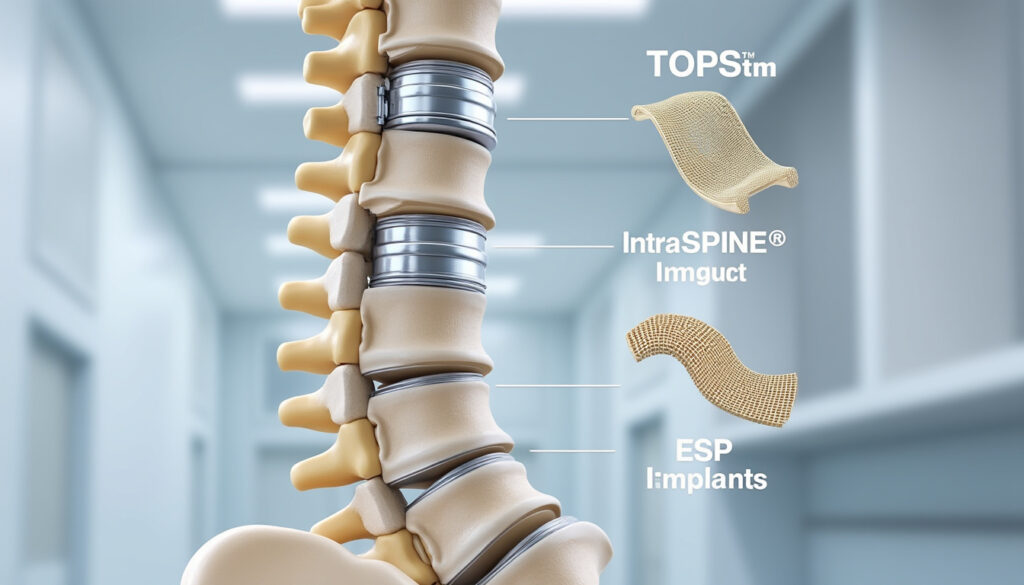
The evolving field of spinal surgery is witnessing a transformative shift, fueled by cutting-edge implant technologies such as TOPS, Intraspine, and ESP. These innovative implants redefine treatment possibilities by emphasizing preservation of natural spinal mechanics, while ensuring durable stabilization and…
Conservative Care Protocols and Their Role in Surgical Decision-Making
Conservative treatments form an essential foundation before considering surgical interventions, a principle strongly championed by leading experts in transatlantic spine care collaboration. Notably, Dr. Sylvain Desforges emphasizes a mandatory 3 to 6-month non-invasive treatment window focusing on biomechanical decompression and symptom management prior to surgery.
The innovative use of robot-assisted neurovertébral decompression at TAGMED clinics exemplifies this conservative strategy. This technique applies controlled, segment-specific traction to relieve nerve pressure, encouraging natural healing without the risks of surgery. Patients often experience substantial pain reduction and functional improvement, sometimes circumventing the need for invasive procedures.
- Physical therapy support: While variable in application, physiotherapy complements decompression by strengthening paraspinal muscles and improving posture, yet is not the primary tool advocated before surgery within this framework.
- Extended observation: Consistent monitoring ensures only patients unresponsive to conservative management are escalated to surgical candidates, reducing unnecessary surgeries and aligning with evidence-based practices.
- Ethical oversight: This approach guarantees all patients receive comprehensive care, adhering to strict safety and efficacy standards across both healthcare systems.
| Treatment | Recommended Duration | Primary Goals | Impact on Surgery Decisions |
|---|---|---|---|
| Robot-assisted Neurovertébral Decompression | 3 to 6 months | Pressure relief, neurological improvement | Critical prerequisite for surgical evaluation |
| Physiotherapy | Variable | Muscle strengthening, pain relief | Complementary, but limited alone |
| Additional Conservative Measures | Variable | Symptom control, mobility enhancement | Supportive before surgery consideration |
Adherence to these protocols enhances clinical outcomes and aligns with global medical best practices emphasizing patient safety and personalized care.
Preparing for Surgery in France: Key Indications, Benefits, and Limitations
In an evolving global healthcare landscape, France emerges as a beacon of advanced surgical expertise, particularly attracting international patients seeking expedited and innovative medical interventions. Patients from regions experiencing long wait times, such as Quebec, increasingly view France as an…
Cultural and Organizational Factors Influencing Spine Care Dynamics
The differences between France and Quebec in spine care extend beyond clinical models and technology, deeply intertwined with cultural values and healthcare organization principles. These factors shape practitioner training, patient relationships, and care coordination, revealing a broader context for spine health management.
France’s model is firmly grounded in a biomedical, protocol-driven approach embedded within university systems and formal professional societies. The emphasis lies in upholding standardized guidelines, ensuring surgical excellence and consistent clinical outcomes across hospitals. Conversely, Quebec’s ethos prioritizes humanistic care, empathy, and flexible rehabilitation pathways, incorporating physiotherapy and chiropractic care as integral components of anticipatory and chronic pain management.
- Professional formation: France’s structured DIU and SFCR certifications create a high level of subspecialty skill, while Quebec’s interprofessional approach fosters versatility and patient engagement.
- Patient-practitioner rapport: French care focuses on guideline adherence, with patients expected to actively participate within a defined treatment protocol, whereas Quebec emphasizes empathetic communication and individualized care adjustments.
- Systems organization: Centralized service delivery in France contrasts with Quebec’s more distributed, adaptable healthcare networks, impacting resource allocation and care continuity.
| Element | France Medical System | Quebec Healthcare System |
|---|---|---|
| Therapeutic Approach | Biomedical, standardized guidelines | Holistic, empathetic, patient-centered |
| Professional Training | University-based specialized credentials | Interdisciplinary, integrated education |
| Patient Interaction | Protocol adherence and informed decision-making | Flexible communication emphasizing compassion |
| Healthcare Organization | Centralized, protocol-driven | Decentralized, adaptable system |
This cultural diversity enriches international collaboration, fostering a comprehensive understanding of patient needs and expectations, which is pivotal for evolving spine care strategies. For more detailed discussions on these themes, references such as the common pitfalls in spine care comparison provide critical insights.

Unveiling the Hidden Benefits of Quality and Certification in Devices
The landscape of device manufacturing and clinical application in 2026 has been fundamentally shaped by the rigorous interplay between quality management and certification processes. Within this complex framework, the hidden benefits of adhering to international standards and obtaining relevant certifications…
Integrating Cutting-Edge Robotics and Imaging in Spine Surgery Practices
Medical best practices increasingly incorporate robotics and 3D imaging to enhance surgical precision, safety, and outcomes. France Medical has notably advanced utilization of robotic assistance platforms, such as eCential Robotics’ state-of-the-art systems approved by agencies like the FDA. These technologies revolutionize navigation and implant positioning in spine surgery, directly impacting recovery times and complication rates.
Key developments include:
- 3D surgical planning: Preoperative imaging allows accurate mapping of patient-specific spinal anatomy, optimizing implant fit and minimizing intraoperative adjustments.
- Robotic-assisted navigation: Offers real-time guidance during instrumentation placement, reducing risks of neurological injury and improving accuracy.
- Minimally invasive application: Enhanced precision facilitates smaller incisions and less tissue disruption, aligning with France’s commitment to fast and effective patient recovery.
| Technology | Primary Benefits | Impact on Patient Outcomes |
|---|---|---|
| 3D Imaging Platforms | Detailed anatomical visualization | Customized implant design; reduced surgical errors |
| Robotic Surgical Assistance | Precise instrument navigation | Lower complication rates; enhanced safety |
| Minimally Invasive Procedures | Smaller incisions; faster recovery | Reduced hospital stays; quicker return to activity |
The integration of these technologies embodies healthcare innovation’s role in redefining spine care quality and efficiency. Supporting detailed protocols, they foster superior functional recovery, highlighting what research reveals about the synergy of implant technology and robotic procedures.
Comparison of Spine Care Practices Between France and Quebec
| Aspect | France Medical System | Quebec Healthcare System |
|---|
Why Experts Advocate for Comprehensive Preoperative Evaluations
In the complex and demanding field of spinal surgery, the emphasis on comprehensive preoperative evaluations has become a fundamental pillar supporting successful surgical outcomes. These evaluations, far beyond mere routine checks, integrate detailed analyses of patient health, surgical risk assessments,…
Enhancing Patient Outcomes Through International Spine Care Collaboration
The cross-pollination of expertise between France and Quebec fosters an enriching environment to refine back pain insights and therapeutic strategies. By combining French advances in surgical innovation with Quebec’s strengths in conservative management and patient-centered care, overall outcomes can be significantly improved.
Studies analyzing these collaborative efforts affirm that patient satisfaction correlates closely with timely interventions, personalized protocols, and integrated multidisciplinary support. International medicine thus plays a pivotal role in elevating practice standards and fostering medical best practices that transcend borders.
Cooperative initiatives have helped reconcile disparities, ensuring ethical, scientific, and humanistic treatment delivery. They continue to fuel spine health research and orthopedic innovation, demonstrating how comparing spine care between France and Quebec enriches global knowledge and directly benefits patients.
| Focus Area | Collaborative Benefits |
|---|---|
| Clinical Outcomes | Improved functionality and reduced post-op complications |
| Patient Satisfaction | Enhanced communication, education, and personalized care |
| Research and Innovation | Shared expertise accelerates development of novel interventions |
What are the main differences between spine care in France and Quebec?
France emphasizes centralized, protocol-driven care with advanced surgical techniques, while Quebec offers a more holistic but decentralized approach focused on accessibility and conservative management.
How does the French transatlantic surgical pathway benefit Quebec patients?
It enables quicker access to innovative spine surgeries, supported by coordinated international logistics, expert evaluations, and comprehensive rehabilitation post-surgery.
Why is conservative treatment important before spine surgery?
Conservative care, including robot-assisted decompression, is vital to avoid unnecessary surgeries and optimize patient readiness and outcomes when surgery is necessary.
What advanced technologies does France use in spine surgery?
France employs 3D imaging, robotic-assisted navigation, and dynamic implant systems that preserve spinal mobility and enhance surgical precision.
How do cultural differences affect spine care in these regions?
France relies on standardized biomedical protocols and formal training, whereas Quebec embraces a flexible, empathetic, and multidisciplinary care environment impacting treatment styles and patient interaction.
The Future of Surgery Lies in Stepwise Functional Recovery
The evolution of surgical care in 2026 reveals a compelling shift toward approaches that prioritize the holistic recovery of patients, moving beyond traditional metrics like length of hospital stay or mortality rates. This modern paradigm highlights the principle that the…